센서 원스톱 – 최고의 가치를 지닌 중국 센서 공급업체 및 공급망

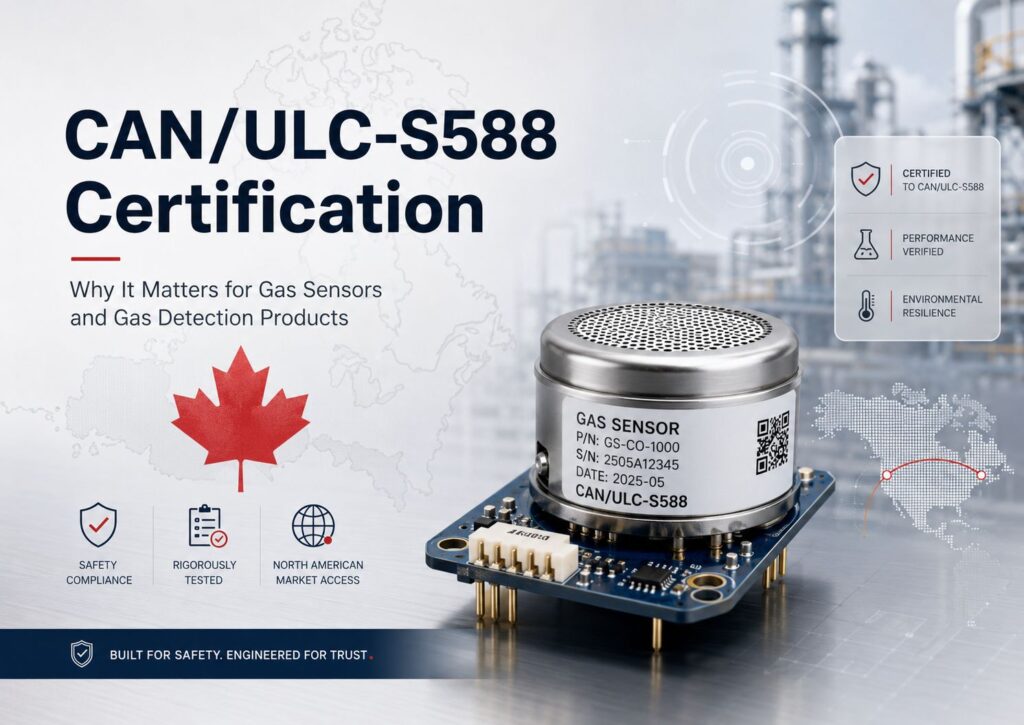
CAN/ULC-S588 인증 설명: 가스 센서 및 가스 감지 제품에 중요한 이유

For gas sensor manufacturers, gas detector brands, and system integrators targeting the North American market, certification is becoming more than a compliance requirement. It is also an important factor in customer trust, project approval, and product selection.

One standard that is receiving increasing attention is CAN/ULC-S588, formally titled Gas and Vapour Detectors and Sensors, Including Accessories. This Canadian standard applies to gas and vapour detectors and sensors used for toxic and combustible gas detection, including permanently installed, portable, and transportable equipment.

For companies working with carbon monoxide sensors, hydrogen sensors, combustible gas sensors, toxic gas sensors, and gas detection modules, understanding CAN/ULC-S588 is important when developing products for safety-related applications such as residential safety, commercial buildings, energy storage systems, fuel cell systems, HVAC control, and industrial monitoring.

What Is CAN/ULC-S588?

CAN/ULC-S588 is a Canadian standard for gas and vapour detectors and sensors, including accessories. It covers requirements for products used to detect toxic gases, combustible gases, and vapours in ordinary gas detection applications.

In practical terms, CAN/ULC-S588 is highly relevant to products such as:

  • Carbon monoxide detectors and CO sensors
  • Hydrogen gas detectors and H₂ sensors
  • Combustible gas detectors
  • Toxic gas detectors
  • Multi-gas detection devices
  • Gas sensing modules used in safety systems
  • Accessories related to gas detection products

The scope of the standard includes fixed, portable, and transportable gas and vapour detectors and sensors. It is especially important for products used in indoor locations, outdoor applications, or unconditioned environments where reliability and safety performance are critical.

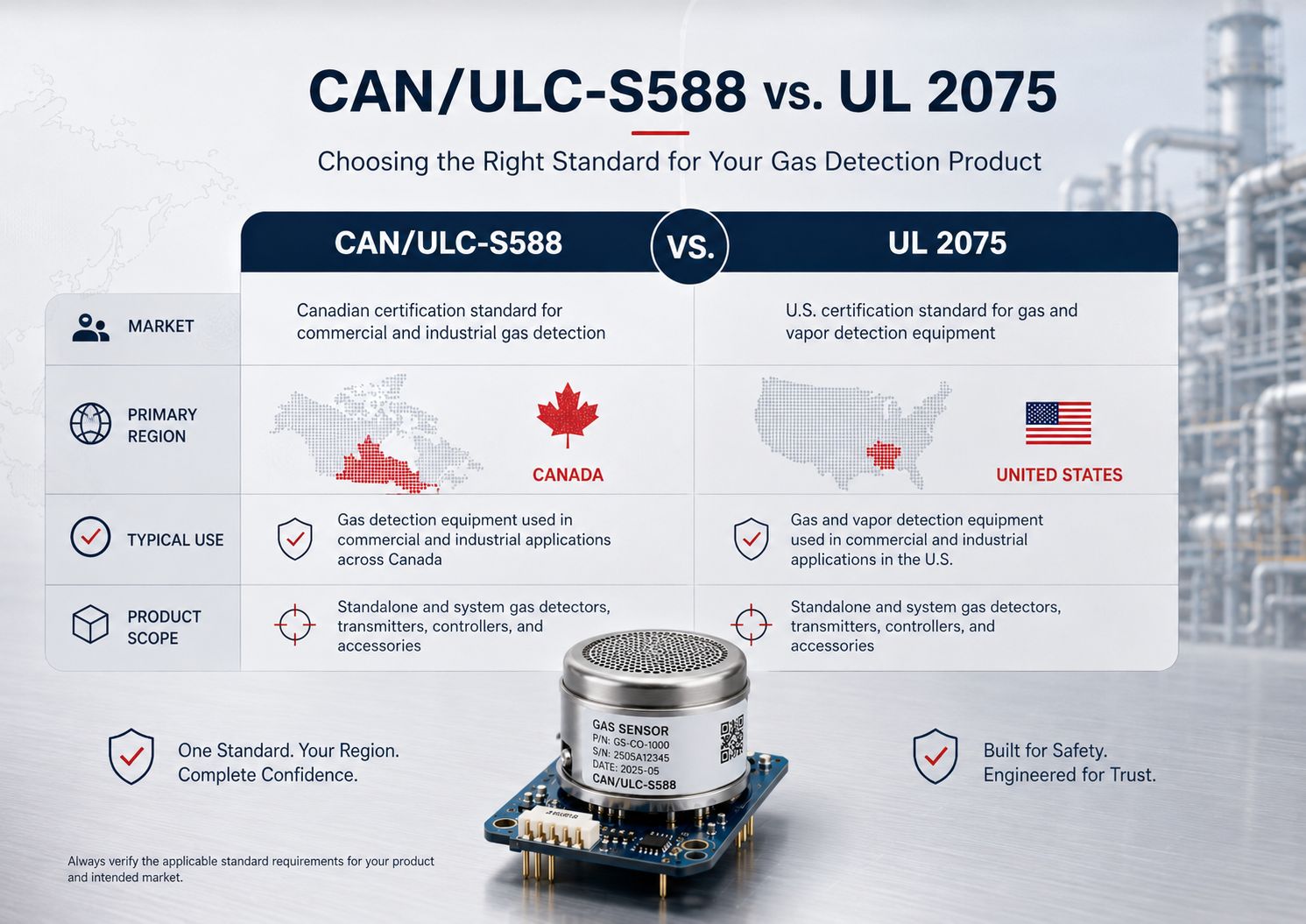
How Is CAN/ULC-S588 Related to UL 2075?

CANULC S588vS. UL 2075

For companies entering North America, CAN/ULC-S588 is often discussed together with UL 2075.

UL 2075 is the U.S. standard for Gas and Vapor Detectors and Sensors. It applies to fixed, portable, and transportable toxic and combustible gas and vapor detectors and sensors intended for use in ordinary non-hazardous locations, including indoor and unconditioned areas.

A simple way to understand the relationship is:

기준Main MarketProduct Focus
UL 2075미국Gas and vapor detectors and sensors
CAN/ULC-S588캐나다Gas and vapour detectors and sensors, including accessories

For many North American projects, manufacturers may need to consider both standards. A gas detection product or sensor component that supports both UL 2075 and CAN/ULC-S588 requirements can be more attractive to OEM customers, system integrators, and safety equipment manufacturers.

Intertek has also noted that gas detectors have been removed from the scope of UL 61010-1 and CSA C22.2 No. 61010-1 and are now under the scope of UL 2075 and ULC S588, which shows that gas detector certification has become more specialized in North America.

Why CAN/ULC-S588 Matters for Gas Sensor Manufacturers

For sensor manufacturers, CAN/ULC-S588 is not only about selling a certified detector. It can also affect the competitiveness of the sensor itself when the sensor is used as a key component inside a complete gas detection product.

Gas detector manufacturers often look for sensor suppliers that can help reduce certification risk. If a sensor has already been evaluated according to recognized North American safety and performance requirements, it may help the end-product manufacturer simplify product development and improve confidence during certification planning.

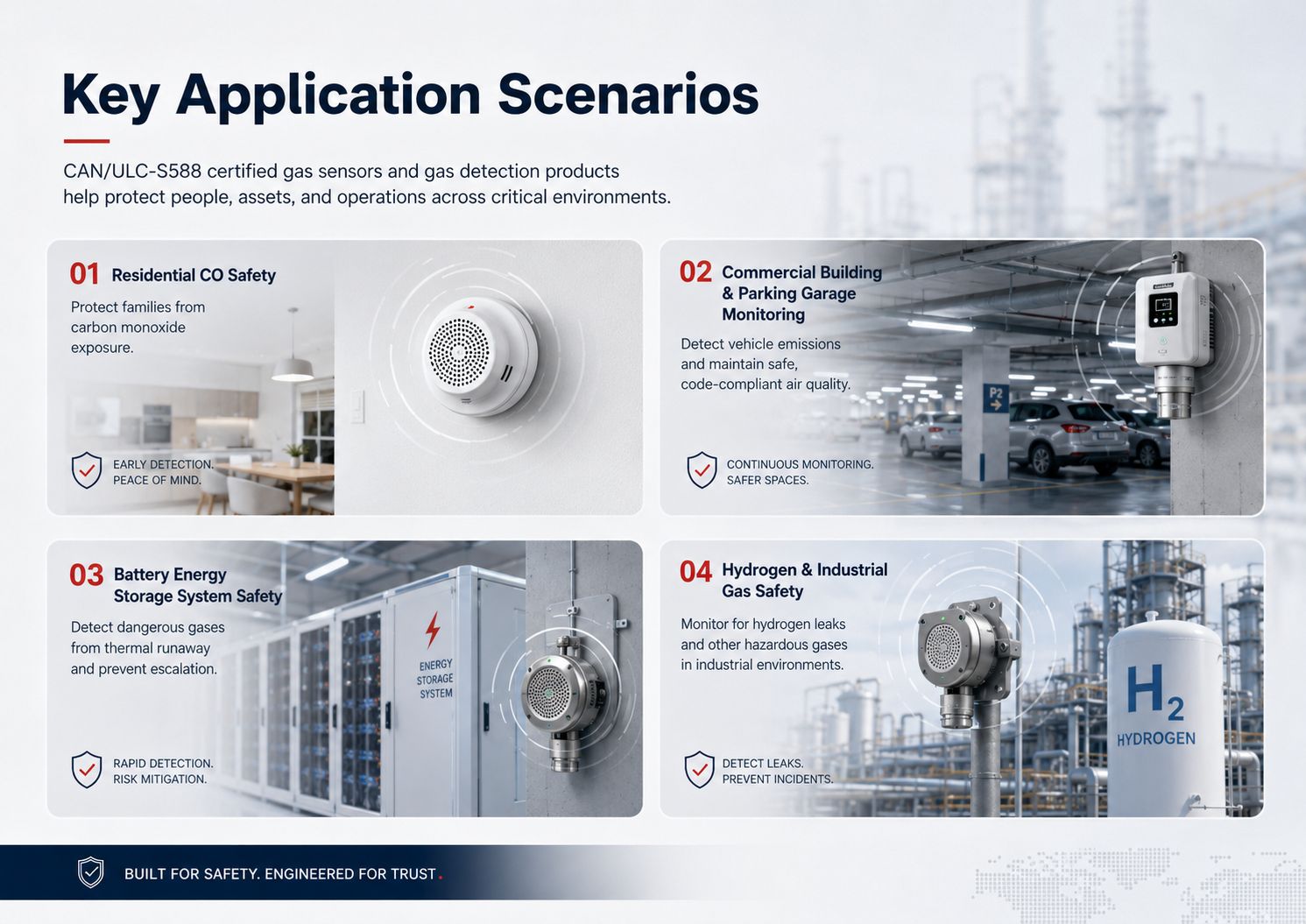
This is especially important in applications where gas detection is directly linked to safety, such as:

  • Residential carbon monoxide alarms
  • Commercial building gas monitoring
  • Parking garage ventilation control
  • Battery energy storage system safety
  • Hydrogen leakage detection
  • Fuel cell system monitoring
  • Industrial toxic gas detection
  • HVAC and refrigeration safety systems

In these applications, customers do not only ask whether a gas sensor can detect a target gas. They also care about long-term stability, operating temperature range, response performance, failure behavior, end-of-life indication, calibration strategy, and certification support.

Key Technical Areas Behind CAN/ULC-S588 Evaluation

The full CAN/ULC-S588 standard is a paid technical document, so manufacturers should always work with an authorized certification body for formal testing and interpretation. However, based on public information and standards update notices, several areas are especially important for gas detection products.

1. Gas Detection Performance

A gas detection product must demonstrate that it can detect the target gas reliably under specified conditions. This may involve sensitivity, alarm threshold, response time, recovery behavior, and performance after environmental exposure.

For example, products targeting carbon monoxide, hydrogen, methane, propane, nitrogen dioxide, or hydrogen sulfide must show that they can respond to gas concentrations in a predictable and safe way.

2. Environmental Reliability

Gas detectors and sensors may be installed in non-ideal environments. Temperature, humidity, vibration, contamination, and long-term drift can all affect sensor performance.

For North American applications, customers may pay close attention to wide-temperature performance, especially in outdoor, garage, industrial, and energy storage environments.

3. Electrical and Functional Safety

A gas detection product is not only a sensing device. It is also part of a safety system. Therefore, electrical safety, component reliability, signal failure behavior, and abnormal operation conditions may be considered during evaluation.

4. Marking and Installation Instructions

The latest ULC S588 update notice includes revisions related to marking and installation instructions, which means manufacturers must also pay attention to product labeling, user guidance, installation limitations, and application conditions.

5. Combustible Gas Detection Thresholds

For combustible gas products, detection thresholds are especially important because the device may be used to warn users before a dangerous concentration is reached. The Intertek standards update notice for ULC S588 mentions requirements related to combustible gas and vapor detection threshold testing.

CAN/ULC-S588 and Hydrogen Detection

Hydrogen detection is becoming increasingly important because of the growth of battery energy storage systems, fuel cells, hydrogen energy infrastructure, and industrial hydrogen applications.

Hydrogen is a small-molecule, highly diffusive, and flammable gas. In practical systems, hydrogen may appear in battery rooms, fuel cell equipment, charging infrastructure, hydrogen production sites, or enclosed technical spaces.

For hydrogen sensor manufacturers, certification-related performance may include:

  • Low-level hydrogen detection capability
  • Fast response and recovery
  • 광범위한 작동 온도 범위
  • 장기적인 안정성
  • Resistance to interference gases
  • Output reliability for system integration
  • Suitability for safety-related monitoring

Because hydrogen safety is becoming a major topic in energy transition projects, gas sensors used in hydrogen detection are increasingly expected to support recognized standards and certification pathways.

CAN/ULC-S588 and Carbon Monoxide Detection

Carbon monoxide remains one of the most important gases in residential, commercial, and industrial safety. CO is colorless, odorless, and toxic, which makes reliable detection essential.

CO sensors are widely used in:

  • Residential carbon monoxide alarms
  • Commercial building safety systems
  • Parking garage ventilation control
  • Boiler rooms
  • Fire detection and safety systems
  • Gas appliances
  • Recreational vehicles and marine applications

For CO sensors, customers often focus on:

  • Long service life
  • Low drift
  • Stable output over temperature and humidity
  • Resistance to alcohol, hydrogen, and other interference gases
  • Reliable performance over the full product life cycle
  • Support for 10-year detector designs

For OEM manufacturers, a CO sensor with strong certification support can be a major advantage when designing gas alarms or gas monitoring systems for North America.

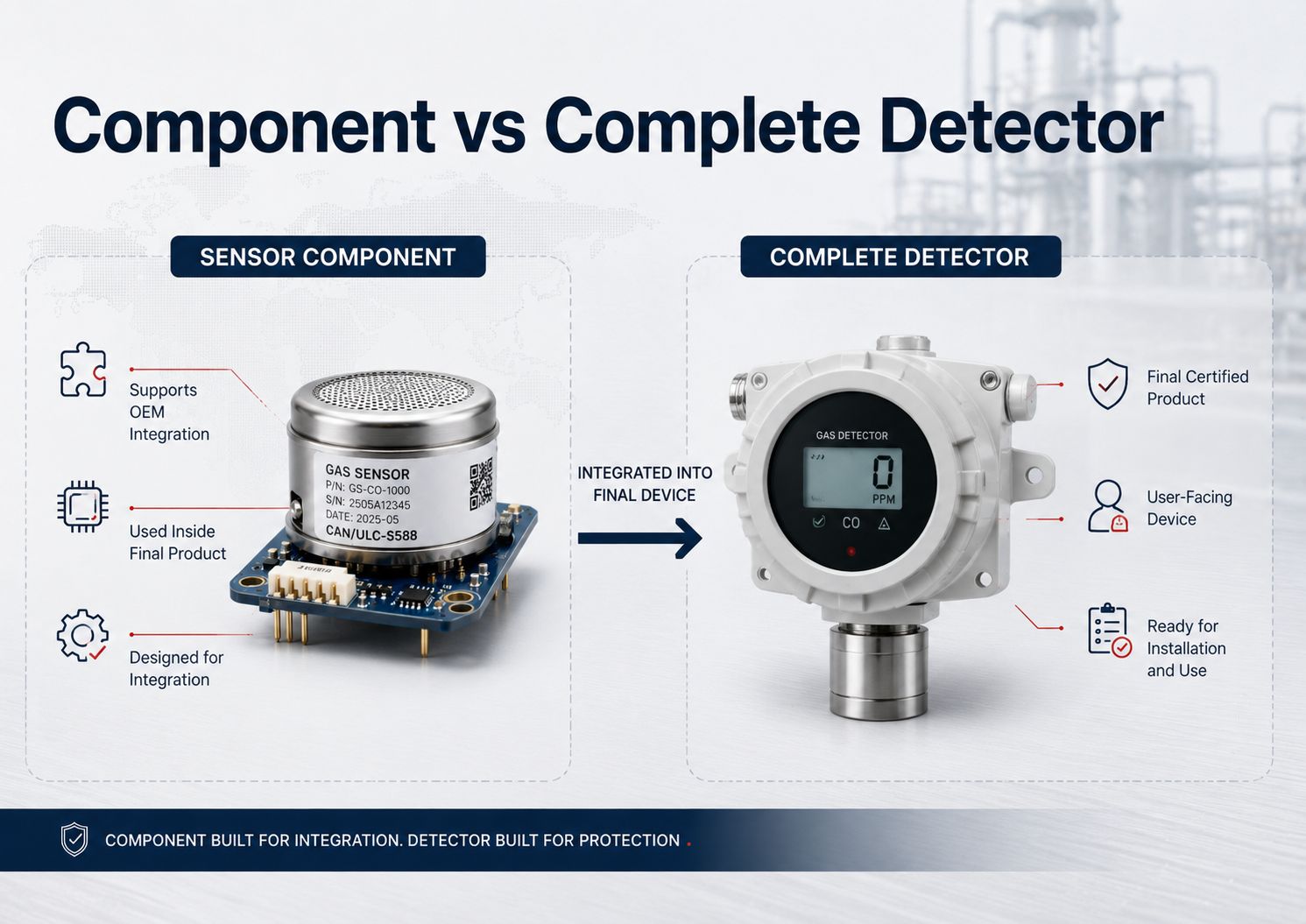
Component Certification vs Complete Product Certification

One important point should be clearly understood: a certified sensor component is not the same as a certified complete gas detector.

A gas sensor may be evaluated as a recognized component used inside a larger certified product. In this case, the sensor supports the certification of the final product, but the complete detector or alarm still needs its own evaluation based on final design, enclosure, power supply, software logic, alarm output, user instructions, and installation conditions.

This distinction matters because gas detector manufacturers often ask sensor suppliers for documentation that can support their own certification process. A well-prepared sensor supplier should be able to provide:

  • Sensor datasheet
  • Performance test data
  • Lifetime and aging data
  • Environmental test data
  • Interference gas data
  • Calibration information
  • Quality control documentation
  • Application notes
  • Certification-related technical support

Why This Certification Is Becoming a Market Advantage

In the gas detection market, technical performance alone is no longer enough. Customers increasingly want products that are easier to approve, easier to integrate, and easier to certify.

CAN/ULC-S588 can create value in several ways:

For Sensor Manufacturers

It helps show that the product is suitable for serious safety-related applications and can support North American customer projects.

For Gas Detector Brands

It reduces uncertainty when selecting core sensing components and designing products for Canada or the broader North American market.

For System Integrators

It provides confidence when gas detection devices are used in building safety, energy storage, industrial monitoring, and ventilation control systems.

For End Users

보다 안정적인 성능, 적절한 설치 및 명확한 제품 표시를 장려하여 보다 안전한 가스 모니터링을 지원합니다.

CAN/ULC-S588이 중요한 애플리케이션

CAN/ULC-S588은 특히 다음 응용 분야에 사용되는 가스 감지 제품과 관련이 있습니다.

애플리케이션일반적인 대상 가스
주거안전CO, 가연성 가스
상업용 건물CO, NO2, 가연성 가스
주차장CO, NO2
배터리 에너지 저장 시스템H2, CO, VOC, 전해질 증기 표시기
연료전지 시스템H2
산업안전H2S, CO, 가연성 가스
HVAC 및 환기 제어CO2, CO, NO2
화재 안전 시스템CO, H2, 가연성 가스

Different applications may require different standards, installation codes, and certification routes. Therefore, manufacturers should evaluate the target market and application scenario before starting certification.

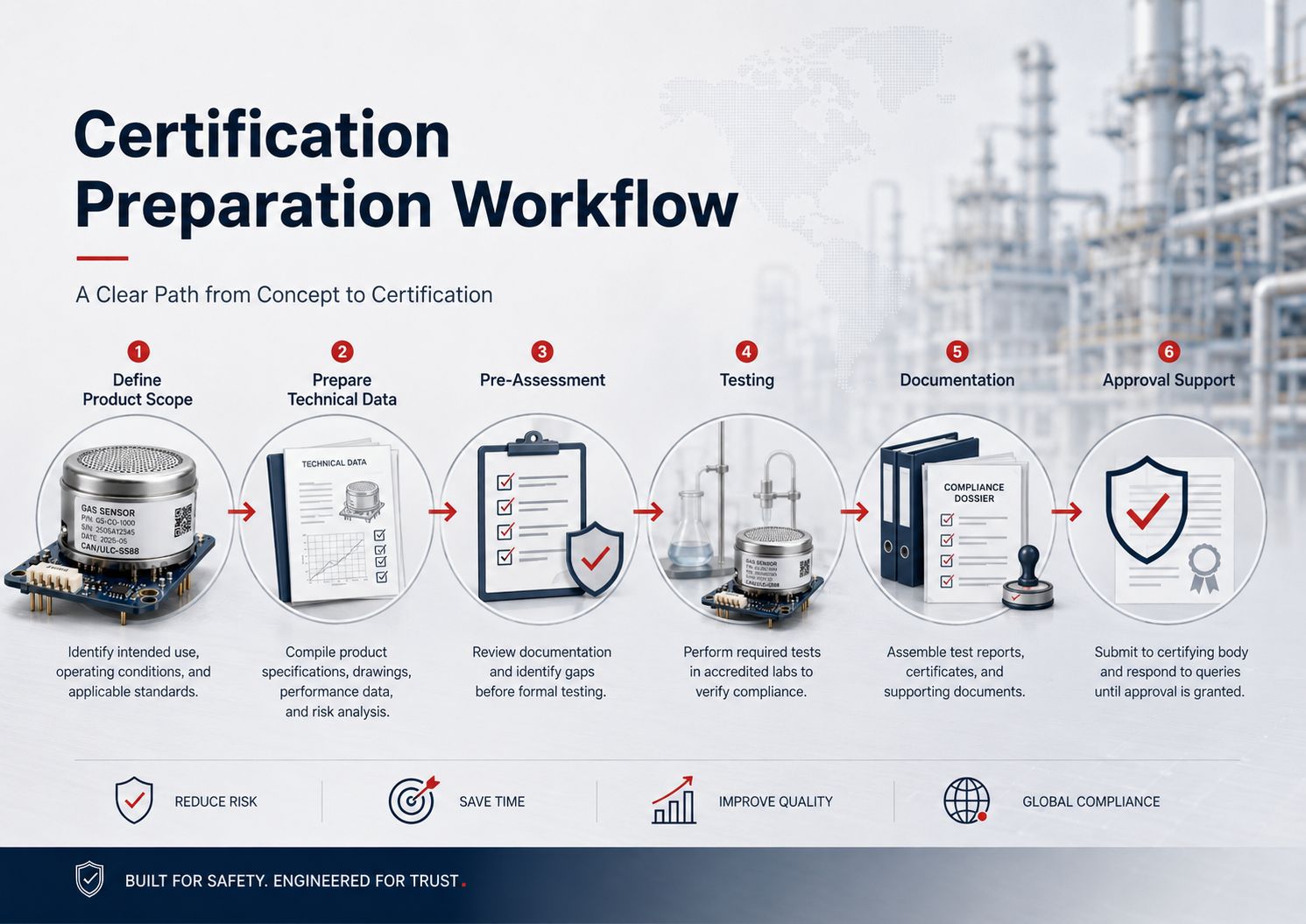
What Manufacturers Should Prepare Before Certification

Before starting a CAN/ULC-S588 or UL 2075 certification project, gas sensor and detector manufacturers should prepare a strong technical foundation.

Important preparation work includes:

  1. Define the product scope
    Confirm whether the product is a sensor component, sensing module, gas detector, gas alarm, or complete monitoring device.

  2. Confirm the target gas and application
    CO, H₂, CH₄, propane, NO₂, H₂S, and VOC-related gases may have different test requirements and customer expectations.

  3. Prepare reliability data
    Long-term drift, aging behavior, temperature cycling, humidity exposure, and storage stability data are important.

  4. Review environmental specifications
    Operating temperature, storage temperature, humidity range, pressure range, and installation environment should be clearly defined.

  5. Prepare quality control documentation
    Certification bodies and OEM customers may review production consistency, calibration process, inspection methods, and traceability.

  6. Clarify certification route
    Decide whether the goal is component recognition, module evaluation, or complete product certification.

  7. Work with a qualified certification body early
    Early pre-assessment can help avoid redesign, documentation gaps, and unexpected testing delays.

결론

CAN/ULC-S588 is an important Canadian standard for gas and vapour detectors and sensors. Together with UL 2075, it plays a key role in North American gas detection product certification.

For gas sensor manufacturers, this standard is not only a regulatory topic. It is also a market signal. Customers in residential safety, commercial buildings, energy storage, hydrogen safety, industrial monitoring, and HVAC systems are increasingly looking for gas sensing products with stronger reliability data and certification support.

As gas detection applications become more safety-critical, sensor suppliers that understand CAN/ULC-S588 and UL 2075 requirements will be better positioned to support OEM customers and enter higher-value markets.

For project teams evaluating CO, hydrogen, combustible gas, or toxic gas sensing solutions, choosing the right sensor technology is only the first step. Certification planning, reliability testing, and application-specific integration are becoming equally important parts of successful gas detection product development.

자주하는 질문

What is CAN/ULC-S588?

CAN/ULC-S588 is a Canadian standard for gas and vapour detectors and sensors, including accessories. It covers products used for toxic and combustible gas detection in fixed, portable, and transportable forms.

Is CAN/ULC-S588 the same as UL 2075?

No. UL 2075 is mainly used for the U.S. market, while CAN/ULC-S588 is the Canadian standard. However, they are often discussed together for North American gas detection products.

Which gases are related to CAN/ULC-S588?

The standard may apply to toxic and combustible gas detection products, including products for gases such as carbon monoxide, hydrogen, methane, propane, nitrogen dioxide, hydrogen sulfide, and other gas or vapour hazards depending on the application.

Does a certified sensor mean the complete detector is certified?

Not necessarily. A sensor may be evaluated as a component, but the complete gas detector or alarm usually requires separate evaluation based on the final product design and application.

Why is CAN/ULC-S588 important for gas sensor suppliers?

It helps sensor suppliers support OEM customers targeting Canada or North America. It can improve customer confidence, reduce certification uncertainty, and strengthen competitiveness in safety-related gas detection markets.

Exit mobile version