
A Complete Guide to Proximity Sensor
What is a proximity sensor?
Proximity sensors are devices that are used to detect the presence or absence of objects within a certain range without the need for physical contact. They are commonly used in various applications for object detection, distance measurement, and obstacle avoidance.
Proximity sensors work based on different principles, including electromagnetic, capacitive, inductive, ultrasonic, and optical.
- Electromagnetic Proximity Sensors
- Capacitive Proximity Sensors
- Inductive Proximity Sensors
- Ultrasonic Proximity Sensors
- Optical Proximity Sensors
Proximity Sensor Features
Proximity sensors come with a range of features that enhance their functionality and adaptability to different applications.
비접촉 감지
One of the standout features of proximity sensors is their ability to detect objects without any physical contact. This non-contact sensing capability not only ensures that the sensor and the object remain undamaged but also eliminates the need for frequent maintenance or cleaning.
High Accuracy and Reliability
Proximity sensors are known for their exceptional accuracy and reliability. They can detect objects with precision, even in challenging environmental conditions such as dust, moisture, or temperature variations. This reliability makes them ideal for critical applications where accuracy is of utmost importance.
빠른 응답 시간
Time is of the essence in many applications, and proximity sensors excel in this area. They have an incredibly fast response time, detecting objects in milliseconds. This quick response enables real-time monitoring and control, making them suitable for high-speed production lines, robotics, and other time-sensitive applications.
Versatile Object Detection
Proximity sensors are incredibly versatile when it comes to object detection. Depending on the technology used, they can detect a wide range of materials, including metal, plastic, glass, liquids, and more. This flexibility allows them to be used in various industries and applications, from position sensing to level detection and presence sensing.
Adjustable Sensing Range
Another fantastic feature of proximity sensors is their adjustable sensing range. This means that you can customize the distance at which the sensor detects objects, making it adaptable to different requirements and environments. Whether you need short-range or long-range detection, proximity sensors have got you covered.
출력 옵션
Proximity sensors offer different output options, such as analog and digital outputs. Analog outputs provide continuous feedback, allowing for precise measurement and control, while digital outputs offer simple on/off signals for object detection. The choice of output type depends on your specific application needs.
Easy Integration
Proximity sensors are designed for easy integration into existing systems. They typically come with standardized mounting options and communication protocols, making the installation process hassle-free. This ease of integration ensures a smooth transition and minimizes downtime during implementation.
Environmental Robustness
Proximity sensors are built to withstand harsh environmental conditions. They are often designed with rugged enclosures that protect them from dust, moisture, vibrations, and even extreme temperatures. This robustness ensures reliable performance in demanding industrial environments, making them suitable for a wide range of applications.
How Do Proximity Sensors Work?
Each type of proximity sensor has its own working principle and characteristics, allowing it to detect objects within its specified sensing range. The output signal generated by the sensor can be used for various purposes, such as object detection, distance measurement, or triggering control actions in automated systems.
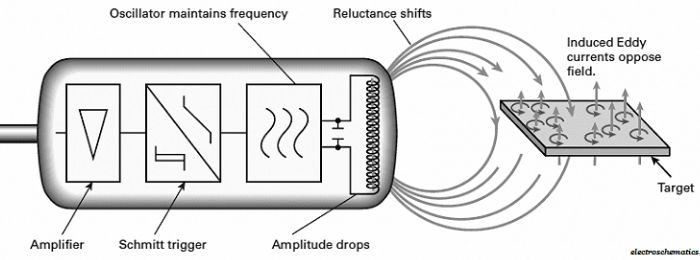
Inductive Proximity Sensors
Inductive proximity sensors generate an electromagnetic field from a coil. When a metallic object enters the sensing range, it disturbs the electromagnetic field, causing a change in the sensor’s impedance. This changein impedance is detected by the sensor, which then triggers an output signal indicating the presence of the object. Inductive proximity sensors are primarily used for detecting metal objects.
Capacitive Proximity Sensors
Capacitive proximity sensors work based on changes in capacitance. These sensors consist of two conductive plates with an insulating material between them. When an object enters the sensing range, it changes the capacitance between the plates, leading to a change in the sensor’s oscillation frequency or amplitude. This change is detected by the sensor, which generates an output signal to indicate the presence of the object. Capacitive proximity sensors can detect both conductive and non-conductive objects.


Ultrasonic Proximity Sensors
Ultrasonic proximity sensors use sound waves to detect objects. They emit ultrasonic waves at a frequency beyond human hearing range. These waves travel through the air and bounce back when they encounter an object. The sensor measures the time it takes for the sound waves to return to the sensor. Based on this time of flight, the sensor can calculate the distance to the object. If the calculated distance is within the sensing range, the sensor triggers an output signal indicating the presence of the object.
Optical Proximity Sensors
Optical proximity sensors use light to detect objects. They consist of an emitter that emits light, typically infrared, and a receiver that detects the reflected light. When an object enters the sensing range and interrupts the light beam, the receiver detects the change in the received light intensity and triggers an output signal indicating the presence of the object. Optical proximity sensors can operate in various modes, such as through-beam (separate emitter and receiver), retro-reflective (emitter and receiver in the same unit, with a reflector), or diffuse (combined emitter and receiver in one unit).

Proximity Sensor Applications

산업 자동화
Proximity sensors are widely used in industrial automation for object detection, positioning, and monitoring. They help control robotic arms, conveyor systems, and assembly lines by detecting the presence or absence of objects, ensuring precise positioning and efficient operation.

자동차 산업
Proximity sensors are essential in the automotive industry for a range of applications. They are used in parking assist systems to detect obstacles and provide proximity feedback to drivers. Proximity sensors are also integral to adaptive cruise control, collision avoidance systems, and automatic door opening systems.

가전
From smartphones to home appliances, proximity sensors are found in a variety of consumer electronic devices. They enable features like automatic screen dimming when the device is held close to the face during a call, touch-free gesture recognition, and proximity-based wake-up functionality.
보안 시스템
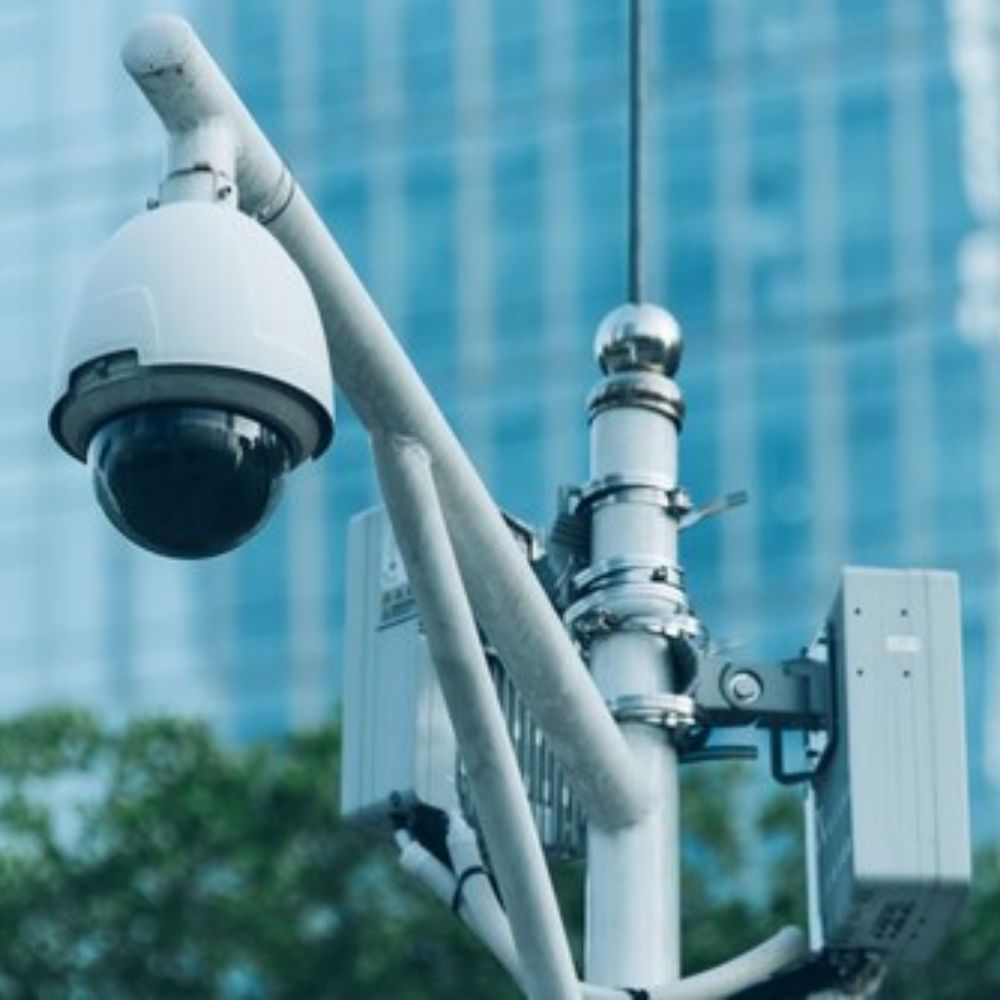
Proximity sensors play a crucial role in security systems, such as burglar alarms and access control. They detect unauthorized entry by sensing the proximity of an individual or object to a restricted area, triggering alarms or activating security measures.

Material Handling
In warehouses and logistics centers, proximity sensors are used in conveyor systems to detect the presence of packages or pallets. They ensure proper spacing between items, prevent collisions, and optimize material flow.

Vending Machines
Ever wondered how vending machines know when to dispense your favorite snack or drink? That’s right, proximity sensors! They detect when a customer’s hand approaches the dispensing area, triggering the release of the desired item.

Elevators and Escalators
Proximity sensors are employed in elevators and escalators to ensure safe operation. They detect the presence of passengers, preventing doors from closing prematurely or objects from getting caught, enhancing passenger safety.

Proximity Switches
Proximity switches, which utilize proximity sensor technology, are commonly used for limit sensing, valve control, and positioning in various industries. They detect the presence of metallic objects and provide on/off signals for precise control and automation.
Selection by Detection Method
| Items requiring confirmation | Inductive Proximity Sensors | Capacitive Proximity Sensors | Magnetic Proximity Sensors |
| Sensing object | Metallic objects (iron, aluminum, brass, copper, etc.) | Metallic objects, resins, liquids, powders, etc. | Magnets |
| Electrical noise | Affected by positional relationship of power lines and signal lines, grounding of cabinet, etc. CE Marking (EC Directive compliance). Sensor covering material (metal, resin). Easily affected by noise when the cable is long. | Almost no effect | Almost no effect |
| 전원공급장치 | DC, AC, AC/DC, DC with no polarity, etc. Connection method, power supply voltage | DC, AC, AC/DC, DC with no polarity, etc. Connection method, power supply voltage | DC, AC, AC/DC, DC with no polarity, etc. Connection method, power supply voltage |
| Current consumption | Depends on the power supply, i.e., DC 2-wire models, DC 3-wire models, AC, etc. DC 2-wire models are effective for suppressing current consumption | Depends on the power supply, i.e., DC 2-wire models, DC 3-wire models, AC, etc. DC 2-wire models are effective for suppressing current consumption | Depends on the power supply, i.e., DC 2-wire models, DC 3-wire models, AC, etc. DC 2-wire models are effective for suppressing current consumption |
| Sensing distance | The sensing distance must be selected by considering the effects of factors such as the temperature, the sensing object, surrounding objects, and the mounting distance between Sensors. Refer to the set distance in the catalog specifications to determine the proper distance. When high precision sensing is required, use a Separate Amplifier model | ||
| Ambient environment | Temperature or humidity, or existence of water, oils, chemicals, etc. Confirm that the degree of protection (refer to the Degree of Protection) matches the ambient environment | ||
| Physical vibration, shock | An extra margin must be provided in the sensing distance when selecting Sensors for use in environments subject to vibration and shock. To prevent Sensors from vibrating loose, refer to the catalog values for tightening torque during assembly | ||
| Assembly | Effects of tightening torque, Sensor size, number of wiring steps, cable length, distance between Sensors, surrounding objects. Check the effects of surrounding metallic and other objects, and the specifications for the mutual interference between Sensors | ||
글로벌 고객이 우리를 선택하는 이유는 무엇입니까?
글로벌 고객은 우리를 선택함으로써 글로벌 도달 범위, 최고 품질, 경쟁력있는 가격, 커스터마이징 옵션, 뛰어난 고객 서비스 및 정시 배송의 비교할 수없는 조합에 액세스 할 수 있습니다. 우리는 기대치를 초과하고 신뢰와 만족을 바탕으로 장기적인 파트너십을 구축하기 위해 노력합니다.
광범위한 공급 업체 네트워크
중국 최고의 공급 업체와의 강력한 파트너십은 광범위한 선택과 고품질 제품을 제공합니다.
품질 보증
우리는 각 제품을 엄격하게 선택하고 테스트하여 엄격한 품질 및 성능 표준을 충족하여 마음의 평화를 제공합니다.
전문가 제품 권장 사항
깊은 지식과 경험을 가진 업계 전문가 팀은 귀하의 요구에 가장 적합한 제품을 신중하게 선별하고 추천하여 시간과 노력을 절약 할 수 있습니다.
경쟁력 있는 가격
공급 업체와의 직접 협력을 통해 경쟁력있는 가격을 제공하여 비용을 절약하고 투자에 더 큰 가치를 제공합니다.
유연한 사용자 정의 서비스
특수 사양, 맞춤형 디자인 또는 개인 라벨링이 필요한지 여부에 관계없이 귀하는 귀하와 긴밀히 협력하여 고유 한 요구 사항을 충족하는 유연한 사용자 정의 솔루션을 제공합니다.
우수한 고객 지원
당사의 전용 고객 지원 팀은 항상 모든 문의를 지원하고 해결할 준비가되어있어 구매 여행 전반에 걸쳐 탁월한 서비스 경험을 제공합니다.
고객은 좋은 피드백입니다
좋은 사람들의 좋은 말
비교할 수없는 품질과 탁월한 고객 서비스
우리는 수년간이 회사에서 구매 해 왔으며 그들의 제품은 결코 실망하지 않습니다. 품질은 예외적이며 고객 서비스는 최고입니다.

메리 r
우수한 소싱 서비스를 가진 신뢰할 수있는 파트너!
우수한 소싱 서비스를 위해이 회사를 강력히 추천합니다. 그들은 우리가 필요로하는 것을 정확하게 찾아 제 시간에 전달할 수있었습니다. 진정으로 신뢰할 수있는 파트너!

존 L.
인상적인 사용자 정의 옵션과 기대치를 초과했습니다!
그들이 제공하는 사용자 정의 수준은 인상적입니다. 그들은 우리의 특정 요구 사항을 충족하고 우리의 기대를 초과 한 제품을 제공 할 수있었습니다. 우리는 향후 주문을 위해 확실히 돌아올 것입니다.

사라 m
문의를 남겨주세요
아직 어떤 센서가 옳은지 확실하지 않습니까? 지금 무료 초기 상담을 받으십시오. 우리 팀은 귀하의 요구를 분석하고 가장 적합한 센서를 추천합니다.
오류: 접촉 양식을 찾을 수 없습니다.