

تخبرك مراقبة تركيز الغاز بالأداة التي تم قياسها عند نقطة عينة معينة. يضيف إنذار السلامة غرضًا وقائيًا محددًا: التعرف على حالة محددة، وإبلاغها، ودعم الاستجابة المتفق عليها أثناء التعامل مع الأخطاء وفقدان التوفر. لا تثبت شاشة التركيز أو جهة اتصال التتابع أو مكون المستشعر وحده أن الترتيب الكامل مناسب لهذا الغرض.
وبالتالي فإن سؤال الاختيار المفيد هو: ما هو القرار الذي يعتمد على هذا القياس، وما هو الدليل الذي يربط العينة بذلك القرار؟ يمكن للمحلل المستخدم لتوجيه عملية ما أن يكون ممتازًا في المهمة المخصصة لها دون أن يكون الجهاز المناسب لتحذير الأشخاص بشأن إخلاء الغرفة. يمكن أن يكون كاشف السلامة مناسبًا للتحذير دون توفير الانتقائية أو عدم اليقين اللازم لتحليل العملية. تخدم بعض الأدوات كلا الدورين، ولكن كل دور يحتاج إلى نطاق موثق خاص به.
This article concerns equipment selection and document review. Requirements differ between industrial flammable-gas detection, workplace exposure assessment, household alarms and engineered safety functions. In Great Britain, HSE's industrial flammable-detector guidance explicitly excludes domestic detectors, mining and offshore applications, and detailed confined-space advice. Its useful general lesson is that detection belongs alongside measures that prevent and manage releases. إرشادات HSE الصناعية للغازات القابلة للاشتعال.

إن المراقبة والإنذار يخدمان واجبات مختلفة. الأشكال الشفافة هي بصمات مفاهيمية، ولم يتم التحقق من صحتها.
ابدأ بالقرار والعينة ووضع التشغيل
اكتب بيان الغرض قبل مقارنة المعدات. "مراقبة أول أكسيد الكربون" تترك العينة والموقع والنتيجة غير واضحة. "قياس أول أكسيد الكربون في عينة العادم المستخدمة لضبط الاحتراق" و"تحذير الركاب من حالة محددة لثاني أكسيد الكربون في هواء الغرفة" هما مهمتان مختلفتان. قد يتطلب الأول عينة عادم مكيفة ونطاق تحليلي وأساس إعداد تقارير محدد. والثاني يتطلب أداة مناسبة لهواء الغرفة وترتيب تحذير يفهمه الأشخاص المعنيون. إن مشاركة نفس اسم الغاز ووحدة التركيز لا تجعل المهمتين متساويتين.
أضف وضع التشغيل. هل تنطبق الوظيفة أثناء تشغيل العملية، أو أثناء عدم المراقبة، أو أثناء التنظيف، أو أثناء الصيانة، أو أثناء انقطاع التهوية العادية؟ لا يمكن للمستند الذي يناقش الإنتاج العادي فقط تحديد ما يحدث أثناء مهمة عمل مؤقتة. لا يُظهر الرسم التخطيطي الذي يُظهر كاشف الغرفة ما إذا كان المقاول الذي يعمل داخل المعدات مغطى بشكل كافٍ. ارسم حدودًا منفصلة للمعدات والمساحات المشغولة والمهام.
ومن ثم تمييز متلقي المعلومة. قد يقبل المؤرخ القراءة لتحليلها لاحقًا. قد تدعم شاشة المشغل التحقيق. قد يوجه المسبار المحلي استجابة فورية. قد يؤدي التعشيق التلقائي إلى بدء إجراء وقائي مصمم. لدى هؤلاء المستلمين توقعات مختلفة حول التوقيت والصلاحية والتوفر. وتسجيلها جميعًا على أنها "مخرجات إنذار" يخفي القرارات التي يجب اتخاذها.
للحصول على مواصفات أولية، استخدم جملة تحتوي على ستة مجالات: العينة والغاز وأساس القياس وأوضاع التشغيل والمستلم والقرار المطلوب. اترك الحقول التي لم يتم حلها دون حل بشكل واضح. من الأفضل كتابة "الاستجابة للخطأ التي سيتم تحديدها من خلال مراجعة السلامة" بدلاً من افتراض أن فقدان الإشارة يعني وجود جو آمن. يصبح بيان الغرض بمثابة اختبار مفيد لكل رسم لاحق وشاشة البرنامج وسجل القبول.
قارن الأدلة المطلوبة لكل دور
| سؤال المراجعة | دور مراقبة التركيز | دور إنذار السلامة |
|---|---|---|
| ما الذي يجب مراعاته؟ | العملية المحددة أو العينة البيئية | الحالة الخطرة ذات الصلة ضمن نطاق الحماية المحدد |
| ما الذي يجعل القراءة مفيدة؟ | النطاق المناسب والانتقائية وعدم اليقين وأساس الإبلاغ | الاستجابة المناسبة بالإضافة إلى الحالة الصالحة والتحذير أو الإجراء الوقائي المطلوب |
| من يستلمها؟ | محلل أو مشغل أو مراقب أو مؤرخ | قم بتسمية الأشخاص أو المعدات مع الاستجابة المتفق عليها |
| ماذا يحدث أثناء الخطأ؟ | تصبح البيانات غير صالحة أو غير متاحة وفقًا لمهمة المراقبة | يتم تطبيق استجابة محددة لانخفاض القيمة؛ الصمت يجب ألا يعني التوفر |
| ما الذي تم اختباره؟ | أداء القياس للمهمة التحليلية المقصودة | واجهات الاستشعار والتواصل والمنطق والإعلان والعمل ذات الصلة |
| ما الذي يغلق المراجعة؟ | مواصفات القياس المقبولة والتحقق منها | التطبيق المقبول وسلوك النظام وترتيبات دورة الحياة |
هذه المقارنة هي إطار مراجعة، وليس اختبار شهادة. تعتمد الأدلة المطلوبة على التطبيق والقواعد المعتمدة في الموقع. قد يقدم المحلل المتطور التشخيص والإنذارات. قد يوفر الكاشف المدمج قراءات مسجلة. تستحق هذه الميزات التقييم بناءً على تنفيذها الفعلي بدلاً من أسمائها. يجب أن يحدد وصف الجهاز أي النواتج مخصصة للوظيفة المطالب بها وأيها إعلامية.
اطلب من المورد ربط كل مطالبة مهمة بوثيقة. نطاق القياس ينتمي إلى أجهزة الاستشعار والغاز ذات الصلة. تنتمي الموافقة إلى تكوين مسمى وشروطه. تنتمي مطالبة السلامة إلى وظيفة محددة والوثائق الداعمة. قد يجمع كتيب مجموعة المنتجات بين الخيارات التي لا يمكن دمجها معًا. يمكن أن يؤدي نسخ قائمة الميزات على مستوى العائلة إلى جدول المشروع إلى وصف أداة غير موجودة عن طريق الخطأ.
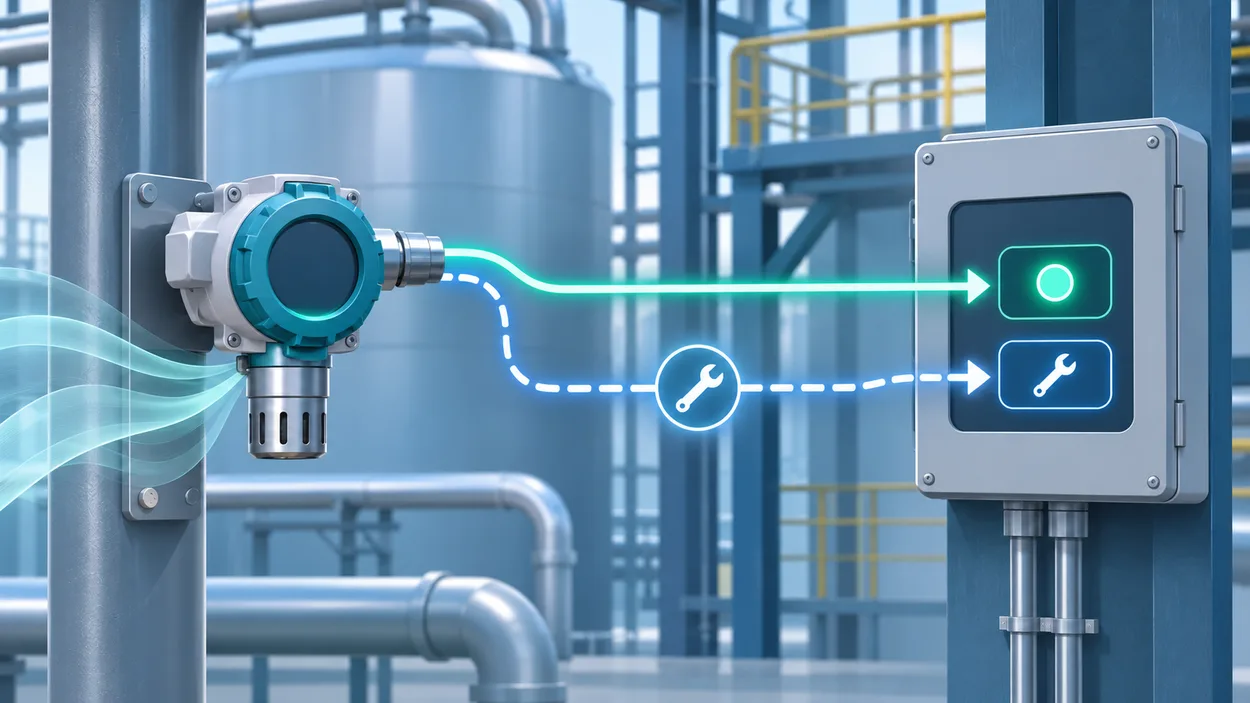
تحتاج واجهة القياس إلى تفسير محدد لحالة المعدات بالإضافة إلى التركيز.
احمل حالة القياس بجانب الرقم
الرقم بدون حالة هو معلومات غير كاملة. فكر في أداة ترسل عادةً قيمة التركيز إلى نظام التحكم. أثناء عملية الإحماء أو المعايرة أو فشل المستشعر أو فقدان الاتصالات، يحتاج نظام التحكم إلى تفسير واضح. يمكن أن يكون الاحتفاظ بالرقم الجيد الأخير مناسبًا للاتجاه، لكن القيمة المحتفظ بها لم تعد ملاحظة حالية. يجب أن تجعل شاشة العرض هذا التمييز مرئيًا أينما يتم استخدام القيمة لدعم القرار.
لا تفترض أن كل مخرجات تناظرية لها اصطلاحات خطأ متطابقة. احصل على تعيين الإخراج الدقيق لجهاز الإرسال المثبت وإدخال وحدة التحكم وتكوين البرنامج. قم بتسجيل القياسات العادية، والنطاق الزائد، والنطاق الناقص، والخطأ، والمنع وأي حالات صيانة يدعمها الجهاز. إذا قام نظام الاستقبال بتحويل هذه الأخطاء إلى خطأ عام واحد، فحدد ما إذا كانت الاستجابة المقصودة لا تزال واضحة. يعد مؤشر الخطأ الموجود على جهاز الإرسال مفيدًا فقط للشخص الذي يمكنه رؤيته وتفسيره.
تطرح الاتصالات الرقمية أسئلة مماثلة. ما الذي يحدد المصدر؟ كيف يتم التعامل مع عمر القيمة؟ ما هي بتات الحالة التي يتم تمريرها عبر البوابات؟ هل يؤدي انقطاع الشبكة إلى حدوث خطأ أو قيمة قديمة أو صفر عادي على ما يبدو؟ هذه أسئلة تتعلق بالواجهة، وليست أسبابًا لرفض الأنظمة الرقمية. جدول الواجهة الكامل يجعل السلوك المقصود قابلاً للمراجعة والاختبار.
Likewise, a gas alarm and an instrument fault should be distinguishable to the people responsible for responding. They may require different technical investigations, but either can affect the availability of the protection arrangement. The project should specify the necessary response without teaching operators to ignore one category. The appropriate action belongs in the site's approved arrangements; a generic article cannot assign it for an unknown installation.
عتبات منفصلة عن المنطق وراءها
عتبة الإنذار هي جزء من فلسفة الإنذار. يجب أن يوضح الجدول الزمني نفسه أساس الغاز والقياس، والمخاطر التي تتم معالجتها، والاستجابة المقصودة، والأشخاص المسؤولين، والمتطلبات التي تحكم إعادة التشغيل أو إعادة التشغيل. إذا كان المبرر الوحيد المتبقي هو "إعدادات المصنع"، فإن المراجعة لم تحدد سبب ملاءمة هذا الإعداد للتطبيق.
Avoid equating an occupational exposure limit with every possible instantaneous alarm. An exposure limit, an instrument's averaging function and a rapid release warning address different questions. The applicable jurisdiction, exposure assessment and instrument implementation matter. The specification should identify whether a channel supports an instantaneous warning, a time-related exposure function, a process decision, or several separately defined functions. Do not silently substitute one for another because the display units match.
A setpoint also interacts with the instrument's usable range, response to the target gas, uncertainty, environmental conditions and system timing. A proposed threshold near an unsuitable part of the measuring range needs technical review. Changing the number on a controller cannot correct a gas that the fitted technology does not adequately detect, a blocked inlet, or a location that the relevant release does not reach.
تستحق أجهزة الإنذار المزعجة التحقيق، مع الاحتفاظ بسجلات الأحداث وظروف التشغيل. وتشمل التفسيرات المحتملة إطلاقًا حقيقيًا، أو غازًا متداخلاً، أو تأثيرات بيئية، أو خطأ في المعدات، أو تركيب غير مناسب. يمكن أن تؤدي زيادة حد إيقاف الشكاوى بشكل متكرر إلى إزالة التحذير دون حل سببه. قم بتسجيل التحقيق وقرار التغيير المعتمد كجزء من سجل النظام.

تحتاج ترتيبات الإنذار إلى متلقين واستجابات محددة؛ الاتصالات الموضحة هنا هي مفاهيمية.
اتبع سلسلة الحماية الكاملة
In a system review, trace the path from the atmosphere to the final response. For a diffusion detector, gas must reach the inlet. For a sampled arrangement, the sample path must deliver a representative sample. The sensing element must respond within its specified conditions. The transmitter must communicate a valid result or status. The controller must evaluate the intended condition. The alarm or final equipment must then perform the action required by the design.

Gas must reach a suitable sensing inlet. This illustrated path is not a prediction of an actual release.
The weakest documented boundary is often an interface between contractors. One supplier may test a detector output, another may test the building management screen, and a third may confirm that a fan runs. Those separate checks do not automatically demonstrate the intended sequence between a gas condition and the fan. Ask which record connects the stages and which party accepts the resulting behavior. Keep the test boundaries explicit rather than describing every record as a “system test.”
An automatic protective function introduces questions beyond the sensing device. What is the accepted safe state? What happens if power is lost? What confirms the final equipment's state where confirmation is required? Which overrides exist, who controls them, and how is normal protection restored? These questions should be addressed by the applicable engineering and safety process, not improvised while a system is impaired.
HSE's functional-safety overview describes safety instrumented systems through sensors, logic and final elements and places them within a managed lifecycle. It does not make every gas alarm a safety instrumented system or assign a required integrity level to an unknown application. A component carrying a safety-related claim does not establish the integrity of the whole installation. HSE functional safety.
Use a state review to expose ambiguous behavior
The following worksheet is intended for a desk review of project documents. It does not prescribe testing methods or actions in a gas emergency. For each row, identify the equipment document, the configured behavior and the person who owns the remaining question. If a state cannot occur in the selected system, record why rather than leaving a blank that looks overlooked.
| State or event | سؤال للحل | Record that should answer it |
|---|---|---|
| Valid normal reading | Can the recipient distinguish a current observation from a historical value? | Point list, display description and data validity rules |
| Defined gas condition | Which local and remote indications operate and which response is expected? | Alarm philosophy and cause-and-effect schedule |
| Sensor warm-up | Is the channel unavailable, and how is that communicated? | Exact instrument manual and configured startup behavior |
| Sensor or transmitter fault | Which system recognizes the impairment? | Output mapping and input fault configuration |
| Lost communications | Does the last number remain visible and how is its age indicated? | Interface and stale-data specification |
| Maintenance inhibit | What is inhibited, for how long, under whose control? | Approved impairment and restoration record |
| Overrange indication | How does the instrument represent a condition outside its supported display range? | Model-specific instructions and event handling |
| Power interruption | Which parts remain available and which require recovery? | Power design and accepted sequence |
| Alarm acknowledgement | Does acknowledgement change sound, indication, protective output or none of these? | Approved alarm behavior specification |
| Return toward normal | What permits reset and any equipment restart? | Recovery and restart arrangements |
Review acknowledgement particularly carefully. A button marked “reset” can mean different things in different devices. A user may assume it only quiets a sounder while a programmer assumes it also clears a latched output. The approved description should use explicit verbs: silence, acknowledge, reset, release, or restart, as applicable. The documentation should identify which of those actions is permitted from each interface.
Hypothetical example: a solvent-handling room
النظر في منشأة افتراضية مع محلل يستخدم لمتابعة تركيز المذيبات في عينة عملية وشاشة عرض حائطية مقترحة توضح تلك القيمة. يصف طلب الشراء الشاشة بأنها إنذار لسلامة الغرفة. لا يتم تضمين أي نتائج اختبار أو التثبيت الفعلي للعميل هنا. يوضح المثال كيف يمكن لمراجعة المستند اكتشاف تغيير غير مدعوم في الغرض.
The analyzer's sample is taken from equipment, not from the room. Its reporting basis and range were selected for that process. The data path passes through a process control system that may hold the last reading during maintenance. A room sounder has been added to the same system, but the specification does not define room-air coverage, sensor fault handling or the response expected from room occupants. The presence of a sounder does not bridge those gaps.
The review separates the two assignments. The process analyzer retains its analytical purpose. The room protection requirement is returned to the hazard and engineering review with a clearly stated sample boundary and intended response. The team requests evidence for the gas profile, appropriate room detection technology, locations, controller behavior, warning arrangements, power and impairment management. No alarm number or mounting distance is selected by analogy with the process reading.
The resulting deliverable is a revised task schedule and a list of evidence needed for acceptance. It is not a claim that the room is now protected. That distinction matters: recognizing a gap is progress, but the gap remains open until the selected arrangement is designed, verified and accepted by the responsible parties. A specification should make that remaining work visible to purchasing, controls and operations alike.
Distinguish tests by the question they answer
A calibration concerns the relationship between an instrument response and a known reference under specified conditions. A function check demonstrates a response within the scope of that check. An interface test may demonstrate that an electrical signal produces a controller state. An end-to-end test may include further stages, depending on its defined start and endpoint. None of these names, used alone, tells a reviewer the full extent of the evidence.
For portable direct-reading monitors, OSHA's current information bulletin distinguishes a bump test from a calibration check and full calibration and emphasizes following manufacturer recommendations. Its page is identified as SHIB 11-26-2024 even though the URL retains an older number. The bulletin is US guidance rather than a universal fixed-system commissioning standard. OSHA معايرة واختبار شاشات القراءة المباشرة.
Request records that state the channel, gas, equipment configuration, conditions, acceptance criterion and result. Where a record excludes a controller, sample line or final device, make that exclusion visible. A certificate that identifies only the sensing unit cannot establish what happened in an untested external interface. Conversely, testing an input by electrical simulation cannot establish that gas reaches and activates the actual sensor.
Evidence also ages. A successful acceptance test describes the configuration and conditions tested at that time. Changes to software, sample tubing, ventilation, sensor type or alarm logic can affect its continuing relevance. The change record should identify which requirements and checks need reconsideration. Treating a file as permanently valid because it carries a signature can disconnect the evidence from the installed system.
Keep the purchasing specification bounded and reviewable
Ask for the exact instrument designation and configuration, named gases, ranges and units, intended environment, output definitions, accessory restrictions, applicable approvals and instructions. Include the required documents and the party responsible for their review. If a claim depends on a special option, make the option part of the order definition rather than a note in correspondence.
ال overview of gas detector types is useful background on instrument categories. For an actual project, move from categories to an identified configuration and its evidence. A sensor component, an assembled detector and a completed installation have different boundaries. For example, the Winsen ZE07-CO module page identifies a CO sensing module with electrical outputs; those component details do not establish acceptance of a completed room alarm arrangement. A component datasheet can support an engineering selection, but it does not authorize a finished alarm system or establish compliance for the completed application.
Keep commercial acceptance separate from unresolved technical acceptance. Delivery of the ordered equipment does not necessarily close installation, configuration or response questions. A useful handover list identifies the owner of each open item and the condition under which it can be closed. This helps prevent a collection of individually plausible products from being mistaken for an accepted protection arrangement.

Equipment configuration and system documentation support different parts of an acceptance review.
Review a proposed alarm as a complete information contract
A useful way to review an interface is to treat it as an agreement between the equipment providing information and the person or system using it. The provider identifies the gas, sample, units, validity and limitations. The recipient identifies the decisions it will make, the states it must recognize and the response it requires. When either side assumes information that the other does not provide, the interface has a gap.
For example, a display designer may expect every incoming concentration to be a current, valid measurement. The transmitter documentation may instead define several states in which the output is unavailable or represents an instrument condition. The discrepancy should be resolved in the point definition and software behavior before acceptance. The same reasoning applies when an operator expects an alarm to identify a location, but the screen combines several inputs under one generic message.
Review the wording of messages as carefully as the wiring. A message such as 'gas normal' can suggest a broader conclusion than the instrument supports. A point-specific description, current value and explicit status can communicate a narrower and more accurate observation. The approved wording should help the recipient identify the required response without requiring them to interpret a raw engineering code during an event.
سؤال مفيد آخر هو ما إذا كان النظام يستطيع التمييز بين الإنذار الذي تم إقراره والوظيفة المستعادة. من الممكن أن يكون الشخص قد شاهد الرسالة أثناء استمرار الحالة الخطرة أو تعطل المعدات. الاعتراف يسجل الاهتمام؛ ولا ينبغي افتراضه لإقامة التصحيح. ينتمي التمييز الدقيق إلى التسلسل المعتمد ووصف الواجهة. يجب أن يكون المراجع قادرًا على متابعته عبر الجهاز المحلي ووحدة التحكم والشاشة البعيدة.
استخدم بدائل الشراء لاختبار المتطلبات
عند مقارنة عرضين، اطلب من كل مورد الإجابة على نفس بيان الغرض. وقد يتضمن أحد الاقتراحات جهاز إرسال قياس فقط، في حين يتضمن الآخر جهاز تحكم ومعدات إنذار. يمكن أن تؤدي مقارنة أسعارها دون تعديل النطاق إلى إنشاء تكافؤ خاطئ. قم بتقسيم الاقتراح إلى قياس مدعوم ومعالجة الحالة والتحذير وواجهات الحماية والوثائق ومسؤوليات الخدمة.
An unresolved item should remain visible in the comparison. If a supplier has not provided target-gas response information, write that the response is unconfirmed rather than assigning a favorable score from a generic brochure. If an external control interface is excluded, identify who will engineer and verify it. This turns a product comparison into a review of how the required function will actually be delivered.
The same approach helps when an existing instrument is proposed for a new role. Reuse can be sensible, but the earlier acceptance concerned a defined purpose and configuration. Identify what the new role adds: a different sample, range, operating mode, warning recipient or protective consequence. Then request the evidence needed for those differences. Familiar equipment deserves the same clear scope as a new purchase.
Finally, separate a missing document from an unfavorable technical finding. A missing manual means suitability has not been established; it does not prove that the equipment is unsuitable. Conversely, a documented restriction that conflicts with the task is a substantive selection issue. Keeping those outcomes distinct makes the next action clear: obtain evidence for the first, reconsider the configuration or duty for the second. Neither should disappear into a general statement that the package is 'under review.'
الأسئلة المتداولة
Is any gas detector with a display a safety alarm?
The display establishes only that the device can present information. Review the intended use, gas response, operating conditions, alarm behavior, approvals where applicable and complete response arrangement. A number on a screen cannot by itself show that the right atmosphere was sampled or that the intended people and equipment will respond. An instrument may be appropriate for a defined warning role, but that conclusion requires evidence for its actual configuration and installation.
Can the same measurement support process control and protection?
It may be possible where the engineering and safety assessment accepts the arrangement. Document both roles, their requirements and the consequences of shared equipment or interfaces. If one failure can disable both functions, that dependency should be understood in the risk assessment. The answer cannot be inferred from the number of outputs or from a marketing description that lists both process and safety applications.
Does a low reading prove that an area is safe?
A valid reading concerns the measured gas and sample point within the instrument's supported conditions. It does not address gases outside the channel's capability, unobserved locations, future releases or unrelated hazards. The wording used in operating records should preserve those boundaries. A low reading can be one input to an authorized decision; it is not a general declaration that all conditions in an area are acceptable.
Does a safety-related approval cover the whole system?
Read the certificate and associated instructions for the precise equipment and claim. A device-level approval has a defined scope. Wiring, placement, settings, power, external logic, final equipment and operating arrangements may require separate design and acceptance. The project should state how component evidence contributes to the completed function rather than treating a logo as a substitute for the system review.
What should a reviewer request first?
Request the purpose statement, sample definition, equipment configuration and cause-and-effect schedule. Those documents establish what the arrangement is meant to do and where its boundaries lie. Then compare the supporting manuals, interface descriptions and verification records with that definition. Starting with a threshold or a product price can obscure an unresolved question about the task itself.
Sources and scope
- HSE: The selection and use of flammable gas detectors, Great Britain, industrial flammable-gas guidance; exclusions stated above.
- HSE: Leak/gas detection, COMAH technical measures and system management considerations.
- HSE: Functional safety, safety lifecycle overview; no application-specific integrity level inferred.
- OSHA: Calibrating and Testing Direct-Reading Monitors, US SHIB 11-26-2024; guidance, not a replacement for the applicable standard or exact equipment instructions.








اترك رد