
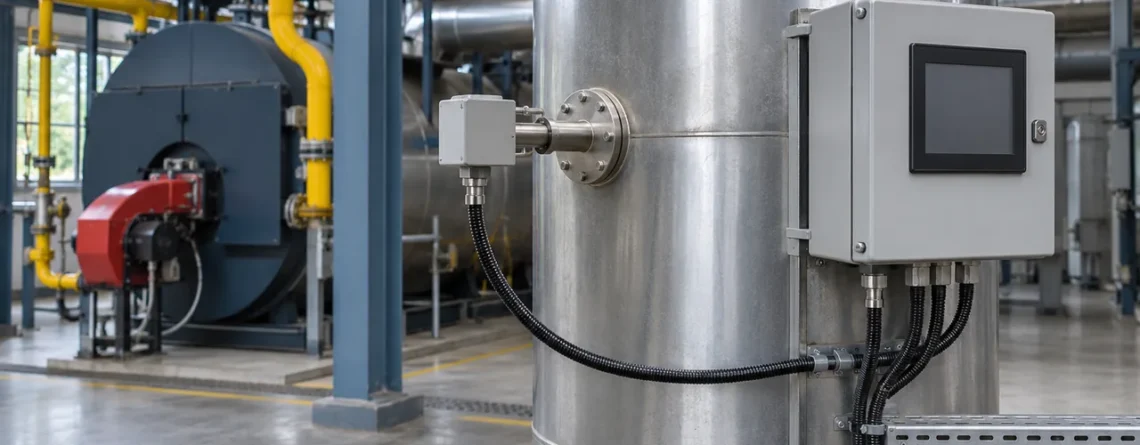
Rauchgassauerstoff ist der Sauerstoff im Verbrennungsabgas an einer definierten Probenahmestelle. Raumsauerstoff ist der Sauerstoff in der Luft an einem definierten Ort, an dem Menschen arbeiten oder sich aufhalten. Beide Instrumente können Prozent O₂ anzeigen. Der Abgaswert beschreibt einen Prozessstrom, häufig auf angegebener Nass- oder Trockenbasis. Der Raumwert beschreibt eine Probe der Umgebungsatmosphäre und kann bei geeignetem Instrument und Probenahmestrategie eine konkrete Arbeitsplatzentscheidung unterstützen.
Der Vergleich von Abgasanalysatoren erfordert die gleiche Probengrenze, Betriebsdauer und Konzentrationsbasis. Der Vergleich eines Raummonitors mit einem Abgasanalysator beantwortet im Allgemeinen eine andere Frage. Ein Instrument könnte erhitzte Abgase in einem Kanal messen und Raumluft als Referenz verwenden. Der andere probiert die Luft selbst. Selbst wenn das Referenzgas Umgebungsluft ist, ist die Messung einer Rauchgassonde immer noch die Abgase am Sensorelement.
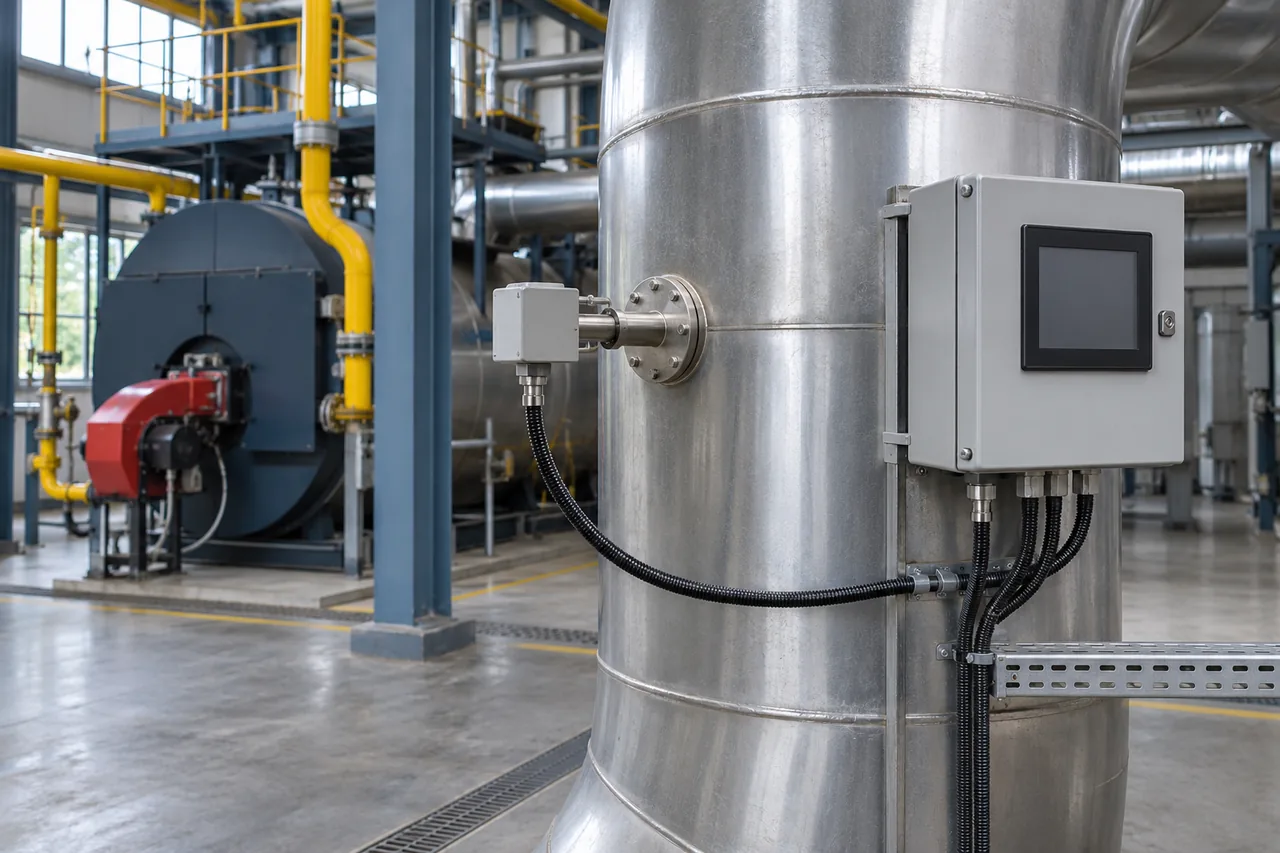
Ein Rauchabzug ist die Grenze der Prozessprobe, getrennt von der genutzten Luft.
Die beiden Sauerstoffwerte beziehen sich auf unterschiedliche Gaspopulationen
Der im Schornstein verbleibende Sauerstoff wird durch die Verbrennung, die Brennstoff- und Luftzufuhr sowie durch jegliche Verdünnung oder Leckage vor der Messstelle beeinflusst. Abgase können je nach Prozess Wasserdampf, Kohlendioxid, Restsauerstoff und andere Bestandteile enthalten. Seine Temperatur, sein Druck, seine Geschwindigkeit und seine Partikelbelastung können sich je nach Gerätezustand ändern. Ein Abgasmesswert an einem Punkt beschreibt, was der Analysator dort unter diesen Bedingungen gemessen hat. Ein Punkt vor einem Luftleck oder hinter einer Mischverbindung kann einen anderen Wert melden, selbst wenn beide Instrumente ordnungsgemäß funktionieren.
Raumsauerstoff beschreibt die Luft, die einen Umgebungsdetektor erreicht. Außenluftzufuhr, örtliche Verdrängung, Belüftungsmuster, Gehäusegeometrie und Arbeiterbewegungen können sich auf die Probe auswirken. Ein Fixpunkt charakterisiert seinen eigenen Standort im Zeitverlauf. Ein tragbares Instrument kann einer Person oder einem definierten Probenahmeplan folgen. Eine entfernte Pumpe und ein Schlauch fügen einen Transportschritt hinzu. Bei jeder Anordnung muss explizit angegeben werden, welche Luft wann entnommen wird.
| Vergleich | Rauchsauerstoff | Raumsauerstoff |
|---|---|---|
| Beispielgrenze | Heißes Gas in einem Kanal oder einer konditionierten Abgasprobe | Umgebungsluft an einem Detektor oder einer entfernten Probenahmestelle |
| Primäre Frage | Welcher Sauerstoffanteil ist unter den angegebenen Bedingungen in diesem Abgas vorhanden? | Welcher Sauerstoffanteil oder angegebene Sauerstoffgehalt ist nach der definierten Methode in dieser Atmosphäre vorhanden? |
| Gängige Konfigurationen | In-situ-Punktsonde, optischer Pfad oder extraktiver Analysator | Fest installierter Umgebungsdetektor oder tragbares, direkt ablesbares Instrument |
| Informationen, die die Interpretation verändern | Nass- oder Trockenbasis, Messort, Betriebslast, Probenahmeintegrität, Zeitausrichtung | Standort, Arbeitsaktivität, Luftstrom, Druckbedingungen, Gerätemodus und Gültigkeit |
| Relevante Überprüfung | Kalibrierung des Analysators und entsprechende Probenweg- oder behördliche Leistungsprüfungen | Vom Hersteller festgelegte Geräte- und Probenwegprüfungen sowie Arbeitsplatz- oder Festsystemverfahren |
Zwei Messwerte können synchronisiert werden, ohne dass sie vergleichbar werden. Ein Prozesssystem kann den Rauchsauerstoff alle paar Sekunden protokollieren, während ein Sicherheitssystem den Raumsauerstoff und den lokalen Alarmstatus auf einer unabhängigen Uhr aufzeichnet. Die Korrelation der Aufzeichnungen kann dabei helfen, herauszufinden, wann Ereignisse aufgetreten sind. Ein Anstieg oder Abfall des Abgaswertes allein kann nicht auf die Raumkonzentration oder deren Ursache schließen. Für diese Schlussfolgerung benötigen die Ermittler die Quelle, den Pfad und geeignete Umgebungswerte.
Wie ein Abgasanalysator seinen Sauerstoffwert ermittelt
In-situ-Zirkonoxidsonden
Eine Zirkonoxid-Konzentrationszelle vergleicht den Sauerstoffpartialdruck auf zwei Seiten eines erhitzten Keramikelements. Eine der Probe zugewandte Seite sieht das Prozessgas. Auf der Referenzseite herrscht eine bekannte, durch das Design definierte Sauerstoffumgebung. Aus der Spannung und der Elementtemperatur wird auf den Sauerstoffgehalt geschlossen. Die des Herstellers Beschreibung der Zirkonoxid-Technologie erklärt den Festelektrolyten, die katalytischen Elektroden und die Referenzseite.
Eine In-situ-Sonde platziert die Messung am Prozess, ohne die Hauptprobe durch eine lange externe Leitung zu transportieren. Dadurch können die durch ein Extraktionssystem verursachten Verzögerungen und der Umgang mit Wasser vermieden werden, während die Sondenbaugruppe Prozesstemperaturen, Verunreinigungen und Materialbeschränkungen ausgesetzt wird. Wenn Wasserdampf im Gas verbleibt und das Gerät den entnommenen Anteil anzeigt, erfolgt die Messung auf Nassbasis. Der Preferred Utilities ZP-Produktdokumentation identifiziert diese Grundlage für sein Modell. Andere Instrumente bieten möglicherweise andere Verarbeitungs- oder Anzeigeoptionen. Überprüfen Sie daher den ausgewählten Kanal und die Datenausgabe.
Heiße Zirkonoxidzellen können zu verfälschten Ergebnissen führen, wenn brennbare Stoffe im Erfassungsbereich reagieren. Eine kleine Menge an lokal verbrauchtem Sauerstoff verändert das, was die Zelle im Verhältnis zum einströmenden Gas sieht. Die tatsächliche Anwendbarkeit hängt vom Design und Muster ab. Überprüfen Sie die vom Hersteller zulässige Probenzusammensetzung, anstatt allgemein zu behaupten, dass eine Zirkonoxidsonde für alle Verbrennungsbedingungen geeignet ist. Auch referenzseitige Verstopfungen, Heizungsstörungen und Undichtigkeiten können den angezeigten Wert verändern oder ungültig machen. Ein Statuspunkt und ein Kalibrierungsprotokoll helfen dabei, eine Prozessänderung von einer Instrumentenänderung zu unterscheiden.
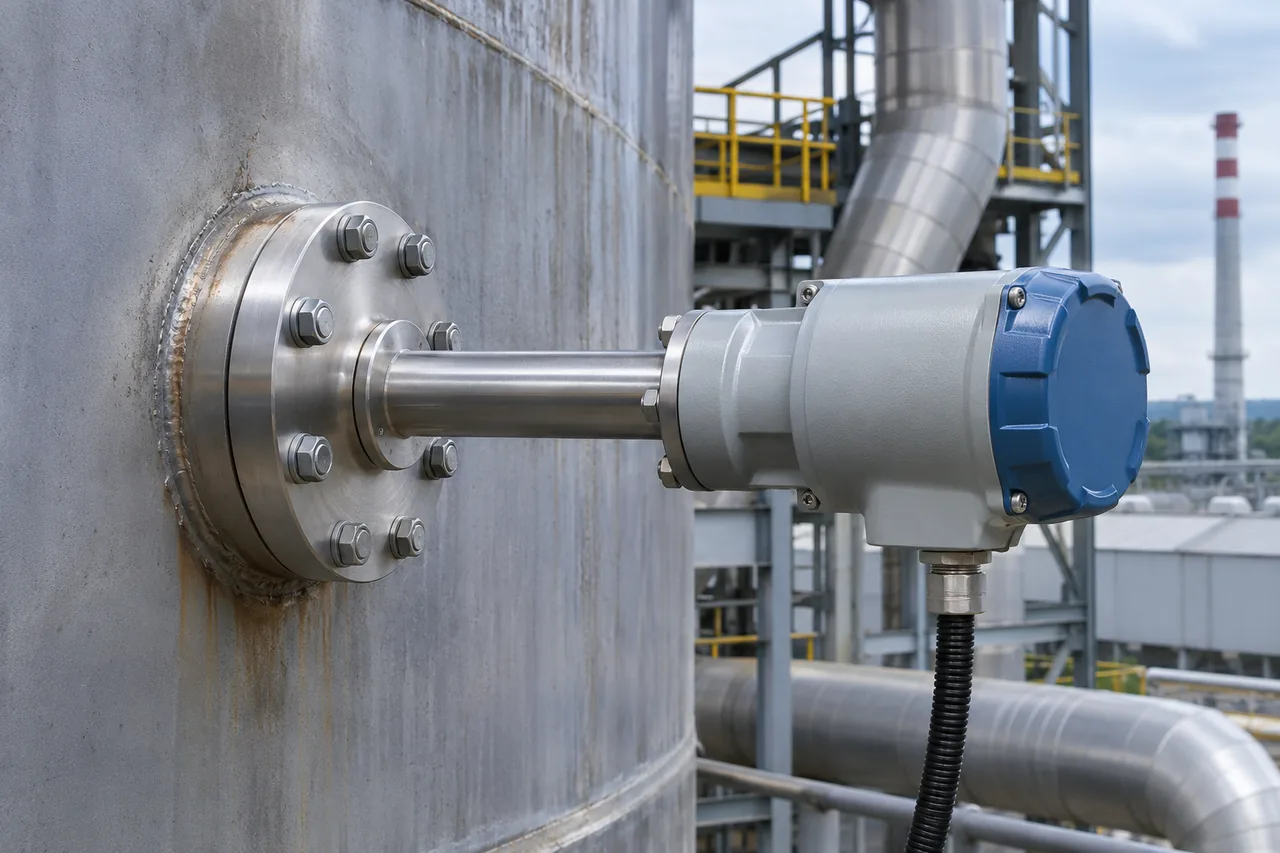
Bei einer In-situ-Messung wird das Gas an der Sonde oder dem Messpfad beobachtet.
Extraktive paramagnetische und andere Analysatorkonfigurationen
Ein Extraktionssystem saugt Gas von einem ausgewählten Punkt an und transportiert es zum Analysator. Sein Design kann eine beheizte Leitung, Partikelfiltration, eine Probenpumpe, einen Kühler oder Trockner, Druck- oder Durchflussregelung und einen Abfluss umfassen. Das Vorhandensein und die Position dieser Komponenten bestimmen, was den Detektor erreicht. Bei Trockenmessungen kann Wasser gezielt entfernt werden. Ein beheiztes System kann stattdessen die Feuchtigkeit während der Messung bewahren, wenn der Analysator und die Methode dies unterstützen. Die Analysetechnologie allein bestimmt nicht die Grundlage des Ergebnisses.
A paramagnetic analyzer uses oxygen’s attraction to a magnetic field. The exact mechanism differs by design. Sample conditioning, pressure, flow, vibration, background gases and contamination can affect specific instruments. A manufacturer's published suitability depends on the gas properties and the installed configuration. Other extractive analyzers may use an electrochemical cell or a different oxygen measurement technology. A portable service analyzer is an example of a specialized extractive arrangement when a probe, tubing and pump take the sample to the instrument.
Ein abstimmbarer Diodenlaseranalysator misst die Absorption entlang eines optischen Pfads mithilfe einer Sauerstoffabsorptionsfunktion, sofern das Design dies unterstützt. Ein Weg durch einen Kanal stellt das Gas entlang dieses Weges dar. Eine Punktsonde repräsentiert einen kleineren Bereich. Ein Pfadmittelwert und eine Punktmessung können über einen geschichteten Fluss hinweg unterschiedlich sein. Lichtdämpfung, optische Ausrichtung, Temperatur- und Druckhandhabung sind für das genaue Instrument relevant. Vergleich der Sauerstoffanalysator-Technologie von Yokogawa beschreibt Zirkonoxid-, Magnet- und Laseranordnungen und ihre Anwendungsüberlegungen.
| Anordnung | Was zu etablieren ist | Was den Vergleich erschweren kann |
|---|---|---|
| In-situ-Zirkonoxidsonde | Tatsächlicher Einschub, Referenzzustand, Prozessgrenzen, gemeldete Basis und Fehlerstatus | Lokale Gradienten, Referenzfehler, brennbare Störungen oder Sondenverschmutzung |
| Extractive analyzer | Sample point, leak integrity, flow, conditioning and analyzer reporting basis | Transport delay, unwanted condensation, ambient air ingress or changed water content |
| In-situ optical path | Beam path, optical access, alignment and compensation | Path average versus local point, changing gas or optical conditions |
| Portable combustion analyzer | Correct mode, probe location, sample handling and appliance conditions | Different port, service test duration, probe leakage or an output that is calculated rather than directly measured |
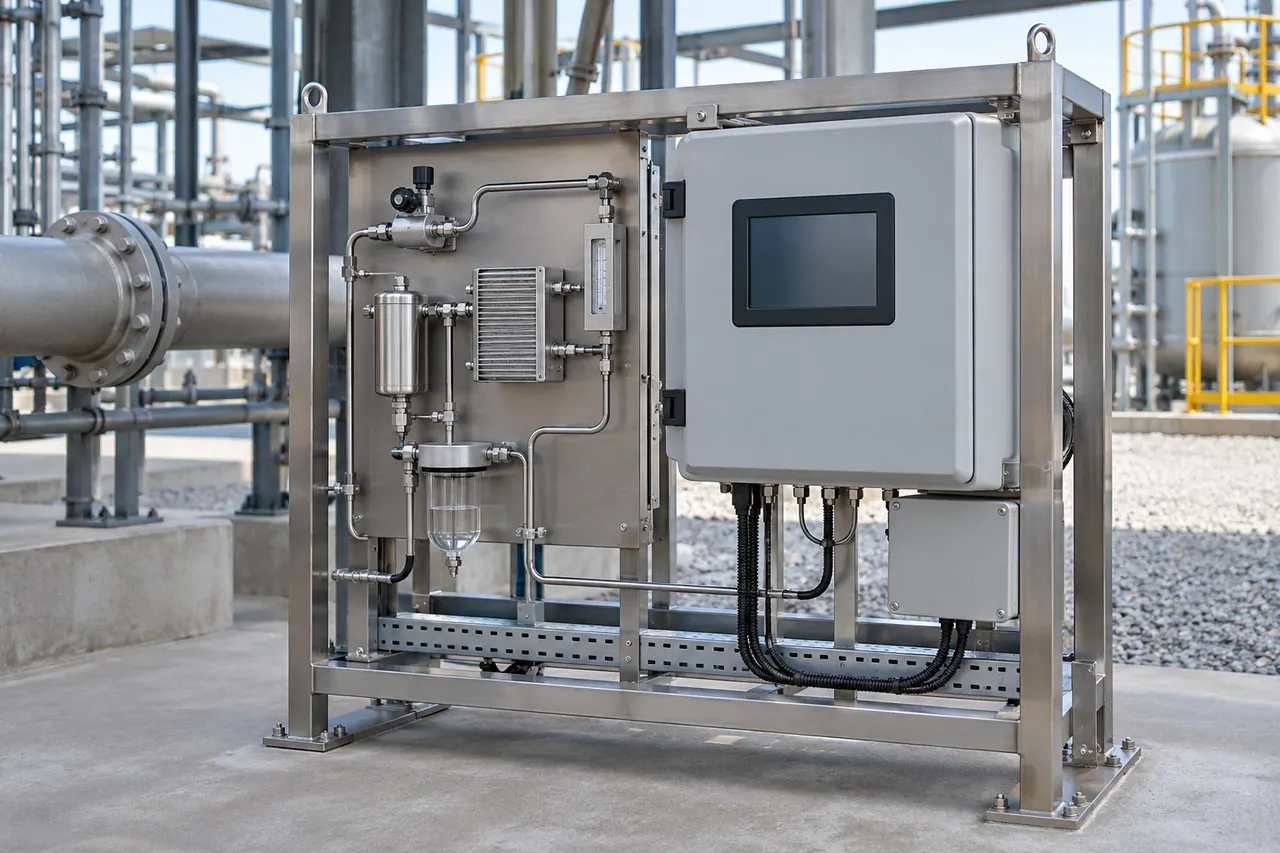
An extractive path can condition gas before the detector sees it.
Why an upstream port and a downstream analyzer can disagree
Imagine a fixed probe upstream of a dilution junction and a portable instrument at a downstream service opening. Some external air enters between the ports during the observation. The downstream value can move toward the oxygen fraction of that external air. The upstream and downstream results may be correct for their own locations. Converting both to the same moisture basis cannot remove a real difference in gas composition. Check the piping and duct drawings, actual port positions and any nearby branches before using the two results to evaluate instrument error.
An extractive analyzer adds another possible explanation. If its sample line or fitting admits surrounding air under suction, the analyzer may see a diluted sample even when both probes are nominally in the same section. The right comparison starts with the design or test procedure, where qualified personnel determine how to evaluate sample integrity. A higher oxygen reading alone cannot distinguish duct dilution from a sample-system leak or true process change. Preserve other readings and system status so those possibilities can be evaluated.
Wet and dry basis can make the same sample look different
Eine Konzentration ist ein Bruchteil des Gasgemisches. Bei einem Ergebnis auf Nassbasis wird das gesamte Gasgemisch, einschließlich Wasserdampf, verwendet. Bei einem Ergebnis auf Trockenbasis wird die Mischung verwendet, nachdem Wasser aus dem Nenner ausgeschlossen wurde. Wenn nur Wasser ausgeschlossen wird, wird die gleiche Sauerstoffmenge durch eine kleinere Summe dividiert, sodass der gemeldete Trockenanteil immer dann größer ist als der Nassanteil, wenn der Wasseranteil positiv ist.
Let x be the wet oxygen mole fraction and w the wet water vapor mole fraction in the same sample. The corresponding dry oxygen mole fraction is x divided by (1 − w). Use fractions consistently. A water content of 10% corresponds to w = 0.10. Converting back to wet basis multiplies the dry fraction by (1 − w). When a specific measurement method defines its own calculation, correction or reporting conventions, use those definitions.
Hypothetical same-sample comparison
Suppose a gas mixture contains 3.60% O₂ on a wet basis and 10.0% water vapor by mole on the same basis. Removing the water leaves 90.0% of the original gas amount for the dry denominator. The resulting oxygen concentration is 3.60% divided by 0.900, or 4.00% dry O₂. The two values differ by 0.40 percentage points and describe the same original mixture under the assumptions.
| Hypothetical quantity | Gemeldeter Wert |
|---|---|
| Wet O₂ fraction | 3.60% |
| Wet water vapor fraction | 10.0% |
| Fraction remaining after water is excluded | 90.0% |
| Equivalent dry O₂ fraction | 4.00% |
| Difference between reported values | 0.40 percentage points |
The example is arithmetic and supplies no operating target for a boiler. To apply a conversion to real data, establish whether moisture was measured or otherwise determined under the applicable method, whether it represents the same gas and time, and whether the oxygen display was already converted. A cold sample trap does not automatically prove that a published number is on the desired basis. A dry-basis instrument can have residual water effects or a manufacturer-defined condition that must be accounted for. Follow the instrument and method definitions.
Air-free or reference-oxygen results answer another question
A report may also correct a pollutant concentration to a reference oxygen basis. Such a correction uses oxygen to standardize reporting under a defined procedure. It is different from removing water from the denominator, and it is different from reporting the actual oxygen in the gas. A comparison of two CO results, for example, needs the same definitions for moisture and any oxygen correction. Keep the directly measured value, oxygen reading, applicable basis and reported result available together when the procedure requires them.
EPA Method 3A veranschaulicht diese Messgrenzen. Es handelt sich um eine Instrumentenmethode für Sauerstoff und Kohlendioxid in Emissionen aus stationären Quellen, wenn dies durch die geltenden US-Vorschriften oder -Genehmigungen vorgeschrieben ist. Es bezieht sich auf Leistungs- und Probenahmebestimmungen, auch wenn Trockengase oder Systeme auf Trockenbasis unterschiedliche Probenleitungsanordnungen verwenden können. Die Auswahl einer Regulierungsmethode erfolgt durch die eigentliche Messpflicht. Ein Kesselwartungsmesswert, ein Prozesstrend und ein Emissionsergebnis haben jeweils ihren eigenen Zweck und ihre eigenen Nachweisanforderungen.
Zur zu beurteilenden Arbeitsplatzatmosphäre gehört der Raumsauerstoff
Ambient oxygen measurement may be relevant where the hazard assessment identifies displacement, enrichment or oxygen consumption. A worker entering a restricted space and an operator viewing a fixed room transmitter have different coverage. A fixed monitor measures the gas at its inlet. A portable pumped unit samples at its probe and adds transport delay and possible line restrictions. A diffusion unit measures gas arriving at the instrument. The selected arrangement must be suited to the task and used under the applicable workplace procedure.
Atmospheric pressure matters to certain technologies and to human exposure. Some ambient oxygen sensing elements respond to oxygen partial pressure and the instrument’s behavior depends on its design and compensation. A device’s displayed oxygen percentage and its environmental limits should be interpreted using its instructions and the relevant safety program. Elevation and pressure changes can affect the interpretation even when a numerical concentration comparison looks straightforward. A flue analyzer’s partial-pressure principle is therefore useful for understanding instruments, while the process reading has no direct role in declaring an ambient atmosphere suitable.
In US federal general industry, OSHA 29 CFR 1910.146 defines oxygen deficiency below 19.5% by volume and oxygen enrichment above 23.5% by volume for its permit-required confined-space framework. That scope matters. These are definitions in a specific regulation, with employer evaluation and entry provisions that depend on the work and space. They do not serve as universal building detector setpoints or authorizations to enter. Other countries, states and industry contexts can have their own governing requirements.
A reading near the ordinary oxygen concentration cannot establish the absence of toxic or flammable gases. An oxygen channel answers a question about oxygen under its measurement conditions. The site’s hazard assessment identifies which other channels and decisions are relevant. For example, a workplace can need carbon monoxide information even when oxygen changes very little. The operator’s trend or work record should retain the status of each channel rather than compressing them into an unexplained overall reading.
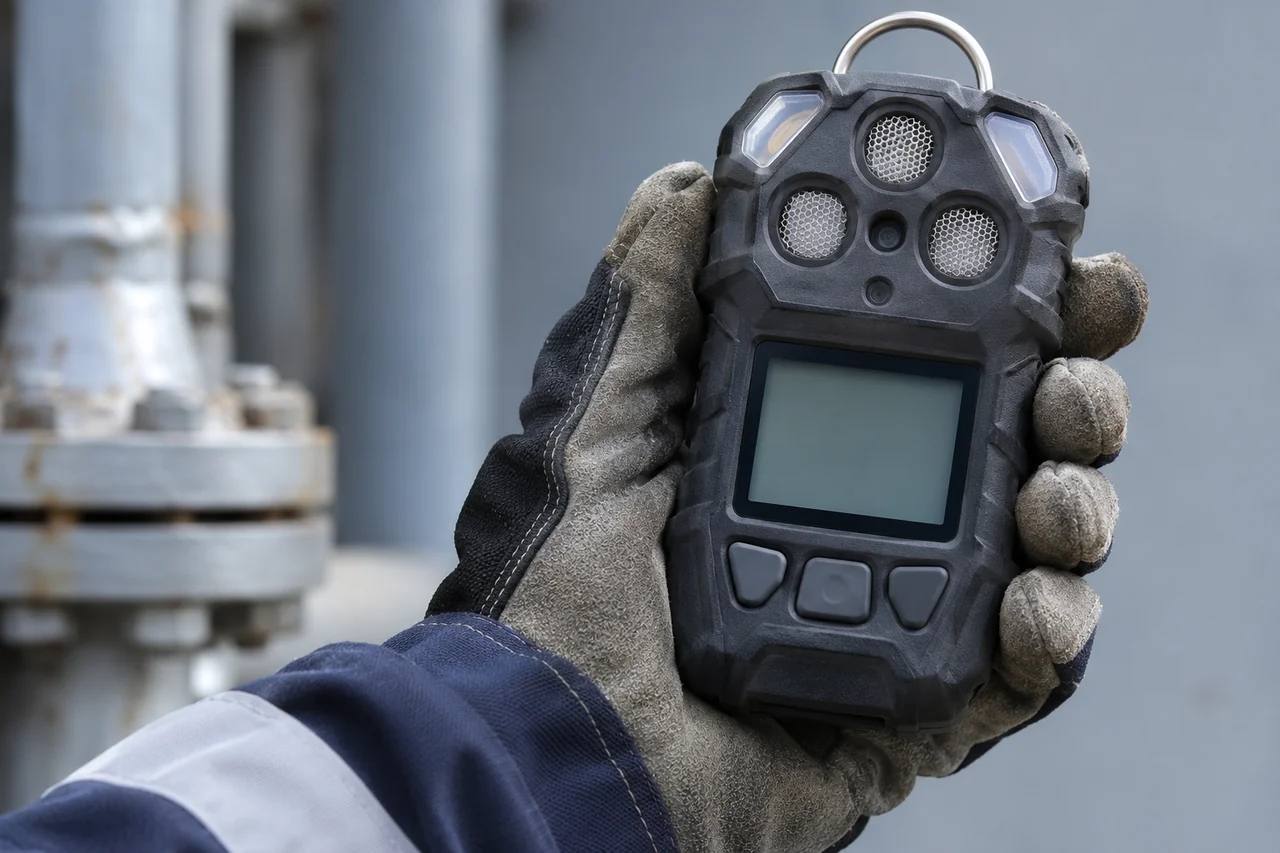
An ambient monitor samples air at its own inlet or designated probe.
Verify the path that produced the value
A flue sample can be validated at several boundaries. An analyzer check examines the sensing and indication under defined test conditions. A system check can include the probe, transport and conditioning path. A method can require additional evidence about sampling location, analyzer response or interference. Describe which part of the path the check included. If calibration gas reaches an analyzer downstream of the sample conditioning, that exercise cannot by itself establish the integrity of a remote probe and line.
For an ambient direct-reading instrument, a response check and a calibration check answer different questions. A functional check can show that the instrument responds and its warning works as intended under the test. A calibration check assesses indication against a suitable known concentration within the prescribed tolerance. OSHA’s direct-reading portable monitor bulletin explains these distinctions and the role of manufacturer procedures. The bump-test explanation provides related background. Fixed instruments have their own installed checks and project requirements. Pumped configurations also depend on sample-path condition and time delay.
When comparing records, bring the equipment identity and instrument state into the comparison. A reading after maintenance can be affected by a changed range, dry-basis conversion, probe replacement or location change. A historian may preserve an old point name even when the engineering units or signal scaling have changed. A valid calibration and a correct trend label are both necessary for reliable interpretation.
| Eintrag aufzeichnen | Flue result | Ambient result |
|---|---|---|
| Measurement identity | Equipment tag, port or path, analyzer and intended method | Space or person, sample point and monitor identity |
| Time and operating state | Collection interval, process load, equipment transitions and sample delay | Work activity, ventilation, sample delay and observation interval |
| Data definition | O₂ unit, moisture basis, directly measured or derived and output configuration | O₂ unit, instrument mode, environmental conditions and validity |
| Sample evidence | Line or probe integrity, conditioning, calibration and applicable system check | Inlet or probe, flow if applicable, instrument check and task procedure |
| Anordnung | Accept, hold or review for the stated process or reporting purpose | Interpret under the responsible workplace or fixed monitoring procedure |
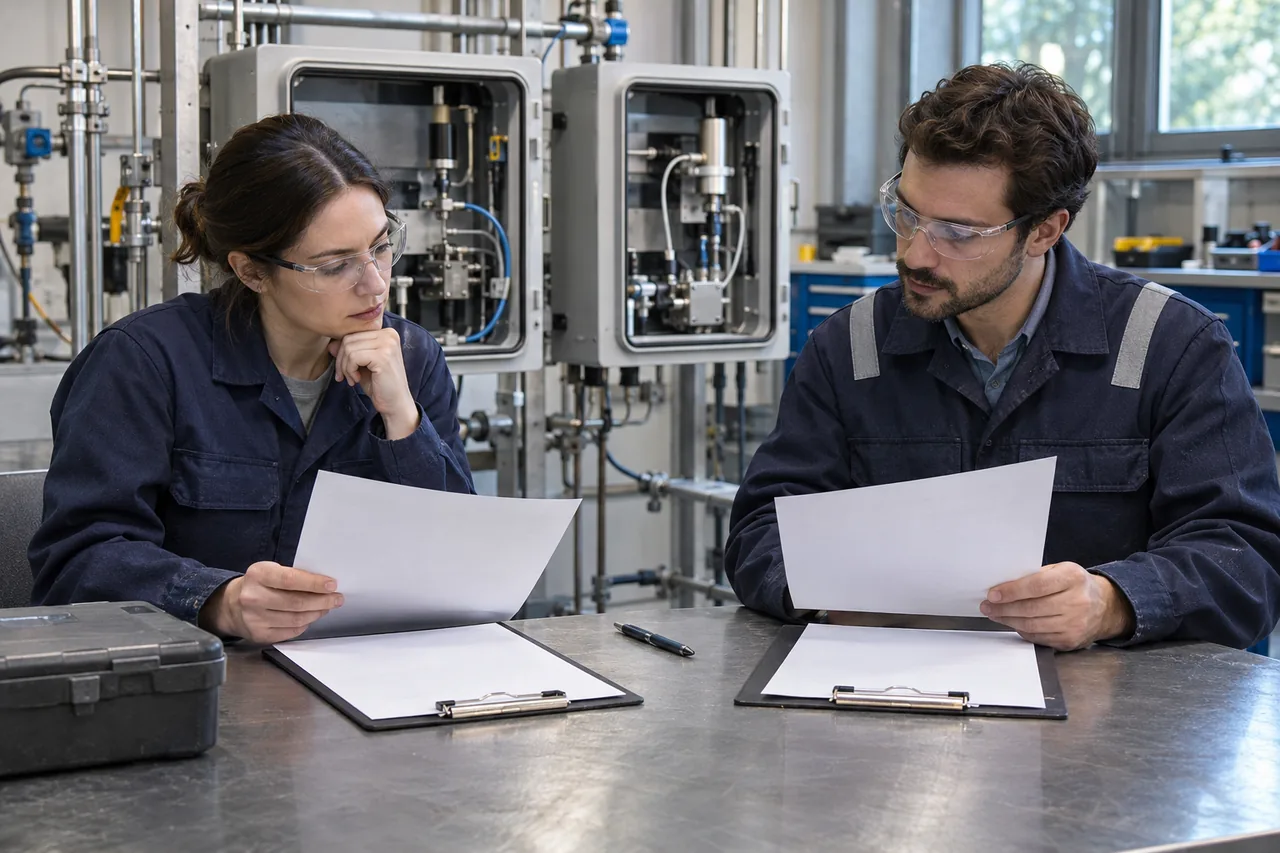
A useful review preserves instrument, sample and reporting identity.
Hypothetical review of three traces
A plant operator reviews a fixed flue trend, a portable combustion service result and a room oxygen trend. The fixed probe reports a wet result. The portable analyzer reports a dry result at a different port. The ambient trend is recorded near a service entrance. Before comparing the two flue values, establish whether their sampling times and equipment loads match. Then check sample location and conditioning and see whether a reliable moisture conversion is available. A residual difference can still reflect a gradient or a transport problem.
The ambient trend remains a separate record. If the building team is investigating a workplace event, the entrance monitor’s status and coverage are useful facts. They cannot establish the atmosphere at another location by themselves. Record any applicable worker or area observations separately, identify how the instruments were verified and avoid overwriting the original times or units while combining reports.
If the portable value has no stated basis, keep its measurement definition unresolved. A vendor description that the instrument can report dry results does not identify the mode used on that job. The original record, configuration or qualified testing under the defined method can close that gap. This is often more informative than applying a generic assumed moisture value to force agreement.
Read the timeline as part of the sample path
Two instruments can sample comparable gas and report on different clocks. In-situ sensing, extractive transport, detector filtering and historian averaging each contribute a distinct time scale. A service technician might write down a stabilized display after waiting under the appliance procedure. The plant historian might store an average over the preceding reporting interval. An extractive monitor might show a change after the duct process has already moved on. If the comparison concerns a transition, ask what instant or interval each value actually represents and where timestamps are assigned.
In a hypothetical trend review, a process point changes at the duct while an extractive system has a documented 18-second transport time before any analyzer or historian delay. Suppose a recorder labels a value at the end of its collection window. The duct sample underlying that label is older than the display time by at least the transport contribution, with any averaging and instrument response still to be accounted for. Subtracting a guessed constant from an averaged value does not reconstruct the original transient. Compare stable intervals where permitted by the investigation, or preserve sufficient time-resolved information and approved delay evidence to compare the transient correctly.
A room safety record may have yet another logging path. A local instrument can process an event before a supervisory system polls it. A historian may suppress repeated values or skip missing records. Preserve the local event time, alarm state and validity if those records are available. For a pumped ambient sample, the relevant delay starts where the sample entered the line. The interval is an instrument and procedure issue, independent of the flue analyzer’s delay.
Consider the limits of a clean-looking overlay. Curves can appear to line up because both respond to a broad change in building operation even when they observe different gas populations. A time shift that visually aligns the curves does not identify a common source. Verify point location, equipment and ventilation states and the actual sample path before drawing a connection. The central question remains whether the recorded evidence supports the process or workplace decision at hand.
Choose a result that can be reproduced by another reviewer
A reviewer should be able to identify the instrument, retrieve the point configuration and understand why the comparison was made. For a flue result, record whether oxygen was measured directly or computed from another reading, and whether the value was observed live, copied from a report or taken from a trend. Preserve the moisture and correction information that went into any conversion. For an ambient result, keep the intended work or area boundary, the method and the device’s operating status alongside the concentration. When a source leaves the basis or sample location unknown, record the gap directly. It may be possible to use the value as supporting context while holding it out of a numerical agreement decision.
Häufig gestellte Fragen
Is in-situ oxygen always wet and extractive oxygen always dry?
A probe that sees the wet gas and reports the as-sampled fraction gives a wet-basis value. An extractive instrument can remove or preserve moisture, depending on its design. Either system can use a derived output if configured and supported. Verify the reporting basis from the exact instrument and method.
Can room air be used as a calibration or reference gas?
Some instruments use ambient air as a reference or provide a manufacturer-defined fresh-air procedure. A regulatory method may specify when a suitable air source can serve a calibration purpose. The actual use depends on the analyzer design and applicable procedure. Reference gas also has a different role from the flue sample being measured.
Why did the flue value change when the room reading did not?
Process gas composition and dilution can change with equipment conditions while the monitored room sample stays similar. Compare the instrument locations, operating records and status. An investigation of a possible ambient hazard needs evidence from the relevant area or workplace sample.
Does a higher dry-basis value mean the flue contains more oxygen?
For the same original gas, a dry-basis percentage can be higher solely because water was removed from the denominator. A statement about how much oxygen is flowing would need gas flow and a defined mass or molar basis as well as concentration.
How should a chart label the two traces?
Use distinct point names such as flue O₂ at the named equipment and port, and ambient O₂ at the named room point. Include percent, wet or dry basis for the flue result, timestamps and validity where the application needs them. Keep separate status and history when combining displays.








Hinterlasse eine Antwort