
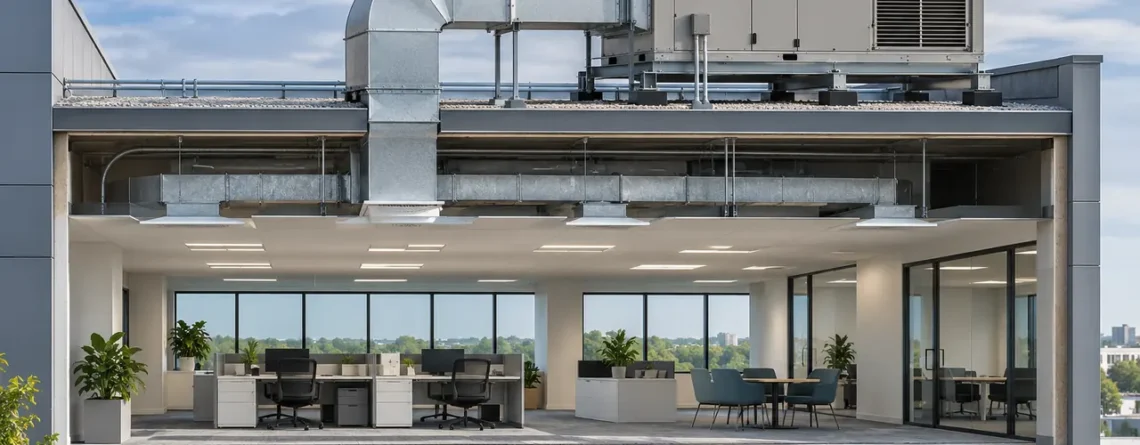
La detección de gas alrededor de un sistema de aire acondicionado puede satisfacer varios requisitos diferentes. Un sensor de CO₂ en el espacio ocupado puede informar al control de la ventilación. Un acondicionador de aire listado puede necesitar un sistema integral de detección de refrigerante para iniciar la mitigación del equipo. Una sala de máquinas de refrigeración puede tener requisitos separados de detección, alarma y ventilación de emergencia. Una evaluación del lugar de trabajo también puede requerir el seguimiento de una tarea o ubicación. Un edificio puede tener todas estas funciones. Cada uno tiene su propia muestra, desencadenante, autoridad y responsable.
Comience por identificar el equipo, el refrigerante, la carga y el diseño, junto con los espacios y actividades laborales a los que sirve el sistema. Establecer el código adoptado y las ediciones referenciadas. Luego asigne cada acción requerida al controlador, dispositivo y persona responsable de la misma. La pregunta "¿este sistema HVAC necesita un detector de gas?" La respuesta se encuentra en ese mapa, que muestra dónde se requiere la detección y qué se debe lograr.
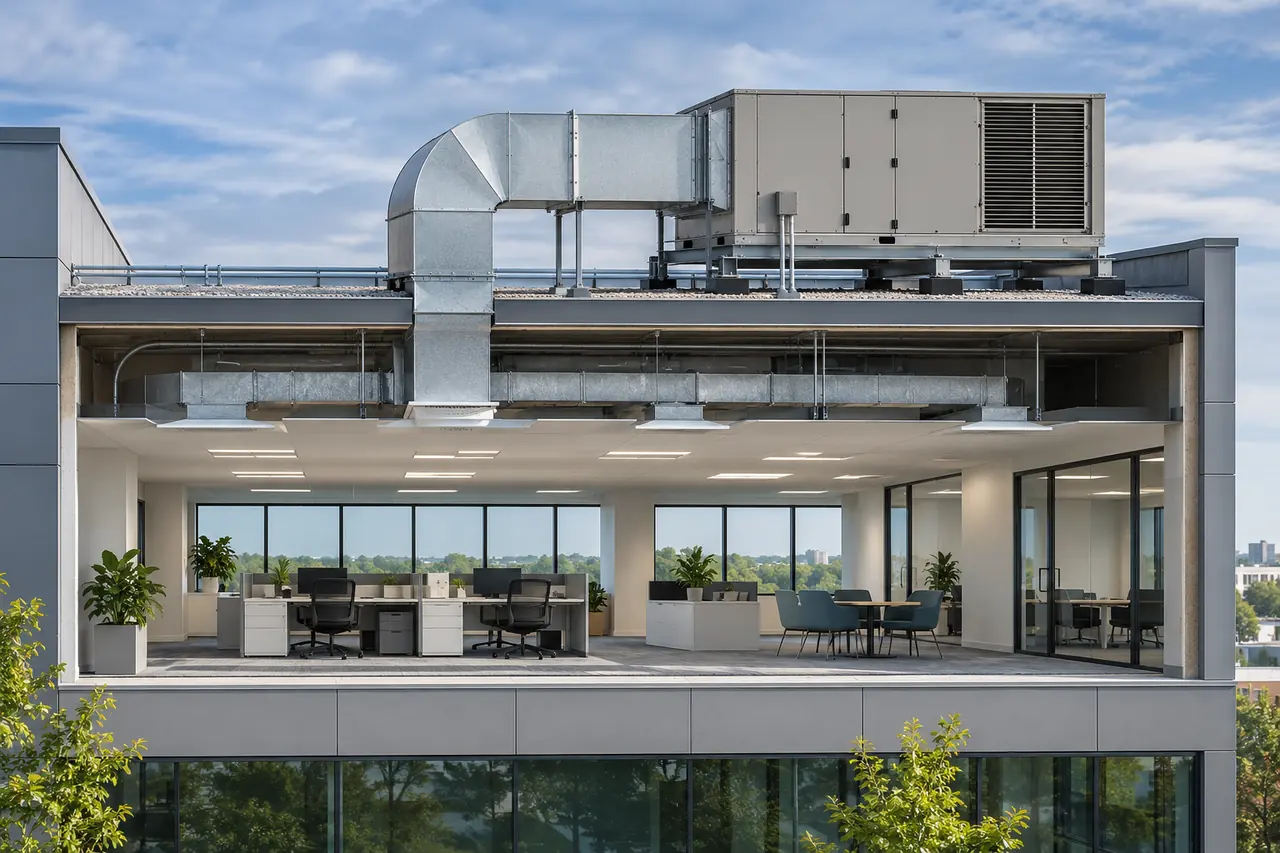
Un edificio puede tener varios límites de respuesta y medición de gas HVAC.
Comience con el equipo y los límites del espacio.
Una medición de gas en el conducto de retorno puede respaldar una secuencia de control en la zona de operaciones. Un detector dentro de un fan coil puede respaldar una respuesta a una liberación de refrigerante dentro de su gabinete. Un detector de habitación puede responder a una liberación que llega al aire fuera de ese gabinete. El monitor de un trabajador toma muestras de la atmósfera en el lugar relevante para el trabajo. En cada caso, el límite físico del muestreo y la acción importan más que el hecho de que el sistema tenga un sensor de gas.
Registre el equipo y las salas reales en lugar de utilizar únicamente la etiqueta del proyecto. Un proyecto de aire acondicionado puede incluir unidades de techo, unidades de tratamiento de aire interior, ramales de tuberías, zonas ocupadas y salas de máquinas dedicadas. Un circuito frigorífico puede servir a varios espacios. Otra unidad puede estar completamente afuera. Los equipos de combustión, los gases de escape de los vehículos u otros procesos pueden afectar la calidad del aire independientemente del sistema de refrigerante. Los dibujos deben poner estos límites y relaciones a disposición del equipo de revisión.
| Trabajo de medición | ¿Qué se muestra? | ¿Qué puede gobernarlo? | Responsabilidad típica de asignar |
|---|---|---|---|
| Control de ventilación o IAQ en espacios ocupados | Aire ambiente o de conductos en una zona de ventilación definida | Reglas de ventilación y energía adoptadas, requisitos del propietario y secuencia. | Diseñador de la zona de operaciones y contratista de controles de edificios |
| Detección integral de refrigerante | Aire en puntos definidos dentro o asociados con el equipo listado | Certificación del equipo, instrucciones del fabricante y requisitos de instalación adoptados. | Proveedor de equipos y contratista instalador. |
| Detección de sala de máquinas de refrigeración | Aire ambiente en los puntos de detección fijos previstos | Se adoptaron reglas mecánicas y contra incendios y se hizo referencia a la norma de seguridad de refrigeración. | Diseñador de refrigeración, proveedor de sistemas de detección y oficios mecánicos o eléctricos. |
| Monitoreo de gases ocupacional | Muestra de área o trabajador para una tarea definida | Evaluación de riesgos del empleador y obligaciones laborales aplicables | Empleador, personal de seguridad y supervisor de trabajo asignado |
| Combustión o fuente adyacente | Muestra de humos, ambiente o aspiración definida según el trabajo | Gas combustible, electrodomésticos, requisitos mecánicos, del lugar de trabajo u otros requisitos aplicables. | Propietario del equipo relevante o de seguridad del sitio |
Las partes pueden variar según el contrato. El resultado importante es un propietario para la decisión y un propietario para cada interfaz. Si el proveedor del equipo proporciona un contacto, identifique quién lo cablea, quién define su estado y quién prueba la respuesta de recepción. Una señal sin propietario receptor puede parecer completa en un plano de equipo mientras la acción del edificio aún no está definida.
El CO₂ ambiental puede influir en una decisión sobre ventilación
El dióxido de carbono interior de los ocupantes puede proporcionar información sobre la ventilación cuando se interpreta en función de la ocupación, la concentración exterior, la mezcla y las condiciones de funcionamiento. Algunas disposiciones de ventilación controladas por demanda utilizan CO₂ como insumo. Los requisitos de ventilación y energía aplicables y el diseño aprobado determinan las condiciones requeridas y la función del sensor. Documento de posición de ASHRAE para 2025 sobre el dióxido de carbono en interiores explica la información limitada que proporciona una concentración de CO₂ sobre la calidad general del aire interior.
Una medición de CO₂ en interiores no caracteriza todos los contaminantes. Las partículas, los compuestos volátiles, las condiciones relacionadas con la humedad y los productos de combustión pueden tener diferentes fuentes y patrones de tiempo. Una habitación con baja ocupación puede tener una señal de CO₂ relacionada con la baja ocupación y al mismo tiempo necesitar una investigación de un contaminante separado. Seleccionar la medida según la pregunta y la estrategia de ventilación.
Revisar la ubicación y definición de muestra para el control de la zona aeronáutica. Un sensor en una habitación mide el aire en ese punto. Un conducto de retorno que da servicio a varias habitaciones puede combinar aire de diferentes zonas. Una referencia exterior, cuando la lógica de control lo requiere, tiene sus propias consideraciones de ubicación y validez. Si el punto deja de ser válido, el diseño de ventilación aprobado debe indicar qué estado se aplica y cómo el personal de operaciones puede saber que la medición no está disponible.
El mismo químico puede aparecer en un trabajo diferente
Una instalación que utiliza R-744 utiliza CO₂ como refrigerante. La función de CO₂ en espacio ocupado y la función de detección de liberación de refrigerante todavía tienen especificaciones separadas. Un transmisor IAQ destinado a un rango de control de ventilación puede no cubrir el rango de respuesta a peligros, el tiempo de respuesta, la alarma o el listado para la aplicación de liberación. Un detector de sala de máquinas puede tener un alcance, ubicación e interfaz diferentes. El Guía de rango del sensor de CO₂ Explica cómo el rango de trabajo y el punto de decisión afectan la selección del instrumento. Un valor de habitación elevado también puede tener más de una fuente posible. El diseño debe vincular cada punto a un uso definido e investigar los eventos según el procedimiento aplicable.
Las etiquetas en los dibujos de los controles deben hacer visibles estas diferencias. “CO₂ para ventilación en sala de conferencias” y “detector de sala de máquinas R-744” brindan al operador un mejor contexto que dos puntos llamados “ppm de CO₂”. Documente qué canal es autorizado para cada respuesta y conserve la configuración exacta del detector, las unidades y el comportamiento en estado no válido.

Un punto de espacio ocupado puede soportar la secuencia de control de ventilación definida.
Los equipos listados pueden tener su propia detección y mitigación.
Algunos acondicionadores de aire y bombas de calor utilizan un sistema integral de detección de refrigerante, a menudo llamado RDS. El detector, la lógica de control y la mitigación forman parte de una disposición de equipos evaluados según la certificación de producto aplicable. Guía de inspección de equipos de UL Solutions explica por qué las marcas exactas del equipo y las instrucciones de instalación determinan si se requiere un RDS integral y cómo se instala. Describe UL 60335-2-40 para equipos cubiertos y señala que los requisitos pueden depender del modelo y la instalación.
The submitted equipment and installation orientation matter. An air handler may be configurable in several orientations, with different approved detector positions. Piping arrangement, charge, cabinet construction and the use of accessories or zoning components can also affect the reviewed installation. Check the complete model designation and the instructions covering the actual arrangement. A brochure stating that a detector is included does not document the approved configuration by itself.
Las instrucciones del equipo pueden especificar respuestas como la operación del ventilador de circulación u otra mitigación local. Algunas disposiciones requieren coordinación con un controlador o dispositivo externo. Utilice la documentación del equipo para establecer qué acciones son integrales, qué interfaces están disponibles y qué acciones se requieren en otros lugares según el diseño aprobado. Si un dispositivo solo envía una señal de monitoreo, no se debe acreditar al sistema receptor una mitigación automática sin una ruta de control documentada, aceptada y verificada.
For a building controls review, identify the difference between an internal equipment event and an externally visible status. An OEM controller can react locally before a gateway updates. A BAS display can receive a contact or network point that conveys only some of the internal states. If the manufacturer’s approved interface provides a leak or fault distinction, preserve it where the project requires it. If the interface lacks that distinction, document the limitation and resolve how the required outcomes and visibility will be achieved.
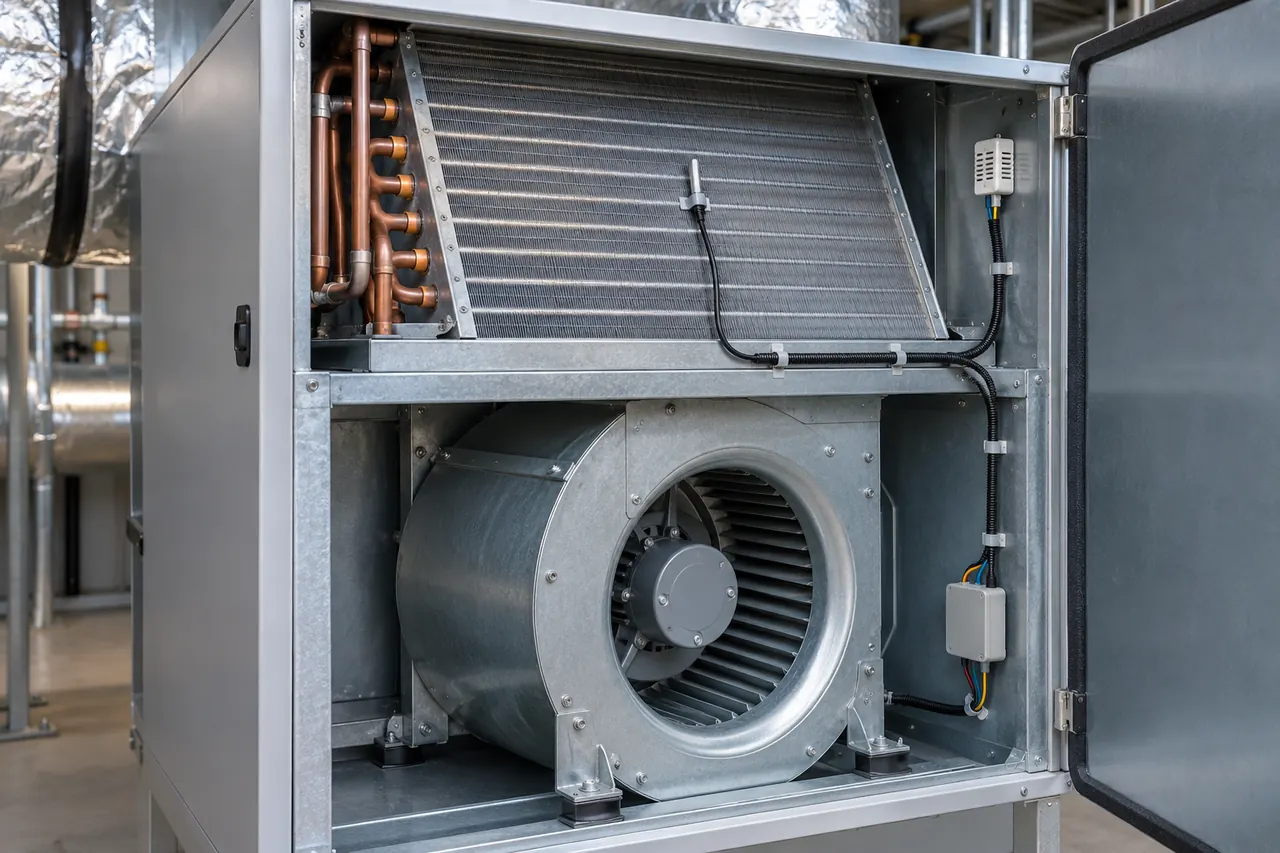
Equipment-integral detection follows the exact listed configuration.
What should the equipment submittal identify?
- El modelo completo del equipo y sus opciones, designación del refrigerante, orientación aprobada e instrucciones de instalación relevantes.
- El listado de equipos o alcance de certificación y la configuración integral exacta de detección y mitigación.
- Las acciones locales, su fuente de control y las condiciones relevantes para la recuperación.
- Los terminales externos u objetos de red documentados, sus estados válidos y de falla y cualquier límite de cableado.
- Las interfaces que dependen de otros oficios, con evidencia del resultado instalado.
- Los registros requeridos cuando cambian el dispositivo, la configuración del equipo o las instrucciones.
Un detector instalado de fábrica todavía tiene un contexto de instalación. Un cambio de campo en la orientación o zonificación puede afectar la forma en que se debe ensamblar el arreglo listado. Un sensor de reemplazo debe manejarse de acuerdo con la documentación del equipo aprobado y los requisitos aplicables del proyecto. Un voltaje de señal o conector compatible no es evidencia suficiente de compatibilidad para una función de seguridad requerida.
La detección de salas de máquinas es una función independiente del edificio
Una sala de máquinas de refrigeración dedicada puede tener su propia detección, advertencia audible o visible, ventilación y otras respuestas requeridas según las disposiciones adoptadas. Los requisitos dependen de la jurisdicción, las normas a las que se hace referencia, el tipo de sistema, el refrigerante y las condiciones del sitio. El Documento de cambios del I-Code A2L 2024 de ICC illustrates how mechanical and fire provisions can address related parts of a machinery-room design. It is a changes reference. Determine the actual adopted text, any amendments and the edition of the referenced standard before applying its provisions.
ASHRAE lists its published Standard 15-2024 among its refrigeration safety resources. Locate the edition of the refrigeration safety standard referenced by the adopted requirements and check any special system scope. Equipment standards, installation standards and occupational requirements are different layers. A newer reference on a website and the edition legally adopted for a project can differ.
Map the intended sample and response by room. Identify the target refrigerant or other gas, coverage basis, detector listing if required, controller, local warnings, remote indications and ventilation interface. The room detector should appear on a plan tied to the documented release and airflow assumptions. The equipment listing may address an internal leak mitigation without providing the required room-level detection. A fixed room detector in turn does not establish that an integral RDS requirement has been met.
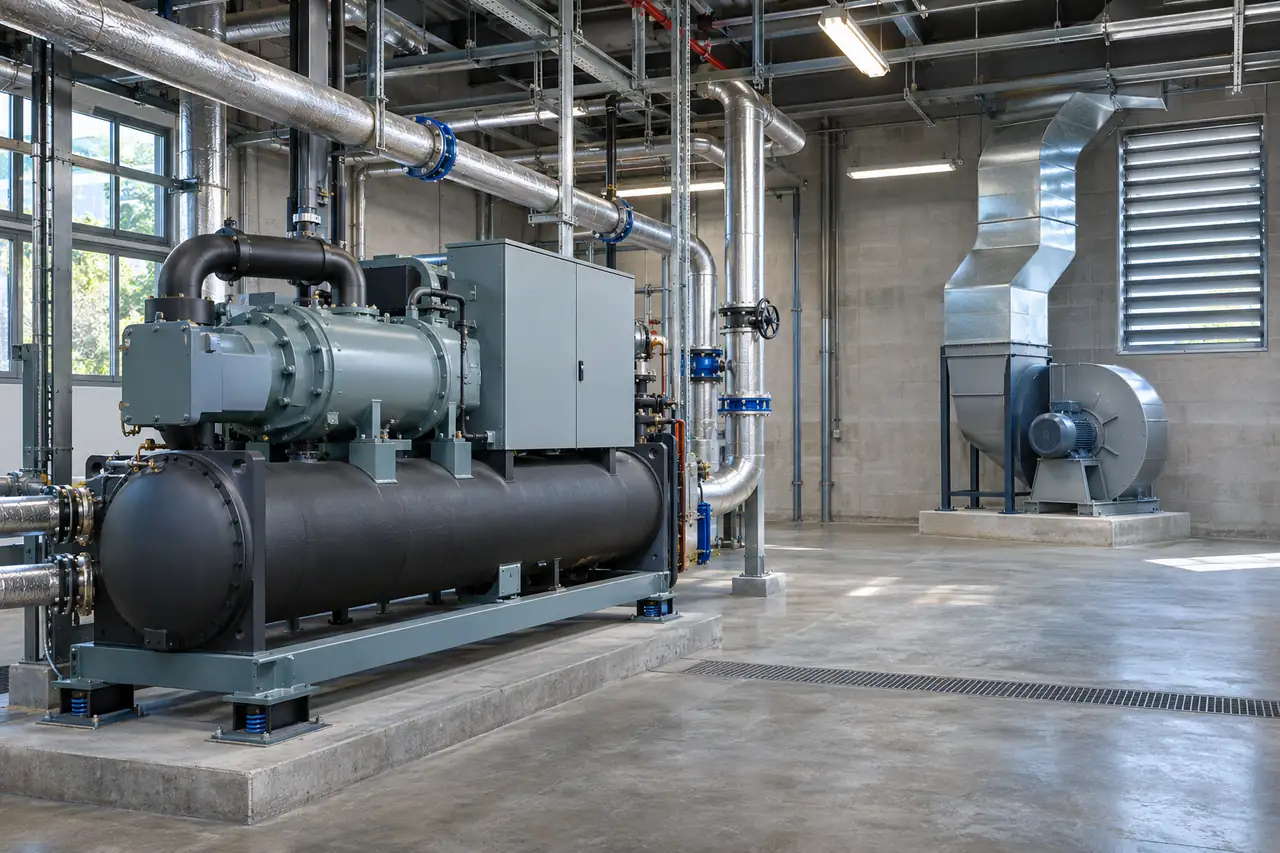
Machinery-room detection concerns the room atmosphere and its approved response.
Separate loss detection, release detection and exposure
A circuit pressure measurement can help indicate an equipment condition. A service instrument can help a technician find a leak. A fixed ambient detector measures what reached its sample location. Those facts can complement each other in an investigation. They answer different questions and have different evidence requirements.
Workplace decisions are also distinct. A worker might enter a particular enclosure, open equipment or perform service while plant operating states differ from normal. A fixed room detector can provide useful context. The employer still needs to apply the workplace obligations and assessment relevant to the task. In US federal general industry, 29 CFR 1910.146 addresses permit-required confined spaces where its scope and conditions apply. A room label or installed detector does not determine whether a specific space or task is governed by that rule.
Some facilities have other hazards near HVAC equipment. Gas-fired heat, an adjacent loading bay or an industrial process can affect a room or a building air intake. Where the project identifies a combustion or process gas task, give it a separate requirement and owner. Its detection and response logic should not be inferred from the refrigerant system, and its signals should be named independently in the building controls documents.
Assign interfaces before purchasing equipment
A requirements matrix should identify both what happens locally and what crosses a boundary. For each required action, write who generates the request, who receives it, which system has authority to act, what proof is required and who receives an abnormal-state notification. This exposes gaps that a single note reading “interlock with BAS” can conceal.
| Interface question | que grabar | Evidence at handover |
|---|---|---|
| Which controller owns the action? | Local equipment controller, room detection panel or building system, with applicable approval | Sequence and schematic tied to the equipment and installed configuration |
| What crosses the boundary? | Terminal, relay state or data object, units and meaning of all required states | Wiring drawing or point list and observed receiving state |
| ¿Qué significa pérdida de señal? | Respaldo local, indicación de problemas y recuperación según el acuerdo aprobado | Evidencia autorizada de pérdida de energía o pérdida de comunicaciones |
| ¿Qué es la prueba física? | Estado del motor, retroalimentación de la compuerta, salida de alarma independiente u otra observación requerida | Evidencia del dispositivo afectado o registro de aceptación del sitio |
| ¿Quién se encarga de la recuperación? | Autorizado, condiciones, expediente y procedimiento | Traspaso de operaciones con deterioro temporal y responsabilidades de servicio. |
An interface can be functional and still fail to meet its intended timing. A local controller might request mitigation immediately under its approved design while the building graphics update on a different interval. Verify the timing at the appropriate boundary. Operator event timestamps should indicate whether they are local event times or the time a receiving system recorded a message. This becomes important when several points change during the same event.
Also document priority. An exhaust fan or damper can serve a normal ventilation sequence and another approved response. The controls design must state how those modes interact. A local equipment signal should reach the system with the authority to coordinate that response. A generic command from a supervisory display is weak evidence when a separate system can override it or when the actual position is not monitored.

A documented interface assigns ownership across equipment and controls.
Keep degraded states visible
A missing refrigerant reading, equipment warm-up and a valid low reading are different states. A fixed detector under service can report a test response while its normal coverage is temporarily impaired. A network gateway can preserve an old value after communications stop. The point list should preserve validity and state, with alarm or service handling defined by the approved arrangement.
Ask how the design handles power loss to each independent system. Loss of power to the BAS can affect visibility while a local safety control remains active, depending on the design. Loss of power to the equipment detector can be a different condition. Record which actions continue, what notification is available and how restoration is authorized. Test only under the applicable authorized procedure and describe what was actually exercised. A simulation can support a logic test, while observing the intended output supplies different evidence.
Hypothetical requirements review for a small commercial building
Consider a commercial building with office areas served by ducted equipment, listed heat pumps with integral detection where specified, and a separate machinery room serving another circuit. Assume the project has already established the applicable rules and equipment instructions. The following matrix illustrates how to assign the evidence. It does not decide whether a real building must include any of these functions.
| Project row | Requirement boundary | Owner and handoff |
|---|---|---|
| Office ventilation CO₂ | Representative airside point for the approved occupied ventilation sequence | Controls contractor maps data and validity. Airside designer owns the ventilation sequence. |
| Heat pump integral detection | Exact equipment orientation and listed mitigation configuration | Equipment supplier provides the instructions. Installer documents the arrangement and local verification. |
| Machinery-room detection | Separate room sample and approved warning and ventilation sequence | Refrigeration designer assigns room requirements. Detection and mechanical trades verify interfaces under the acceptance plan. |
| Service work assessment | Particular task and place, including access and ventilation states | Employer or authorized work lead owns the assessment and monitoring procedure. |
Suppose the original mechanical notes say the BAS must record an integral equipment event. The equipment submittal shows a local fan mitigation and a documented status contact. The team records two outcomes. One is the local action under the listed arrangement. The other is event visibility in the BAS. The controls contractor wires and verifies the status path, while the installer confirms the local equipment arrangement. The records say which action was observed in each test. A missing BAS graphic can be repaired without rewriting the evidence for the equipment’s local action, provided the design and test boundaries support that distinction.
Now suppose a replacement unit changes the equipment orientation and control interface. The change reaches more than the mechanical schedule. It can affect detector placement within the equipment, point naming and the interface test. The change review should route the exact new instructions to the people who own the mechanical arrangement, electrical connection and controls sequence. A record from the earlier model remains useful history. Approval of the changed configuration needs evidence for the changed conditions.
Make the operating record usable after turnover
At closeout, keep the adopted requirement references, equipment and detector identities, scope of each test, drawings and unresolved conditions together. Label which tests used simulation and which observed the required physical response. If an alarm or equipment action depends on external power or another controller, include that dependency in the record so operations staff can assess impairments.
The whole-building handover assigns monitoring and mitigation functions to the systems and parties responsible for them. Lifecycle records then preserve how those functions are maintained. When the owner later changes a room layout, replaces a control panel or adds equipment, the requirements matrix shows which evidence must be revisited.
Read the authority behind every requirement
Write the source and version next to each line in the matrix. A city or state adoption can reference a particular mechanical code and modify its refrigeration provisions. The adopted text can then reference a specific edition of a safety standard. The equipment documents identify the listing and configuration for the model selected. An owner specification can add monitoring, documentation or operations features. An employer procedure can govern a service activity even when the facility installation was approved under building rules. Keeping these sources separate helps the review team resolve an apparent conflict.
For example, a project standard might request that all equipment alarms appear on a dashboard. An equipment listing might require a local response independent of that dashboard. The project then has two outcomes to prove. One belongs to the certified equipment arrangement and its installation. The other belongs to the supervisory display and event history. The approved design identifies which outcome takes priority if a communications fault affects one of them. Requests to change equipment logic or interface behavior should be evaluated against both requirements before field changes are made.
Maintain a revision history when the applicable basis changes. A late refrigerant or equipment substitution can change the governing product documentation and the inputs used to determine room or equipment requirements. A revised architectural layout can change the defined space, available circulation path or interface with another system. A change to the owner’s alarm routing might leave local mitigation intact while changing response responsibility. Identify the requirement lines affected by each revision and name who approves their new evidence.
Decide how to interpret a missing document
In review, distinguish absent evidence from evidence that the submission deviates. For example, a submittal may omit the wiring page that shows an external fault contact. The omission leaves the interface unverified. A submitted wiring page may instead show that the proposed device has no supported output for the required distinction. That is a documented difference to resolve through the appropriate design and approval process. Both situations call for a specific question or disposition, with responsibility assigned.
For an occupied-space sensor, the missing item could be the airside sequence or the purpose of an outdoor reference point. For a listed unit, it could be the instructions covering the actual cabinet orientation or a permitted accessory. For a room system, it could be the approved warning destination or exhaust proof. For a workplace program, it could be the task assessment or the identity of the person authorized to issue an entry decision. Record the requested evidence in terms that identify exactly which requirement it is meant to close.
A building-wide review should therefore keep track of dependencies and unknowns. Some work can be complete within its own boundary while a separate interface is still pending. A supplied detector can have complete product documentation while the building sequence has no assigned receiving point. An approved wiring drawing can still need installation and acceptance evidence. During handover, tie the outstanding item to the responsible party and the system state so operations staff can understand what coverage and actions are available.
Preguntas frecuentes
Does every air conditioner need a refrigerant leak detector?
Determine the requirement from the exact equipment, refrigerant, charge and installation arrangement, then check the adopted rules and product instructions. The listed appliance can have a different detection requirement from the surrounding room or building.
Can an indoor CO₂ monitor detect a refrigerant leak?
An ordinary IAQ CO₂ channel measures CO₂ within its stated conditions. It does not measure refrigerants that require other sensing methods. In an R-744 application, the common gas name still leaves differences in range, performance, alarm purpose and approval to resolve.
Can the BAS provide all required refrigerant detection and mitigation?
The approved design, listing and governing requirements define where the control authority sits. The BAS may receive status or participate in a required interface when the design supports that use. Identify and verify each function separately before assigning it to the supervisory system.
Is a machinery-room detector enough for service work?
Its reading describes the air that reached its point. The employer’s work assessment determines what monitoring is appropriate for the task, including a worker’s location, restricted spaces and operating conditions.
What should be checked when an HVAC unit is substituted?
Review the exact listing, instructions, orientation, refrigerant and installation details, local mitigation and external signals. Update the requirement and interface records that depend on the changed configuration, and confirm what evidence is required for acceptance.








Deja una respuesta