
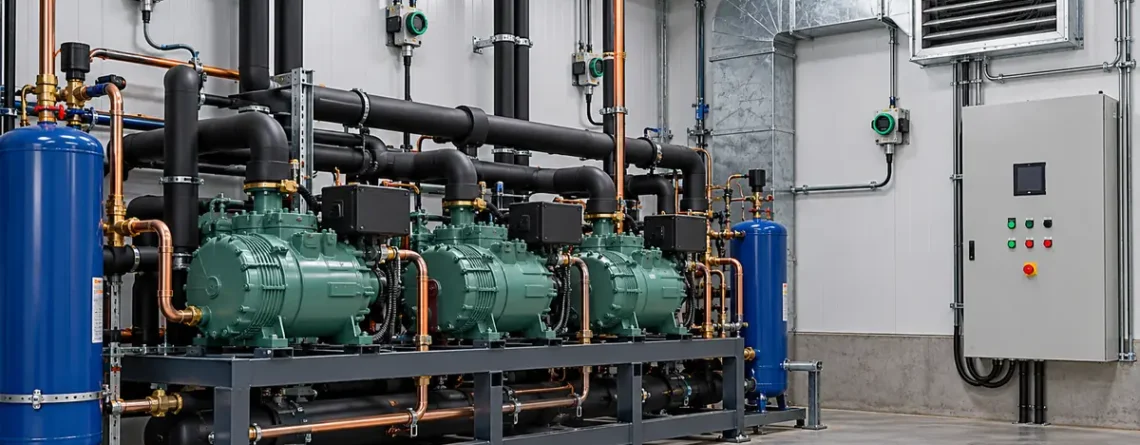
A plant-room gas log should let a later reader reconstruct what the detector measured, what the control system commanded, what equipment actually did, and how the event was resolved. A single peak concentration cannot answer those questions. The detector may have been in a fault state; an alarm may have reached a local beacon but not a remote operator; a ventilation fan may have received a start command without proving airflow. A good record preserves these distinctions without asking the operator to guess the cause during an incident.
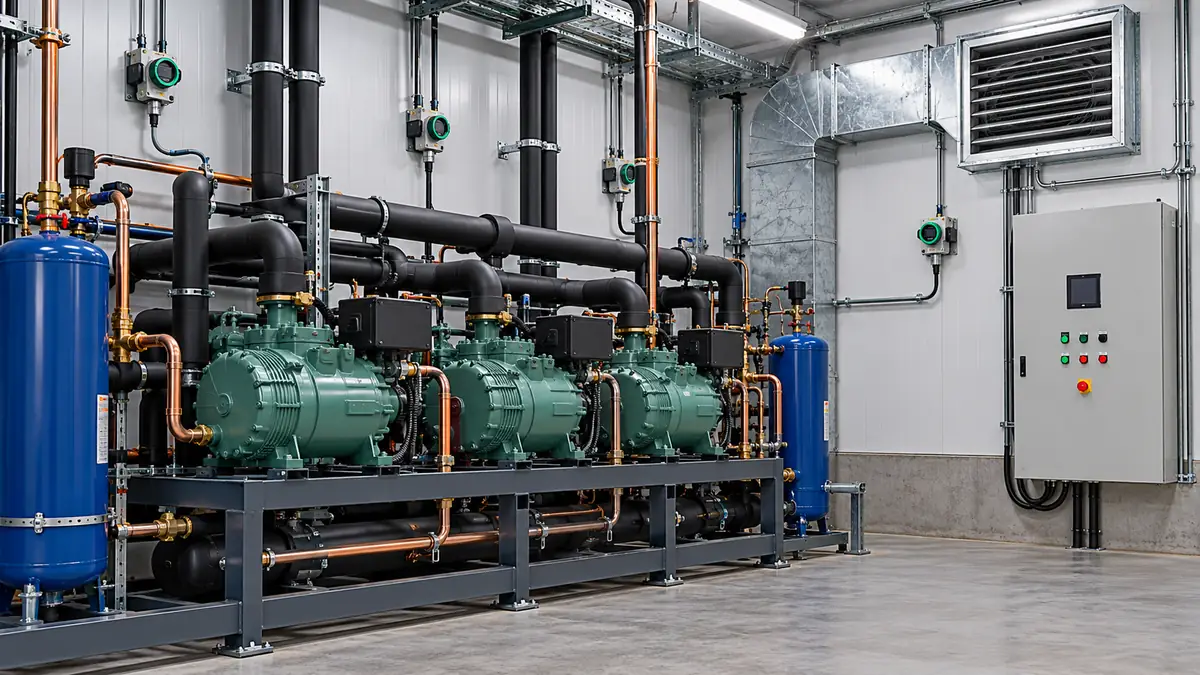
This article is an operational record design guide, not a universal legal form or an alarm-setting instruction. The applicable refrigeration safety standard, local rules, site risk assessment and device manuals determine the actual design, thresholds, tests and response procedure. The fields below are a practical way to preserve the evidence needed to understand that system. They also make routine maintenance, incident review and sensor replacement less dependent on one person's memory.
Keep a device register and an event log as separate records
را device register describes what the installed system is supposed to be. It changes when a detector, firmware, refrigerant profile, alarm setting, controller mapping or location changes. The event log describes what happened at a particular time. Mixing both into a free-text notebook makes it difficult to know whether a historical reading used today's configuration or an earlier one.
For every fixed detection point, the register should identify a unique tag, physical location, detector model and serial number, sensor module if separately replaceable, refrigerant or gas profile, displayed units, measurement range and the relevant alarm and fault outputs. Record the controller input or network point to which it is connected. Note who approved the configuration and which document revision was used. If a site uses a multi-refrigerant profile, identify the exact profile and the reason it is appropriate to the equipment in that room. A generic label such as “gas sensor” loses the information needed to interpret an event.
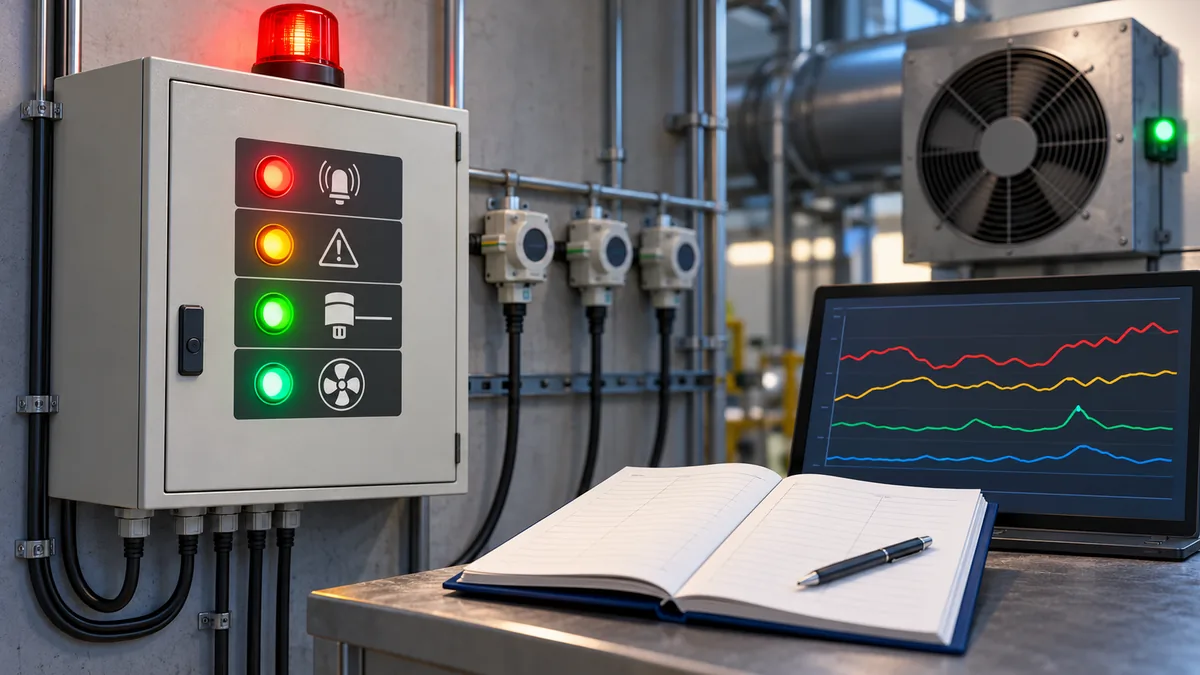
The event log should preserve the original time-stamped sequence: initial status, trend if available, alarm transition, local and remote notification, ventilation command, evidence of fan operation, operator acknowledgement, inspection findings, service action, reset and return to normal. A record can link to raw historian data rather than duplicating every sample, provided the raw data remain accessible and the link identifies the relevant time window. Avoid replacing the first observation with a cleaned-up narrative written after the issue is resolved.
| ضبط کنید | Stable identity or time-varying event? | Example of a useful field | چرا اهمیت دارد |
|---|---|---|---|
| Device register | Mostly stable | Tag, model, serial number, room location | Connects an alarm to the actual installed hardware |
| Configuration history | Changes on approval | Refrigerant profile, alarm logic, firmware revision | Explains why two events from the same tag may differ |
| Event log | Time-varying | Alarm, fault and controller transitions | Reconstructs the sequence and delays |
| Maintenance record | Time-varying | Test method, result, corrective action | Shows whether a channel was proven functional |
| Site response record | Time-varying | Person notified, equipment status, closure | Connects the instrument output to the operational response |
These are distinct logical records; a well-designed building-management system may store several in one application. What matters is that the version of the detector configuration effective at the event time is recoverable.
Record the measurement task before interpreting a number
A fixed room detector, a portable service instrument and a refrigerant-circuit pressure transducer answer different questions. A room detector samples the surrounding atmosphere at its installed position. A portable tool helps a technician investigate a suspected source at a particular moment. A pressure or temperature channel can support equipment diagnostics but does not directly establish a safe plant-room atmosphere. Our guide to portable and fixed refrigerant detection explains why one cannot simply replace the other in the log.
Before an event occurs, the register should state the target refrigerant or approved set of refrigerants and the unit in which each indication is reported. Parts per million by volume and a percentage of a lower flammability limit are different quantities; a log that says only “25” is uninterpretable. Even the words زنگ هشدار و trouble need distinct fields. A detector can report a high-gas condition, an internal fault, loss of communication or an overdue service condition. Those states can demand different responses under the site's approved scheme.
Danfoss's gas-detection application guide describes choices of sensing technology, target gas, location, maintenance and control integration. It also cautions that local legislation can differ. That is a reason to record the basis for a site's detector design, not to copy a typical placement distance or alarm value from an example into every plant room. ASHRAE's historical Addendum h to Standard 15-2016 illustrates that machinery-room detection, alarms and ventilation can be separate functions; a current project must check its applicable adopted edition and local requirements.
The register should also say which system owns the alarm decision. Does the detector's relay change state locally? Does a controller compare an analog reading with a configured threshold? Is the data transmitted digitally to another controller? For an event, capture the detector output and the controller's interpreted status separately when possible. That distinction is critical when a communications fault, wiring error or configuration change is under investigation.
Follow the signal through the whole response chain
An alarm is not a single timestamp. It is a chain from the sensing point to the people and equipment that respond. If the log is designed around this chain, it can reveal where information or action was delayed.
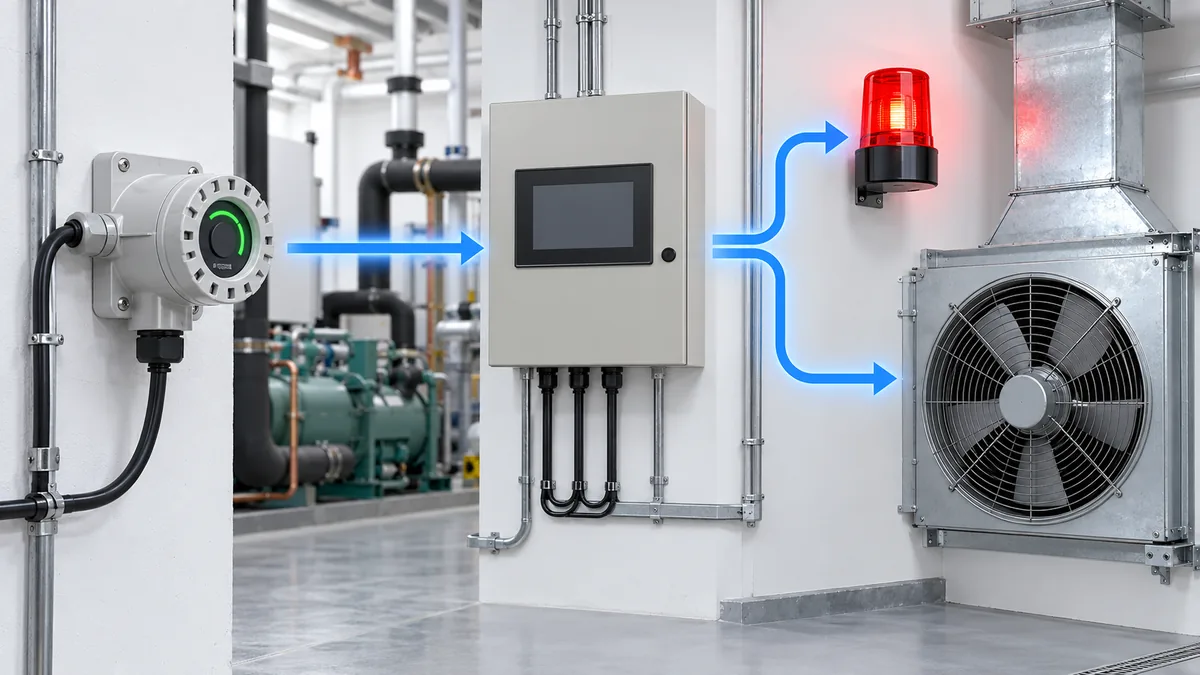
A useful chronology contains the following, where the system exposes each item:
- The first abnormal measurement و the detector's health or fault state at that time.
- The detector or controller alarm transition, including the threshold/profile version then in force.
- The local audible or visual alarm output and any remote notification transmission.
- A ventilation or isolation command, followed separately by an observed fan run, airflow switch, damper position or other available feedback.
- Operator acknowledgement and the time a qualified person began the approved response.
- Inspection findings, any independent measurement made under the site's procedure, corrective action, reset authorization and return to service.
The fan command and fan feedback must not be merged into “ventilation on.” A controller can command a fan while a starter, drive, damper or power supply prevents the expected air movement. Conversely, an exhaust fan may already have been running for another reason before the detector alarm. Capture both the pre-event operating mode and the post-event response.
Time synchronization matters because a sequence is misleading when one device's clock is several minutes away from another's. Record the clock source, time zone and daylight-saving convention used by the detector, building-management system, phone alerts and manual entry. A historian should keep the original event times; a later export can convert them to a shared time base while preserving the source. The site should define who may correct a record and retain the correction history.
Detector location and room operation are part of the evidence
The same detector trace can mean different things in an idle room, during maintenance, after a door opens, or while exhaust airflow changes. A plant room is not a perfectly mixed box. Equipment and piping can create obstructions; supply and exhaust paths can carry a release toward or away from a detector. Refrigerants also differ, and a simple “place every detector at the floor” rule ignores the room's actual ventilation and manufacturer guidance. Trane's machinery-room engineering discussion treats detection and ventilation as system design questions rather than isolated product choices.
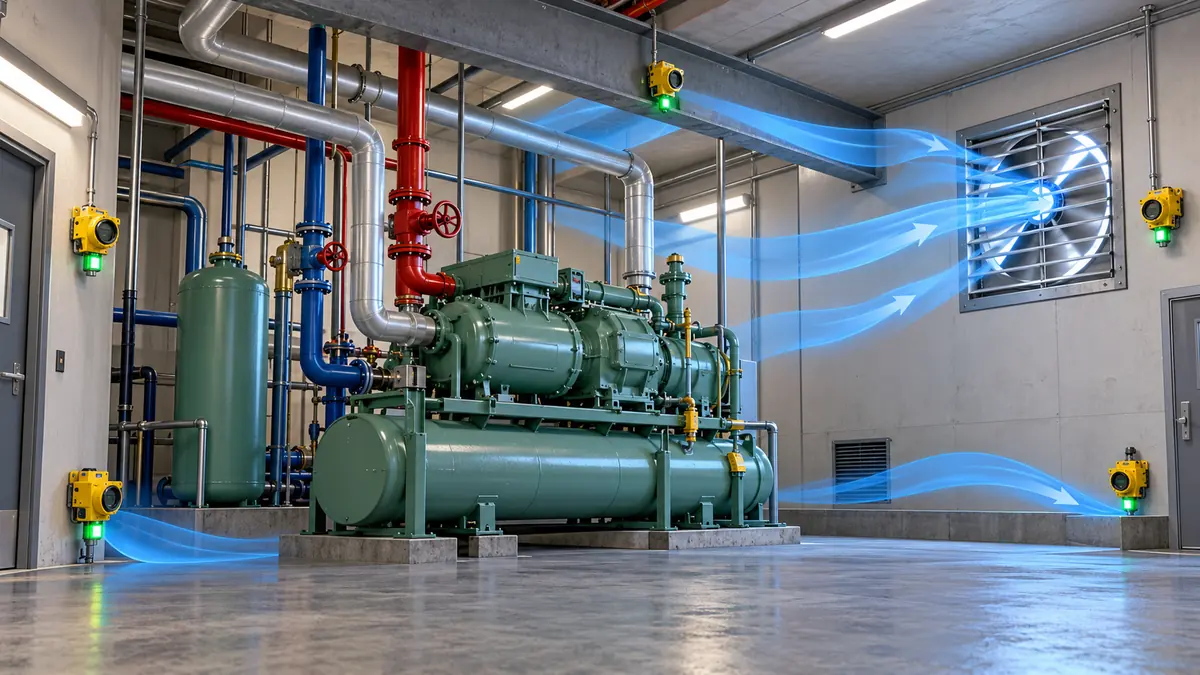
Keep a current drawing or location map associated with the register. It should identify the detector tag, relevant refrigeration equipment, ventilation inlets and outlets, doors and the normal modes that affect airflow. A photograph can be useful if the location has changed, but it should not be the only identifier. If equipment is moved or a partition is added, record when the map and placement assessment were reviewed. This is especially important for an event that began before a renovation was documented.
For a particular alarm, note the operating state that could affect concentration at the sensing point: which compressors or packages were running, any active service work, fan and damper states, door position if known, and whether an intentional function test was in progress. These are contextual fields, not invitations to dismiss an alarm. The atmosphere may be hazardous even if a known maintenance activity happened nearby. The immediate response still follows the site's approved plan.
If several detectors are installed, preserve their individual traces and positions. Two points rising together may support a different spatial interpretation from a single point, but neither pattern by itself proves the source. Sampling paths, response times, sensor health and airflow need review. A single low reading at another location is not evidence that the entire room is clear.
Maintenance records should prove the method, not just a checkbox
“Tested OK” is rarely enough to reconstruct what was tested. Was the detector exposed to an approved test gas, was only the controller input simulated, or did someone press a lamp-test button? These activities prove different parts of the chain. The maintenance record should identify the procedure, instrument or test medium, expected result, observed result, person, date, environmental conditions relevant to the manufacturer method, and any follow-up action. A test cylinder's identity, concentration, expiry and traceability matter when a method uses one. Do not enter a cylinder value or pass/fail result from memory.
Danfoss's guide distinguishes a functional or bump test from calibration. A function test shows that a device and connected response can react to a prescribed challenge; calibration assesses or adjusts measurement against a reference according to the manufacturer's procedure. The exact challenge, concentration, service interval and acceptance criteria depend on the installed product and site requirements. A recorded controller simulation should not silently become evidence that gas reached the physical sensing element.
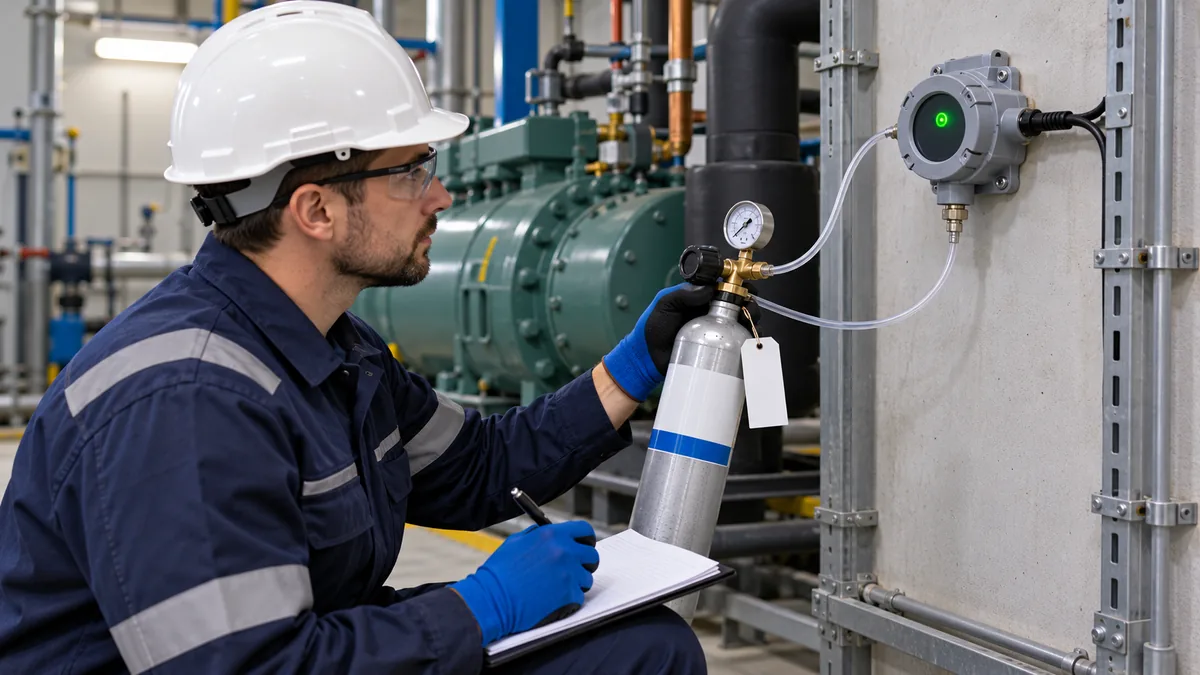
Record sensor-module replacements and configuration changes as separate events. A new module may have a different serial number, calibration state or response characteristic even though the wall-mounted unit keeps the same tag. Keep the previous module's record linked to the events it produced. A firmware update or changed refrigerant profile can be equally relevant. After maintenance, the site's return-to-service check should confirm the measurement channel and downstream alarm path prescribed by the approved procedure, with the results attached to the maintenance record.
Faults deserve their own history. If a sensor reports trouble, loss of power or communication loss, note when it began, what supervisory system recognized it, what compensating site action was taken and when the channel was restored. A gap in data is itself an operational condition; it must not be represented as a series of zero gas readings.
A practical event template
The following fields can be adapted to a digital form or incident report. They are an editorial template for reconstructing an event, not a claim that a standard mandates this exact form.
| Section | Fields to capture |
|---|---|
| Identity | Event ID, room, detector tag, model/serial, location-map revision |
| Configuration | Refrigerant/profile, units, range, alarm/fault logic revision, effective date |
| First indication | Source timestamp, first value/status, trend window, detector health state |
| Response chain | Local alarm, remote alert, controller output, fan/damper command, actual equipment feedback |
| زمینه | Equipment mode, ventilation mode, work permit or test in progress, relevant door/airflow state |
| Human response | Acknowledgement, responder, approved procedure used, inspection observations |
| Service evidence | Independent instrument details if used, test or repair procedure, result, replaced parts |
| Closure | Reset authorization, return-to-service verification, residual issue and reviewer |
If a field is unavailable, record “not captured” with the reason rather than inventing an observation. An operator may know that a fan was commanded without having a run contact. That is a valuable limitation to document; it may guide a future instrumentation improvement. The form should allow attachments such as raw trends, configuration export and service records, while still keeping a short human-readable event synopsis.
What different log patterns can and cannot tell you
Consider three hypothetical patterns. They show how the record structure helps investigation; they are not incident reports or diagnostic rules.
Pattern A: a concentration rise and an alarm, with no fan-run feedback. The trace shows a detector alarm followed by a ventilation command, but the run contact never changes. This supports investigating the control-to-fan path and the room atmosphere under the approved response plan. It does not prove the fan was physically stopped unless the feedback channel itself is reliable and the system's normal timing is understood. Preserve the alarm and the feedback fault as separate facts.
Pattern B: a fault followed by a flat displayed value. The device first reports a sensor or communications fault, and the historian thereafter shows a constant number. The flat line may be a stale value or fallback imposed by the controller. It is not proof of a stable atmosphere. The configuration should explain how fault states are presented, and the operator should follow the prescribed fault response until a qualified check restores confidence in the channel.
Pattern C: a single brief rise during documented service work. The event record links a time-stamped test or maintenance action to the rise. That context helps explain a possible source, but the record alone cannot establish that no unintended release occurred. The site procedure must define how testing is authorized, announced and distinguished from a real alarm, and a qualified person still evaluates the actual indication.
These examples show why an event narrative is most trustworthy when it points to raw device status, controller transitions and work records. A narrative that says “false alarm” without those supporting facts discards the very evidence needed for the next review.
Make records usable months later
The data system should protect records from accidental overwriting and preserve which version of a configuration, drawing or procedure applied at the time. Define access rights for operators, maintenance contractors and reviewers. If an event is corrected after the fact, keep the original entry and the reason for the correction. Export files should include units and time-zone information. A chart image without raw values and a legend may be useful for discussion but poor evidence for detailed review.
Retention and review intervals should be set by the operator's governing obligations and risk management process. No single duration fits every country, refrigerant or facility. A regular review can find recurring detector faults, missing fan feedback, failed notification paths or repeated service-related events. Trends can also reveal whether a particular location often becomes inaccessible for calibration. Record the action owner and closure; otherwise the review is only a report.
The review should distinguish measurement quality از system availability. A detector can be healthy but misplaced for a changed room arrangement. A sensor can measure correctly while an alert never reaches a staffed location. Conversely, an intact notification path does not compensate for an untested or faulted sensing element. The log is valuable because it follows all of these layers together.
Check whether the log can reconstruct a past event
Before a log template is adopted, choose one historical event or a controlled system test and ask a reviewer who was not present to reconstruct it. Can the reviewer identify the installed detector and the gas profile in force on that date? Can they see the detector's gas and health states separately? Can they tell whether the controller merely issued a fan command or whether an independent contact confirmed operation? Can they locate the response procedure and maintenance record that were in force then? Missing answers reveal where the register, historian or manual form needs improvement.
A controlled test is useful only when its purpose and scope are explicit. If a technician simulates a controller input to check an alarm light, that record should say “controller input simulation,” not “gas detector tested.” If an approved gas challenge is used, record the actual procedure and whether the gas reached the installed inlet. If remote notifications are checked, distinguish a message generated by the building-management server from a notification received and acknowledged at a staffed location. A system may pass one layer and fail another. The log should be able to show that without forcing a binary “pass” on the entire plant room.
Data quality deserves routine attention. A trend system may store a rounded display value while a detector's alarm relay operates at an internal unrounded value. A controller may replace a communications failure with a configured default. Some systems record only transitions, while others store periodic samples and overwrite older data. These behaviors are not inherently wrong, but they need to be documented so a reviewer knows what the chart can and cannot show. Make sure alarm, trouble and missing-data states survive export in a form that is distinguishable from a measured zero.
Finally, link the log to change control. A refrigerant conversion, new compressor package, room partition, changed exhaust path or detector firmware update can alter the interpretation of future events. The site should record the date, rationale and approving person for each change, update the room map and check whether the original detection design still matches the space. A reliable log is therefore not just an incident archive; it is also a record of the system's evolving measurement boundary.
Questions worth answering in the site procedure
Is a maximum concentration enough for the log?
No. Keep the units, gas profile, detector status and time history. Capture alarm and fault transitions and the response chain. A peak alone does not show whether the detector was functioning, how long the condition lasted or whether ventilation actually operated.
Does a bump or function test replace calibration?
No. They serve different purposes under a manufacturer's procedure. Record which one was performed, the method and result. A controller input simulation is narrower still: it may verify an output chain without exposing the sensor to gas.
Should portable survey results be entered?
Yes, when they inform the incident or return-to-service decision. Record the portable instrument's model, identity, gas setting, units, status, measurement location and time, along with the trained person's method. Do not treat its point measurement as a direct substitute for the fixed monitor's room coverage.
Can a faulted detector's last value be treated as zero exposure?
No. A fault and a measured zero are different states. The historian should preserve the fault and any data gap. The site response follows the approved fault procedure.
Which fields are legally required?
That depends on the jurisdiction, adopted standard, refrigerant, equipment and site procedures. This template is meant to make a measurement-and-response sequence reviewable. It does not replace the applicable standard, detector manual or facility safety plan.
A useful gas-monitoring log is therefore a versioned system record and a time-stamped event story. It shows what the detector was configured to detect, whether its channel was healthy, what the room and controller did, and what qualified personnel verified before closure. That level of context turns an isolated alarm into evidence that can improve both maintenance and plant-room safety decisions.







نظر (1)
[…] from its low gas reading, and a process pressure trend does not prove the room air is safe. Our refrigeration plant-room monitoring log guide shows the event and response records that a permanent gas system should be able to […]