
یک حسگر گاز فقط زمانی برای اندازه گیری خاصی آماده است که توالی راه اندازی آن، گرم کردن مشخص شده، تثبیت محیطی مربوطه و بررسی های اعتبار داده ها همگی برآورده شوند. نمایشگری که روشن میشود یا یک رجیستر دیجیتالی که عددی را برمیگرداند، ثابت میکند که بخشی از الکترونیک کار میکند. این به خودی خود نشان نمی دهد که عدد با مشخصات دقت مطابقت دارد. دوره انتظار مناسب از مستندات دقیق ابزار و شرایط استفاده ناشی می شود، نه یک قانون جهانی برای همه سنسورهای گاز.
در دسترس بودن خروجی و آمادگی کامل با مشخصات، نقاط عطف جداگانه ای هستند.
بنابراین سوال عملی این است: آماده برای چه، تحت چه شرایطی و بر اساس کدام شواهد؟ A preliminary trend, a quantitative reference comparison and an action that depends on an alarm system are different uses. This article explains how to read the timing terms, handle transitions and preserve enough information to decide whether a measurement is usable. It focuses on gas and indoor-air instruments; an individual detector's safety functions and operating instructions must be assessed at the complete equipment level.
واقعا منتظر کدام ساعت هستید؟
پس از اعمال برق، چندین فرآیند می توانند به طور همزمان اتفاق بیفتند. پردازنده بوت می شود، ارتباطات در دسترس می شود، عنصر حسگر به سمت شرایط کاری مورد نظر حرکت می کند، گاز به حجم اندازه گیری می رسد و فیلترها یا الگوریتم ها خروجی خود را ایجاد می کنند. کندترین شرایط مربوطه بر آمادگی برای نتیجه مورد نظر حاکم است. این فرآیندها نیازی به شروع همزمان ندارند و نباید به عنوان مشخصات زمانی قابل تعویض در نظر گرفته شوند.
| اصطلاح در مستندات | آنچه می تواند ایجاد کند | چیزی که به تنهایی ایجاد نمی کند |
|---|---|---|
| زمان راه اندازی یا راه اندازی | الکترونیک و خروجی ها در دسترس می شوند | دقت اندازه گیری کامل |
| اندازه گیری اول | یک نمونه جدید قابل بازگشت است | مناسب بودن در هر شرایط محیطی اعلام شده |
| گرم کردن برای مشخصات کامل | یک شرایط عملیاتی مشخص پس از برق رسانی به دست می آید | بازیابی از هر رویداد ذخیره سازی یا آلودگی |
| زمان پاسخگویی، مانند T90 | پاسخ به تغییر گاز در شرایط آزمایشی اعلام شده | آمادگی روشن شدن یا حمل و نقل کامل از خط نمونه |
| تعادل محیطی | ابزار و شرایط اطراف حل می شود | کالیبراسیون صحیح یا هویت مرجع |
| کالیبراسیون یا یادگیری پایه | یک فرآیند تصحیح اطلاعات کافی دارد | اینکه هر خواندن اولیه باطل است یا هر قرائت بعدی صحیح است |
Read the document's definitions rather than interpreting a word in isolation. A short specification table may list only one warmup value, while the operating section distinguishes initial operation from a tighter accuracy condition. If the meaning remains ambiguous, the missing information is the relationship between the timing value and the claimed result. An arbitrary extra delay may reduce a transient, but it does not resolve an undefined specification.
A clock should also have an explicit start event. Is it measured from application of rated supply voltage, release of reset, start of periodic measurement, or exposure to the new sample? For a networked instrument, the controller may reconnect long after the sensor powered up. Restarting the controller's timer at connection can be conservative but misleading for diagnostics. Starting a readiness timer at the last successful communication can be unsafe if the sensor actually reset after that event.
مشخصات سازنده واقعی چه چیزی را نشان می دهد؟
Vaisala's مشخصات GMP252 در سند M212450EN-H راه اندازی در +25 درجه سانتیگراد زیر 12 ثانیه و گرم کردن برای مشخصات کامل زیر دو دقیقه را لیست می کند. همین جدول به طور جداگانه زمان پاسخ را برای رابط های نمونه مختلف، از جمله فیلتر استاندارد و محافظ اسپری نشان می دهد. اینها سه ادعای متفاوت در مورد یک تحقیق مستند هستند. استفاده از شماره راهاندازی بهعنوان زمان انتظار با دقت کامل، تمایز صریح در منبع را حذف میکند.
یک ساز متفاوت تمایز را متفاوت می کند. را برگه اطلاعات XMW85 B212996EN-D یک گرم کردن یک دقیقه ای و ده دقیقه برای مشخصات کامل برای اندازه گیری CO2 را فهرست می کند. این بدان معنا نیست که XMW85 عموماً نسبت به GMP252 پایینتر است، و نه اینکه ده دقیقه برای هر محصول Vaisala اعمال میشود. این نشان می دهد که چرا یک مقایسه باید شرایط مدل، پارامتر و مشخصات را حفظ کند.
را مستندات محصول Sensirion SCD30 provides another useful reading discipline: measurement range, accuracy and response time are separate characteristics. When integrating a sensor module, use the associated datasheet and interface description for its actual operating mode. A host's fast polling rate does not shorten the module's physical response or convert repeated reads of one sample into independent measurements.
مقادیر زمانبندی را در خانوادههای محصول کپی نکنید زیرا دستگاهها دارای برچسب NDIR، فوتوآکوستیک، الکتروشیمیایی یا اکسید فلز هستند. ساخت و ساز، گرمایش، جبران، محفظه و نرم افزار بر رفتار ابزار تحویلی تأثیر می گذارد. حتی دو محصولی که از یک عنصر حسگر مرتبط استفاده میکنند، میتوانند رابطها و الزامات آمادگی متفاوتی داشته باشند. جدول عمومی نقطه شروع است. مدل دقیق و بازبینی دستی فرض مهندسی را تعریف می کند.
چرا یک عدد می تواند قبل از ثابت شدن اندازه گیری ظاهر شود؟
الکترونیک می تواند نتیجه یک سیگنال فیزیکی در حال تکامل را محاسبه کند. یک منبع مادون قرمز، آشکارساز و ساختار اطراف ممکن است همه فوراً به شرایط حرارتی مورد نظر خود نرسند. یک سنسور با بخاری ممکن است به یک حالت عملیاتی خاص نیاز داشته باشد. یک سیستم سنجش الکتروشیمیایی ممکن است به فرآیند اولیه یا بازیابی مستند خود نیاز داشته باشد. این مثال ها توضیح می دهند که چرا گرم کردن می تواند مهم باشد. آنها مکانیسم یا مدت زمان یکسانی را برای هر فناوری ایجاد نمی کنند.
There is also a distinction between a sensor's internal compensation and the environment it is supposed to represent. A compensated output may account for measured temperature or an entered pressure value. It cannot automatically correct a stale pressure input, a sample that has not arrived, an inappropriate gas matrix, or a temperature probe that represents the circuit board rather than the sample. A stable compensated number can still be based on the wrong conditions.
Vaisala's نکته کاربردی در مورد خودگرم شدن دستگاه CO2 توضیح میدهد که چرا مدارهای الکترونیکی و خروجی میتوانند بر اندازهگیری دما و رطوبت نسبی هماکنون تأثیر بگذارند. برای ابزارهای ترکیبی، هر مقدار گزارش شده را جداگانه ارزیابی کنید. کانال CO2، کانال دما و کانال RH نیازی به ایجاد عملکرد مفید به طور همزمان ندارند. یک تایمر متصل به ابزار به طور کلی می تواند این تفاوت های خاص کانال را پنهان کند.
بنابراین یک گزارش تشخیصی مفید، مقدار اندازه گیری شده را همراه با کانال های مورد استفاده برای جبران و وضعیت فعلی ثبت می کند. اگر نتیجه CO2 در حالی که دمای دستگاه در حال ته نشین شدن است تغییر کند، این رابطه ممکن است به چارچوب یک تحقیق کمک کند. همبستگی به تنهایی یک الگوریتم جبران معیوب را ثابت نمی کند. غلظت اتاق یا جریان هوا ممکن است همزمان تغییر کند. از تنظیم مجدد صرفاً برای وادار کردن یک گذرا زود هنگام با نمایشگر دیگر خودداری کنید.
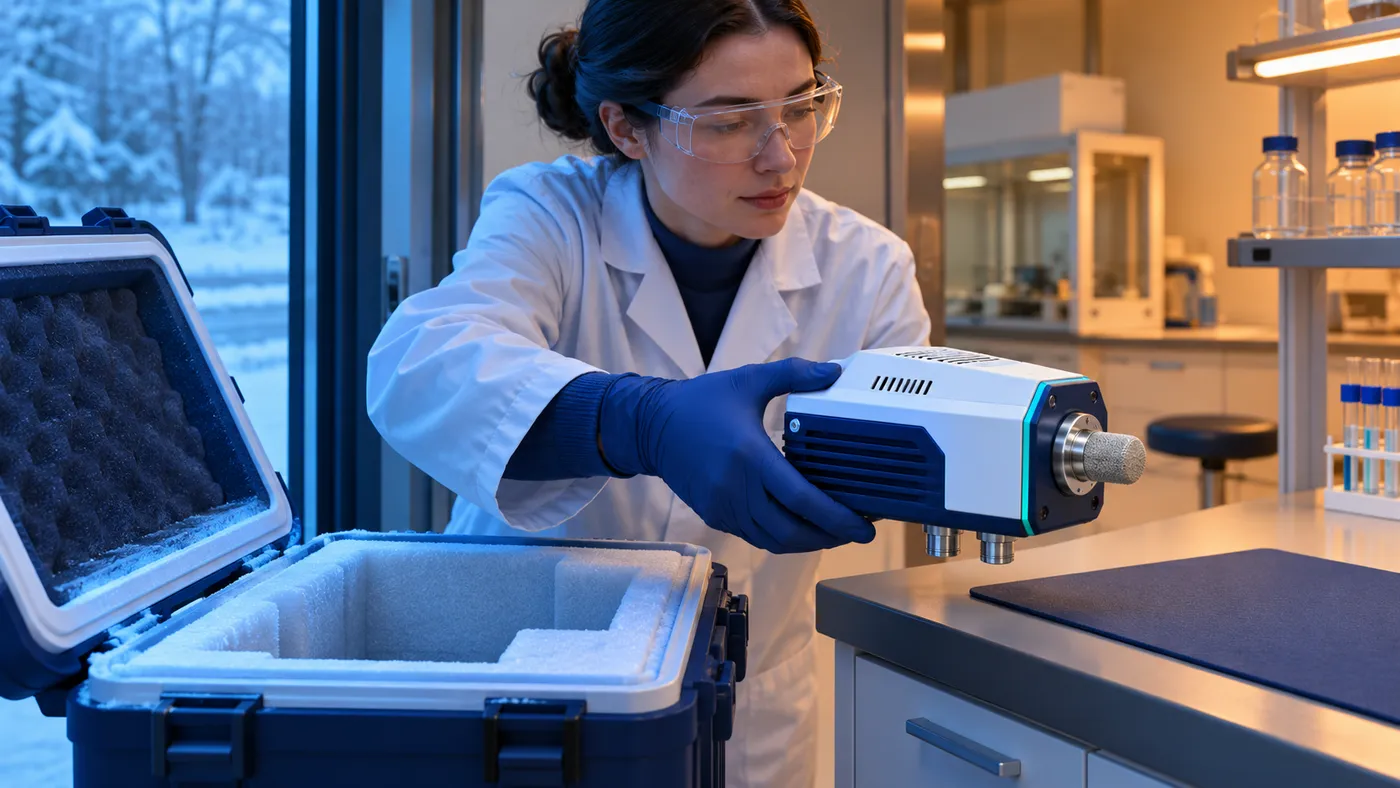
انتقال محیطی می تواند نیازهای تثبیت را فراتر از راه اندازی مجدد الکتریکی ایجاد کند.
آیا تغییر دما باعث شروع مجدد نیاز به گرم کردن می شود؟
انتقال ابزار از انبار سرد به اتاق گرم، مجموعه ای از شرایط متفاوت از یک روشن شدن برق معمولی در دمای اتاق را تغییر می دهد. محفظه، مسیر نمونه، ساختار حسگر و هوای اطراف می توانند با سرعت های مختلف به تعادل نزدیک شوند. اگر سازنده یک دوره بازیابی ذخیره سازی یا یک روش سازگاری را مشخص کند، این الزام علاوه بر شرایط معمول زمان بندی اندازه گیری اعمال می شود.
سنسوری که برق باقی می ماند همچنان می تواند یک گذر محیطی را تجربه کند. به عنوان مثال، یک مانیتور قابل حمل که از مکانی به مکان دیگر منتقل می شود ممکن است راه اندازی مجدد الکترونیکی نداشته باشد، اما گاز، دما و رطوبت در ورودی آن تغییر کرده است. برعکس، یک قطع کوتاه ارتباط میزبان ممکن است به هیچ وجه محیط حسگر یا وضعیت برق را تغییر ندهد. به جای این که فرض کنید هر ناپیوستگی قانون بازیابی یکسانی دارد، به طور صریح با رویداد آغازگر رفتار کنید.
Condensation deserves its own assessment. A non-condensing humidity rating does not permit liquid water on the sensing surface simply because the nominal RH number is within a table's range. The GMP252 documentation explicitly distinguishes its non-condensing operating condition and powered sensor-head heating. That feature is model-specific. It should not be interpreted as permission to use any gas sensor while wet or to accelerate recovery with an improvised heat source.
An acclimatization log can be simple: previous location or storage condition, new ambient conditions, power state during transfer, transfer time, any visible moisture, and the manufacturer's applicable instruction. If the instrument remains unstable beyond its expected conditions, the next question is what changed in the measurement chain. Extending a timer indefinitely can conceal a blocked inlet, wrong compensation value, damaged sensor or unsuitable environment.
چگونه گرم شدن را از واکنش گاز متمایز می کنید؟
Warmup concerns the instrument's operating state after the relevant start event. Response time concerns how the output follows a change in input gas under a defined setup. A warmed instrument does not report a remote gas change before the sample reaches it. A cold instrument does not become fully accurate merely because it has been exposed to the same gas for one published response time.
یک سیستم نمونه برداری حمل و نقل و اختلاط را اضافه می کند. محل ورودی، حجم خط، جریان، فیلترها و حجم اندازه گیری داخلی می تواند رسیدن گاز به عنصر حسگر را به تاخیر بیاندازد یا تغییر دهد. ابزار انتشار دارای موانع و تبادل محفظه خاص خود است. مقدار پاسخ از یک ماژول خالی نمی تواند به طور خودکار محصول نصب شده را توصیف کند، به خصوص زمانی که یک محافظ یا فیلتر اضافی نصب شده باشد. مقادیر پاسخ مستند برای لوازم جانبی خاص مفیدتر از حدس زدن هستند.
به عنوان یک محاسبه حمل و نقل فرضی, a line containing 120 mL of gas at an actual flow of 240 mL/min has a nominal volume/flow time of 0.5 minutes, or 30 seconds. That arithmetic describes one volume turnover under the stated flow assumption. It does not prove complete replacement, represent adsorption, include dead volumes or establish a safe alarm response. It also says nothing about the sensor's warmup. A measured installed-system response is needed for claims about that system.
| مشاهده | Plausible question to investigate | Evidence that would help |
|---|---|---|
| Values change after power-on in stable shared air | Is this a startup transient? | Power/reset timestamps and documented warmup |
| Values lag after moving the inlet | Has the new sample arrived? | Inlet event, flow status and installed response evidence |
| Only temperature or RH drifts | Is enclosure thermal settling involved? | Independent ambient measurement and mounting conditions |
| Output freezes while communication continues | Is the sample fresh? | Data-ready behavior, sample counter or timestamp |
| Repeated restarts prevent useful readings | Is supply integrity adequate? | Reset cause and supply measurements from qualified investigation |
Do not add published timing values mechanically unless the system model supports that calculation. Some processes overlap; others begin sequentially. A sample may already be present before electronic warmup finishes, or a line may begin purging only after the pump starts. A timing diagram for the actual equipment is clearer than a blanket sum of unrelated maximum values.
A fresh value, its validity status and its age answer different questions.
What should the data-validity state mean?
A useful measurement record separates value, status and age. Value is the concentration or other quantity. Status says whether the device or host currently considers it usable and why. Age indicates when the underlying measurement was acquired, rather than when the application last displayed it. Keeping these fields separate prevents a cached result from looking like a new valid sample after a reboot or disconnection.
Read the manufacturer's meaning for data-ready, busy, warmup, fault and out-of-range indications. A data-ready bit often answers a narrower question than “all measurement uncertainty requirements have been met.” Equally, the absence of a dedicated warmup bit does not remove a stated warmup requirement. Host software may need to apply the documented time and condition checks in addition to the device's status.
برای یک لاگر کمی، حالت های ممکن عبارتند از مقداردهی اولیه، انتظار برای شرایط لازم، معتبر، کهنه و خطا. اینها یک نمونه واژگان طراحی هستند، نه یک پروتکل جهانی. انتقال به معتبر باید شواهد مورد نیاز برنامه را مشخص کند: نمونه تازه، تکمیل زمان بندی خاص مدل، وضعیت قابل قبول دستگاه و شرایط محیطی مرتبط. خروج از اعتبار باید زمانی رخ دهد که آن مدرک دیگر وجود نداشته باشد.
For equipment with a safety function, the required behavior while measurements are unavailable belongs in the manufacturer's instructions and the site's engineered protection strategy. Replacing an unavailable value with zero can falsely imply an absence of gas. Holding the previous reading without an age or invalid marker can falsely imply continuous measurement. The treatment of alarms, faults and control actions must be established for the complete system, not improvised from this example vocabulary.
Can a steady display prove full accuracy?
خیر. پایداری شواهد مفیدی است که نشان میدهد ممکن است یک گذرا فروکش کرده باشد، اما یک نتیجه پایدار میتواند دارای یک افست، مقیاسبندی اشتباه یا جبران نادرست باشد. وضوح و صاف کردن نیز می تواند حرکت را پنهان کند. نمایشگری که 800 ppm را نگه میدارد ممکن است یک سیگنال خام ثابت، یک سیگنال تغییر متوسط به شدت، یک نتیجه گرد یا یک نمونه قدیمی را نشان دهد. ظاهر آن به تنهایی نمی تواند این موارد را تشخیص دهد.
Quantitative verification requires an appropriate reference and a defined comparison. The reference has its own uncertainty, response and environmental requirements. Two instruments placed near each other may sample different air, especially near people, vents or a gas source. Their agreement is more informative when the measurand, location, timing and averaging are genuinely comparable. Agreement between two unknown instruments is not equivalent to traceable verification.
The distinction between traceability and a convenient comparison is explained by NIST's metrological traceability guidance. Traceability concerns the measurement result and its documented chain, including uncertainty. For a warmup investigation, record the reference identity and comparison conditions rather than describing any second monitor as a ground truth. A portable reference can be useful without supporting an unlimited accuracy claim.
A reference check should not erase the startup question. If an adjustment is made during warmup, the resulting correction may compensate for a temporary state and become wrong after equilibrium. Capture the original response, wait according to the documented conditions, and separate any authorized adjustment from the independent check afterward. These are evidence-management principles; the actual procedure and allowable adjustment commands remain instrument-specific.
How can you build a readiness worksheet?
The following worksheet turns scattered specifications into a single reviewable decision. It can be attached to an integration requirement, commissioning record or troubleshooting log. Fill in explicit values only when the source supplies them; “not specified” is more useful than an invented duration.
| Worksheet field | Record this | Review question |
|---|---|---|
| هویت دستگاه | Manufacturer, model, serial, firmware and accessories | Is this the configuration covered by the source? |
| منبع | Datasheet/manual title, revision and section | Does the timing apply to this mode? |
| Power event | Actual power-on/reset timestamp and cause | What started this clock? |
| Output availability | First fresh sample and communication status | Is the host reading new data? |
| Full-spec requirement | Stated warmup and qualifying conditions | Is output availability being confused with accuracy? |
| محیط | Relevant temperature, humidity, pressure and transitions | Are the specification conditions satisfied? |
| مسیر نمونه | Inlet, filter/shield, flow status and sampling mode | Does installed response differ from module response? |
| Compensation | Enabled inputs, values, units and update age | Are assumed conditions still correct? |
| Release decision | Intended use, evidence, decision time and reviewer | What claim does readiness actually support? |
A practical implementation should preserve the source revision with the worksheet. Future firmware or accessory changes can alter the relevant assumptions. If a replacement sensor has the same commercial family name but a different revision or measurement mode, review the worksheet instead of inheriting the old timer automatically. A simple configuration change can otherwise create a persistent mismatch between the code and the documentation.
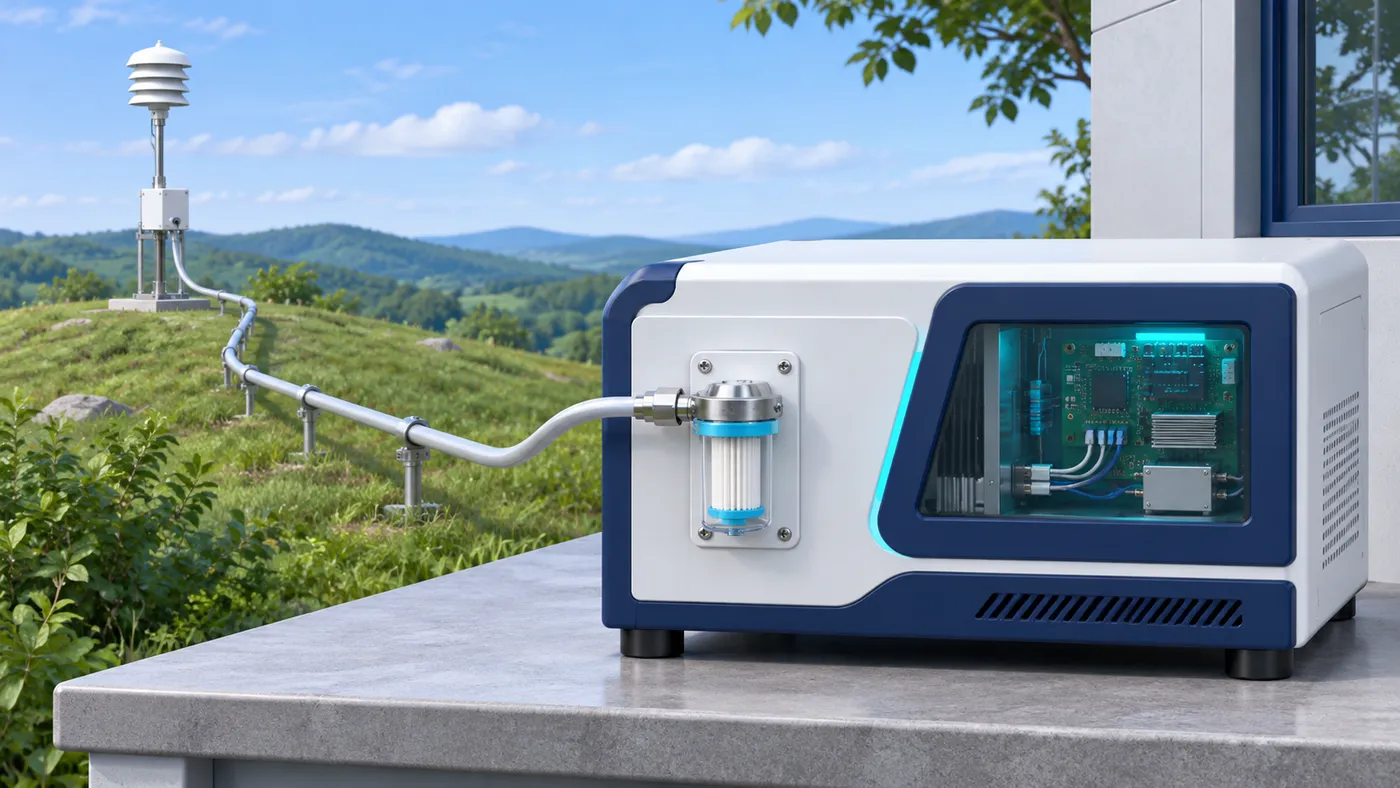
The sample must reach the measurement volume before the instrument can represent a remote inlet.
What does a checked startup example look like?
Consider a fictional integration example با استفاده از مدارک مورد نیاز دو دقیقه برای گرم کردن با مشخصات کامل، با دستگاه از قبل سازگار شده و از هوای پایدار اتاق نمونه برداری می کند. سنسور در ساعت 09:00:00 روشن می شود. ارتباط از ساعت 09:00:08 آغاز می شود. یک نمونه غلظت تازه در ساعت 09:00:10 می رسد. در ساعت 09:01:00 خروجی ثابت به نظر می رسد. در ساعت 09:02:00 میزبان زمان مورد نیاز، نمونه تازه و وضعیت قابل قبول دستگاه را تایید می کند.
The elapsed time from power-on to the first sample is ten seconds. The elapsed time from power-on to the release review is 120 seconds. The first sample therefore appeared 110 seconds before the warmup review. That arithmetic is the only quantitative conclusion supplied by the fictional timeline. It does not assert a particular error at ten seconds or prove that all real instruments become accurate at exactly two minutes.
Now change one assumption: the sensor was moved from cold storage at 08:59:50, and the relevant instructions require environmental stabilization that has not been demonstrated. The electronic timeline is unchanged, but the release decision changes. The host cannot infer satisfaction of that environmental requirement from elapsed electrical warmup alone. The record should retain the limiting condition rather than silently labeling the reading fully valid.
Change another assumption: power is interrupted at 09:01:30 and the sensor restarts. The original two-minute clock no longer describes uninterrupted operation. If the model's instructions require the warmup after that restart, the timer follows the new power event. A persistent application process must not retain its old ready flag merely because the application itself never rebooted.
What should you troubleshoot before adding more waiting time?
First confirm that the instrument is actually remaining powered and that the host is receiving fresh samples. Then review configuration, compensation and the sample path. Look for a recent change in mounting, enclosure ventilation, filter, flow, measurement mode or surrounding environment. Preserve the original evidence before resetting, adjusting or replacing the device, because those interventions can remove the symptom without explaining it.
A useful troubleshooting comparison changes one relevant condition at a time under an approved method. For example, documenting the same installed instrument before and after a filter service can distinguish a sample-path concern from a generic startup claim, provided all other important conditions are recorded. It is less useful to change the sensor, firmware, reference, location and averaging simultaneously and attribute the result to warmup.
If documentation offers only a vague timing term, ask the manufacturer which specification is met after that interval, at what ambient conditions, from what initial state and with which accessories. Those four questions narrow the uncertainty more effectively than asking whether the sensor needs “a few minutes.” For purchasing, require the answer in a controlled technical document so that it remains reviewable after staff or suppliers change.
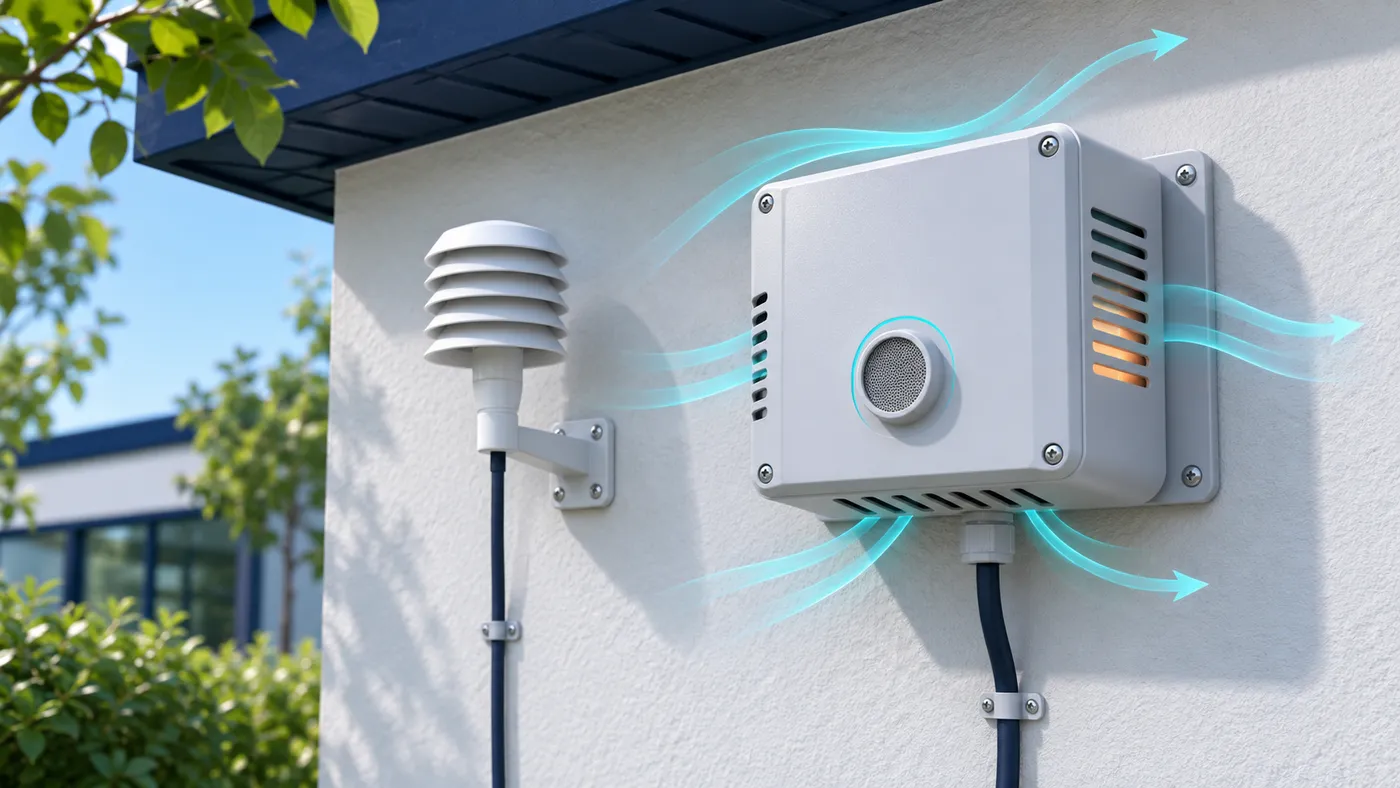
Different channels can settle differently in the same enclosure; airflow symbols are conceptual.
How should you document a restart policy for an integrated product?
A restart policy should specify which events invalidate the measurement and which evidence restores it. Distinguish sensor power loss, sensor reset, host reset, communication loss and a user request to change measurement mode. These events may look identical on a dashboard while requiring different actions. The integration requirement should identify which device supplies the authoritative reset or sample-age information.
Consider a host that reboots while the sensor stays continuously powered. If the host can reliably recover sensor status and sample age, it may establish readiness without pretending the sensor just powered on. If that information is unavailable, the application must follow its documented conservative recovery behavior. Either approach needs an explicit rationale; silently inheriting a cached green indicator is not evidence.
Now consider a sensor that browns out while its host continues running. A timer measured only from host startup will be wrong. The product needs a way to detect the relevant sensor event, whether through diagnostics, a reset indication, acquisition behavior or another supported mechanism. Choose the mechanism from the actual interface documentation and verify its behavior during integration.
The readiness specification should also define what appears in exported data. Preserve an unavailable or initializing interval as such, with timestamps and reason codes where possible. Removing it entirely can make a system appear continuously available. Replacing it with a plausible concentration can corrupt averages and later investigations. A record can contain an early numerical output for diagnostics while clearly withholding the claim that it is a qualified measurement.
Finally, keep the restart policy linked to the product configuration. A new measurement interval, power-saving mode, enclosure or firmware revision may invalidate old assumptions. Review the policy when those changes are introduced. The useful deliverable is a reproducible decision about data status under defined events, rather than a delay constant whose original purpose has been forgotten.
سوالات متداول
Can I use startup readings for a trend?
Possibly, if the purpose tolerates their limitations and they are clearly marked. Retaining initializing data for diagnosis can be valuable. Combining it with fully qualified data without status markers can distort statistics and conceal availability. The intended decision determines whether preliminary data have any useful role.
Should I always wait the longest warmup time I can find online?
No. A value for another model does not define your instrument. Use the exact model, revision, operating mode and conditions. A longer arbitrary wait may be conservative in one respect but still fail to address condensation, wrong compensation or missing sample flow.
Does continuous power eliminate every stabilization issue?
No. Continuous operation can avoid repeated electrical startup, but environmental transitions and changes in the sampled gas still occur. It also does not establish calibration quality or prevent inlet blockage. The relevant evidence depends on the event being investigated.
Is T90 the time to full accuracy?
No. T90 normally describes reaching 90% of a response change under stated conditions. It is a dynamic-response measure. Full accuracy after startup is a different claim, and a sample system can introduce additional delay. Read both definitions in the applicable documentation.
Can automatic baseline correction fix a warmup problem?
Do not assume so. A baseline algorithm and a startup transient are different processes. Whether baseline correction is appropriate depends on the sensor design and exposure assumptions. Changing that setting to hide an early reading can create a separate long-term error.
What is the most useful single readiness record?
A timestamped entry linking the fresh value, device status, power/reset history and relevant conditions to the exact timing requirement. It should say what use was authorized. That makes a readiness decision reconstructable instead of relying on the appearance of a steady display.









پاسخ دهید