05Sep
02Sep
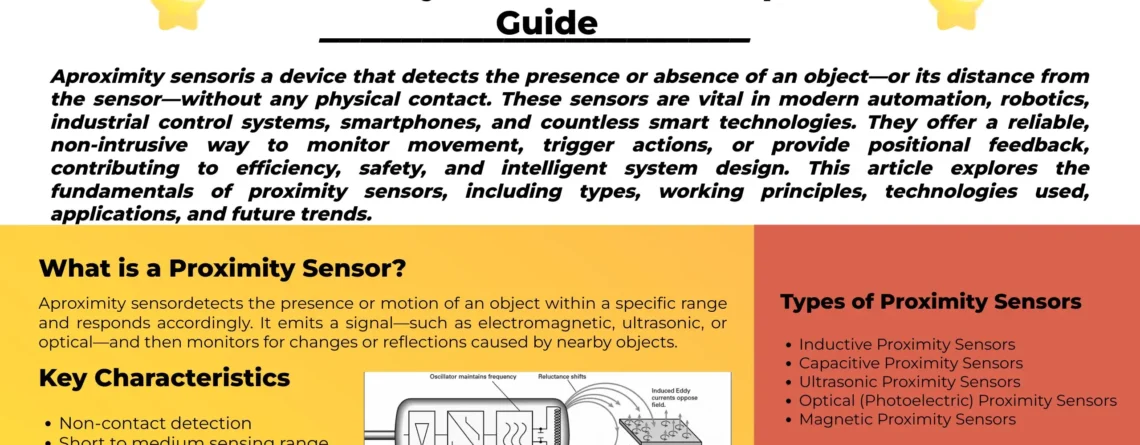
Capteurs de proximité: un guide approfondi
A proximity sensor is a device that detects the presence or absence of an object—or its distance from the sensor—without any physical contact. These sensors are vital in modern automation, robotics, industrial control systems, smartphones, and countless smart technologies. They offer a reliable, non-intrusive way...
01Sep
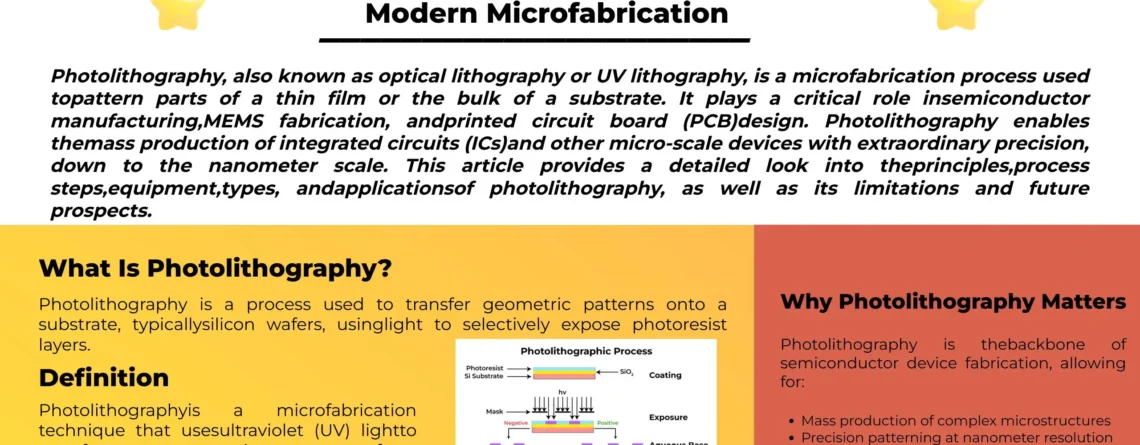
Photolithographie: le fondement de la microfabrication moderne
Photolithography, also known as optical lithography or UV lithography, is a microfabrication process used to pattern parts of a thin film or the bulk of a substrate. It plays a critical role in semiconductor manufacturing, MEMS fabrication, and printed circuit board (PCB) design. Photolithography enables...
01Août
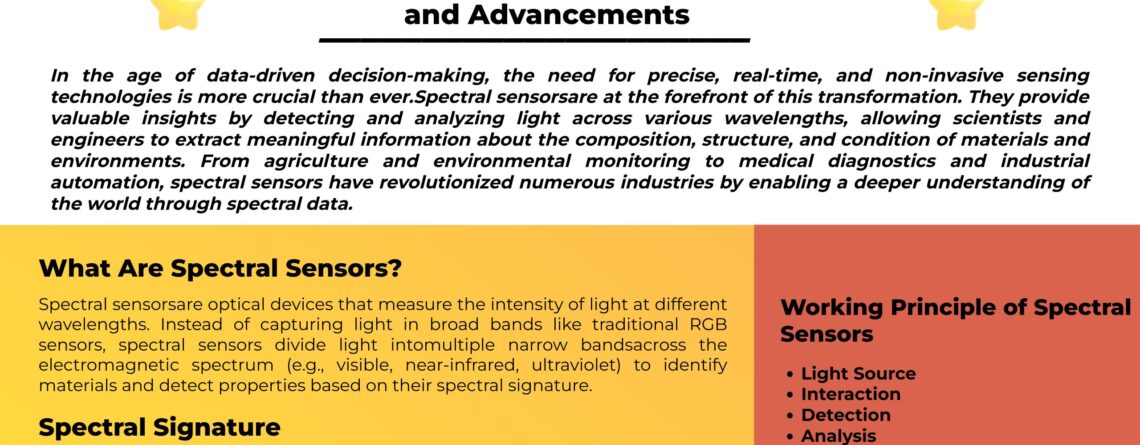
Capteurs spectraux: principes, applications et progrès
À l’ère de la prise de décision basée sur les données, le besoin de technologies de détection précises, en temps réel et non invasives est plus crucial que jamais. Les capteurs spectraux sont à l’avant-garde de cette transformation. Ils fournissent des informations précieuses en détectant et en analysant la lumière sur différentes longueurs d'onde, permettant aux scientifiques et aux ingénieurs...
30Juillet
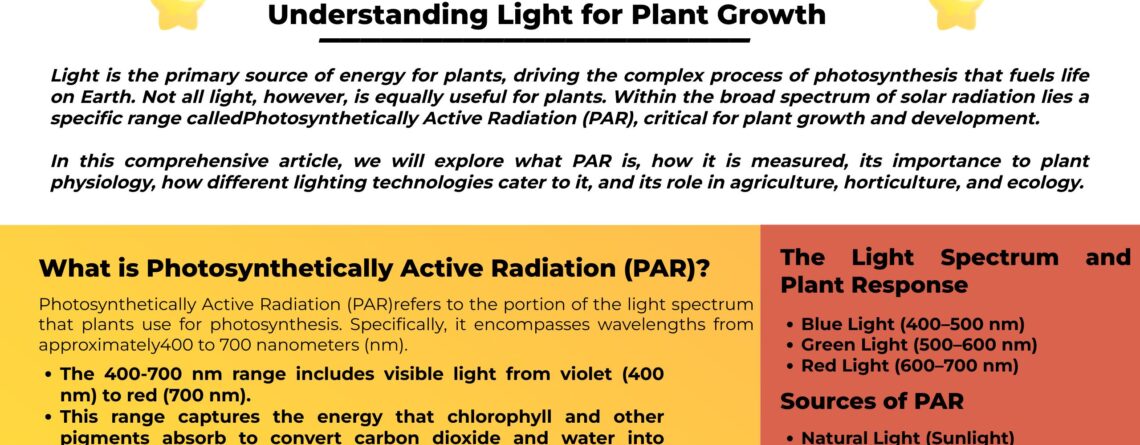
Rayonnement photosynthétiquement actif (PAR): comprendre la lumière pour la croissance des plantes
Light is the primary source of energy for plants, driving the complex process of photosynthesis that fuels life on Earth. Not all light, however, is equally useful for plants. Within the broad spectrum of solar radiation lies a specific range called Photosynthetically Active Radiation (PAR),...
17Juillet
Physique AI: Le rôle de l'intelligence artificielle dans la physique moderne
IntroductionArtificial Intelligence (AI) is revolutionizing countless industries, from healthcare to finance. One of the most promising and rapidly evolving intersections is Physics AI, where AI algorithms are integrated with the rigorous methodologies of physics. This fusion has opened unprecedented opportunities in theoretical modeling, experimental analysis,...
09Juillet
Capteur de rayonnement (PAR) photosynthétiquement actif: un guide approfondi
1. IntroductionLa recherche sur l'agriculture, l'horticulture et les plantes a considérablement évolué grâce aux progrès de la technologie des capteurs. L’un des éléments essentiels à l’optimisation de la croissance des plantes est la lumière, en particulier la partie de la lumière que les plantes utilisent pour la photosynthèse. C’est ce qu’on appelle le rayonnement photosynthétiquement actif (PAR). UN PAR...
02Juillet
Capteurs optiques: principes, types, applications et tendances futures
Optical sensors are crucial components in modern technology, playing an essential role in various industries, from medical diagnostics to industrial automation. These sensors detect changes in light intensity, wavelength, or other optical properties to measure physical or environmental parameters. Their high accuracy, fast response time,...
27juin
Spectroscopie photoacoustique (PAS): principes, technologie et applications
1. IntroductionPhotoacoustic Spectroscopy (PAS) is a powerful analytical technique used to detect and measure the concentration of chemical substances through the generation of acoustic waves as a result of light absorption. First observed in the 1880s by Alexander Graham Bell, the photoacoustic effect remained a...
17juin