
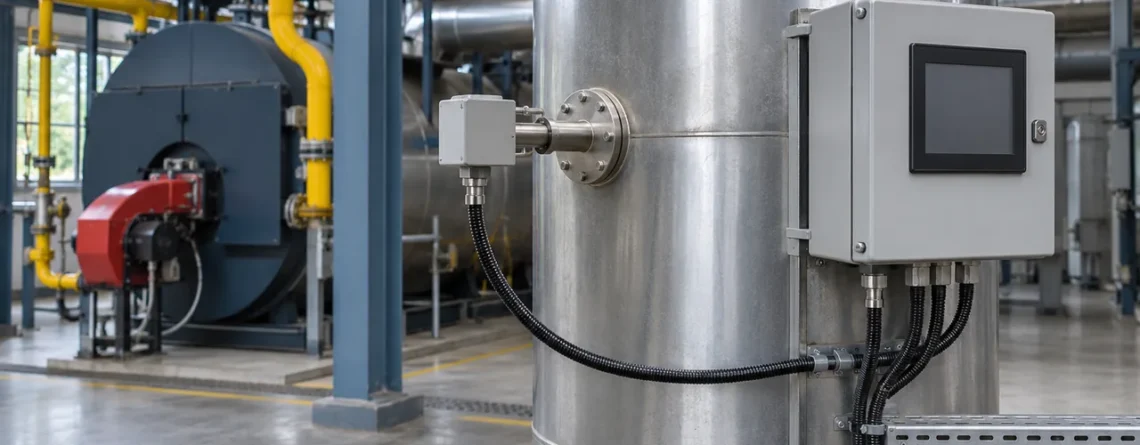
Is é ocsaigin gáis múcháin an ocsaigin sa sceite dócháin ag pointe samplála sainithe. Is éard is ocsaigin seomra ann ná an ocsaigin san aer ag suíomh sainithe ina bhféadfaidh daoine oibriú nó dul isteach ann. Féadfaidh an dá ionstraim a thaispeáint faoin gcéad O₂. Déanann an luach múcháin cur síos ar shruth próisis, go minic ar bhonn fliuch nó tirim sonraithe. Déanann an luach seomra cur síos ar shampla den atmaisféar comhthimpeallach agus féadann sé tacú le cinneadh sonrach san ionad oibre nuair a bhíonn an ionstraim agus an straitéis samplála oiriúnach.
Teastaíonn an teorainn samplach céanna, an tréimhse oibriúcháin agus an bonn comhchruinnithe chun anailíseoirí múcháin a chur i gcomparáid. Trí mhonatóir seomra a chur i gcomparáid le hanailíseoir múcháin freagraítear ceist eile de ghnáth. D’fhéadfadh uirlis amháin sceite téite a shampláil taobh istigh de dhucht agus aer an tseomra a úsáid mar thagairt. Déanann na samplaí eile an t-aer féin. Fiú nuair is aer comhthimpeallach é an gás tagartha, is é tomhas taiscéalaí múcháin fós an sceite ag an eilimint braite.
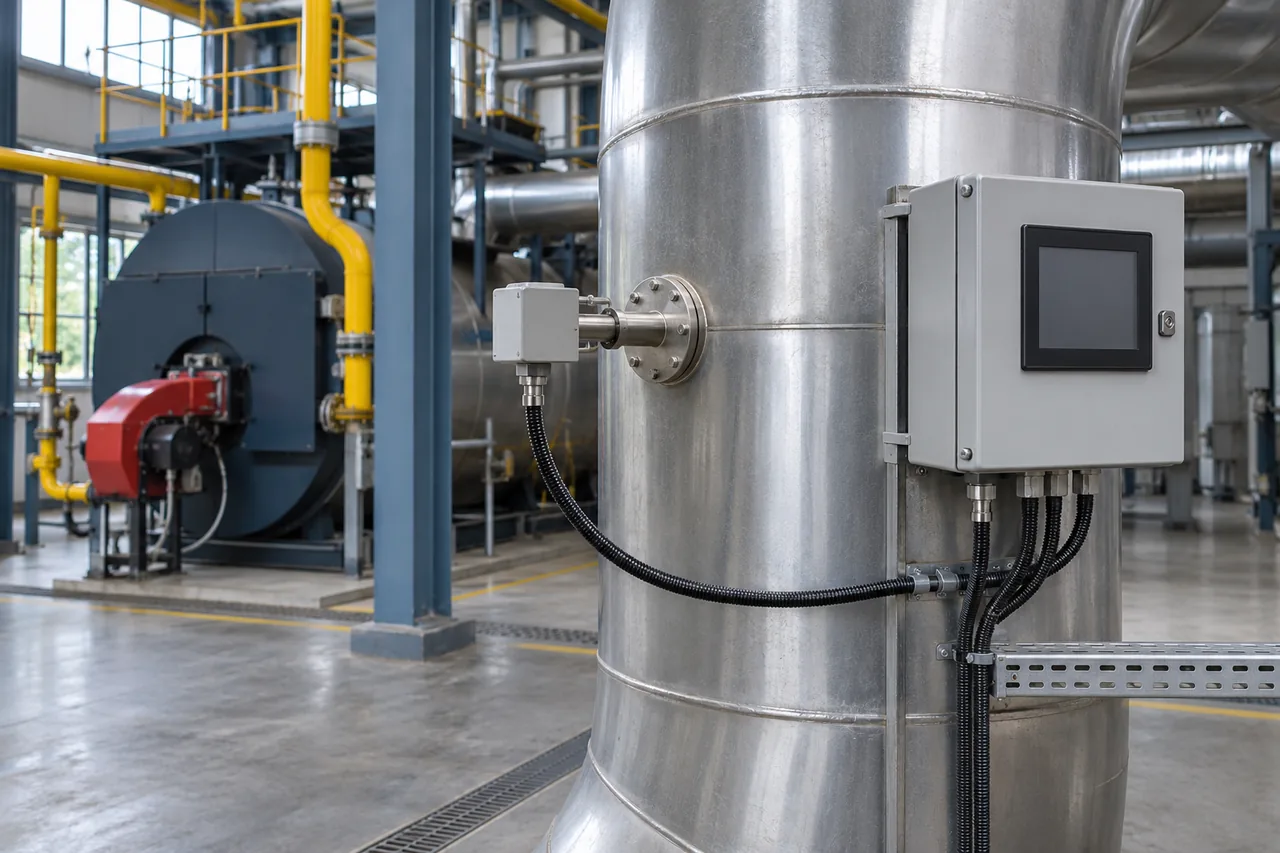
Is éard is múchán ann ná teorainn an tsampla próisis, ar leith ó aer áitithe.
Tagraíonn an dá léamh ocsaigine do dhaonraí gáis éagsúla
Oxygen remaining in a flue is affected by combustion, fuel and air supply, and any dilution or leakage upstream of the measurement point. Exhaust can contain water vapor, carbon dioxide, residual oxygen and other constituents depending on the process. Its temperature, pressure, velocity and particulate loading can change with equipment state. An exhaust reading at one point describes what the analyzer sampled there, under those conditions. A point upstream of an air leak or downstream of a mixing junction can report a different value even if both instruments are working properly.
Déanann ocsaigin seomra cur síos ar an aer a shroicheann brathadóir comhthimpeallach. Is féidir le soláthar aeir lasmuigh, díláithriú áitiúil, patrúin aerála, céimseata imfhálú agus gluaiseacht oibrithe difear don sampla. Is sainairíonna é pointe seasta a shuíomh féin le himeacht ama. Is féidir le hionstraim iniompartha duine nó plean samplála sainithe a leanúint. Cuireann caidéal agus feadán iargúlta céim iompair. Teastaíonn ráiteas soiléir ó gach socrú faoin aer a shamplaíonn sé agus cathain.
| Comparáid | Ocsaigin múcháin | Ocsaigin seomra |
|---|---|---|
| Teorainn samplach | Gás te i nducht nó i sampla sceite coinníollaithe | Aer comhthimpeallach ag brathadóir nó pointe samplach cianda |
| Buncheist | Cén codán ocsaigine atá sa sceite seo faoi na coinníollacha atá luaite? | Cén codán ocsaigine nó cén leibhéal ocsaigine léirithe atá san atmaisféar seo faoin modh sainithe? |
| Cumraíochtaí coitianta | Taiscéalaí pointe in-situ, cosán optúil nó anailíseoir eastóscach | Brathadóir comhthimpeallach seasta nó ionstraim léite dírí iniompartha |
| Faisnéis a athraíonn léirmhíniú | Bunús fliuch nó tirim, suíomh tomhais, ualach oibriúcháin, sláine samplála, ailíniú ama | Suíomh, gníomhaíocht oibre, sruth aeir, coinníollacha brú, modh ionstraime agus bailíocht |
| Fíorú ábhartha | Calabrú anailísí agus seiceálacha infheidhme ar chonair an tsampla nó ar fheidhmíocht rialála | Seiceálacha ar ionstraim agus ar chonairí samplacha arna sainiú ag an monaróir agus ag an ionad oibre nó ag nós imeachta an chórais sheasta |
Is féidir dhá léamh a shioncronú gan a bheith inchomparáide. Féadfaidh córas próisis ocsaigin múcháin a logáil gach cúpla soicind, agus taifeadann córas sábháilteachta ocsaigin seomra agus stádas aláraim áitiúil ar chlog neamhspleách. Is féidir le comhghaolú na dtaifead cuidiú le fiosrú nuair a tharla teagmhais. Ní féidir le hardú nó titim sa luach múcháin ann féin tiúchan an tseomra nó a chúis a shuíomh. Teastaíonn foinse, cosán agus léamha comhthimpeallacha cuí ó imscrúdaitheoirí don tátal sin.
Conas a fhaigheann anailíseoir múcháin a léamh ocsaigine
Taiscéalaithe zirconia in-situ
Déanann cill tiúchan zirconia comparáid idir brúnna páirteach ocsaigine ag dhá thaobh eilimint ceirmeach téite. Feiceann taobh samplach an próiseas gáis. Feiceann an taobh tagartha timpeallacht ocsaigine ar a dtugtar atá sainmhínithe ag an dearadh. Úsáidtear an voltas agus an teocht eilimint chun tátal a bhaint as an ábhar ocsaigine. An monaróir Cur síos ar theicneolaíocht zirconia míníonn an leictrilít soladach, leictreoidí catalaíoch agus taobh tagartha.
Cuireann taiscéalaí in-situ an tomhas ar an bpróiseas gan an príomhshampla a iompar trí líne sheachtrach fhada. Is féidir leis seo an mhoill agus an láimhseáil uisce a thugtar isteach le córas eastóscach a sheachaint, agus an tionól probe á nochtadh chun teocht, éilliú agus srianta ábhartha a phróiseáil. I gcás go bhfanann gal uisce sa ghás agus go dtuairiscíonn an ionstraim an codán marsampláilte, déantar an tomhas ar bhonn fliuch. Tá an Doiciméadú táirge Preferred Utilities ZP aithníonn sé an bonn sin dá samhail. Is féidir le hionstraimí eile roghanna próiseála nó taispeána éagsúla a thairiscint, mar sin seiceáil an cainéal roghnaithe agus an t-aschur sonraí.
Hot zirconia cells can give biased results if combustible species react in the sensing region. A small amount of oxygen consumed locally changes what the cell sees relative to the incoming gas. The actual applicability depends on the design and sample. Verify the manufacturer’s permitted sample composition rather than using a general assertion that a zirconia probe is suitable for every combustion condition. Reference-side obstruction, heater faults and leaks may also change the indicated value or invalidate it. A status point and calibration record help separate a process change from an instrument change.
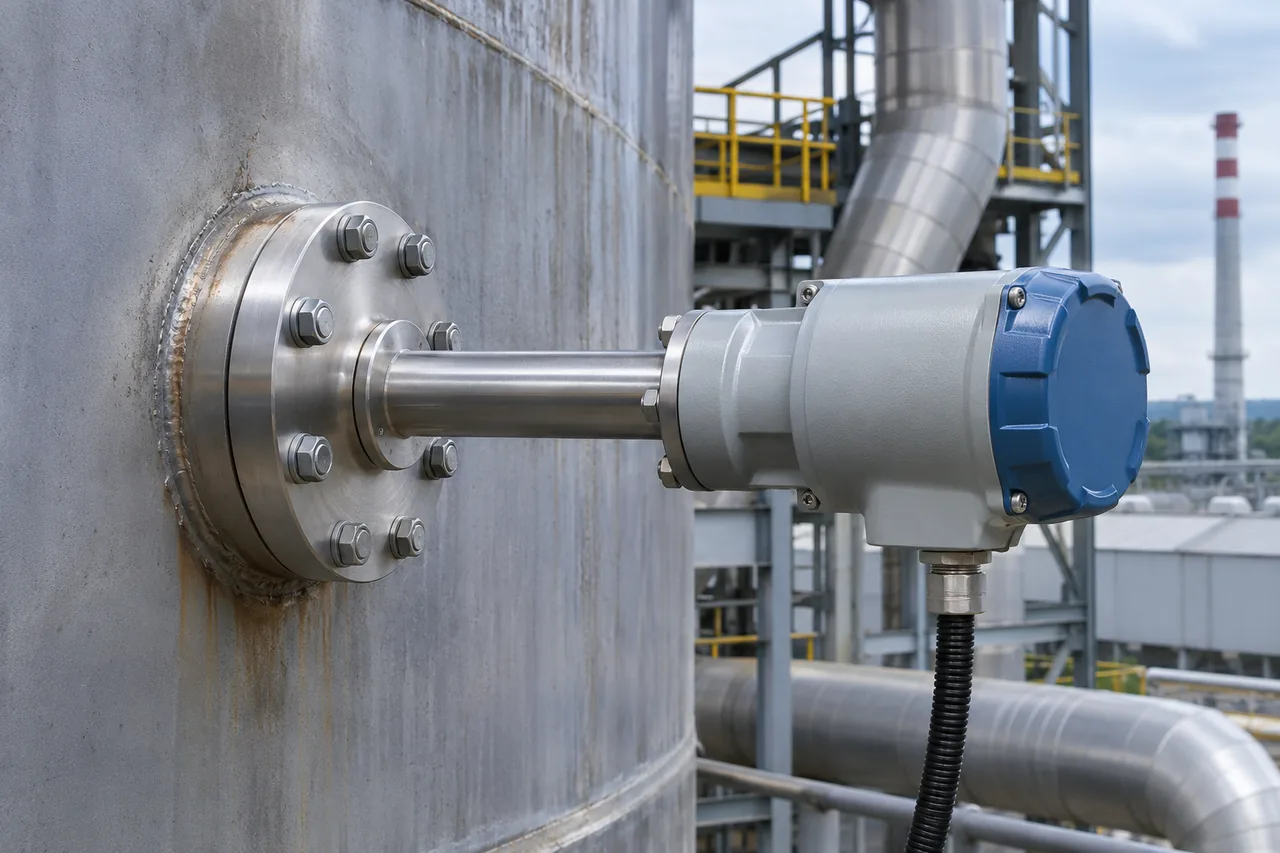
An in-situ measurement observes the gas at the probe or sensing path.
Cumraíochtaí paramagnetic eastóscacha agus anailísí eile
Tarraingíonn córas eastóscach gás ó phointe roghnaithe agus iompraíonn sé chuig an anailísí é. Is féidir líne téite, scagachán cáithníní, caidéal samplach, fuaraitheoir nó triomadóir, rialú brú nó sreafa agus draein a áireamh lena dhearadh. Cinneann láithreacht agus suíomh na gcomhpháirteanna seo cad a shroicheann an brathadóir. Is féidir uisce a bhaint d'aon ghnó chun bonn tirim a thomhas. Ina ionad sin, féadfaidh córas téite taise a chaomhnú tríd an tomhas, má thacaíonn an anailíseoir agus an modh leis. Ní chinneann teicneolaíocht an anailíseora amháin bunús an toraidh.
A paramagnetic analyzer uses oxygen’s attraction to a magnetic field. The exact mechanism differs by design. Sample conditioning, pressure, flow, vibration, background gases and contamination can affect specific instruments. A manufacturer's published suitability depends on the gas properties and the installed configuration. Other extractive analyzers may use an electrochemical cell or a different oxygen measurement technology. A portable service analyzer is an example of a specialized extractive arrangement when a probe, tubing and pump take the sample to the instrument.
A tunable diode laser analyzer measures absorption along an optical path using an oxygen absorption feature where the design supports it. A path across a duct represents the gas along that path. A point probe represents a smaller region. A path average and point measurement can differ across a stratified flow. Light attenuation, optical alignment, temperature and pressure handling are relevant to the exact instrument. Yokogawa’s oxygen analyzer technology comparison describes zirconia, magnetic and laser arrangements and their application considerations.
| Socrú | What to establish | What can make comparison difficult |
|---|---|---|
| In-situ zirconia probe | Actual insertion, reference condition, process limits, reported basis and fault status | Local gradients, reference faults, combustible interference or probe fouling |
| Extractive analyzer | Sample point, leak integrity, flow, conditioning and analyzer reporting basis | Transport delay, unwanted condensation, ambient air ingress or changed water content |
| In-situ optical path | Beam path, optical access, alignment and compensation | Path average versus local point, changing gas or optical conditions |
| Portable combustion analyzer | Correct mode, probe location, sample handling and appliance conditions | Different port, service test duration, probe leakage or an output that is calculated rather than directly measured |
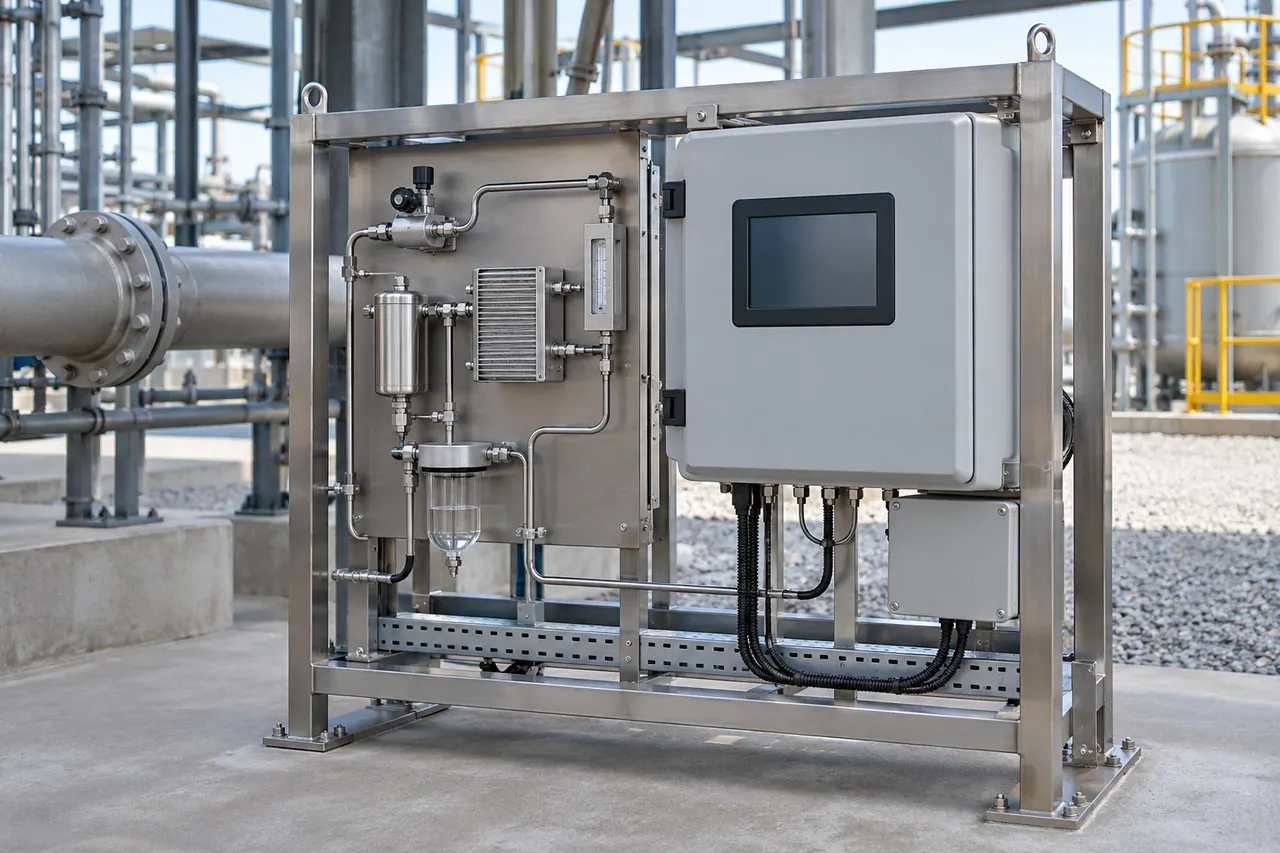
An extractive path can condition gas before the detector sees it.
Why an upstream port and a downstream analyzer can disagree
Imagine a fixed probe upstream of a dilution junction and a portable instrument at a downstream service opening. Some external air enters between the ports during the observation. The downstream value can move toward the oxygen fraction of that external air. The upstream and downstream results may be correct for their own locations. Converting both to the same moisture basis cannot remove a real difference in gas composition. Check the piping and duct drawings, actual port positions and any nearby branches before using the two results to evaluate instrument error.
An extractive analyzer adds another possible explanation. If its sample line or fitting admits surrounding air under suction, the analyzer may see a diluted sample even when both probes are nominally in the same section. The right comparison starts with the design or test procedure, where qualified personnel determine how to evaluate sample integrity. A higher oxygen reading alone cannot distinguish duct dilution from a sample-system leak or true process change. Preserve other readings and system status so those possibilities can be evaluated.
Wet and dry basis can make the same sample look different
A concentration is a fraction of the gas mixture. A wet-basis result uses the entire gas mixture, including water vapor. A dry-basis result uses the mixture after excluding water from the denominator. If only water is excluded, the same oxygen amount is divided by a smaller total, so the reported dry fraction is larger than the wet fraction whenever the water fraction is positive.
Let x be the wet oxygen mole fraction and w the wet water vapor mole fraction in the same sample. The corresponding dry oxygen mole fraction is x divided by (1 − w). Use fractions consistently. A water content of 10% corresponds to w = 0.10. Converting back to wet basis multiplies the dry fraction by (1 − w). When a specific measurement method defines its own calculation, correction or reporting conventions, use those definitions.
Hypothetical same-sample comparison
Suppose a gas mixture contains 3.60% O₂ on a wet basis and 10.0% water vapor by mole on the same basis. Removing the water leaves 90.0% of the original gas amount for the dry denominator. The resulting oxygen concentration is 3.60% divided by 0.900, or 4.00% dry O₂. The two values differ by 0.40 percentage points and describe the same original mixture under the assumptions.
| Hypothetical quantity | Luach tuairiscithe |
|---|---|
| Wet O₂ fraction | 3.60% |
| Wet water vapor fraction | 10.0% |
| Fraction remaining after water is excluded | 90.0% |
| Equivalent dry O₂ fraction | 4.00% |
| Difference between reported values | 0.40 percentage points |
The example is arithmetic and supplies no operating target for a boiler. To apply a conversion to real data, establish whether moisture was measured or otherwise determined under the applicable method, whether it represents the same gas and time, and whether the oxygen display was already converted. A cold sample trap does not automatically prove that a published number is on the desired basis. A dry-basis instrument can have residual water effects or a manufacturer-defined condition that must be accounted for. Follow the instrument and method definitions.
Air-free or reference-oxygen results answer another question
A report may also correct a pollutant concentration to a reference oxygen basis. Such a correction uses oxygen to standardize reporting under a defined procedure. It is different from removing water from the denominator, and it is different from reporting the actual oxygen in the gas. A comparison of two CO results, for example, needs the same definitions for moisture and any oxygen correction. Keep the directly measured value, oxygen reading, applicable basis and reported result available together when the procedure requires them.
Modh EPA 3A léiríonn na teorainneacha tomhais seo. Is modh uirlise é le haghaidh ocsaigine agus dé-ocsaíd charbóin in astaíochtaí foinse seasta nuair a éilíonn riail nó cead rialaithe SAM é. Tagraíonn sé d'fhorálacha feidhmíochta agus samplála, lena n-áirítear nuair is féidir le gáis thirim nó le córais thirim-bhunús socruithe éagsúla línte samplacha a úsáid. Roghnaítear modh rialála de réir na hoibleagáide tomhais iarbhír. Tá a gcuspóirí agus a riachtanais fianaise féin ag gach toradh le léamh seirbhíse coire, treocht próisis agus toradh astuithe.
Baineann ocsaigin an tseomra leis an atmaisféar san ionad oibre atá á mheas
Féadfaidh tomhas ocsaigine comhthimpeallach a bheith ábhartha i gcás ina sainaithnítear sa mheasúnú guaise díláithriú, saibhriú nó tomhaltas ocsaigine. Bíonn clúdach difriúil ag oibrí a théann isteach i spás srianta agus oibreoir ag féachaint ar tharchuradóir seomra seasta. Tomhaiseann monatóir seasta an gás ag a ghóilín. Samplaíonn aonad pumpáilte iniompartha ag a taiscéalaí agus cuireann sé moill iompair agus srianta féideartha ar an líne leis. Tomhaiseann aonad idirleathadh an gás a thagann chuig an ionstraim. Caithfidh an socrú roghnaithe a bheith feiliúnach don tasc agus a úsáid faoin nós imeachta ionaid oibre is infheidhme.
Atmospheric pressure matters to certain technologies and to human exposure. Some ambient oxygen sensing elements respond to oxygen partial pressure and the instrument’s behavior depends on its design and compensation. A device’s displayed oxygen percentage and its environmental limits should be interpreted using its instructions and the relevant safety program. Elevation and pressure changes can affect the interpretation even when a numerical concentration comparison looks straightforward. A flue analyzer’s partial-pressure principle is therefore useful for understanding instruments, while the process reading has no direct role in declaring an ambient atmosphere suitable.
In US federal general industry, OSHA 29 CFR 1910.146 sainmhíníonn sé easnamh ocsaigine faoi bhun 19.5 % de réir toirte agus saibhriú ocsaigine os cionn 23.5 % de réir toirte dá chreat spáis teoranta a éilíonn cead. Tá tábhacht leis an raon feidhme sin. Is sainmhínithe iad seo i rialachán sonrach, le forálacha meastóireachta agus iontrála fostóra a bhraitheann ar an obair agus ar an spás. Ní fheidhmíonn siad mar phointí socraithe braite foirgnimh uilíocha ná mar údaruithe chun dul isteach. Féadfaidh a gcuid riachtanas rialaithe féin a bheith ag tíortha, ag stáit agus ag comhthéacsanna tionscail eile.
A reading near the ordinary oxygen concentration cannot establish the absence of toxic or flammable gases. An oxygen channel answers a question about oxygen under its measurement conditions. The site’s hazard assessment identifies which other channels and decisions are relevant. For example, a workplace can need carbon monoxide information even when oxygen changes very little. The operator’s trend or work record should retain the status of each channel rather than compressing them into an unexplained overall reading.
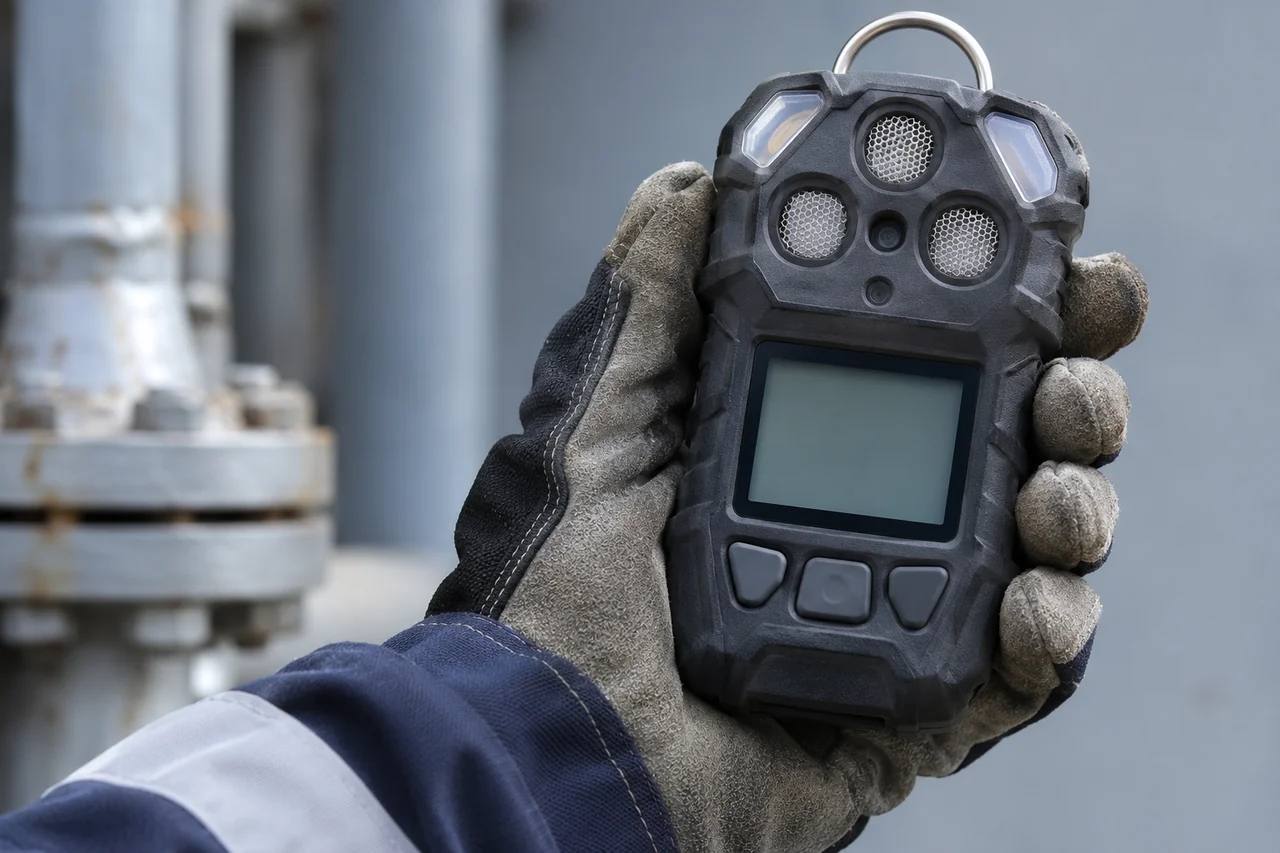
An ambient monitor samples air at its own inlet or designated probe.
Verify the path that produced the value
A flue sample can be validated at several boundaries. An analyzer check examines the sensing and indication under defined test conditions. A system check can include the probe, transport and conditioning path. A method can require additional evidence about sampling location, analyzer response or interference. Describe which part of the path the check included. If calibration gas reaches an analyzer downstream of the sample conditioning, that exercise cannot by itself establish the integrity of a remote probe and line.
For an ambient direct-reading instrument, a response check and a calibration check answer different questions. A functional check can show that the instrument responds and its warning works as intended under the test. A calibration check assesses indication against a suitable known concentration within the prescribed tolerance. OSHA’s direct-reading portable monitor bulletin explains these distinctions and the role of manufacturer procedures. The bump-test explanation provides related background. Fixed instruments have their own installed checks and project requirements. Pumped configurations also depend on sample-path condition and time delay.
Agus taifid á gcur i gcomparáid, tabhair aitheantas an trealaimh agus staid na hionstraime sa chomparáid. Féadfaidh raon athraithe, tiontú bonn tirim, athsholáthar taiscéalaithe nó athrú suímh difear a dhéanamh ar léamh tar éis cothabhála. Féadfaidh staraí seanainm pointe a chaomhnú fiú nuair a bhíonn na haonaid innealtóireachta nó an scálaithe comharthaí athraithe. Tá calabrú bailí agus lipéad treochta ceart araon riachtanach chun léirmhíniú iontaofa a dhéanamh.
| Taifead mír | Toradh múcháin | Toradh comhthimpeallach |
|---|---|---|
| Féiniúlacht tomhais | Clib trealaimh, calafort nó cosán, anailísí agus an modh atá beartaithe | Spás nó duine, pointe samplach agus monatóireacht ar fhéiniúlacht |
| Am agus staid oibriúcháin | Eatramh bailiúcháin, ualach próisis, aistrithe trealaimh agus moill samplach | Gníomhaíocht oibre, aeráil, moill samplach agus eatramh breathnóireachta |
| Sainmhíniú sonraí | O₂ unit, moisture basis, directly measured or derived and output configuration | O₂ unit, instrument mode, environmental conditions and validity |
| Sample evidence | Line or probe integrity, conditioning, calibration and applicable system check | Inlet or probe, flow if applicable, instrument check and task procedure |
| Diúscairt | Accept, hold or review for the stated process or reporting purpose | Interpret under the responsible workplace or fixed monitoring procedure |
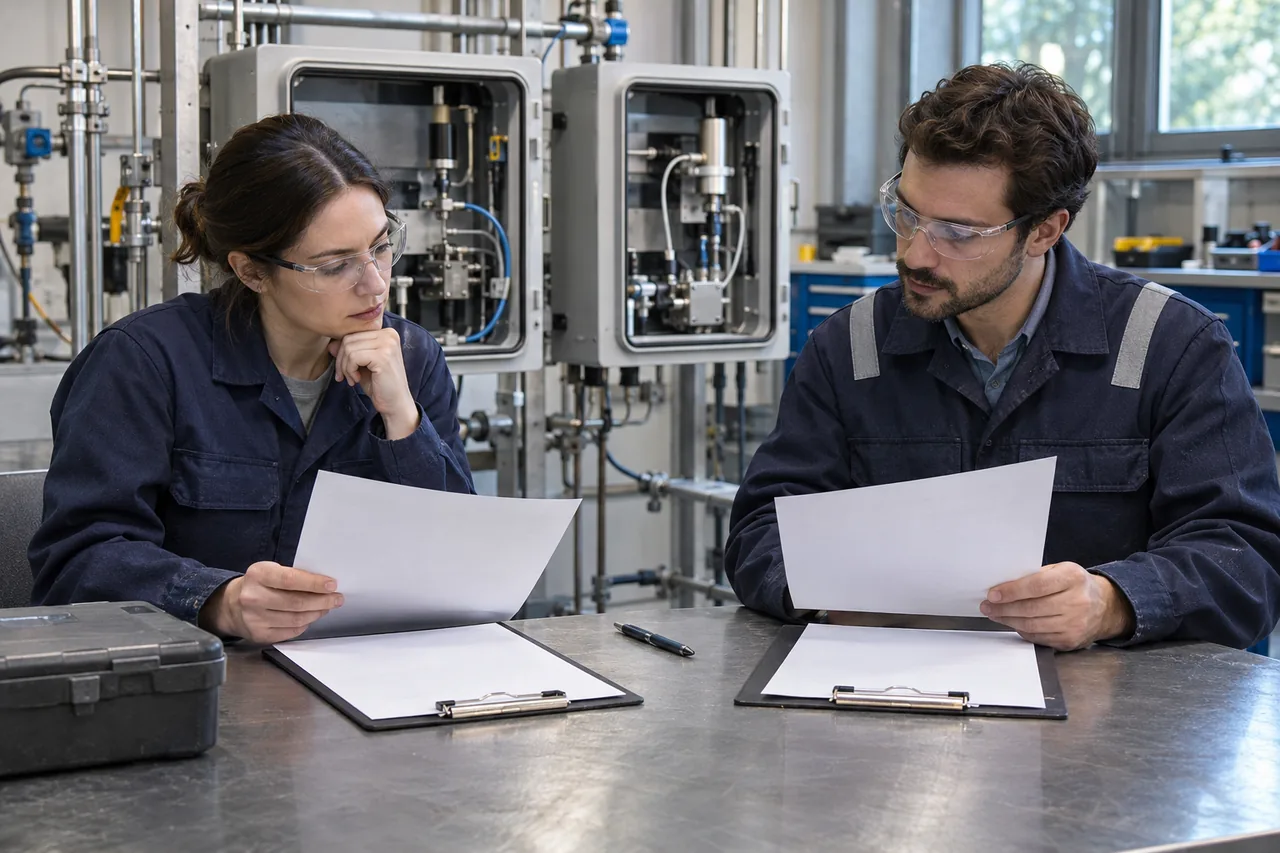
A useful review preserves instrument, sample and reporting identity.
Hypothetical review of three traces
Déanann oibreoir gléasra athbhreithniú ar threocht múcháin sheasta, ar thoradh seirbhíse dócháin iniompartha agus ar threocht ocsaigine seomra. Tuairiscíonn an taiscéalaí seasta toradh fliuch. Tuairiscíonn an anailísí iniompartha toradh tirim ag calafort difriúil. Taifeadtar an treocht chomhthimpeallach in aice le bealach isteach seirbhíse. Sula ndéanfaidh tú comparáid idir an dá luach múcháin, faigh amach an bhfuil a n-amanna samplála agus ualaí trealaimh ag teacht le chéile. Ansin seiceáil suíomh agus riochtú samplach agus féach an bhfuil comhshó taise iontaofa ar fáil. Is féidir le difríocht iarmharach grádán nó fadhb iompair a léiriú.
The ambient trend remains a separate record. If the building team is investigating a workplace event, the entrance monitor’s status and coverage are useful facts. They cannot establish the atmosphere at another location by themselves. Record any applicable worker or area observations separately, identify how the instruments were verified and avoid overwriting the original times or units while combining reports.
If the portable value has no stated basis, keep its measurement definition unresolved. A vendor description that the instrument can report dry results does not identify the mode used on that job. The original record, configuration or qualified testing under the defined method can close that gap. This is often more informative than applying a generic assumed moisture value to force agreement.
Read the timeline as part of the sample path
Two instruments can sample comparable gas and report on different clocks. In-situ sensing, extractive transport, detector filtering and historian averaging each contribute a distinct time scale. A service technician might write down a stabilized display after waiting under the appliance procedure. The plant historian might store an average over the preceding reporting interval. An extractive monitor might show a change after the duct process has already moved on. If the comparison concerns a transition, ask what instant or interval each value actually represents and where timestamps are assigned.
In a hypothetical trend review, a process point changes at the duct while an extractive system has a documented 18-second transport time before any analyzer or historian delay. Suppose a recorder labels a value at the end of its collection window. The duct sample underlying that label is older than the display time by at least the transport contribution, with any averaging and instrument response still to be accounted for. Subtracting a guessed constant from an averaged value does not reconstruct the original transient. Compare stable intervals where permitted by the investigation, or preserve sufficient time-resolved information and approved delay evidence to compare the transient correctly.
D'fhéadfadh go mbeadh cosán logála eile fós ag taifead sábháilteachta seomra. Is féidir le hionstraim áitiúil imeacht a phróiseáil sula ndéanann córas maoirseachta vótaíocht air. Féadfaidh staraí luachanna arís agus arís eile a shochtadh nó taifid atá in easnamh a sheachaint. Caomhnaigh am an imeachta áitiúil, staid an aláraim agus bailíocht má tá na taifid sin ar fáil. I gcás sampla comhthimpeallach pumpáilte, tosaíonn an mhoill ábhartha nuair a chuaigh an sampla isteach sa líne. Is saincheist ionstraime agus nós imeachta é an t-eatramh, neamhspleách ar mhoill an anailíseora múcháin.
Consider the limits of a clean-looking overlay. Curves can appear to line up because both respond to a broad change in building operation even when they observe different gas populations. A time shift that visually aligns the curves does not identify a common source. Verify point location, equipment and ventilation states and the actual sample path before drawing a connection. The central question remains whether the recorded evidence supports the process or workplace decision at hand.
Choose a result that can be reproduced by another reviewer
A reviewer should be able to identify the instrument, retrieve the point configuration and understand why the comparison was made. For a flue result, record whether oxygen was measured directly or computed from another reading, and whether the value was observed live, copied from a report or taken from a trend. Preserve the moisture and correction information that went into any conversion. For an ambient result, keep the intended work or area boundary, the method and the device’s operating status alongside the concentration. When a source leaves the basis or sample location unknown, record the gap directly. It may be possible to use the value as supporting context while holding it out of a numerical agreement decision.
Ceisteanna coitianta
Is in-situ oxygen always wet and extractive oxygen always dry?
A probe that sees the wet gas and reports the as-sampled fraction gives a wet-basis value. An extractive instrument can remove or preserve moisture, depending on its design. Either system can use a derived output if configured and supported. Verify the reporting basis from the exact instrument and method.
Can room air be used as a calibration or reference gas?
Some instruments use ambient air as a reference or provide a manufacturer-defined fresh-air procedure. A regulatory method may specify when a suitable air source can serve a calibration purpose. The actual use depends on the analyzer design and applicable procedure. Reference gas also has a different role from the flue sample being measured.
Why did the flue value change when the room reading did not?
Process gas composition and dilution can change with equipment conditions while the monitored room sample stays similar. Compare the instrument locations, operating records and status. An investigation of a possible ambient hazard needs evidence from the relevant area or workplace sample.
Does a higher dry-basis value mean the flue contains more oxygen?
For the same original gas, a dry-basis percentage can be higher solely because water was removed from the denominator. A statement about how much oxygen is flowing would need gas flow and a defined mass or molar basis as well as concentration.
How should a chart label the two traces?
Use distinct point names such as flue O₂ at the named equipment and port, and ambient O₂ at the named room point. Include percent, wet or dry basis for the flue result, timestamps and validity where the application needs them. Keep separate status and history when combining displays.





Fág freagra