
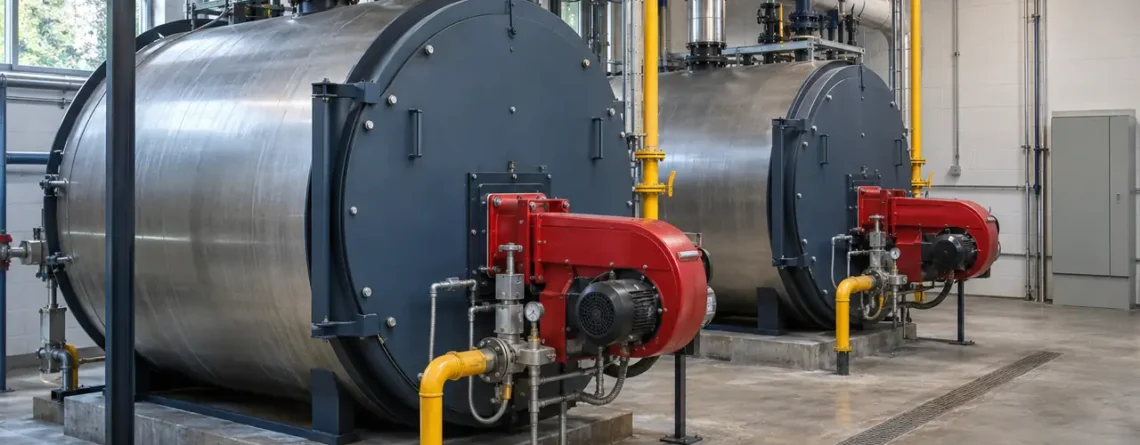
A boiler-room gas monitoring schedule starts with the source and the action a reading is meant to support. A combustible-gas detector looks for escaped fuel in room air. A carbon monoxide detector looks for CO in room air. A workplace oxygen monitor measures the atmosphere people may enter or work in when an oxygen hazard has been identified. A combustion analyzer samples exhaust or flue gas to assess the appliance or to meet a defined measurement obligation. Those four jobs can coexist at a plant. They use different samples, may have separate owners and produce different evidence.
Ba cheart d’fhoireann an tsuímh an breosla, an trealamh agus na spásanna a shainaithint sula gcinnfidh siad cé na poist a bheidh i gceist. Tá cásanna éagsúla ag gléasra uisce te gásbhreoslaithe, gléasra gaile ola-bhreoslaithe agus coire timpeallaithe ag trealamh ar féidir leo gás támh a scaoileadh. Tosaigh leis na rialacha meicniúla, gás breosla, tine agus coire agus na treoracha trealaimh. Luíonn cleachtais oibre agus ceanglais maidir le nochtadh ceirde taobh leis na rialacha sin. Ba cheart go mbeadh sceideal mar thoradh air a mhíníonn cad a bhreathnaíonn gach ionstraim agus cad a tharlaíonn nuair a bhíonn a léamh ard, íseal, neamhbhailí nó gan a bheith ar fáil.
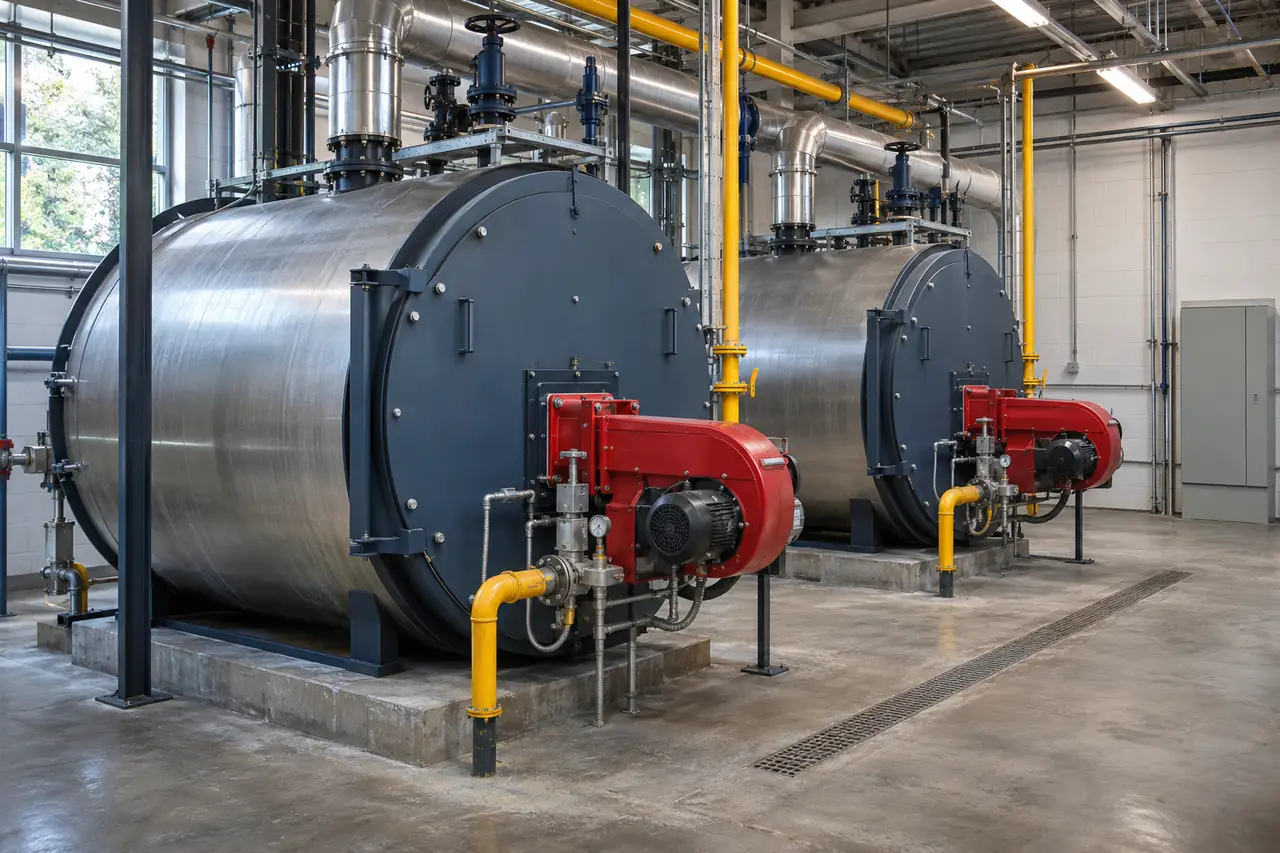
Soláthraíonn trealamh coire comhthéacs don phróiseas ar leith agus do thomhais seomra.
Cén sampla a thomhaiseann gach uirlis iarbhír?
A mechanical-room drawing often shows a boiler, several pipe runs and a single label reading “gas detection.” Split that label into the measurement jobs that the design actually requires. Trace each one from the physical sample to the decision. Even an instrument with several sensing channels needs a separate definition for each channel.
| Jab | Sample and measurand | Decision it can support | Fianaise le coinneáil |
|---|---|---|---|
| Escaped fuel detection | Room air or air from a designed sample point, for the specified combustible gas | Defined response to a release where the detection system applies | Fuel profile, coverage basis, gas response data, controller and interface drawings |
| Ambient CO detection | Room air at defined points or a worker’s exposure sample, in the applicable units | Defined room alarm or an exposure assessment, according to instrument purpose | CO range and interferences, air path, location, response and exposure basis |
| Ambient oxygen monitoring | Air in the area or work space, with the applicable O₂ measurement basis | Defined area, entry or work decision for a documented atmosphere hazard | Scope of hazard assessment, location, timing and instrument checks |
| Flue and combustion analysis | Exhaust at a specified test point, with named gases and reporting basis | Appliance service diagnosis, a process trend or a defined emissions result | Sample point, method, load, basis, equipment and verification records |
| Burner supervision | Flame signal, pressure switches or other inputs defined by equipment controls | Equipment permissive, trip or lockout according to its approved logic | Burner documentation, interlock schedule and equipment verification |
A workplace sample and a fixed room sample belong on separate rows when each serves a different decision. A fixed detector tells the operator about the gas that reached that detector or its inlet. A person can move across zones, work close to a release or enter an enclosure. A personal instrument or sampling strategy can follow an exposure in a way that a wall-mounted point cannot. Conversely, a worker’s portable instrument is present only when carried and maintained for that assignment.
Scríobh an teorainn fhisiciúil go soiléir. Mar shampla, d’fhéadfaí “CO ag tarchuradóir seasta an tseomra coire” agus “CO i sceith coire B ag an gcalafort seirbhíse” a thaifeadadh i gcodanna in aghaidh an mhilliúin. Caitheann taifead dar teideal “CO coire ppm” an t-idirdhealú. Ba cheart go n-áireofaí ar lipéid treochtaí céannacht seomra nó trealaimh, pointe, gás, aonaid agus stádas. Má thíolacann an ionstraim toradh sceite ríofa, baineann a bhunús leis an lipéad nó leis na meiteashonraí pointe nasctha.
Lean an breosla sula roghnaíonn tú cainéal indóite
Trace the fuel from the incoming service through equipment owned by the plant and the appliance. Where relevant, include regulators, valves, joints, flexible connections, burner trains and branches that remain pressurized when a boiler is off. Establish whether the fuel is utility natural gas, a propane supply or another named gas, and identify changes across operating modes. A conversion can affect the gas profile, equipment installation and response instructions even when the room and controls panel appear unchanged.
Féadfaidh brathadóir gáis indóite tuairisciú i faoin gcéad den teorainn phléascach íochtair, a scríobhtar go minic % LEL. Braitheann brí an scála ar an spriocghás agus ar chumraíocht na hionstraime. Úsáideann roinnt ionstraimí gás calabraithe sonrach agus soláthraíonn siad fachtóirí freagartha do gháis eile. Níor cheart fachtóir le haghaidh teicneolaíochta braite cruinn agus múnla a úsáid ach amháin laistigh dá choinníollacha sonraithe. Tá tiúchan arna shloinneadh mar chéatadán de LEL difriúil le toirt faoin gcéad san aer. Iarr ainm an gháis, an bonn calabraithe, an modh ceartúcháin nuair is infheidhme agus na rialacha maidir le léamha thar raon. Tá an Comparáid MSA idir brathadóirí coirníní infridhearg agus catalaíoch cur síos ar phrionsabail braite indóite agus ar ról na sprice dálaí gáis agus comhshaoil.
Catalytic combustible sensors oxidize suitable gases at a heated sensing element. The reaction depends on oxygen and can be affected by poisoning or inhibition. An infrared combustible detector measures absorption for the gases its optical design supports. A suitable hydrocarbon detector can be an option in certain oxygen-poor applications, but its response table and approval need to cover the actual gas and scenario. Infrared coverage for one hydrocarbon does not imply response to a gas with different optical behavior. Review the exact installed instrument and manufacturer documentation before making the technology decision.
Consider air movement and barriers with the release scenario. A warm equipment plume, supply diffuser, open door or extract path can move the gas differently as the building changes mode. A high ceiling void or partition may isolate an area from the detector shown on a floor plan. Gas density is one input. Temperature, release momentum, source geometry, ventilation and access for service also affect whether gas can reach the inlet. Record the basis for each location and each coverage assumption with the design team. A generic height or distance carries little information about an actual room.
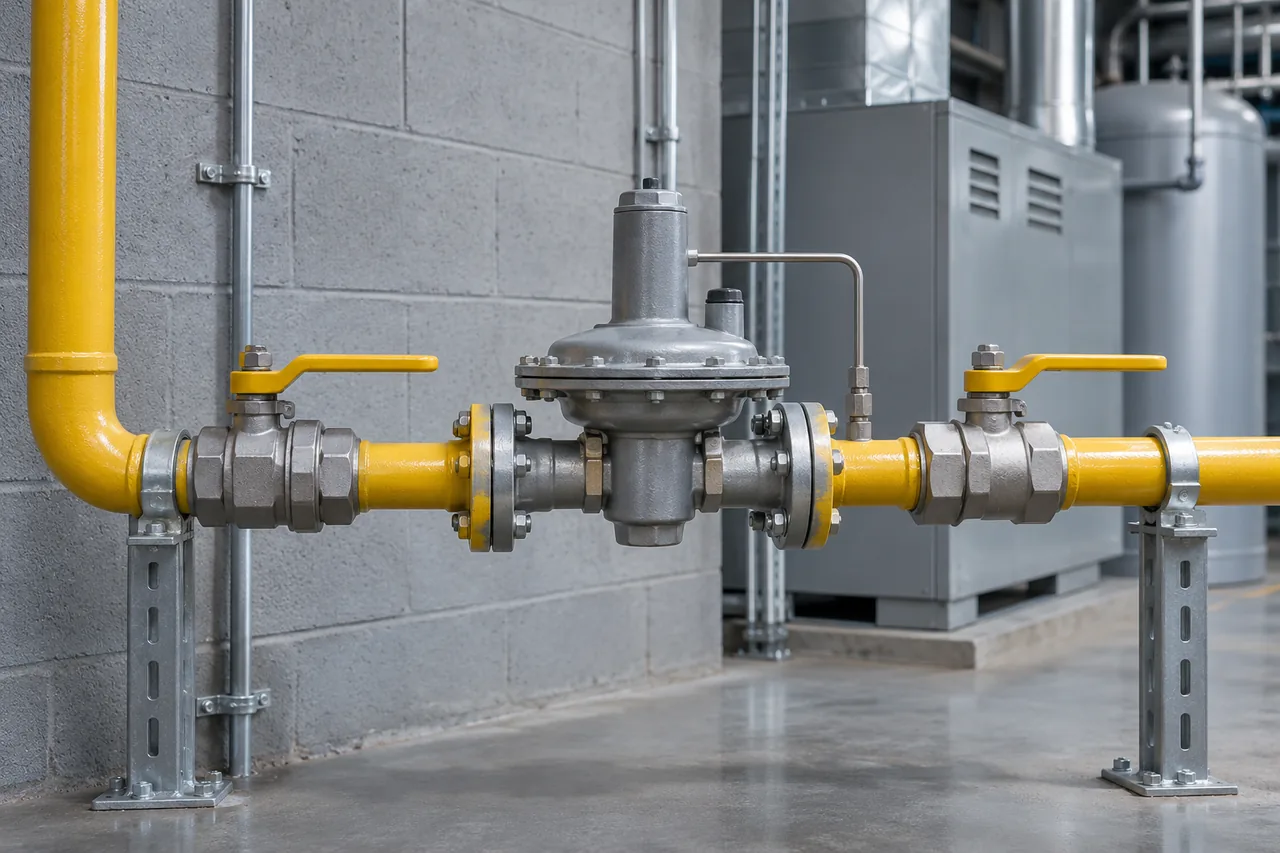
Fuel piping and associated components establish a separate release scenario.
Fuel response belongs in a controlled sequence
Assign ownership of the alarm, local indication, authorized isolation and any ventilation response. The sequence should identify the signal type, which equipment or system has authority to act, how a valid release is distinguished from an instrument fault, and how recovery is permitted. Where the accepted design includes automatic fuel isolation, the gas detector output is one part of that chain. Valve state, proof where specified and restart permission remain separate design questions.
Review what a monitored contact does when its source loses power. A single binary input may represent several physical states unless the interface is designed to distinguish them. Compare power failure, disconnected signal, actual gas event and a control system maintenance bypass. The approved sequence can define a different response for each state. A stable last value can mislead an operator if the monitoring screen has no stale-data indication.
Give ambient CO its own source and pathway analysis
Is féidir le CO seomra a bhaint amach nuair a bhíonn táirgí dócháin ag doirteadh, ag sceitheadh as cosán vent nó ag teacht ó fhoinse eile. Féadfaidh trácht feithicle cóngarach, innill shealadacha agus trealamh breosla-bhreoslaithe eile a bheith ábhartha maidir le saoráid ar leith. Déan athbhreithniú ar an liosta foinsí lasmuigh d'ainm an tseomra. Is féidir le teagmhas CO tarlú gan aláram breosla indóite. Is féidir le scaoileadh breosla tarlú gan CO ardaithe. Is gá breithniú neamhspleách a dhéanamh ar an dá chás nuair is infheidhme.
Draft and pressure relationships can change with exhaust fans, combustion air openings, exterior conditions or the operation of nearby equipment. An observation at steady load captures one operating condition. A room investigation should keep the event time and equipment state aligned with ventilation status and other activities. A single low reading taken later, after equipment stopped or doors opened, describes that later sample. The earlier event remains a separate question for the site team.
Úsáidtear cealla CO leictriceimiceach go forleathan le haghaidh ionstraimí comhthimpeallacha. Seiceáil an freagra beacht gáis agus cur isteach doiciméadaithe, chomh maith le teocht, taise, saol seirbhíse agus am freagartha. Is ábhar imní sochreidte é trasnaíocht hidrigine do roinnt cealla CO. Braitheann cibé an bhfuil sé tábhachtach ar chill agus ar thiúchan an gháis trasnaíochta, agus ní mór aon chúiteamh nó scagaire a mheas laistigh dá raon sonraithe. Nóta teicniúil Honeywell maidir le braiteoirí leictriceimiceach léiríonn sé conas is féidir faisnéis maidir le freagairt gháis agus tras-íogaireachta a cheangal le samhlacha braite ar leith. Ba cheart go bhfanfadh comhartha rabhaidh inghníomhaithe faoin nós imeachta suímh fad a bheidh an fhoinse agus an ionstraim á meas.
Is soláthar nochta ceirde í an teorainn CO cónaidhme san ionad oibre i SAM Tábla aer-éillithe OSHA. Ba cheart go ndéanfadh an tionscadal idirdhealú a dhéanamh ar an mbonn samplála méadrach nochta, pearsanta nó ceantair is infheidhme, agus aon cheanglas aláraim áitiúil nó trealaimh. Tá cuspóir difriúil ag fuinneog meánaithe a úsáidtear chun nochtadh a mheas ó mhoill ama nó loighic aláraim an rialaitheora seomra. Is féidir le treocht braite seasta eolas a chur ar fáil d’imscrúdú nuair a thuigtear a chlúdach agus a sonraí. Tá fianaise fós ag teastáil ón measúnú nochta atá oiriúnach don duine, don suíomh agus don eatramh ama atá á mheasúnú.
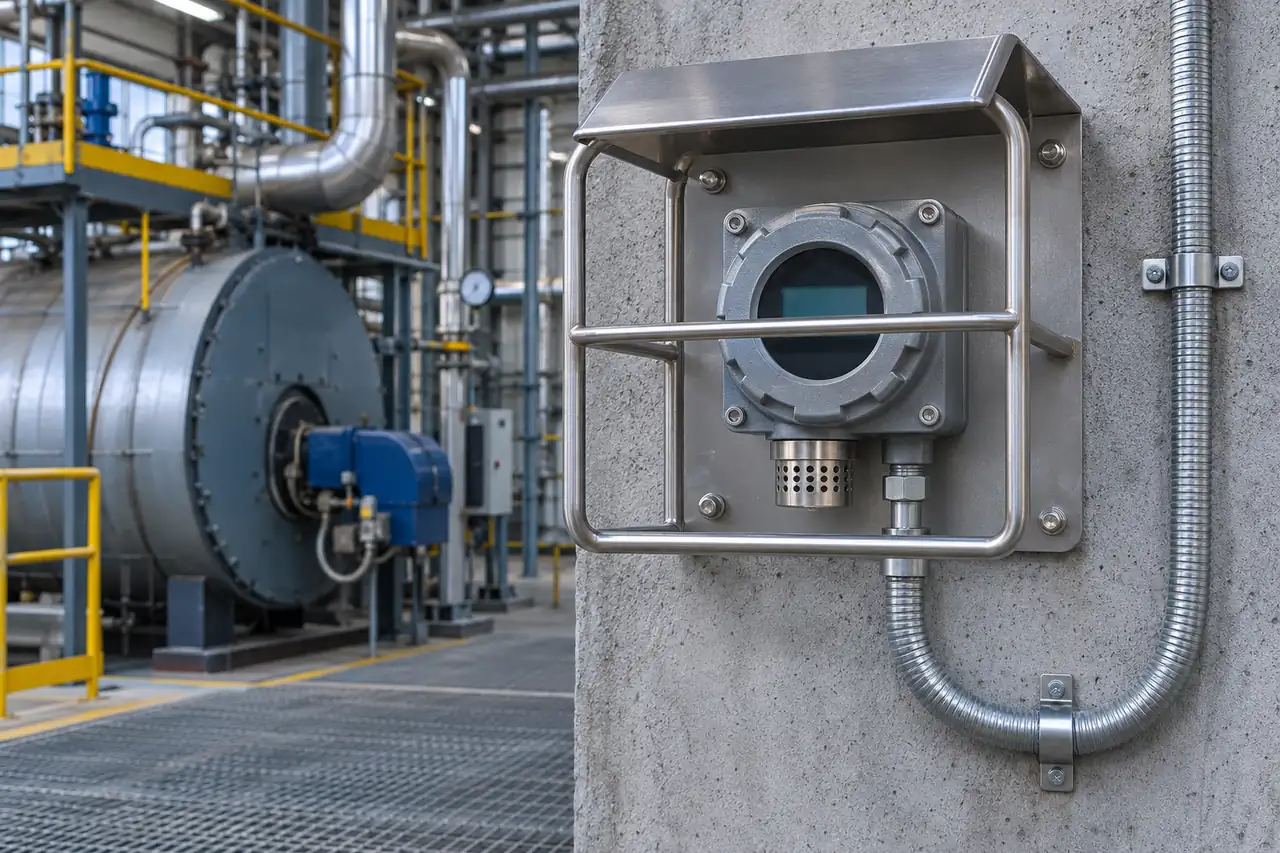
Léiríonn tarchuradóir seasta a shuíomh braite. Ní shonraíonn an radharc seo gléasadh.
Féadfaidh trí uimhir CO dhifriúla a bheith bailí
Imagine a plant team receives an appliance report, a room trend and a workplace sampling report. The appliance report lists CO from the exhaust, on a specified basis at a documented load. The trend lists the latest valid ambient CO sample for a fixed point near one work area. The workplace report summarizes an employee measurement over a specified period. All three can use ppm. Each is a different statement about the plant. An exhaust diagnostic cannot be substituted for an area reading. A low time average cannot tell the operator how large a brief event was unless the time history and method support that question.
Keep two chronology fields when possible. One indicates when the sample was taken or integrated. The other indicates when it was logged or shown on the controller. An extractive analyzer may have a transfer delay. A field network may update at a different cadence from the detector. Timeline alignment is important when the inquiry concerns a short equipment transition rather than a steady condition.
Decide where oxygen monitoring serves a defined work or area hazard
Room oxygen matters when a plausible process can change the oxygen concentration in the air people encounter. The review can include inert gases from maintenance or adjacent equipment, releases affecting a poorly ventilated enclosure, or oxygen-consuming conditions within a particular space. A boiler-room label alone does not identify those scenarios. Determine whether the question is continuous area monitoring, worker-carried detection, pre-entry evaluation or another defined activity.
A monitor selected for oxygen must be suitable for the environment and use. Document its valid range, environmental limits, sample inlet, response and other channels needed by the hazard assessment. In ambient work an oxygen result answers the oxygen question. CO can be hazardous while oxygen remains near its ordinary background. Some gases can present toxicity or flammability hazards before an oxygen reading changes enough to serve as a proxy. Use the channels assigned to the identified hazards.
An enclosed boiler component, pit or other restricted space may warrant separate assessment. The US federal general-industry permit-required confined-space rule a thugann aghaidh ar chomhthéacs oibre ar leith. Ba cheart go ndéanfadh clár sábháilteachta seomra idirdhealú a dhéanamh idir an limistéar trealaimh oscailte agus spásanna a ndearnadh meastóireacht orthu faoi nósanna imeachta iontrála agus ba cheart go n-aithneodh sé cé a dhéanfaidh an cinneadh agus a dhéanann taifead. I ndlínsí eile, bain úsáid as an rialtóir ionaid oibre is infheidhme agus na rialacha glactha. Soláthraíonn feiste seomra buan áit eile sa tsaoráid sampla difriúil ón gceann a tógadh le haghaidh iontrála sainithe.
Coinnigh anailís ar ghás múcháin leis an bhfearas agus a mhodh tomhais
Combustion analysis can include oxygen, CO and other quantities depending on the equipment and purpose. A service instrument can help a qualified technician assess combustion under the appliance procedure. An installed process analyzer can track exhaust as operating conditions change. A permit or emissions program may require a method with its own sampling, analyzer and validation provisions. These applications can use different instruments even when a channel shares the same gas name.
Is sampla sceite te nó cuid sainithe coinníollaithe den sceith sin. Sainaithin suíomh an chalafoirt nó an taiscéalaí, an t-eastóscadh agus an riochtú más infheidhme, staid an fhearais agus an bonn tuairiscithe. Athraítear ainmneoir tiúchana nuair a bhaintear uisce as sampla. Is féidir leis an aer a théann isteach i gcosán samplach sceite nó a chaolaíonn an múchán ag pointe le sruth an toradh a athrú freisin. Má shonraíonn tuarascáil CO an bonn ceartaithe, coinnigh an sainmhíniú ar an ríomh, na hamhléithe agus aon ionchuir riachtanacha ar fáil. Tá brí éagsúil le gnáthléamh CO seomra agus le toradh dócháin arna cheartú le haghaidh tiúchan ocsaigine tagartha.
Modh EPA 3A is a US instrumental method for oxygen and carbon dioxide in stationary-source emissions where required by the applicable rule or permit. It illustrates the value of validating the sampling system and analyzer together. It does not supply the service instructions for every boiler or establish a room-air safety measurement. Use the equipment’s service instructions and the actual project measurement requirement to decide what evidence applies.
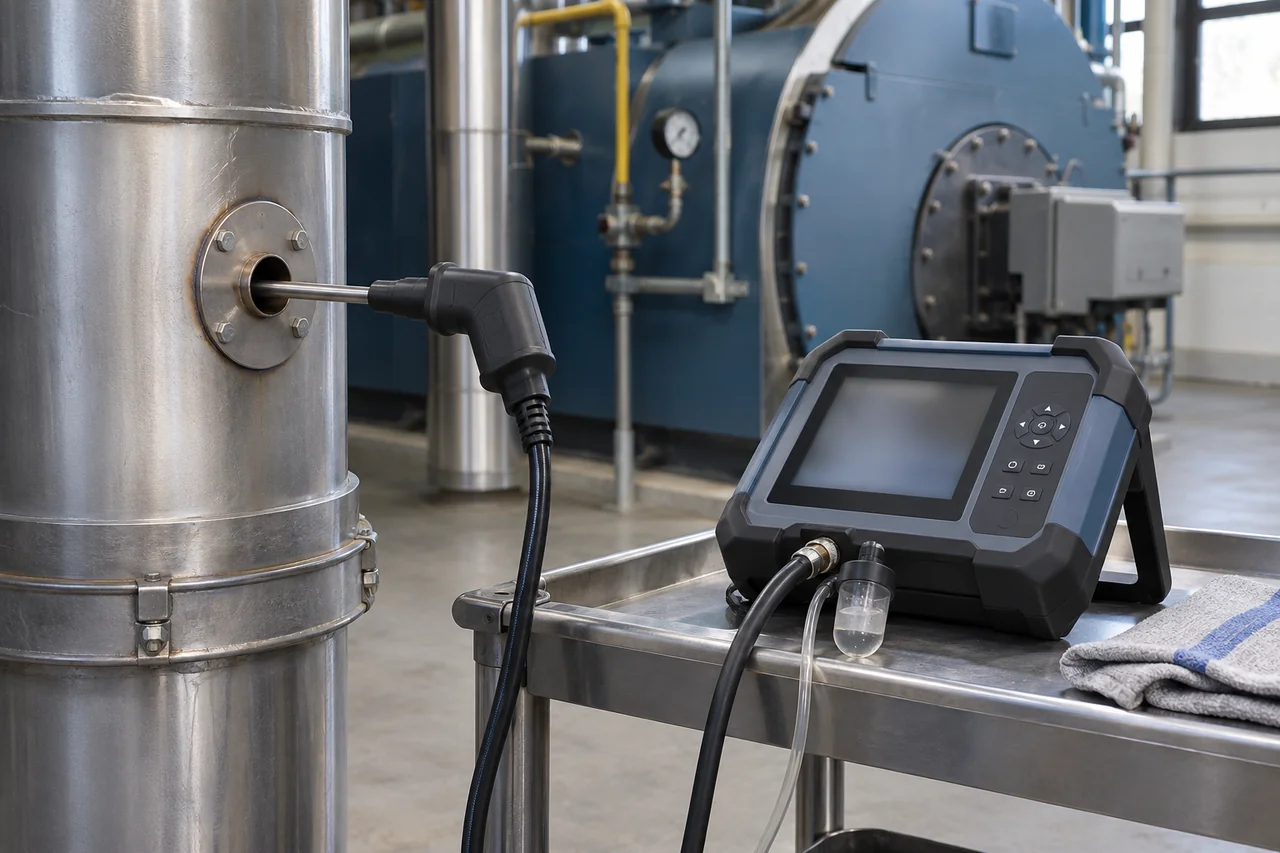
Exhaust sampling is a separate task from ambient room measurement.
Burner controls are another layer
Féadfaidh córas bainistíochta dóire úsáid a bhaint as ionchuir amhail maoirsiú lasair, brú gáis, cruthú comhla nó ceadanna sreafa aeir mar atá sonraithe ag an trealamh agus na ceanglais rialaithe. Déanann na hionchuir sin cur síos ar staid an dóire agus a chuid seirbhísí. Ní dhéanann siad sampla den atmaisféar seomra ginearálta. Is féidir le taifead múchta nó frithdhúnadh cabhrú le heachtra a chomhghaolú le hoibríocht. Ní shuíonn sé cé acu an scaoil nasc píopaí in aghaidh an tsrutha gás isteach sa seomra nó an shroich CO limistéar oibre.
Ar an gcaoi chéanna, tá cuspóir rialaithe sonrach agus freagra cumraithe ar locht ag aon ionchur ocsaigine múcháin a úsáideann straitéis rialaithe dócháin. Ba cheart go mbeadh sé le feiceáil ar sceideal ionstraimíochta an phróisis le húinéir an rialaithe sin. Ba cheart go mbeadh a gcomhéadan doiciméadaithe féin ag an rabhadh comhthimpeallach agus ag freagairt an tseomra. Déan athbhreithniú ar an dearadh leis an speisialtóir trealaimh, an dearthóir rialuithe agus an fhoireann sábháilteachta freagrach, lena n-áirítear cad a mheastar a dhéanfaidh gach córas má chailleann córas eile cumhacht.
Bunaigh raon feidhme an chóid roimh luach aláraim a bhaint amach
Féadfaidh glacadh stáit agus áitiúla eagráin agus leasuithe éagsúla, liostú trealaimh agus treoracha, oibleagáidí gairme agus ceadanna a bheith i gceist le tionscadail SAM. Baineann stádas tógála nó athraithe an láithreáin. Seiceáil áitíocht, toilleadh trealaimh nó aicmiú más infheidhme, sonraí breosla agus suiteála. Féadfaidh an t-údarás atá freagrach as ceadanna tógála a bheith difriúil ón eagraíocht atá freagrach as iniúchtaí coirí, astaíochtaí nó nochtadh san ionad oibre. Taifead cén fhoinse a rialaíonn gach cinneadh aonair.
Tá an Riail mheicniúil Minnesota maidir le trealamh dócháin soláthraítear sampla amháin d’fhorálacha a bhaineann go sonrach le dlínse. Treoir brathadóir gáis nádúrtha Chathair Nua-Eabhrac addresses a city requirement for covered housing and explains its applicability. The presence of a detector provision in one use case is evidence about that use case. A central plant in another city, an industrial workplace or an oil-fired appliance needs its own basis. In jurisdictions outside the United States, start with the applicable local building, gas, fire and workplace requirements and the installed equipment documentation.
Read the condition before the number. One value may be an equipment certification condition, another may be a limit for a workplace exposure, and another may be a site-approved room alarm. For every threshold or state in the approved design record, keep the purpose, gas, units, basis, time behavior, authority, required response and responsible owner together. An alarm list copied from a different plant loses most of the information needed to judge whether it belongs at this site.
Build a measurement schedule that operators can use
Tá sraitheanna ceangailte le clibeanna trealaimh agus le réimsí fisiceacha i sceideal úsáideach. Áirítear ar na hiontrálacha stáit oibriúcháin a chlúdaíonn an pointe, an raon ceadaithe, stáit neamhbhailí agus an áit a dtaispeántar an léamh. I gcás gach ró, sainaithin an chuid den dearadh a iompaíonn aschur braite ina ghníomh. Is féidir le léamh bailí rabhadh áitiúil, ciantheachtaireacht, comhéadan le rialtóir eile nó roinnt gníomhartha i seicheamh deartha a spreagadh. Ba chóir go léireodh fianaise fíoraithe na gníomhartha a breathnaíodh i ndáiríre.
| Réimse sceideal | Cad atá le doiciméadú |
|---|---|
| Foinse agus clúdach | Gás nó próiseas, scaoileadh inchreidte nó suíomh samplach, limistéar difear agus stáit oibriúcháin |
| Ionstraim | Brathadóir nó anailíseoir cruinn, cumraíocht gáis, raon, aonaid agus rátáil comhshaoil |
| Sampláil | Physical inlet or probe, mounting or line details, filter and flow supervision if relevant |
| Control and notification | Source of logic, destination, priority, authorized actions and physical proof where required |
| Invalid data | Loss of power, fault, overrange, service, stale communications and bypass |
| Test boundary | Detector response, signal delivery, commanded action and independent feedback as applicable |
| Ownership | Responsible discipline or team, document revision, service owner and approved recovery |
Specify how service changes are controlled. A detector can be in warm-up after replacement, a sample path can be disconnected for maintenance and a controller can be under a temporary override. The operator needs an indication of coverage and availability during those states. A return-to-service record should identify the asset, configuration, resulting checks and unresolved conditions, with restrictions if required by the site process. Align maintenance access with the design so qualified personnel can reach detectors and sample components under the applicable procedures.
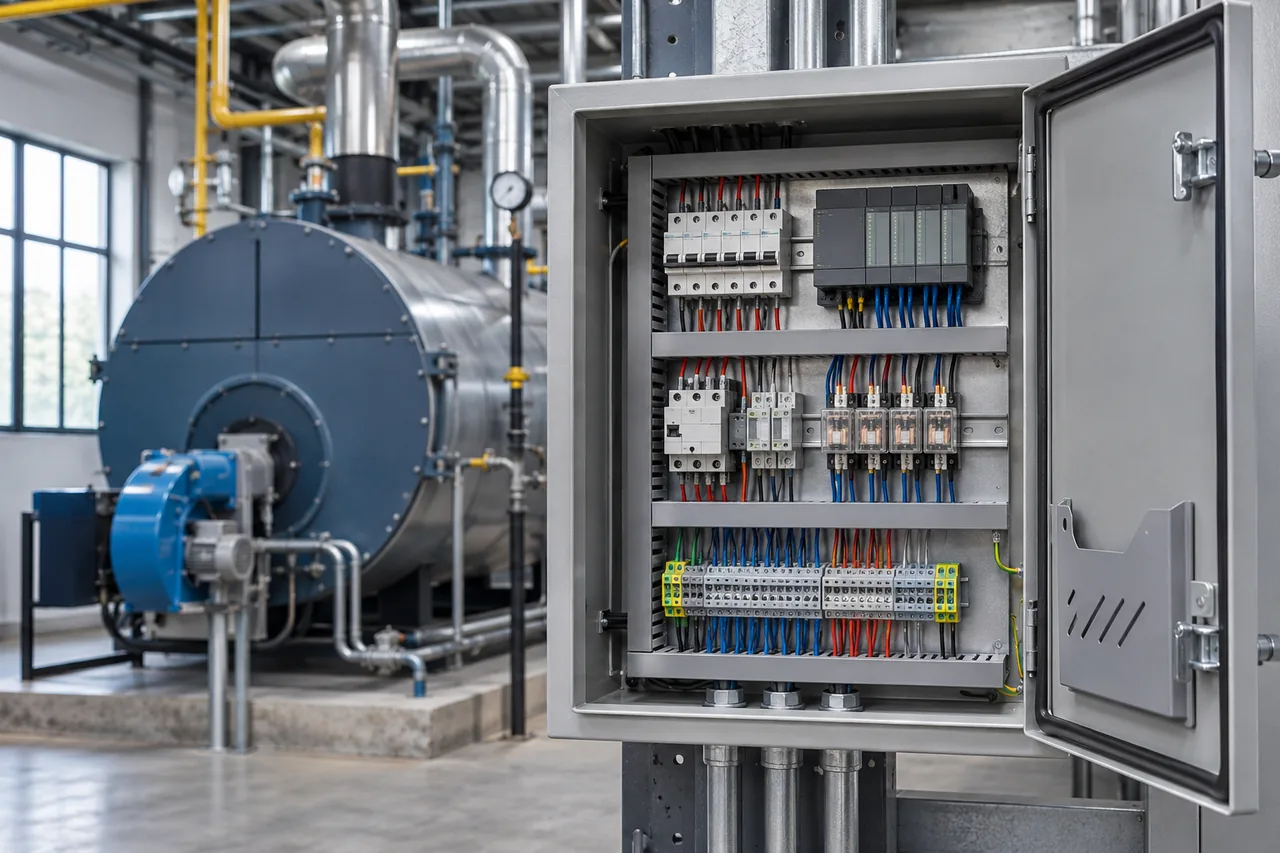
The installed control path defines how a detector event becomes an action.
Hypothetical plant with two boilers and an adjacent loading area
Consider two gas-fired boilers sharing a mechanical room beside a loading area. A fixed fuel-gas detection row concerns a release from the pressurized fuel system into the room. A separate ambient CO row covers combustion products that could arrive from the plant or the adjacent activity. A qualified service contractor uses a flue analyzer at the defined appliance test point for each boiler. Workplace staff assess a restricted equipment enclosure separately for entry hazards.
Suppose the fixed ambient CO channel rises while the fuel channel stays low. The operations log preserves the alarm, ventilation mode, boiler state and nearby activity. An appliance test performed later records its own load and sampling basis. The team can assess competing explanations using the two independent records. A service result at one boiler under one load is useful evidence about that test condition. The fixed channel event still has its own time, source investigation and response record.
Anois is dócha go n-iompórtálann uasghrádú rialuithe na ceithre shruth sonraí go léir isteach ar an deais chéanna. Ba cheart go gcaomhnódh an léarscáil comhéadain a neamhspleáchas. Má theipeann ar nuashonrú líonra, ba cheart don deais idirdhealú a dhéanamh idir na seanluachanna agus luachanna beo nuair a éilíonn dearadh an chórais é. Ba cheart údarás an bhunrialtóra cheadaithe agus aon ghníomhartha áitiúla a dhoiciméadú ar leithligh ón deais. Bain úsáid as taifid coimisiúnaithe chun an cosán tríd an suiteáil iarbhír a thaispeáint. Ní féidir le grafaic scáileáin amháin cad a tharla ag an bhfean, an chomhla nó an fógraitheoir áitiúil a shuíomh.
Cad is féidir le seiceáil brathadóir a léiriú?
A functional gas response check can demonstrate the expected response under the test conditions. A calibration check compares the indication with a suitable reference. A full installed sequence check adds the signal path, controller behavior and configured downstream outcomes. For an aspirated system, the point where test gas enters matters. A test applied at the analyzer can leave the installed sample inlet and transport path outside the test boundary.
OSHA’s bulletin on direct-reading portable gas monitors describes the distinction between portable monitor functional checks and calibration. The bump-test guide expands on what a response check shows. Fixed instruments and combustion analyzers need their applicable methods, instructions and approved test arrangements. Keep the test point, reference, observed action and any unverified parts of the chain in the report. Testing that can operate equipment or alarm interfaces belongs under the authorized site procedure.
Ceisteanna coitianta
Does a boiler’s flue analyzer monitor carbon monoxide in the room?
Its probe or sample line measures exhaust at its defined sampling point. An ambient CO measurement requires a suitable channel that samples the room or the worker’s environment as specified. An instrument may offer more than one mode, but the mode, inlet and intended use still define what the displayed value represents.
Can a fuel detector replace a CO detector?
The two channels have different target gases and decisions. Compare the exact gas responses of each instrument. A shared controller or enclosure can host independent channels if the application and approvals support it. Each channel still needs its own purpose, limits and evidence.
Do all boiler rooms need an oxygen alarm?
Review the oxygen hazard and governing requirements for the specific space and task. A fixed area detector, portable worker instrument and measurement used under an entry procedure have distinct purposes. Document the reason for selecting each one and the boundaries of the coverage it provides.
Is one detector location suitable for every gas?
Braitheann an suíomh ar an bhfoinse, leagan amach an tseomra, staid an tsreafa aeir, na treoracha trealaimh agus na ceanglais infheidhme. Ní féidir glacadh leis go bhfuil suíomh a roghnaítear do ghás amháin agus cinneadh ionadaíoch do ghas eile. Athbhreithnigh céimseata iarbhír an tseomra agus athruithe san aeráil agus clúdach á mheas.
Cé leis an seicheamh freagartha gáis?
Ba cheart go n-aithneodh doiciméid an tionscadail úinéir gach rialaithe áitiúil, gach comhéadan agus gach gníomh deiridh, mar aon leis an údarás a ghlacann leis an socrú. Teastaíonn taifead ó fhoireann na n-áiseanna ar an áit le haláraim a fheiceáil, conas a shainaithnítear lochtanna agus cén nós imeachta a rialaíonn aisghabháil. Féadfaidh an díoltóir brathadóireachta, an conraitheoir rialuithe agus an soláthraí trealaimh araon fianaise a sholáthar maidir le cuid den slabhra.







Fág freagra