
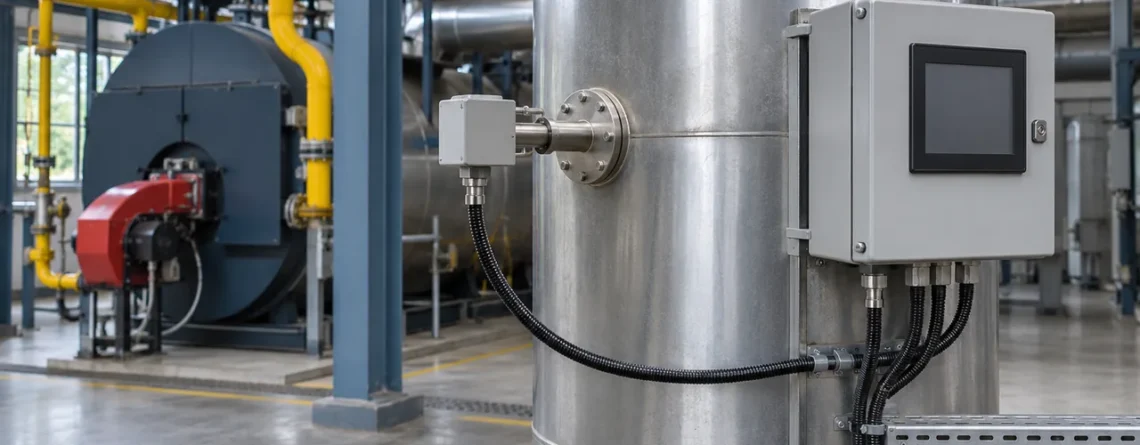
Flue gas oxygen is the oxygen in combustion exhaust at a defined sampling point. Room oxygen is the oxygen in the air at a defined location where people may work or enter. Both instruments may show percent O₂. The flue value describes a process stream, often on a stated wet or dry basis. The room value describes a sample of the ambient atmosphere and can support a specific workplace decision when the instrument and sampling strategy are suitable.
Il confronto tra gli analizzatori di fumi richiede lo stesso confine del campione, periodo di funzionamento e base di concentrazione. Il confronto tra un monitor ambientale e un analizzatore di combustione risponde generalmente a una domanda diversa. Uno strumento potrebbe campionare i gas di scarico riscaldati all'interno di un condotto e utilizzare l'aria ambiente come riferimento. L'altro campiona l'aria stessa. Anche quando il gas di riferimento è l'aria ambiente, la misurazione di una sonda fumi è ancora lo scarico sull'elemento sensibile.
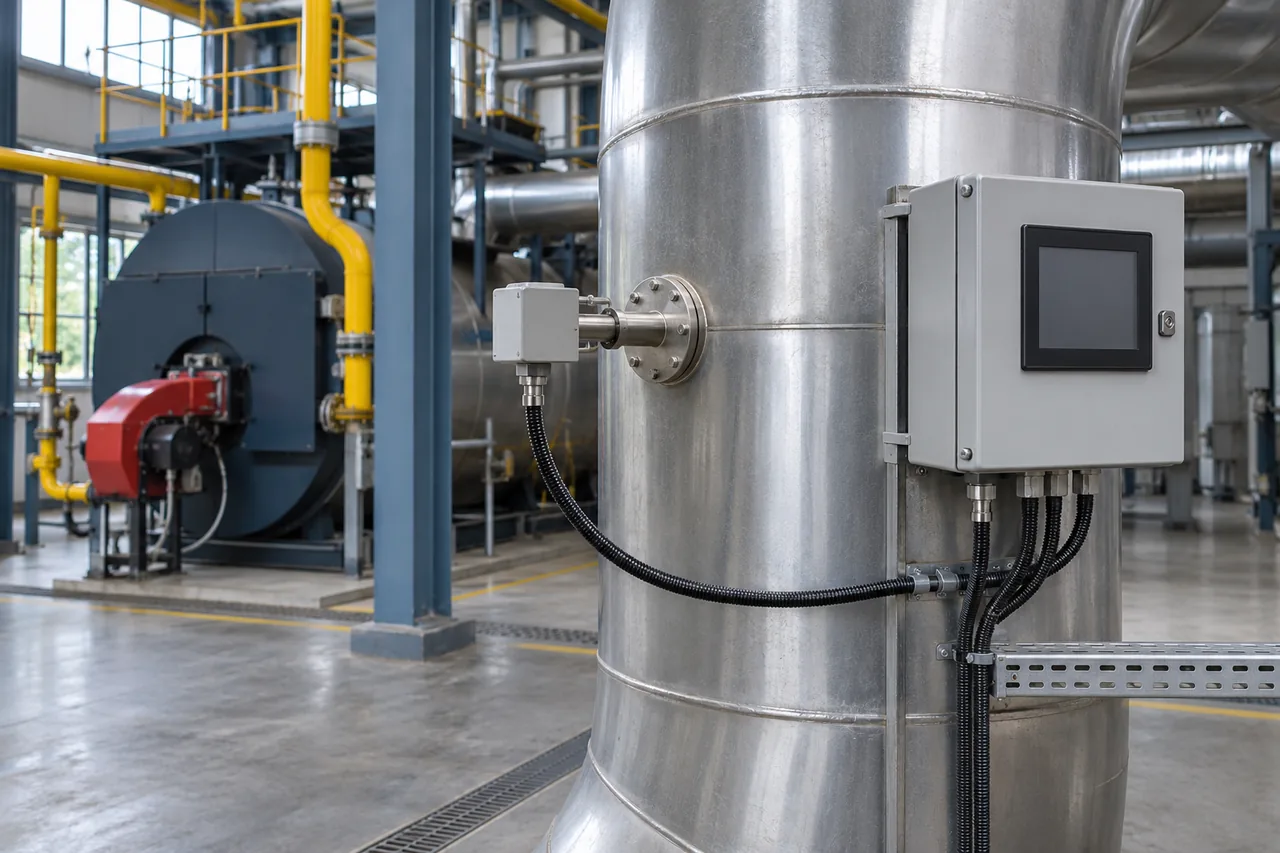
Una canna fumaria è il confine del campione di processo, distinto dall'aria occupata.
Le due letture dell'ossigeno si riferiscono a popolazioni di gas diverse
L'ossigeno rimasto in una canna fumaria è influenzato dalla combustione, dall'alimentazione di carburante e aria e da qualsiasi diluizione o perdita a monte del punto di misurazione. I gas di scarico possono contenere vapore acqueo, anidride carbonica, ossigeno residuo e altri componenti a seconda del processo. La sua temperatura, pressione, velocità e carico di particolato possono cambiare con lo stato dell'apparecchiatura. Una lettura dei gas di scarico ad un certo punto descrive ciò che l'analizzatore ha campionato lì, in quelle condizioni. Un punto a monte di una perdita d'aria o a valle di un giunto di miscelazione può riportare un valore diverso anche se entrambi gli strumenti funzionano correttamente.
Room oxygen describes the air that reaches an ambient detector. Outdoor air supply, local displacement, ventilation patterns, enclosure geometry and worker movement can affect the sample. A fixed point characterizes its own location over time. A portable instrument can follow a person or a defined sampling plan. A remote pump and tube add a transport step. Each arrangement needs an explicit statement of what air it samples and when.
| Confronto | Flue oxygen | Room oxygen |
|---|---|---|
| Sample boundary | Hot gas in a duct or a conditioned exhaust sample | Ambient air at a detector or remote sample point |
| Primary question | What oxygen fraction is present in this exhaust under the stated conditions? | What oxygen fraction or indicated oxygen level is present in this atmosphere under the defined method? |
| Common configurations | In-situ point probe, optical path or extractive analyzer | Fixed ambient detector or portable direct-reading instrument |
| Information that changes interpretation | Wet or dry basis, measurement location, operating load, sampling integrity, time alignment | Location, work activity, airflow, pressure conditions, instrument mode and validity |
| Relevant verification | Analyzer calibration and applicable sample-path or regulatory performance checks | Instrument and sample-path checks defined by the manufacturer and workplace or fixed-system procedure |
Two readings may be synchronized without becoming comparable. A process system may log flue oxygen every few seconds, while a safety system records room oxygen and local alarm status on an independent clock. Correlating the records can help investigate when events occurred. A rise or fall in the flue value cannot by itself establish the room concentration or its cause. Investigators need the source, path and appropriate ambient readings for that inference.
How a flue analyzer gets its oxygen reading
In-situ zirconia probes
A zirconia concentration cell compares oxygen partial pressures at two sides of a heated ceramic element. A sample-facing side sees the process gas. The reference side sees a known oxygen environment defined by the design. The voltage and the element temperature are used to infer the oxygen content. The manufacturer’s zirconia technology description explains the solid electrolyte, catalytic electrodes and reference side.
An in-situ probe places the measurement at the process without transporting the main sample through a long external line. This can avoid the delay and water handling introduced by an extractive system, while exposing the probe assembly to process temperature, contamination and material constraints. Where water vapor remains in the gas and the instrument reports the as-sampled fraction, the measurement is on a wet basis. The Preferred Utilities ZP product documentation identifies that basis for its model. Other instruments can offer different processing or display options, so check the selected channel and data output.
Hot zirconia cells can give biased results if combustible species react in the sensing region. A small amount of oxygen consumed locally changes what the cell sees relative to the incoming gas. The actual applicability depends on the design and sample. Verify the manufacturer’s permitted sample composition rather than using a general assertion that a zirconia probe is suitable for every combustion condition. Reference-side obstruction, heater faults and leaks may also change the indicated value or invalidate it. A status point and calibration record help separate a process change from an instrument change.
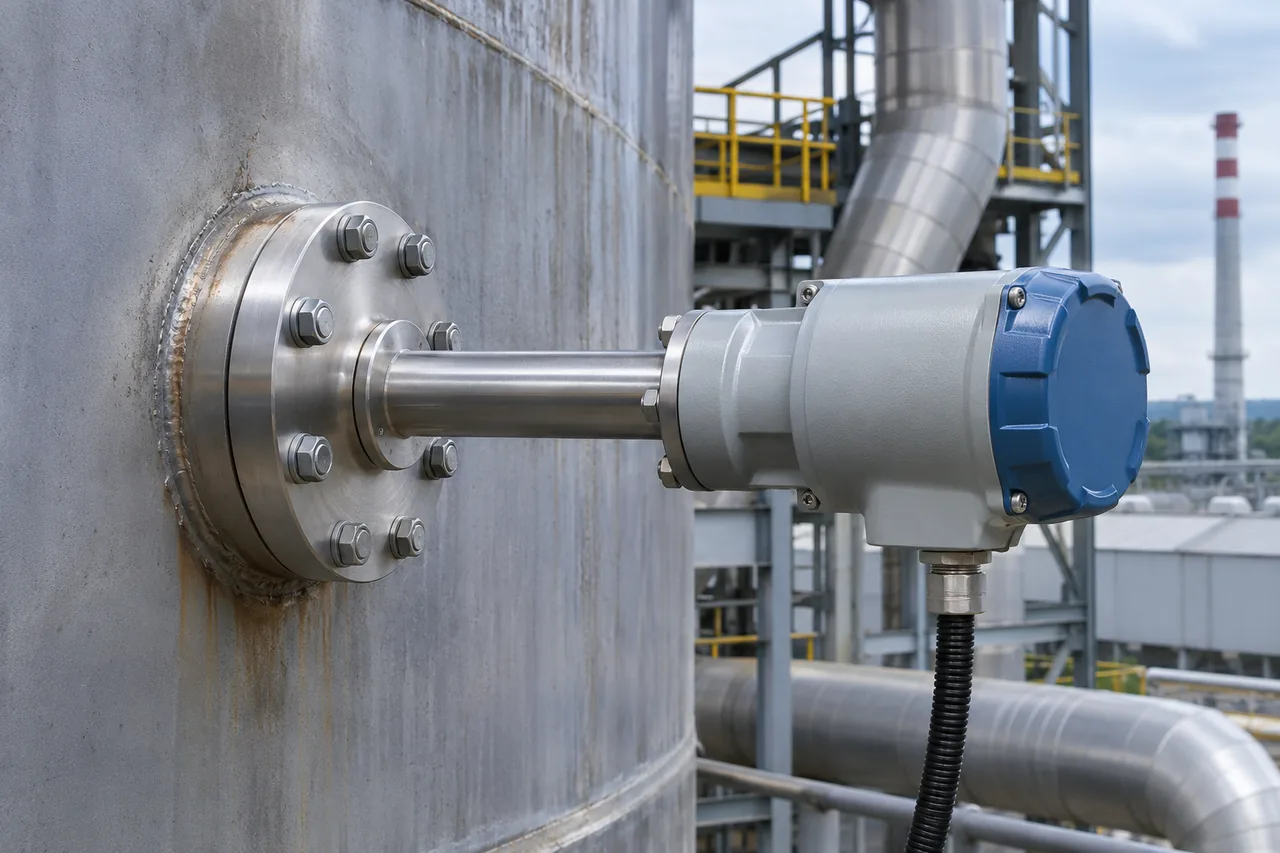
An in-situ measurement observes the gas at the probe or sensing path.
Extractive paramagnetic and other analyzer configurations
An extractive system draws gas from a selected point and carries it to the analyzer. Its design can include a heated line, particle filtration, a sample pump, a cooler or dryer, pressure or flow control and a drain. The presence and position of these components determine what reaches the detector. Water may be intentionally removed for dry-basis measurement. A heated system may instead preserve moisture through the measurement, if the analyzer and method support it. The analyzer technology alone does not determine the result’s basis.
A paramagnetic analyzer uses oxygen’s attraction to a magnetic field. The exact mechanism differs by design. Sample conditioning, pressure, flow, vibration, background gases and contamination can affect specific instruments. A manufacturer's published suitability depends on the gas properties and the installed configuration. Other extractive analyzers may use an electrochemical cell or a different oxygen measurement technology. A portable service analyzer is an example of a specialized extractive arrangement when a probe, tubing and pump take the sample to the instrument.
A tunable diode laser analyzer measures absorption along an optical path using an oxygen absorption feature where the design supports it. A path across a duct represents the gas along that path. A point probe represents a smaller region. A path average and point measurement can differ across a stratified flow. Light attenuation, optical alignment, temperature and pressure handling are relevant to the exact instrument. Yokogawa’s oxygen analyzer technology comparison describes zirconia, magnetic and laser arrangements and their application considerations.
| Disposizione | What to establish | What can make comparison difficult |
|---|---|---|
| In-situ zirconia probe | Actual insertion, reference condition, process limits, reported basis and fault status | Local gradients, reference faults, combustible interference or probe fouling |
| Extractive analyzer | Sample point, leak integrity, flow, conditioning and analyzer reporting basis | Transport delay, unwanted condensation, ambient air ingress or changed water content |
| In-situ optical path | Beam path, optical access, alignment and compensation | Path average versus local point, changing gas or optical conditions |
| Portable combustion analyzer | Correct mode, probe location, sample handling and appliance conditions | Different port, service test duration, probe leakage or an output that is calculated rather than directly measured |
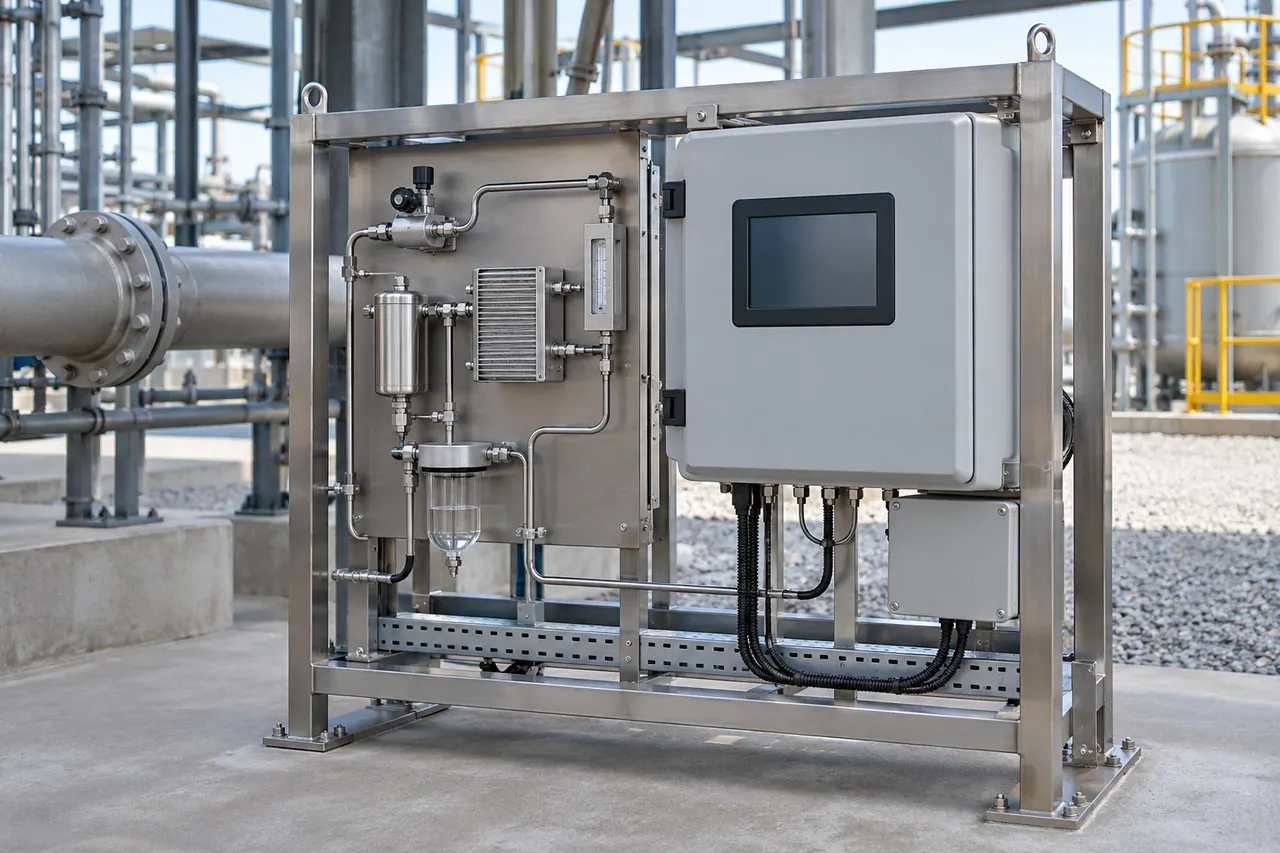
An extractive path can condition gas before the detector sees it.
Why an upstream port and a downstream analyzer can disagree
Immaginate una sonda fissa a monte di una giunzione di diluizione e uno strumento portatile in un'apertura di servizio a valle. Durante l'osservazione, tra le porte entra dell'aria esterna. Il valore a valle può spostarsi verso la frazione di ossigeno di quell'aria esterna. I risultati a monte e a valle potrebbero essere corretti per le rispettive posizioni. La conversione di entrambi alla stessa base di umidità non può eliminare una differenza reale nella composizione del gas. Controllare i disegni delle tubazioni e dei condotti, le posizioni effettive delle porte ed eventuali diramazioni vicine prima di utilizzare i due risultati per valutare l'errore dello strumento.
An extractive analyzer adds another possible explanation. If its sample line or fitting admits surrounding air under suction, the analyzer may see a diluted sample even when both probes are nominally in the same section. The right comparison starts with the design or test procedure, where qualified personnel determine how to evaluate sample integrity. A higher oxygen reading alone cannot distinguish duct dilution from a sample-system leak or true process change. Preserve other readings and system status so those possibilities can be evaluated.
Wet and dry basis can make the same sample look different
A concentration is a fraction of the gas mixture. A wet-basis result uses the entire gas mixture, including water vapor. A dry-basis result uses the mixture after excluding water from the denominator. If only water is excluded, the same oxygen amount is divided by a smaller total, so the reported dry fraction is larger than the wet fraction whenever the water fraction is positive.
Sia x la frazione molare dell'ossigeno umido e w la frazione molare del vapore acqueo umido nello stesso campione. La corrispondente frazione molare di ossigeno secco è x divisa per (1 − w). Usa le frazioni in modo coerente. Un contenuto d'acqua del 10% corrisponde a w = 0,10. La conversione su base umida moltiplica la frazione secca per (1 − w). Quando uno specifico metodo di misurazione definisce le proprie convenzioni di calcolo, correzione o rendicontazione, utilizzare tali definizioni.
Confronto ipotetico dello stesso campione
Supponiamo che una miscela di gas contenga il 3,60% di O₂ su base umida e il 10,0% di vapore acqueo in moli sulla stessa base. Rimuovendo l'acqua si lascia il 90,0% della quantità di gas originale per il denominatore secco. La concentrazione di ossigeno risultante è 3,60% diviso per 0,900, ovvero 4,00% di O₂ secco. I due valori differiscono di 0,40 punti percentuali e descrivono la stessa miscela originaria sotto le ipotesi.
| Quantità ipotetica | Valore riportato |
|---|---|
| Frazione O₂ umida | 3,60% |
| Frazione di vapore acqueo umido | 10,0% |
| Frazione rimanente dopo l'esclusione dell'acqua | 90,0% |
| Frazione equivalente di O₂ secca | 4,00% |
| Differenza tra i valori riportati | 00,40 punti percentuali |
The example is arithmetic and supplies no operating target for a boiler. To apply a conversion to real data, establish whether moisture was measured or otherwise determined under the applicable method, whether it represents the same gas and time, and whether the oxygen display was already converted. A cold sample trap does not automatically prove that a published number is on the desired basis. A dry-basis instrument can have residual water effects or a manufacturer-defined condition that must be accounted for. Follow the instrument and method definitions.
Air-free or reference-oxygen results answer another question
A report may also correct a pollutant concentration to a reference oxygen basis. Such a correction uses oxygen to standardize reporting under a defined procedure. It is different from removing water from the denominator, and it is different from reporting the actual oxygen in the gas. A comparison of two CO results, for example, needs the same definitions for moisture and any oxygen correction. Keep the directly measured value, oxygen reading, applicable basis and reported result available together when the procedure requires them.
EPA Method 3A illustrates these measurement boundaries. It is an instrumental method for oxygen and carbon dioxide in stationary-source emissions when required by the governing US rule or permit. It refers to performance and sampling provisions, including when dry gases or dry-basis systems can use different sample line arrangements. A regulatory method is selected by the actual measurement obligation. A boiler service reading, process trend and emissions result each have their own purpose and evidence requirements.
Room oxygen belongs to the workplace atmosphere being assessed
Ambient oxygen measurement may be relevant where the hazard assessment identifies displacement, enrichment or oxygen consumption. A worker entering a restricted space and an operator viewing a fixed room transmitter have different coverage. A fixed monitor measures the gas at its inlet. A portable pumped unit samples at its probe and adds transport delay and possible line restrictions. A diffusion unit measures gas arriving at the instrument. The selected arrangement must be suited to the task and used under the applicable workplace procedure.
Atmospheric pressure matters to certain technologies and to human exposure. Some ambient oxygen sensing elements respond to oxygen partial pressure and the instrument’s behavior depends on its design and compensation. A device’s displayed oxygen percentage and its environmental limits should be interpreted using its instructions and the relevant safety program. Elevation and pressure changes can affect the interpretation even when a numerical concentration comparison looks straightforward. A flue analyzer’s partial-pressure principle is therefore useful for understanding instruments, while the process reading has no direct role in declaring an ambient atmosphere suitable.
In US federal general industry, OSHA 29 CFR 1910.146 definisce la carenza di ossigeno inferiore al 19,5% in volume e l'arricchimento di ossigeno superiore al 23,5% in volume per il quadro dello spazio confinato richiesto dall'autorizzazione. Questo ambito è importante. Si tratta di definizioni contenute in un regolamento specifico, con valutazione del datore di lavoro e disposizioni di ingresso che dipendono dal lavoro e dallo spazio. Non servono come setpoint universali del rilevatore di edifici o autorizzazioni all'ingresso. Altri paesi, stati e contesti industriali possono avere i propri requisiti di governo.
A reading near the ordinary oxygen concentration cannot establish the absence of toxic or flammable gases. An oxygen channel answers a question about oxygen under its measurement conditions. The site’s hazard assessment identifies which other channels and decisions are relevant. For example, a workplace can need carbon monoxide information even when oxygen changes very little. The operator’s trend or work record should retain the status of each channel rather than compressing them into an unexplained overall reading.
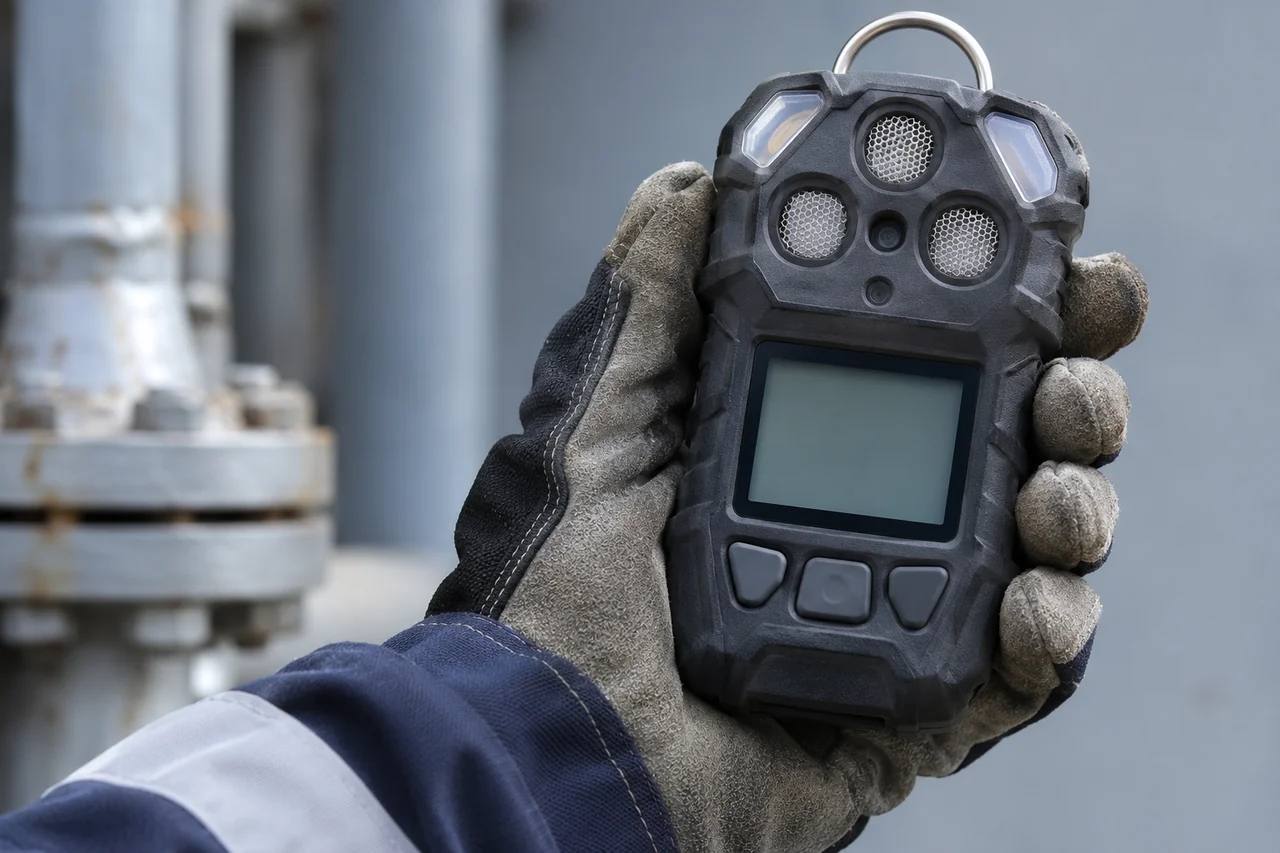
An ambient monitor samples air at its own inlet or designated probe.
Verify the path that produced the value
A flue sample can be validated at several boundaries. An analyzer check examines the sensing and indication under defined test conditions. A system check can include the probe, transport and conditioning path. A method can require additional evidence about sampling location, analyzer response or interference. Describe which part of the path the check included. If calibration gas reaches an analyzer downstream of the sample conditioning, that exercise cannot by itself establish the integrity of a remote probe and line.
For an ambient direct-reading instrument, a response check and a calibration check answer different questions. A functional check can show that the instrument responds and its warning works as intended under the test. A calibration check assesses indication against a suitable known concentration within the prescribed tolerance. OSHA’s direct-reading portable monitor bulletin explains these distinctions and the role of manufacturer procedures. The bump-test explanation provides related background. Fixed instruments have their own installed checks and project requirements. Pumped configurations also depend on sample-path condition and time delay.
Quando si confrontano i record, includere nel confronto l'identità dell'apparecchiatura e lo stato dello strumento. Una lettura dopo la manutenzione può essere influenzata da una modifica dell'intervallo, da una conversione su base secca, dalla sostituzione della sonda o da un cambiamento di posizione. Uno storico può preservare un vecchio nome di punto anche quando le unità ingegneristiche o la scala del segnale sono cambiate. Una calibrazione valida e un'etichetta di tendenza corretta sono entrambe necessarie per un'interpretazione affidabile.
| Registra elemento | Risultato della canna fumaria | Risultato ambientale |
|---|---|---|
| Identità di misura | Etichetta dell'apparecchiatura, porta o percorso, analizzatore e metodo previsto | Spazio o persona, punto di campionamento e identità del monitor |
| Ora e stato operativo | Intervallo di raccolta, carico del processo, transizioni delle apparecchiature e ritardo del campione | Attività lavorativa, ventilazione, ritardo del campionamento e intervallo di osservazione |
| Definizione dei dati | O₂ unit, moisture basis, directly measured or derived and output configuration | O₂ unit, instrument mode, environmental conditions and validity |
| Sample evidence | Line or probe integrity, conditioning, calibration and applicable system check | Inlet or probe, flow if applicable, instrument check and task procedure |
| Disposizione | Accept, hold or review for the stated process or reporting purpose | Interpret under the responsible workplace or fixed monitoring procedure |
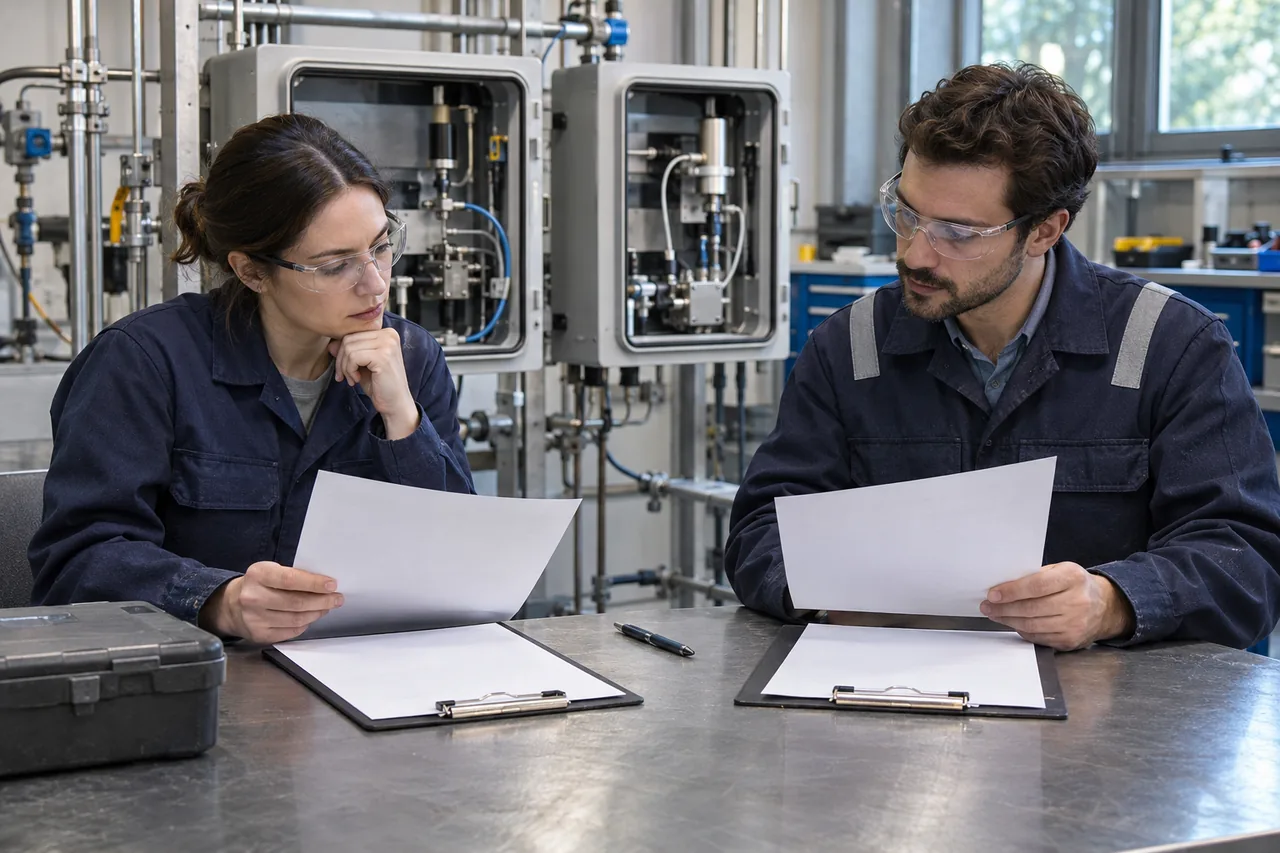
A useful review preserves instrument, sample and reporting identity.
Hypothetical review of three traces
A plant operator reviews a fixed flue trend, a portable combustion service result and a room oxygen trend. The fixed probe reports a wet result. The portable analyzer reports a dry result at a different port. The ambient trend is recorded near a service entrance. Before comparing the two flue values, establish whether their sampling times and equipment loads match. Then check sample location and conditioning and see whether a reliable moisture conversion is available. A residual difference can still reflect a gradient or a transport problem.
The ambient trend remains a separate record. If the building team is investigating a workplace event, the entrance monitor’s status and coverage are useful facts. They cannot establish the atmosphere at another location by themselves. Record any applicable worker or area observations separately, identify how the instruments were verified and avoid overwriting the original times or units while combining reports.
If the portable value has no stated basis, keep its measurement definition unresolved. A vendor description that the instrument can report dry results does not identify the mode used on that job. The original record, configuration or qualified testing under the defined method can close that gap. This is often more informative than applying a generic assumed moisture value to force agreement.
Read the timeline as part of the sample path
Two instruments can sample comparable gas and report on different clocks. In-situ sensing, extractive transport, detector filtering and historian averaging each contribute a distinct time scale. A service technician might write down a stabilized display after waiting under the appliance procedure. The plant historian might store an average over the preceding reporting interval. An extractive monitor might show a change after the duct process has already moved on. If the comparison concerns a transition, ask what instant or interval each value actually represents and where timestamps are assigned.
In a hypothetical trend review, a process point changes at the duct while an extractive system has a documented 18-second transport time before any analyzer or historian delay. Suppose a recorder labels a value at the end of its collection window. The duct sample underlying that label is older than the display time by at least the transport contribution, with any averaging and instrument response still to be accounted for. Subtracting a guessed constant from an averaged value does not reconstruct the original transient. Compare stable intervals where permitted by the investigation, or preserve sufficient time-resolved information and approved delay evidence to compare the transient correctly.
Un record di sicurezza di una stanza può avere ancora un altro percorso di registrazione. Uno strumento locale può elaborare un evento prima che un sistema di supervisione lo interroghi. Uno storico può sopprimere valori ripetuti o saltare i record mancanti. Conservare l'ora dell'evento locale, lo stato dell'allarme e la validità se tali registrazioni sono disponibili. Per un campione ambientale pompato, il relativo ritardo inizia nel punto in cui il campione è entrato nella linea. L’intervallo è una questione di strumento e di procedura, indipendente dal ritardo dell’analizzatore di fumi.
Considera i limiti di un rivestimento dall'aspetto pulito. Le curve possono sembrare allineate perché entrambe rispondono a un ampio cambiamento nel funzionamento dell’edificio anche quando osservano popolazioni di gas diverse. Uno spostamento temporale che allinea visivamente le curve non identifica una fonte comune. Verificare la posizione del punto, gli stati delle apparecchiature e della ventilazione e l'effettivo percorso del campione prima di tracciare una connessione. La questione centrale rimane se le prove registrate supportano il processo o la decisione sul posto di lavoro in questione.
Scegli un risultato che possa essere riprodotto da un altro revisore
Un revisore dovrebbe essere in grado di identificare lo strumento, recuperare la configurazione dei punti e comprendere il motivo per cui è stato effettuato il confronto. Per un risultato di combustione, registrare se l'ossigeno è stato misurato direttamente o calcolato da un'altra lettura e se il valore è stato osservato in tempo reale, copiato da un rapporto o preso da una tendenza. Conserva le informazioni sull'umidità e sulla correzione inserite in qualsiasi conversione. Per un risultato ambientale, mantenere il lavoro previsto o il confine dell'area, il metodo e lo stato operativo del dispositivo accanto alla concentrazione. Quando una fonte lascia la base o la posizione del campione sconosciuta, registrare direttamente il divario. Potrebbe essere possibile utilizzare il valore come contesto di supporto escludendolo da una decisione sull'accordo numerico.
Domande frequenti
L’ossigeno in situ è sempre umido e l’ossigeno estrattivo sempre secco?
Una sonda che rileva il gas umido e riporta la frazione campionata fornisce un valore su base umida. Uno strumento estrattivo può rimuovere o preservare l'umidità, a seconda del suo design. Entrambi i sistemi possono utilizzare un output derivato se configurato e supportato. Verificare la base di rendicontazione dallo strumento e dal metodo esatti.
È possibile utilizzare l'aria ambiente come gas di calibrazione o di riferimento?
Alcuni strumenti utilizzano l'aria ambiente come riferimento o forniscono una procedura con aria fresca definita dal produttore. Un metodo normativo può specificare quando una fonte d'aria adeguata può servire a uno scopo di calibrazione. L'uso effettivo dipende dal design dell'analizzatore e dalla procedura applicabile. Anche il gas di riferimento ha un ruolo diverso rispetto al campione di combustione da misurare.
Perché il valore della canna fumaria è cambiato mentre la lettura della stanza non è cambiata?
La composizione e la diluizione del gas di processo possono cambiare in base alle condizioni dell'apparecchiatura mentre il campione della stanza monitorata rimane simile. Confronta le posizioni degli strumenti, i dati operativi e lo stato. Un'indagine su un possibile pericolo ambientale necessita di prove provenienti dall'area pertinente o dal campione del luogo di lavoro.
Un valore su base secca più alto significa che la canna fumaria contiene più ossigeno?
Per lo stesso gas originale, una percentuale su base secca può essere più elevata semplicemente perché l'acqua è stata rimossa dal denominatore. Una dichiarazione sulla quantità di ossigeno che scorre richiederebbe il flusso di gas e una massa o base molare definita, nonché una concentrazione.
Come dovrebbe un grafico etichettare le due tracce?
Use distinct point names such as flue O₂ at the named equipment and port, and ambient O₂ at the named room point. Include percent, wet or dry basis for the flue result, timestamps and validity where the application needs them. Keep separate status and history when combining displays.









lascia un commento