Introduction
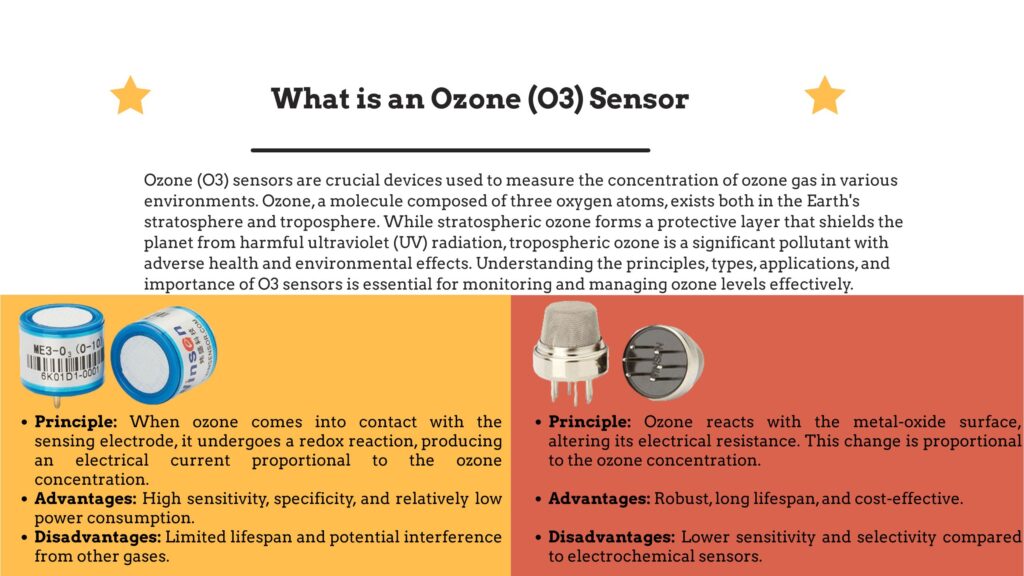
Ozone (O3) sensors are crucial devices used to measure the concentration of ozone gas in various environments. Ozone, a molecule composed of three oxygen atoms, exists both in the Earth’s stratosphere and troposphere. While stratospheric ozone forms a protective layer that shields the planet from harmful ultraviolet (UV) radiation, tropospheric ozone is a significant pollutant with adverse health and environmental effects. Understanding the principles, types, applications, and importance of O3 sensors is essential for monitoring and managing ozone levels effectively.
Principles of Ozone Sensing
Ozone sensors operate based on different detection principles, each suited for specific applications and environmental conditions. The most common principles include:
Electrochemical Sensors

Electrochemical sensors detect ozone by measuring the electrical current generated by a redox reaction between ozone and an electrolyte. These sensors typically consist of a sensing electrode, a counter electrode, and an electrolyte.
- Principle: When ozone comes into contact with the sensing electrode, it undergoes a redox reaction, producing an electrical current proportional to the ozone concentration.
- Advantages: High sensitivity, specificity, and relatively low power consumption.
- Disadvantages: Limited lifespan and potential interference from other gases.
Metal-Oxide Semiconductor (MOS) Sensors
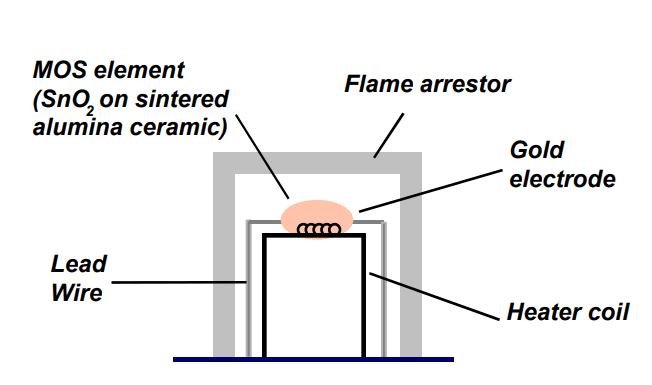
MOS sensors detect ozone by measuring changes in the electrical resistance of a metal-oxide layer when exposed to ozone gas.
- Principle: Ozone reacts with the metal-oxide surface, altering its electrical resistance. This change is proportional to the ozone concentration.
- Advantages: Robust, long lifespan, and cost-effective.
- Disadvantages: Lower sensitivity and selectivity compared to electrochemical sensors.
UV Absorption Sensors
UV absorption sensors detect ozone by measuring the absorption of ultraviolet light at specific wavelengths.
- Principle: Ozone absorbs UV light, causing a reduction in light intensity. The decrease in intensity is proportional to the ozone concentration.
- Advantages: High precision and specificity.
- Disadvantages: High cost and complex maintenance requirements.
Chemiluminescence Sensors
Chemiluminescence sensors detect ozone by measuring the light emitted from a chemical reaction between ozone and a reagent.
- Principle: Ozone reacts with a chemiluminescent reagent, producing light. The intensity of the emitted light is proportional to the ozone concentration.
- Advantages: High sensitivity and rapid response time.
- Disadvantages: High cost and potential interference from other gases.
Types of Ozone Sensors
Different types of ozone sensors are available to meet various monitoring needs. These include:
Portable Ozone Sensors
Portable ozone sensors are compact, battery-powered devices designed for on-the-go monitoring of ozone levels.
- Applications: Used by environmental professionals, researchers, and emergency responders for field measurements.
- Advantages: Lightweight, easy to use, and provide real-time data.
- Disadvantages: Limited detection range and battery life.
Fixed Ozone Monitors
Fixed ozone monitors are stationary devices installed in specific locations to continuously monitor ozone levels.
- Applications: Used in air quality monitoring stations, industrial facilities, and indoor environments.
- Advantages: Continuous data collection, high accuracy, and integration with data logging systems.
- Disadvantages: Higher cost and installation requirements.
Personal Ozone Monitors
Personal ozone monitors are wearable devices designed to monitor individual exposure to ozone.
- Applications: Used by workers in industries with high ozone exposure, such as healthcare and manufacturing.
- Advantages: Provides personal exposure data, portable, and easy to use.
- Disadvantages: Limited detection range and battery life.
Applications of Ozone Sensors
Ozone sensors are employed in various sectors to ensure safety, compliance, and environmental protection.
Environmental Monitoring
- Air Quality Monitoring: Ozone sensors are used in air quality monitoring networks to measure ambient ozone levels and assess compliance with air quality standards.
- Climate Research: Researchers use ozone sensors to study ozone distribution and its effects on climate and weather patterns.
- Ecosystem Health: Monitoring ozone levels in sensitive ecosystems helps assess the impact of ozone on vegetation and biodiversity.
Industrial Applications
- Occupational Safety: Industries that use or produce ozone, such as water treatment and food processing, use ozone sensors to monitor workplace ozone levels and ensure worker safety.
- Process Control: Ozone sensors are used in industrial processes that involve ozone to maintain optimal conditions and prevent overexposure.
Indoor Air Quality
- Building Management: Ozone sensors are installed in buildings to monitor indoor air quality and ensure a healthy environment for occupants.
- HVAC Systems: Integration of ozone sensors in heating, ventilation, and air conditioning (HVAC) systems helps control ozone levels and improve indoor air quality.
Healthcare
- Medical Research: Ozone sensors are used in medical research to study the effects of ozone on human health.
- Patient Safety: In healthcare facilities, ozone sensors monitor ozone levels to protect patients and staff from overexposure.
Importance of Ozone Sensors
The importance of ozone sensors cannot be overstated, given the significant health and environmental impacts of ozone.
Health Protection
Ozone is a potent respiratory irritant that can exacerbate conditions such as asthma, bronchitis, and other lung diseases. Long-term exposure to high ozone levels is associated with increased risks of cardiovascular diseases and premature mortality. Ozone sensors help in:
- Early Detection: Providing real-time data to detect high ozone levels promptly.
- Risk Mitigation: Informing the public and vulnerable populations about ozone pollution to take preventive measures.
- Regulatory Compliance: Ensuring compliance with air quality standards to protect public health.
Environmental Protection
Ozone adversely affects plant health, reducing agricultural yields and damaging natural vegetation. It also plays a role in climate dynamics. Ozone sensors help in:
- Monitoring Ecosystems: Tracking ozone levels in sensitive ecosystems to study its impact and devise conservation strategies.
- Research: Providing data for research on ozone’s role in climate change and environmental degradation.
Industrial Safety
In industries where ozone is used or produced, monitoring its levels is crucial for ensuring worker safety and process efficiency. Ozone sensors help in:
- Leak Detection: Identifying and controlling ozone leaks in industrial settings.
- Process Optimization: Maintaining optimal ozone levels in industrial processes to prevent overexposure and equipment damage.
Challenges in Ozone Sensing
Despite advancements in ozone sensing technologies, several challenges remain:
- Calibration and Maintenance: Ensuring accurate and reliable measurements requires regular calibration and maintenance of sensors.
- Interference: Sensors can be affected by interference from other gases or environmental factors, leading to false readings.
- Cost: High-precision ozone detection systems can be expensive, limiting their accessibility for certain applications.
- Sensitivity and Selectivity: Balancing the sensitivity and selectivity of sensors to detect ozone at low concentrations without cross-sensitivity to other substances.
- Data Management: Handling and analyzing the large volumes of data generated by ozone detection systems can be complex and resource-intensive.
Future Trends in Ozone Sensing
The field of ozone sensing is continuously evolving, with several emerging trends shaping its future:
- Advances in Sensor Technology: Development of more sensitive, selective, and robust sensors using novel materials and nanotechnology.
- Integration with IoT: Incorporating ozone sensors into the Internet of Things (IoT) for real-time monitoring and data analysis.
- Wearable Ozone Detectors: Designing portable and wearable ozone detectors for personal safety in various environments.
- Automated and Remote Monitoring: Implementing automated and remote monitoring systems for continuous and unattended ozone detection.
- Artificial Intelligence and Machine Learning: Using AI and machine learning algorithms to analyze ozone detection data, identify patterns, and predict potential hazards.
Conclusion
Ozone sensors play a vital role in monitoring and managing ozone levels in various environments. They are essential tools for protecting human health, ensuring industrial safety, and preserving the environment. By understanding the principles, types, applications, and challenges of ozone sensing, we can better utilize these technologies to address the complex issues associated with ozone pollution. As advancements in sensor technology and data analysis continue, ozone sensors will become even more integral to our efforts to create a healthier and safer world.
