Introduction
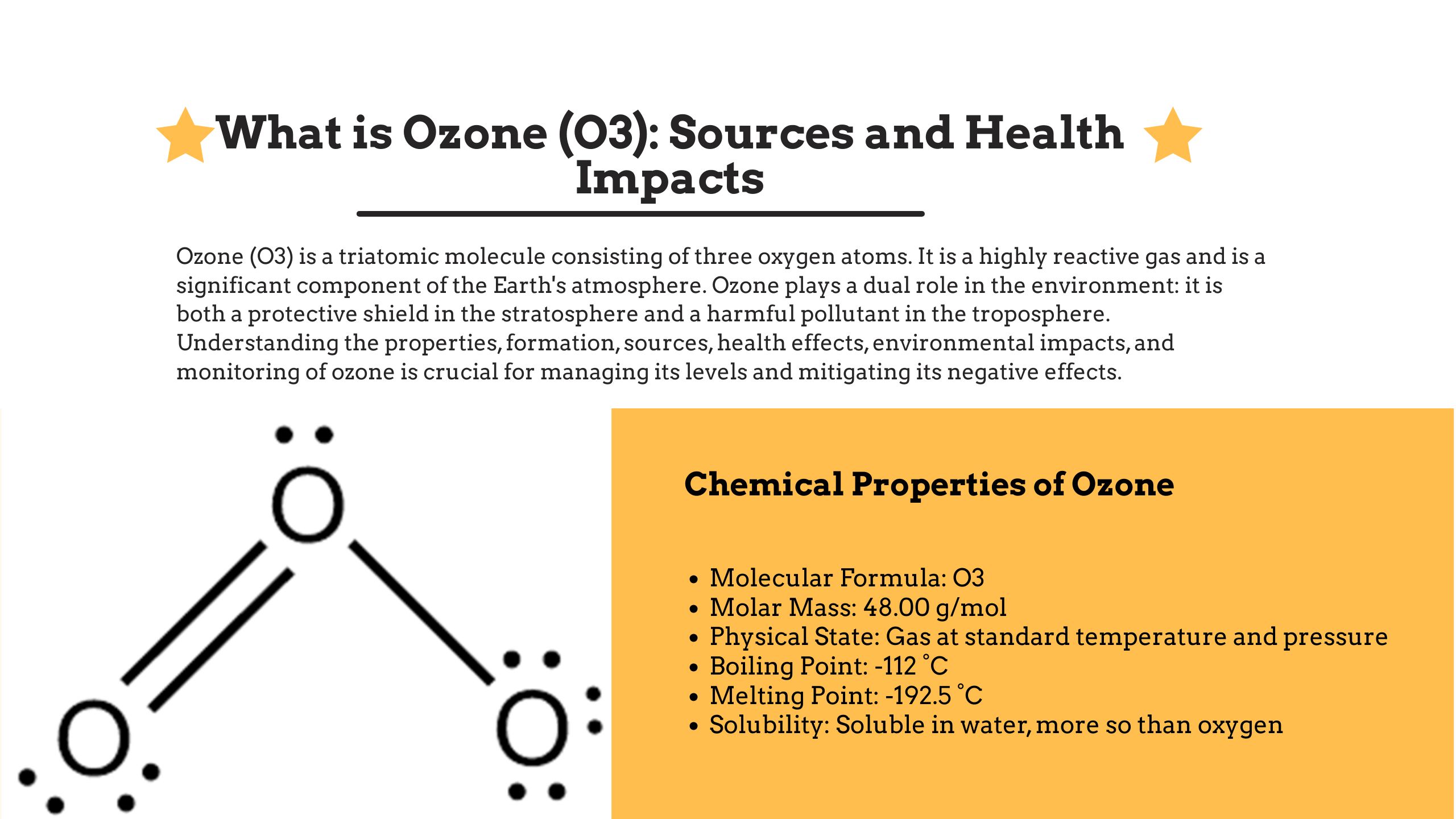
Ozone (O3) is a triatomic molecule consisting of three oxygen atoms. It is a highly reactive gas and is a significant component of the Earth’s atmosphere. Ozone plays a dual role in the environment: it is both a protective shield in the stratosphere and a harmful pollutant in the troposphere. Understanding the properties, formation, sources, health effects, environmental impacts, and monitoring of ozone is crucial for managing its levels and mitigating its negative effects.
Chemical Properties of Ozone
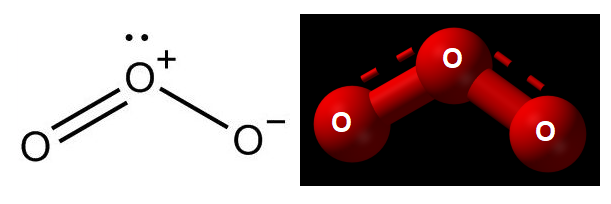
Ozone is a pale blue gas with a distinct, sharp odor that is detectable even at low concentrations. It is highly reactive and unstable, readily decomposing into diatomic oxygen (O2). This reactivity makes ozone a powerful oxidizing agent, which is both beneficial and harmful depending on its location and concentration.
- Molecular Formula: O3
- Molar Mass: 48.00 g/mol
- Physical State: Gas at standard temperature and pressure
- Boiling Point: -112 °C
- Melting Point: -192.5 °C
- Solubility: Soluble in water, more so than oxygen
Ozone’s reactivity leads to its role in various chemical processes in the atmosphere, including the absorption of ultraviolet (UV) radiation and the formation of smog.
Formation of Ozone
Ozone is formed through chemical reactions involving oxygen molecules (O2) and free oxygen atoms (O). These reactions occur in different parts of the atmosphere, leading to the formation of stratospheric and tropospheric ozone.
Stratospheric Ozone
Stratospheric ozone, commonly known as the ozone layer, is found in the stratosphere, approximately 10 to 50 kilometers above the Earth’s surface. It is formed through the following photochemical reactions:
- Photodissociation of Oxygen:
O2+UV-C light→2O
Ultraviolet (UV-C) light from the sun breaks down molecular oxygen (O2) into individual oxygen atoms (O).
- Formation of Ozone:
O2+UV-C light→2O
The free oxygen atoms react with molecular oxygen to form ozone (O3).
- Ozone-UV Interaction:
O3+UV-B light→O2+O
Ozone absorbs ultraviolet (UV-B) light, breaking down back into molecular oxygen and a free oxygen atom. This cycle of formation and destruction maintains the ozone layer, which absorbs and shields the Earth from the majority of the sun’s harmful UV radiation.
Tropospheric Ozone
Tropospheric ozone, also known as ground-level ozone, is found in the lower atmosphere, up to about 10 kilometers above the Earth’s surface. It is not directly emitted but is formed through photochemical reactions involving precursor pollutants such as nitrogen oxides (NOx) and volatile organic compounds (VOCs). The main reactions are:
- NO2 Photolysis:
NO2+UV light→NO+O
Nitrogen dioxide (NO2) absorbs UV light and breaks down into nitric oxide (NO) and a free oxygen atom.
- Ozone Formation:
O+O2→O3
The free oxygen atom reacts with molecular oxygen to form ozone (O3).
- NO-Ozone Reaction:
NO+O3→NO2+O2
Nitric oxide (NO) can react with ozone, leading to the regeneration of NO2 and molecular oxygen.
These reactions create a dynamic equilibrium influenced by sunlight, temperature, and the presence of precursor pollutants. Tropospheric ozone is a key component of photochemical smog and poses significant health risks.
Sources of Ozone
Natural Sources
- Lightning: Lightning strikes generate ozone through the high-energy dissociation of oxygen molecules and subsequent reactions.
- Stratospheric Intrusion: Natural processes can cause ozone from the stratosphere to mix with the troposphere, increasing ground-level concentrations.
- Vegetation: Certain plants and trees emit VOCs, which can participate in ozone formation under the right conditions.
Anthropogenic Sources
Human activities are major contributors to the formation of tropospheric ozone through the emission of precursor pollutants.
- Fossil Fuel Combustion: Burning fossil fuels in power plants, vehicles, and industrial processes releases NOx and VOCs, which contribute to ozone formation.
- Industrial Emissions: Factories and refineries emit large quantities of VOCs and NOx.
- Solvent Use: The use of solvents in paints, coatings, and cleaning agents releases VOCs into the atmosphere.
- Agricultural Activities: Fertilizer application and livestock management produce NOx and VOCs.
Health Effects of Ozone
Exposure to ozone can have severe health implications, particularly affecting the respiratory and cardiovascular systems.
Respiratory Effects
- Asthma: Ozone exposure can trigger asthma attacks and exacerbate symptoms in individuals with preexisting conditions.
- Chronic Obstructive Pulmonary Disease (COPD): Long-term exposure to ozone is linked to the development and worsening of COPD.
- Lung Function: Ozone can cause inflammation and damage to the airways, reducing lung function and increasing susceptibility to respiratory infections.
Cardiovascular Effects
- Heart Disease: Ozone exposure is associated with an increased risk of heart attacks and other cardiovascular diseases.
- Blood Pressure: Short-term exposure to high ozone levels can raise blood pressure and affect heart rate variability.
Other Health Effects
- Premature Mortality: Long-term exposure to elevated ozone levels is linked to premature death from respiratory and cardiovascular causes.
- Inflammation: Ozone can cause systemic inflammation, affecting multiple organs and systems in the body.
- Mental Health: Emerging research suggests that ozone exposure may also have implications for mental health, contributing to cognitive decline and mood disorders.
Environmental Impacts of Ozone
Effects on Vegetation
- Crop Damage: Ozone can impair photosynthesis and reduce crop yields by damaging plant tissues.
- Forest Health: Prolonged exposure to ozone can weaken trees, making them more susceptible to diseases and pests.
- Biodiversity: High ozone levels can alter species composition and reduce biodiversity in sensitive ecosystems.
Effects on Climate
- Greenhouse Gas: Although ozone itself is a greenhouse gas, its role in the atmosphere is complex. Tropospheric ozone contributes to warming, while stratospheric ozone has a cooling effect by blocking UV radiation.
- Interactions with Other Pollutants: Ozone can influence the formation and behavior of other atmospheric pollutants, affecting overall air quality and climate dynamics.
Ozone Monitoring and Measurement
Accurate monitoring and measurement of ozone levels are essential for assessing air quality and implementing control strategies.
Ground-Based Monitoring
- Ozone Analyzers: Ground-based stations use ozone analyzers to measure concentrations in real-time. These devices typically use UV photometry to detect ozone levels.
- Air Quality Networks: Networks of monitoring stations provide comprehensive data on ozone levels across regions, helping to identify pollution sources and trends.
Remote Sensing
- Satellite Observations: Satellites equipped with spectrometers measure ozone concentrations in the atmosphere by detecting specific wavelengths of light absorbed by ozone.
- LIDAR: Light Detection and Ranging (LIDAR) systems use laser pulses to measure ozone concentrations at various altitudes, providing vertical profiles of ozone distribution.
O3 Sensor
Electrochemical Sensors

Electrochemical sensors detect ozone by measuring the electrical current generated by a redox reaction between ozone and an electrolyte. These sensors typically consist of a sensing electrode, a counter electrode, and an electrolyte.
- Principle: When ozone comes into contact with the sensing electrode, it undergoes a redox reaction, producing an electrical current proportional to the ozone concentration.
- Advantages: High sensitivity, specificity, and relatively low power consumption.
- Disadvantages: Limited lifespan and potential interference from other gases.
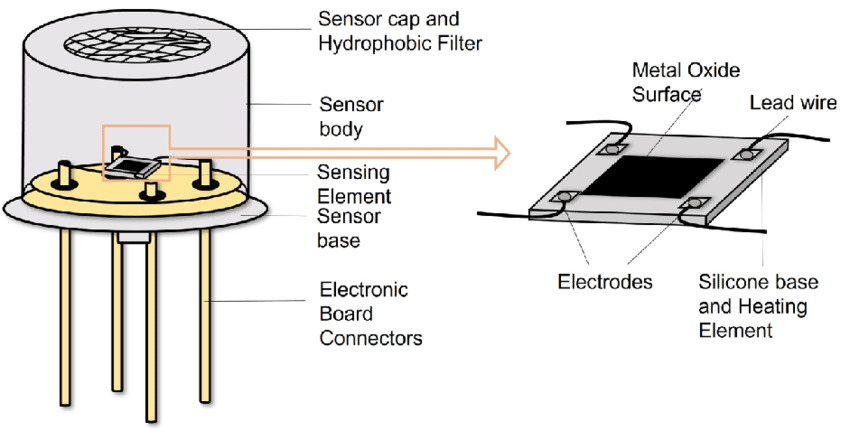
Metal-Oxide Semiconductor (MOS) Sensors
![]()
MOS sensors detect ozone by measuring changes in the electrical resistance of a metal-oxide layer when exposed to ozone gas.
- Principle: Ozone reacts with the metal-oxide surface, altering its electrical resistance. This change is proportional to the ozone concentration.
- Advantages: Robust, long lifespan, and cost-effective.
- Disadvantages: Lower sensitivity and selectivity compared to electrochemical sensors.
More About Ozone Sensor: What is an Ozone (O3) Sensor
Regulation and Control of Ozone
Regulatory frameworks and control measures are essential for managing ozone levels and protecting public health.
- Air Quality Standards: Governments set air quality standards for ozone, defining acceptable
concentration limits to protect human health and the environment.
- Emission Controls: Regulations limit the emissions of NOx and VOCs from industrial sources, vehicles, and other activities.
- Clean Air Act: In the United States, the Clean Air Act provides a comprehensive framework for controlling air pollution, including ozone.
Strategies for Reducing Ozone Levels
Effective strategies for reducing ozone levels involve both technological solutions and behavioral changes.
- Emission Reductions: Implementing cleaner technologies and fuels to reduce emissions from power plants, vehicles, and industrial processes.
- Energy Efficiency: Improving energy efficiency in buildings, transportation, and industry to reduce the demand for fossil fuels.
- Alternative Energy Sources: Promoting the use of renewable energy sources such as wind, solar, and hydroelectric power.
- Public Awareness: Educating the public about the sources and effects of ozone pollution and encouraging actions to reduce personal contributions.
- Regulatory Enforcement: Strengthening enforcement of air quality regulations and ensuring compliance by industries and other polluters.
Future Perspectives
The future of ozone management involves continued advancements in technology, regulation, and public awareness.
- Sensor Technology: Developing more accurate and affordable sensors for real-time ozone monitoring.
- Global Cooperation: Enhancing international collaboration to address transboundary ozone pollution and global air quality issues.
- Climate Change Mitigation: Integrating ozone management with climate change mitigation strategies to address the interlinked challenges of air pollution and global warming.
- Research and Innovation: Investing in research to better understand ozone formation, health effects, and effective control measures.
Conclusion
Ozone is a critical component of the Earth’s atmosphere, playing both protective and harmful roles. While stratospheric ozone shields the planet from harmful UV radiation, tropospheric ozone poses significant health and environmental risks. Understanding the sources, formation, and effects of ozone is essential for developing effective strategies to manage its levels and mitigate its impacts. Through a combination of technological advancements, regulatory measures, and public awareness, we can protect human health and the environment from the adverse effects of ozone pollution.