Introduction
In today’s world, we are surrounded by various pollutants and hazards that pose a threat to our health and well-being. One such danger is toxic gas. Toxic gases are substances that, when released into the environment, can cause harm to living organisms, including humans. In this comprehensive article, we will delve into the world of toxic gases, exploring their sources, effects, and preventive measures. So, let’s dive in and gain a deeper understanding of this invisible threat.
What is Toxic Gas?
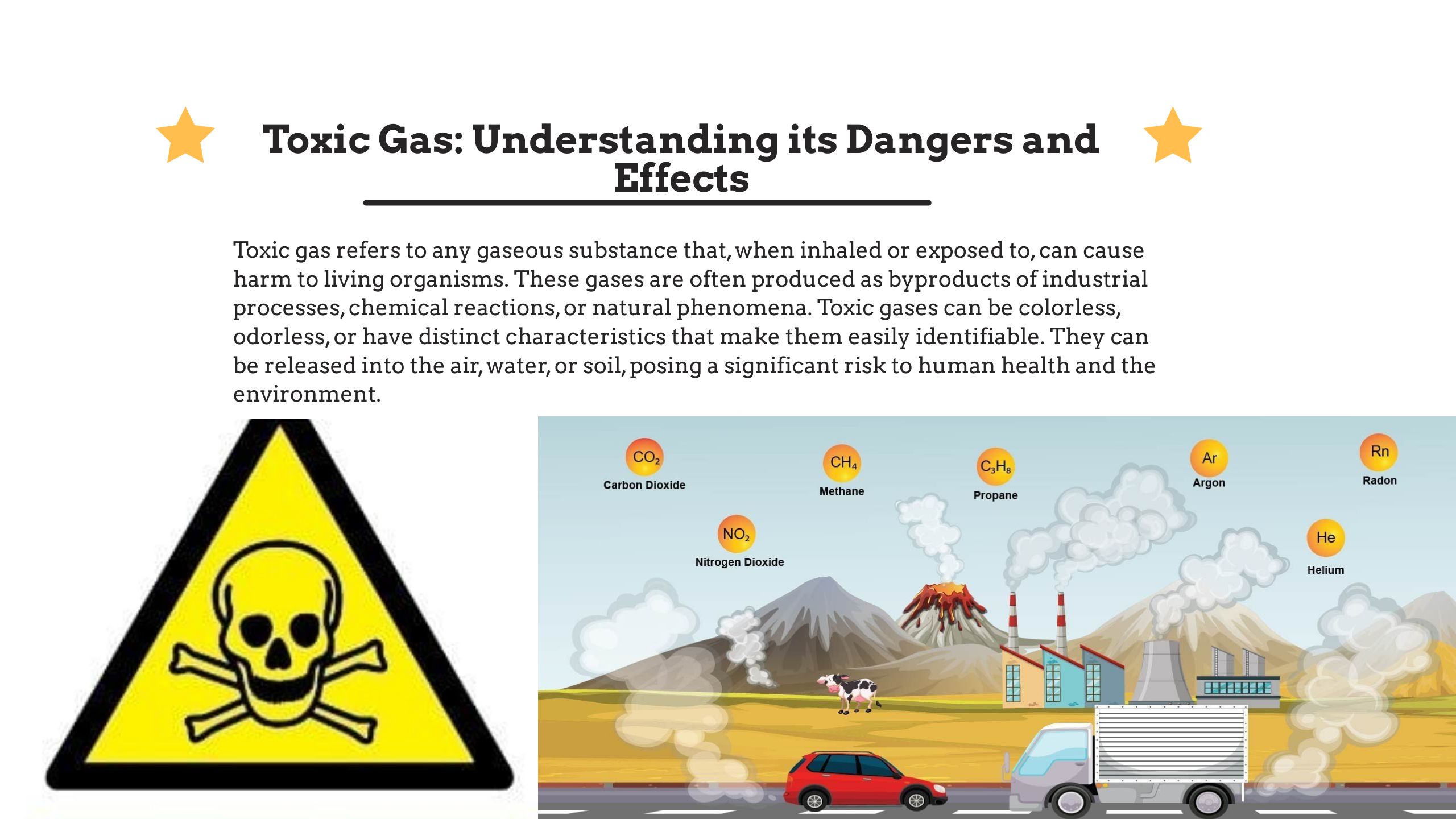
Toxic gas refers to any gaseous substance that, when inhaled or exposed to, can cause harm to living organisms. These gases are often produced as byproducts of industrial processes, chemical reactions, or natural phenomena. Toxic gases can be colorless, odorless, or have distinct characteristics that make them easily identifiable. They can be released into the air, water, or soil, posing a significant risk to human health and the environment.
Key Characteristics
- Toxicity: The degree to which a substance can cause harm.
- Volatility: The ability of the substance to vaporize and become a gas at low temperatures.
- Reactivity: Some toxic gases can react with other chemicals or materials, posing additional risks.
Common Types of Toxic Gases
Carbon Monoxide (CO)
- Source: Incomplete combustion of fossil fuels (e.g., car engines, gas stoves).
- Effect: Interferes with oxygen transport in the bloodstream, causing headaches, dizziness, and potentially death.
Chlorine (Cl2)
- Source: Used in water purification, cleaning products, and as a chemical weapon.
- Effect: Irritates the respiratory system, eyes, and skin; can cause pulmonary edema.
Hydrogen Sulfide (H2S)
- Source: Industrial processes, sewage treatment, and naturally occurring in volcanic gases.
- Effect: Respiratory distress, nervous system damage, and death at high concentrations.
Ammonia (NH3)
- Source: Agricultural fertilizers, industrial cleaning agents.
- Effect: Irritates eyes, skin, and respiratory system; can be lethal in high concentrations.
Nitrogen Dioxide (NO2)
- Source: Vehicle emissions, industrial processes, and burning of fossil fuels.
- Effect: Lung irritation, decreased lung function, and can exacerbate asthma and other respiratory diseases.
Ozone (O3)
- Source: Industrial emissions, electric utilities, and chemical solvents.
- Effect: Respiratory problems, lung tissue damage, and aggravation of lung diseases like asthma.
Sulfur Dioxide (SO2)
- Source: Burning of fossil fuels, industrial processes, and volcanic eruptions.
- Effect: Respiratory tract irritation, eye irritation, and aggravation of cardiovascular diseases.
Hydrofluoric Acid (HF)
- Source: Industrial processes, particularly in the production of refrigerants and aluminum.
- Effect: Severe burns, respiratory damage, and systemic toxicity affecting calcium levels in the body.
Hydrogen (H2)
- Source: Industrial processes, natural gas production.
- Effect: While not toxic in small amounts, hydrogen can displace oxygen in the air, leading to asphyxiation.
Phosphine (PH3)
- Source: Fumigation processes, production of semiconductors.
- Effect: Respiratory distress, damage to the lungs, heart, and kidneys.
Hydrochloric Acid (HCl)
- Source: Industrial processes, cleaning agents.
- Effect: Irritation of the respiratory tract, eyes, and skin; can cause severe burns.
Odorants (OU, Odor)
- Source: Various sources including industrial emissions and natural decay.
- Effect: While not always harmful, strong odors can cause headaches, nausea, and respiratory discomfort.
Dimethyl Disulfide (C2H6S2)
- Source: Used in the petrochemical industry and as a pesticide.
- Effect: Eye, skin, and respiratory irritation; can be harmful if inhaled in large quantities.
Styrene (C8H8)
- Source: Used in the manufacture of plastics and resins.
- Effect: Respiratory issues, eye irritation, and potential long-term effects such as cancer.
Ethyl Mercaptan (C2H6S)
- Source: Added to natural gas as an odorant for leak detection.
- Effect: Strong odor, respiratory discomfort, and eye irritation.
Methyl Mercaptan (CH4S)
- Source: Industrial processes, natural decay of organic matter.
- Effect: Respiratory issues, eye and skin irritation; highly flammable.
Trimethylamine (C3H9N)
- Source: Decay of organic matter, used in the chemical industry.
- Effect: Strong fishy odor, respiratory and eye irritation.
Vinyl Chloride (C2H3Cl)
- Source: Production of PVC plastic.
- Effect: Respiratory issues, liver damage, and increased risk of cancer.
Realted Reading: Common Sources of Toxic Gases
More About Health Effects of Toxic Gas Exposure: Health Effects of Toxic Gas Exposure
How to detection Toxic Gas?
- Gas Detectors: Gas detectors are specialized devices designed to detect the presence of hazardous gases in the air. These detectors utilize various sensing technologies to measure gas concentrations accurately. Portable handheld detectors are commonly used for personal safety, while fixed gas detection systems are installed in specific areas for continuous monitoring. Gas detectors are highly sensitive and can quickly alert users when gas levels exceed predetermined thresholds.
- Colorimetric Tubes: Colorimetric tubes are small glass tubes filled with chemicals that undergo a color change when exposed to specific gases. These tubes are used in conjunction with a hand pump, which draws a sample of air through the tube. By comparing the color change to a calibration chart, the concentration of the gas can be determined. Colorimetric tubes are simple to use and provide a cost-effective solution for gas detection.
- Electronic Sensors: Electronic sensors are widely used in gas detection systems due to their accuracy and reliability. These sensors operate based on changes in electrical conductivity, resistance, or electrochemical reactions when exposed to specific gases. They provide real-time readings and can be integrated into portable or fixed gas detection systems. Electronic sensors are capable of detecting a wide range of toxic gases and are commonly used in industrial settings.
- Flame Ionization Detectors (FID): FID is a detection method primarily used for combustible gases. It works by measuring the ionization current produced when a gas sample is burned in a hydrogen flame. The ionization current is proportional to the concentration of the combustible gas, allowing for accurate detection and measurement. FID detectors are commonly used in industries where the risk of flammable gases is high.
- Infrared (IR) Spectroscopy: IR spectroscopy is a powerful technique used for the identification and quantification of specific gases. It works by analyzing the absorption of infrared light by gas molecules. Each gas has a unique absorption pattern, allowing for the identification and measurement of multiple gases simultaneously. IR spectroscopy is commonly used in industrial settings for continuous monitoring of toxic gases.
- Photoionization Detectors (PID): PID is a detection method that utilizes ultraviolet (UV) light to ionize gas molecules, creating a measurable current. This method is particularly effective in detecting volatile organic compounds (VOCs) and other gases with low ionization potentials. PID detectors are commonly used in industrial hygiene and environmental monitoring applications.
Preventive Measures for Toxic Gas Exposure
To protect ourselves and the environment from the dangers of toxic gas exposure, it is essential to take preventive measures. Here are some effective strategies to minimize the risk:
-
Proper Ventilation: Ensure adequate ventilation in enclosed spaces to prevent the accumulation of toxic gases. This is especially crucial in industrial settings and areas where hazardous substances are used or stored.
-
Personal Protective Equipment (PPE): When working in environments with potential exposure to toxic gases, it is essential to use appropriate PPE, such as masks, goggles, and gloves, to minimize inhalation or contact with harmful substances.
-
Safe Handling and Storage: Follow proper guidelines for handling and storing hazardous materials to avoid accidental releases of toxic gases. This includes using secure containers, labeling chemicals correctly, and storing them in well-ventilated areas.
-
Regular Maintenance and Inspections: Regularly inspect and maintain equipment, machinery, and ventilation systems to ensure they are functioning correctly and not contributing to the release of toxic gases.
-
Emergency Preparedness: Develop and implement emergency response plans in case of accidental releases or exposure to toxic gases. This includes establishing evacuation procedures, providing training to employees, and having appropriate safety equipment readily available.
Frequently Asked Questions (FAQs)
Q1: How can I detect thepresence of toxic gases in my surroundings?
A1: There are various methods to detect the presence of toxic gases. Gas detectors and sensors are commonly used to monitor air quality and detect the concentration of specific gases. These devices can be portable or installed in specific areas to provide real-time data on gas levels. Additionally, some toxic gases have distinct odors or visual indicators that can help in their identification. However, it is crucial to rely on professional testing and monitoring services for accurate detection and analysis.
Q2: What should I do if I suspect a toxic gas leak?
A2: If you suspect a toxic gas leak, it is essential to prioritize your safety and take immediate action. Here are some steps to follow:
-
Evacuate the area: Leave the premises or move to a safe location away from the source of the suspected leak.
-
Call emergency services: Dial the emergency hotline in your country to report the situation and seek professional assistance.
-
Avoid ignition sources: Do not use any electrical devices, lighters, or matches, as toxic gases can be highly flammable.
-
Warn others: If possible, inform people in the vicinity about the potential danger and advise them to evacuate as well.
Remember, it is crucial not to attempt to handle the situation on your own, as toxic gases can be extremely hazardous. Leave the response to trained professionals who have the necessary equipment and expertise to handle such incidents.
Q3: Can long-term exposure to toxic gases cause chronic health problems?
A3: Yes, long-term exposure to toxic gases can lead to chronic health problems. Prolonged inhalation or contact with certain toxic gases can cause cumulative damage to the body’s systems and organs. Chronic respiratory issues, neurological disorders, and organ damage are some examples of health problems that can arise from long-term exposure. It is crucial to prioritize preventive measures and minimize exposure to toxic gases to safeguard long-term health.
Q4: Are there any regulations or guidelines regarding toxic gas emissions?
A4: Yes, many countries have regulations and guidelines in place to control and monitor toxic gas emissions. These regulations aim to protect public health, ensure workplace safety, and minimize environmental pollution. Regulatory bodies set limits on acceptable emission levels for specific gases, and industries are required to comply with these standards. It is essential for businesses and individuals to stay informed about relevant regulations and take necessary measures to adhere to them.
Q5: Can toxic gases be mitigated or eliminated entirely?
A5: While it may not be possible to eliminate toxic gases entirely, various measures can be taken to mitigate their presence and reduce the associated risks. This includes implementing advanced technologies and processes to minimize emissions, promoting the use of alternative energy sources, and adopting sustainable practices. Additionally, strict adherence to safety protocols, regular maintenance, and employee training can significantly contribute to minimizing the release and exposure to toxic gases.
Conclusion
Toxic gases pose a significant threat to human health and the environment. Understanding their sources, effects, and preventive measures is crucial in mitigating the risks associated with exposure. By implementing proper ventilation, using personal protective equipment, and following safe handling practices, we can minimize the release and impact of toxic gases. Additionally, staying informed about regulations and guidelines and being prepared for emergencies can help us respond effectively to potential incidents. Let us prioritize the safety of ourselves and our surroundings by taking the necessary steps to combat the dangers of toxic gases.
Remember, knowledge is power, and in the case of toxic gases, it can be a matter of life and death. Stay informed, stay safe!