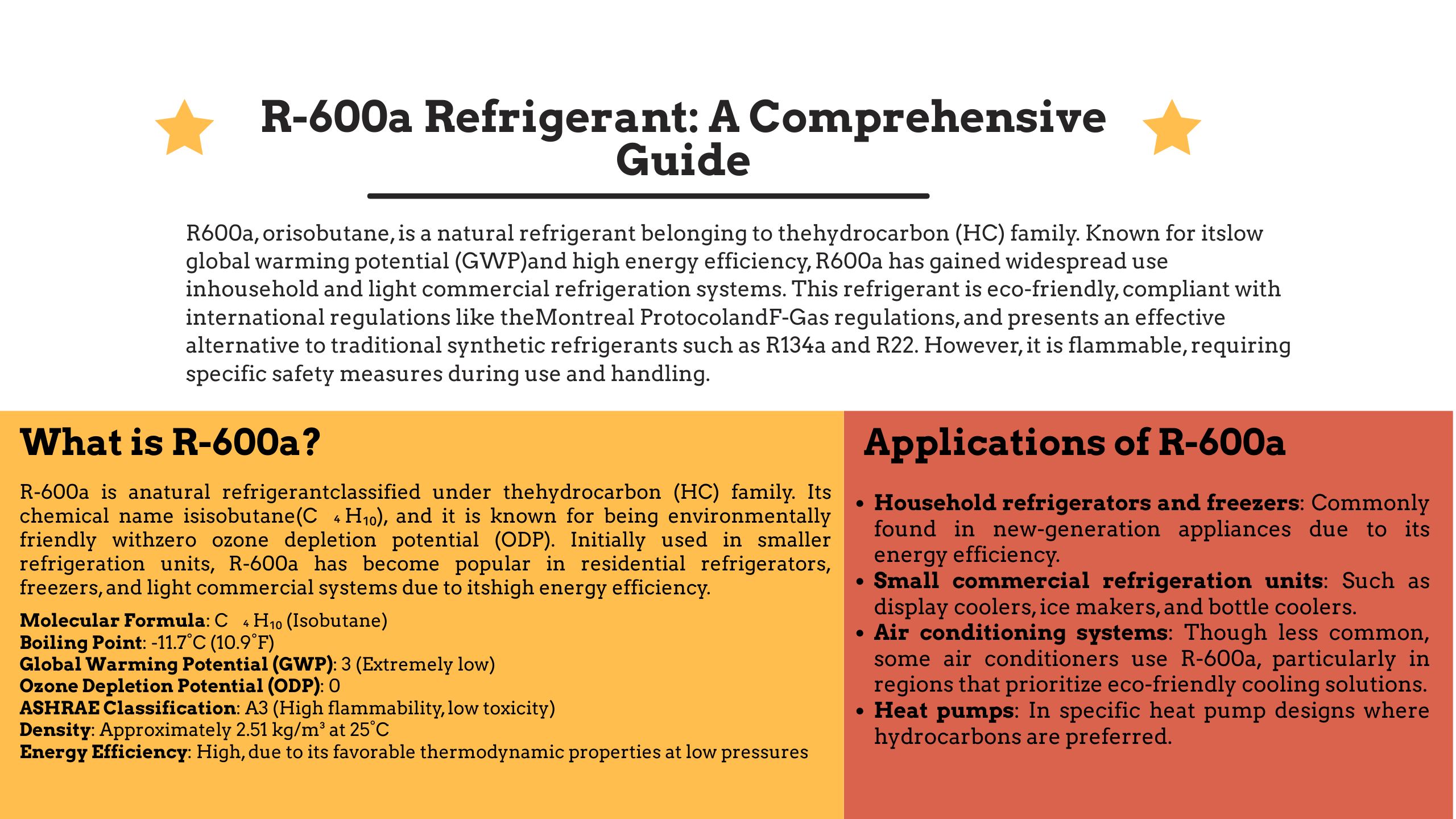
R600a, or isobutane, is a natural refrigerant belonging to the hydrocarbon (HC) family. Known for its low global warming potential (GWP) and high energy efficiency, R600a has gained widespread use in household and light commercial refrigeration systems. This refrigerant is eco-friendly, compliant with international regulations like the Montreal Protocol and F-Gas regulations, and presents an effective alternative to traditional synthetic refrigerants such as R134a and R22. However, it is flammable, requiring specific safety measures during use and handling.

What is R-600a?

R-600a is a natural refrigerant classified under the hydrocarbon (HC) family. Its chemical name is isobutane (C₄H₁₀), and it is known for being environmentally friendly with zero ozone depletion potential (ODP). Initially used in smaller refrigeration units, R-600a has become popular in residential refrigerators, freezers, and light commercial systems due to its high energy efficiency.

More About Refrigerant: Understanding Refrigerants: Types, Uses, and Environmental Impact

A Brief History of R600a Refrigerant

Natural refrigerants like hydrocarbons were commonly used before the emergence of CFCs and HFCs in the mid-20th century. With environmental concerns driving a transition back to natural refrigerants, R600a re-entered the market in the 1990s, particularly in Europe and Asia. As concerns around ozone depletion and high GWP refrigerants intensified, manufacturers started adopting R600a for residential refrigerators and light commercial refrigeration.

Properties of R-600a Refrigerant
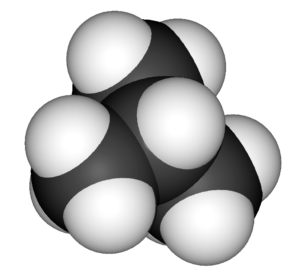
R 600a

R-600a offers a unique combination of thermodynamic properties that contribute to its growing popularity. Key properties include:

  • Molecular Formula: C₄H₁₀ (Isobutane)
  • Boiling Point: -11.7°C (10.9°F)
  • Global Warming Potential (GWP): 3 (Extremely low)
  • Ozone Depletion Potential (ODP): 0
  • ASHRAE Classification: A3 (High flammability, low toxicity)
  • Density: Approximately 2.51 kg/m³ at 25°C
  • Energy Efficiency: High, due to its favorable thermodynamic properties at low pressures

Its low boiling point makes R-600a particularly effective in small refrigeration systems operating under lower pressure conditions.

Applications of R-600a

R-600a is primarily used in:

  • Household refrigerators and freezers: Commonly found in new-generation appliances due to its energy efficiency.
  • Small commercial refrigeration units: Such as display coolers, ice makers, and bottle coolers.
  • Air conditioning systems: Though less common, some air conditioners use R-600a, particularly in regions that prioritize eco-friendly cooling solutions.
  • Heat pumps: In specific heat pump designs where hydrocarbons are preferred.

Realted Read: Applications of Refrigerants: An In-Depth Analysis

Environmental Impact and GWP of R-600a

R-600a stands out as an environmentally friendly refrigerant due to its extremely low GWP of 3. This makes it a sustainable alternative to HFC refrigerants like R-134a, which have a much higher GWP. Since R-600a has zero ODP, it does not harm the ozone layer. Additionally, it aligns with global environmental goals, including the Montreal Protocol and the European Union’s F-Gas regulations.

GWP Calculator

Safety Considerations for R-600a

While R-600a is highly efficient and eco-friendly, its flammability requires strict safety protocols. It is classified as an A3 refrigerant by ASHRAE, indicating high flammability but low toxicity. Key safety measures include:

  • Proper ventilation during installation and servicing to prevent the accumulation of gas.
  • Specialized tools and equipment that minimize the risk of sparking.
  • Leak detectors designed for hydrocarbons to ensure early detection of leaks.
  • Training for technicians to safely handle and maintain systems with R-600a.

When properly managed, the risks associated with R-600a are minimal, making it a safe refrigerant option.

More Read: Refrigerant Safety: A Comprehensive Guide

R600a vs. R290: A Comparative Look

Both R600a (isobutane) and R290 (propane) belong to the hydrocarbon family and are eco-friendly refrigerants with low GWP. However, they have distinct properties:

FeatureR600a (Isobutane)R290 (Propane)
Boiling Point-11.7°C-42.1°C
GWP33
ApplicationsHousehold refrigerationCommercial refrigeration, air conditioning
Energy EfficiencyHighModerate to High
FlammabilityA3 (High)A3 (High)

While R600a is preferred for household appliances, R290 is more common in commercial refrigeration systems and air conditioning units.

You May Like: A Comprehensive Guide to R32 and R290 Refrigerants: Features, Benefits, and Applications

R-600a vs. Other Refrigerants

Let’s compare R-600a with other commonly used refrigerants:

FeatureR-600a (Isobutane)R-134aR-32R-410A
GWP314306752088
ODP0000
FlammabilityHighNon-flammableMildly flammableNon-flammable
EfficiencyHighModerateHighModerate
UsageHousehold appliancesAutomotive ACResidential ACCommercial AC

R-600a offers better energy efficiency and a much lower environmental impact compared to synthetic refrigerants. However, it requires more safety precautions due to its flammability.

Pros and Cons of R-600a

Pros

  • Low GWP and Zero ODP: Environmentally friendly and compliant with international regulations.
  • High Energy Efficiency: Reduces energy consumption, leading to lower operational costs.
  • Compatibility with Smaller Systems: Ideal for household refrigerators and light commercial units.
  • Natural Refrigerant: Part of the hydrocarbon family, promoting sustainable refrigeration.

Cons

  • Flammability: Classified as A3, requiring strict safety protocols during handling.
  • Limited Applications: Not suitable for large-scale air conditioning or industrial systems.
  • Specialized Training: Technicians need training to safely handle flammable refrigerants.
  • Regulatory Restrictions: Some countries impose limits on hydrocarbon refrigerants in specific applications.

Realted Read: What Makes a Good Refrigerant?

Compliance and Regulations for R-600a

R-600a complies with several environmental regulations aimed at reducing greenhouse gas emissions, including:

Manufacturers are increasingly incorporating R-600a into household and commercial appliances to meet these regulatory requirements.

Maintenance Considerations for R600a Systems

Maintaining refrigeration systems that use R600a requires adherence to strict safety protocols due to the refrigerant’s flammability. Key considerations include:

  • Leak Detection: Regularly check for leaks using hydrocarbon-specific detectors.
  • Proper Ventilation: Ensure good ventilation during installation and servicing to avoid gas buildup.
  • Specialized Tools: Use non-sparking tools to minimize fire risks.
  • Technician Training: Ensure that technicians are trained to handle flammable refrigerants safely.

By following these guidelines, R600a systems can operate safely and efficiently for extended periods.

Frequently Asked Questions (FAQs)

1. Is R-600a safe to use?

Yes, R-600a is safe when handled correctly. Although it is flammable, following safety protocols ensures minimal risk.

2. Can R-600a replace R-134a?

In many applications, R-600a serves as an efficient alternative to R-134a, especially in household refrigeration systems.

3. What is the GWP of R-600a?

R-600a has a GWP of just 3, making it one of the most environmentally friendly refrigerants available.

4. Are there restrictions on using R-600a?

Some regions have restrictions on using hydrocarbons in air conditioning systems due to their flammability. However, R-600a is widely accepted for household refrigeration.

5. Do I need special tools to handle R-600a?

Yes, technicians need specialized tools to work with R-600a safely, as well as proper training on handling hydrocarbon refrigerants.

6. Can R600a Refrigerant Be Used as a Substitute for R22?

R600a cannot directly replace R22 due to differences in operating pressures and flammability classification. R22, a high-pressure refrigerant, was widely used in air conditioning and refrigeration systems before being phased out under the Montreal Protocol. R600a, on the other hand, operates at lower pressures and is more suitable for smaller refrigeration units. For systems designed for R22, alternatives like R290 or R407C may be more appropriate.

7. R600a Compressors and Their Role

R600a compressors are specifically designed to operate under lower pressures compared to other refrigerants. They contribute significantly to the energy efficiency of refrigeration systems. These compressors are smaller, quieter, and more efficient, making them ideal for modern household refrigerators and freezers. However, due to the refrigerant’s flammability, sealed compressors and strict manufacturing standards are essential.

Conclusion

R-600a (isobutane) has emerged as a highly efficient and environmentally friendly refrigerant, especially in household refrigerators and small commercial units. Its low GWP, zero ODP, and alignment with global regulations make it a sustainable choice for manufacturers and consumers alike. However, its flammability requires careful handling, making it essential for technicians to follow safety protocols. As the world moves towards greener refrigeration solutions, R-600a is expected to play an increasingly important role in reducing the environmental impact of cooling technologies.

Leave a Reply

Your email address will not be published. Required fields are marked *