
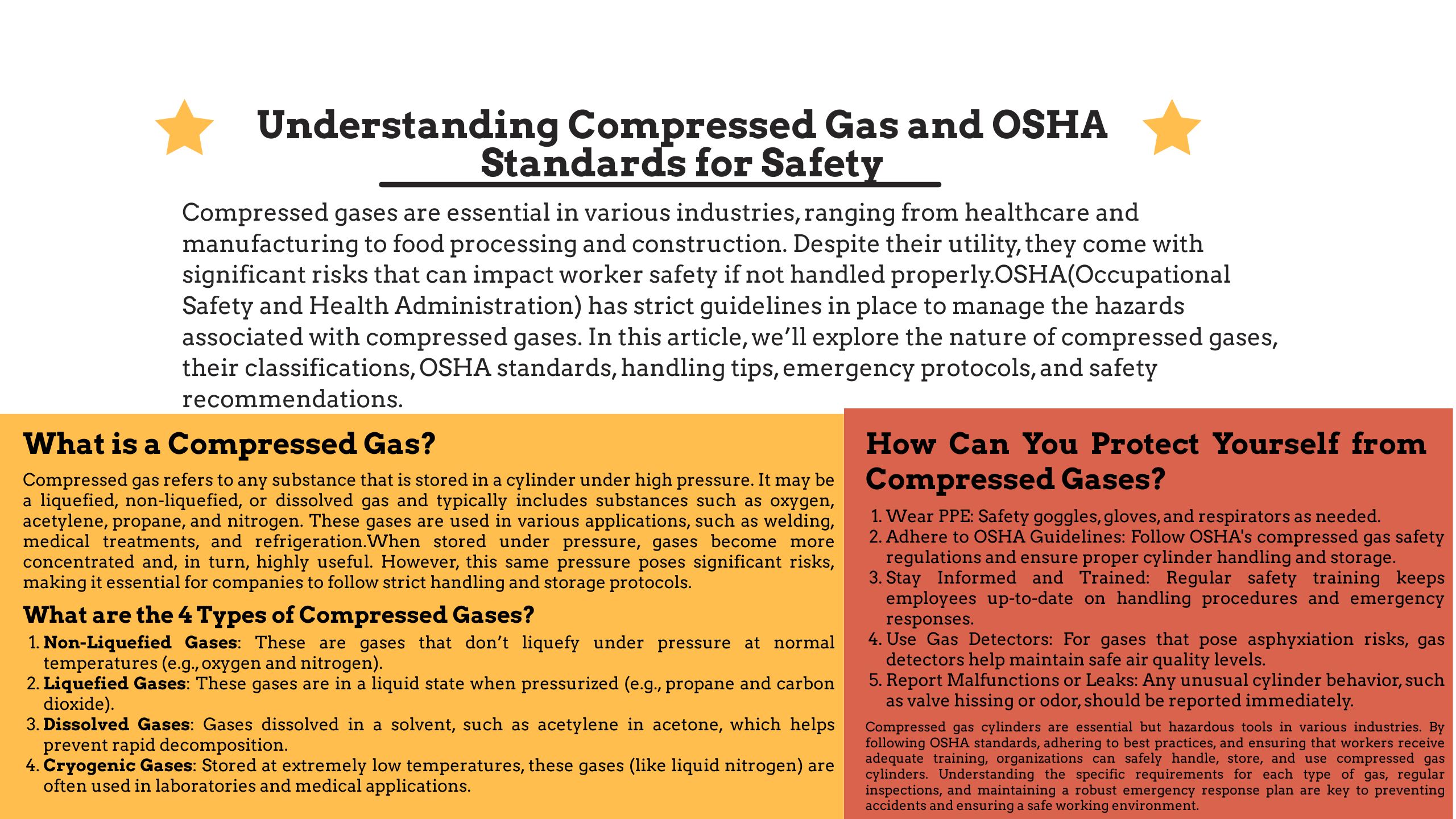
Compressed gases are essential in various industries, ranging from healthcare and manufacturing to food processing and construction. Despite their utility, they come with significant risks that can impact worker safety if not handled properly. OSHA (Occupational Safety and Health Administration) has strict guidelines in place to manage the hazards associated with compressed gases. In this article, we’ll explore the nature of compressed gases, their classifications, OSHA standards, handling tips, emergency protocols, and safety recommendations.
What is a Compressed Gas?
Compressed gas refers to any substance that is stored in a cylinder under high pressure. It may be a liquefied, non-liquefied, or dissolved gas and typically includes substances such as oxygen, acetylene, propane, and nitrogen. These gases are used in various applications, such as welding, medical treatments, and refrigeration.
When stored under pressure, gases become more concentrated and, in turn, highly useful. However, this same pressure poses significant risks, making it essential for companies to follow strict handling and storage protocols.
What are the 4 Types of Compressed Gases?
Compressed gases are generally categorized into four main types based on their properties and applications:
- Non-Liquefied Gases: These are gases that don’t liquefy under pressure at normal temperatures (e.g., oxygen and nitrogen).
- Liquefied Gases: These gases are in a liquid state when pressurized (e.g., propane and carbon dioxide).
- Dissolved Gases: Gases dissolved in a solvent, such as acetylene in acetone, which helps prevent rapid decomposition.
- Cryogenic Gases: Stored at extremely low temperatures, these gases (like liquid nitrogen) are often used in laboratories and medical applications.
Each type of compressed gas presents unique handling requirements and hazards, making it essential for industries to adhere to OSHA regulations for each gas category.
CO2 Tank Safety & CO2 Cylinder Safety: Essential Guidelines and Best Practices
Why is Compressed Gas Dangerous?
Compressed gases present several hazards, including:
- Pressure Hazards: A high-pressure gas cylinder can become a powerful projectile if punctured or damaged.
- Chemical Hazards: Many gases are toxic, flammable, or corrosive, posing health risks upon inhalation or skin contact.
- Asphyxiation: Some gases displace oxygen in enclosed spaces, leading to the risk of suffocation.
- Explosion and Fire: Certain gases are highly flammable and can lead to explosions if they come into contact with ignition sources.
Key OSHA Standards for Compressed Gas Cylinder Storage and Handling
What are the OSHA Requirements for Compressed Gas?
OSHA has established specific requirements under the 29 CFR 1910.101 regulation, which provides guidelines for the safe handling, storage, and use of compressed gases. Here’s a summary of the key standards:
- Cylinder Storage: Cylinders should be stored upright, secured to prevent tipping, and in a well-ventilated area.
- Segregation of Incompatible Gases: Flammable and oxidizing gases must be stored separately, with a physical barrier or a minimum distance of 20 feet between them.
- Labeling: All cylinders must be clearly labeled with the gas name and hazard class.
- Regular Inspection: Cylinders and equipment should be inspected regularly for signs of damage or leakage.
OSHA Regulations for Gas Cylinders
Each type of compressed gas may have specific storage and handling requirements, as outlined by OSHA. Some general rules include:
- Valves and Caps: Cylinders should have valve caps or guards during storage and transportation to protect the valve from damage.
- Handling Precautions: Employees must handle gas cylinders with care, never dropping, dragging, or rolling them on their sides.
- Emergency Protocols: Companies must have a documented emergency plan for handling gas leaks, fires, and other incidents involving compressed gases.
OSHA Compressed Gas Cylinder Storage Tips
- Store cylinders in designated, well-ventilated areas away from sources of heat and ignition.
- Use cylinder cages or secure storage racks to prevent cylinders from falling.
- Store full and empty cylinders separately to avoid confusion.
- Keep cylinders away from direct sunlight and extreme temperatures.
How to Handle Industrial Gas Cylinders
Handling compressed gas cylinders requires proper training and adherence to safety protocols. Here are some important tips:
- Use Appropriate Equipment: Always use carts or carriers designed specifically for gas cylinders.
- Open Valves Slowly: Rapid release of pressure can cause accidents, so open cylinder valves slowly and carefully.
- Keep Cylinders Upright: This prevents liquid gas from escaping and maintains cylinder stability.
- Avoid Using Oil or Grease: Oil and grease can react dangerously with certain gases, such as oxygen, and should never come into contact with cylinders.
Compressed Gas Safety Standards
Compressed gas safety standards are designed to ensure the safe handling, use, and storage of cylinders. In addition to OSHA standards, companies may also adhere to standards set by other organizations, such as the Compressed Gas Association (CGA) and the American National Standards Institute (ANSI).
OSHA Compressed Gas Standards by Industry
Different industries may have specific OSHA requirements for compressed gases. For example:
- Healthcare: Medical facilities using oxygen and nitrous oxide must adhere to special guidelines to prevent fire hazards.
- Construction: Flammable gases like acetylene used in welding must be stored and handled according to strict OSHA guidelines.
- Food and Beverage: CO₂ used in beverage carbonation must be managed to prevent asphyxiation hazards in enclosed spaces.
Gas Cylinder Recycling & Disposal
Proper disposal of compressed gas cylinders is essential to prevent environmental hazards. Most gas suppliers offer recycling programs, and empty cylinders should be returned to the supplier for proper disposal. Cylinders should never be discarded as regular waste, as they pose risks to waste management personnel.
Best Practices for Safe Handling of Compressed Gas Cylinders
While OSHA sets the minimum standards for compressed gas cylinder safety, implementing additional best practices can further reduce risks and promote a safe working environment.
1. Secure and Transport Cylinders Properly
- Always transport cylinders using a suitable cylinder cart and secure them with chains during transport. Never attempt to move a cylinder by rolling it on its base, as this can damage the cylinder and increase the risk of a leak.
2. Store Cylinders in Designated Areas
- Designate specific areas for storing full and empty cylinders, ensuring they are kept upright, secured, and in well-ventilated spaces away from combustible materials.
3. Perform Regular Inspections and Maintenance
- Schedule periodic inspections for all cylinders and equipment. Cylinders showing signs of wear, corrosion, or leaks should be removed from service immediately and returned to the supplier.
4. Emergency Preparedness and Response
- Ensure that all employees know the location of emergency shut-off valves and are trained on how to respond in case of a gas leak or fire. Emergency response plans should be posted in visible areas, and drills should be conducted regularly.
5. Ensure Proper Ventilation
- Good ventilation in areas where gases are stored or used is crucial, especially for gases that pose an asphyxiation risk. Ventilation systems should be regularly maintained to avoid any potential failures.
Compressed Gas Safety for Individual Gases
Each gas has unique safety requirements. For example:
- Oxygen: Avoid using near any combustible materials.
- Acetylene: Always store upright to prevent acetone from leaking.
- Carbon Dioxide: Ensure proper ventilation as CO₂ is a suffocant in confined spaces.
What to Do in a Compressed Gas Emergency?
In case of a compressed gas leak or emergency:
- Evacuate the Area: Move all personnel to a safe location.
- Shut Off the Source: If safe to do so, close the valve to stop the leak.
- Notify Authorities: Alert local emergency services or the fire department.
- Follow Safety Protocols: Use emergency ventilation systems and wear appropriate PPE if you must handle the cylinder directly.
10 Industrial Gas Safety Tips
- Store cylinders in designated, well-ventilated areas.
- Regularly inspect cylinders and valves for leaks and damage.
- Secure cylinders upright with appropriate restraints.
- Never smoke or use ignition sources near flammable gases.
- Use the correct regulator and equipment for each gas type.
- Label all cylinders accurately and keep labels visible.
- Open cylinder valves slowly to control pressure release.
- Train all employees on compressed gas safety protocols.
- Keep incompatible gases separated.
- Have emergency response plans and practice regular drills.
Industry-Specific Requirements for Compressed Gas Safety
Different industries have unique requirements and additional regulations for compressed gas safety. Below are some examples:
1. Welding and Metalworking
- In industries that use gases like acetylene, OSHA enforces standards such as limiting the acetylene pressure and ensuring that gas cylinders are stored a safe distance from welding and cutting operations.
2. Healthcare and Laboratories
- For healthcare settings, where gases like oxygen and nitrous oxide are commonly used, cylinders must be stored in designated areas that meet stringent cleanliness and ventilation requirements to avoid contamination.
3. Food and Beverage
- In the food and beverage industry, carbon dioxide is frequently used. Employers must ensure that CO2 levels in the workspace are monitored regularly, as CO2 poses an asphyxiation risk in confined areas.
How Can You Protect Yourself from Compressed Gases?
Protection from compressed gases includes the following steps:
- Wear PPE: Safety goggles, gloves, and respirators as needed.
- Adhere to OSHA Guidelines: Follow OSHA’s compressed gas safety regulations and ensure proper cylinder handling and storage.
- Stay Informed and Trained: Regular safety training keeps employees up-to-date on handling procedures and emergency responses.
- Use Gas Detectors: For gases that pose asphyxiation risks, gas detectors help maintain safe air quality levels.
- Report Malfunctions or Leaks: Any unusual cylinder behavior, such as valve hissing or odor, should be reported immediately.
Conclusion
Compressed gas cylinders are essential but hazardous tools in various industries. By following OSHA standards, adhering to best practices, and ensuring that workers receive adequate training, organizations can safely handle, store, and use compressed gas cylinders. Understanding the specific requirements for each type of gas, regular inspections, and maintaining a robust emergency response plan are key to preventing accidents and ensuring a safe working environment.
Portable vs Fixed Refrigerant Detection: How Their Jobs Differ
Compare handheld leak locators, fixed-point monitors and aspirating systems by sample location, response chain and commissioning needs.
Read More
Refrigerant Identification vs Concentration Measurement: Which Test Do You Need?
Distinguish a sealed-charge identifier from ambient concentration monitoring, handheld leak location and formal refrigerant purity testing.
Read More
How Humidity Affects Optical PM2.5 Sensor Readings
Learn why humidity, water uptake, fog and condensation can affect optical PM2.5 estimates and how to investigate and validate a humid-air spike.
Read More
How to Interpret CO2 Readings in a Vehicle Cabin
Read vehicle-cabin CO2 trends alongside passengers, HVAC mode and route conditions while separating ventilation clues from particle and exhaust safety questions.
Read More
Gas Heater Monitoring at Home: Which Alarm and Sensor Does What?
Understand the separate roles of a household CO alarm, fuel-gas detector, CO2 monitor and qualified heater service, including what to do after a warning.
Read More
How to Plan IAQ Monitoring in Shared Indoor Spaces
Plan indoor-air-quality monitoring for libraries, waiting areas and shared rooms by matching CO2, particles and other channels to a defined decision.
Read More