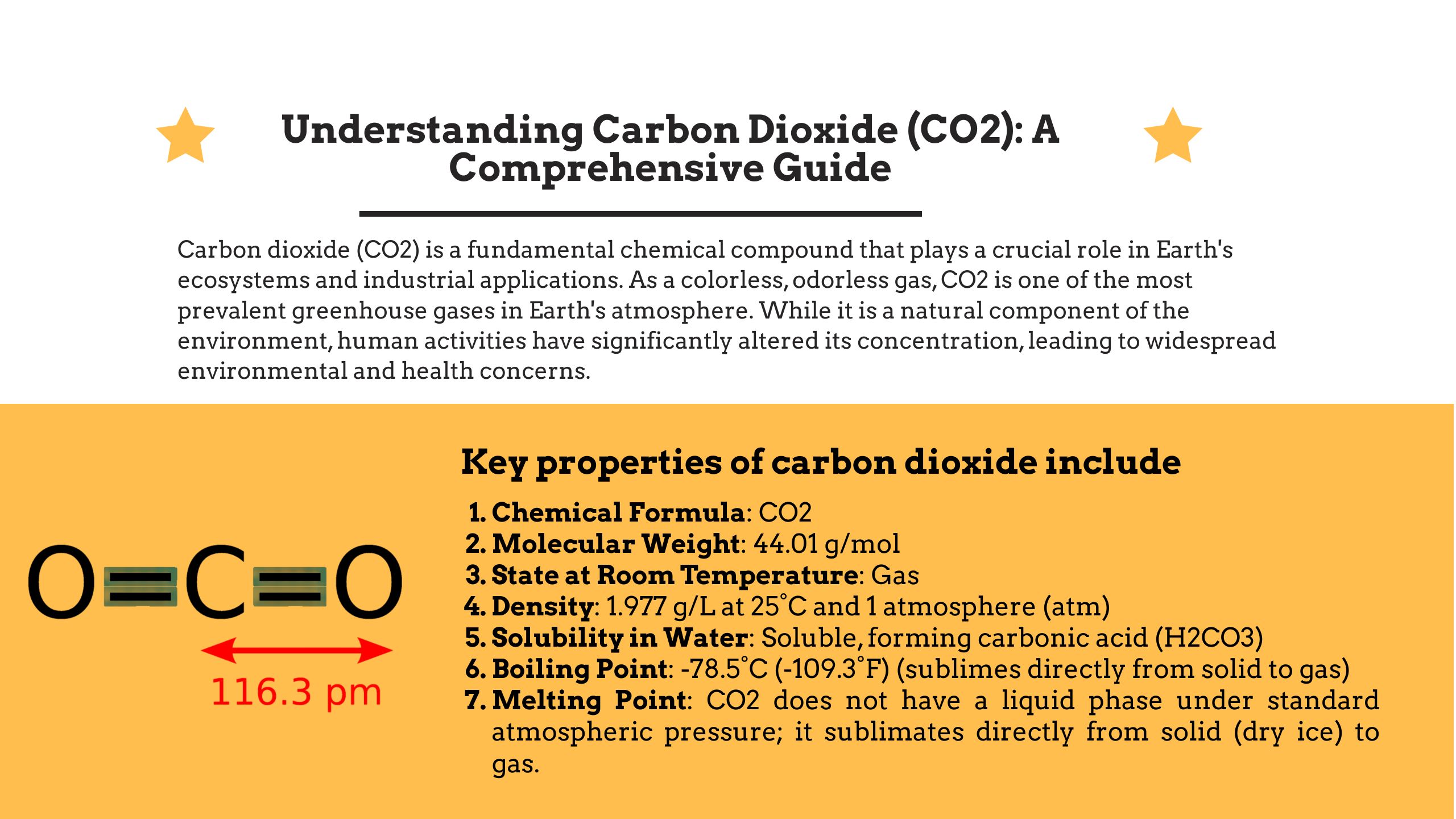
Carbon dioxide (CO2) is a fundamental chemical compound that plays a crucial role in Earth’s ecosystems and industrial applications. As a colorless, odorless gas, CO2 is one of the most prevalent greenhouse gases in Earth’s atmosphere. While it is a natural component of the environment, human activities have significantly altered its concentration, leading to widespread environmental and health concerns.

This article explores what carbon dioxide is, its sources, role in the environment, industrial applications, and the impacts of elevated CO2 levels on climate change and human health.

What is Carbon Dioxide (CO2)?

Chemical Composition and Properties
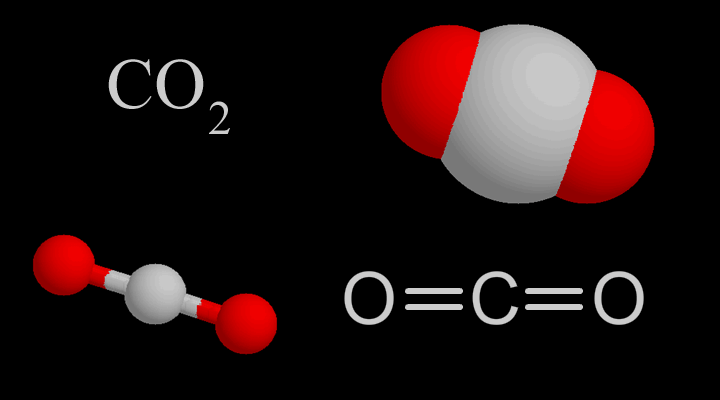
Carbon dioxide (CO2) is a chemical compound composed of one carbon atom covalently bonded to two oxygen atoms. The molecular formula for carbon dioxide is CO2, and its molecular structure is linear, with the carbon atom in the center and the oxygen atoms on either side.

Key properties of carbon dioxide include:

  • Chemical Formula: CO2
  • Molecular Weight: 44.01 g/mol
  • State at Room Temperature: Gas
  • Density: 1.977 g/L at 25°C and 1 atmosphere (atm)
  • Solubility in Water: Soluble, forming carbonic acid (H2CO3)
  • Boiling Point: -78.5°C (-109.3°F) (sublimes directly from solid to gas)
  • Melting Point: CO2 does not have a liquid phase under standard atmospheric pressure; it sublimates directly from solid (dry ice) to gas.

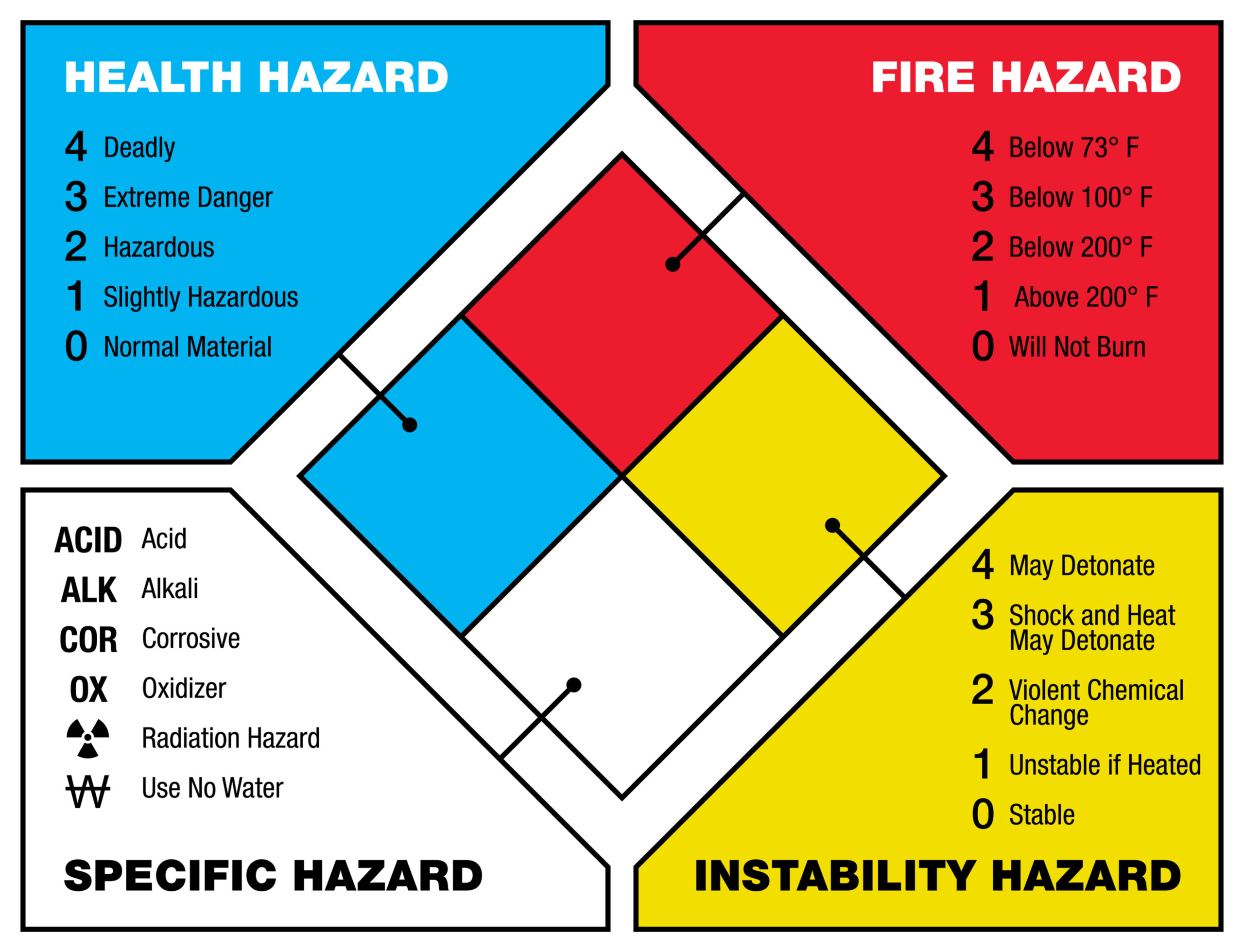
Carbon dioxide is a stable compound, non-flammable, and inert under normal conditions. It is heavier than air and can accumulate in low-lying areas, which can pose health risks in poorly ventilated environments.

Natural Sources of Carbon Dioxide

Carbon dioxide is naturally present in Earth’s atmosphere as part of the carbon cycle. The primary natural sources of CO2 include:

  • Respiration: All aerobic organisms, including humans, animals, and plants, produce carbon dioxide as a byproduct of cellular respiration. During this process, glucose (C6H12O6) and oxygen (O2) are converted into energy, with CO2 and water (H2O) as byproducts.
  • Decomposition: When organic matter, such as plants and animals, decomposes, microorganisms break down the material, releasing CO2 into the atmosphere.
  • Volcanic Activity: Volcanic eruptions release large amounts of carbon dioxide stored in Earth’s mantle into the atmosphere.
  • Oceans: Oceans absorb and release CO2 as part of the carbon cycle. Phytoplankton in the ocean also play a role in sequestering CO2 through photosynthesis.
  • Wildfires: Natural wildfires, caused by lightning or other natural events, produce CO2 as organic material burns.

Anthropogenic (Human-Made) Sources of Carbon Dioxide

While carbon dioxide is a natural component of the atmosphere, human activities have significantly increased its concentration since the Industrial Revolution. The primary anthropogenic sources of CO2 include:

  • Fossil Fuel Combustion: Burning fossil fuels such as coal, oil, and natural gas for energy production is the largest source of anthropogenic CO2 emissions. This includes emissions from power plants, transportation, and industrial processes.
  • Deforestation: Clearing forests for agriculture or urban development reduces the number of trees available to absorb CO2 through photosynthesis, leading to increased atmospheric CO2 levels.
  • Cement Production: The process of manufacturing cement involves the calcination of limestone (calcium carbonate), which releases CO2 as a byproduct.
  • Industrial Processes: Certain industrial processes, such as steel production and chemical manufacturing, release CO2 as part of their operations.

The Role of Carbon Dioxide in the Environment

Photosynthesis and the Carbon Cycle

Carbon dioxide plays a crucial role in the carbon cycle, a natural process that regulates the flow of carbon among the atmosphere, oceans, and living organisms. One of the most important aspects of this cycle is photosynthesis.

Photosynthesis is the process by which green plants, algae, and some bacteria convert sunlight, carbon dioxide, and water into glucose (a form of sugar) and oxygen. The general equation for photosynthesis is:

photosynthesis general equation

Through photosynthesis, plants absorb CO2 from the atmosphere and use it to build carbohydrates, which serve as the foundation for the food chain. Oxygen, a byproduct of photosynthesis, is released into the atmosphere, supporting aerobic life.

Respiration and decomposition release CO2 back into the atmosphere, completing the carbon cycle. The balance between these processes helps regulate atmospheric CO2 levels.

Carbon Sequestration

Carbon sequestration refers to the process of capturing and storing atmospheric carbon dioxide to mitigate climate change. This can occur naturally through biological processes (such as the growth of forests) or artificially through technologies designed to capture and store CO2 from industrial emissions.

Types of carbon sequestration include:

  • Biological Sequestration: The absorption of CO2 by plants, soils, and oceans. Forests and wetlands are particularly effective at storing carbon over long periods.
  • Geological Sequestration: The capture and storage of CO2 in underground rock formations, such as depleted oil and gas reservoirs or deep saline aquifers.
  • Ocean Sequestration: The natural absorption of CO2 by oceans, where it can be stored in marine ecosystems or in deep ocean waters.

Carbon sequestration is a critical strategy in reducing the impact of CO2 emissions on global climate change.

Related Read: The Benefits of CO2 for Plants: A Comprehensive Guide

Industrial Applications of Carbon Dioxide

Food and Beverage Industry

Carbon dioxide has numerous applications in the food and beverage industry:

  • Carbonation: CO2 is used to carbonate beverages such as soda, beer, and sparkling water. The gas dissolves in the liquid under pressure, creating the characteristic bubbles and fizzy sensation.
  • Food Preservation: CO2 is used in modified atmosphere packaging (MAP) to extend the shelf life of perishable foods. By replacing the oxygen in packaging with CO2, the growth of bacteria and mold is inhibited, preserving the freshness of the food.
  • Refrigeration and Freezing: Solid CO2, commonly known as dry ice, is used as a refrigerant for transporting perishable goods. It is also used in food processing to flash-freeze products, preserving their quality and texture.
  • Extraction: Supercritical CO2 is used as a solvent in the extraction of flavors, fragrances, and essential oils from natural products. This method is popular for producing decaffeinated coffee and extracting cannabinoids from cannabis.

Medical and Healthcare Applications

Carbon dioxide has several medical and healthcare applications:

  • Respiratory Therapy: CO2 is used in respiratory therapy to stimulate breathing in patients with respiratory failure or apnea. It is sometimes administered in a controlled mixture with oxygen to improve breathing efficiency.
  • Laparoscopy: In laparoscopic surgery, CO2 is used to inflate the abdominal cavity, providing surgeons with a better view of the internal organs.
  • Cryotherapy: Liquid CO2 is used in cryotherapy to remove warts, moles, and other skin lesions by freezing the tissue.

Industrial and Environmental Applications

In addition to its uses in the food, beverage, and medical industries, carbon dioxide has numerous industrial and environmental applications:

  • Fire Suppression: CO2 is used in fire suppression systems, particularly for electrical fires and areas with sensitive equipment. It works by displacing oxygen, thereby suffocating the fire without leaving harmful residues.
  • Enhanced Oil Recovery (EOR): CO2 is injected into oil reservoirs to increase the pressure and improve the extraction of oil. This technique, known as enhanced oil recovery, helps to maximize the yield from existing oil fields.
  • Welding: CO2 is used as a shielding gas in welding processes to protect the weld from oxidation and contamination. It is commonly used in metal inert gas (MIG) welding.
  • Water Treatment: CO2 is used to adjust the pH of water in water treatment processes, making it less corrosive and improving the efficiency of chemical reactions.

Environmental and Health Impacts of Carbon Dioxide

Climate Change and Global Warming

Carbon dioxide is one of the most significant greenhouse gases, contributing to the greenhouse effect and global warming. The greenhouse effect occurs when greenhouse gases, including CO2, trap heat in Earth’s atmosphere, preventing it from escaping into space. This trapped heat leads to an increase in global temperatures, a phenomenon known as global warming.

Since the Industrial Revolution, human activities have significantly increased the concentration of CO2 in the atmosphere, primarily through the burning of fossil fuels and deforestation. This increase in CO2 levels has been linked to several environmental and climatic changes, including:

  • Rising Global Temperatures: Average global temperatures have risen by approximately 1.1°C (2°F) since the late 19th century, with much of the warming occurring in the past few decades. This rise in temperature has led to more frequent and severe heatwaves, droughts, and other extreme weather events.
  • Melting Polar Ice and Glaciers: Higher temperatures have caused polar ice caps and glaciers to melt at an accelerated rate, contributing to rising sea levels. This has resulted in the loss of habitat for polar species and increased the risk of coastal flooding.
  • Ocean Acidification: As CO2 levels in the atmosphere increase, more of the gas is absorbed by the oceans, leading to a decrease in the pH of seawater. This process, known as ocean acidification, has harmful effects on marine life, particularly organisms with calcium carbonate shells, such as coral reefs,

mollusks, and some plankton species.

  • Disruption of Ecosystems: Climate change driven by increased CO2 levels has disrupted ecosystems and altered the distribution of plant and animal species. Some species may be unable to adapt to the changing conditions, leading to a loss of biodiversity.

Health Impacts of Elevated CO2 Levels

While carbon dioxide is not toxic at low concentrations, elevated levels of CO2 can pose health risks, particularly in enclosed or poorly ventilated spaces. The health effects of elevated CO2 levels include:

  • Headaches and Dizziness: Exposure to moderate levels of CO2 (between 1,000 and 5,000 parts per million) can cause headaches, dizziness, and fatigue. These symptoms are often the result of reduced oxygen availability in the blood.
  • Increased Heart Rate and Respiratory Rate: Higher concentrations of CO2 (above 5,000 parts per million) can lead to an increased heart rate and respiratory rate as the body attempts to compensate for the reduced oxygen supply.
  • Asphyxiation: At extremely high concentrations (above 40,000 parts per million), CO2 can displace oxygen in the air, leading to asphyxiation and death if not promptly addressed.
  • Indoor Air Quality: Elevated CO2 levels are often used as an indicator of poor indoor air quality, as they are typically associated with insufficient ventilation. Poor indoor air quality can lead to discomfort, reduced cognitive function, and an increased risk of respiratory infections.

You May Like:

Understanding Carbon Dioxide Levels: A Comprehensive Guide

Understanding and Managing Typical CO2 Levels at Home: A Comprehensive Guide

Dangers of CO2: Everything You Need to Know

The Importance of Monitoring and Managing CO2 Levels

Given the significant environmental and health impacts of elevated CO2 levels, it is essential to monitor and manage CO2 concentrations in various settings. This is particularly important in industrial, commercial, and residential environments where CO2 levels can rise due to human activities or insufficient ventilation.

Methods for Monitoring CO2 Levels:

  • CO2 Sensors: Carbon dioxide sensors, also known as CO2 detectors, are devices used to measure the concentration of CO2 in the air. These sensors are commonly used in HVAC systems, greenhouses, and indoor air quality monitors to ensure that CO2 levels remain within safe limits.
  • Portable CO2 Monitors: Portable CO2 monitors are handheld devices that can be used to measure CO2 levels in various locations. These monitors are useful for assessing indoor air quality in homes, offices, and other enclosed spaces.
  • Environmental Monitoring Systems: In industrial and commercial settings, environmental monitoring systems are often used to continuously track CO2 levels and other environmental parameters. These systems can trigger alarms or adjust ventilation systems if CO2 levels exceed predetermined thresholds.

Strategies for Reducing CO2 Emissions:

  • Energy Efficiency: Improving energy efficiency in buildings, transportation, and industrial processes can reduce the amount of fossil fuels burned, thereby lowering CO2 emissions.
  • Renewable Energy: Transitioning to renewable energy sources, such as solar, wind, and hydropower, can significantly reduce CO2 emissions associated with electricity generation.
  • Carbon Capture and Storage (CCS): Carbon capture and storage technologies capture CO2 emissions from industrial processes and power plants and store them underground, preventing them from entering the atmosphere.
  • Afforestation and Reforestation: Planting trees and restoring forests can help sequester CO2 from the atmosphere, reducing the overall concentration of greenhouse gases.
  • Behavioral Changes: Individuals can reduce their carbon footprint by making environmentally conscious choices, such as using public transportation, reducing energy consumption, and supporting sustainable products and practices.

Conclusion

Carbon dioxide is a vital component of Earth’s atmosphere, playing a central role in the carbon cycle and supporting life through photosynthesis. However, human activities have significantly altered the natural balance of CO2, leading to environmental challenges such as climate change, ocean acidification, and health risks associated with elevated CO2 levels.

Understanding the sources, impacts, and applications of carbon dioxide is essential for developing strategies to mitigate its effects and ensure a sustainable future. By monitoring and managing CO2 levels, reducing emissions, and adopting sustainable practices, we can address the challenges posed by this important but often misunderstood gas.

Realted Read: Carbon Dioxide vs Carbon Monoxide Understanding the Differences

[post-views]

Leave a Reply

Your email address will not be published. Required fields are marked *