
1. Introduction to Vibration Sensors
Vibration sensors are essential devices used to detect, measure, and analyze oscillatory motions in objects, systems, or structures. These sensors convert mechanical motion into electrical signals, enabling monitoring, diagnostics, and preventive maintenance across industries such as manufacturing, aerospace, automotive, construction, and healthcare.
Vibration monitoring provides critical information about the health, performance, and safety of machinery and structures. It plays a fundamental role in predictive maintenance (PdM), allowing operators to identify potential faults early and avoid catastrophic failures.
2. What is Vibration?
Vibration is a mechanical phenomenon where oscillations occur about an equilibrium point. It can be periodic (e.g., a pendulum swinging) or random (e.g., the movement of a car over a rough road).
Vibrations are typically characterized by:
Amplitude: The magnitude of displacement.
Frequency: The number of oscillations per second (measured in Hz).
Acceleration: Rate of change of velocity (measured in g or m/s²).
Velocity: Speed of the vibration (measured in mm/s or in/s).
Displacement: Distance moved by the vibrating object (measured in micrometers or mils).
By monitoring these properties, engineers can assess the operational state of machines and structures.
3. How Vibration Sensors Work
Vibration sensors detect oscillatory movements and translate them into electrical signals that can be measured and analyzed. Depending on the type, they may measure displacement, velocity, or acceleration.
Most vibration sensors work through:
Sensing element (e.g., piezoelectric material, MEMS chip, strain gauge)
Signal processing circuitry to amplify and convert signals
Output interface (analog or digital)
The conversion of mechanical energy to an electrical signal is essential for data recording, diagnostics, and control applications.
4. Types of Vibration Sensors
There are several types of vibration sensors, each suited to specific applications and environments:
a. Piezoelectric Accelerometers
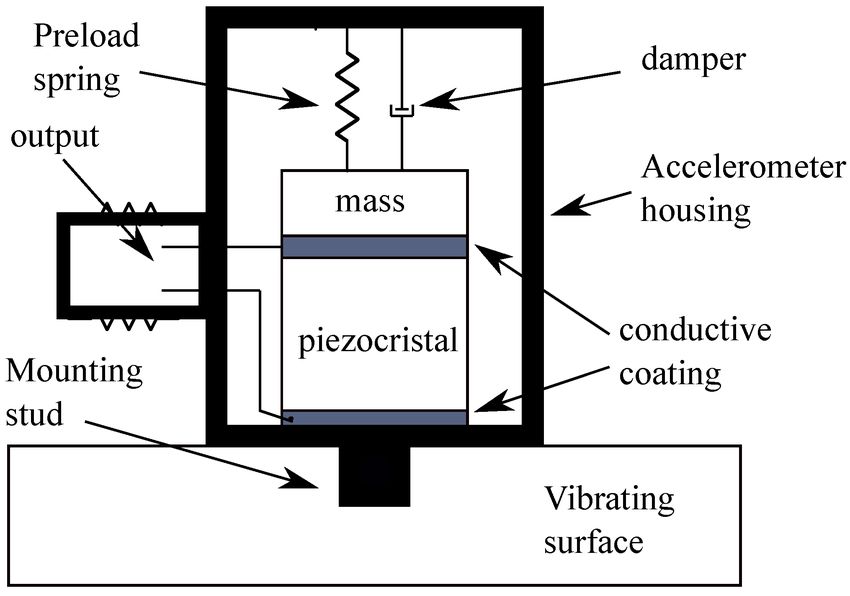
Most common type.
Use piezoelectric crystals that generate an electric charge when subjected to vibration.
Offer high sensitivity and wide frequency response.
Ideal for industrial equipment monitoring and seismic applications.
b. MEMS Accelerometers
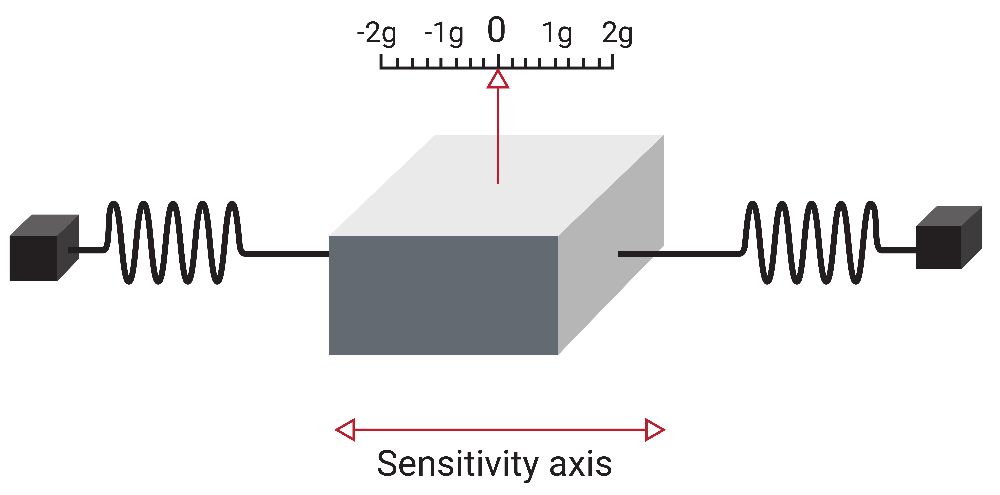
Miniaturized sensors using Micro-Electro-Mechanical Systems technology.
Compact, low-power, and cost-effective.
Found in smartphones, wearable devices, drones, and automotive safety systems.
c. Velocity Sensors
Measure the speed of a vibrating object.
Typically electromagnetic, using a moving coil in a magnetic field.
Common in machinery condition monitoring.
d. Displacement Sensors
Measure the distance an object moves during vibration.
Useful for low-frequency vibrations.
Often capacitive, eddy current, or laser-based.
e. Strain Gauge Sensors
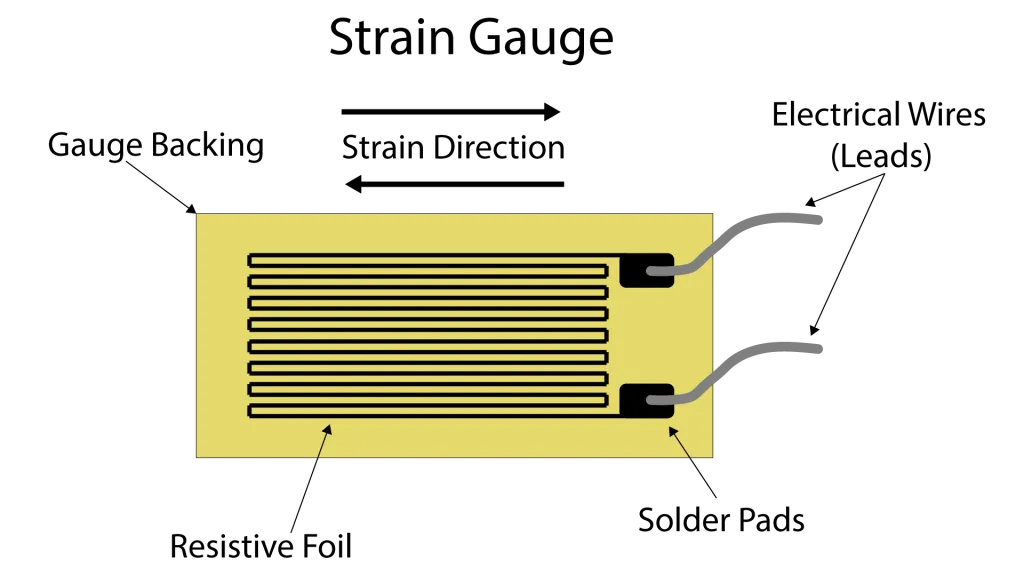
Measure the deformation (strain) caused by vibration.
Convert strain into a resistance change, which can be measured electrically.
f. Optical Vibration Sensors
Use laser or fiber optics to detect minute vibrations without physical contact.
High-precision applications like aerospace structures.
5. Key Specifications of Vibration Sensors
When selecting a vibration sensor, several parameters must be considered:
| Specification | Description |
|---|---|
| Sensitivity | Output per unit of input (e.g., mV/g) |
| Frequency Range | Range of vibration frequencies the sensor can detect |
| Dynamic Range | Range of amplitudes the sensor can accurately measure |
| Resolution | Smallest detectable vibration |
| Shock Resistance | Ability to withstand sudden impacts |
| Temperature Range | Operational temperature limits |
| Output Type | Analog (voltage/current) or Digital (I²C, SPI, UART) |
Choosing the right sensor depends on the application’s operating conditions and required measurement precision.
6. Applications of Vibration Sensors
a. Industrial Machinery Monitoring
Detect bearing failures, misalignments, unbalance, or looseness.
Key to implementing predictive maintenance programs.
Extend equipment life and reduce downtime.
b. Automotive Industry
Monitor engine vibrations.
Enable airbag deployment systems via crash detection (accelerometers).
Used in anti-lock braking systems (ABS) and electronic stability programs (ESP).
c. Aerospace Engineering
Analyze vibrations in aircraft components.
Ensure structural integrity under extreme conditions.
Essential for spacecraft instrumentation.
d. Civil Engineering
Monitor bridges, skyscrapers, and dams for structural health.
Detect resonance that could lead to collapse or damage.
e. Consumer Electronics
Smartphone motion detection (screen rotation, step counting).
Gaming controllers with haptic feedback (vibration motors).
f. Medical Devices
Vibrational therapy devices.
Monitoring patient movement for rehabilitation.
g. Seismology
- Detect and analyze ground vibrations caused by earthquakes.
7. Advantages of Vibration Sensors
Early Fault Detection: Identifies mechanical issues before they become serious.
Non-Destructive Monitoring: Real-time observation without interrupting operations.
Wide Measurement Range: From microscopic movements to violent impacts.
Integration with IoT Systems: Enables remote monitoring and data analytics.
Increased Safety: Predicts failures in critical infrastructure.
8. Challenges and Limitations
Environmental Sensitivity: Dust, moisture, and temperature extremes can affect performance.
Calibration Requirements: Sensors must be calibrated for accuracy.
Signal Noise: Requires filtering to separate meaningful data.
Cost Factors: High-end sensors can be expensive, especially in aerospace and precision engineering.
9. Vibration Data Analysis
Vibration data are usually analyzed in both time and frequency domains:
Time-domain analysis: Simple methods like RMS (root mean square), peak detection.
Frequency-domain analysis: Uses Fast Fourier Transform (FFT) to break down vibrations into constituent frequencies — helpful for diagnosing specific faults (e.g., unbalance at a characteristic frequency).
Advanced diagnostics might involve:
Envelope analysis
Order tracking
Cepstrum analysis
Machine learning for pattern recognition
10. Emerging Trends in Vibration Sensor Technology
a. Wireless Vibration Sensors
Battery-operated devices transmitting data over Wi-Fi, ZigBee, Bluetooth, or LoRaWAN.
Reduce wiring costs in industrial settings.
b. Smart Vibration Sensors
Edge computing capabilities for on-board data processing.
AI-enabled systems predicting failures autonomously.
c. Energy Harvesting Sensors
- Use the vibrations themselves to generate power for sensor operation — true self-powered systems.
d. Miniaturization
- Micro-sensors for wearable health monitors and micro-robotics.
e. Vibration Sensing in Industry 4.0
Integration into digital twins.
Real-time analytics and cloud-based dashboards.
11. Case Study: Vibration Monitoring in Wind Turbines
Wind turbine operators face significant downtime costs if a gearbox or blade suffers damage. By installing vibration sensors at critical points, operators detect:
Gear mesh faults
Blade cracks
Bearing wear
Real-time vibration monitoring reduces unplanned downtime by up to 30% and extends turbine life.
12. Best Practices for Installing Vibration Sensors
Placement: Mount sensors close to the source of vibration.
Mounting Method: Use bolts, adhesives, or magnetic bases depending on conditions.
Cable Management: Protect cables from mechanical damage and EMI (electromagnetic interference).
Calibration: Regularly calibrate sensors to maintain accuracy.
Environmental Protection: Use enclosures for harsh environments.
13. Conclusion
Vibration sensors have revolutionized the way industries maintain machinery, monitor structures, and ensure safety. From the massive turbines of a power plant to the tiny accelerometers in your smartphone, vibration sensing technology touches nearly every aspect of modern life.
As industries embrace digitalization and smart systems, vibration sensors will continue to play a pivotal role in predictive maintenance, fault detection, and safety enhancement. Innovations like wireless networking, AI integration, and energy harvesting are pushing vibration sensors toward a smarter, more connected future.
Investing in high-quality vibration sensors and proper monitoring strategies is a powerful step toward maximizing uptime, reducing costs, and ensuring the long-term health of machines and structures.

How to Interpret CO2 Readings in a Vehicle Cabin
Read vehicle-cabin CO2 trends alongside passengers, HVAC mode and route conditions while separating ventilation clues from particle and exhaust safety questions.
Read More
Gas Heater Monitoring at Home: Which Alarm and Sensor Does What?
Understand the separate roles of a household CO alarm, fuel-gas detector, CO2 monitor and qualified heater service, including what to do after a warning.
Read More
How to Plan IAQ Monitoring in Shared Indoor Spaces
Plan indoor-air-quality monitoring for libraries, waiting areas and shared rooms by matching CO2, particles and other channels to a defined decision.
Read More
How to Build a School IAQ Monitoring Record That Leads to Action
Use linked room, occupied-event and issue logs to turn school CO2 observations into reliable ventilation follow-up.
Read More
Where to Place CO2 Monitors in School Classrooms
Choose representative school classroom CO2 monitor positions by occupancy and air paths, then verify, document and maintain the installation.
Read More
How to Interpret Classroom CO2 Readings for Ventilation
Interpret classroom CO2 readings as occupied ventilation clues with context, local guidance, monitor checks and repeatable follow-up.
Read More