
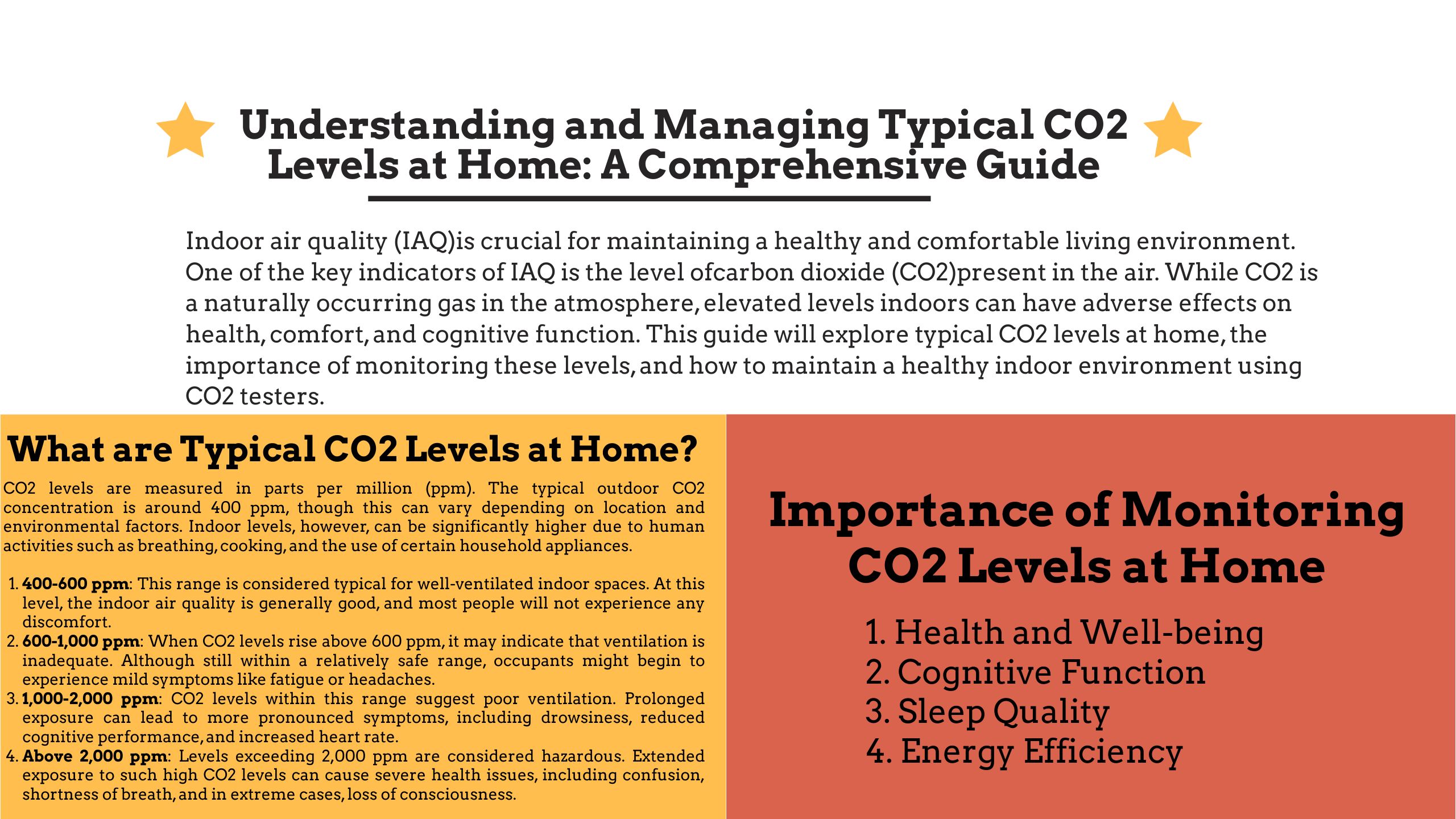
Indoor air quality (IAQ) is crucial for maintaining a healthy and comfortable living environment. One of the key indicators of IAQ is the level of carbon dioxide (CO2) present in the air. While CO2 is a naturally occurring gas in the atmosphere, elevated levels indoors can have adverse effects on health, comfort, and cognitive function. This guide will explore typical CO2 levels at home, the importance of monitoring these levels, and how to maintain a healthy indoor environment using CO2 testers.
What are Typical CO2 Levels at Home?
CO2 levels are measured in parts per million (ppm). The typical outdoor CO2 concentration is around 400 ppm, though this can vary depending on location and environmental factors. Indoor levels, however, can be significantly higher due to human activities such as breathing, cooking, and the use of certain household appliances.
- 400-600 ppm: This range is considered typical for well-ventilated indoor spaces. At this level, the indoor air quality is generally good, and most people will not experience any discomfort.
- 600-1,000 ppm: When CO2 levels rise above 600 ppm, it may indicate that ventilation is inadequate. Although still within a relatively safe range, occupants might begin to experience mild symptoms like fatigue or headaches.
- 1,000-2,000 ppm: CO2 levels within this range suggest poor ventilation. Prolonged exposure can lead to more pronounced symptoms, including drowsiness, reduced cognitive performance, and increased heart rate.
- Above 2,000 ppm: Levels exceeding 2,000 ppm are considered hazardous. Extended exposure to such high CO2 levels can cause severe health issues, including confusion, shortness of breath, and in extreme cases, loss of consciousness.
CO2 Levels and Your Health
The impact of CO2 on health is well-documented. While low levels of CO2 are relatively harmless, higher concentrations can lead to a variety of symptoms and long-term health issues. The table below summarizes the effects of different CO2 concentration levels:
| CO2 Concentration (ppm) | Health Effects |
|---|---|
| 400-600 | Normal air; no adverse effects. |
| 600-1,000 | Possible mild discomfort; potential decrease in cognitive function. |
| 1,000-2,000 | Noticeable drowsiness, increased heart rate, headaches, and concentration problems. |
| 2,000-5,000 | Significant cognitive impairment, shortness of breath, and increased health risks. |
| Above 5,000 | Severe symptoms, including respiratory distress, loss of consciousness, and death. |
Maintaining CO2 levels below 1,000 ppm is generally recommended for optimal health and comfort.
CO2 Home Tester Experiment
To evaluate the accuracy of CO2 home testers, an experiment can be conducted to monitor CO2 levels at different times throughout the day. This helps in understanding daily fluctuations and the factors influencing CO2 concentration in a typical home environment.
6 a.m.
At 6 a.m., CO2 levels are generally lower, especially if windows have been left open overnight. Fresh air circulates, lowering indoor CO2 concentrations.
- Expected CO2 Level: 400-600 ppm
- Tester Reading: 450 ppm (example)
- Accuracy Check: This reading is within the expected range, indicating that the CO2 tester is functioning accurately.
7 a.m.
As the day begins and household activities start, CO2 levels might begin to rise. People waking up, cooking breakfast, and using appliances can contribute to higher CO2 concentrations.
- Expected CO2 Level: 600-800 ppm
- Tester Reading: 700 ppm (example)
- Accuracy Check: The tester reading aligns with expected CO2 levels, showing good accuracy.
8 a.m.
With more activity in the home, especially if the house is sealed for air conditioning or heating, CO2 levels may increase further.
- Expected CO2 Level: 800-1,000 ppm
- Tester Reading: 900 ppm (example)
- Accuracy Check: The reading is consistent with anticipated levels, confirming the tester’s reliability.
9 a.m.
By 9 a.m., many people may have left the house, leading to a potential decrease in CO2 levels if doors are opened or ventilation systems are activated.
- Expected CO2 Level: 700-900 ppm
- Tester Reading: 800 ppm (example)
- Accuracy Check: The tester continues to provide accurate readings within the expected range.
Were My CO2 Levels Typical for Any Home?
To determine whether your CO2 levels are typical, consider the following factors:- Ventilation: Homes with better ventilation systems tend to have lower CO2 levels.
- Occupancy: The number of people in a room or home directly affects CO2 levels, with more occupants leading to higher concentrations.
- Activities: Cooking, heating, and other activities can increase CO2 levels, especially in enclosed spaces.
| Environment | Typical CO2 Levels (ppm) | Notes |
|---|---|---|
| Well-Ventilated Home | 400-600 | Optimal for health and comfort. |
| Poorly Ventilated Home | 600-1,000 | Common in homes with limited airflow; may cause mild discomfort. |
| Crowded or Sealed Environment | 1,000-2,000 | Indicates poor air quality; may impact health and cognitive function. |
| Homes with Combustion Devices | 2,000+ | Potentially hazardous; action needed to reduce CO2 levels through better airflow. |
The Importance of Monitoring CO2 Levels at Home
Understanding why CO2 levels fluctuate and the significance of these changes is crucial for maintaining a healthy living environment. High CO2 levels can negatively impact both physical health and cognitive performance. In workplaces, schools, and homes, managing CO2 levels is essential for well-being, productivity, and safety.
Monitoring CO2 levels at home is vital for several reasons:
1. Health and Well-being
High CO2 concentrations can lead to various health issues. Short-term exposure to elevated CO2 levels may cause symptoms such as headaches, dizziness, and difficulty concentrating. Long-term exposure, particularly in poorly ventilated spaces, can result in chronic respiratory problems and other health complications.
2. Cognitive Function
Research has shown that elevated CO2 levels can impair cognitive function, affecting decision-making, problem-solving, and concentration. This is particularly important for individuals who work from home, as maintaining optimal air quality is essential for productivity and overall performance.
3. Sleep Quality
CO2 levels can also impact sleep quality. High concentrations of CO2 in the bedroom can lead to restless sleep, frequent awakenings, and reduced sleep efficiency. Monitoring and managing CO2 levels can help improve sleep quality and overall health.
4. Energy Efficiency
Monitoring CO2 levels can also contribute to energy efficiency. By understanding when ventilation is needed, homeowners can avoid over-ventilating, which can lead to unnecessary energy consumption. Properly managed ventilation ensures that energy is used efficiently, reducing both costs and environmental impact.
How to Measure CO2 Levels at Home
Measuring CO2 levels at home requires the use of a CO2 tester or monitor. These devices are designed to continuously measure and display the concentration of CO2 in the air, allowing homeowners to track and manage indoor air quality effectively.
1. Types of CO2 Testers
There are several types of CO2 testers available on the market, ranging from basic models to advanced systems with additional features:
- Portable CO2 Testers: These handheld devices are compact and easy to use, making them ideal for spot-checking CO2 levels in different rooms or areas of the home.
- Wall-Mounted CO2 Monitors: These monitors are designed for continuous use and can be installed in key areas of the home to provide real-time data on CO2 levels.
- Smart CO2 Monitors: Integrated with home automation systems, smart CO2 monitors can be controlled via smartphone apps, providing alerts and recommendations based on real-time data.
2. Features to Look For in a CO2 Tester
When choosing a CO2 tester, consider the following features to ensure it meets your needs:
- Accuracy: Look for a tester with high accuracy to ensure reliable readings. Many testers offer accuracy within ±50 ppm, which is generally sufficient for home use.
- Data Logging: Some CO2 testers have the ability to log data over time, allowing you to track trends and identify patterns in indoor air quality.
- Alert System: An alert system can notify you when CO2 levels reach a certain threshold, prompting you to take action to improve ventilation.
- Additional Sensors: Some CO2 monitors also measure other indoor air quality parameters, such as humidity, temperature, and volatile organic compounds (VOCs), providing a more comprehensive view of your home’s environment.
3. Where to Place CO2 Monitors
Proper placement of CO2 monitors is crucial for obtaining accurate readings. Consider the following tips:
- Living Areas: Place monitors in living rooms, bedrooms, and other areas where people spend significant amounts of time.
- High-Occupancy Rooms: Rooms with higher occupancy, such as offices, classrooms, or home gyms, should be prioritized, as CO2 levels can rise more quickly in these spaces.
- Ventilation Sources: Avoid placing monitors directly near windows, doors, or ventilation sources, as this can result in skewed readings. Instead, position them in a central location within the room.
Managing and Reducing CO2 Levels at Home
If you discover that CO2 levels in your home are higher than recommended, there are several strategies you can employ to improve air quality:
1. Increase Ventilation
The most effective way to reduce CO2 levels is by increasing ventilation. This can be achieved by opening windows and doors to allow fresh air to circulate, or by using mechanical ventilation systems such as exhaust fans or air exchangers.
2. Use Air Purifiers
While air purifiers are typically used to remove particulates and allergens from the air, some advanced models also help to reduce CO2 levels. However, it’s important to note that air purifiers are generally less effective at removing CO2 than increasing ventilation.
3. Houseplants
Certain houseplants can help improve indoor air quality by absorbing CO2 and releasing oxygen. Plants such as snake plants, spider plants, and peace lilies are known for their air-purifying properties. However, the impact of houseplants on CO2 levels is relatively small compared to ventilation.
Best Plants to Clean Indoor Air: NASA Recommends
4. Reduce Indoor Pollutants
Minimizing the use of appliances and activities that produce CO2 can also help maintain lower levels. For example, avoid burning candles or using gas stoves without proper ventilation. Additionally, reducing the number of occupants in a room can lower CO2 concentration.
5. Regular Maintenance of HVAC Systems
Ensure that your home’s heating, ventilation, and air conditioning (HVAC) systems are regularly maintained. Clean or replace air filters as needed to ensure efficient operation and optimal air quality.
6. Smart Ventilation Systems
Investing in a smart ventilation system can automate the process of managing CO2 levels. These systems adjust ventilation rates based on real-time air quality data, ensuring that your home remains within a healthy CO2 range without wasting energy.
Best CO2 Testers for Indoor Air Quality
Selecting a reliable CO2 tester is crucial for accurately monitoring and managing indoor air quality. Below are some of the best CO2 testers available, each offering unique features:
| CO2 Tester | Key Features | Price Range |
|---|---|---|
| Aranet4 Home | Portable, wireless, real-time CO2 monitoring, long battery life, smartphone app integration. | $150-$200 |
| Awair Element | Measures CO2, humidity, temperature, VOCs, and particulate matter; integrates with smart home systems. | $150-$180 |
| Temtop M2000C | Handheld, professional-grade accuracy, measures CO2, PM2.5, and other pollutants. | $250-$300 |
| Kaiterra Laser Egg+ CO2 | Real-time monitoring, sleek design, includes VOC sensor, and smartphone connectivity. | $200-$250 |
| CO2Meter RAD-0301 | Compact design, high accuracy, audible alarm for high CO2 levels, easy to use. | $100-$150 |
When choosing a CO2 tester, consider factors such as accuracy, ease of use, additional features (like data logging or smartphone connectivity), and budget. Investing in a quality tester can help ensure that your indoor environment remains safe and healthy.
10 Tips to Lower CO2 Levels in Your Home
Managing and reducing CO2 levels in your home can improve both air quality and overall health. Here are ten practical tips to help you maintain optimal CO2 levels:
- Increase Natural Ventilation: Open windows and doors regularly to allow fresh air to circulate and reduce CO2 buildup.
- Use Exhaust Fans: Install and use exhaust fans in kitchens and bathrooms to remove stale air and bring in fresh air.
- Upgrade to Smart Ventilation Systems: Consider investing in smart ventilation systems that automatically adjust based on indoor CO2 levels.
- Implement Regular HVAC Maintenance: Keep your heating, ventilation, and air conditioning (HVAC) systems in good working order with regular maintenance and filter changes.
- Utilize Air Purifiers: Although primarily for particulates, some advanced air purifiers can help lower CO2 levels by increasing air exchange.
- Reduce Indoor Pollutant Sources: Limit the use of combustion appliances, such as gas stoves and fireplaces, which contribute to higher CO2 levels.
- Add Houseplants: While not a primary method, houseplants can slightly improve air quality by absorbing CO2 and releasing oxygen.
- Optimize Occupancy: Reduce the number of people in enclosed spaces whenever possible to minimize CO2 production.
- Monitor Regularly: Use a CO2 tester to regularly monitor indoor levels, allowing you to take action when necessary.
- Educate Household Members: Ensure everyone in the household understands the importance of air quality and participates in practices that help maintain low CO2 levels.
By following these tips, you can effectively manage CO2 levels in your home, ensuring a healthier and more comfortable living environment.
Conclusion
Maintaining healthy CO2 levels at home is essential for ensuring the well-being, comfort, and productivity of its occupants. By regularly monitoring CO2 levels using a reliable CO2 tester, homeowners can identify when ventilation is needed and take proactive steps to improve indoor air quality. Whether through increased ventilation, the use of houseplants, or smart home systems, managing CO2 levels is a key aspect of creating a healthy and comfortable living environment.
Investing in a quality CO2 tester and taking the necessary actions to maintain optimal indoor air quality will not only enhance your home’s comfort but also protect the health and well-being of everyone living in it.
Related Reading: Strategies for Improving Indoor Air Quality (IAQ)
Components of IAQ: A Comprehensive Overview
Common Sources of Indoor Air Pollutants
What CO2 Level is Dangerous
CO2 Data Logger or Live Display? Choose the Record Your Decision Needs
Choose a CO2 logger, live display or both by comparing sensor response, update and record intervals, timestamps, data gaps, retention and use.
Read More
Single-Gas vs Multiparameter Monitors: Compare the Channels, Not the Screen
Compare single-gas and multiparameter monitors by the evidence for each channel, sample location, data quality, maintenance and intended use.
Read More
A CO2 Measurement Requirements Worksheet: Define the Job Before Choosing a Sensor
Build a practical CO2 measurement brief covering purpose, sample, range, timing, data, faults, maintenance and acceptance evidence before selecting an instrument.
Read More
CO2 Purity vs Ambient CO2 Concentration: Two Different Measurement Jobs
CO2 supply purity and ambient CO2 ppm describe different samples and analytes. Learn why room monitors cannot certify gas lots and purity certificates cannot describe room air.
Read More
Air Quality Score vs Gas Concentration: What an Indoor Monitor Can Actually Tell You
A pollutant concentration is a named measurement; an air-quality score is a mapping. Compare indoor scores with the official US outdoor AQI and inspect a monitor's raw channels.
Read More
CO vs CO2 Sensors: Why a Dual-Gas Instrument Needs Two Measurement Channels
CO and CO2 sensors measure different gases. Learn how to verify each channel, its sensing principle, range, calibration, sampling path and finished-device purpose.
Read More