Introduction

Carbon dioxide (CO2) is a naturally occurring gas essential for life on Earth. It is a key component of the Earth’s atmosphere, contributing to the greenhouse effect, which keeps our planet warm enough to sustain life. However, elevated levels of CO2 can pose significant health risks and environmental challenges. This article explores the various levels of CO2, their impacts on human health and the environment, and how to monitor and manage CO2 levels effectively.

Understanding CO2 Levels

Normal Atmospheric CO2 Levels

  • Pre-Industrial Levels: Before the industrial revolution, atmospheric CO2 levels were approximately 280 parts per million (ppm).
  • Current Levels: As of 2023, atmospheric CO2 levels have risen to over 420 ppm due to human activities such as burning fossil fuels, deforestation, and industrial processes.

Indoor CO2 Levels

  • Typical Indoor Levels: Indoor CO2 levels typically range from 350 to 1,000 ppm, depending on ventilation and occupancy.
  • Elevated Indoor Levels: Levels above 1,000 ppm are considered elevated and can indicate poor ventilation.

Health Impacts of CO2
What CO2 Level is Dangerous

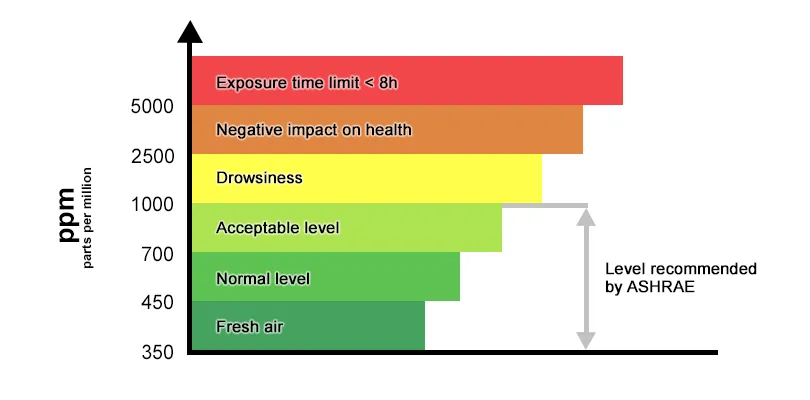
The effects of CO2 on human health vary depending on the concentration and duration of exposure. The following table summarizes the health impacts associated with different CO2 levels:

CO2 Concentration (ppm)Health Impact
350 – 1,000No adverse health effects.
1,000 – 2,000Mild discomfort, headaches, drowsiness, and reduced concentration.
2,000 – 5,000Increased headaches, dizziness, restlessness, and decreased cognitive function.
5,000 – 10,000Significant discomfort, shortness of breath, increased heart rate, and confusion.
10,000 – 40,000Serious health risks, including impaired hearing, vision, and potential loss of consciousness.
>40,000Immediate danger to life and health (IDLH), including risk of death.

Mild Exposure (1,000 – 2,000 ppm)

Exposure to CO2 levels between 1,000 and 2,000 ppm can cause mild symptoms such as headaches, fatigue, and a general sense of discomfort. These symptoms are often due to the buildup of CO2 in poorly ventilated indoor environments, such as classrooms, offices, and homes.

Moderate Exposure (2,000 – 5,000 ppm)

At levels between 2,000 and 5,000 ppm, symptoms become more pronounced and can include dizziness, restlessness, and a significant decrease in cognitive performance. Prolonged exposure to these levels can lead to chronic health issues, particularly in occupational settings where workers may be exposed for extended periods.

High Exposure (5,000 – 10,000 ppm)

CO2 concentrations between 5,000 and 10,000 ppm pose serious health risks, including shortness of breath, increased heart rate, and confusion. These levels are often found in confined spaces with poor ventilation, such as submarines, mines, and spacecraft.

Very High Exposure (>10,000 ppm)

Exposure to CO2 levels above 10,000 ppm is extremely dangerous and can lead to severe health effects, including impaired hearing and vision, loss of consciousness, and potentially death. These levels are typically found in industrial accidents or environments with catastrophic ventilation failures.


Environmental Impacts of Elevated CO2 Levels

Climate Change

  • Greenhouse Effect: CO2 is a significant greenhouse gas that traps heat in the Earth’s atmosphere, contributing to global warming and climate change.
  • Temperature Rise: Increased CO2 levels are associated with rising global temperatures, leading to more frequent and severe weather events, such as hurricanes, droughts, and floods.

Ocean Acidification

  • CO2 Absorption: The world’s oceans absorb about 30% of atmospheric CO2, which reacts with seawater to form carbonic acid.
  • Impact on Marine Life: Ocean acidification affects marine organisms, particularly those with calcium carbonate shells or skeletons, such as corals, mollusks, and some plankton species.

Ecosystem Disruption

  • Habitat Loss: Changes in temperature and precipitation patterns disrupt ecosystems, leading to habitat loss for many species.
  • Biodiversity Decline: Species that cannot adapt to rapid environmental changes or migrate to suitable habitats face extinction, reducing biodiversity.

Monitoring and Measuring CO2 Levels

Detection Methods

  • Infrared Gas Analyzers: Measure CO2 levels by detecting the absorption of infrared light by CO2 molecules.
  • Chemical Sensors: Use chemical reactions to detect and quantify CO2 concentrations.
  • Photoacoustic Sensors: Measure sound waves produced by the absorption of light by CO2.

More About CO2 Sensor: What Is A CO2 Sensor And How Does It Work?

Monitoring Equipment

  • Portable Monitors: Handheld devices used for spot-checking CO2 levels in various environments.
  • Fixed Monitors: Installed in buildings and industrial sites for continuous monitoring.
  • Data Loggers: Record CO2 levels over time for analysis and reporting.

Standard Exposure Limits

OrganizationCO2 Concentration LimitExposure Duration
Occupational Safety and Health Administration (OSHA)5,000 ppm8-hour workday
National Institute for Occupational Safety and Health (NIOSH)5,000 ppm10-hour workday
NIOSH Short-Term Exposure Limit (STEL)30,000 ppm15-minute short-term exposure limit
American Conference of Governmental Industrial Hygienists (ACGIH)5,000 ppm8-hour workday

Mitigation Strategies

Reducing CO2 Emissions

  • Energy Efficiency: Improving energy efficiency in homes, buildings, and transportation reduces fossil fuel consumption.
  • Renewable Energy: Shifting to solar, wind, and other renewable energy sources reduces CO2 emissions from power generation.
  • Carbon Capture and Storage (CCS): Capturing CO2 emissions from industrial sources and storing them underground prevents them from entering the atmosphere.

Enhancing Carbon Sequestration

  • Reforestation and Afforestation: Planting trees and restoring forests increase the absorption of CO2 from the atmosphere.
  • Soil Management: Agricultural practices that enhance soil carbon storage, such as no-till farming and cover cropping, sequester CO2.

Improving Indoor Air Quality

  • Ventilation Systems: Ensuring proper ventilation in buildings helps maintain healthy indoor CO2 levels.
  • Air Purifiers: Devices that filter and recirculate air can reduce indoor CO2 concentrations.
  • Green Building Design: Incorporating green building practices, such as using plants and sustainable materials, improves overall air quality.

Regulations and Policies

International Agreements

  • Paris Agreement: A global pact to limit global warming to well below 2°C, with efforts to limit it to 1.5°C, by reducing greenhouse gas emissions.
  • Kyoto Protocol: An earlier agreement that set binding emission reduction targets for developed countries.

National Policies

  • Clean Air Act (USA): Regulates air emissions from stationary and mobile sources to protect public health and the environment.
  • Climate Action Plans: Various countries have developed plans to reduce greenhouse gas emissions and transition to sustainable energy sources.

Corporate Responsibility

  • Sustainability Reporting: Companies are increasingly required to report their carbon footprints and sustainability practices.
  • Carbon Pricing: Mechanisms like carbon taxes and cap-and-trade systems incentivize businesses to reduce their CO2 emissions.

Future Perspectives

Technological Innovations

  • Advances in Carbon Capture: Developing more efficient and cost-effective carbon capture technologies will play a critical role in mitigating CO2 emissions.
  • Renewable Energy Technologies: Innovations in renewable energy sources, such as advanced solar cells and wind turbines, will further reduce dependence on fossil fuels.
  • Electric and Hydrogen Vehicles: Transitioning to electric and hydrogen-powered transportation will significantly cut CO2 emissions from the transportation sector.

Public Awareness and Education

  • Climate Education: Increasing public awareness about the dangers of CO2 and climate change is essential for driving collective action.
  • Behavioral Changes: Encouraging sustainable practices, such as reducing energy consumption and supporting green initiatives, can significantly impact CO2 levels.

Global Cooperation

  • International Collaboration: Addressing CO2 emissions requires cooperation among countries to share technologies, resources, and strategies.
  • Support for Developing Nations: Providing financial and technical assistance to developing countries will help them transition to sustainable energy sources and reduce CO2 emissions.

Conclusion

Carbon dioxide, while essential for life, poses significant dangers when present in elevated concentrations. Understanding the health and environmental impacts of CO2, along with effective detection, measurement, and mitigation strategies, is crucial for safeguarding our planet. Through technological innovation, regulatory measures, and global cooperation, we can address the challenges posed by CO2 and work towards a sustainable and healthy future.

[post-views]

Leave a Reply

Your email address will not be published. Required fields are marked *