What Is A CO2 Sensor And How Does It Work

CO2 sensors are essential devices used to measure and monitor carbon dioxide levels in various environments. In this article, we will delve into the workings of CO2 sensors, exploring their purpose, functionality, and how they operate. By understanding CO2 sensors, we can gain insights into their importance in maintaining air quality and ensuring safety in numerous applications.

What is a CO2 Sensor?

A CO2 sensor, also known as a carbon dioxide sensor, is a device designed to detect and measure the concentration of carbon dioxide in the surrounding air. It provides valuable data for monitoring air quality and ventilation in indoor spaces, industrial processes, and environmental monitoring.

How Does a CO2 Sensor Work?

CO2 sensors work based on various principles, including non-dispersive infrared (NDIR) technology, chemical reactions, or solid-state sensors. The most common type of CO2 sensor is NDIR.

Non-Dispersive Infrared (NDIR) CO2 Sensors

NDIR sensors contain an infrared light source, a measuring chamber, and a detector. The infrared light source emits specific wavelengths of light that are absorbed by CO2 molecules. The detector measures the amount of light that passes through the chamber, and the difference in the detected light intensity is used to determine the CO2 concentration.
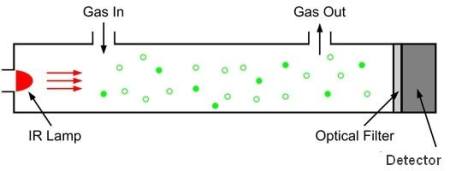
ndir sensor principle

Semiconductor CO2 sensors

Semiconductor CO2 sensors utilize a solid-state sensing element to detect carbon dioxide levels. The sensing element consists of a thin film of semiconductor material, typically metal oxides or polymers, that undergoes a change in electrical conductivity when exposed to CO2. This change in conductivity is then measured and converted into CO2 concentration.
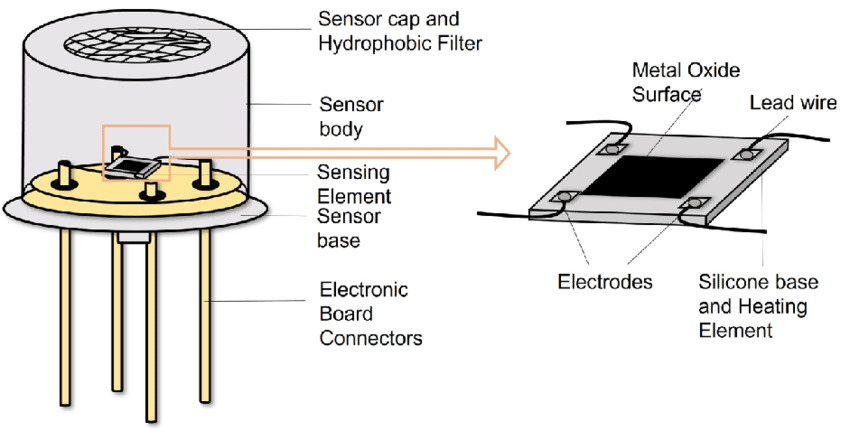
The working principle of metal oxide semiconductor MOS sensors

Thermal Conductor CO2 Sensors

Thermal conductivity CO2 sensors are based on the principle that carbon dioxide molecules have different thermal conductivities compared to other gases.

The sensor consists of two elements: a reference channel and a measurement channel. Both channels are heated to a specific temperature. The reference channel is exposed to the ambient air, while the measurement channel is exposed to the air sample being tested.

When the air sample contains CO2, the thermal conductivity of the gas in the measurement channel changes. CO2 has a higher thermal conductivity compared to other gases present in the air. As a result, the heat transfer in the measurement channel is different from the reference channel.

By measuring the temperature difference between the two channels, the sensor can determine the concentration of CO2 in the air. The change in thermal conductivity is directly proportional to the concentration of CO2.

thermal conductivity grande

Further reading: A Comparative Analysis of NDIR, Semiconductor, and Thermal Conductor CO2 Sensors

Applications of CO2 Sensors

Indoor Air Quality Monitoring

CO2 sensors are commonly used in buildings, offices, schools, and healthcare facilities to monitor and control indoor air quality. High levels of CO2 can indicate poor ventilation, which can lead to discomfort and health issues. By continuously monitoring CO2 levels, HVAC systems can be adjusted to maintain optimal indoor air quality.

Greenhouse and Agriculture

CO2 sensors are essential in greenhouse environments where precise control of CO2 levels is necessary for plant growth and photosynthesis. By monitoring and maintaining optimal CO2 concentrations, greenhouse operators can enhance plant productivity and yield.

Industrial Processes

CO2 sensors are used in various industrial processes, such as fermentation, chemical production, and biogas monitoring. Accurate measurement of CO2 levels helps ensure process efficiency, safety, and compliance with environmental regulations.

Safety and Ventilation Systems

CO2 sensors are integrated into safety and ventilation systems in underground parking garages, tunnels, and confined spaces. Monitoring CO2 levels helps detect potential hazards and triggers ventilation systems to maintain a safe environment for occupants.

Medical and Healthcare

CO2 sensors are utilized in medical devices such as capnographs, which measure CO2 levels in the breath to monitor respiratory function during anesthesia, intensive care, and sleep studies. They are also used in incubators and respiratory equipment for neonatal care.

Automotive and Transportation

CO2 sensors are employed in vehicle exhaust systems to measure and monitor emissions. This data helps ensure compliance with emission regulations and facilitates the development of more fuel-efficient and environmentally friendly vehicles.

Research and Laboratories

CO2 sensors are extensively used in research laboratories for various scientific experiments and studies. They provide accurate measurements of CO2 concentrations, allowing researchers to study and understand the impact of CO2 on climate change, environmental processes, and atmospheric chemistry.

Conclusion

CO2 sensors are vital tools for measuring and monitoring carbon dioxide levels in various environments. They employ NDIR technology or other methods to accurately detect CO2 concentrations. By providing critical data on air quality, CO2 sensors enable the optimization of ventilation systems, ensure worker safety, and contribute to environmental research. Understanding how CO2 sensors work helps us appreciate their significance in maintaining healthy, safe, and sustainable spaces.

Leave a Reply

Your email address will not be published. Required fields are marked *