Introduction to R-1234yf Refrigerant
R-1234yf, a hydrofluoroolefin (HFO) refrigerant, represents the next step in the evolution of environmentally friendly cooling solutions. It was developed as a low-GWP alternative to R-134a and has rapidly become the standard refrigerant in automotive air conditioning systems. With its environmental benefits and efficient performance, R-1234yf aligns with global regulations aimed at reducing the environmental impact of refrigerants.
More About Refrigerant: Understanding Refrigerants: Types, Uses, and Environmental Impact
The Environmental Need for R-1234yf
The increasing awareness of climate change and the detrimental effects of high-GWP refrigerants has accelerated the demand for alternatives like R-1234yf. The transition to low-GWP refrigerants is essential to meet the requirements of the Montreal Protocol, the Kigali Amendment, and European Union F-Gas regulations.
What is Global Warming Potential (GWP)?
GWP measures the impact of a refrigerant on global warming over a specific period (usually 100 years), compared to carbon dioxide (CO₂), which has a GWP of 1.
- R-134a has a GWP of 1430.
- R-1234yf has a GWP of less than 1, making it one of the most environmentally friendly refrigerants available.
R-1234yf as a Replacement for R-134a
R-1234yf was introduced to replace R-134a in automotive air conditioning systems due to regulatory pressures. While R-134a was widely used for decades, its high GWP has made it unsustainable under modern environmental standards. By 2021, most new vehicles in Europe and North America began using R-1234yf.
Properties and Technical Characteristics of R-1234yf



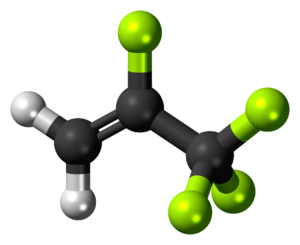
- Chemical Formula: C₃H₂F₄
- Molecular Weight: 114 g/mol
- Boiling Point: -29°C (-20.2°F)
- GWP: <1
- Ozone Depletion Potential (ODP): 0
- Classification: A2L (Mildly flammable)
Applications of R-1234yf
R-1234yf is primarily used in:
- Automotive Air Conditioning (AC): Found in passenger vehicles, trucks, and buses.
- Heat Pumps: Emerging as an eco-friendly solution for residential and commercial heat pumps.
- Commercial Refrigeration: Some food and beverage coolers are transitioning to R-1234yf.
More Refrigerant Application: Applications of Refrigerants: An In-Depth Analysis
How R-1234yf Compares with R-134a
| Property | R-1234yf | R-134a |
|---|---|---|
| GWP | <1 | 1430 |
| Energy Efficiency | Comparable | High |
| Ozone Depletion Potential (ODP) | 0 | 0 |
| Flammability | Mildly Flammable | Non-flammable |
| Adoption | New Standard | Phasing Out |
R-1234yf provides similar cooling performance to R-134a but with a significantly lower environmental impact.
Benefits of R-1234yf Refrigerant
Low Global Warming Potential
R-1234yf’s GWP of less than 1 makes it one of the most environmentally friendly refrigerants available.
Energy Efficiency
It offers performance comparable to R-134a, ensuring that automotive and commercial systems operate efficiently.
Compliance with Regulations
R-1234yf meets the strict environmental standards set by the EU, USA, and other global regulators, making it a future-proof refrigerant choice.
What is good Refrigerant: What Makes a Good Refrigerant?
Safety Considerations with R-1234yf
R-1234yf is classified as mildly flammable (A2L), meaning it requires careful handling during installation and maintenance. However, its flammability is considered manageable with proper safety protocols. Automotive systems using R-1234yf are equipped with sensors and safety mechanisms to prevent accidental ignition.
Compliance with Global Environmental Regulations
The adoption of R-1234yf aligns with:
- European F-Gas Regulations
- US EPA SNAP Program
- Kigali Amendment to the Montreal Protocol
These regulations mandate the phase-out of high-GWP refrigerants and promote the use of environmentally friendly alternatives like R-1234yf.
Challenges of Transitioning to R-1234yf
Flammability Concerns
While R-1234yf is only mildly flammable, it still poses a challenge for technician training and equipment design.
Cost of Transition
The initial cost of transitioning to R-1234yf can be higher due to the upfront investment in new tools and equipment. However, long-term environmental and regulatory benefits outweigh these costs.
Frequently Asked Questions (FAQs) about R-1234yf
Is R-1234yf Safe to Use?
Yes, R-1234yf is safe when used correctly. Vehicles and systems are designed with safety measures to minimize risks associated with its mild flammability.
Can R-1234yf Replace R-134a Directly?
In most cases, R-1234yf requires system modifications to replace R-134a, as it operates at slightly different pressure levels.
Is R-1234yf More Environmentally Friendly?
Yes, with a GWP of less than 1, R-1234yf has an extremely low environmental impact compared to R-134a.
Future Trends in Refrigerants
The HVAC and automotive industries are moving toward low-GWP refrigerants like R-1234yf as part of broader efforts to combat climate change. R-1234yf will continue to play a key role in meeting environmental targets while new, even more sustainable alternatives are being developed.
Conclusion
R-1234yf represents a significant advancement in the quest for sustainable refrigerants. With its low GWP, high energy efficiency, and compliance with global regulations, R-1234yf is a reliable and environmentally responsible solution. As the world transitions to greener technologies, R-1234yf will play a critical role in ensuring that cooling systems remain effective, efficient, and sustainable.
Looking for reliable refrigerant suppliers from China ?
We offer end-to-end procurement solutions, handling everything from sourcing to shipping, ensuring you get the best products at competitive prices.
- sales@sensor1stop.com
- +86 18037022596
- 18037022596