
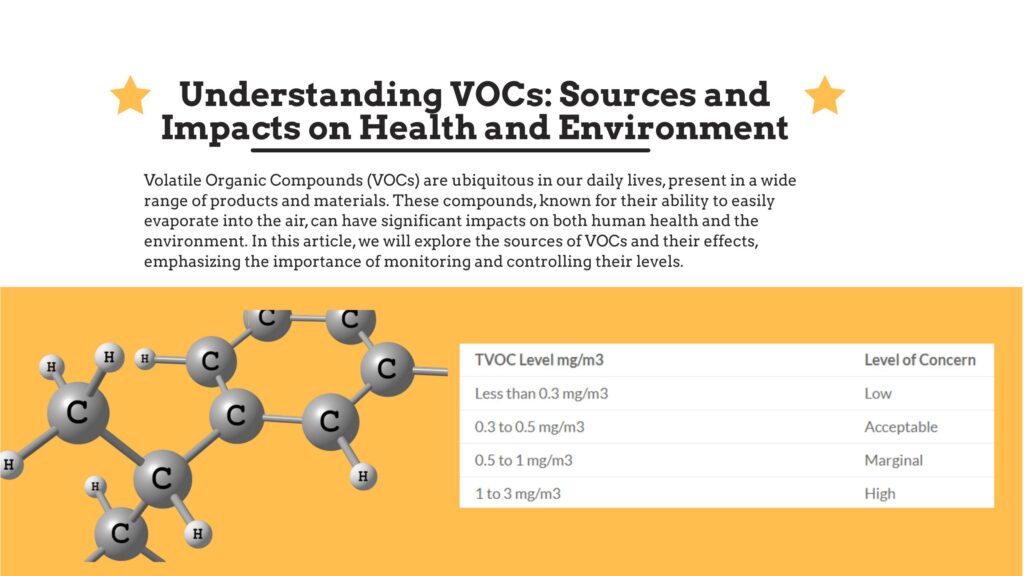
Volatile Organic Compounds (VOCs) are ubiquitous in our daily lives, present in a wide range of products and materials. These compounds, known for their ability to easily evaporate into the air, can have significant impacts on both human health and the environment. In this article, we will explore the sources of VOCs and their effects, emphasizing the importance of monitoring and controlling their levels.
What are VOCs?
Volatile Organic Compounds (VOCs) are a group of organic chemicals that easily evaporate at room temperature. They are classified as volatile because they can vaporize and enter the air, even from solid or liquid forms. VOCs are commonly found in everyday products and materials, and they can have both natural and human-made sources.
VOCs can be emitted from a wide range of sources, including paints, solvents, cleaning products, adhesives, fuels, pesticides, building materials, and consumer products such as cosmetics and air fresheners. They can also be released from natural sources like plants, trees, and even the human body.
The chemical composition of VOCs varies, but they often include compounds such as benzene, formaldehyde, toluene, xylene, and various hydrocarbons. Many VOCs are known to have harmful effects on human health and the environment.
How Are VOCs Produced?
VOCs, or Volatile Organic Compounds, are produced by a variety of natural and human-made sources.
Natural Sources
a) Plants and Trees: Many plants and trees emit VOCs as part of their natural biological processes. This is often referred to as biogenic VOC emissions. These emissions serve various purposes, including communication between plants, attracting pollinators, and defending against pests.
b) Decomposition: Natural processes such as the decay of organic matter in soil and the breakdown of dead plants and animals can release VOCs. This is particularly true in wetlands and forested areas.
c) Volcanoes and Wildfires: Volcanic eruptions and wildfires release significant amounts of VOCs into the atmosphere. These natural events can contribute to both local and global VOC emissions.
Human-Made Sources
a) Industrial Processes: Various industrial activities release VOCs into the air. Manufacturing processes, chemical production, and the use of solvents and fuels in industries such as printing, painting, and dry cleaning are major contributors. Industrial emissions can occur through evaporation, combustion, or chemical reactions.
b) Transportation: Vehicles, including cars, trucks, ships, and airplanes, emit VOCs through the combustion of fuels. The exhaust gases from engines contain VOCs, contributing to air pollution in urban areas and along transportation corridors.
c) Consumer Products: Many household and consumer products contain VOCs that can be released into the air. Examples include paints, varnishes, adhesives, cleaning products, personal care items, and aerosol sprays. These products can emit VOCs during use and even when stored.
d) Construction and Building Materials: Building materials, such as paints, coatings, carpets, and adhesives, often contain VOCs. These VOCs can be released into the indoor air during construction, renovation, and everyday use of buildings.
e) Agricultural Practices: The use of pesticides, fertilizers, and livestock operations in agriculture can contribute to VOC emissions. Pesticides and fertilizers often contain VOCs that can evaporate into the atmosphere. Livestock operations can release VOCs through manure management and the decomposition of organic matter.
Why measure Volatile Organic Compounds (VOCs)?
Human Health Protection
VOCs can have adverse effects on human health. By measuring VOC levels in indoor and outdoor environments, we can assess potential health risks associated with exposure. This information allows us to implement appropriate control measures to protect individuals from the harmful effects of VOCs. Monitoring VOCs is especially crucial for sensitive populations such as children, the elderly, and individuals with respiratory conditions.
Indoor Air Quality (IAQ) Assessment
VOCs are commonly found indoors, emitted from various sources such as building materials, furniture, cleaning products, and personal care items. Measuring VOC levels helps evaluate indoor air quality and identify potential sources of pollution. This information enables us to take corrective actions to improve IAQ, providing a healthier and more comfortable living and working environment.
Environmental Impact Assessment
VOCs contribute to air pollution and can have detrimental effects on the environment. By measuring VOC emissions from industrial processes, transportation, and other sources, we can assess their impact on air quality, ecosystem health, and climate change. This information guides the development of mitigation strategies to reduce VOC emissions and protect the environment.
Regulatory Compliance
Many countries and regions have regulations and guidelines in place to control VOC emissions. Industries and businesses are required to measure and report their VOC emissions to ensure compliance with these regulations. Accurate VOC measurements help organizations stay in line with legal requirements, avoid penalties, and demonstrate their commitment to environmental responsibility.
Hazardous Materials Response
In emergency situations involving hazardous materials, measuring VOCs is crucial for the safety of responders and the public. VOC sensors, such as photoionization detectors (PIDs), help quickly detect and identify hazardous VOCs, allowing responders to assess the situation and implement appropriate mitigation measures. This ensures effective and timely response to protect public safety.
Research and Development
Measurement of VOCs plays a vital role in scientific research and development. Researchers use VOC measurements to study chemical reactions, understand the behavior of pollutants, and assess the effectiveness of mitigation strategies. This knowledge contributes to advancements in air quality management, environmental science, and the development of new technologies.
Health effects of VOC exposure
Exposure to volatile organic compounds (VOCs) can have various health effects on individuals. While the specific health impacts may vary depending on the type of VOC and the duration and intensity of exposure, here are some common health effects associated with VOC exposure
- Respiratory Irritation: VOCs can irritate the respiratory system, leading to symptoms such as coughing, wheezing, shortness of breath, and chest tightness. Individuals with pre-existing respiratory conditions, such as asthma or chronic obstructive pulmonary disease (COPD), may experience exacerbated symptoms.
- Eye and Throat Irritation: VOCs can irritate the eyes and throat, causing redness, itching, tearing, and soreness. Prolonged exposure may lead to more severe symptoms, including blurred vision and difficulty swallowing.
- Headaches and Dizziness: VOC exposure is often associated with the onset of headaches and dizziness. These symptoms can range from mild discomfort to severe migraines, impacting an individual’s daily activities and overall well-being.
- Nausea and Vomiting: Some VOCs, particularly those with strong odors, can cause nausea and vomiting when inhaled or absorbed through the skin. This reaction is more common in individuals with heightened sensitivity to certain chemicals.
- Allergic Reactions: Certain VOCs can trigger allergic reactions in susceptible individuals. Symptoms may include skin rashes, hives, itching, and swelling. Severe allergic reactions, such as anaphylaxis, are rare but possible in extreme cases.
- Neurological Effects: Some studies suggest that prolonged exposure to certain VOCs may have neurological effects, including cognitive impairment, memory loss, and difficulty concentrating. However, further research is needed to fully understand the extent and mechanisms of these effects.
- Organ Damage: Prolonged or high-level exposure to specific VOCs, such as benzene or formaldehyde, may lead to organ damage. These compounds have been associated with adverse effects on the liver, kidneys, and central nervous system, with potential long-term health consequences.
How can VOC levels be monitored?
VOC Sensor
VOC sensors, such as photoionization detectors (PIDs) and metal oxide sensors, are widely used for measuring VOC concentrations. These portable devices can quickly detect and quantify VOCs in real-time. They work by measuring the response of the sensor to the presence of VOCs in the air.
More About VOC Sensor: What is a VOC sensor and how does it work?
How to Choose VOC Sensor: A Comparative Analysis of MOS Sensors, PIDs, and IR Sensors for VOC Detection
Indoor Air Quality (IAQ) Monitors
IAQ monitors are designed to assess the overall air quality in indoor environments, including VOC levels. These monitors often incorporate multiple sensors to measure various pollutants, including VOCs. They provide real-time data on VOC concentrations and other air quality parameters.
How can I reduce the levels of VOCs indoors?
- Choose Low-VOC Products: When purchasing items such as paints, adhesives, cleaning products, furniture, and flooring, opt for low-VOC or VOC-free alternatives. Look for products labeled with certifications like Green Seal or Greenguard, which indicate low VOC emissions.
- Ventilation: Proper ventilation is essential for reducing indoor VOC levels. Open windows and use exhaust fans in kitchens, bathrooms, and other areas where VOC-emitting activities take place. Consider using air purifiers with activated carbon filters to help remove VOCs from the air.
- Allow for Off-Gassing: New products, particularly furniture, carpets, and flooring, can release VOCs over time. If possible, unpack and air out these items in a well-ventilated area before bringing them indoors. This allows for the off-gassing process to occur outside of your living space.
- Maintain Indoor Humidity Levels: High humidity can promote the release of VOCs from certain materials. Use dehumidifiers or air conditioners to maintain optimal humidity levels, usually between 30% and 50%, to minimize VOC emissions.
- Clean with Care: Many conventional cleaning products contain VOCs. Switch to environmentally friendly and low-VOC cleaning alternatives. You can also make your own cleaners using natural ingredients like vinegar, baking soda, and lemon juice.
- Store Chemicals Properly: Store household chemicals, solvents, and paints in sealed containers in well-ventilated areas, such as garages or sheds, rather than indoors. This helps prevent VOCs from escaping into your living space.
- Avoid Smoking Indoors: Cigarettes and other tobacco products release a significant amount of VOCs. Establish a smoke-free environment indoors to reduce both VOC levels and the associated health risks.
- Regularly Maintain HVAC Systems: Dust, dirt, and debris in heating, ventilation, and air conditioning (HVAC) systems can contribute to indoor air pollution. Clean or replace filters regularly, and schedule professional maintenance to ensure optimal air circulation and filtration.
- Choose Natural Materials: Opt for natural building materials, furniture, and textiles whenever possible. Solid wood furniture, natural fiber carpets, and organic fabrics often have lower VOC emissions compared to their synthetic counterparts.
- Test and Monitor Indoor Air Quality: Consider conducting regular indoor air quality testing to assess VOC levels and identify potential sources of contamination. This can help you take targeted actions to reduce VOC exposure.
Conclusion
Volatile Organic Compounds (VOCs) are prevalent in our surroundings, originating from various sources including common household products and industrial processes. The health impacts of VOC exposure and their contribution to air pollution and environmental degradation cannot be overlooked. Through effective monitoring and control measures, we can mitigate the risks associated with VOCs, promoting healthier indoor and outdoor environments for the well-being of both humans and the planet.