
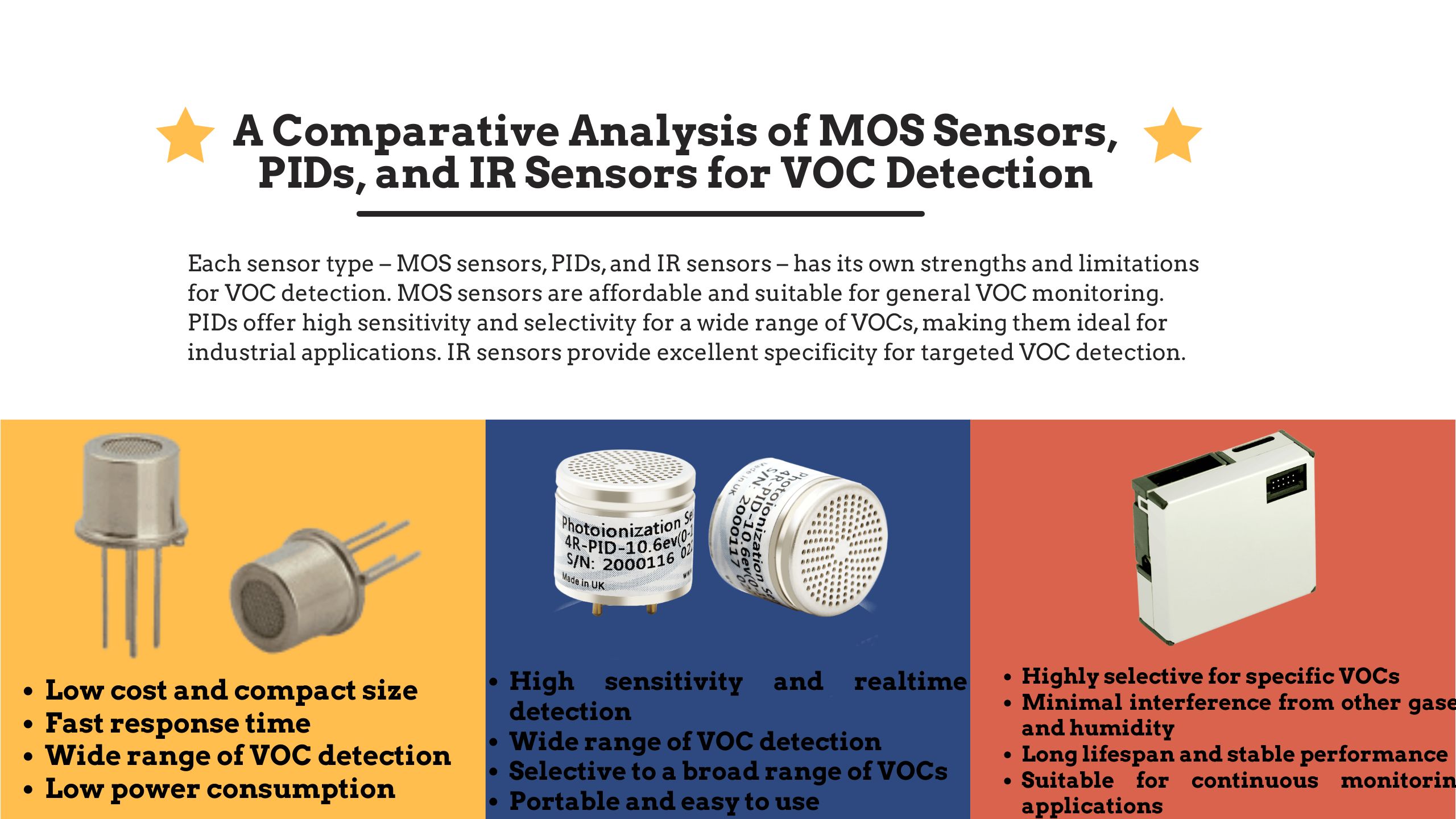
Metal Oxide Semiconductor (MOS) Sensors
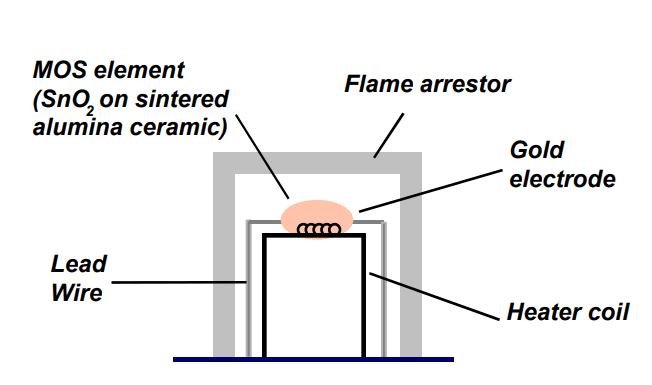
MOS sensors are widely used for VOC detection due to their affordability and sensitivity. They work by measuring the changes in electrical conductivity when VOCs interact with a metal oxide film.
Advantages
- Affordability: MOS sensors are relatively inexpensive compared to other VOC sensor technologies, making them a cost-effective choice for large-scale deployment.
- Versatility: MOS sensors can detect a wide range of VOCs, including both polar and non-polar compounds, making them suitable for various applications.
- Quick Response Time: MOS sensors offer fast response times, providing real-time data for prompt action.
Limitations
- Sensitivity to Interference: MOS sensors can be affected by environmental factors such as temperature and humidity, leading to potential false readings.
- Limited Selectivity: MOS sensors may not distinguish between different VOCs with similar chemical properties, resulting in limited specificity.
Photoionization Detectors (PIDs)
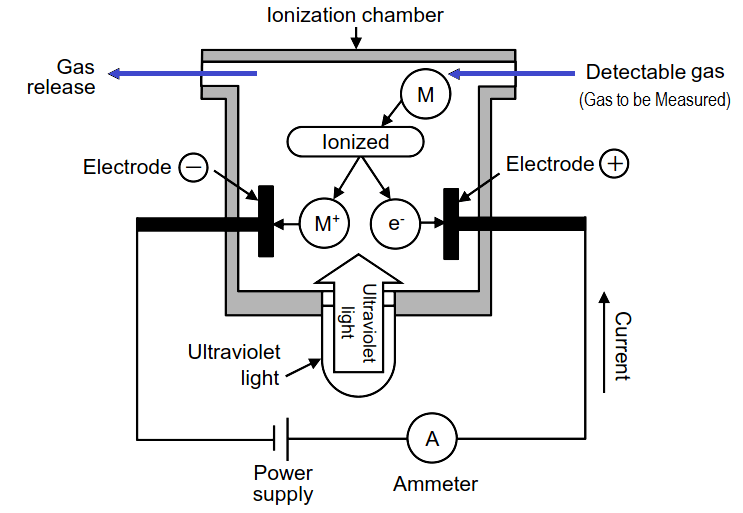
PIDs are commonly used in industrial and occupational settings for VOC detection. They work by ionizing VOCs with ultraviolet light and measuring the resulting electrical current.
Advantages
- High Sensitivity: PIDs are highly sensitive and can detect low concentrations of VOCs, making them ideal for applications where trace-level detection is crucial.
- Broad VOC Detection Range: PIDs can detect a wide range of VOCs, including both volatile and semi-volatile compounds, offering comprehensive monitoring capabilities.
- Real-time Response: PIDs provide immediate results, allowing for quick decision-making in hazardous situations.
Limitations
- High Cost: PIDs tend to be more expensive compared to other VOC sensor technologies, limiting their widespread usage in certain applications.
- Potential Saturation: PIDs can become saturated when exposed to high VOC concentrations, leading to inaccurate readings and the need for frequent calibration.
Infrared (IR) Sensors

IR sensors detect VOCs by measuring the absorption of infrared light at specific wavelengths.
Advantages
- Selectivity: IR sensors offer excellent selectivity as they can differentiate between different VOCs based on their unique absorption patterns, providing more accurate identification.
- Stability: IR sensors are less affected by environmental factors such as temperature and humidity, resulting in more stable and reliable measurements.
- Long Lifespan: IR sensors have a longer lifespan compared to other sensor technologies, reducing maintenance and replacement costs.
Limitations
- Limited Detection Range: IR sensors may have a narrower range of detectable VOCs compared to MOS sensors and PIDs, limiting their suitability for certain applications.
- Higher Cost: IR sensors can be more expensive compared to MOS sensors, making them less accessible for budget-constrained projects.
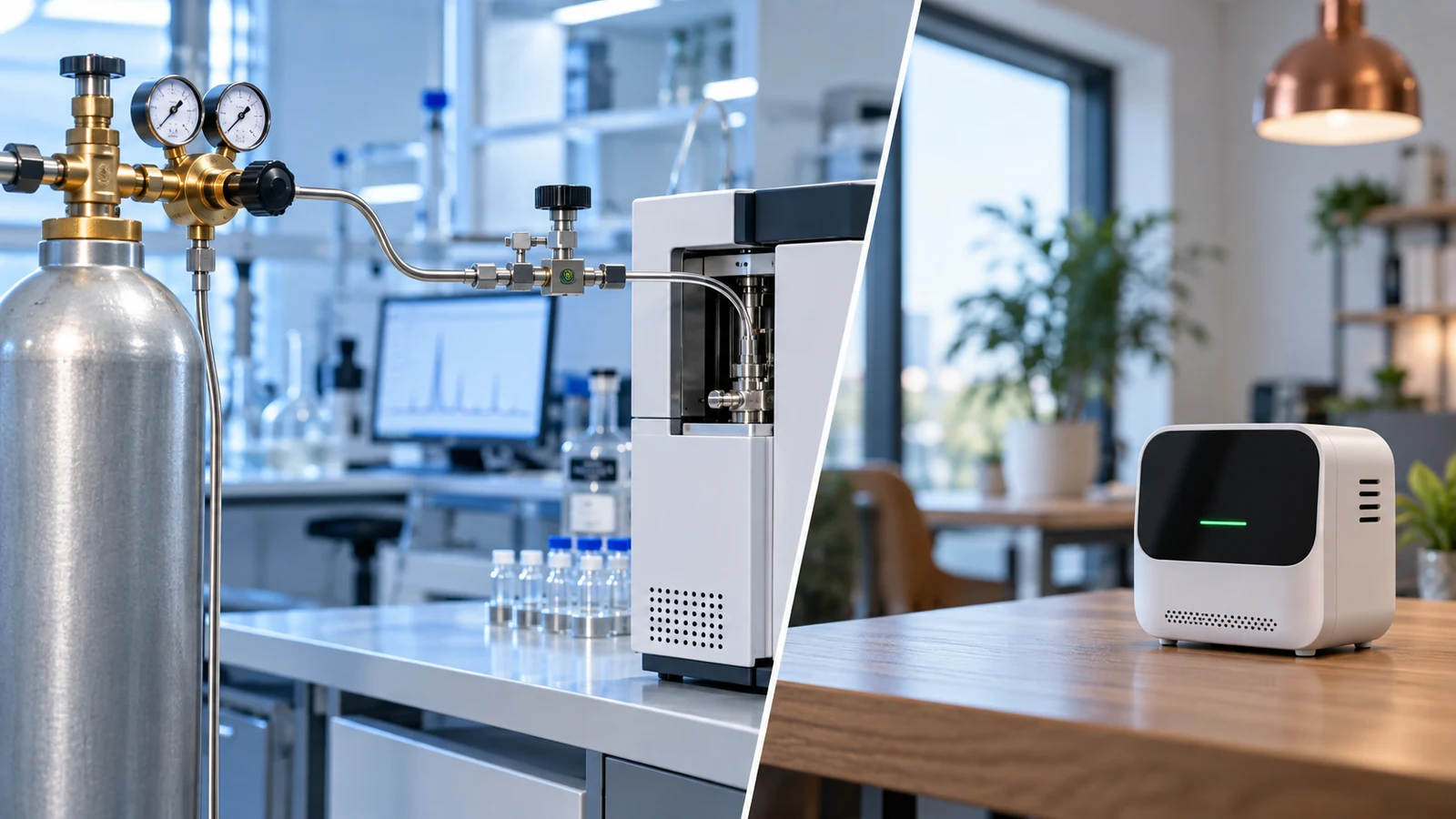
CO2 Purity vs Ambient CO2 Concentration: Two Different Measurement Jobs
CO2 supply purity and ambient CO2 ppm describe different samples and analytes. Learn why room monitors cannot certify gas lots and purity certificates cannot describe room air.
Read More
Air Quality Score vs Gas Concentration: What an Indoor Monitor Can Actually Tell You
A pollutant concentration is a named measurement; an air-quality score is a mapping. Compare indoor scores with the official US outdoor AQI and inspect a monitor's raw channels.
Read More
CO vs CO2 Sensors: Why a Dual-Gas Instrument Needs Two Measurement Channels
CO and CO2 sensors measure different gases. Learn how to verify each channel, its sensing principle, range, calibration, sampling path and finished-device purpose.
Read More
Wet vs Dry CO2 Readings: Why Sample Basis Changes the Number
Wet-air and dry-air CO2 ppm can differ because water vapor changes the fraction denominator. Learn the conditional conversion and what to record in a sampled-gas system.
Read More
CO2 Sensor Range: Choosing ppm or Percent Measurement
Choose a CO2 measurement range around the concentrations and decisions that matter. Compare ppm and percent units, accuracy intervals, overrange behavior and sampling conditions.
Read More
CO2 Monitor vs Gas Analyzer: Sampling, Data and Instrument Choice
Compare CO2 monitors and gas analyzers by sample point, gas path, measurement range, time resolution, calibration evidence and the decision the data supports.
Read More