
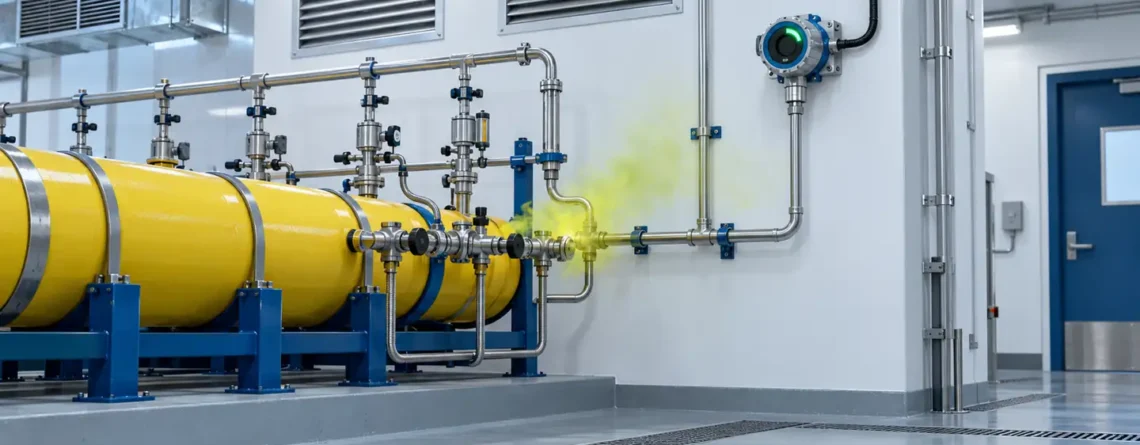
An industrial chlorine gas detector should be selected as a complete warning system, not by choosing a Cl₂ sensing element from a catalog. Define the credible release points, the concentration and response you need to detect, the room's airflow and environmental conditions, the warning or control action, and how the installed channel will be checked. Then compare instruments on the same basis: target gas, measuring range, interference, response under the intended sampling arrangement, output and fault behavior, and maintainability. A sensor that performs well on a bench may still miss a release if gas never reaches its inlet.
This guide addresses chlorine gas (Cl₂) in air around storage, feed equipment and industrial processes. It does not treat a detector as a substitute for a site hazard assessment, ventilation design or emergency procedure. Nor does it confuse airborne Cl₂ with a free-chlorine probe immersed in treated water. The practical aim is to help an engineer or buyer ask the right questions before selecting a sensor, transmitter or finished instrument.
Begin with the warning decision
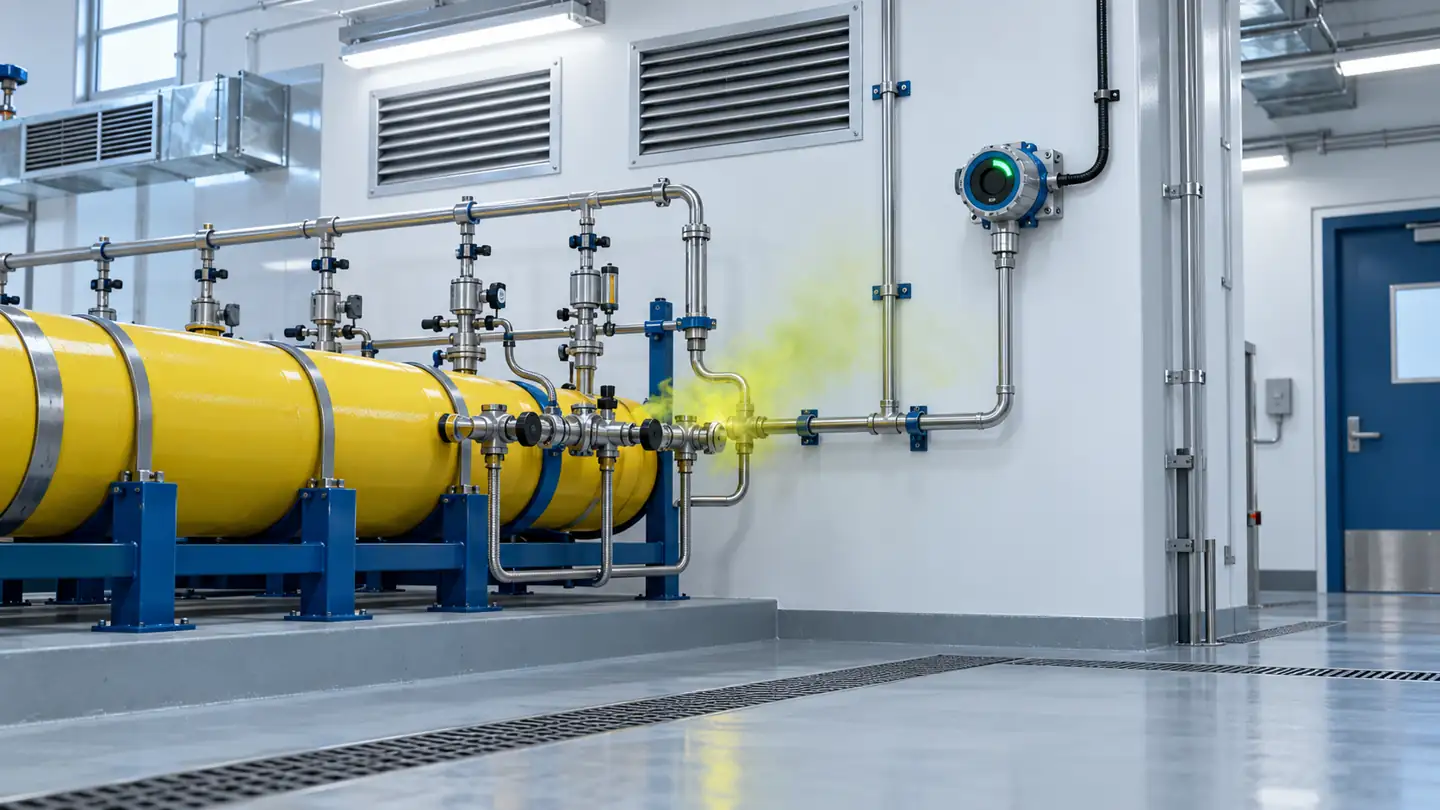
Write down what the system must do when a reading changes. A room warning for people entering a chlorine feed area is a different task from monitoring a sample cabinet, checking a scrubber outlet, or assessing a worker's changing exposure during maintenance. They can involve the same molecule but different locations, time scales, interfaces and maintenance plans. A fixed detector normally measures air at one point, or at an extractive sample inlet, rather than the entire room. A portable instrument travels with the user but has its own limitations and checks.
| Question to settle | Why it matters to instrument choice | 요청할 증거 |
|---|---|---|
| Where can Cl₂ plausibly escape? | A detector placed away from the first gas path can respond late. | Piping and equipment layout, release scenarios and ventilation drawing. |
| Who or what needs warning? | Occupied points, entrances, maintenance locations and automated responses may differ. | Site risk assessment and control narrative. |
| What measuring range is needed? | Full scale, resolution, overrange and recovery affect a low-level warning and a larger release differently. | Complete-system specification for the selected Cl₂ configuration. |
| What else is in the air? | Oxidants, cleaning chemicals and process gases can create positive or negative interference. | Model-specific cross-sensitivity table and process inventory. |
| Will gas reach the cell directly? | An intake tube, filter or sample line changes response and may lose a reactive gas. | Installation manual and tested sampling arrangement. |
| How will a fault appear? | A dead channel must not be mistaken for a clean room. | Fault outputs, controller logic, power-loss behavior and proof-test method. |
| Who maintains it and how? | Calibration access, gas supply and replacement interval determine whether performance can be sustained. | Model manual, spare-part plan and service records. |
This checklist is intentionally broader than a sensor specification. A procurement sheet that says only “Cl₂, 0–20 ppm” leaves the most important system questions open.
First separate gas detection from water measurement
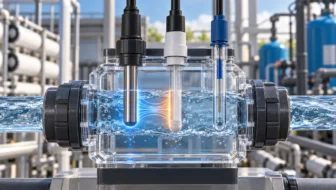
The word “chlorine sensor” is ambiguous. An airborne chlorine gas detector samples the atmosphere and reports gaseous Cl₂, commonly in ppm by volume. A water-treatment free-chlorine sensor contacts a liquid stream and responds to dissolved disinfectant species under its stated chemistry and operating conditions. These are not interchangeable readings or instruments. A water probe cannot stand in for an atmospheric leak detector, and an air detector cannot report disinfectant residual in a process line.
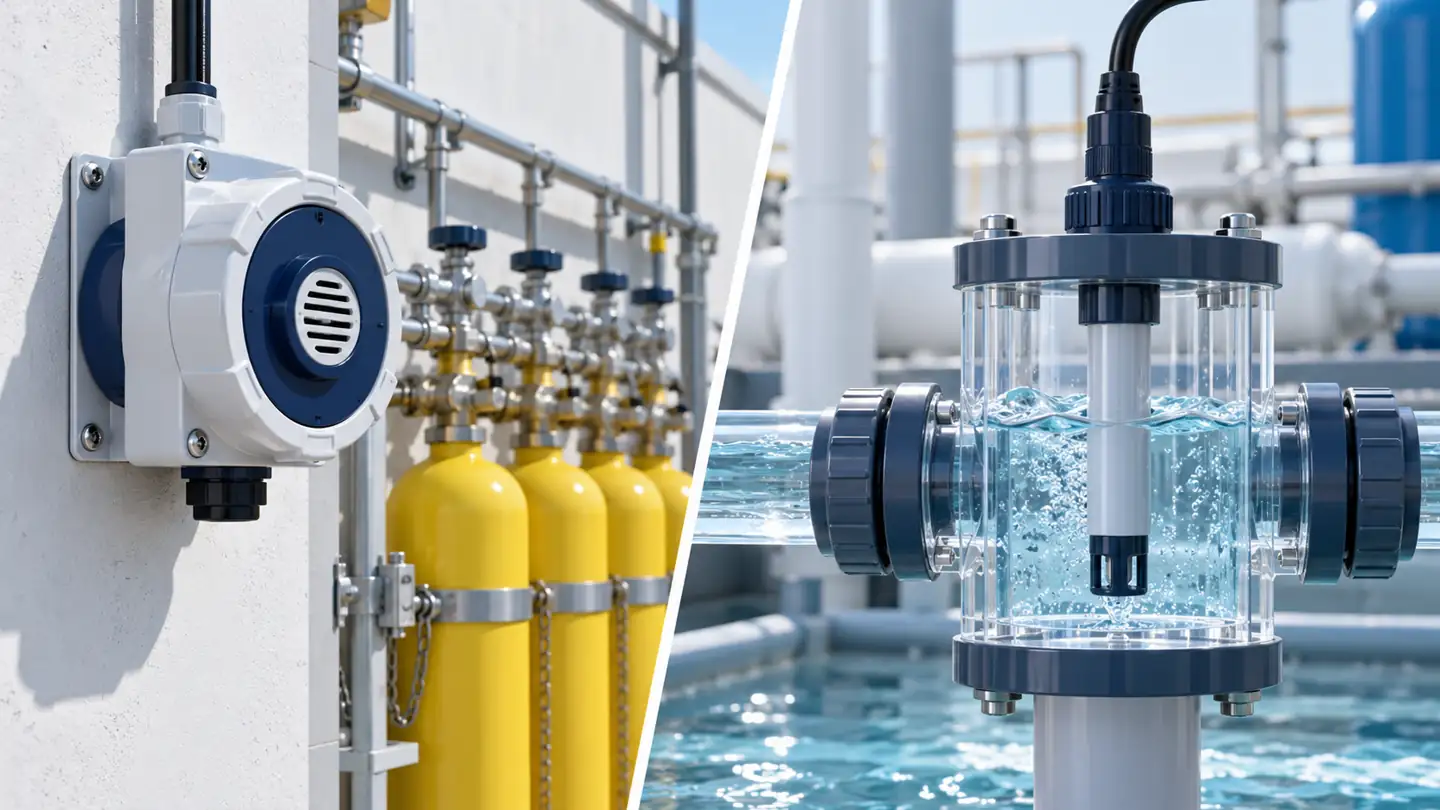
In water, pH and the balance among chlorine species are central to interpretation. Endress+Hauser's amperometric chlorine measurement guide describes liquid-phase measurement and the conditions around it. A chlorine storage or feed room creates a separate question: whether Cl₂ gas is present in the surrounding air. Even when both measurements belong to the same plant, they should have separate tags, ranges, maintenance procedures and alarm logic. Likewise, a “chlorine dioxide” detector is not automatically a Cl₂ detector merely because the names share the word chlorine. Confirm the exact analyte on the instrument label and datasheet.
The distinction also prevents a common editorial mistake: treating a generic chlorine property page as if it were a design guide. The physical hazards explain why detection matters, but they do not choose the sensing technology or location. NIOSH's Pocket Guide for chlorine identifies Cl₂ as a nonflammable, strong oxidizer and lists a relative gas density of 2.47. That density is relevant to dispersion, yet actual movement depends on release momentum, temperature, ventilation and the building geometry.
Sensor element, transmitter and complete detector
An electrochemical Cl₂ cell is a component. Gas reaches an electrode through a diffusion barrier; an electrochemical reaction produces a current that electronics interpret. The Winsen ME4-Cl2 manual describes its constant-potential electrolysis cell and specifies a 0–20 ppm detection range for that particular element. It also gives a T90 of no more than 60 seconds under the manual's conditions, a −20 to 50 °C temperature range, 15–90% RH without condensation and a two-year stated life. These numbers belong to ME4-Cl2 version 1.2, not to every chlorine cell or to every installed detector that uses such a cell.
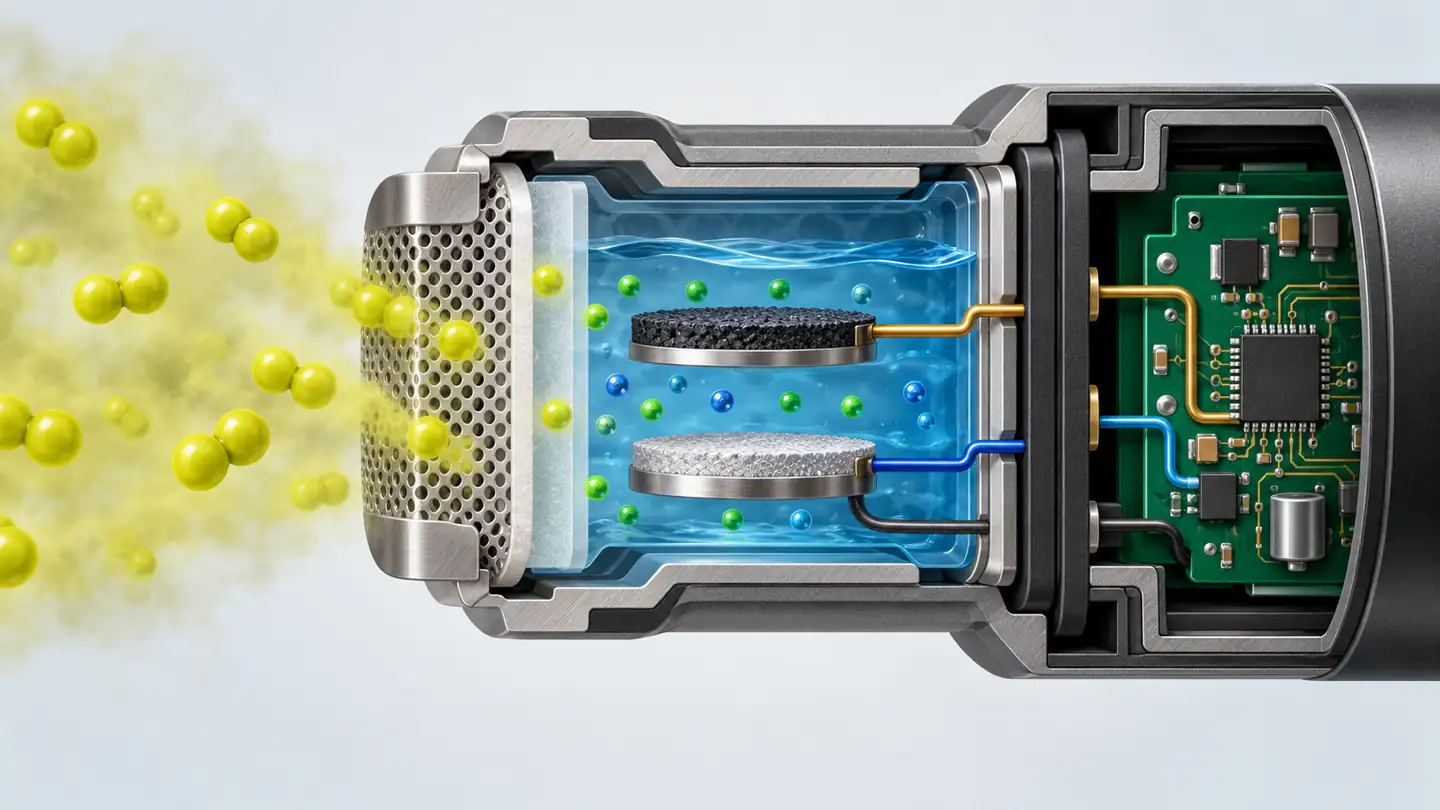
A transmitter adds power, signal conditioning, calibration data, environmental protection and an output such as a current loop or network message. A fixed detector system may then add a controller, audible or visible warning, power backup, fault supervision and an interface to plant controls. An extractive system adds a pump and sample transport path. Each addition can change the time between a release and a warning. The cell response time is one term in that chain; it is not automatically the end-to-end alarm time.
This hardware hierarchy is useful when comparing a bare cell with a finished detector. The CTI GG-CL2 product page describes a finished fixed instrument and its available configurations. The Winsen manual describes a sensor component. The different document types answer different buying questions. A developer building a detector around a cell must qualify electronics, enclosure, calibration, faults and the complete measurement chain. A plant buyer specifying a finished detector should request complete-system evidence rather than infer performance from the cell inside it. Our electrochemical sensor primer gives more background on the sensing principle.
What the technology can and cannot promise
Electrochemical sensing is a common approach for low-level Cl₂ detection because it can produce a target-related signal without the heated sensing layer required by many metal-oxide devices. It does not mean absolute selectivity. The particular membrane, electrolyte, electrodes and filtering determine what else produces a response. An apparently zero reading is only evidence about the gas reaching the inlet and the channel's present condition; it is not proof that every part of the room is clear.
Manufacturers sometimes list optical or semiconductor approaches for chlorine-related applications. Those alternatives should be judged by their specified Cl₂ configuration and complete-system performance, not by a broad technology label. An optical analyzer designed for process gas, for example, has a different sampling problem from a wall-mounted room detector. A heated metal-oxide cell may respond to multiple oxidizing or reducing gases and require application-specific interpretation. Rather than rank technologies universally, compare the named models against the actual gas mixture, target range and operating conditions.
Cross-sensitivity is especially important if the space contains other oxidants or cleaning agents. A positive interferent can produce a Cl₂-like reading; a negative interferent can suppress the displayed value. The Emerson electrochemical Cl₂ detector manual discusses model-specific interference, including a response to nitrogen dioxide. That observation does not establish the size or direction of NO₂ interference for another manufacturer's cell. Request the cross-sensitivity table for the exact sensor and, where the consequence matters, evaluate the actual mixture with the manufacturer or qualified integrator.
The same caution applies to “accuracy.” One datasheet may quote cell repeatability, another complete-detector accuracy at a reference temperature, and another resolution. These are different quantities. Record the units, reference concentration, temperature, humidity, pressure, age and calibration basis behind a claim. A small displayed increment does not prove that the assembled system measures that increment accurately in a humid equipment room.
Point sensing or an extracted sample?
In a point detector, the sensing inlet is at the monitoring location. This keeps the path from room air to sensor short, but requires the detector to survive and remain serviceable at that position. In an extractive arrangement, a pump draws air from a remote inlet to an instrument. That can make the electronics easier to maintain or allow several defined sample points, but the sample tube and pump become part of the measurement. Transport delay, leaks, flow loss, filter condition and interaction of Cl₂ with surfaces must be considered. A specified cell T90 cannot be applied directly to a long sample tube.
| Arrangement | Useful when | Questions before selection |
|---|---|---|
| Local fixed point detector | A credible release area can be covered from a serviceable position. | Is the inlet on the likely gas path? Can personnel test it safely? Are power and warning outputs supervised? |
| Extractive detector | The sample inlet should be near a difficult location while electronics remain accessible. | What is the actual inlet-to-alarm delay? Is the tubing and flow path approved for reactive Cl₂? How is flow loss indicated? |
| Portable instrument | A trained person needs readings during a defined task or entry assessment. | Is this model configured for Cl₂, checked before use, and appropriate for the task and site procedure? |
Honeywell's Midas Cl₂ datasheet illustrates how a commercial extractive system specifies a particular gas cartridge and instrument configuration. Its values should be used for that product, not silently substituted for a different sampling system. For either architecture, ask the supplier to define response at the inlet or installed sensing point and at the warning output, including the sampling components actually supplied.
Range, environment and recovery
Choose a range that resolves the decision level while remaining suitable for credible concentrations and the manufacturer's overrange behavior. A low full-scale range can give useful low-level resolution, but the system must be able to report a significant release or its own overrange state without presenting a misleading ordinary number. Conversely, a much higher full scale is not automatically better for detecting small changes. Compare the complete instrument's specified resolution, uncertainty, alarm options and recovery after exposure.
Temperature and humidity influence the cell and the gas transport path. Condensation can block an inlet or change the cell environment; the Winsen ME4-Cl2 manual explicitly limits operation to noncondensing humidity. Pressure and flow conditions also matter, especially in an extracted system. Check enclosure and materials against cleaning chemicals, water spray, dust and corrosion at the actual installation. A rated housing does not prove the sensing inlet remains representative when shielded, blocked or contaminated.
Age and storage affect service planning. A published cell life is normally based on stated conditions and is not a guarantee that a particular installed channel will remain within tolerance until that date. Keep commissioning date, replacement date, as-found checks and environmental events. If a device has been exposed to a large release, use its manual to decide whether it needs inspection, recalibration or sensor replacement before being relied upon again. Do not assume that returning to zero proves full sensitivity has returned.
Placement is a gas-path problem
The first placement question is: where can gas escape? Examine valves, joints, cylinder connections, feed equipment, flexible lines and maintenance operations, then consider where a release would travel under normal and abnormal ventilation. Mechanical air movement, doors, partitions, equipment heat and obstructions can create paths very different from a simple “heavier gas sinks” diagram. NIOSH reports chlorine's relative gas density as 2.47, but density alone cannot specify a universal mounting height or number of detectors.
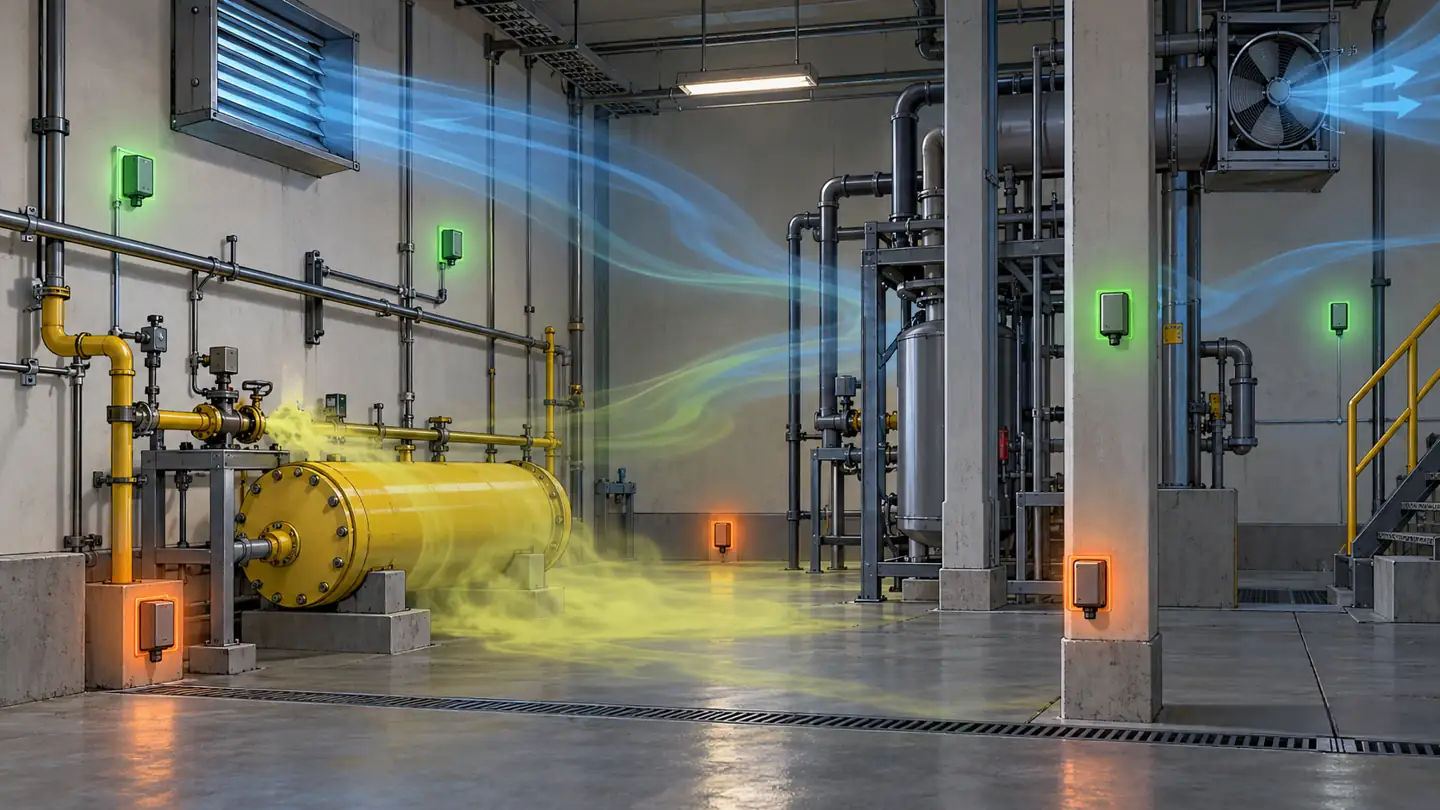
Use the site layout and credible release scenarios to propose locations; then review them with the detector manufacturer's placement guidance and the facility's hazard analysis. Consider both equipment that could release gas and places people might enter or work. A detector behind a solid enclosure, inside a dead zone or directly in a fresh-air jet may not sample the cloud expected from a nearby leak. A single point may leave uncovered paths. On the other hand, indiscriminately adding sensors without defining each one's job can make testing and response harder. Each detector should have a documented purpose and an accessible challenge point.
It is helpful to draw several operating cases on a plan: ordinary ventilation, fans stopped, doors open, doors closed and a plausible maintenance release. Mark likely leak points, air supply, exhaust and obstructions. The diagram is an engineering discussion aid, not a validated dispersion model. If the installation has high consequence or unusual geometry, use competent site-specific analysis and the applicable facility requirements. Record why each location was chosen so later equipment or ventilation changes trigger a placement review.
For an extractive system, review the sample inlet location independently from the analyzer cabinet. The tube route, length, fittings and pump must be treated as measurement components. A low-flow fault or blocked line can make the analyzer read little or nothing despite gas near the inlet. The maintenance procedure should challenge the complete path where the manufacturer's method allows, rather than only exposing the cell after the tubing.
Exposure values are context, not ready-made alarm settings
그만큼 NIOSH Pocket Guide lists a NIOSH recommended exposure limit (REL) ceiling of 0.5 ppm for 15 minutes, OSHA permissible exposure limit (PEL) ceiling of 1 ppm, 그리고 IDLH value of 10 ppm for chlorine. These are different reference concepts; the old draft incorrectly called the OSHA value a 0.5 ppm time-weighted average and described a 1 ppm short-term limit. It is important not to carry that error into a detector specification.
An alarm threshold and delay are part of a site's safety design. The required warning action, applicable jurisdiction, response time, measurement uncertainty, detector position and possible exposure pattern all affect how a setpoint is selected. Do not copy a manufacturer's default or equate a ceiling value with an automatic universal alarm setting. A room detector may warn about gas at one fixed point while the breathing-zone concentration elsewhere differs. The site's qualified safety and controls team should approve the alarm philosophy, including fault, overrange, power loss, warning escalation and reset.
Specify what happens after a channel detects gas: local indication, audible/visible warning, notification, ventilation or other interlock if engineered for that site. Then verify the whole chain. A detector display that changes while the controller remains inhibited is not a functioning warning system. Equally, a controller fault that appears as a clean zero is not an acceptable interpretation. Labels and test records should identify which detector and output were exercised.
Commissioning and ongoing verification
Commissioning begins with the installation, not only the sensor calibration. Confirm the selected gas cartridge or cell, wiring, power, output scaling, controller tag, location, sample-flow supervision, fault behavior and alarm routing. Preserve the detector manual and configuration record. Test the channel with the method and gas specified for that model, using trained personnel and the site's safety procedure. Reactive chlorine calibration gas has handling and stability constraints; use current manufacturer guidance for cylinders, regulators, tubing and exposure adapters rather than improvising a convenient source.

ㅏ functional challenge shows that a channel responds to an approved test exposure and, when included in the procedure, that the connected warning chain operates. A quantitative calibration check compares the displayed or transmitted value with a known reference under defined conditions. A calibration adjustment changes the instrument's response when the as-found check is outside the accepted tolerance and adjustment is permitted. These operations should be recorded separately. Our guides to bump testing 그리고 gas sensor calibration explain the distinction in more detail.
OSHA's portable gas monitor calibration guidance notes that reactive gases such as chlorine deserve attention to calibration-gas stability and test conditions. Although that bulletin addresses portable monitors, the underlying lesson applies when evaluating a Cl₂ reference for any approved field-check procedure: know the reference, delivery path and conditions. Do not claim a detector is “calibrated” merely because a gas bottle was placed near it. Record gas identity and certified concentration, expiry, balance, delivery hardware, ambient conditions if required, as-found response, adjustment, as-left response and warning-chain result.
The maintenance interval must come from the selected model, operating environment and site's management system. Increase attention after a failed challenge, unusual exposure, water ingress, power fault or process change. Keep access to the detector and sample inlet; a beautifully placed point that cannot be checked safely will be difficult to sustain. When replacing a cell, check whether the transmitter needs a new configuration, stabilization period or calibration. Finally, restore bypasses or inhibited outputs only under the approved procedure and document that the channel returned to normal operation.
If a reading does not make sense
A high reading can indicate Cl₂, an interferent, residual gas from a recent event, an incorrect gas configuration or a fault. Treat the alarm through the site's response procedure first; do not try to diagnose a possible release by assuming the sensor is wrong. Once the area is managed safely, compare other channels, process conditions and the model's fault information. A detector is one piece of evidence, not a stand-alone explanation.
A persistent zero can also have several meanings: genuinely little gas at that inlet, poor placement, blocked inlet, failed pump, sensor depletion, wrong controller scaling or an inhibited output. A low display is not a substitute for a functional challenge. Distinguish the local sensor display, the transmitted signal and the operator-facing alarm; faults may occur between them.
Slow response may come from sample transport, filters, weather shields, low flow, an aging cell or the chosen detector location. Compare the timing with the complete installation, not just a cell datasheet. Unstable readings may correlate with ventilation changes, temperature transients, humidity, contamination or interference. A useful troubleshooting record includes the location, instrument configuration, recent chemicals and maintenance, ambient conditions, reference-gas details and what each stage of the warning chain did.
A specification worksheet worth keeping
Before purchase, make one line for each proposed point or sample inlet:
- 측정: Cl₂ gas in air; purpose of the point; expected clean-air baseline and credible release scenario.
- 위치: drawing tag, potential sources, air supply and exhaust, obstructions, normal and abnormal operating states.
- Instrument: named model and Cl₂ configuration, range, resolution, response specification and overrange behavior.
- 환경: temperature, humidity/condensation, pressure, cleaning chemicals, enclosure and access requirements.
- 간섭: nearby oxidants or process chemicals, manufacturer cross-sensitivity data and unresolved mixture questions.
- Sampling: point or extractive inlet, tube materials and length, flow supervision and measured inlet-to-output response where applicable.
- Interfaces: power, signal, fault, controller scaling, alarm actions, inhibit and recovery logic.
- Verification: approved challenge gas and method, maintenance access, interval, record owner and spare cell or cartridge.
If a supplier cannot answer a line, keep it open rather than filling it with a generic industry assumption. The most useful comparison is not a list of advertised features; it is a side-by-side account of whether each complete configuration can meet the same monitoring job. A Winsen Cl₂ sensor-element manual can inform a developer's component choice. A finished detector manual must additionally establish the installed warning functions.
자주 묻는 질문
Is an electrochemical cell always the best chlorine detector?
It is a common choice for low-level Cl₂ gas detection, but “best” depends on the range, interferents, environment, placement, response and system architecture. Compare named models under the intended conditions. A technology category cannot prove the performance of the installed warning system.
Can I use a free-chlorine water probe to detect a chlorine gas leak?
No. It is intended for a liquid sample and a different measurement quantity. Use an atmospheric Cl₂ detector specified for air. A plant may need both measurements for different purposes.
Should all chlorine detectors be installed near the floor?
No universal height follows from chlorine's density. Source geometry, release momentum, ventilation, obstacles and access change the gas path. Determine and document locations through the site's release scenarios and the selected manufacturer's guidance.
Does a 0–20 ppm cell mean the room detector warns in 60 seconds?
No. The Winsen ME4-Cl2 values describe that particular cell under its test conditions. Gas transport to the inlet, an extractive tube, electronics, signal processing and controller logic all contribute to end-to-end warning time.
Is a bump test the same as calibration?
No. A functional challenge checks response and possibly the alarm chain. A quantitative calibration check compares against a reference at a known concentration; adjustment changes the instrument when permitted. Record which operation occurred and its as-found result.
Can an OSHA or NIOSH exposure value simply be entered as the alarm setpoint?
No. These values have specific definitions and jurisdictions. The site must decide warning thresholds and actions based on its hazard assessment, detector performance, locations and applicable requirements. NIOSH's chlorine guide is a source for the exposure values, not a universal controller configuration sheet.
Primary references
- NIOSH Pocket Guide: Chlorine — identity, relative density and US exposure-reference definitions.
- Winsen ME4-Cl2 manual, version 1.2 — example electrochemical element mechanism and model-specific ratings.
- Emerson electrochemical Cl₂ detector manual — example complete-detector installation, interference and maintenance considerations.
- Honeywell Midas Cl₂ datasheet — example extractive monitor configuration.
- OSHA gas monitor calibration guidance — reference-gas and condition considerations.
- Endress+Hauser chlorine measurement guide — why aqueous free-chlorine measurement is a separate task.






코멘트(1)
[…] The latter requires an atmospheric detector and a different placement and warning strategy; our chlorine gas detector guide covers that task. Here the measurement chain starts at a water sample point, passes through tubing […]