
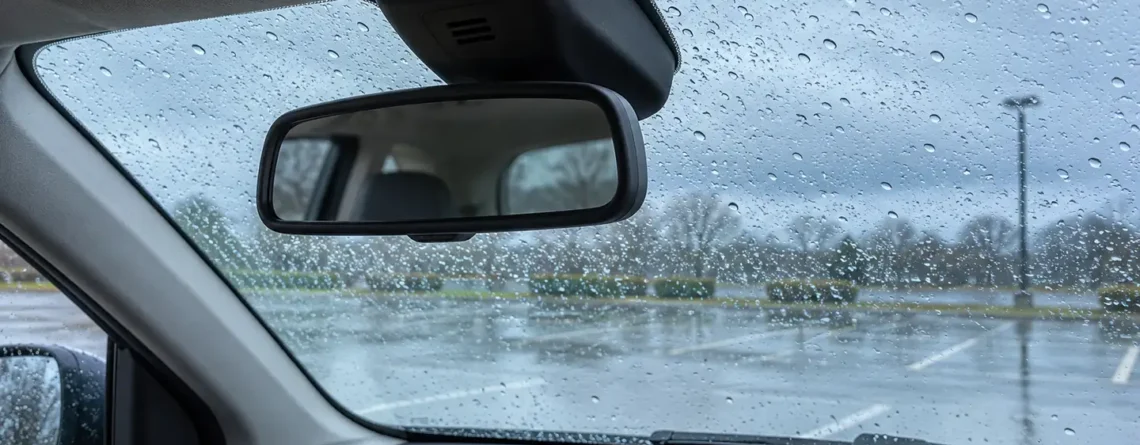
A conventional optical windshield rain sensor shines near-infrared light into a small area of the glass. On a dry windshield, much of the light returns to a receiver inside the sensor. Water on the outside of that area changes the reflection, so less light returns. When the automatic mode is enabled, the vehicle uses that change to decide when to run the wipers and how often to sweep.
If the wipers work at manual speeds but fail in AUTO, first check that rain sensing is enabled and that the sensing area is clean, swept by the blades and actually getting wet. A problem that begins immediately after windshield replacement puts the glass specification, the sensor's mounting and its clear coupling pad high on the list. Rain-sensor initialization, where the manufacturer calls for it, is a separate operation from forward-camera alignment.
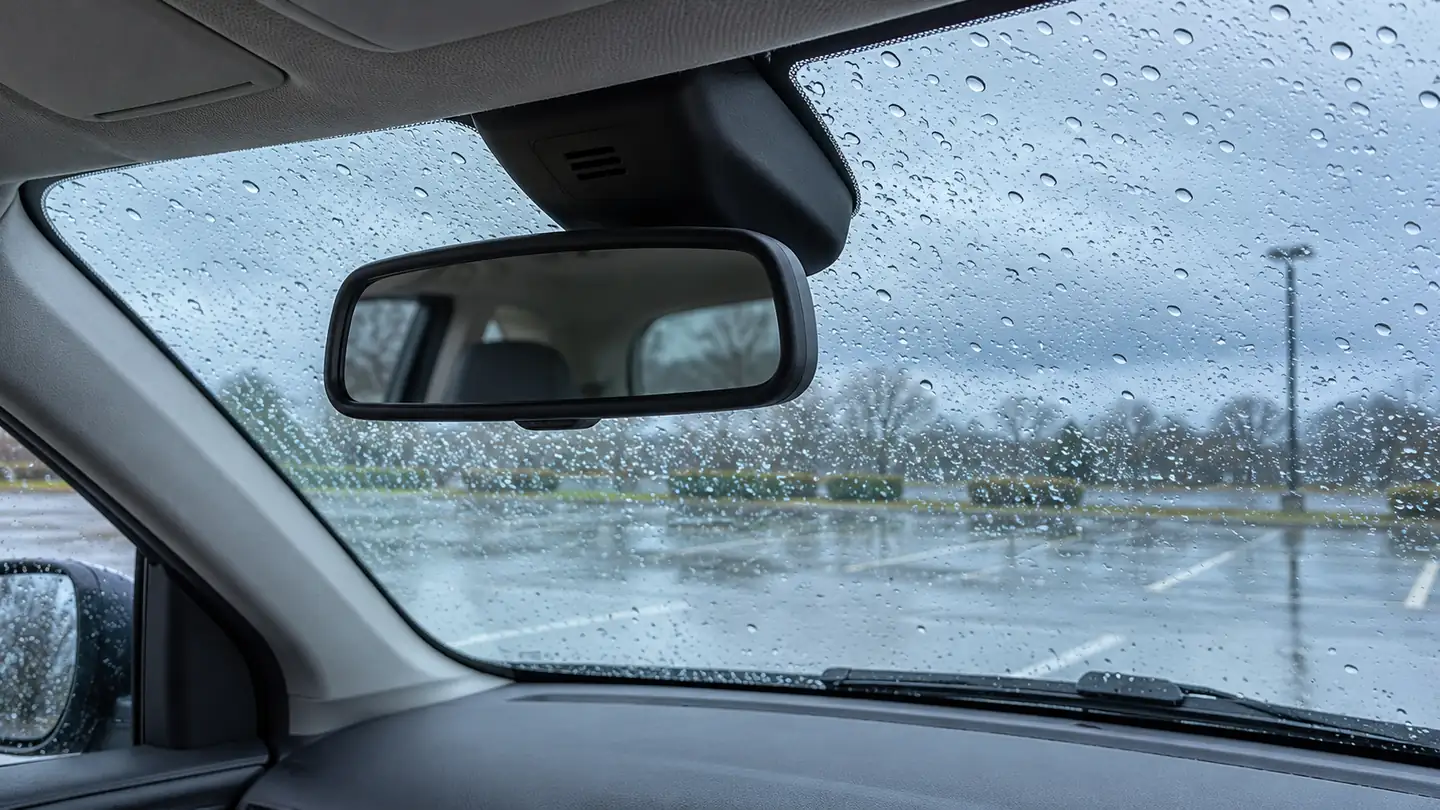
The sensor is commonly near the interior mirror, against the glass. Use the vehicle documentation to identify the sensing area and equipment on your windshield.
What the rain sensor sees through the glass
In an optical sensor, an infrared LED provides the light and a photodiode converts the returned light into an electrical signal. Optical elements shape the light so that it enters the windshield at a useful angle. A transparent coupling material between the sensor and the inside of the windshield helps the light pass between them. The critical wet or dry boundary is farther away, where the outside of the glass meets air or water. Hamamatsu's automatic wiper application guide illustrates the emitter and receiver arrangement.
On dry glass, a ray reaching the outer glass-to-air interface at a suitable angle can remain in the glass through total internal reflection. Some designs use several reflections to send the light back to the detector. In a real assembly, losses elsewhere in the optical path mean the dry signal is a measured reference with a finite strength. A droplet replaces air at part of the glass boundary with water. At a suitable operating angle, some light can now pass into the water and less reaches the photodiode. The useful measurement is the drop in returned light.
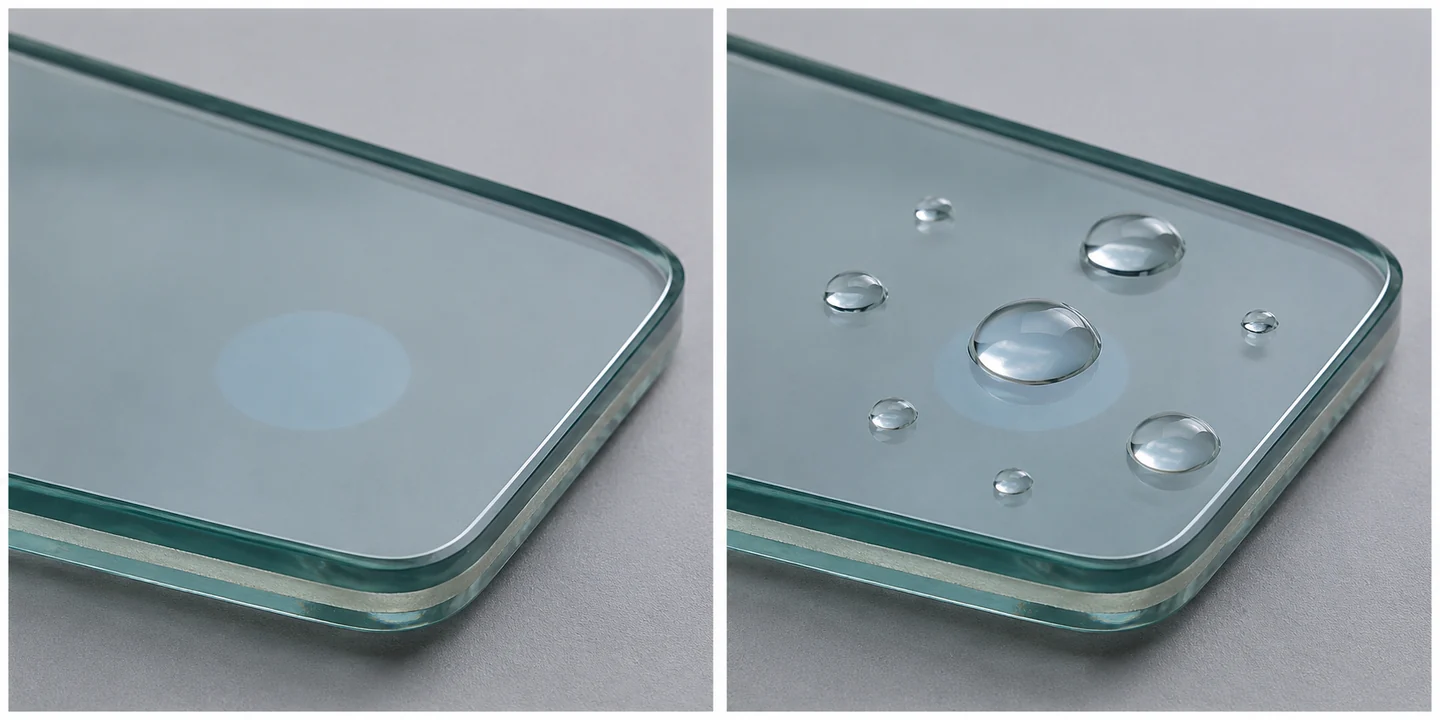
Conceptual comparison. Only the part of the sensing footprint where water meets the outside surface changes from a glass–air boundary to a glass–water boundary.
It matters where that water lands. A sensor above the mirror line can only assess the small footprint reached by its optical path. The driver sees a much wider part of the windshield. In fine drizzle, that patch may be comparatively clear even though another part of the glass has enough small droplets to blur the road. Conversely, a single splash can wet the patch abruptly and produce a stronger signal than several seconds of drizzle. A measurement made on the glass also depends on how droplets bead, spread and run off. The signal represents local wetting, with no direct conversion to a rainfall rate.
The sensor usually sits within a blade's swept area so each pass can clear the patch and change the next measurement. That makes blade condition part of the measurement chain. A worn blade can leave a streak over the sensor while cleaning other parts of the windshield reasonably well. In that case the system still sees a wet surface after the sweep and may request another one. A streak down the driver's side with a clean sensing patch presents the opposite problem. HELLA's technical description covers the feedback from the swept area and adaptation to gradual changes at that location. HELLA rain and light sensor service guide
How a change in light becomes a wiper command
The optical return is only the first stage. The vehicle has to interpret the signal, know whether the driver requested automatic wiping, and command the motor. An example supplier architecture sends sensor data over a Local Interconnect Network (LIN) to the vehicle's control electronics. The body controller can use information such as stalk position and wiper park state. The wiper electronics act on the resulting command. Wiring, module responsibilities and available diagnostic data depend on the vehicle. HELLA 861 rain and light sensor technical description
A sensitivity setting changes how readily the system responds to wetting according to the vehicle's design. It cannot make the detector sample a larger area. A similar thumbwheel on a vehicle with conventional intermittent wiping may set the interval between sweeps. Identify which feature is fitted before using the thumbwheel's behavior to diagnose it. On some vehicles the rain function also has a separate enable setting. Ford's cited owner's manual, for example, describes both the stalk setting and a setting in the vehicle menu. Ford owner's manual, rain and light sensor section
That distinction explains several otherwise puzzling behaviors:
- One wipe when selecting AUTO. Some vehicles sweep when a mode is selected or a sensitivity setting changes. Confirm that a later change in wetness produces the expected response while the setting stays fixed.
- Different results during steady drizzle and a road splash. Rain can accumulate slowly on the sensing patch in one case and cover it quickly in the other. The controller can then request different wiping even if the driver's view seems equally poor.
- More wiping after a blade change. Compare the swept sensing patch before and after each pass. A blade that fits mechanically but clears the patch unevenly can leave a persistent optical signal.
- AUTO idle even when the wipers work on demand. Manual operation shows that the wipers can move in those tested modes. The automatic decision, its inputs and any automatic-specific control path still require their own check.
Use manual wiping whenever you need it for visibility. Before washing the windshield, clearing snow or handling the blades, put the wipers into the appropriate state described in the owner's manual. Volvo's S60 instructions, for example, describe a service position and explicitly tell the driver to deactivate rain sensing in an automatic car wash. Other vehicles can remember the driver's preference or have different service controls. Volvo S60 rain sensor operating instructions
Rain sensor, light sensor and forward camera near the mirror
A combined rain and light module may have a single housing and connector with two separate sensing functions. The rain channel sends light into the glass and measures its return. The light channel receives environmental light to help decide when to switch the exterior lighting. HELLA describes an example with a wide-angle ambient detector and a narrower forward light detector. The vehicle's lighting logic determines which lamps come on and how it responds to changing light. HELLA combined rain and light sensor description
A forward camera for advanced driver assistance systems (ADAS), where equipped, images the scene ahead. On vehicles with a conventional optical rain sensor it may be fitted immediately beside that sensor, behind the same trim. It can have its own bracket, optical window and service procedure. Automatic wiper controls by themselves tell you little about the sensing hardware fitted to the vehicle. Use the equipment description or parts diagram to confirm that it has a separate optical rain module before looking for its coupling pad.
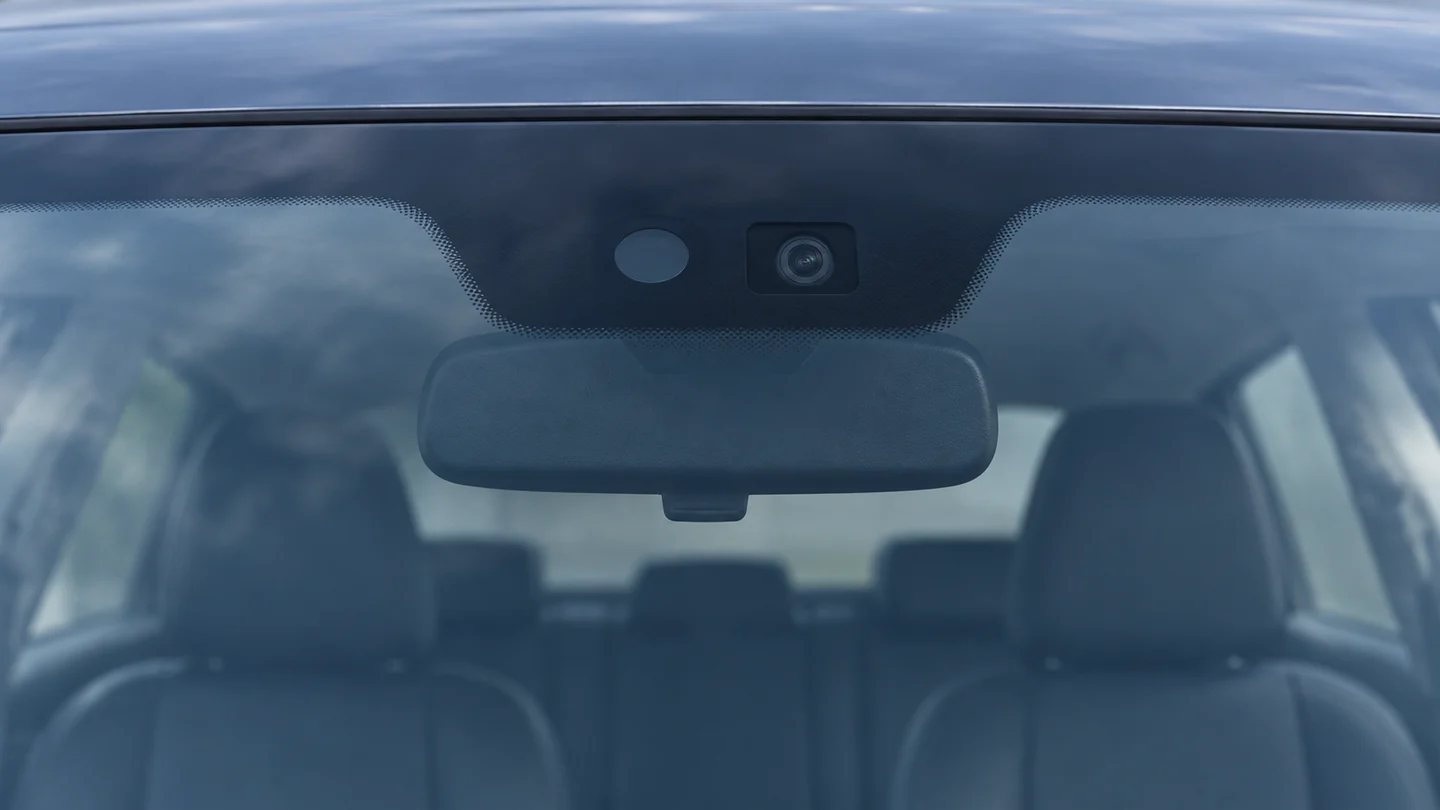
Conceptual view from outside the windshield. The round rain and light sensor sits left of the separate forward camera lens. Mount shape and layout vary by vehicle.
| Function on a vehicle with separate optical rain sensing | What it looks at | What a successful check establishes |
|---|---|---|
| Rain channel | An illuminated footprint at the outside surface of the windshield | AUTO wipers respond to wetting there under the conditions checked |
| Ambient light channel | Environmental brightness through its optical opening | The applicable lighting function responds in the conditions checked |
| Forward driver-assistance camera | A scene through a dedicated viewing area | The camera alignment procedure and verification called for by the manufacturer were completed |
Working automatic lights give a useful clue that the light channel can operate, but say little about the integrity of the rain channel's return path. If both functions stopped after the same work, a shared connector, supply or housing may deserve attention. A lane-assist warning after glass replacement belongs on the camera diagnostic path even if the wipers behave normally. When the wipers and camera both have symptoms, the timing points to recent work around the windshield. Each device still needs its own result.
A parked check for automatic wipers that will not respond
Write down when the behavior changed before altering several things at once. A fault following a glass replacement has a different starting point from one following a new blade, a glass treatment, a wash or a change in driver settings. Also note whether the problem occurs on clean glass, under what wetting conditions, and whether it is consistent or occasional. Use this information to decide what to check first.
- Verify the wiper system with the manual controls. With the vehicle parked and the glass suitably wet, check the manual modes described in the owner's manual. Note whether the blades start, move normally and park. If a manual speed is missing, movement is uneven or the blades fail to park, record those symptoms before pursuing rain sensitivity.
- Inspect the outside of the windshield and the blades. With the automatic mode off and the system secured for inspection per the manual, check the sensing area for dirt, residue, stickers or damage. Use the manufacturer's glass and blade cleaning instructions. Check that the blade clears the sensing patch. Ford identifies damaged blades, coatings, wax, dirt and detergent deposits as possible influences in the cited owner's manual.
- Confirm the correct automatic mode and sensitivity. Look for the expected indication or setting. Some vehicles require more than a stalk position. Begin with a fixed sensitivity so one variable changes at a time. Use the proper ignition or vehicle state for the test, as documented for that model.
- Wet the actual sensing area. Where the vehicle instructions permit a basic spray check, keep it parked, keep people and tools clear of the wiper travel, and put a fine spray of plain water on the outside of the glass over the optical footprint. Stand clear before activating the wipers or ask a helper inside to operate the controls. Observe from a safe position. Follow the manufacturer's conditions if a dedicated test exists.
- Compare a dry baseline, a wet response and recovery. If the model sweeps once when AUTO is selected, distinguish that from any subsequent response to water. Watch for wiping when the patch is wetted, then for a return toward dry behavior as it clears. If the first trial is inconclusive, recheck the location and repeat under comparable conditions. Change sensitivity only after recording a result at the first setting.
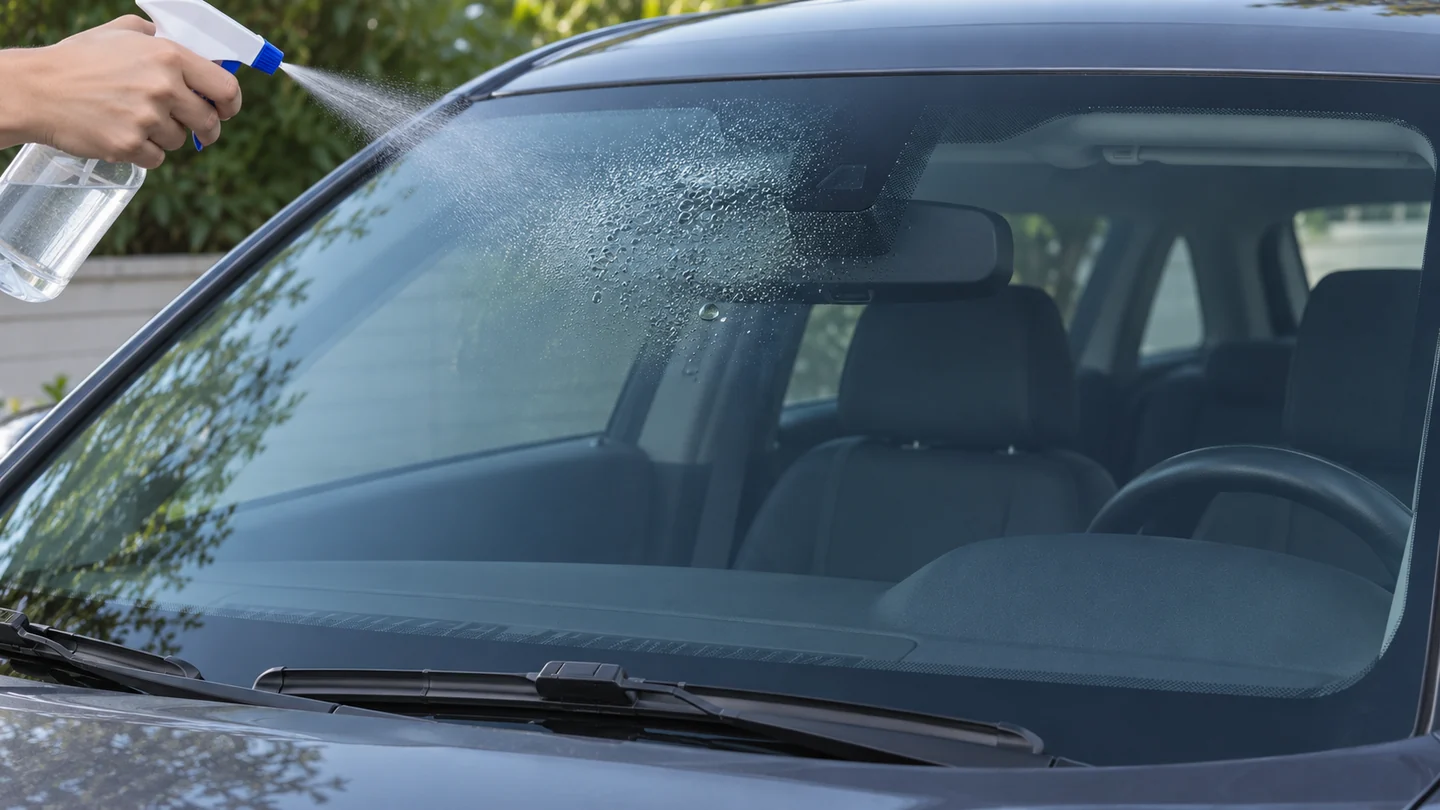
Conceptual parked check. Wet the sensor footprint from outside, with people and equipment clear of the wiper path. Vehicle instructions determine the operating conditions.
HELLA's workshop guide uses targeted water application as a basic function check. Its next step when manual wiping works and the rain channel fails to respond is diagnosis with suitable equipment. A workshop may be able to see automatic mode status, sensor information or a wiper command, depending on what that vehicle exposes. Recording whether the controller sees a change during a localized wetting test is more informative than clearing fault codes and seeing whether they return. A basic emissions code reader may have limited access to body or wiper systems. HELLA basic function check and diagnostic parameters
| What you observe | Where to look first | What to verify next |
|---|---|---|
| Manual wipers fail, stop partway or behave abnormally | Wiper actuation, park feedback, supply or mechanism, according to the symptom | Establish which manual modes work before judging the sensor |
| Manual works, AUTO does nothing during a localized wet check | AUTO enable, vehicle conditions, sensor mounting or a control path | Verify that the wetting reaches the correct patch and see whether the controller registers a change |
| AUTO wipes repeatedly on apparently dry glass | Deposits, streaks, damage, coupling condition, or a mode behavior | Start from a clean dry patch and compare repeated trials at a fixed sensitivity |
| AUTO works after a large splash but is late in drizzle | Local wetting, glass treatment, blade condition and sensitivity | Compare what is on the sensing patch when visibility first becomes poor |
| AUTO worked before glass replacement and now fails | Glass part, bracket, coupling pad, connector, setup | Ask the installer to check the installation and required service steps |
| Camera feature shows a warning with or without a wiper symptom | Camera diagnostics and required alignment | Have the camera path verified independently |
Consider two hypothetical observations. In the first, manual low and high both work, AUTO sweeps when armed, and nothing changes when water is applied below the mirror area. Moving the spray to the actual footprint produces a response. The original result tested the wrong part of the windshield. In the second, water reaches the footprint, the response stays absent across comparable trials, and the issue began immediately after glass work. That is a stronger reason for the shop to inspect the assembly and check whether the controller sees wetting. A module replacement remains premature without that evidence.
How workshop data can narrow the fault
If the diagnostics expose suitable data, the technician can compare three observations during the same test. First, does the control unit recognize the selected mode? Second, does the rain input change as the test patch goes from dry to wet? Third, is a wiper request issued, and does the motor carry it out? Capture the information before changing settings or clearing stored faults so the readings still describe the original symptom.
If AUTO appears enabled at the controls but the module shows a manual mode, check the mode selection and related inputs first. If the displayed rain input changes reproducibly but no command is issued, look at the conditions for permitting an automatic wipe. If the motor receives an automatic request and fails to respond, the repair path shifts toward actuation or its control electronics. If the input never changes, inspect the glass and coupling, then check communication, supply and the sensor as directed by the vehicle procedure. A stored communication fault and a valid but unchanging rain reading are different observations.
Some tools show a reported wetness value, while others show only a mode, a status or a request. The displayed quantity matters. A value labeled as calculated rain intensity may rise with wetting even though the physical infrared return falls. Use the service documentation to interpret the parameter and compare it at the same points in a dry-to-wet test. A single snapshot cannot establish the direction or repeatability of the change. HELLA checking and diagnostic parameter overview
What windshield replacement changes
The glass does three jobs in the optical measurement. It carries the light between the emitter and receiver, provides the exterior surface where the water changes reflection, and gives the sensor and its bracket a stable mounting geometry. A replacement can fit the opening and still need verification for the equipment fitted to the vehicle.
Glass specification and mounting. Ask for the installed windshield part identification and how it was matched to the vehicle's build options. The position of the bracket and optical opening matter, as can the glass transmittance and geometry in the sensing area. HELLA's 861 data sheet lists glass transmission, thickness and curvature requirements for its example device. Those values are a specification for that unit and cannot establish fitment for an arbitrary windshield. A Daimler Trucks North America bulletin goes further in a particular application, documenting certain windshield markings associated with transmittance variation after the installation and rain-sensor calibration checks have been made. HELLA 861 technical details, DTNA service bulletin 54-347
Coupling material and contact. The pad or gel fills the interface between the sensor and the inner glass, reducing unwanted optical discontinuities. Lifting the sensor during replacement can disturb this interface. A fold, a patch of dirt or an air pocket changes the path before the light reaches the exterior surface. A sensor that looks centered from outside may still be seated unevenly. The shop should inspect the coupler, retainer and connector according to the applicable procedure. Ask what that procedure says about reuse, damage and acceptable air inclusions. Some manufacturers specify different parts or criteria by model. HELLA coupling medium and installation guide
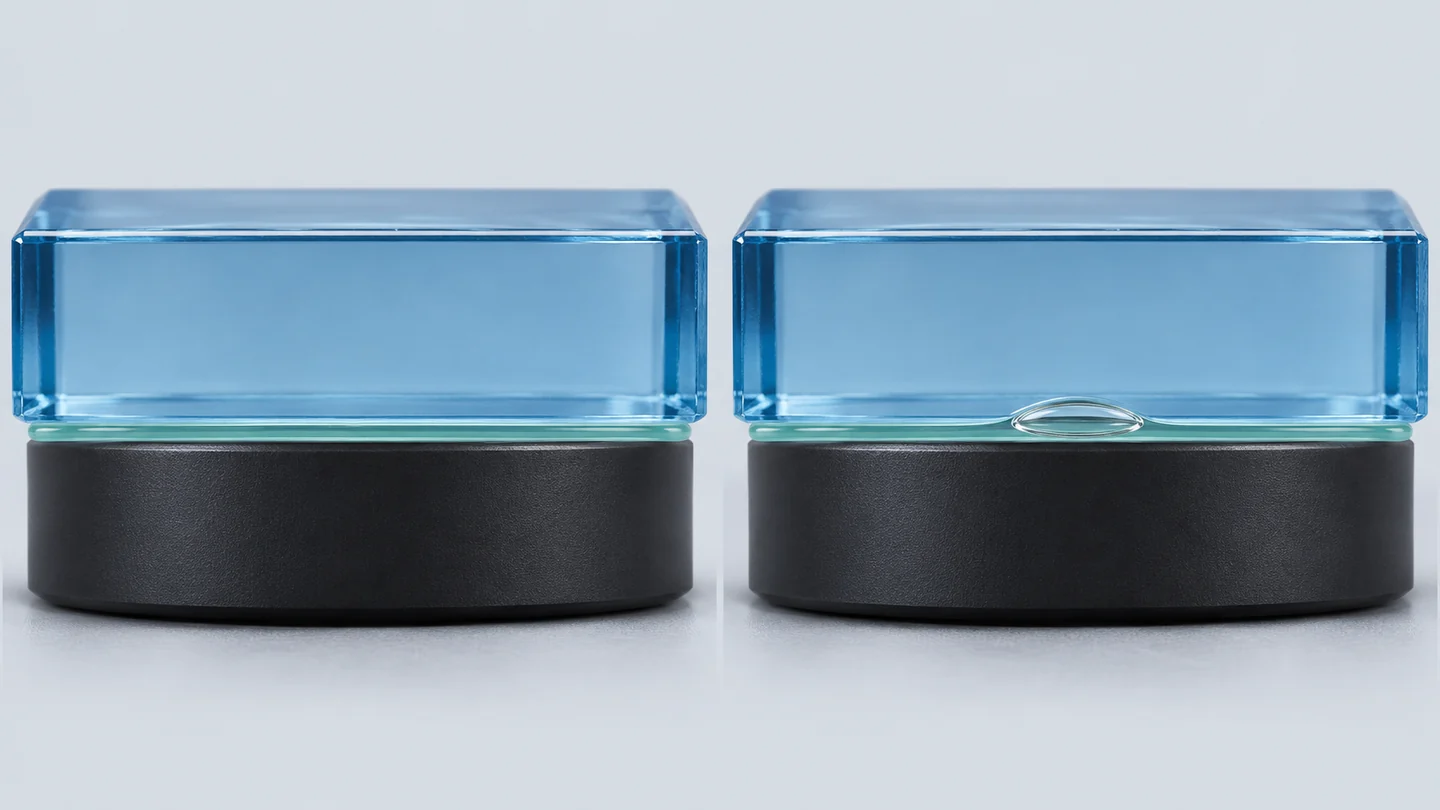
Conceptual cross-section. An air pocket at the inside coupling interface can alter the light path even before light reaches the outside surface. The service procedure sets the acceptance criteria.
BMW's bulletin 51 13 21 explains that, for applicable vehicles with a separately available pad, damage confined to that part can be addressed with the pad. Ford's program 23B84 for certain 2022–2023 F-150 vehicles takes a different approach in its replacement procedure. It calls for a new rain sensor when the inspected gel pack is damaged. These examples explain why a service recommendation can differ even though both sensors rely on optical contact. Identify the correct procedure before choosing what part to order. BMW SIB 51 13 21, Ford 23B84 technical instructions
Electrical connection and setup. Verify a fully seated connector and any reported faults using the manufacturer's diagnostic procedure. Then determine whether rain-sensor initialization, adaptation or coding is required for that vehicle and repair. Initialization can establish a reference for the optical rain channel. Coding can configure supported hardware or glass options on some platforms. Follow the documented setup conditions, including any requirement for clean dry glass. Diagnose persistent poor contact or incompatible parts as physical faults even if the service tool completes a setup routine.
What to ask the glass shop to verify
Use separate work-order entries for the installed glass, rain sensing and the forward camera if fitted. Ask which steps apply to your vehicle, which were performed, and what was actually observed. A work order saying only “calibrated” leaves you without a way to tell which system was addressed.
| Check after glass replacement | Useful record |
|---|---|
| Correct glass and attached hardware | Installed part identification and confirmed match for the relevant sensor, camera and equipment options |
| Rain sensor mounting | Retainer, optical interface and connector inspected; transferred or replaced parts identified |
| Rain-sensor setup, if required | Function performed, applicable vehicle procedure and result |
| Rain-wiper function | Manual operation and targeted wet response observed under the correct conditions |
| Forward camera, if equipped | Required alignment or calibration and any post-service checks completed according to the vehicle procedure |
| Unresolved symptoms | Which function remains affected, operating conditions and the next diagnostic step |
Ford's 23B84 instructions make the distinction concrete. The rain sensor is removed and its gel pack inspected separately from the forward camera. Camera alignment is a separate operation where the procedure calls for it. The two tasks address different problems. Rain-sensor setup relates the optical return to the glass and sensor. Camera alignment relates the camera's view to the reference the vehicle needs for its driver-assistance features. Ford 23B84 technical instructions
A parked wet test gives evidence about the rain channel during that test. It cannot certify the camera or predict every response to fine drizzle. Likewise, a documented successful camera calibration tells you about that camera procedure. If AUTO still fails, ask for a repeatable wetting test and observation of the rain input where the diagnostics provide one. Record the conditions and whether manual wiping works. A description such as “manual low and high worked on wet glass, AUTO was enabled, and spraying over the identified sensing area produced no sweep” gives the shop a clear starting point.
자주 묻는 질문
Why does the rain sensor wipe when the windshield looks dry?
Check the sensing patch from outside under good light. A thin film, a streak near the mirror or small droplets can be easy to miss from the driver's seat. A mode-selection sweep can also look like a false trigger. Note whether the wipes persist while the setting stays fixed. Repeated dry wiping after windshield work warrants checking the optical contact and setup, especially if it can be reproduced after cleaning.
Is rain-sensing wiper sensitivity the same as intermittent speed?
In rain-sensing mode, sensitivity usually changes the response to detected wetting. In conventional intermittent mode, an interval control changes the delay between sweeps. Manufacturers may use a similar ring or scale for either function. The owner's manual for your equipment identifies what the control does in each mode.
Can automatic lights work while the automatic wipers fail?
Yes. A combined module can measure ambient light correctly while a fault affects the rain channel. The ambient detector samples environmental light, while the rain channel needs a sound coupling interface and a measurable optical return from the exterior glass. Check each function in its own mode.
Do I always need rain-sensor initialization after replacing the windshield?
Use the service information for the vehicle and repair. Some procedures require a dedicated initialization or other setup. The physical installation and a function check remain relevant to interpreting the result. If the work order lists camera calibration only, ask whether a separate rain-sensor step applied and whether AUTO response was checked.
Can a water-repellent coating affect rain-sensing wipers?
Yes, some manufacturers list coatings or wax as possible causes of changed response. A coating can change where water beads or how it clears the sensing patch. Effects depend on the product, the glass and the wiper system. Check the manufacturer's guidance before treating that area. If the behavior changed after applying a coating, report that timing and use the approved cleaning or service procedure.
Does the rain sensor know when it is snowing or when the glass is frozen?
An optical rain channel measures a change in return at the glass. Snow, meltwater and ice can produce different responses, and any additional temperature logic varies by vehicle. Clear ice and snow according to the owner's manual, keep AUTO off while doing so and use the manual controls as needed for visibility.
Can an optical rain sensor tell me how hard it is raining?
It observes the wetting of a small windshield area, which can reflect drizzle, spray, runoff and the effect of a wiper pass. There is no general way to turn that observation into a weather measurement. If the wipers lag or overreact, look at how water reaches and leaves the sensing patch before drawing conclusions about the sensor.









답장을 남겨주세요