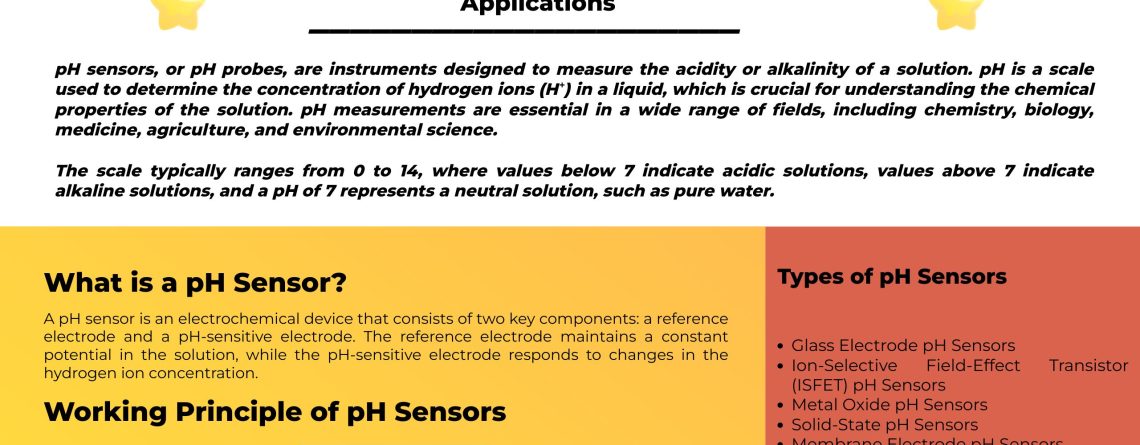
Senzor One Stop2025-04-21T11:43:58+08:00pH sensors, or pH probes, are instruments designed to measure the acidity or alkalinity of a solution. pH is a scale used to determine the concentration of hydrogen ions (H⁺) in a liquid, which is crucial for understanding the chemical properties of the solution. pH...
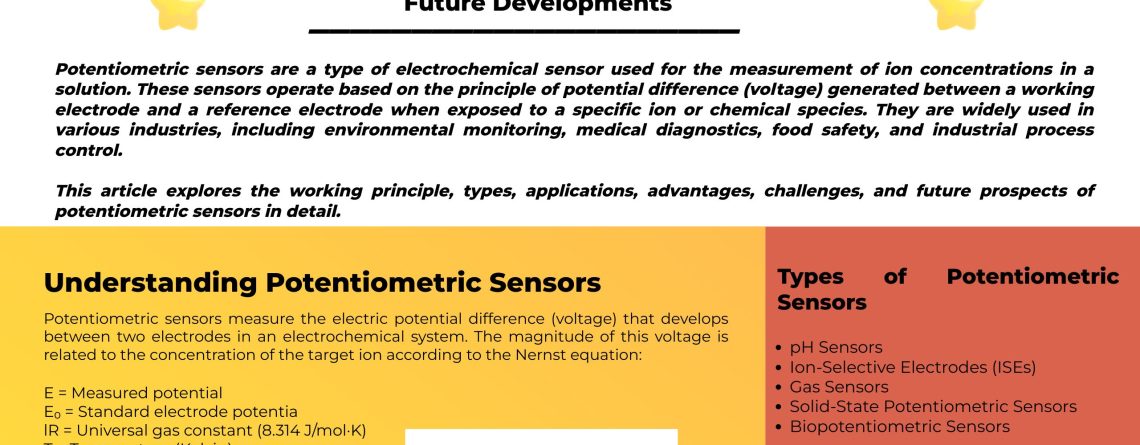
Senzor One Stop2025-04-21T11:47:23+08:00Potentiometric sensors are a type of electrochemical sensor used for the measurement of ion concentrations in a solution. These sensors operate based on the principle of potential difference (voltage) generated between a working electrode and a reference electrode when exposed to a specific ion or...
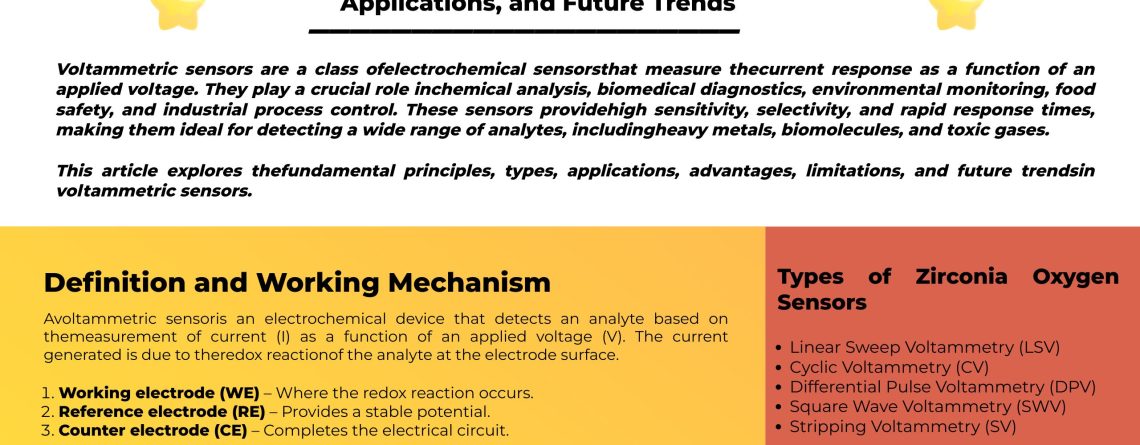
Senzor One Stop2025-04-17T13:53:28+08:00Voltammetric sensors are a class of electrochemical sensors that measure the current response as a function of an applied voltage. They play a crucial role in chemical analysis, biomedical diagnostics, environmental monitoring, food safety, and industrial process control. These sensors provide high sensitivity, selectivity, and...
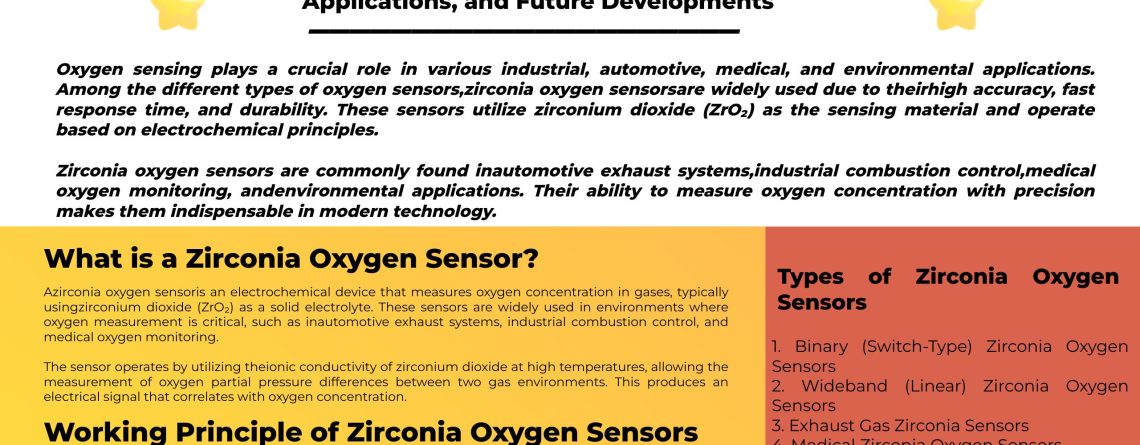
Senzor One Stop2025-04-15T11:07:14+08:00Oxygen sensing plays a crucial role in various industrial, automotive, medical, and environmental applications. Among the different types of oxygen sensors, zirconia oxygen sensors are widely used due to their high accuracy, fast response time, and durability. These sensors utilize zirconium dioxide (ZrO₂) as the...
Senzor One Stop2025-04-08T11:07:33+08:00Sulfur dioxide (SO₂) is a significant atmospheric pollutant and a crucial industrial chemical. It is a colorless gas with a pungent, suffocating odor and is well-known for its role in air pollution and acid rain formation. Despite its negative environmental effects, SO₂ has numerous industrial...
Senzor One Stop2025-04-08T11:02:21+08:00Hydrogen sulfide (H₂S) is a colorless, flammable, and highly toxic gas with a distinct odor of rotten eggs. It is commonly found in natural gas, petroleum, volcanic emissions, and decaying organic matter. While hydrogen sulfide occurs naturally in the environment, it is also produced in...
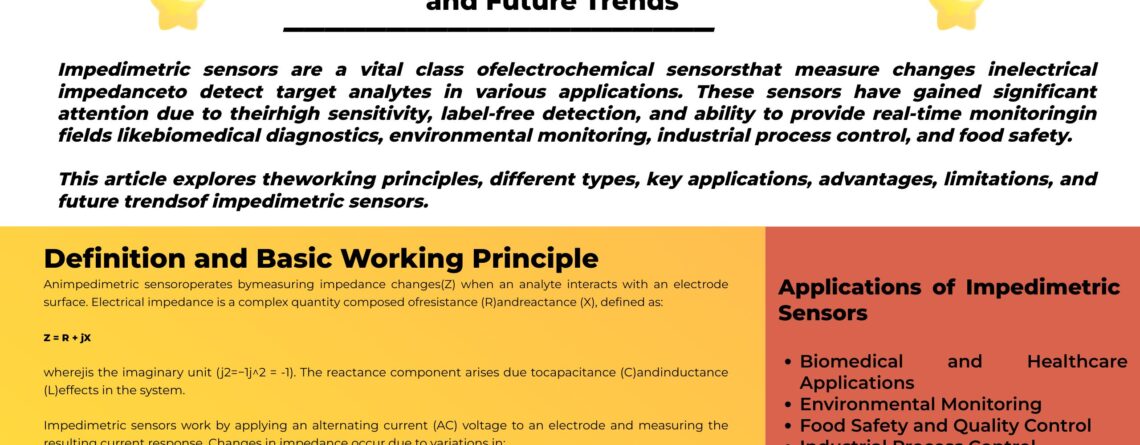
Senzor One Stop2025-03-31T10:39:39+08:00Impedimetric sensors are a vital class of electrochemical sensors that measure changes in electrical impedance to detect target analytes in various applications. These sensors have gained significant attention due to their high sensitivity, label-free detection, and ability to provide real-time monitoring in fields like biomedical...
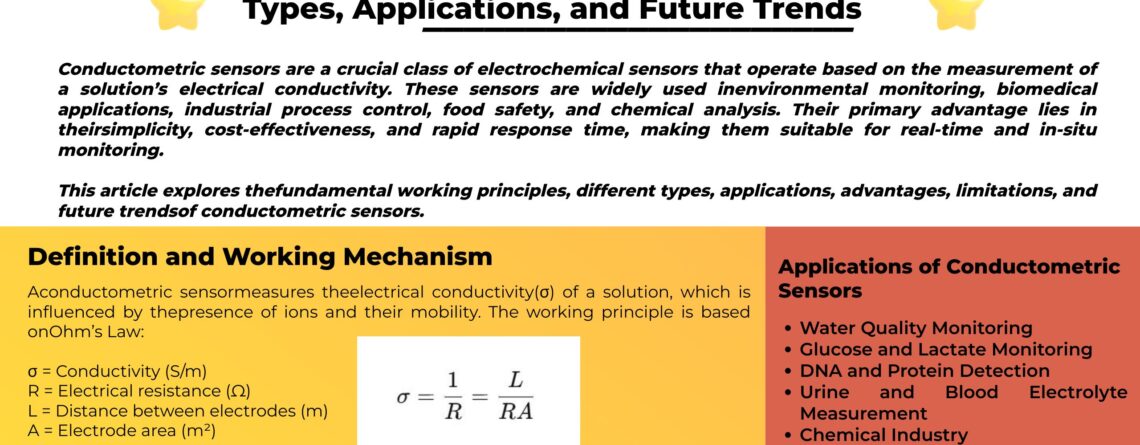
Senzor One Stop2025-03-20T12:38:49+08:00Conductometric sensors are a crucial class of electrochemical sensors that operate based on the measurement of a solution’s electrical conductivity. These sensors are widely used in environmental monitoring, biomedical applications, industrial process control, food safety, and chemical analysis. Their primary advantage lies in their simplicity,...
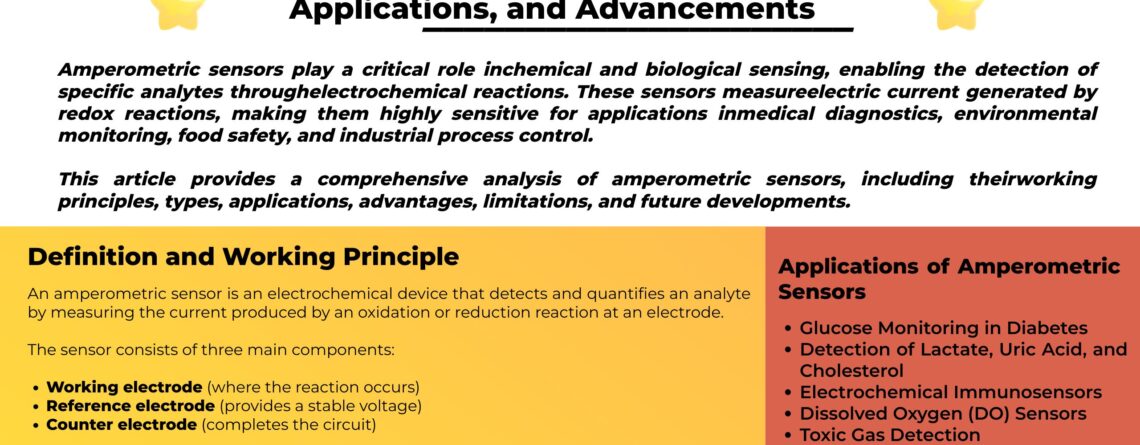
Senzor One Stop2025-03-19T10:36:40+08:00Amperometric sensors play a critical role in chemical and biological sensing, enabling the detection of specific analytes through electrochemical reactions. These sensors measure electric current generated by redox reactions, making them highly sensitive for applications in medical diagnostics, environmental monitoring, food safety, and industrial process...
Senzor One Stop2025-03-17T10:52:51+08:00Ammonia (NH3) is a colorless, pungent-smelling gas composed of nitrogen and hydrogen. It is a naturally occurring compound found in the environment, including soil, water, and air. Ammonia plays a crucial role in the nitrogen cycle, where bacteria break down organic matter to release nitrogen-containing...