
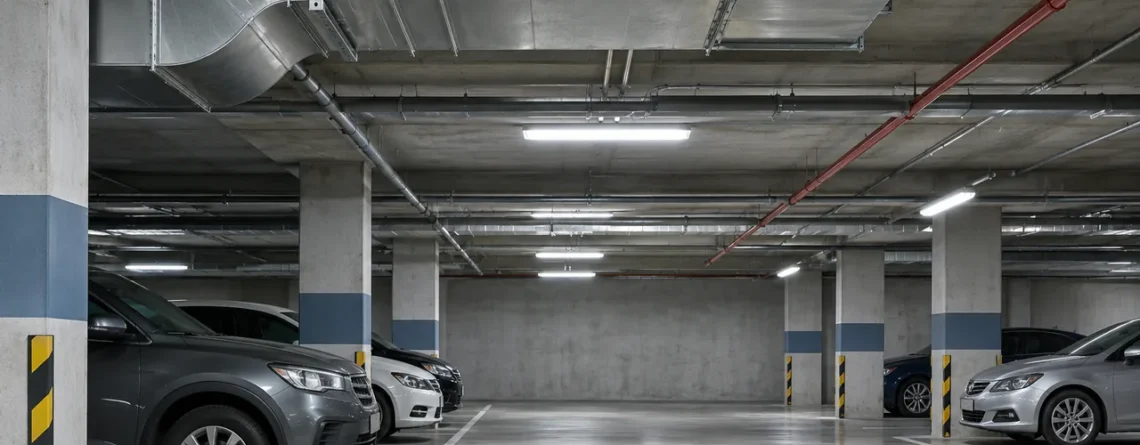
Kapalı otopark CO izleme gereksinimleri yargı yetkisine, benimsenen kod sürümüne ve garaj ve havalandırma sisteminin türüne bağlıdır. Uygulanabilir bir kural, egzoz havalandırmasını kontrol etmek için karbon monoksit izlemeyi gerektirebilir. Ayrıca başka bir gaz kanalı, dedektör listesi, ayrı bölgelerde kapsama alanı, arıza yönetimi veya resmi kabul testi de gerekebilir. Vantilatörü harekete geçirmek için kullanılan bir okuma, tesis personeline gönderilen bir sorun alarmı ve bina sakinlerine koruyucu önlem almalarını söyleyen bir sinyal ayrı işlevlerdir. Her birinin kendi yetkisine ve sırasına ihtiyacı vardır.
Garaj sınıflandırması, izin kapsamı ve mekanik tasarımla başlayın. Kabul edilen mekanik ve enerji gerekliliklerini ve geçerli yangın veya işyeri hükümlerini bulun. Daha sonra gaz kapsamını, kontrol eşiklerini, zaman davranışını, minimum hava akışını, dedektör hatalarını ve bildirim sorumluluklarını ayrı sıralara yerleştirin. Bu ayırma, yayınlanan bir sayının farklı bir karar için yeniden kullanılmasını önler.
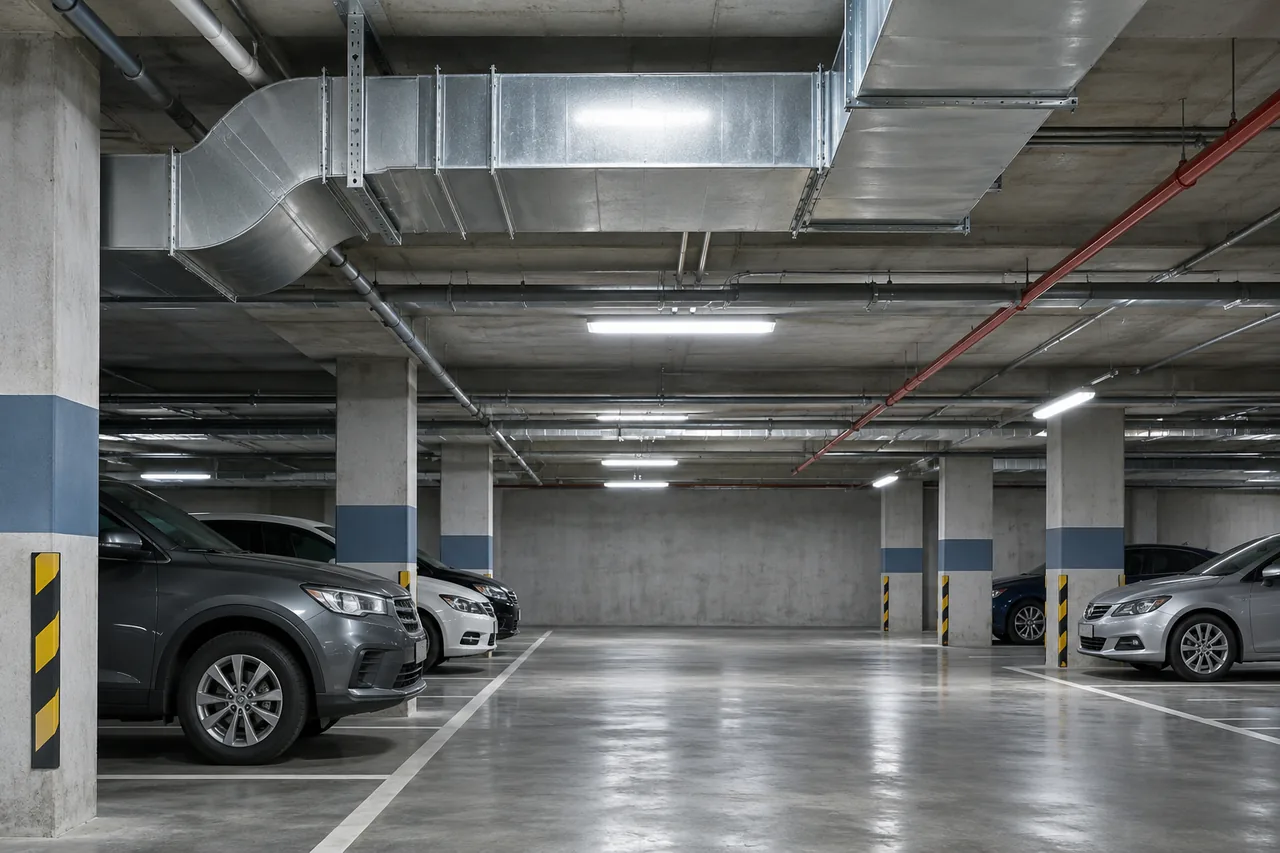
Kapalı garaj havalandırması, yetki alanına özgü gereksinimleri olan mekanik bir sistemdir.
Hangi garaj hükümlerinin geçerli olduğunu belirleyin
"Kapalı", "açık", "mevcut" ve "değiştirilmiş", düzenleyici şartlar veya proje koşullarının yanı sıra sıradan açıklamalardır. Açıklıkları olan bir garajın da benimsenen bina veya mekanik kod kapsamında sınıflandırılması gerekebilir. Sokağa açılan bir rampa tek başına hizmet ettiği düzeyin sınıflandırmasını oluşturmaz. Ayrı bölümlerin farklı gereksinimleri olup olmadığını ve bir izin, değişiklik veya kullanım değişikliğinin geçerli basımı veya dahil edilen çalışmayı değiştirip değiştirmediğini kontrol edin.
Toplam tasarım egzoz oranını, beklenen araç karışımını, doluluk programını ve sistemin aynı zamanda duman kontrolü veya başka bir acil durum işlevi görüp görmediğini belirleyin. Bu ayrıntılar, bir enerji tedariğinin geçerli olup olmadığını ve hangi sıraların koordinasyona ihtiyaç duyduğunu etkileyebilir. Bir garaj sisteminin birden fazla amaç için kullanılması durumunda, tasarım dokümanlarında her durumda hangi fonksiyonun öncelikli olduğu ve bağımsız sistemlerin nasıl durum alışverişinde bulunduğu belirtilmelidir. Bir CO kontrol noktasının aynı zamanda bir yangın modu sırasını değiştirme yetkisine sahip olduğunu varsaymayın.
Bir yetki alanı, değişiklikler içeren bir model kanunu benimseyebilir, ayrı bir enerji kanunu uygulayabilir veya sonucu değiştiren yerel kurallara sahip olabilir. İşi kontrol eden gerçek metni edinin. Projenin kapsamını ve benimsenen basımını bölüm numarasıyla birlikte saklayın. Önceki bir proje spesifikasyonunu kullanan bir yüklenici, bunun daha önceki garajın iznine, egzoz oranına veya filosuna uygulanıp uygulanmadığını bilmeden bir numarayı içe aktarabilir.
Belirli bir 2025 Enerji Kanunu hükmü için Kaliforniya örneği
The Kaliforniya Enerji Komisyonu'nun 2025 Enerji Kanunu sayfası 2025 kodu için ilgili izin başvuru tarihi olarak 1 Ocak 2026'yı belirliyor. Onun 2025 Bina Enerji Verimliliği Standartları, Bölüm 120.6(c) belirtilen istisnalara tabi olarak, toplam tasarım egzoz oranı en az 10.000 cfm olan kapalı otoparklar için mekanik havalandırma sistemlerini ele alın. Bu bölüm, aşamalandırma veya modülasyonu, CO izleme ve kapsama alanını, planlı doluluk minimum hava akışını ve diğer kullanılabilir alanlara göre basınç ilişkisini içerir.
Bu alt bölüm kapsamında CO, her 5.000 feet kare başına en az bir sensörle, yakınlık bölgesi başına en az iki sensörle ve en yüksek konsantrasyonları yaşaması beklenen alanlara yerleştirilerek izlenmelidir. Yakınlık bölgesi, hükümde tanımlandığı şekilde bir zemin veya geçilemez başka bir engelle ayrılır. Kural, tüm sensörlerdeki CO konsantrasyonunun 25 ppm'den fazla tutulmamasını belirtir. Numarayı, ilgili tasarımı, sensör performansı ve arıza hükümleriyle birlikte kapsamlı enerji ve havalandırma kontrolü gereksiniminin bir parçası olarak değerlendirin.
Listelenen istisnalar arasında, depolanması beklenen araçların yüzde 20'sinden fazlasının benzinli olmayan yanmalı motorlara sahip olduğu belirli kısımlar ve yeni egzoz kapasitesi için belirtilen eşiğin altındaki bazı eklemeler veya değişiklikler yer alıyor. Proje yetkilisi ile tüm dili gözden geçirin. Bir enerji alt bölümünün geçerli olup olmadığı, projede başka hangi mekanik veya güvenlik hükümlerinin geçerli olduğu sorusunu yanıtlamaz. Bölüm 120.6(c), kapsam dahilindeki sistemlere ilişkin gerekli kabul kanıtları için Referans Konut Dışı Ek NA7.12'ye de atıfta bulunur.
Eyalet mekanik değişikliği için Minnesota örneği
Minnesota Kuralları 1346.0404, alt bölüm 1 Kapalı otoparklara ilişkin IMC Bölüm 404.1'i değiştirdi. Metni, CO en az 25 ppm'ye, NO₂ en az 3 ppm'ye veya her ikisine ulaştığında CO ve nitrojen dioksit tespitini ve otomatik mekanik ventilasyonun etkinleştirilmesini gerektirir. Aynı zamanda UL 2075'e göre listelenmiş ve listeleri ve üretici talimatları uyarınca monte edilmiş dedektörleri de gerektirir. Bu Minnesota'nın yayınlanmış değişikliğidir. Şekiller bu metindeki havalandırma işlemini açıklamaktadır.
Bu örnekler arasında nelerin değiştiğine dikkat edin. Kaliforniya'nın bahsi geçen enerji tedariğinin bir tasarım kapasitesi tetikleyicisi, bir CO2 bakım koşulu ve kendi yoğunluk ve arıza kuralları vardır. Minnesota'nın belirtilen mekanik değişikliği açıkça iki kirleticiyi adlandırıyor ve bir havalandırma aktivasyon koşulunu tanımlıyor. Çakışan bir CO değeri, hükümleri birbirinin yerine kullanılabilir hale getirmez. Birden fazla kurala tabi olan bir proje, uygulanabilir her gereksinimi karşılayan ve bu gereksinimlerin nasıl etkileşime girdiğini belgeleyen bir sıraya ihtiyaç duyar.
| Gereksinim sorusu | İstenecek kanıt |
|---|---|
| Garaj veya kısmı kapsam dahilinde mi? | İzin, sınıflandırma esası, kabul edilen baskı, yerel değişiklikler ve istisna analizi |
| Hangi gazlar ve tespit ürünleri geçerlidir? | Mekanik ve enerji tedariklerinin kontrol edilmesi, tam model veya kanal verilerinin listelenmesi ve listelenmesi |
| What must the fans do? | Approved sequence, design airflow and required minimum, with occupancy and priority conditions |
| Which signals go to people? | Project notification matrix, applicable fire or safety basis and operator instructions |
| What proves acceptance? | Required acceptance form, tested states, detector and fan evidence and signed disposition |
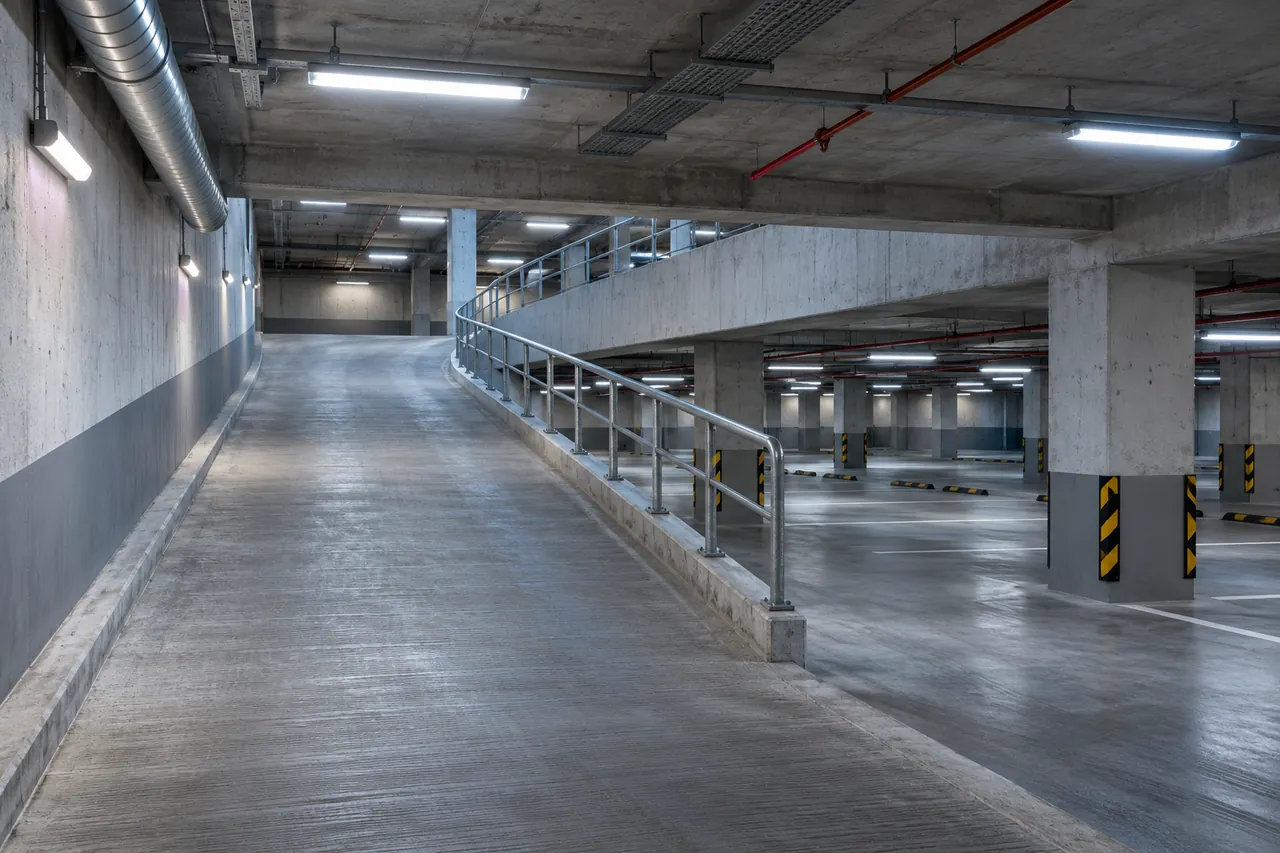
Physical separation and ventilation help define a garage coverage review.
Separate a ventilation decision from an alarm decision
Talep kontrollü havalandırma, egzozun hızını veya çalışmasını geçerli sınırlar dahilinde değiştirmek için gaz ölçümlerini kullanır. Sıralama aynı zamanda dolu bir program ve minimum hava akışı ayarını da kullanabilir. Her bir fan grubunu hangi kanalların ve bölgelerin etkilediğini ve tesisin gerekli çalışma durumunun altına düşmesini neyin önlediğini tanımlamalıdır. Bir havalandırma çıkışı, sıradan bir kontrol olayı sırasında, bu olay nedeniyle herhangi bir bina sakininin alarmı gerektirmeden aktif olabilir.
Dedektör arızası olayı farklıdır. Bu durum, bir kanalın arızalanması, iletişimin eski olması, güç kaybı veya başka bir durumun veriyi kullanılamaz veya geçersiz hale getirmesi nedeniyle meydana gelebilir. Sistemin bu durum için belgelenmiş bir duruma ihtiyacı vardır. Alıntılanan Kaliforniya alt bölümü uyarınca, tespit edilen sensör arızası, tasarım havalandırma oranları ve tesis operatörlerine alarm verilmesini gerektirir. Kural, kalibrasyon durumu ve dolu ve boş dönemler sırasındaki tutarlılık karşılaştırmaları da dahil olmak üzere arıza kontrollerini belirtir. Geçerli baskıdaki ayrıntılı koşulları okuyun. Eksik bir sensörden görüntülenen sıfır, bir arızanın yanıltıcı bir temsilidir.
İlgili kural veya tasarımın gerektirdiği durumlarda yolcu uyarısı, koruyucu bir tepkiye hizmet eder ve kendi kriterlerine, alıcılarına ve yetkili eylemlere ihtiyaç duyar. Bağımsız ekipman veya onaylı bir arayüz kullanabilir. Bildirim düzenlemesinden sorumlu yetkiliyi, etkilenen alanların nasıl tanımlandığını ve kurtarma yetkisini kimin verdiğini doğrulayın. Tesis sorun mesajı ve bina sakini tehlike sinyali aynı projeden iki ayrı çıktı olabilir. İsimleri, öncelikleri ve yanıt belgeleri bunu açıkça ortaya koymalıdır.
Mesleki maruz kalma değerlendirmesi başka bir karardır. OSHA'nın Tablosu Z-1 geçerli kapsamı dahilinde, CO dahil olmak üzere federal ABD işyeri hava kirletici hükümlerini verir. Zaman ağırlıklı maruz kalma ve mekanik havalandırma etkinleştirme noktası farklı şeyleri tanımlar. Sabit bir garaj monitörü, gazın o noktaya nerede ve ne zaman ulaştığı hakkında faydalı bilgiler sağlar. Bir işyeri değerlendirmesi, incelenmekte olan çalışanlara, görevlere ve maruziyet ölçüsüne uygun bir strateji gerektirir.
Operatörlerin yorumlayabileceği bir sıra tablosu kullanın
| Giriş veya durum | Kontrol sorusu | Kanıt veya bildirim sorusu |
|---|---|---|
| Geçerli gaz okuması yükselir | Hangi bölge ve gecikme için hangi fan kademesi veya hava akışı gerekli? | Hangi nokta, değer, birim ve geçerlilik günlüğe kaydedilir? |
| Konsantrasyon düzelir | Hangi serbest bırakma koşulu ve minimum hava akışı geçerlidir? | Kurtarmayı bypass veya sensör sıfırlamadan ayıran kayıtlar nelerdir? |
| Sensör arızalanır veya veriler eskir | Onaylanan sıra hangi geri dönüşü gerektirir? | Sorunu kim görüyor ve işaret onlara ne kadar çabuk ulaşıyor? |
| Fan komutu mevcut ve kanıt yok | Hangi ekipman arızası veya alternatif durum geçerlidir? | Operatör komutu ve gerçek kanıtı ayrı ayrı görüyor mu? |
| Ayrı acil durum modu etkin | Hangi onaylanmış fonksiyon önceliklidir? | Kararın sahibi hangi denetleyicidir ve neler günlüğe kaydedilir? |
| Yetkili servis modu etkin | Etkilenen bölgeyi hangi geçici kontroller koruyor? | Buna kim izin verdi, süresi ne zaman doluyor ve normal hizmete nasıl geri dönülüyor? |
Komut, ekipmana verilen bir talimattır. Bir kanıt, bir motorun çalıştığını veya izlenen başka bir koşulun elde edildiğini gösterebilir. Bir çalışma sinyali bile ölçülen hava akışından farklı bir kanıtsal anlama sahip olabilir. Kontrol çizimindeki ve kabul raporundaki ayrımları koruyun. Bir fan simgesinin renk değiştirmesi, bir grafiğin durum aldığını gösterebilir. Tek başına gerekli hava hareketini sağlamaz.
Kuralları gaz kapsamına çevirin
Bir dedektör, algılama elemanına veya girişine gelen gazı örnekler. Kaynağın konumu ve gaz hareketi o numunenin kullanışlılığını belirler. Yaygın tasarım soruları arasında araçların bariyerlerde nasıl sıraya girdiği, rampaların park seviyeleriyle buluştuğu yer, bir bölmenin mi yoksa zeminin bir bölgeyi izole edip etmediği ve besleme ve egzozun emisyon hareketini nasıl etkilediği yer alıyor. Fanlar sahnelendiğinde, kapılar açıldığında veya araçlar seviyenin belirli kısımlarını işgal ettiğinde koşullar değişebilir. Senaryoları ve varsayımlarını, kapsamı gözden geçirmek için kullanılan aynı çizimler üzerinde işaretleyin.
CO can be produced by incomplete combustion, and vehicle exhaust composition depends on fuel and operating state. NO₂ can be a separate concern and may be required as a separate channel. An electrochemical CO sensor is designed and calibrated for CO under specified conditions. An NO₂ sensor has its own response, range and interference behavior. Combining the channels in one enclosure does not make their readings interchangeable. The Honeywell GSTC transmitter page provides a manufacturer example of CO and NO₂ gas transmitter configurations. Check the exact product and supporting data rather than inferring coverage from a family name.
A design review should check the sensing location against the exact product’s instructions and the governing rule. A single height or radius copied from an unrelated installation does not describe coverage. Walls, vehicle movements, recesses and ventilation can affect transport. Equipment exposed to washing, condensation, temperature swings or physical impacts needs suitable protection and service access. A guard, splash cover or enclosure can also change diffusion or response if it was not approved for the assembly.
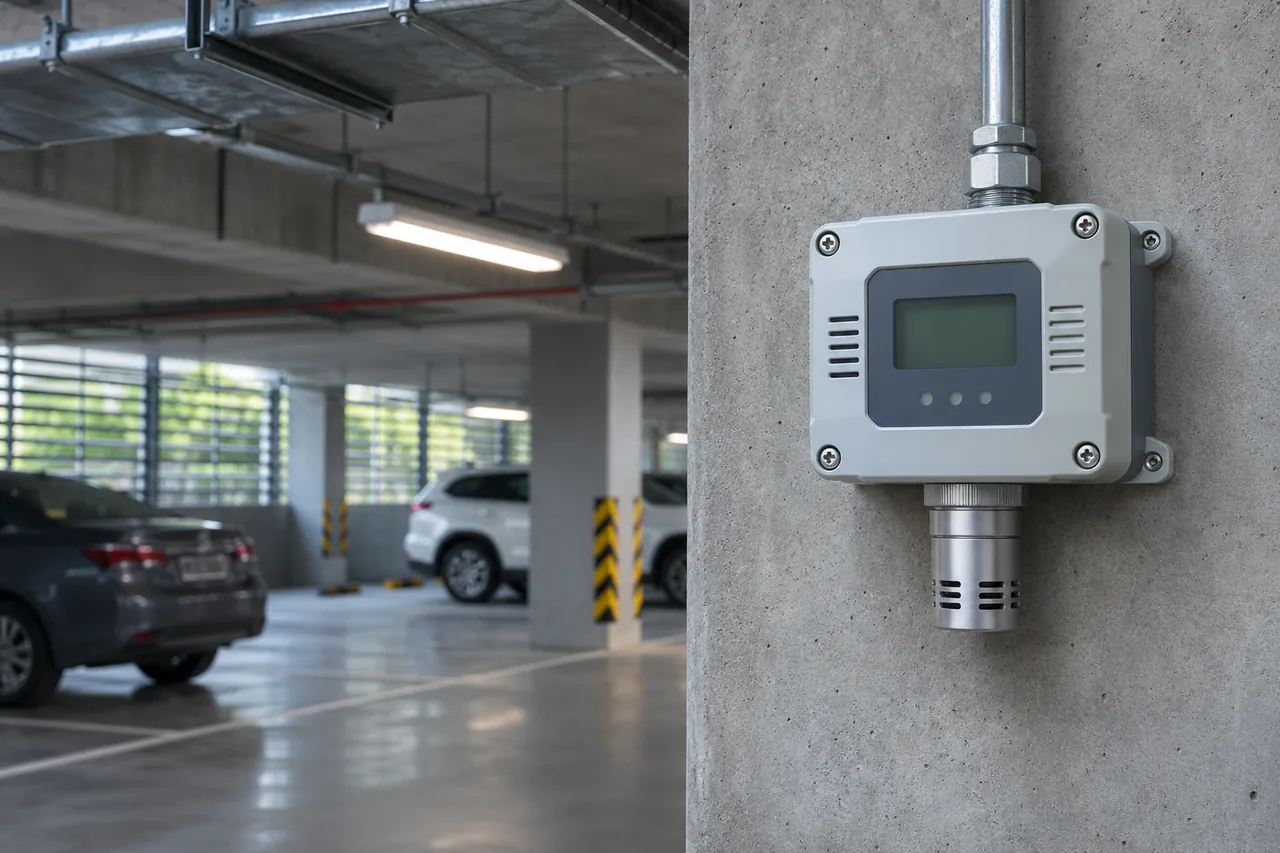
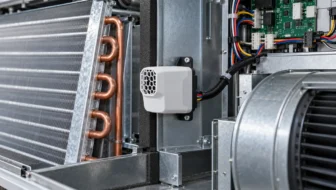
A fixed transmitter samples at its own location. The image does not define placement.
Hypothetical zoning under the cited California rule
Consider a qualifying project with two proximity zones isolated by floors or another impenetrable obstruction under the California definition. Suppose one zone is 11,000 square feet and the other is 4,000 square feet. Applying the area ratio to each zone for this design illustration gives three sensors for the larger zone because two would cover only 10,000 square feet at the stated ratio. The smaller zone’s area calculation gives one, but the two-per-zone minimum brings it to two. The example layout therefore starts with five CO sensors, before considering expected high concentrations, product instructions or other applicable provisions.
| Hypothetical zone | Area | Whole sensors from area ratio | Zone minimum | Starting count |
|---|---|---|---|---|
| Larger zone | 11,000 ft² | 3 | 2 | 3 |
| Smaller zone | 4,000 ft² | 1 | 2 | 2 |
| Combined | 15,000 ft² | 4 from separate zone calculations | 4 across two zones | 5 |
Counting sensors for the combined floor area alone would give three and would miss the separate zone review. The arithmetic does not choose coordinates or prove that the detectors see the worst expected conditions. The project team still needs the approved proximity zones and placement rationale. In a garage with different openings, connected levels or exhaust arrangements, the actual zones and review outcome may differ.
Identify where the controls use local or grouped values
A controls design should describe when it uses individual readings and when it uses any derived value, such as a comparison for sensor fault detection. If a requirement applies at all sensor points, a floor average can hide a locally elevated measurement. Conversely, comparison logic intended to diagnose anomalous sensors may legitimately compare values or rolling averages under its applicable rule and conditions. Label those calculations by purpose so a diagnostic comparison is never mistaken for the controlling concentration.
For each zone, draw the relationship from the detector and its local reading to the controller, fan group, fault path and operator display. Identify which controller handles data quality and which part of the sequence continues if the building network is unavailable. The project may use analog, relay or networked inputs. The design should state where unit conversion occurs, how signal failure is represented and which recorded values are authoritative for review.
Review detector performance around the decisions it supports
Request the exact model, gas channel and range. Evaluate error, resolution, response and environmental limits near the relevant decision levels. A detector that can display a small increment is not necessarily accurate to that increment. Calibration drift, long averaging, filters and sample-path delays can matter near a decision threshold even if the nominal range covers it. Evaluate those effects under the actual detector documentation and retain the model-specific evidence.
Listing claims must match the product and installation in the applicable project. A sensor component and a complete detector can have different approval boundaries. This Canadian gas detector certification overview explains why the scope of the exact listed product matters. The cited US garage requirements have their own applicable listing provisions. A vendor letter for one channel or model suffix may not cover the submitted configuration. Ask which assembly the listing covers, any permitted accessories or controller configurations, and whether field configuration changes the use covered by the documentation.
Where the cited California subsection applies, check the manufacturer’s certification of accuracy and drift, factory calibration and calibration interval characteristics alongside the specified system monitoring logic. Verify the exact conditions of the product evidence. A certification of annual drift does not tell the reviewer whether a particular device remained in calibration after maintenance or a local incident. The record needs the asset identity and actual service date.
A fixed instrument is also a maintained point. Review expected service life, supported replacements, access for check gas under the manufacturer procedure and how the BAS distinguishes calibration or service mode. Service activities can interrupt coverage or produce readings that should be flagged. Assign who handles maintenance, temporary impairment and subsequent release. Any maintenance frequency belongs to the applicable documentation and approved program.
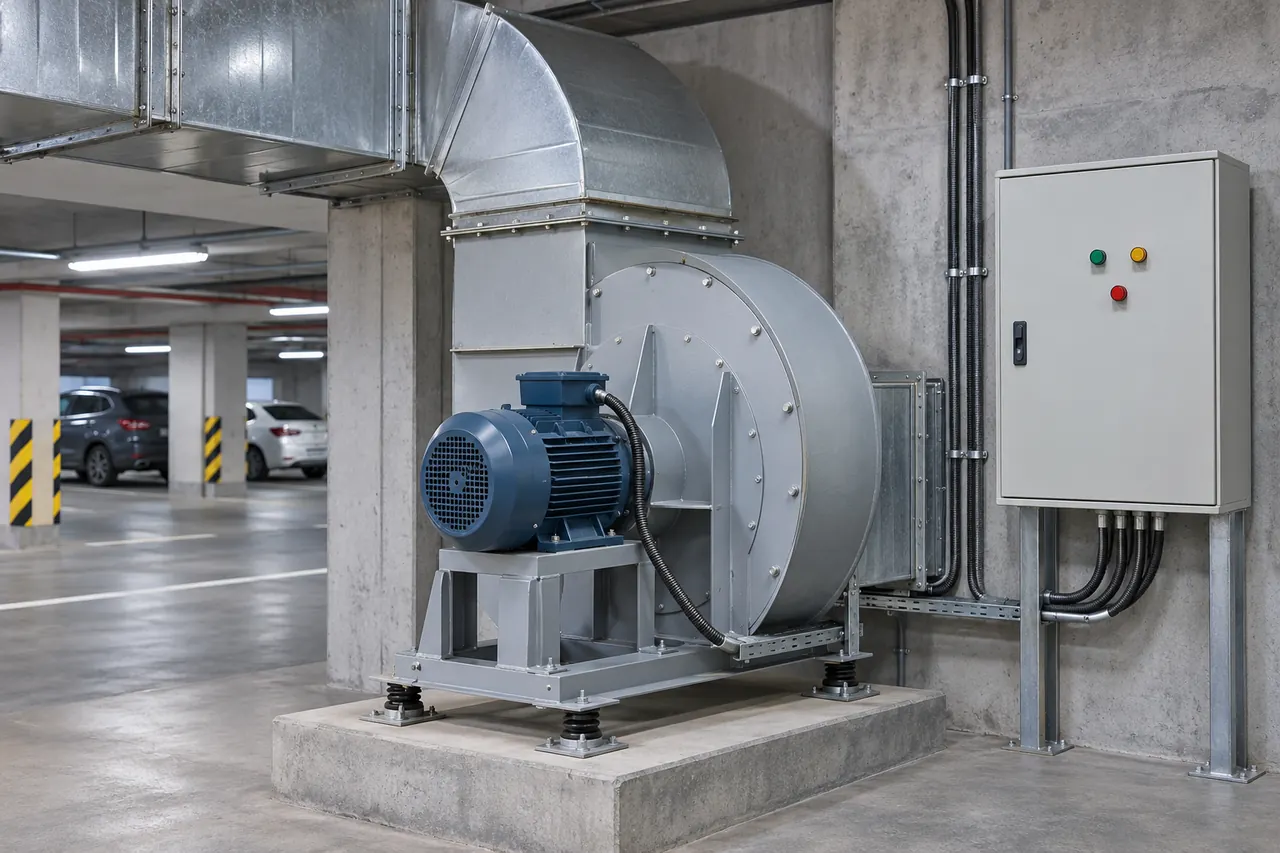
Ventilation control includes both the signal path and a physical response.
Review each evidence layer through to the physical response
The exact commissioning and acceptance requirements come from the authority, project and manufacturer documents. A practical record separates detector response, signal transfer, controller action and physical ventilation response. A test at the detector can show that the sensing channel responds under the stated conditions. A controller simulation can verify logic paths. Equipment feedback or measured airflow can verify a different boundary. Record which boundaries each approved test exercised.
| Evidence layer | What the record should identify |
|---|---|
| Detector response | Gas and channel identity, reference and procedure, result and validity |
| Signal path | Input or network object, engineering units, data status and receiving controller |
| Sequence | Conditions simulated or observed, affected fan group, timing and priority |
| Physical response | Fan or damper state, proof point and airflow evidence as required |
| Fault handling | Fault type, fallback response, operator notification and recovery |
| Closeout | Authority requirements, accepted record, deviations and service responsibilities |
A field test involving equipment actions belongs under the authorized project procedure. When a test uses a substitution or simulation, say so in the report. If physical fan response was outside the test scope, retain the separate record that establishes it. Verify the system after changes to device configuration, controller logic, garage partitions or fan equipment as required by the applicable project process.
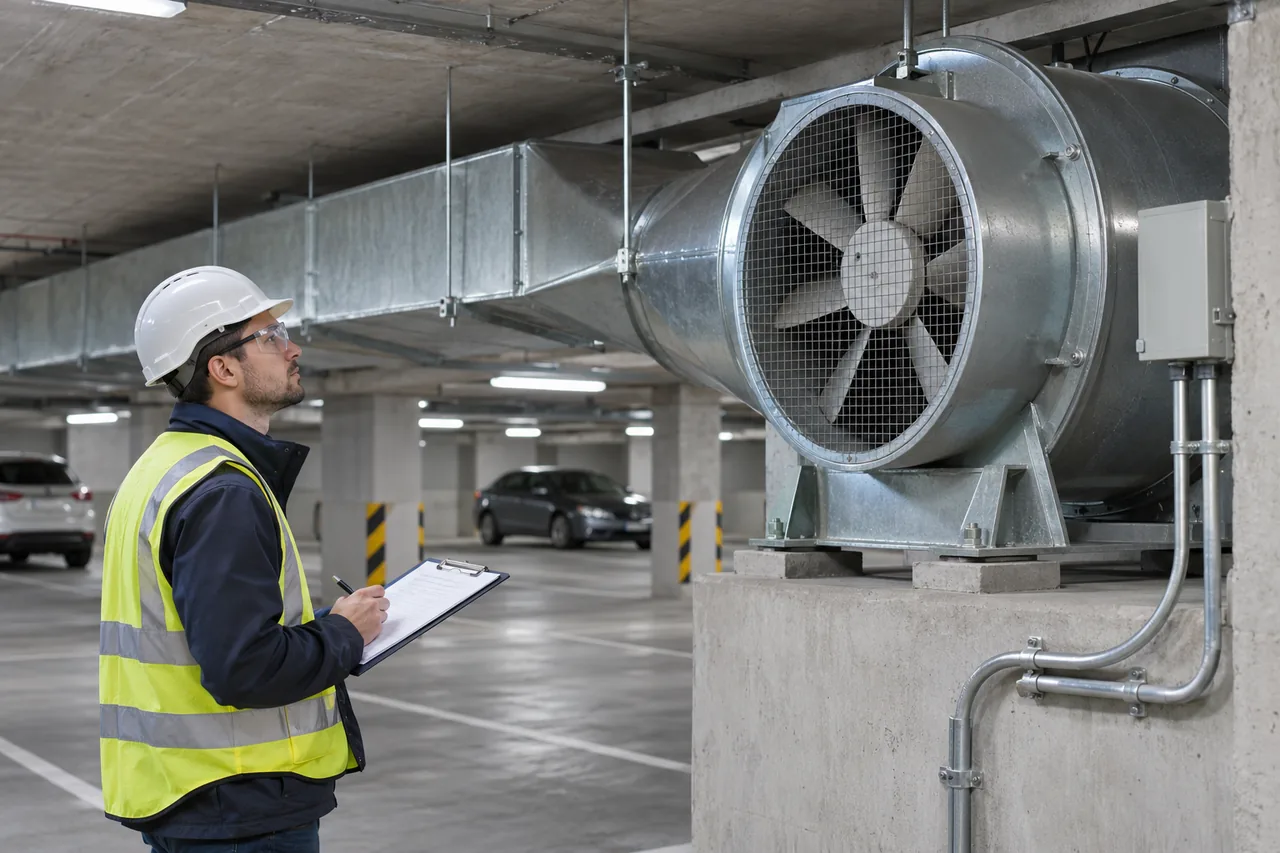
Acceptance evidence depends on the scoped installation and applicable procedure.
Hypothetical controls handover after a detector failure
A facilities operator sees a high garage airflow command and a detector fault at one parking level. The trend still shows the last valid CO number next to the fault. If the approved fallback is design airflow, the increase can be explained by a trouble condition even though the final valid sample was low. The event record should display stale status beside that sample and identify when the failure was detected. The operator can then follow the assigned trouble response and verify the ventilation state through the designated proof.
If a later event shows a valid increase in NO₂ in a garage governed by the cited Minnesota amendment, the ventilation actuation may be required even when CO is below its actuation level. A combined point list that only displays “garage gas alarm” can obscure which event drove the action. At handover, demonstrate the individual channels, their zone mapping and how the controls and notifications distinguish a genuine gas event from loss of valid data.
One additional check can prevent ambiguity after servicing. The record should link the replaced detector’s configuration and final checks to the physical tag, controls point and current drawing. A replacement can report the correct units on its own display while the receiving controller applies an obsolete range. Linking the device to the complete signal path makes that discrepancy reviewable. Preserve both the work performed and the final approved state.
Manage modes that change the garage after design
Drawings show a particular set of openings, barriers and fan systems. Operations can depart from those assumptions. A payment queue can move after entry hardware is replaced. A section can be fenced for construction, or the operator can dedicate one area to a different vehicle fleet. A temporary obstruction can change airflow through an opening that previously linked two regions. Evaluate whether changes affect the permitted design or coverage basis before treating the existing point count and zone map as current.
Capture changed use separately from detector service. A new sensor at the same tag can preserve coverage while changing configuration evidence. A new parking partition can change coverage with every detector still calibrated and reporting normally. A fan scheduling change can affect contaminant movement without any physical construction. The owner’s change process should identify which condition calls for design review, updates to the controlled drawings or renewed acceptance evidence.
For a site with mixed operating modes, record which schedules and ventilation priorities the analysis assumed. Consider a garage that is generally closed at night but opens for a late event. Occupied and unoccupied control logic can be different under the approved sequence, including the applicable sensor comparison logic. The facilities team needs a clear way to tell which mode was active during an event. A manually overridden schedule should appear as an authorized state with a start and end, not as an unexplained shift in fan behavior.
A historical trend is most useful when the log preserves individual readings, measured units, instrument health, ventilation mode, command and feedback. With those fields, an operator can tell the difference between an elevated value, a failed sensor that drove fallback and an independent fan fault. A review can also account for suppression or delay in the recording system. When records show only an average or an unnamed alarm, save whatever supporting event, service and equipment records remain available before drawing a conclusion about the cause.
Hand over a rule and a record together
Write the actual clause beside the associated design evidence. For a coverage requirement, retain the approved plan and the rationale for high-concentration locations. For a concentration control requirement, retain the signed sequence and the test evidence appropriate to that requirement. For a trouble response, retain the observed operator message and ventilation evidence. Make the handover usable when a detector is replaced or a facility operator changes. A schedule that explains both the design authority and where to find the current evidence is easier to maintain than a collection of isolated controller settings.
An archived acceptance record should also explain changes made during testing. For instance, a commissioning team might correct a zone assignment before repeating an approved test. Keep the original observation, the controlled revision and the successful retest together. An operator later reviewing the history should be able to identify which version of the sequence was accepted and which sensors drove each fan group. If the design relies on a required minimum airflow, record the state that was verified and how the evidence applies to the affected area. This makes the test useful after a maintenance or controls change.
Sık sorulan sorular
Is 25 ppm the alarm setpoint for every garage?
The two cited US examples give that number a specific ventilation or concentration-control role within their respective scopes. A warning for occupants, a facilities fault alarm and an exposure criterion each need their own applicable basis. Use the adopted requirements and approved sequence for the actual garage.
Do garages need nitrogen dioxide detection as well as CO?
Some governing provisions expressly require both, as Minnesota’s cited amendment does. Check the adopted local requirements and equipment instructions. A CO measurement cannot stand in for an NO₂ channel.
Can the number of detectors be determined by floor area alone?
Area can be one rule input. The cited California provision also has a zone minimum and an expected-concentration location requirement. Review physical separation, airflow, expected sources, instructions and the requirements that apply to the site.
Can a dashboard provide proof that the garage ventilation worked?
A dashboard may show the input and the commanded response. Determine which status points represent independent equipment feedback and what airflow evidence the acceptance requirements call for. The system’s documented test boundary tells the reviewer what was actually demonstrated.
Why do two sensors in the same level sometimes disagree?
Different locations can see different emissions or airflow. Instrument response, drift, interference and service state can also affect the comparison. Preserve location, time and status first, then evaluate the difference under the approved sequence and service procedure.




Cevap bırakın