
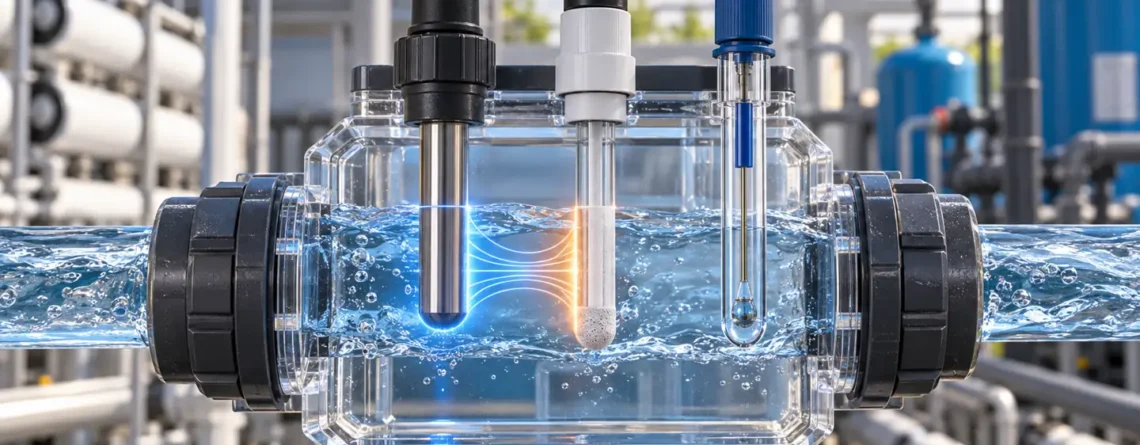
An ORP sensor measures the electrical potential between a redox-sensitive metal electrode and a reference electrode in a water sample. The result, in millivolts, describes a mixed response to electroactive substances under the measurement conditions. It is useful for following certain process changes, but it is not a universal water-quality score and it does not directly report a chlorine, ozone or oxygen concentration. To use ORP well, document the reference system, pH, temperature, sample point, dominant chemistry and the decision supported by the trend.
This guide explains what the sensor measures, where ORP can add value, why apparently similar waters can show different numbers, and how to check a field probe without treating a reference-solution result as proof that a complex process is in chemical equilibrium. It builds a practical interpretation framework from the older broad ORP draft, which mixed general claims with application-specific assumptions.
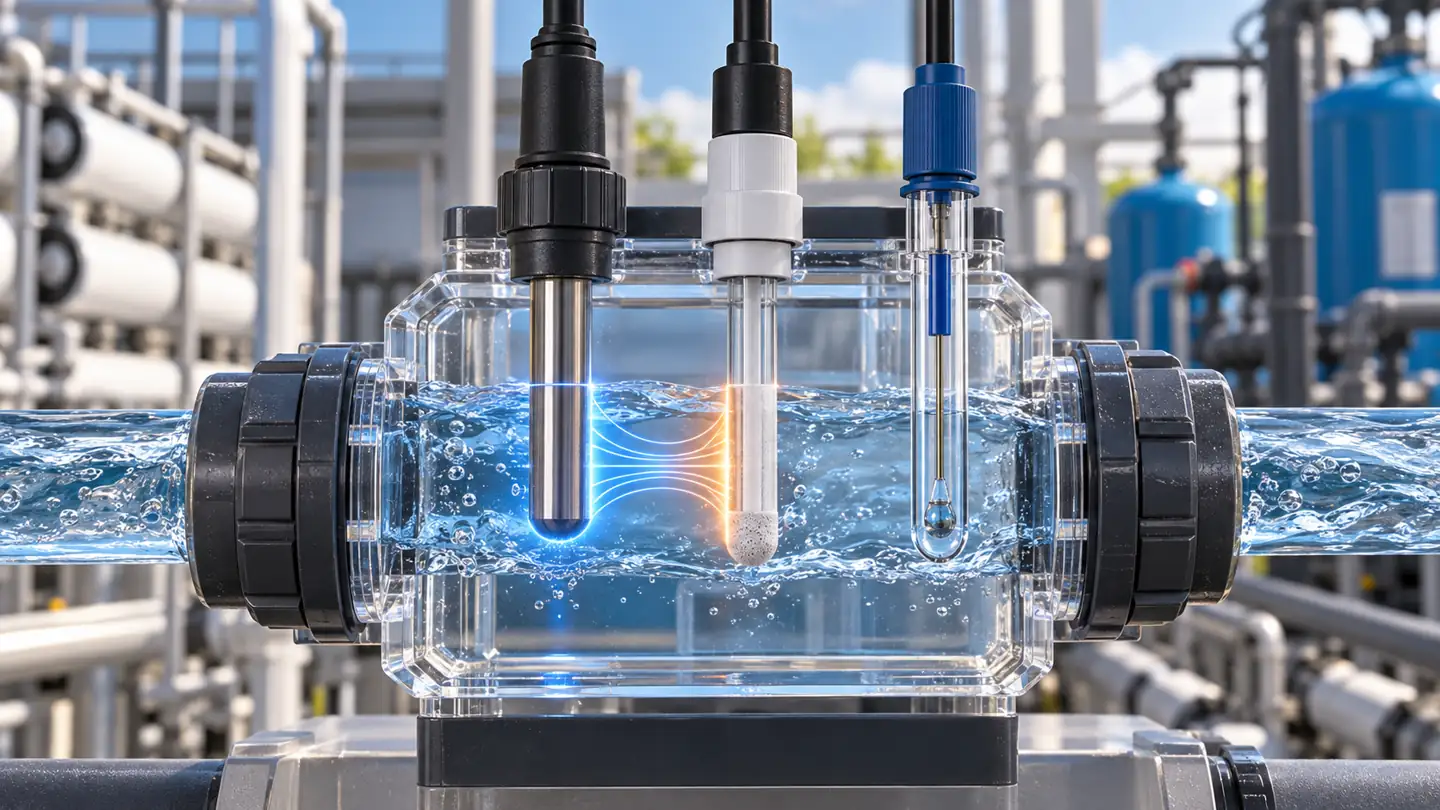
Start with a process question, not an mV target
“Measure ORP” is not a complete process objective. A stronger requirement is “detect a change in oxidizing condition across this treatment stage,” or “trend an established redox response in a specific wastewater stream while also measuring the chemical of interest.” The site must identify which substances are likely to dominate the electrode response. If the water contains many changing redox couples, a single potential may be difficult to relate to one operational cause.
Các USGS field manual on reduction–oxidation potential cautions that redox measurement is not a routine universal determination in natural waters. The measured potential may show useful qualitative trends, but it usually cannot be interpreted as a true equilibrium value. YSI's ORP technical note similarly warns against over-interpreting a number when no dominant electroactive species is known. That is an important limit for dashboards that color every high mV value “good” and every low value “bad.”
| Câu hỏi hữu ích | What ORP may add | What it cannot establish alone |
|---|---|---|
| Has the oxidizing condition changed in a known treatment step? | A continuous trend when the dominant chemistry is understood. | Which chemical changed or by how much. |
| Is a reducing environment developing in a process tank? | A signal for investigation alongside process and chemical data. | The concentration of every reduced species. |
| Is chlorine residual maintained? | A possible auxiliary trend after local validation. | A direct mg/L free-chlorine result. |
| Has an environmental sample changed? | A qualitative comparison with careful sampling and reference documentation. | A universal health or contamination rating. |
The electrode pair and its reference matter
The measuring surface is often platinum, an inert metal that exchanges electrons with electroactive species in the water. The reference electrode, often Ag/AgCl in practical probes, provides a stable comparison potential. The instrument reads the difference. Its displayed mV is therefore relative to that reference, unless the instrument explicitly converts to a different reference scale. The reference junction also has to remain in chemical contact with the sample; clogging, dehydration or contamination can change the apparent potential.
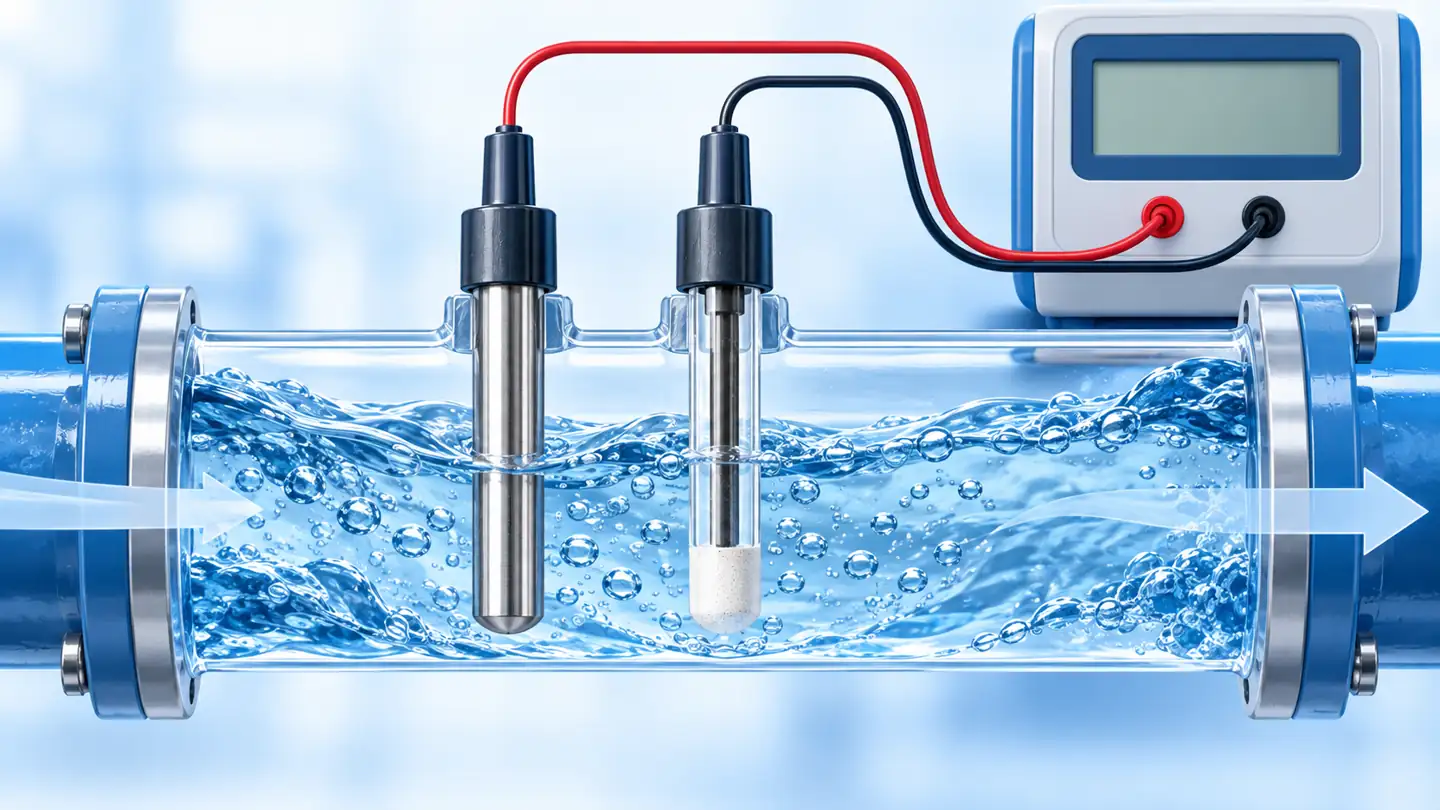
YSI explains that an Eh value is reported relative to the standard hydrogen electrode (SHE), whereas a field ORP value is often relative to a practical reference. Converting between them requires the actual reference chemistry and temperature, not a universal offset copied from a blog. Some instruments may display a converted value or apply an offset in calibration settings. Two readings that differ by a roughly constant amount may therefore reflect different reference bases rather than different water. Record the electrode type, reference solution, instrument setting and whether the number is reported as ORP or Eh.
The electrode assembly and transmitter are one measurement chain. The transmitter's high-input-impedance circuit, cable condition, moisture ingress and grounding can influence an unstable reading. A combination probe may share a reference electrode with a pH sensor. If pH and ORP both misbehave at the same time, the shared reference is a plausible point to inspect; it is not a diagnosis without checking the model and process. YSI's practical ORP guide discusses this shared-reference issue.
Why an ORP value is not a concentration
An electrode potential responds to redox activity, not by counting molecules of one named analyte. In a mixture, multiple oxidants and reductants can influence the surface. Their proportions, reaction rates and how readily each couple exchanges electrons with the metal determine the observed potential. Some substances present in a sample may not equilibrate quickly with the electrode. A clean theoretical relationship derived for one redox couple should not be fitted to a mixed field sample without validating the chemistry.
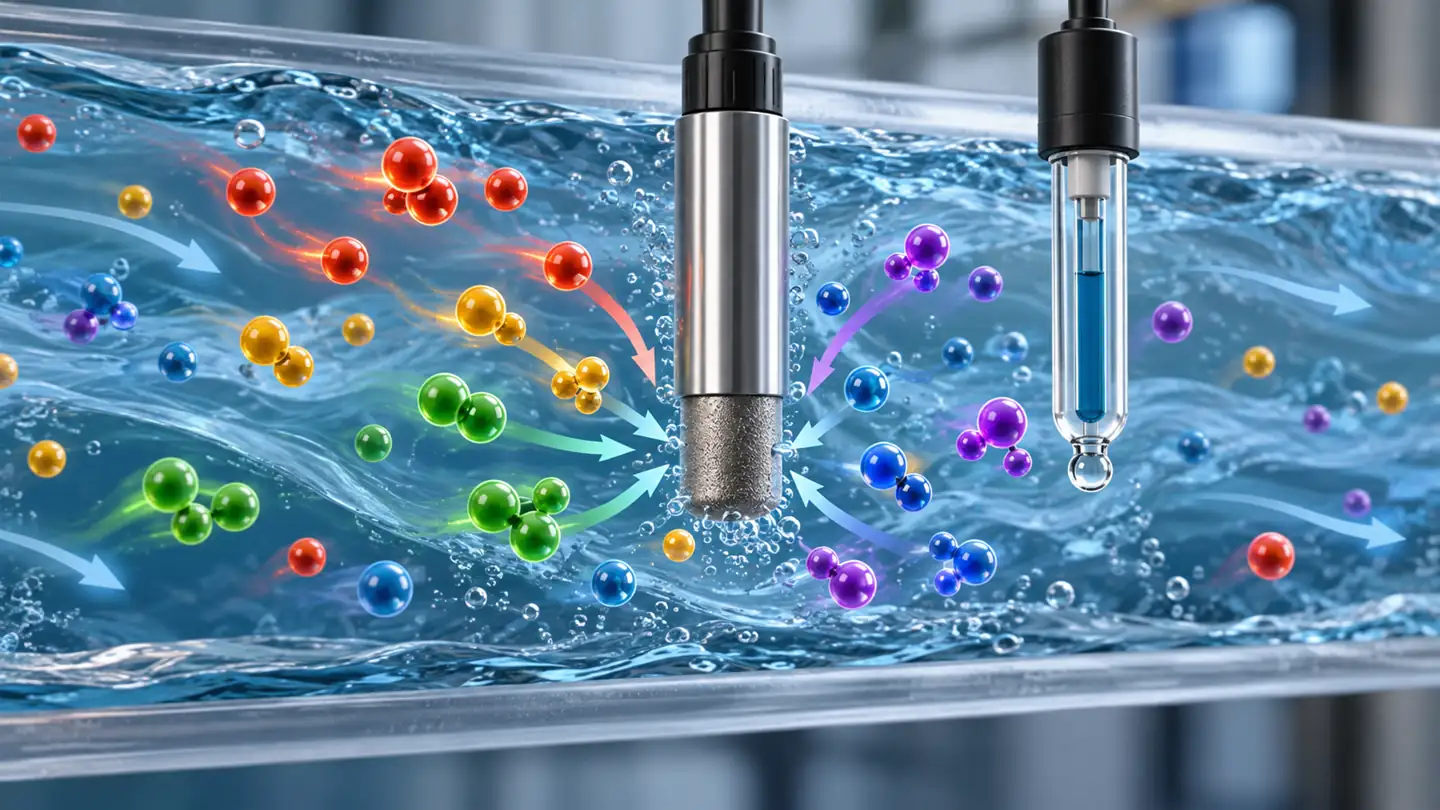
This is why “650 mV means safe water” is not a universal statement. The same potential can occur in different waters with different disinfectant concentration, pH and competing species. Conversely, a change in mV may come from a change in pH or the composition of the mixture even if one dosing pump has not changed. Use a direct analyte method when an operating or legal requirement names a concentration. For free chlorine in water, our online free-chlorine sensor guide compares amperometric and DPD methods; link it only after that article is public.
ORP also differs from dissolved oxygen concentration. Oxygen can be a redox participant, but a platinum ORP electrode is not a calibrated dissolved-oxygen probe. Conductivity is another distinct measurement: it responds to ionic conductance, not oxidizing strength. If all three values move, analyze the process mechanism rather than assume one is a substitute for another.
pH can alter what the redox potential means
Many redox reactions involve hydrogen ions. As pH changes, the equilibrium potential of such a reaction changes even if an operator has not deliberately changed the oxidant feed. In chlorinated water, pH also changes the balance between HOCl and OCl⁻. The relationship between measured ORP and free-chlorine residual can therefore shift. An ORP trend used for a disinfectant-control decision should be assessed alongside pH and a direct chlorine measurement over the plant's expected operating range.
The right analysis is not to apply one generic mV-per-pH correction to every process. First identify the relevant chemistry and whether the electrode is responding to it in the field. If the pH changes from cleaning, chemical dosing or a new source water, the ORP trend may represent a real shift in redox environment, a changed species distribution, or both. Record the parallel pH measurement and sample temperature so the process team can interpret the event later.
Temperature matters too. It affects reference potential, reaction kinetics and the solution chemistry. A calibration-check solution has a temperature-dependent expected value, and a process stream may change temperature across a treatment step. YSI's technical note explicitly discusses temperature when comparing ORP and Eh. A temperature-compensated display does not make all redox reactions temperature-independent.
Sample location and response time
An ORP probe reads the water touching its surface. In a mixed tank, location near a dosing jet can show a different potential from the well-mixed bulk. In a bypass, long tubing can delay the sample and allow oxygen exchange or chemical reactions before it reaches the cell. A stagnant pocket can produce a stable but irrelevant reading. Air bubbles may intermittently expose a surface and make a trend noisy. Choose the measurement point from the process question, then document the actual sample path.
For field water samples, minimize unintended exposure and changes during transfer according to the applicable sampling method. The USGS ORP field guidance emphasizes careful measurement and explains why an electrode result may not represent equilibrium in natural water. That caution should influence whether to publish an isolated grab-sample mV number without accompanying method information.
Response can be slow when the electrode surface is fouled, the reference junction is restricted, or the redox couple exchanges electrons slowly. A displayed value that has not stabilized should not be interpreted like a steady process result. Define a stabilization or trend criterion from the instrument method and application. Avoid forcing a universal “wait one minute” rule onto every sensor and water chemistry.
Check the probe with a reference solution
A known ORP check solution tests the electrode and meter under defined conditions. It is not a direct calibration of every redox species in process water. The expected mV depends on the reference electrode and solution temperature, so compare with the value stated for the exact check solution and instrument. Record what the display showed before making any offset adjustment. If the check fails, inspect electrode cleanliness, storage condition, reference junction and cable before deciding the process itself is at fault.
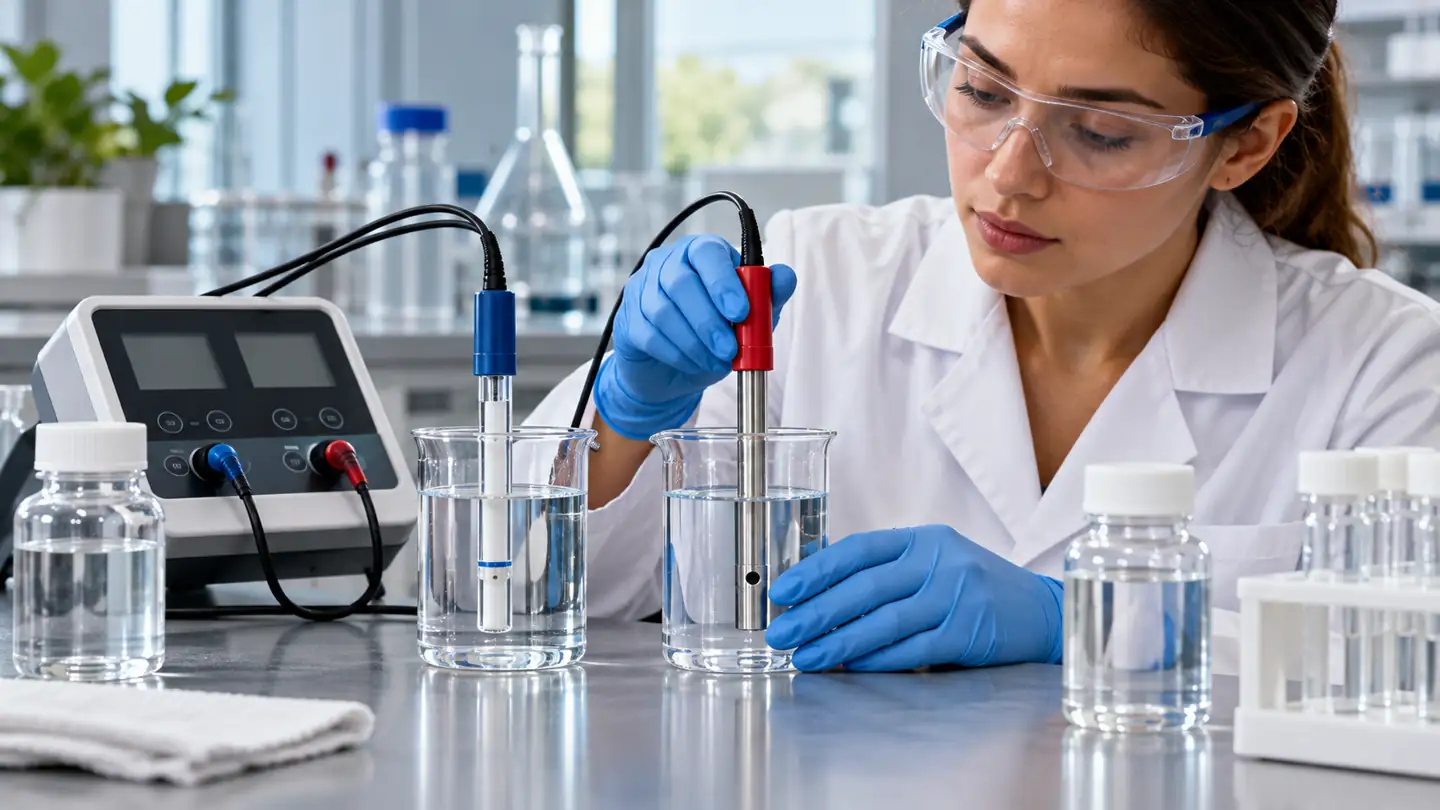
Manufacturer language about “calibration” differs. Some ORP systems permit a one-point offset after checking a standard; others recommend only checking and cleaning or replacing the electrode. The Hanna maintenance guidance says its ORP electrodes generally need a reference-solution response check rather than a pH-style calibration. An Emerson pH/ORP sensor guide gives model-specific check and service procedures. Follow the chosen model's instructions instead of generalizing one vendor's allowance.
Do not confuse a successful check with a validation of the process interpretation. A probe can read a standard correctly while an mV threshold chosen from a different water remains inappropriate. Validation requires simultaneous process chemistry, pH, temperature and direct target-analyte measurements over the range in which decisions will be made. Keep that relationship under review if source water, treatment chemicals or hydraulics change.
Diagnosing an unexpected high, low or drifting ORP
First decide whether the process could really have changed: dosing, flow, aeration, reducing load, tank mixing or a new source water. Look at other measurements and the sampling point. Do not edit the ORP offset to make the trend “look right” before checking the water. If there is a safety or process consequence, follow the site's response procedure while investigating.
Next compare the field probe with a suitable reference solution under controlled conditions, preserving the as-found value. A slow, noisy or impossible reading can come from electrode coating, reference-junction problems, a dry probe, damaged cable, electrical noise or poor sample flow. If pH and ORP share a reference and both change abnormally, the common reference deserves inspection. If only the process reading is odd while the check solution is acceptable, investigate sample chemistry and placement rather than assuming the probe is perfect or the process is wrong.
Cleaning methods depend on the sensor and foulant. Oil, scale and biological films need different treatments, and aggressive cleaning can damage the electrode or reference. Use the model's procedure; rinse and allow stabilization before judging the result. If the electrode requires conditioning or storage solution, preserve that requirement during shutdowns. A record of cleaning, check-solution response and process conditions makes a subsequent trend interpretable.
When ORP belongs in a control strategy
ORP can be valuable as a fast continuous trend when the dominant reaction is understood and the relationship to the controlled outcome is demonstrated locally. The site should establish the response over normal and upset conditions, not select an mV number because another plant used it. If pH or source water changes, revisit the relationship. A control strategy may use ORP to trigger investigation or supplement a direct residual analyzer, with independent checks for the required chemical concentration.
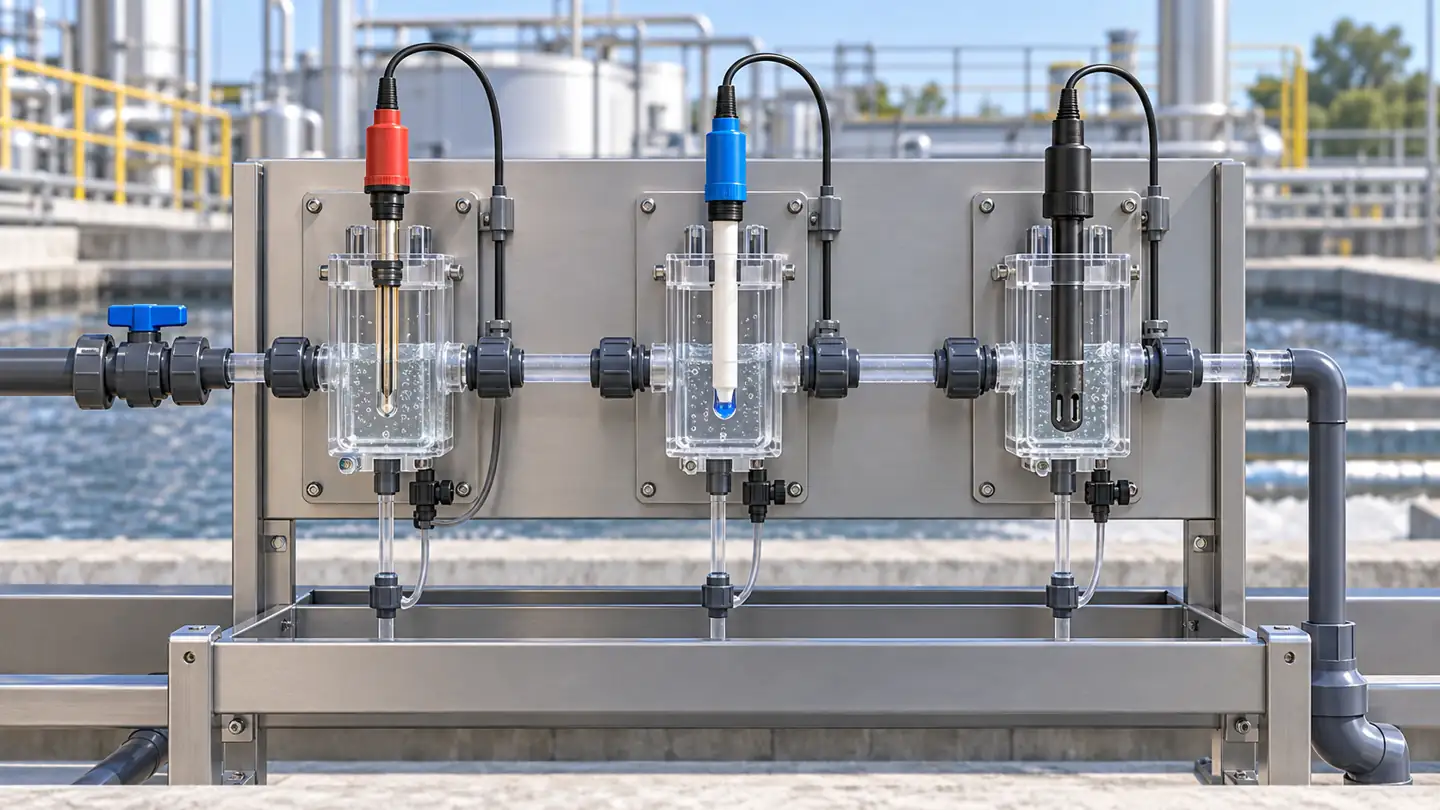
If a legal or process limit is stated in mg/L of a particular substance, an ORP electrode cannot automatically be its compliance method. The direct measurement method and reporting rules must be chosen separately. Likewise, do not apply a generic ORP threshold to natural waters where many redox species may be out of equilibrium with the electrode. The USGS and YSI guidance both support this narrower interpretation.
An accepted ORP control design should document its sample location, reference system, pH and temperature range, dominant chemistry, independent comparison method, alarm or control action, fault behavior and revalidation triggers. Treat the installed probe, transmitter and process relationship as a system. A sensor datasheet can support hardware selection but cannot establish a universally valid process threshold.
A compact specification worksheet
Application example: an oxidizing treatment step
Imagine a process stream in which an oxidant is normally dosed into a contact tank. An ORP probe downstream might show when the overall oxidizing condition rises or falls, but the number cannot by itself tell whether the cause was oxidant dose, water pH, reduced chemical load, mixing or probe fouling. A useful design therefore places the probe at a point representative of the treated stream and records the dose, pH, flow and a direct oxidant measurement during commissioning. The relationship is tested over the expected operating envelope. If a later ORP shift occurs, operators can compare those channels rather than treating mV as an automatic concentration calculation.
In an application where the desired result is a free-chlorine residual, the direct chlorine analyzer remains the channel that reports that concentration. ORP may offer an additional fast trend or a diagnostic clue, subject to site validation. A change of disinfectant chemistry or a move to chloramination can invalidate an old correlation even if the ORP hardware is unchanged. The acceptance record should name the chemistry for which any decision level was established.
Application example: a reducing environment
In a wastewater or process tank, a lower ORP can be consistent with more reducing conditions. It does not identify whether sulfide, dissolved metals, organic loading, oxygen depletion or another change dominates. Samples from different depths can also differ because mixing and aeration are not uniform. If ORP is used to control a process stage, choose a representative measurement point and compare the mV trend with process indicators that identify the relevant mechanism. A laboratory analysis may be necessary when the chemical identity matters.
In natural water, the difficulty can be greater. Multiple redox couples may not be at equilibrium with one another or with the platinum electrode. The USGS field manual expressly limits how far such electrode results can be interpreted. For environmental reporting, include location, sample handling, reference scale, pH, temperature and stabilization information. An isolated number without those conditions can invite a false comparison with another watershed or season.
When two instruments need to be compared
Comparing ORP probes requires more than putting both readouts side by side. Confirm that each uses the same reference basis or calculate a documented conversion for its actual reference chemistry and temperature. Check whether either transmitter has a stored offset. Then place both sensors in the same appropriate reference solution and allow the specified stabilization. If they agree there but differ in the process, compare their locations, local flow, electrode surface condition and response time. A difference that follows one probe after swapping locations points to a sensor or configuration issue; a difference that remains with the location points to water or installation.
Do not force two probes to match by editing offsets in the process. A mixed-potential measurement may legitimately differ between points only a short distance apart when a reagent has not mixed or a tank is stratified. A good comparison plan preserves as-found readings and uses an independent check solution. If the measurement controls equipment, document how the process is protected while either channel is being serviced and how the output is restored. A plausible mV display does not show whether the controller received a live signal.
What uncertainty means for ORP
A manufacturer may specify meter resolution or probe response in a standard solution. That number is not the full uncertainty of an ORP interpretation in a complex water sample. Reference electrode condition, junction potential, temperature, electrode contamination, slow kinetics, sampling and changing chemistry can all contribute. The decision threshold should be wider than the variation caused by those factors or be supported by independent measurements. If a proposed control point is only a few millivolts away from normal noise, the team should first improve the measurement and process understanding rather than tune the controller more aggressively.
Trend shape can also be more useful than a single absolute value. A sustained shift under stable pH and flow may warrant investigation even if the numerical mV threshold has not been crossed. Conversely, a sharp change coincident with probe cleaning or reference replacement may be an instrument discontinuity. Record maintenance events on the trend. This makes ORP a more honest diagnostic signal and prevents unreviewed threshold changes from hiding sensor deterioration.
A field record that can be interpreted later
At minimum, save the sample-point tag, electrode and reference type, raw mV or Eh basis, temperature, pH, flow condition, check-solution identity and expected value, as-found check, any offset change and as-left check. Add the relevant direct chemical result when ORP is being associated with a named substance. Note whether the water was flowing at the usual rate and whether the sensor had stabilized. These details are manageable to capture during routine checks and are often more valuable than adding another decimal place to the display.
For a new installation, establish a baseline across ordinary and unusual but safe operating conditions before using ORP for automatic control. Review the relationship after a major change in source water, reagent, tank hydraulics or sample location. If the site cannot show a repeatable connection between the potential and the desired process outcome, keep ORP as an exploratory trend and use a direct measurement for the decision. That is a meaningful use of the sensor, not a failure of it.
- Mục đích: what decision will change when ORP changes, and which electroactive species are expected to dominate?
- Sample: exact location, flow, temperature, pH range, likely oxidants and reductants, solids and cleaning chemicals.
- Probe: measuring metal, reference electrode chemistry, junction design, wetted materials, temperature sensing and transmitter compatibility.
- Reporting: raw ORP versus a stated reference or converted Eh; units and any offset stored in the transmitter.
- Installation: immersion or flow-through, access, sample delay, air exposure and fouling control.
- Check method: reference solution, expected value at the relevant temperature, acceptance criterion and as-found record.
- Validation: direct analyte measurements, pH and process cases used to justify any mV decision level.
This worksheet is more useful than an isolated “ORP range” line on a quote. It lets the process team separate the electrode's ability to measure a potential from the site's ability to interpret that potential.
A data historian should preserve the reference scale and maintenance events with the mV trend. If a transmitter is replaced, the new instrument may default to a different reference conversion or offset. A step change in the graph could then be a configuration event, not a sudden change in the water. The handover should record the old and new settings, the check-solution readings and any period when the control output was held. When comparing different sites, include their electrode references and water chemistry before drawing conclusions from their absolute numbers. This matters when one system reports raw ORP and the other reports an Eh conversion.
If a process engineer proposes a numerical control threshold, ask what direct outcome was used to validate it, across which pH and temperature range, and what happens when the sensor fails. The answer may justify a trend band for that plant. It cannot be transferred automatically to another water source or reagent. This lets ORP contribute continuous information without turning a mixed-potential sensor into a false concentration meter.
Câu hỏi thường gặp
Is a higher ORP always cleaner or safer water?
No. ORP is a mixed electrochemical potential. It depends on the water chemistry, pH, reference and measurement conditions. A high value is not a universal quality score or proof of pathogen control.
Can ORP be converted to free chlorine in mg/L?
There is no universal conversion. A site-specific empirical relationship may be useful over a controlled range, but it can change with pH, temperature and other redox-active substances. Use a direct chlorine method when a residual concentration is required.
Are ORP and Eh the same number?
They are related potential quantities, but Eh is referenced to the standard hydrogen electrode. Field ORP often uses Ag/AgCl or another practical reference. Compare only after identifying the reference, temperature and any instrument conversion.
Does an ORP probe need a two-point calibration like a pH probe?
Generally not in the same way. Many manufacturers use a check solution and, where allowed, a one-point offset or service procedure. Follow the named model's instructions and preserve the as-found check.
Why do two ORP sensors disagree in the same process?
They may use different reference systems or settings, have different junction condition, be placed in different water, or be at different stabilization stages. Compare their configuration and response in the same reference solution before diagnosing the process.
Primary references
- USGS, Reduction–Oxidation Potential: Electrode Method — limits and interpretation of redox measurements in water.
- YSI, Measuring ORP: Tips, Cautions and Limitations — reference electrode, Eh relationship and mixed-potential cautions.
- YSI, ORP Measurement Tips — practical field interpretation and shared reference.
- Hanna Instruments, ORP Maintenance — manufacturer-specific check rather than pH-style calibration.
- Emerson, Rosemount pH/ORP Sensors Guide — model-specific reference and service guidance.









Để lại một câu trả lời