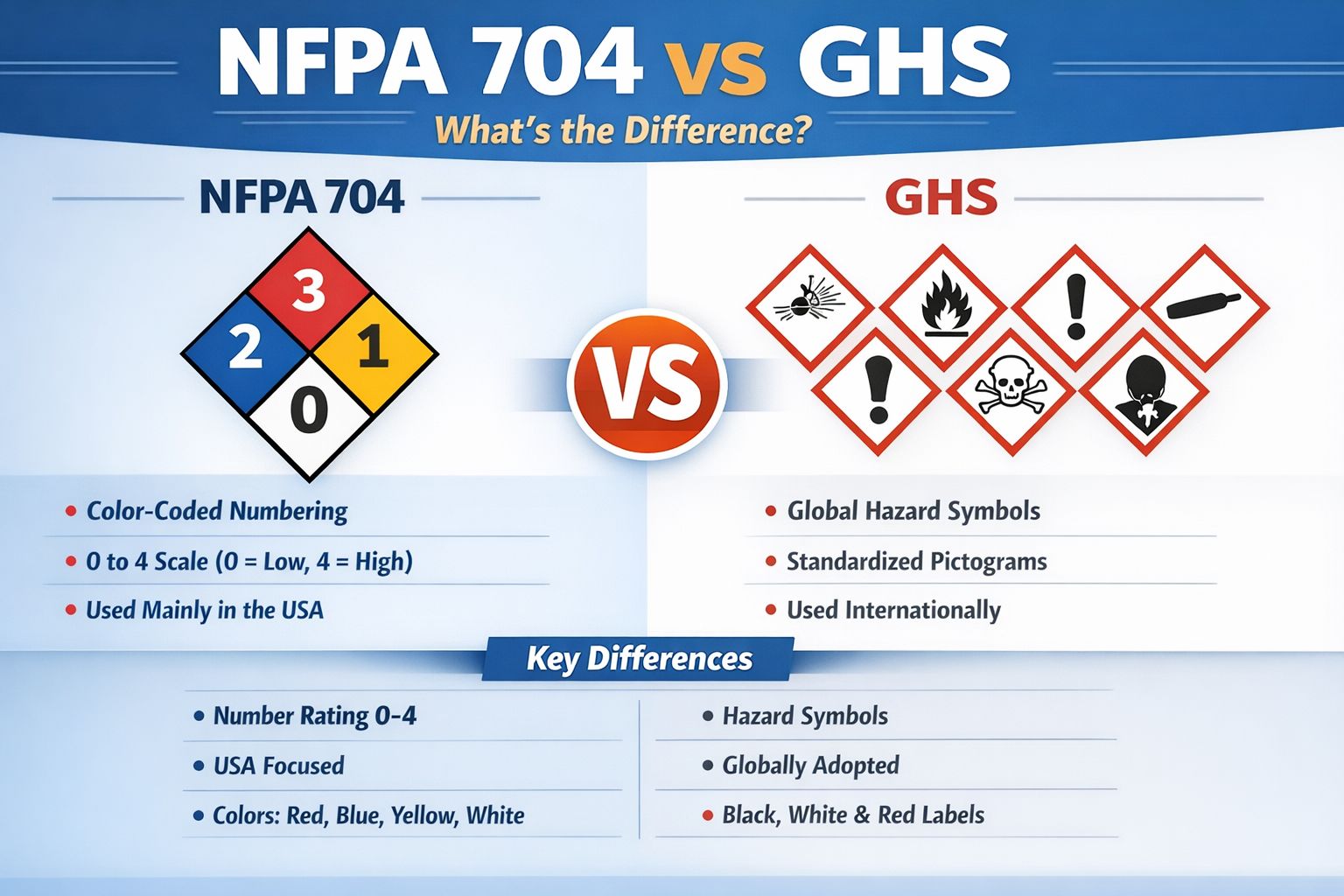
NFPA 704 是 美國消防協會緊急應變材料危害辨識標準體系。它使用熟悉的 危險鑽石 或者 火鑽 為消防員、危險物品處理小組和其他緊急應變人員提供材料健康狀況、易燃性、不穩定性和特殊危險性的快速直觀總結。兩個都 美國消防協會and OSHA describe it as a simple, readily recognized, easily understood marking system intended to communicate hazard severity for emergency response.Many people know NFPA 704 by its shape rather than its formal name. The system is built around a菱形「方形點」標語牌 分為四個較小的部分。這種視覺佈局是它在儲存、處理或加工危險化學品的設施中廣泛使用的原因之一。 NFPA 解釋說,該符號旨在緊急情況下提供對危險嚴重程度的直接一般認識,而不是冗長的技術解釋。
為什麼 NFPA 704 很重要
NFPA 704 很重要,因為緊急應變人員通常需要在幾秒鐘內做出決定。在火災、溢出、洩漏或其他事件期間,應變人員在選擇滅火方法、隔離距離或防護措施之前可能沒有時間查看完整的安全資料表。 NFPA 危險鑽石有助於一目了然地傳達關鍵風險。 NFPA 自己的描述強調該系統旨在識別材料的危害以及 嚴重程度of those hazards for emergency response.This emergency-response focus also explains why NFPA 704 is different from many workplace labeling systems. OSHA’s Hazard Communication framework is aligned with GHS and is designed to provide standardized label elements and SDS information for workers, while NFPA 704 is built around rapid hazard recognition in emergency conditions.
如何解讀 NFPA 704 鑽石級
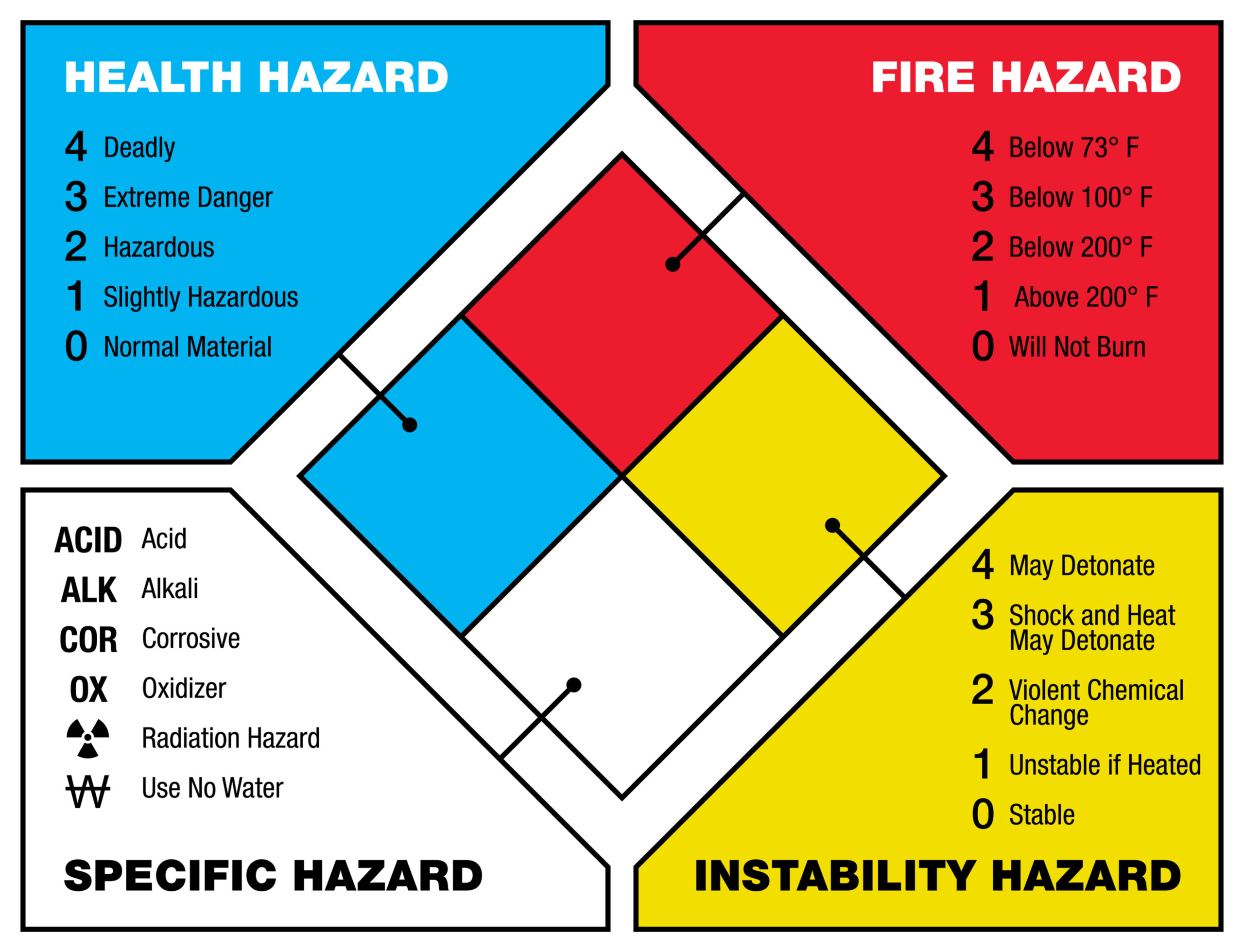
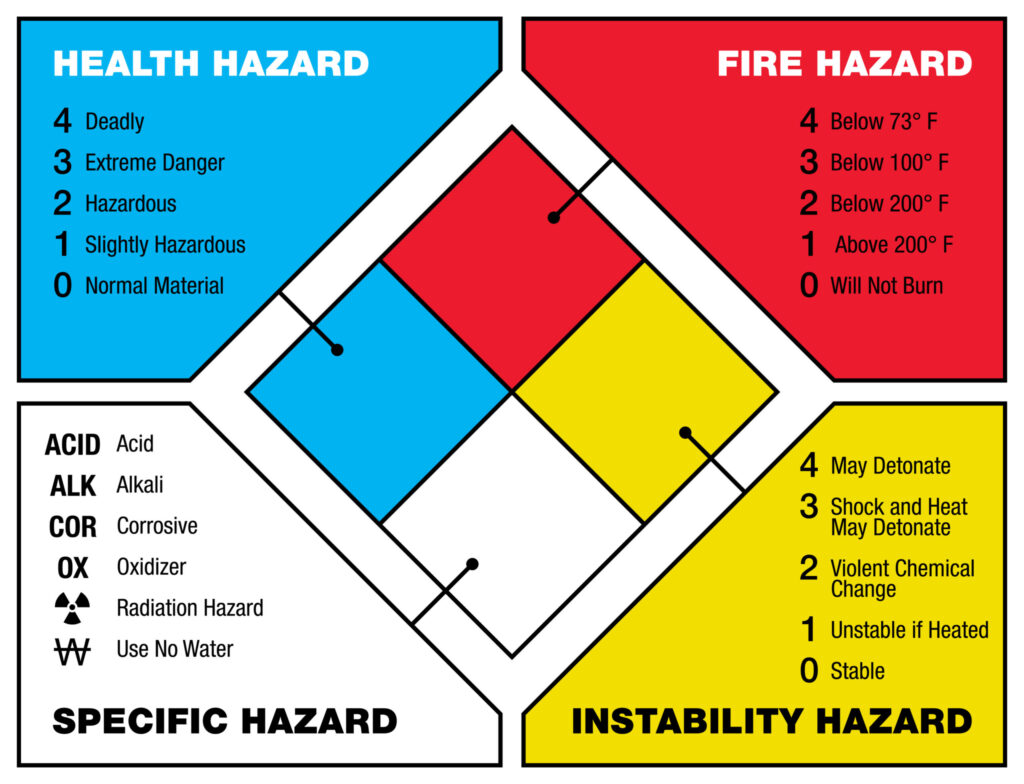
NFPA 704 標示牌有四個顏色編碼區域:
顏色
位置
意義
藍色的
左邊
健康危害
紅色的
頂部
可燃性危險
黃色的
正確的
不穩定/反應危險
白色的
底部
特殊危險
NFPA and OSHA both describe the color positions this way, and NFPA notes that the white section is used for special hazards when applicable.The three main numeric sections use a0 至 4 級, 在哪裡 0 表示危險最小 和 4表示嚴重危險。 NFPA 的公開解釋一致地用這些術語描述了數位規模。
這 白色象限 保留用於 特殊危險。 NFPA 的公共指南指出,本節常見的特殊危險包括 瓦, 牛, 和 在。 NFPA 解釋說 瓦 表示與水發生異常反應, 牛 表示氧化劑,並且 在indicates a simple asphyxiant gas. NFPA committee materials also note that OX and W are the required NFPA 704 special symbols, while SA is an optional symbol used inside the white quadrant.This part of the diamond is especially important because it alerts responders to hazards that may affect firefighting strategy. For example, a瓦 標記警告水可能會使事件惡化而不是幫助控制事件。
NFPA 704 與 GHS 不同
對讀者來說最重要的一點是 NFPA 704 和 GHS 標籤不可互換。 OSHA 的危險溝通標準與 全球統一制度 (GHS)and requires shipped-container labels to include elements such as signal words, pictograms, hazard statements, and precautionary statements. OSHA’s NFPA comparison materials make clear that NFPA 704 serves a different purpose and uses a different logic.A major source of confusion is the use of numbers. OSHA specifically warns users請勿將 SDS 第 2 部分的 GHS 危險類別編號複製到 NFPA 704 標籤上. The numbering systems are different and are designed for different labeling purposes.Another important difference is hazard scope. OSHA’s NFPA/GHS comparison states that NFPA 704 focuses on急性、短期健康危害 與緊急應變相關的訊息,而 NFPA 704 標籤未涵蓋慢性健康影響,而基於 GHS 的工作場所溝通可以涵蓋這些影響。
NFPA 704 的常見用途
NFPA 704 is commonly used wherever responders need quick hazard recognition for chemicals stored or handled on-site. High-ranking guidance pages and institutional safety references repeatedly show the system being used for chemical storage areas, facility hazard identification, and emergency planning contexts where responders need immediate awareness of health, flammability, instability, and special hazards.In practice, that means NFPA 704 often appears in industrial plants, laboratories, chemical storage rooms, utility areas, warehouses, and other facilities that maintain hazardous materials inventories. The exact posting rules can depend on local fire code, facility type, and jurisdictional adoption.
使用 NFPA 704 時的常見錯誤
A common mistake is assuming NFPA 704 is a complete replacement for OSHA HazCom or GHS labeling. It is not. OSHA makes clear that workplace hazard communication requires labels, SDSs, and training, while NFPA 704 is a fast-response marking system.Another mistake is treating the NFPA number as a general-purpose consumer safety score. NFPA 704 is not designed to summarize every possible hazard detail for routine daily handling. It is specifically intended to help emergency responders understand the相對嚴重程度of hazards during an incident.A third mistake is copying SDS Section 2 category numbers directly into the diamond. OSHA’s comparison guidance explicitly warns against this because GHS category numbers and NFPA 704 ratings are not equivalent.
如何確定正確的 NFPA 704 評級
The correct NFPA 704 rating should be based on appropriate hazard data rather than guesswork. OSHA comparison guidance points users toward the NFPA rating system and information available in the SDS, and institutional safety guidance typically maps relevant SDS sections to health, flammability, instability, and special hazard determination.For SEO readers looking for a practical takeaway, the safest rule is this:使用 SDS 和 NFPA 方法,而不是單獨使用非正式的網路圖表。這對於緊急情況可能與普通處理條件不同的混合物、製程化學品和特定地點的材料尤其重要。