
A soil device labeled “NPK sensor” does not necessarily measure nitrogen, phosphorus and potassium separately. Some systems use ion-selective measurements or chemical extraction; others estimate nutrient values from indirect electrical or optical signals and a calibration model. To judge a device, ask which chemical form it measures, how it samples the soil, what its reported units mean and how its results were validated against a suitable laboratory method。
Soil electrical conductivity (EC) can indicate changes in the ability of soil and soil water to conduct electricity. It cannot, on its own, uniquely identify how much of that signal comes from nitrate, phosphate, potassium or other ions. A probe can be useful for mapping or monitoring conditions without being a laboratory-equivalent nutrient analyzer. The correct decision depends on what was actually measured and validated.
Start with the nutrient question
The letters N, P and K name elements, not single substances with one universal soil concentration. Nitrogen can occur in nitrate, ammonium and organic forms. Phosphorus and potassium occur in soil solution and in other pools that differ in how readily they enter solution. A laboratory test may report a particular extractable fraction under a specified procedure; an in-situ sensor may respond to an ion in soil water. These values can be related, but they are not automatically the same quantity.
Before evaluating a sensor, identify the crop, soil and management decision. Is the goal to track nitrate change after irrigation, map spatial variability, or select a fertilizer rate based on a local soil-test recommendation? Determine the chemical form and units required by that decision. A device displaying three values in mg/kg needs a clear description of its method and calibration, not only a communication protocol and a display resolution.
| Reported value | Question to ask | Important distinction |
|---|---|---|
| Nitrate-nitrogen | Is it nitrate expressed as nitrogen, or nitrate ion? | Different reporting bases have different numerical values. |
| Extractable phosphorus | Which extraction method and soil-test interpretation are used? | A laboratory index is method-dependent and is not total soil phosphorus. |
| Potassium in soil solution | Is the reading for solution concentration or soil mass? | Water content and sampling method affect comparisons. |
| Estimated N, P and K | Which independent inputs and calibration model produce each estimate? | An estimate may not transfer to a different soil or season. |
這 University of Florida soil-test report guidance explains that a laboratory's procedures and interpretations apply to the area represented by its sample. The appropriate sampling depth and analysis also depend on the local recommendation system. Illinois Extension emphasizes collecting samples at the depth and time for which the test method was calibrated.
Why conductivity cannot identify N, P and K by itself
Conductivity reflects the combined electrical behavior of ions in the measurement path. Different mixtures can have similar conductivity, and the same mixture can give different soil measurements as water content, temperature, contact and soil structure change. A saline soil may produce a high EC reading without revealing which nutrient is deficient or abundant. Three output numbers derived from one electrical signal are not proof that the device has independently measured three chemical species.
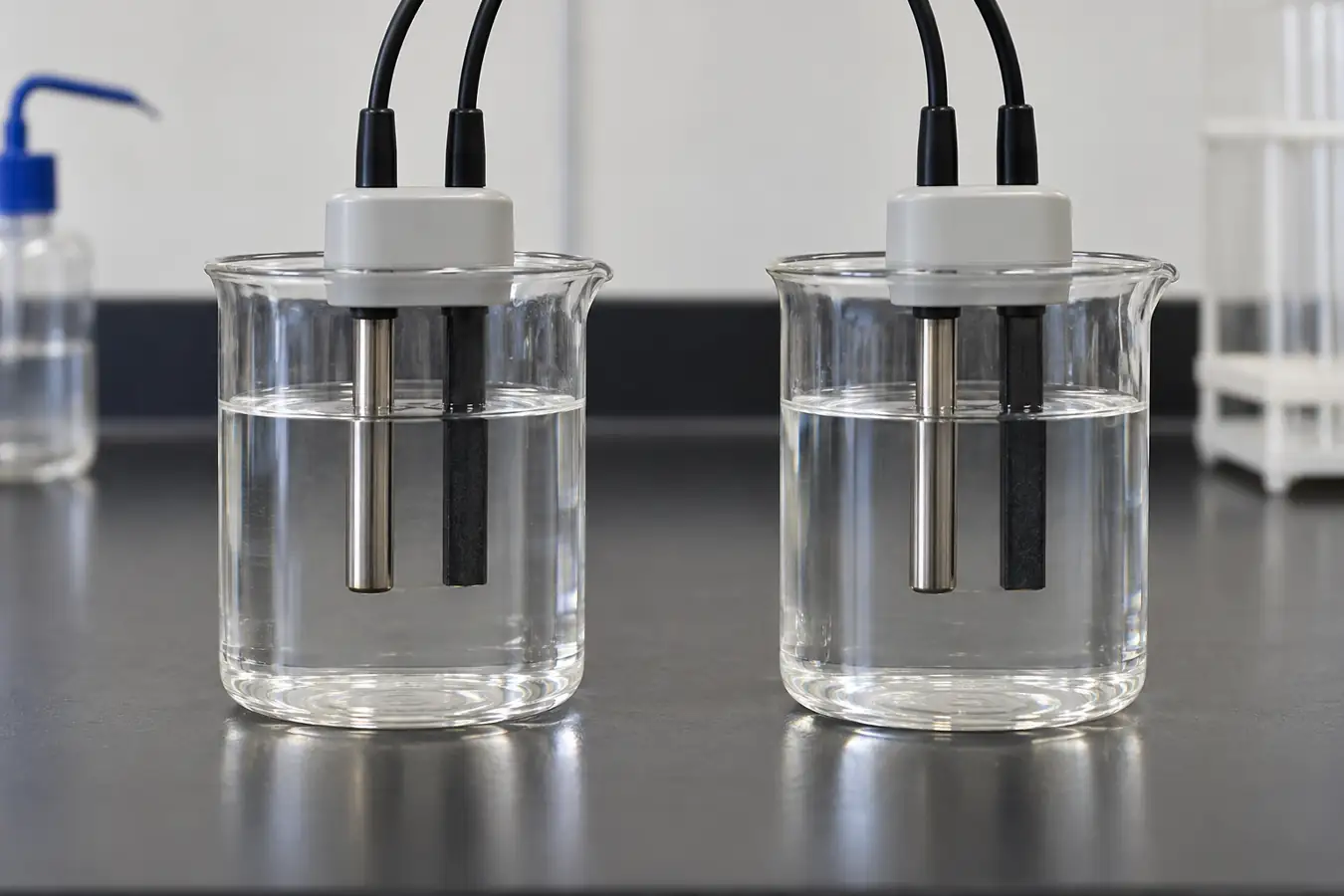
This does not make EC useless. It can help identify changes in salinity-related conditions or support management-zone mapping when its limitations are understood. It becomes an indirect nutrient estimate only if a model links its inputs to a defined reference quantity. That model needs evaluation on the actual soils, water conditions and nutrient ranges where it will be used.
在一個 study of specific in-situ NPK probes, the tested devices did not provide reliable real-time nutrient measurements against the study's reference methods. That is evidence about those probes and test conditions, not proof that every nutrient sensing technology fails. Ask a vendor for independently assessed results for the specific model, not simply a statement that soil EC is correlated with fertility.
What ion-selective methods can and cannot tell you
An ion-selective electrode uses a membrane and reference measurement to respond preferentially to a particular ion in a solution. The output must be calibrated and may be influenced by other ions, temperature, contact, membrane condition and the solution matrix. “Selective” does not mean that an electrode is completely immune to all other chemicals.
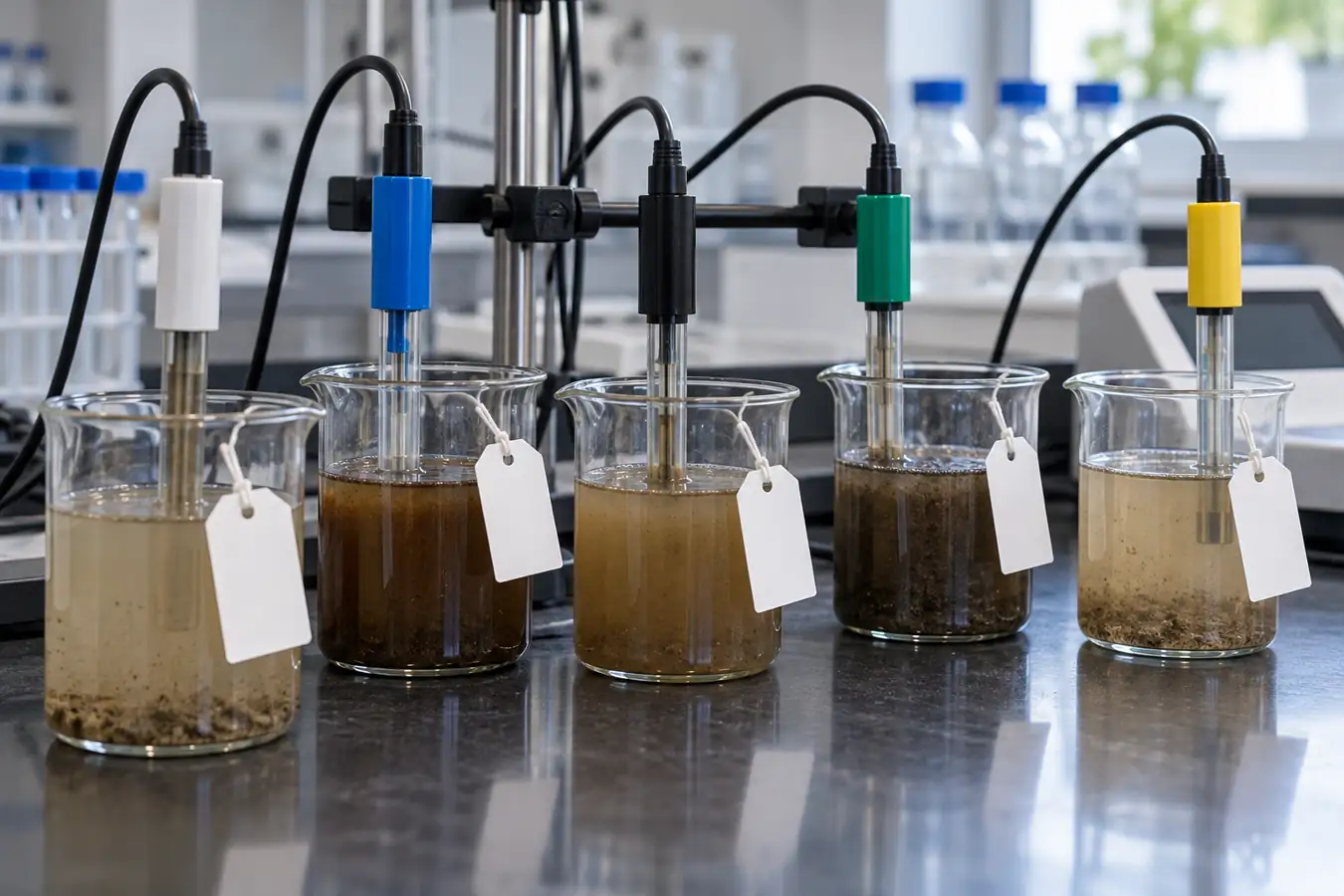
A system may measure a prepared soil extract, a solution obtained from soil, or a direct-contact response using a particular design. Those approaches do not automatically represent the same soil nutrient pool. Ask how the device prepares or contacts the sample, how it calibrates, which ions interfere, and what the reported concentration is intended to represent. A nitrate-specific device should not be described as measuring total nitrogen.
一個 original nitrate sensor study evaluated a particular electrochemical design and reported results under its own soil and validation conditions. Another nitrate sensor field study compared sensor results with laboratory analysis over a defined period. These studies show that ion-specific sensing can be researched and validated; their results do not certify an unrelated commercial probe.
Compare methods fairly
Laboratory soil tests usually require a representative sample and a defined preparation and extraction method. The reported result is then interpreted using a local recommendation system. Ion-selective systems may provide a faster measurement of selected ions, potentially with preparation and calibration steps. Spectroscopic or multisensor systems can use models that infer properties from several inputs; their performance depends on training data and independent validation.
The correct comparison pairs the same intended quantity, sampling depth, time and location as closely as possible. A sensor reading from a small wet volume and a laboratory result from a composite dried sample may differ for legitimate reasons. Ask the laboratory which method and reporting basis it uses before attempting to convert or compare results.
Extraction and calibration are part of the reported value
An extraction method uses a specified solution, soil-to-solution ratio, contact time and subsequent analysis to produce a soil-test result. Different extractants may remove different fractions of a nutrient from the same soil. The test is useful when its result has been interpreted against crop response for the soils and conditions covered by the recommendation system. It is not necessarily a direct inventory of every nutrient atom in the soil.
When evaluating an electrode system that uses extraction, ask whether its extraction matches the reference laboratory's procedure. A system using a different extractant may correlate with the laboratory in a particular dataset but still need its own calibration and independent validation. The sensor's ion response and the extraction's ability to represent the desired soil pool are separate sources of uncertainty.
Soil moisture sensors provide complementary information about the water environment. They do not directly measure nutrient concentrations. Our soil moisture sensor selection guide discusses field placement and water-content interpretation. Combining moisture, conductivity and nutrient data can improve context, but a combination of inputs is not automatically an accurate nutrient measurement.
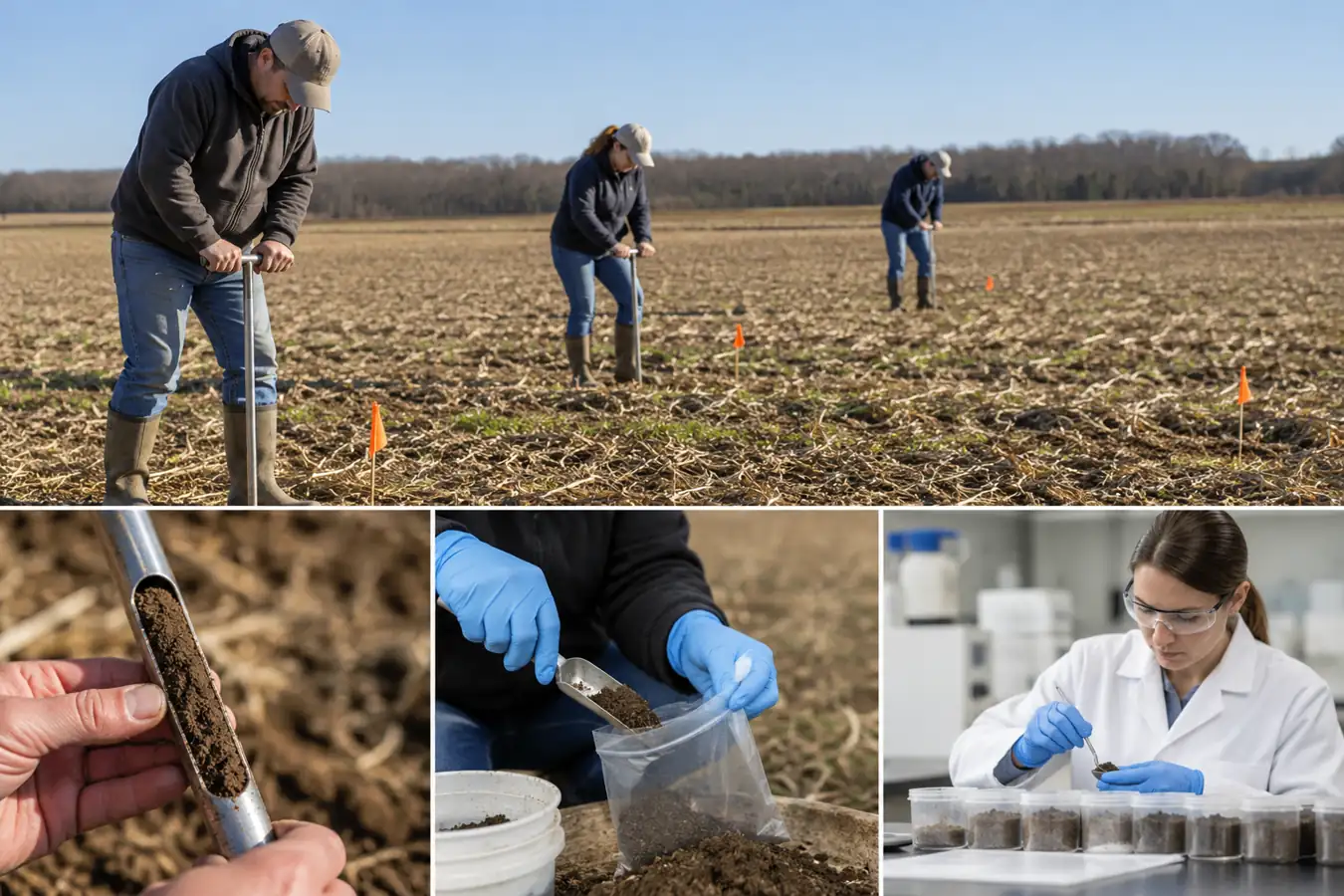
Design a field comparison that can answer the question
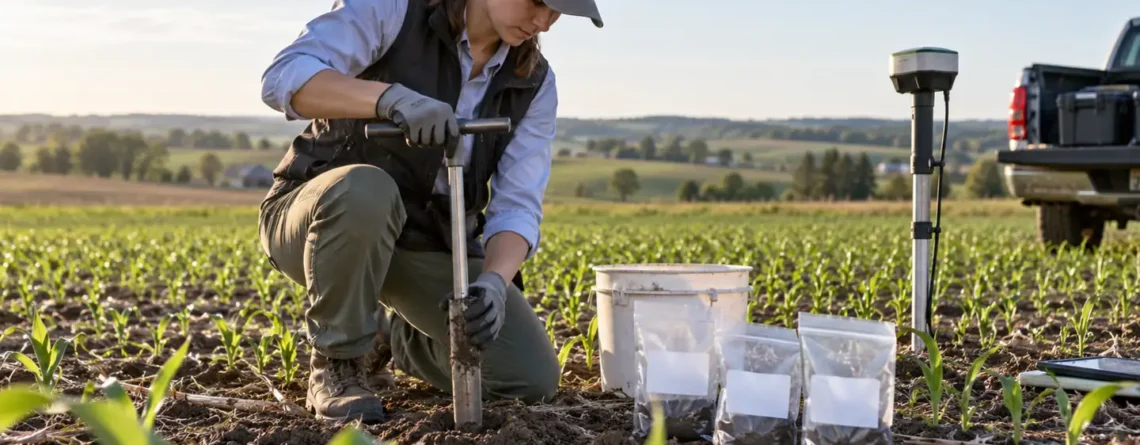
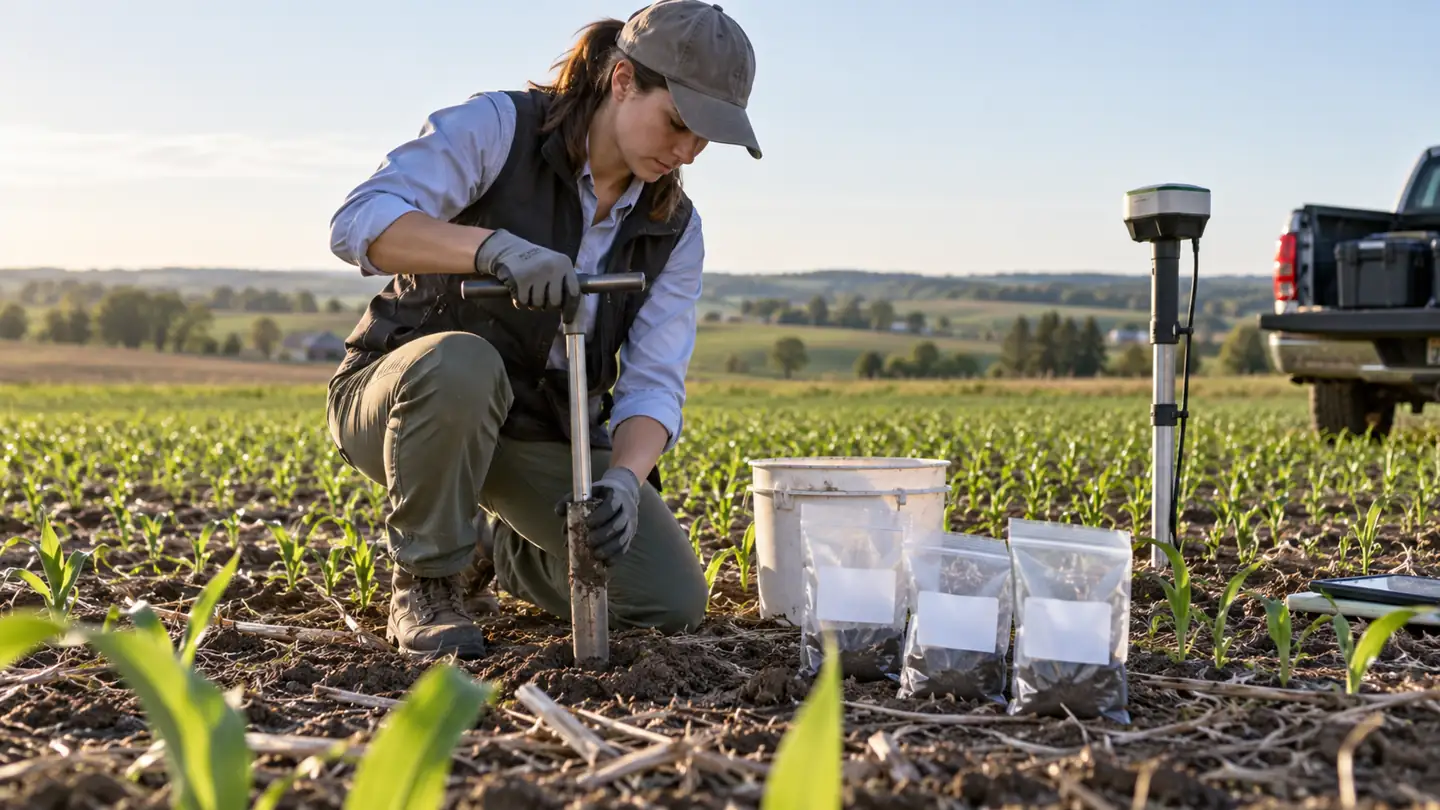
Before buying sensors for fertilizer decisions, agree on a reference method and a plan with a qualified local laboratory or agronomic adviser. Identify the field, crop, management zones and expected range of nutrient values. Collect paired sensor readings and soil samples as closely matched in location, depth and time as practical, while avoiding disturbing the sensor's actual measurement volume before the reading.
Soil is spatially variable. One laboratory composite sample may combine multiple cores while a probe observes a much smaller volume. Decide in advance how the paired observations represent the same area. Record depth, moisture, temperature, recent fertilizer application, irrigation, soil type and the sensor's calibration. Follow the laboratory's instructions for sampling, preservation and delivery; nitrate can change during handling.
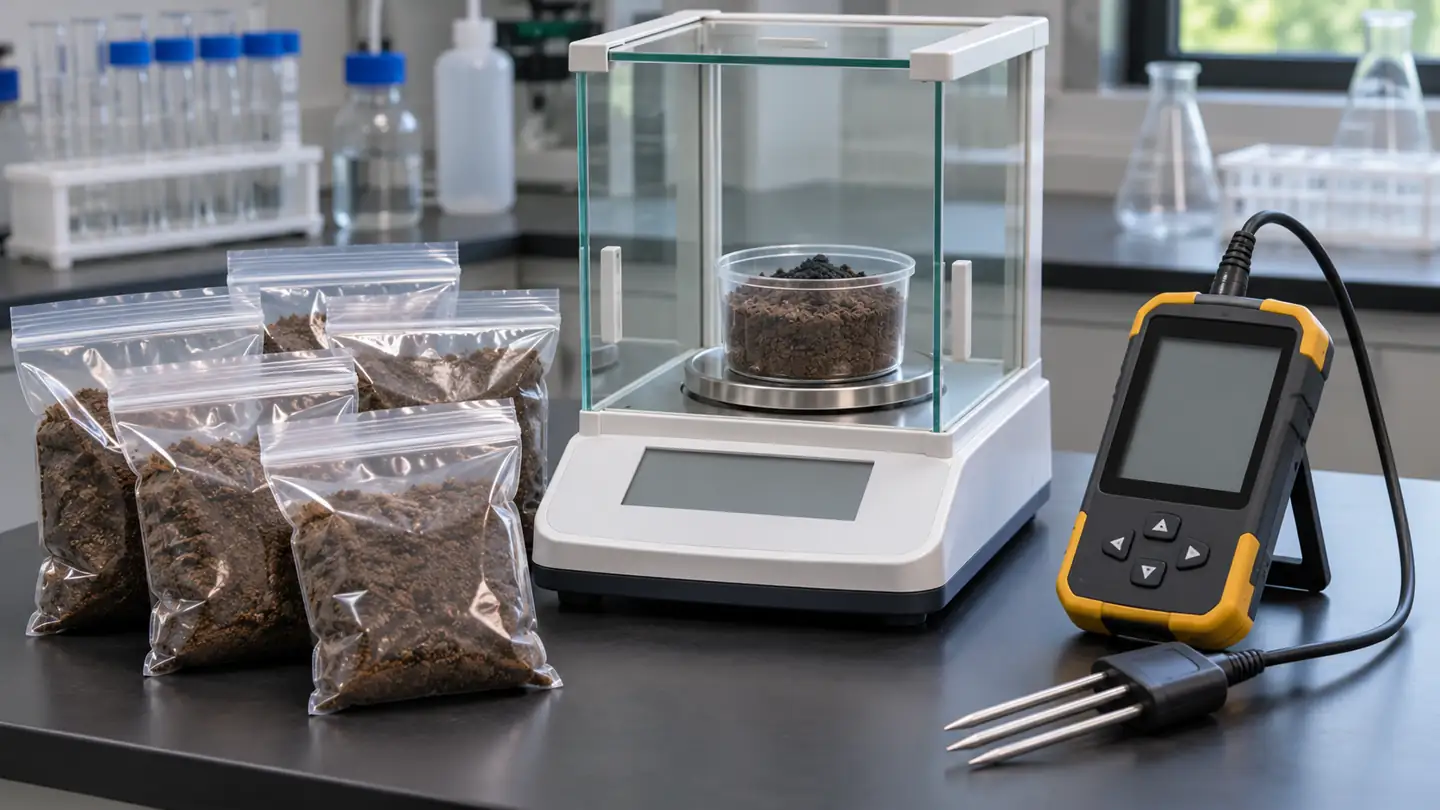
這 USDA soil sampling guidance describes the importance of sampling and handling for nutrient management. Utah State University Extension illustrates how sampling depth and handling vary by nutrient and local program. These are examples, not universal prescriptions for every field or laboratory.
Match the units and sample basis
A result reported in milligrams per kilogram of dry soil expresses mass relative to the dry soil sample. A sensor immersed in an extract or soil solution may instead report milligrams per litre of liquid. The two cannot be converted by changing the unit label. The extraction volume, soil mass, dilution, recovery and preparation method all matter, and the liquid concentration may describe a different nutrient pool from the laboratory test.
Similarly, a result reported as nitrate (NO₃⁻) is not numerically identical to nitrate expressed as nitrogen (NO₃–N). Using approximate molar masses, nitrate ion is about 62/14, or 4.43 times the mass of its nitrogen component. Thus 10 mg/L as NO₃–N corresponds to about 44.3 mg/L as NO₃⁻ for the same solution and chemical amount. That is a reporting-basis calculation, not a conversion from solution concentration to soil mass or from nitrate to total nitrogen. Check the laboratory's convention and significant figures.
Phosphorus and potassium fertilizer grades may use oxide-equivalent conventions, whereas a soil laboratory may report elemental P or K. Do not assume a fertilizer label, an extracted nutrient index and a sensor output use the same basis. Ask the laboratory or agronomist to interpret the exact methods used in the local recommendation system.
Choose sampling locations before seeing the results
A field can have different soil textures, fertilizer histories, slopes and irrigation patterns. Divide it into zones that correspond to plausible management decisions. Avoid unusual spots unless they are being studied intentionally, such as a fertilizer band, headland or standing-water area. Record GPS positions or another repeatable location reference and use the laboratory's recommended sampling pattern.
For a sensor intended to guide a whole field, several representative sites can reveal whether local readings vary enough to affect a decision. For a sensor intended to monitor one root zone over time, repeated measurements at that location may be useful even though they cannot represent the whole field. Specify the spatial claim before purchasing the device. More decimal places in a single reading do not make its sampling volume more representative.
Separate a calibration set from a validation set
If a vendor fits a model to a field's laboratory data, reserve samples that were not used in calibration. Ideally, evaluate additional locations or times relevant to actual deployment. Randomly splitting repeated measurements from the same soil sample between calibration and validation can make performance appear better than it will be on a new field. Ask how the validation samples were selected and whether any preprocessing used information from the test set.
Inspect prediction errors by nutrient, range, moisture and soil type. A useful result should include more than a correlation coefficient: compare bias and the magnitude of differences with the decision tolerance. If the model predicts a fertilizer category, evaluate incorrect category decisions near the boundaries, not only the overall average. Do not use an unvalidated extrapolation beyond the range of soils and values represented in the model.
Evaluate error at the decision boundary
A high correlation does not by itself prove that sensor numbers agree closely enough with laboratory values. A device can track high and low samples while consistently overestimating or underestimating them. Compare paired results in the units and reference basis used by the decision. Examine bias, scatter, outliers and the errors near the thresholds where the recommended action changes.
Set an acceptance criterion before examining the results. If a model was calibrated using a set of samples, evaluate it on independent samples that were not used to fit the model. Include different relevant moisture conditions and soil types, and repeat the assessment over time if the device will be deployed for a season. A small trial can reveal a large problem but cannot establish universal performance in all soils.
When readings disagree, do not assume the laboratory is wrong or immediately adjust the sensor. Check whether both results represent the same nutrient form, units, sampling depth and date. Review sensor contact, calibration, sample handling and laboratory method. Keep the original values and document any correction. A correction developed for one field or season should not be silently applied to unrelated soils.
A practical paired-sample record
For each observation, record a sample identifier, location, depth, date and time, sensor serial number, calibration state and all displayed units. Add soil texture where known, water condition, recent irrigation or rain, and relevant fertilizer history. Record the reference laboratory's sample preparation, extraction method and reporting basis when results return. A photograph or location sketch can help preserve context without revealing a false precision in location.
If a laboratory requires a composite sample, collect the individual cores as it instructs and document which sensor readings are being compared with that composite. A single sensor reading should not be labeled as an exact match for a mixed sample without considering the difference in sampled volume. Where the measurement is repeated, keep each observation rather than only an average so that variation and possible outliers remain visible.
Check the range of the data. A model tested only in a narrow low-nutrient range may not perform well after a concentrated fertilizer application. Conversely, a device that distinguishes a large laboratory concentration change may not resolve the smaller difference that changes a field recommendation. The meaningful acceptance criterion belongs to the crop, soil-test method and intended decision.
Questions to ask a supplier
Request the physical measurement principle for each reported output, the chemical species or reference method represented, the units and the basis for conversion to dry soil mass if applicable. Ask whether the instrument measures separate signals for N, P and K or uses a model based on other properties. Request the calibration dataset, environmental range, independent validation and error statistics near the intended decision points.
Also ask about calibration standards, sensor cleaning, electrode life, response time, contact requirements, drift and maintenance. An RS-485 interface or a display with decimal places describes communication and presentation; neither proves nutrient selectivity or accuracy. Check the conditions under which the vendor's performance claims were obtained and whether those conditions resemble the proposed field.
Understand calibration and maintenance requirements
An ion-selective electrode may need one or more reference solutions, a stable reference electrode and a defined calibration sequence. Its useful life and response can change with the membrane, storage, fouling and the ions in the sample. The instrument manual should identify the calibration solutions and conditions, the permissible operating range and how the electrode should be checked. A manufacturer may supply a combined sensor with additional preparation or compensation steps; follow the instructions for that actual system.
For a model-based device, ask whether “calibration” means an electrical zero check, a factory sensor calibration or a soil-specific predictive model. These are different activities. A successful electronic self-check does not prove that a nutrient model remains accurate after a change in soil texture, water source or fertilizer chemistry. Keep both the raw sensor outputs and derived values if available so that changes in the model can be traced.
Environmental readings may help interpret a result without fully correcting every source of error. Soil moisture and temperature sensors are useful context, but adding them to a conductivity probe does not by itself create independent measurements of nitrate, phosphate and potassium. Check the validation evidence for the complete combination and the actual inference method.
Use the measurement in an agronomic decision
A soil test or sensor result is one input to nutrient management. The crop, expected yield, soil history, local recommendations, timing and other nutrient sources influence the decision. A sensor reading alone should not be converted into an application rate using an unspecified universal formula. Work with the local recommendation system and a qualified adviser when the cost or consequences of an incorrect application are material.
Continuous sensing can offer information that a single laboratory sample cannot, such as a trend following irrigation. A trend can still be affected by moisture, salinity, temperature or changed contact. Compare it with process events and periodic suitable reference measurements. A trend that is repeatable in one installation may not be comparable with an absolute laboratory index unless the relationship has been established.
Retain the measurement date, location, depth, sensor and model version, environmental conditions, laboratory method and any fertilizer action. This record enables later review of whether the measurement helped the decision. If a sensor is replaced or a model is updated, annotate the time series and, where feasible, compare old and new configurations during an overlap period.
Recognize the limits of a short demonstration
A demonstration in a cup of fertilizer solution can show that a probe responds to a changing solution. It does not establish that it independently measures three nutrients in soil. Fertilizer solutions may change several ions and conductivity together, so a device can appear responsive without identifying each nutrient. A stronger evaluation uses independently varied nutrient conditions and appropriate reference analysis.
Similarly, a comparison with one laboratory report cannot establish performance throughout the season. Soil solution, water content and nutrient distribution can change after rain, irrigation, fertigation or crop uptake. A credible report states the number and range of samples, soil types, reference method, time period, independent validation and observed errors. If those details are unavailable, treat the displayed values as unverified estimates for the proposed application.
Decide what the sensor adds
Some applications need a calibrated nutrient concentration; others need an early warning that conditions have changed. A sensor that is unsuitable for reporting laboratory-equivalent phosphorus might still contribute a useful conductivity or moisture trend if that quantity is clearly labeled and independently checked. The operational value comes from a decision that improves with the information and from knowing when the signal is unreliable.
Document the intended action and the fallback when data are missing or outside the validated range. If a nutrient recommendation depends on a laboratory index, use the relevant soil-test procedure until the alternative method has demonstrated the necessary agreement. Review the system after a season using recorded measurements, reference samples and actual management decisions. That feedback can reveal whether additional sampling locations, a different method or more careful installation would improve the result.
常見問題
Can one conductivity measurement reveal three nutrient concentrations?
Not uniquely. Different ionic mixtures can produce similar conductivity. A model using EC and other information may estimate nutrient-related values only to the extent it has been independently validated for the relevant soils and conditions.
Is nitrate the same as total nitrogen?
No. Nitrate is one nitrogen-containing form. A nitrate-specific measurement does not automatically include ammonium or organic nitrogen. Reporting as nitrate ion and nitrate-nitrogen also uses different bases.
Are ion-selective electrodes always accurate in soil?
No. Their performance depends on the target ion, interfering ions, calibration, contact, preparation and environment. Some systems are promising, but each design needs validation for the intended matrix and decision.
Can a sensor replace laboratory soil testing?
Only if its intended measurement and independently demonstrated performance meet the relevant decision's requirements. A local laboratory method also has sampling and analytical uncertainty, so compare complete methods rather than treating either output as context-free truth.
Why does sampling depth matter?
Nutrient concentrations vary with depth, and local soil-test recommendations are calibrated for particular sampling procedures. A sensor at one depth and a laboratory sample from another may represent different soil.









發表評論