

在二氧化碳传感器附近呼吸可以使其读数上升,但无法验证准确性,因为传感单元的浓度未知。呼出的气体与室内空气混合,同时温度、湿度、流量甚至压力一起变化。数字不断上升表明观察结果响应有限,与已知参考值不一致。
Accuracy needs a defined comparison: a reference value with suitable uncertainty, a representative sample at the sensor and conditions consistent with the instrument's specification. Breath supplies none of those automatically. Even a plausible peak can come from a mixture that changes faster than a room-air monitor can follow.

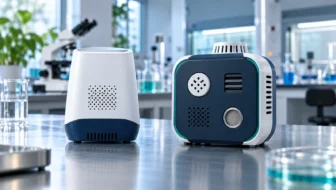
概念性房间布置:直接呼吸是一种局部干扰。房间监测器应代表其预期的采样位置。
二氧化碳读数上升实际上说明了什么?
读数上升可以表明显示的测量结果响应了变化的本地环境。根据仪器的不同,它还可能支持对气体进入或电子信号链的有限观察。它不能识别真实浓度或测量误差的大小。
几个不同的主张经常被压缩到文字作品中。一个设备可以响应、重复类似的模式并与第二个设备达成一致,同时两者都保持偏见。稳定后它也可以是准确的,但对于不同的预期任务响应太慢。
| 宣称 | 需要证据 | 未知的呼吸羽流无法提供什么 |
|---|---|---|
| 显示发生变化 | 与干扰相关的观察到的变化 | 证明变化的幅度合适 |
| 传感器对 CO2 做出响应 | 适当的技术和受控的气体响应 | 隔离湿度或其他同时影响 |
| 仪器可重复 | 在同等已知条件下重复测量 | 可重复的未知羽流 |
| 两种仪器一致 | 常见样本、时间和条件比较 | 独立的真值 |
| 仪器准确 | 合适的参考、不确定度和指定条件 | 已知细胞浓度 |
| 校准调整是合理的 | 记录的参考和支持的过程 | 一个可防御的校准目标 |
这种分离可以防止有用的观察结果变成不受支持的主张。如果目的只是调查设备是否被冻结,则观察到的响应可能是相关的。如果目的是证明浓度的准确性,证据必须更强且结构不同。
对于安全仪器,任何所需的功能检查或校准均由其支持的程序和适用用途定义。非正式的呼吸反应不应被重新标记为合规的通气测试、警报验证或校准。
Why isn't exhaled CO2 a known reference?
呼出的气体在一次呼吸中和不同情况下会发生变化。更重要的是,附近房间传感器处的浓度不是口腔处的浓度。混合立即开始,仪器仅对移动羽流的一部分进行采样。
距离、方向、室内电流、外壳开口和扩散路径都会影响呼出气体到达细胞的量。人们无法从监视器的可见位置推断出局部混合分数。空气运动的微小变化可以产生不同的峰值,而不会出现任何仪器故障。
传感室增加了另一个阶段。房间监视器可以通过保护格栅和内部空间交换气体。格栅外部的气体可能会在电池内部的气体发生变化之前发生变化。因此,该显示并不是对外壳外部羽流的直接瞬时测量。
引用的典型呼吸浓度不能解决这个问题。即使源浓度已知,池中的稀释分数仍然未知。参考需要实际呈现给测量的条件,而不仅仅是估计的源值。
临床呼吸分析仪是一种不同的应用。此类仪器使用明确的采样方法、测量动态和临床验证。专用设备可以分析呼吸这一事实并不意味着呼吸可以成为室内空气监测仪的校准材料。
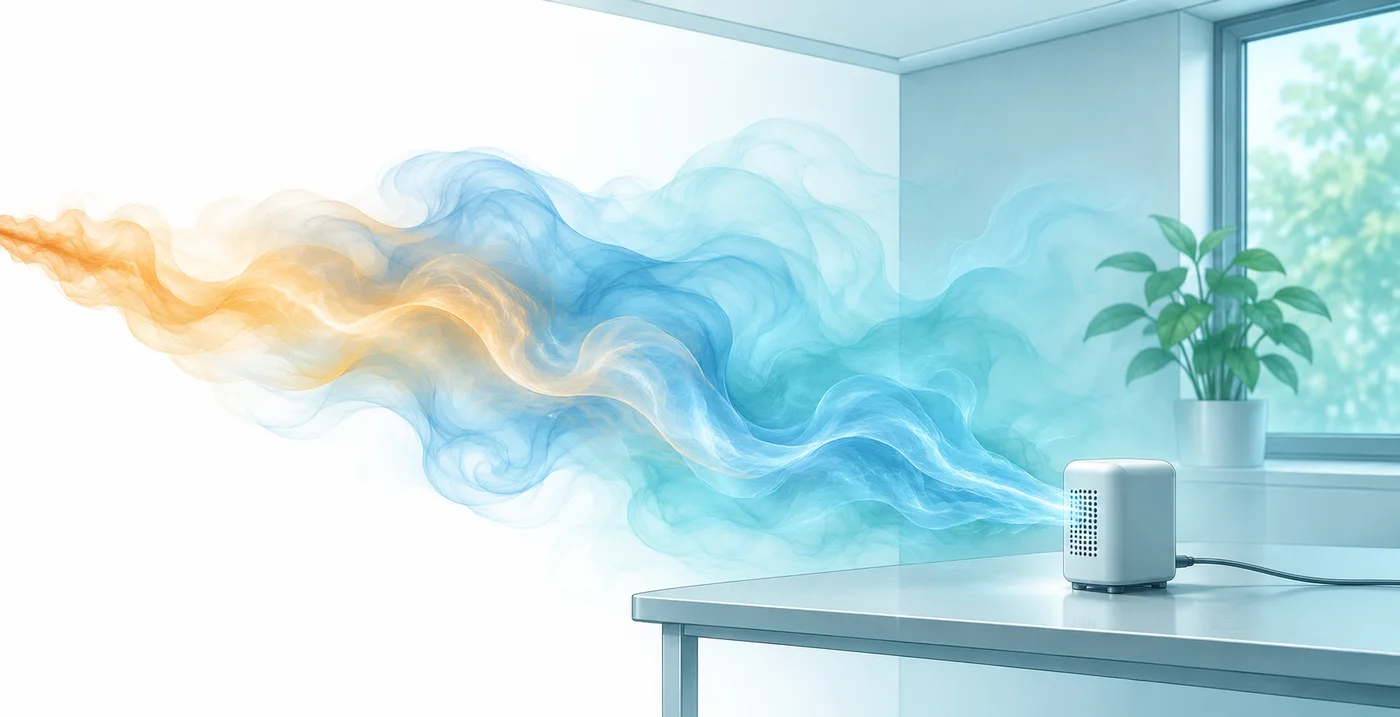
概念混合:当羽流夹带室内空气时,局部样本会发生变化。图中没有指定浓度。
湿度会改变样品及其测量条件
呼出的气体会引入水分和二氧化碳。水分可以通过多种不同的方式产生影响:它会改变混合物的成分,改变仪器看到的湿度,并可能在较冷的表面上凝结。
水蒸气稀释是真实的成分效应。湿基浓度包括气体分子中的水;干基值不包括它。在不协调基础的情况下将潮湿的当地样本与干燥的参考值进行比较会产生错误的精度计算。
湿度还可以通过其特定的环境行为影响设备。该机制取决于传感器技术和补偿系统。如果其他条件同时发生变化,测量到的上升不能自动完全归因于二氧化碳。
冷凝会增加物理干扰。潮湿的入口或保护膜会减慢气体交换或改变样品路径。液滴无需到达传感元件即可改变室内空气监测器的响应速度。
这 维萨拉 CO2 测量应用说明 解释了与湿度相关的成分变化,并建议避免将发射器放置在人们直接呼吸的地方。该放置指南与测量预期房间环境而不是局部呼出羽流的目标一致。
更广泛的文章涉及 气体传感器中的湿度影响 分离稀释、传感器响应和冷凝。在解释意外峰值或恢复时,这些机制应保持独立。
温度、流量、压力同时变化
温暖的羽流可以产生局部热转变。传感单元、外壳和补偿温度计不需要一起加热。专为稳定的房间条件设计的设备可能会暂时经历与其特性假设的梯度不同的梯度。
流量也很重要。气体直接流向入口可以改变交换率和局部压力。突然的流动扰动可能会使响应出现得比普通房间采样更快,而无需建立稳态精度。
这 Sensirion SCD30 设计指南 讨论热平衡和避免外部热源,以及气流引起的压力扰动。这些是特定于模型的安装注意事项,说明了为什么直接呼吸会引入几个混杂变量。
内部温度测量并不能证明整个气路已经平衡。它可能代表棋盘上的一个点或修正的估计。同样,外部房间温度计无法确定传感器腔内快速变化的羽流的温度。
因此,从变化的数字得出的合理结论是适度的:测量链在当地条件变化的情况下做出反应。确定哪些影响起作用以及最终值是否正确,需要进行受控比较。
为什么峰特别难以解释
室内空气传感器具有响应时间、更新间隔并且经常进行过滤。这些数量是不同的。显示器可能会频繁刷新,而其传感单元响应缓慢。处理器可以在显示结果之前对多个读数进行平均。
如果输入浓度快速上升和下降,则测量的峰值取决于整个时间历史。较低的峰值可以表明更强的稀释、更短的干扰、更慢的交换或更多的过滤。它不能唯一地识别低读数校准错误。
因此,两台监视器可以在同一房间中显示不同的峰值,同时在稳定的公共样本下保持一致。它们的入口位置、外壳、采样动态或显示处理可能不同。除非源受到控制,否则峰值比较主要是动态系统比较。
Output range is another limitation. A sensor can produce a numeric value beyond the concentration interval over which accuracy is specified. A large number on the display does not extend the manufacturer's stated accuracy range.
这 SCD30接口说明 区分测量、校准和环境补偿命令。成功读取数据与建立有效的校准参考是不同的操作。
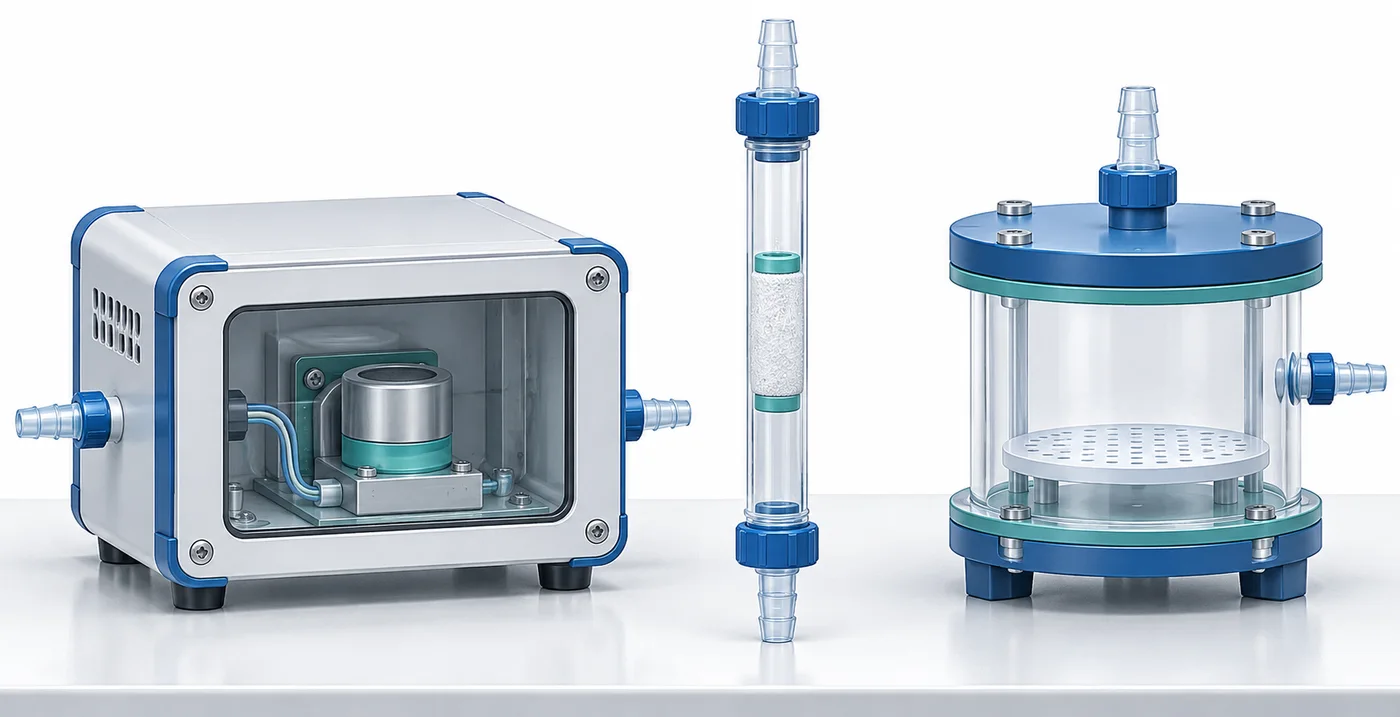
概念采样组件:传输和外壳交换可以改变值到达显示器之前的时间历史。
检查示例:未知稀释在比较中占主导地位
Assume an entirely hypothetical source gas contains 40,000 ppm CO2 and the room air contains 600 ppm. These numbers are chosen only to illustrate mixing; they are not assigned to a particular person's breath.
如果到达传感器的气体由 5% 的源气体和 95% 的室内空气组成,则理想的混合物将包含:
0.05 × 40,000 + 0.95 × 600 = 2570 ppm。
如果本地来源比例为 10%,则混合物将包含:
0.10 × 40,000 + 0.90 × 600 = 4540 ppm。
将未知混合分数改变 5 个百分点会使局部浓度改变 1970 ppm。仅根据假定的源值无法判断 3000 ppm 的峰值是高还是低。局部稀释仍然未知。
现在考虑一个单独的假设精度规格 ±(50 ppm + 读数的 3%)。在 1000 ppm 时,该表达式给出:
50 + 0.03 × 1000 = 80 ppm。
这是一个规格算术示例,而不是指定产品声明或验收规则。混合示例中未知羽流浓度的定义太差,无法评估该范围内的误差。
第一个计算还假设理想混合、无损失、共同浓度基础和瞬时代表性样品。真实的呼吸干扰会增加湿度、温度和仪器动态的变化。这些复杂情况加强了对已知参考的需求;它们没有提供一种从峰值推断的方法。
是什么让参考文献站得住脚?
参考需要指定的值和适当的信任基础。对于气体测量,可能涉及经过认证的气体混合物或具有适当校准和不确定度的参考仪器。选择取决于浓度、气体基质和应用。
NIST's CO2 measurement and reference-material program 描述了支持浓度测量的主要重量标准品和气体标准物质。中心点是出处:参考值是通过记录的测量链分配的,而不是从熟悉的来源猜测的。
这 NOAA 全球监测实验室中央校准实验室 维护和分配指定大气气体的气体摩尔分数比例。它的作用说明了另一个重要的区别:记录规模的一致性不同于两个附近的显示器仅显示相似的数字。
A certificate alone is not enough if the delivered sample is wrong. The mixture must reach the instrument without unintended dilution, leaks, contamination, excessive pressure or incompatible moisture conditions. The reference value applies to a defined material, while the measurement occurs at the cell.
A reference instrument also has limitations. It must be suitable for the relevant concentration and conditions, and its response must be considered when comparing dynamic readings. A calibrated instrument sampling another part of a moving plume does not necessarily provide the true value at the test device.
Compare under a common, defined sample
A useful comparison asks whether both instruments receive representative portions of the same gas under compatible conditions. Physical proximity is helpful but not sufficient if the sample has sharp spatial gradients.
For stable room-air comparisons, consider whether nearby people, ventilation outlets, windows and local sources create differences between inlet locations. A short period of agreement in one location supports a narrower claim than a multi-condition comparison against a suitable reference.
For a professional gas-reference comparison, follow the manufacturer's supported sampling arrangement and handling procedure. The relevant record includes the reference concentration, balance gas, uncertainty, moisture basis, pressure, flow where applicable, stabilization criteria and instrument status.
Do not invent a delivery arrangement from the presence of a calibration port. A regulator, chamber or flow adapter must be compatible with the device. An unsupported pressure or flow can change the reading or damage a component.
选择能够回答预期问题的比较点。某一浓度的一致性并不能独立确定整个范围内的斜率、线性或性能。多点也需要适当的参考和条件;更多未知样本不会产生校准。
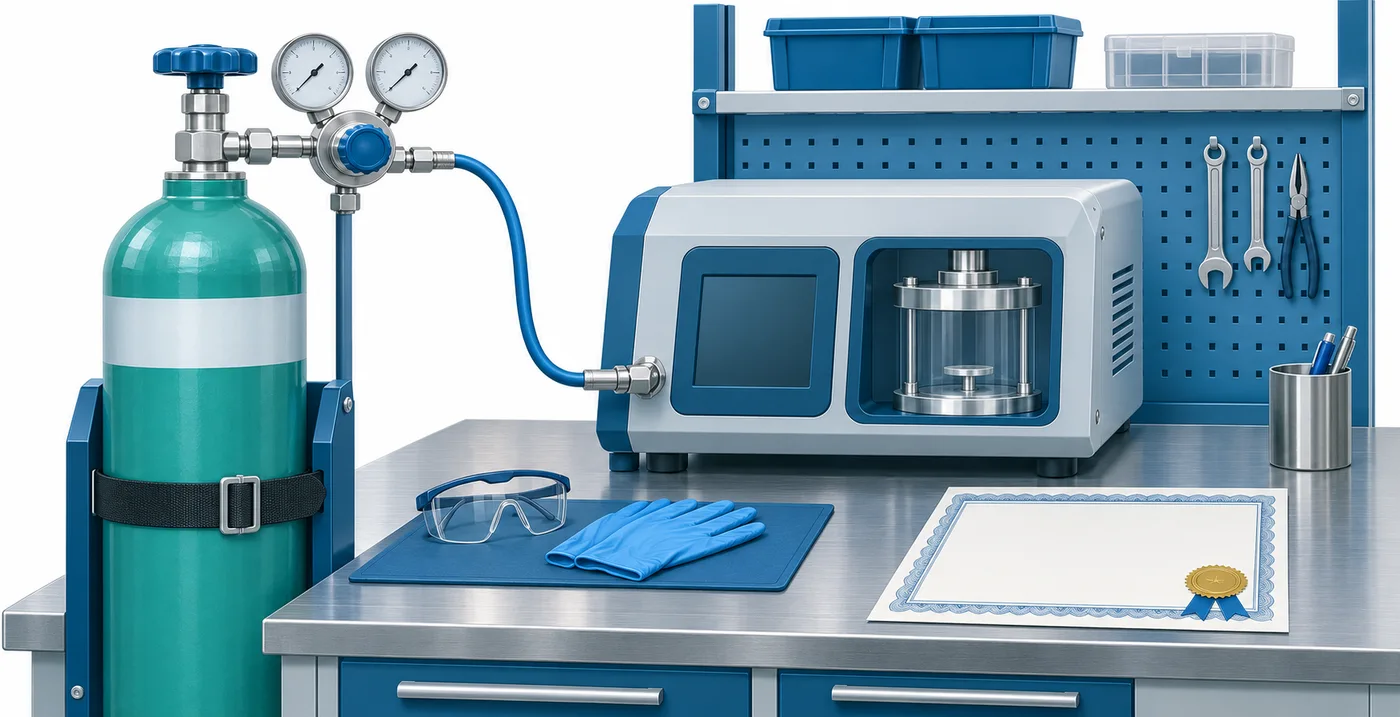
概念性专业比较:参考材料、交付路径和记录的条件都有助于解释证据。
校准、调整和自动背景校正有所不同
Calibration establishes the relationship between an instrument's indication and a reference under stated conditions. Adjustment changes the instrument's response. They are often performed together, but they are different actions.
比较可以揭示分歧,但尚未确定哪个设备是错误的或调整是否合理。如果参考、样品交付或条件不确定,更换仪器可能会掩盖真正的原因。
强制重新校准通常要求用户或主机提供参考浓度。该值必须代表传感器实际经历的气体。输入假定的呼吸值会告诉设备采用不受支持的目标;它不会将源转化为已知的参考。
自动背景校正是另一个独特的机制。它依赖于关于暴露历史的模型特定假设。仪器可以根据其记录的算法使用假定的背景条件。这些假设必须适合安装。
Do not infer a universal background value or exposure schedule from another model's manual. A continuously occupied space, greenhouse or process area may not present the background conditions assumed by a room-air algorithm.
The useful first step before any adjustment is to preserve the original configuration and comparison evidence. Record whether automatic correction was active and whether it could have changed during the observation period. Otherwise a later shift can be difficult to distinguish from environmental variation or a manual change.
Why two monitors can agree and still be wrong
Two instruments may share a similar calibration bias, algorithm assumption or environmental sensitivity. Their agreement reduces uncertainty about their difference under the tested conditions, but it does not independently establish the true concentration.
They may also sample the same room while differing in pressure configuration or moisture basis. Similar displayed numbers can arise from different effects that happen to cancel at one point. A later condition can expose the difference.
An inexpensive reference is not automatically unsuitable, and an expensive analyzer is not automatically correct. What matters is its documented performance, calibration state, uncertainty, suitability and sampling arrangement for the comparison being made.
Time alignment deserves attention. If one monitor reports a moving average and another reports a recent sample, a changing room concentration can create apparent disagreement. Compare stable periods or use a supported method that accounts for the response characteristics.
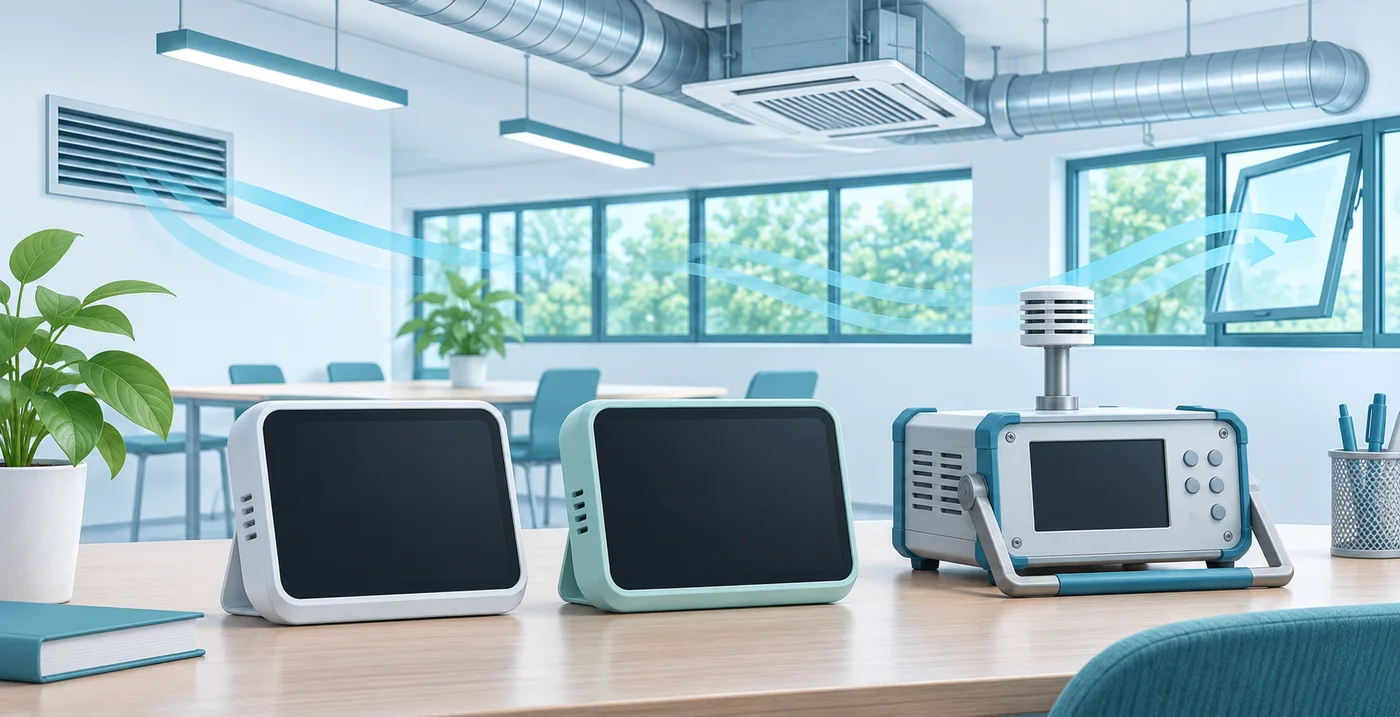
Side-by-side placement can support comparison, but shared sampling conditions and a qualified reference are needed for an accuracy claim.
What if breathing nearby produces no visible response?
A missing response has several possible explanations. The gas may not have reached the sensing cavity, the disturbance may have been too brief, the display may update slowly, or the sensor may have been outside its valid operating state.
The device may also report an estimated CO2 value derived from another signal rather than directly measuring CO2. Check the stated sensing technology and output definition. Product appearance alone does not establish what is measured.
Some instruments apply smoothing, range limits or status-dependent output behavior. A steady displayed value can therefore reflect processing or an invalid-data hold rather than an unchanged gas concentration. Read status fields and documentation before assuming the sensing element has failed.
Inspect installation and configuration using the supported diagnostic process. Check power, communication, data-ready behavior, update age, inlet obstruction and model-specific readiness. These checks often provide clearer evidence than repeating an uncontrolled disturbance.
If a functional gas-response check is required, use the manufacturer's documented method and an appropriate reference or service arrangement. Repeatedly applying an unknown wet plume does not resolve why the first observation was inconclusive.
Build a comparison record that supports the claim
Start by naming the claim. Is the task to confirm data updates, observe a response, investigate disagreement or verify accuracy? The evidence required grows as the claim becomes stronger.
Record the device identity, firmware, calibration history and active compensation settings. Include any automatic background correction and pressure configuration. A title such as factory calibrated does not describe every later operating condition.
Identify the reference and its uncertainty, concentration range and gas basis. For a reference instrument, record its calibration status and response characteristics. For a gas material, record the assigned value and applicable certificate details without assuming the delivery path preserves them.
Describe the sample arrangement and relevant environmental conditions. Include the inlet locations, common-sample method, temperature, pressure, humidity or dew point, and flow where applicable. These details make a comparison repeatable in meaning.
Preserve the time series and status, not only the most favorable reading. Note when conditions changed and when the agreed comparison interval began. A selected screenshot cannot show whether a device had stabilized or was holding an old value.
State the acceptance criterion before judging the result. The criterion should account for the test device, reference and comparison method. Simply checking whether two numbers differ by less than one manufacturer's headline specification can ignore reference uncertainty and sampling differences.
文章关于 reading a CO2 monitor accuracy specification explains fixed and reading-dependent error terms. Use that specification literacy to define the comparison; do not replace the actual test conditions with the formula alone.
A practical interpretation ladder
An observed display change supports a response observation. A repeated change under similar but unmeasured disturbances supports only limited qualitative repeatability. Neither identifies the true concentration at the cell.
Agreement between two devices under a stable common sample supports agreement at that condition. If one is a qualified reference and the method controls relevant differences, the comparison can support an accuracy assessment within its scope.
Agreement at multiple documented points can support a broader assessment, provided the references and conditions are suitable. It still does not establish performance during untested humidity, pressure or thermal transitions.
This ladder helps keep reports precise. “The display rose during a local disturbance” is a valid observation. “The instrument met the stated comparison criterion at the documented reference points” is a different, stronger claim requiring different evidence.
Precision in language is useful because it preserves what was learned. It avoids both overclaiming a successful informal observation and dismissing it as meaningless. The observation can guide diagnosis while remaining insufficient for an accuracy decision.
How to report an informal observation without overclaiming
A useful report identifies the stimulus as uncontrolled and records what the device actually did. For example, a note might state that the displayed concentration rose during a nearby local disturbance and later returned toward its previous value. That preserves an observation without assigning an unknown true concentration.
Add the device's update state if available. A recent timestamp, changing raw output or valid data-ready indication can help distinguish a live measurement from a frozen display. These checks remain evidence about data flow, not concentration accuracy.
Avoid calculating an accuracy percentage from the peak. That calculation requires a reference value for the gas actually measured. An estimated source concentration, a value from another breath or a number remembered from a general article cannot supply it.
If a comparison against another monitor was made, describe it as agreement or disagreement under the observed conditions. Record inlet positions and timing. This makes the observation useful for deciding whether a controlled follow-up is warranted while preserving its limited scope.
Such reporting is especially helpful when discussing a suspected fault with a service provider. Model, status, configuration, timing and the exact symptom provide actionable information. A statement that the monitor failed a breath calibration can instead send the investigation toward an adjustment that the evidence does not justify.
常见问题
Does a high reading after breath prove that the sensor is genuine?
It is limited evidence that the displayed value responds to a disturbance. Confirm the stated sensing technology and use appropriate diagnostics; a response alone does not authenticate the measurement method or establish accuracy.
Can I calibrate using a typical human breath concentration?
No. The concentration at the cell is unknown because source composition, dilution and timing vary. A typical source value is not a delivered reference value.
Why do two monitors show different peaks?
Their local samples, inlet exchange, response times, update timing and filtering may differ. An unknown transient cannot isolate calibration error.
Can outdoor air serve as an exact reference?
Outdoor concentration varies with location and time. Use a manufacturer's supported procedure only within its stated assumptions, and distinguish that procedure from an independently certified reference comparison.
Does the highest displayed value reveal the source concentration?
No. A room monitor may average, lag, limit or dilute the source before reporting. The peak reflects the sample history and instrument dynamics.
What is the appropriate next step after an inconclusive response?
Read the device status and supported diagnostic instructions. If accuracy needs verification, arrange a documented comparison with a suitable reference and compatible sampling method.




发表评论