
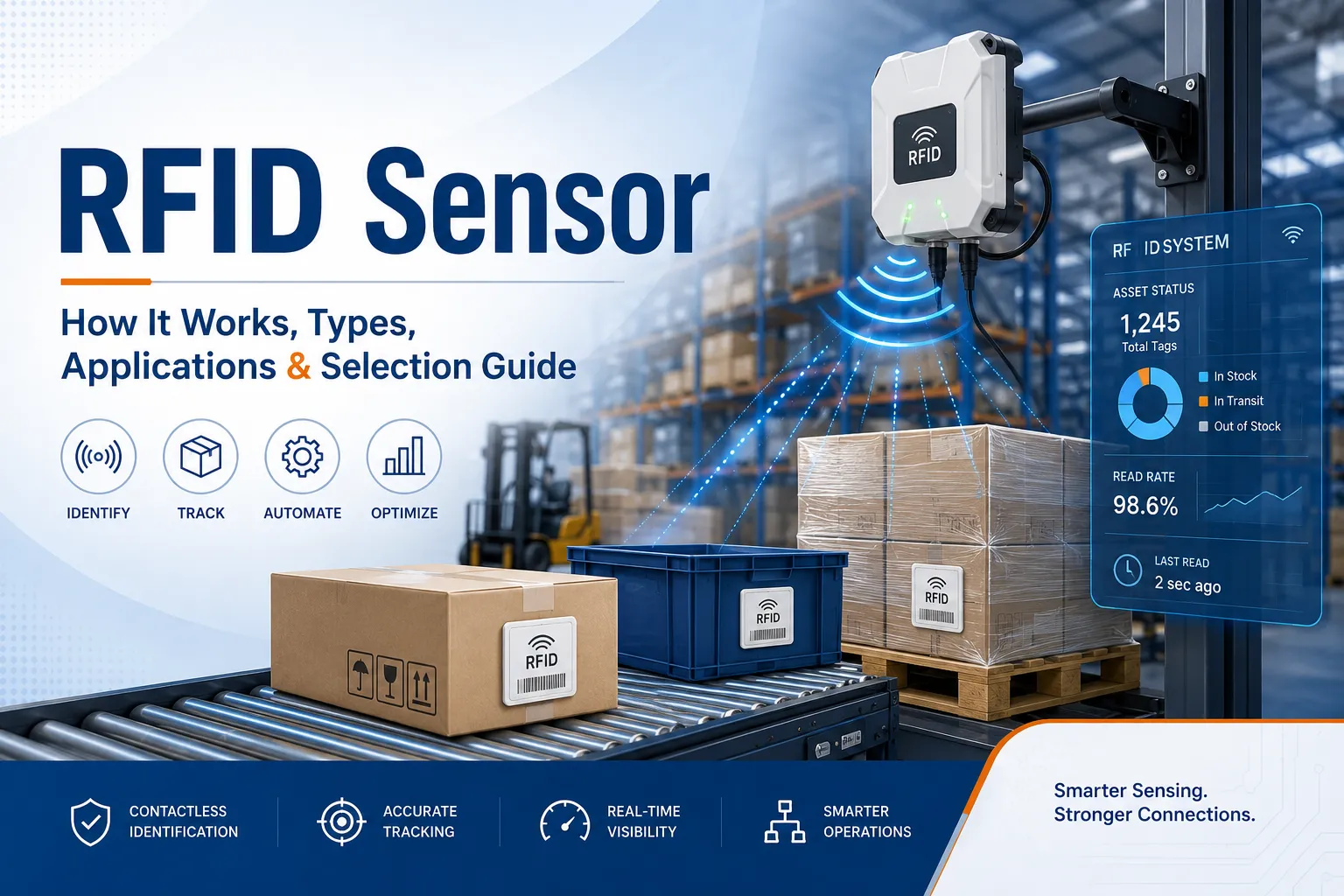
تجمع أجهزة استشعار RFID بين التعريف اللاسلكي وجمع البيانات تلقائيًا، مما يسمح للشركات بتحديد الكائنات وتتبعها وإدارتها دون إجراء مسح يدوي لكل عنصر.
يتم استخدامها على نطاق واسع في المستودعات ومرافق التصنيع والمستشفيات ومحلات البيع بالتجزئة والمكتبات وأنظمة النقل ومشاريع إدارة الأصول الصناعية. بالمقارنة مع الرموز الشريطية التقليدية، لا يتطلب نظام RFID دائمًا خط رؤية مباشر ويمكنه قراءة العديد من الكائنات الموسومة داخل منطقة القراءة نفسها.
ومع ذلك، فإن مصطلح "مستشعر RFID" يمكن أن يكون له أكثر من معنى. قد يشير ذلك إلى قارئ RFID الذي يكتشف العلامات القريبة، أو إلى علامة RFID المجهزة بعنصر استشعار يقيس درجة الحرارة أو الرطوبة أو الضغط أو الحركة أو الظروف البيئية الأخرى.
يعد فهم هذا التمييز أمرًا مهمًا عند اختيار معدات RFID لمشروع جديد.
ما هو جهاز استشعار RFID؟
مستشعر RFID هو جهاز أو نظام لاسلكي يستخدم تقنية تحديد الترددات الراديوية لاكتشاف الكائنات التي تم وضع علامة عليها أو التعرف عليها أو مراقبتها.
يتضمن نظام RFID القياسي عادةً ما يلي:
- علامات RFID المرفقة بالأشياء
- قارئ RFID أو المحقق
- واحد أو أكثر من هوائيات RFID
- واجهات الاتصالات
- البرامج الوسيطة أو برامج الإدارة
- قاعدة بيانات أو ERP أو WMS أو منصة أعمال أخرى
يرسل القارئ إشارة تردد راديوي عبر الهوائي. عندما تدخل علامة متوافقة إلى حقل القراءة، فإنها تستجيب بالمعلومات المخزنة مثل رقم التعريف الفريد.
يقوم البرنامج بعد ذلك بربط رقم التعريف هذا بمنتج معين، أو منصة نقالة، أو أداة، أو مستند، أو مركبة، أو شارة موظف، أو قطعة من المعدات.
قارئ RFID مقابل علامة مستشعر RFID
على الرغم من أن المصطلحين يستخدمان أحيانًا بالتبادل، إلا أن قارئ RFID وعلامة مستشعر RFID يؤديان وظائف مختلفة.
قارئ رفيد
يتواصل قارئ RFID مع علامات RFID القريبة. اعتمادًا على التطبيق، قد يكون:
- قارئ RFID ثابت
- قارئ RFID متكامل
- قارئ سطح المكتب
- محطة محمولة
- قارئ البوابة
- وحدة RFID مدمجة
يقوم القارئ بجمع معلومات العلامة ونقلها إلى نظام البرنامج المتصل.
علامة مستشعر RFID
تحتوي علامة مستشعر RFID على شريحة RFID وهوائي وواحد أو أكثر من عناصر الاستشعار.
بالإضافة إلى نقل بيانات التعريف، قد تقوم بجمع معلومات مثل:
- درجة حرارة
- رطوبة
- ضغط
- اهتزاز
- صدمة
- أَضْنَى
- رُطُوبَة
- التعرض للضوء
- تركيز الغاز
- الحالة مفتوحة أو مغلقة
على سبيل المثال، يمكن لعلامة مستشعر درجة الحرارة RFID التعرف على العبوة الصيدلانية مع تسجيل أيضًا ما إذا كانت قد تعرضت لدرجات حرارة خارج النطاق المسموح به.
كيف يعمل جهاز استشعار RFID؟
تشتمل عملية استشعار RFID النموذجية على خمس مراحل.
1. يقوم القارئ بإنشاء إشارة راديو
يقوم قارئ RFID بتوليد إشارة تردد راديوي ويرسلها إلى هوائي.
2. الهوائي يخلق مجالًا للقراءة
يقوم الهوائي بتحويل الإشارة الكهربائية إلى موجات راديو وإنشاء منطقة قراءة RFID محددة.
3. تدخل علامة RFID إلى الحقل
عندما تدخل علامة متوافقة منطقة القراءة، فإنها تتلقى إشارة القارئ.
تحصل العلامات السلبية على طاقة التشغيل من مجال التردد الراديوي للقارئ. تستخدم العلامات النشطة البطاريات الداخلية الخاصة بها.
4. تقوم العلامة بنقل بياناتها
تستجيب العلامة بالمعلومات المخزنة في ذاكرتها. اعتمادًا على العلامة، قد يشمل ذلك ما يلي:
- رمز المنتج الالكتروني
- رقم تعريف العلامة
- بيانات المنتج
- معلومات الدفعة
- سجلات الصيانة
- قياسات الاستشعار
5. يقوم البرنامج بمعالجة المعلومات
ينقل القارئ المعلومات التي تم جمعها إلى جهاز كمبيوتر أو خادم أو منصة سحابية أو وحدة تحكم صناعية.
يمكن للبرنامج بعد ذلك تحديث سجلات المخزون، أو إطلاق إنذار، أو فتح بوابة، أو تسجيل خطوة إنتاج، أو إرسال معلومات إلى نظام تخطيط موارد المؤسسات (ERP) أو نظام إدارة المستودعات.
الأنواع الرئيسية لأجهزة استشعار RFID
يمكن تصنيف أجهزة استشعار RFID حسب مصدر الطاقة ونطاق التردد وتكوين القارئ وقدرة الاستشعار.
أجهزة استشعار RFID السلبية
لا تحتوي علامات RFID السلبية على بطارية داخلية. يتلقون الطاقة من المجال الكهرومغناطيسي لقارئ RFID.
مزاياها الرئيسية تشمل:
- البناء المدمج
- تكلفة الوحدة منخفضة
- عمر تشغيلي طويل
- الحد الأدنى من الصيانة
- توافر في العديد من الأشكال والمواد
- ملاءمة للنشر على نطاق واسع
يستخدم RFID السلبي بشكل شائع في:
- مخزون التجزئة
- إدارة المستودعات
- تحديد المنتج
- تتبع الأداة
- إدارة الوثائق
- أنظمة المكتبات
- تتبع الغسيل والمنسوجات
- بطاقات الوصول
تعتمد مسافة القراءة الفعلية على التردد وإخراج القارئ وتصميم الهوائي وبناء العلامة وبيئة التثبيت والمواد الموسومة.
أجهزة استشعار RFID النشطة
تحتوي علامات RFID النشطة على بطارية خاصة بها ويمكنها نقل الإشارات عبر مسافة أكبر.
غالبًا ما يتم اختيارهم من أجل:
- تتبع المركبات
- مراقبة المعدات الكبيرة
- إدارة الحاويات
- مواقع البناء
- عمليات التعدين
- موقع الموظفين
- أنظمة تحديد المواقع في الوقت الحقيقي
- تتبع الأصول ذات القيمة العالية
توفر علامات RFID النشطة عمومًا مسافات اتصال أطول ونقلًا أكثر تكرارًا للبيانات، ولكنها أكبر وأكثر تكلفة من العلامات السلبية.
تتمتع بطارياتها أيضًا بعمر خدمة محدود.
أجهزة استشعار RFID السلبية المدعومة بالبطارية
تحتوي علامات RFID السلبية أو شبه السلبية المدعومة بالبطارية على بطارية تعمل على تشغيل الشريحة الداخلية أو عنصر الاستشعار.
على عكس العلامة النشطة بالكامل، قد يظل الاتصال يعتمد على استقبال إشارة استجواب من قارئ RFID.
يكون هذا التصميم مفيدًا عندما يتطلب التطبيق ما يلي:
- تحسين أداء الاستشعار
- القياسات البيئية الدورية
- مسافة قراءة أطول من العلامات السلبية القياسية
- استهلاك أقل للطاقة مقارنة بالأنظمة النشطة
غالبًا ما يتم أخذ علامات مستشعر RFID المدعومة بالبطارية في الاعتبار في تطبيقات سلسلة التبريد والمراقبة الصيدلانية والبيئية.
أجهزة استشعار RFID بدون شرائح
لا تستخدم أجهزة استشعار RFID بدون شرائح دائرة متكاملة تقليدية. وبدلاً من ذلك، يغير هيكل العلامة استجابته الكهرومغناطيسية وفقًا للحالة المقاسة.
تشمل التطبيقات المحتملة ما يلي:
- كشف الرطوبة
- المراقبة الهيكلية
- مؤشر درجة الحرارة
- تغليف المواد الغذائية
- استشعار منخفض التكلفة يمكن التخلص منه
يظل Chipless RFID أكثر تخصصًا من RFID التقليدي القائم على الشريحة وقد يتطلب قارئات خاصة بالتطبيقات وطرق معالجة الإشارات.
نطاقات التردد RFID
يؤثر تردد التشغيل على مسافة القراءة ومعدل البيانات وحجم العلامة والأداء البيئي والامتثال الإقليمي.
التردد المنخفض وتتفاعل
يستخدم التردد المنخفض RFID عادة لتحديد المسافة القصيرة.
تشمل التطبيقات النموذجية ما يلي:
- تحديد هوية الحيوان
- مانعات حركة المركبات
- التحكم في الوصول
- تحديد الهوية الصناعية
تعمل أنظمة LF بشكل عام بشكل جيد نسبيًا حول الماء وبعض المواد الصعبة، ولكنها توفر عادةً مسافات قراءة أقصر وسرعات بيانات أقل.
عالية التردد وتتفاعل
يتضمن نظام RFID عالي التردد أنظمة تعمل عادةً بتردد 13.56 ميجاهرتز.
تشمل التطبيقات النموذجية ما يلي:
- البطاقات الذكية
- إدارة المكتبة
- التذاكر
- مصادقة المنتج
- التواصل قريب المدى
- التحكم في الوصول
يوفر HF RFID اتصالاً قصير المدى يتم التحكم فيه وهو مناسب للتطبيقات التي تتطلب تفاعلًا متعمدًا من قبل المستخدم.
تقنية RFID فائقة التردد
يستخدم UHF RFID على نطاق واسع في الخدمات اللوجستية وتجارة التجزئة والتصنيع وأتمتة المستودعات.
وتشمل مزاياها ما يلي:
- مسافة قراءة أطول
- تحديد سريع للعلامة
- إنتاجية قراءة عالية
- دعم علامات متعددة
- توافر الملصقات السلبية منخفضة التكلفة
يمكن أن يتأثر أداء UHF RFID بالمعادن والسوائل واتجاه العلامة والتداخل. ولذلك يجب تحديد الهوائيات والعلامات ووضعها وفقًا لبيئة التثبيت الفعلية.
تطبيقات مستشعر RFID الشائعة
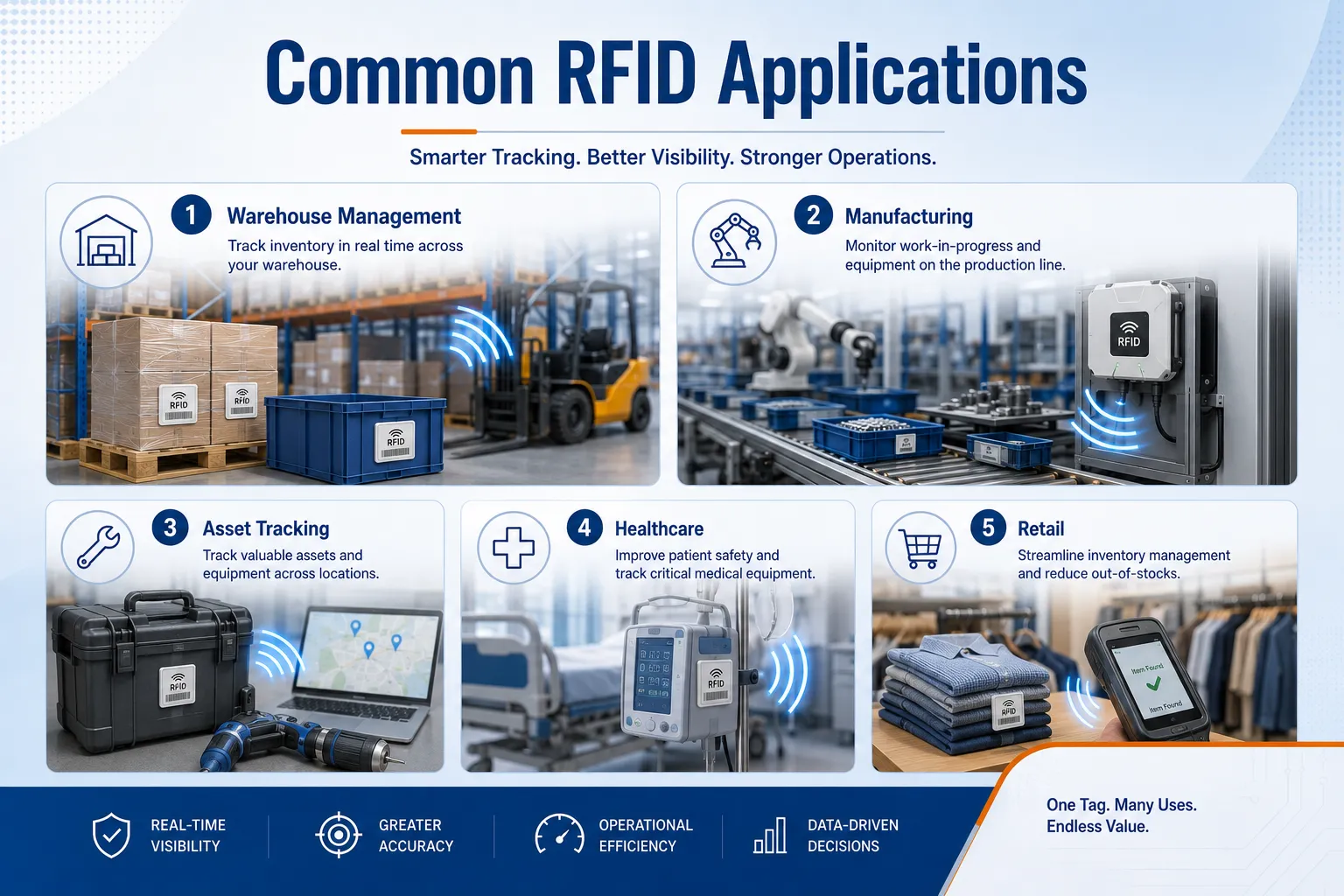
إدارة المخزون
يمكن لأجهزة استشعار RFID تحديد المنتجات والكرتون والمنصات الموسومة تلقائيًا أثناء تحركها عبر المستودعات أو مراكز التوزيع.
يمكن للنظام أن يدعم:
- تلقي التحقق
- عد المخزون
- تأكيد الإبعاد
- التحقق من الاختيار
- فحص الشحنة
- العد الدوري
- إدارة موقع المخزون
ونظرًا لإمكانية اكتشاف علامات متعددة في منطقة قراءة واحدة، فإن RFID يمكن أن يقلل من مقدار المسح اليدوي المطلوب في العمليات ذات الحجم الكبير.
تتبع الأصول الصناعية
يمكن للشركات إرفاق علامات RFID بالأدوات والأدوات والقوالب ومعدات الاختبار وغيرها من الأصول القيمة.
يمكن لقارئات RFID الموضوعة في غرف التخزين أو مداخل الإنتاج أو مخارج ورشة العمل أن تسجل عندما يدخل أحد الأصول أو يغادر منطقة خاضعة للرقابة.
وهذا يساعد المنظمات:
- تحديد موقع المعدات بسرعة أكبر
- تقليل الخسارة
- تحسين توافر الأداة
- سجل استخدام الأصول
- دعم إدارة المعايرة
- تحسين تخطيط الصيانة
تتبع التصنيع والعمل الجاري
يمكن لأجهزة استشعار RFID التعرف على المكونات والحوامل وقطع العمل في محطات الإنتاج المختلفة.
يمكن استخدام البيانات التي تم جمعها من أجل:
- التحقق من المادة الصحيحة
- تسجيل خطوات الإنتاج
- منع أخطاء التجميع
- تتبع العمل الجاري
- ربط المنتجات بنتائج الفحص
- تحسين إمكانية تتبع الإنتاج
يعد RFID مفيدًا بشكل خاص عندما تتلف الرموز الشريطية بسهولة أو تلوثها أو يتم إخفاؤها أثناء الإنتاج.
مراقبة سلسلة التبريد
يمكن أن تجمع علامات مستشعر RFID بين تعريف المنتج ومراقبة درجة الحرارة أو الرطوبة.
تشمل التطبيقات:
- اللقاحات
- الأدوية
- العينات البيولوجية
- طعام طازج
- المنتجات المجمدة
- المواد الكيميائية
- الالكترونيات الحساسة لدرجة الحرارة
يمكن للنظام ربط كل سجل بيئي بشحنة أو حاوية أو طرد محدد.
ومع ذلك، لا ينبغي التعامل مع نظام استشعار RFID تلقائيًا كبديل لمسجل بيانات معتمد. ويجب تقييم الدقة والمعايرة والفاصل الزمني لأخذ العينات والوثائق التنظيمية المطلوبة لكل تطبيق.
الرعاية الصحية وإدارة المختبرات
تستخدم المستشفيات والمختبرات تقنية RFID من أجل:
- تتبع المعدات الطبية
- تحديد العينة
- إدارة الطب
- تحديد هوية المريض
- تتبع الأدوات الجراحية
- إمكانية تتبع منتجات الدم
- إدارة الكتان
يمكن لـ RFID تقليل الوقت المستغرق في البحث عن المعدات وتحسين الرؤية عبر سير عمل الرعاية الصحية المعقدة.
التجزئة والملابس
يمكن لتجار التجزئة إرفاق ملصقات UHF RFID بالمنتجات والملابس الفردية.
يدعم نظام تحديد الهوية بموجات الراديو:
- عد المخزون السريع
- رؤية المخزون على مستوى الصنف
- التجديد
- تلبية الطلب
- الخروج الذاتي
- التحقق من العودة
- تحليل منع الخسارة
يمكن أن تكون تقنية RFID ذات قيمة خاصة للشركات التي تدير المتاجر الفعلية وقنوات المبيعات عبر الإنترنت نظرًا لأن بيانات المخزون الدقيقة تدعم تلبية احتياجات القنوات المتعددة.
التحكم في الوصول وتحديد هوية الموظفين
يمكن استخدام بطاقات RFID وسلاسل المفاتيح وأساور المعصم والشارات لتحديد هوية الموظفين المعتمدين.
تشمل التطبيقات الشائعة ما يلي:
- الوصول إلى المكتب
- مداخل المصانع
- غرف الفندق
- الأحداث
- إدارة الحرم الجامعي
- أنظمة مواقف السيارات
- أنظمة العضوية
يجب أن تجمع مشاريع التحكم في الوصول الحساسة بين تعريف RFID والتشفير المناسب والمصادقة وإدارة الأذونات وسجلات التدقيق.
تتبع الغسيل والنسيج
يمكن دمج علامات RFID القابلة للغسل في الزي الرسمي وبياضات الفنادق ومنسوجات المستشفيات والملابس الصناعية.
يمكن للنظام تسجيل:
- ملكية المنسوجات
- دورات الغسيل
- توزيع
- مجموعة
- فرز
- إستبدال
- خسارة
يجب أن تتحمل العلامة المحددة درجة حرارة الغسيل المتوقعة والمواد الكيميائية والضغط وعملية التجفيف والضغط الميكانيكي.
مزايا مستشعر RFID
لا يوجد خط رؤية مباشر مطلوب
قد يتم اكتشاف علامات RFID دون وضع رمز مطبوع مباشرة أمام الماسح الضوئي.
يمكن قراءة علامات متعددة
يمكن لنظام RFID المصمم بشكل صحيح تحديد علامات متعددة داخل منطقة القراءة.
جمع البيانات الآلي
يمكن للقارئات الثابتة جمع البيانات أثناء مرور الأشياء عبر الأبواب أو نقاط النقل أو محطات الإنتاج أو بوابات المستودعات.
تعريف العنصر الفريد
يمكن أن تحمل العناصر الفردية معرفات إلكترونية فريدة، حتى عندما تبدو المنتجات متطابقة ماديًا.
الذاكرة القابلة لإعادة الكتابة
تسمح بعض علامات RFID للأنظمة المعتمدة بتحديث حقول الذاكرة المحددة.
تصاميم العلامات المرنة
تتوفر علامات RFID على النحو التالي:
- تسميات لاصقة
- العلامات الصعبة
- بطاقات
- سلاسل المفاتيح
- الأساور
- علامات الغسيل
- علامات ربط الكابل
- العلامات على المعدن
- علامات ارتفاع درجة الحرارة
- العلامات المضمنة
حدود مستشعر RFID
لا يعد RFID مناسبًا تلقائيًا لكل مشروع تتبع.
تدخل المعادن والسائلة
يمكن للأسطح المعدنية أن تعكس موجات الراديو، بينما يمكن للسوائل أن تمتص طاقة التردد اللاسلكي. هذه التأثيرات مهمة بشكل خاص في أنظمة UHF RFID.
قد تكون هناك حاجة إلى علامات معدنية وفواصل وهوائيات متخصصة واختبار التثبيت.
قراءة العلامات غير المرغوب فيها
قد يكتشف القارئ العلامات خارج المنطقة المقصودة عندما لا يتم التحكم في منطقة القراءة بشكل صحيح.
يجب تكوين قوة القارئ واتجاه الهوائي والتدريع ومرشحات البرامج بعناية.
اتجاه العلامة
يمكن أن تؤثر الزاوية بين هوائي القارئ وهوائي العلامة على أداء القراءة.
قد تساعد الهوائيات ذات الاستقطاب الدائري عندما لا يمكن التنبؤ باتجاه العلامة، على الرغم من أن اختبار التطبيق لا يزال ضروريًا.
تكامل النظام
يجب أن تكون بيانات RFID مرتبطة بالعمليات التجارية. لا يؤدي تثبيت القارئ وحده إلى إنشاء مخزون كامل أو حل لإدارة الأصول.
يجب أن تتعامل البرامج الوسيطة والبرمجيات مع ما يلي:
- القراءات المكررة
- تصفية
- منطق الحدث
- التحقق من صحة البيانات
- إدارة الجهاز
- تكامل قاعدة البيانات
- معالجة الاستثناء
الخصوصية والأمن
قد تقوم أنظمة RFID بمعالجة المعلومات المتعلقة بالمنتجات أو الموظفين أو العملاء أو أذونات الوصول.
يجب أن تأخذ المشاريع بعين الاعتبار:
- تشفير البيانات
- المصادقة
- حماية ذاكرة العلامة
- التحكم في الوصول
- أمن الشبكة
- سياسات الاحتفاظ بالبيانات
- متطلبات الخصوصية ذات الصلة
مستشعر RFID مقابل الباركود
| ميزة | مستشعر RFID | الباركود |
|---|---|---|
| طريقة القراءة | الاتصالات بالترددات الراديوية | المسح البصري |
| خط البصر | عادة غير مطلوبة | مطلوب |
| قراءة متعددة العناصر | مدعوم في العديد من الأنظمة | عادة رمز واحد في كل مرة |
| قراءة المسافة | يعتمد على نوع RFID وتكوينه | عادة ما تكون قصيرة |
| تكلفة العلامة | أعلى عموما | أقل عموما |
| الرؤية المطبوعة | غير مطلوب | يجب أن يظل الرمز المطبوع قابلاً للقراءة |
| ذاكرة | قد تحتوي على حقول قابلة للكتابة | البيانات المطبوعة الثابتة عادة |
| حساسية المعادن والسائلة | يمكن أن تؤثر على الأداء | عادة ما تكون أقل تأثراً |
| تعقيد النظام | أعلى | أدنى |
لا تحتاج تقنيات RFID والباركود دائمًا إلى المنافسة. العديد من المشاريع تستخدم كليهما.
على سبيل المثال، قد تتضمن بطاقة RFID أيضًا رمزًا شريطيًا مطبوعًا حتى يتمكن الموظفون من مسح العنصر يدويًا عند عدم توفر معدات RFID.
كيفية اختيار جهاز استشعار RFID
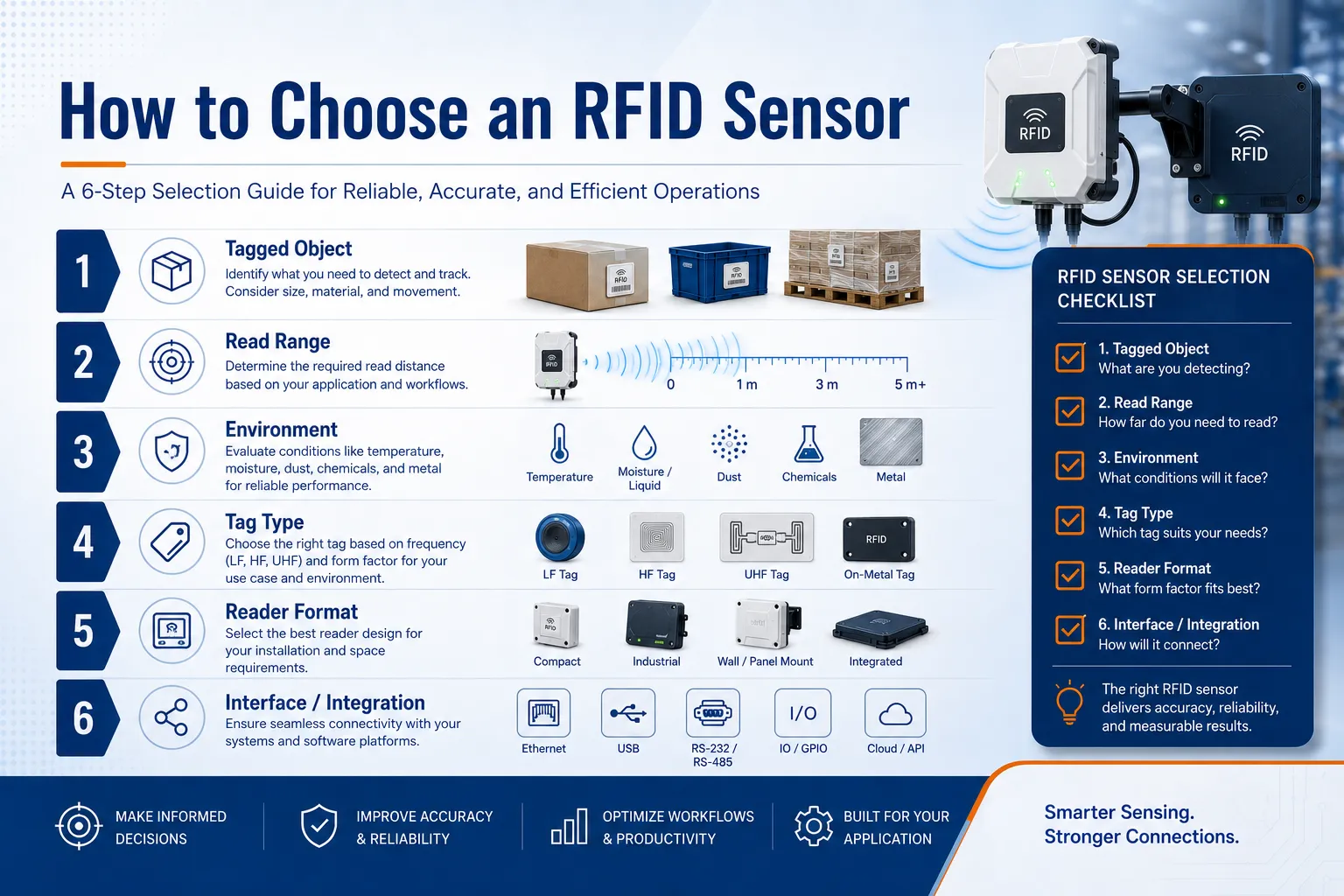
قبل شراء أجهزة RFID، حدد شروط المشروع بوضوح.
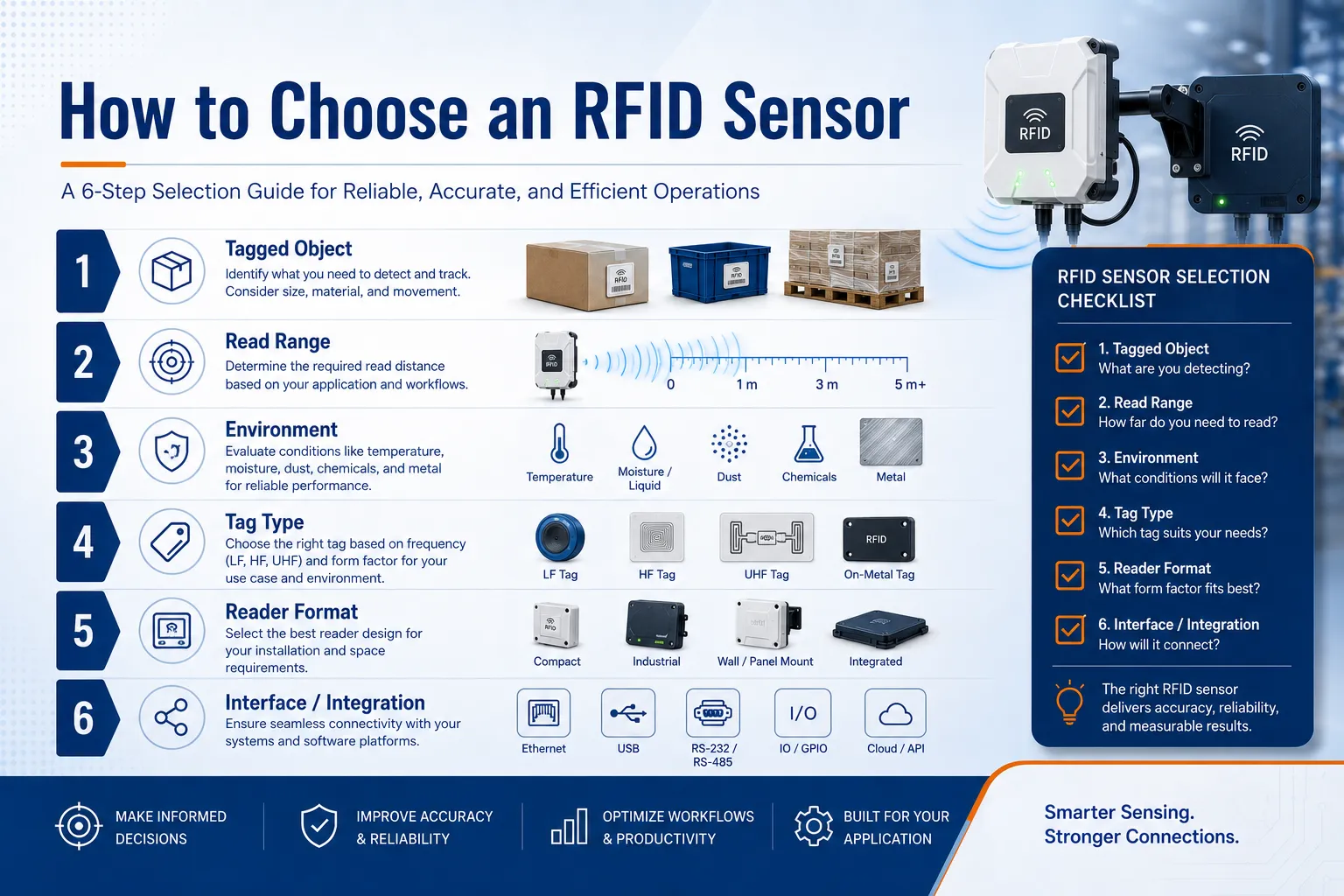
1. تحديد الكائن
تحديد ما سيتم وضع علامة عليه:
- المنتجات الفردية
- كرتون
- المنصات
- أدوات
- وثائق
- المركبات
- الناس
- الحيوانات
- المعدات المعدنية
- حاويات سائلة
تؤثر المواد الموسومة بشكل مباشر على اختيار العلامة.
2. تحديد مسافة القراءة المطلوبة
قد تتطلب محطة التشفير المكتبية مسافة قراءة قصيرة فقط، بينما قد تتطلب بوابة المستودع أو مشروع إدارة المركبات منطقة قراءة أكبر بكثير يمكن التحكم فيها.
مسافة القراءة الأطول ليست دائمًا أفضل. النطاق الزائد قد ينتج عنه قراءات غير مرغوب فيها.
3. تحديد كمية العلامة
قم بتقدير عدد العلامات التي قد تكون موجودة في منطقة القراءة في وقت واحد.
تتطلب التطبيقات عالية الكثافة أداءً مناسبًا للقارئ ووضع الهوائي وتصفية البرامج.
4. تقييم البيئة
يعتبر:
- تركيب داخلي أو خارجي
- تراب
- ماء
- المواد الكيميائية
- اهتزاز
- تأثير
- درجات الحرارة القصوى
- الهياكل المعدنية
- المعدات اللاسلكية القريبة
قد تتطلب التطبيقات الصناعية حاويات متينة وعلامات متخصصة واتصالات كابلات محمية.
5. حدد تنسيق القارئ
اختر بين:
- وحدة RFID المدمجة
- قارئ سطح المكتب
- قارئ متكامل
- قارئ متعدد المنافذ ثابت
- قارئ محمول
- بوابة الوصول
- جهاز RFID الذكي
بالنسبة للمشاريع التي تتطلب أجهزة قراءة أو وحدات أو محطات طرفية محمولة أو هوائيات أو علامات UHF، فإن ما هو متاح حلول أجهزة RFID من Syncotek يمكن أن يوفر نقطة بداية مفيدة لمقارنة تنسيقات الأجهزة المختلفة. تتضمن فئة RFID من Syncotek وحدات UHF، والقراء المدمجين، والقارئات الثابتة، والقارئات المكتبية، وبوابات الوصول، والأجهزة المحمولة، والهوائيات وعلامات RFID.
6. تأكيد واجهات الاتصال
تتضمن الواجهات الشائعة ما يلي:
- USB
- RS232
- RS485
- إيثرنت
- Wi-Fi
- بلوتوث
- ويجاند
- جيبيو
- يستطيع
- uart
يجب أن تكون الواجهة المحددة متوافقة مع نظام التحكم أو الكمبيوتر أو وحدة التحكم في الوصول أو الشبكة الصناعية.
7. تحقق من متطلبات التردد الإقليمي
تختلف تخصيصات تردد UHF RFID وقوة الإرسال المسموح بها حسب البلد أو المنطقة.
يجب أن تدعم الأجهزة لوائح موقع التثبيت. لا تقم باختيار القارئ فقط وفقًا لأقصى مسافة مُعلن عنها.
8. إجراء اختبار في الموقع
يعتمد أداء RFID على البيئة الكاملة.
يجب أن يستخدم الاختبار المناسب:
- الكائنات الموسومة الفعلية
- العلامات المقصودة
- القارئ المخطط
- الهوائيات المخطط لها
- سرعة الكائن واقعية
- كمية العلامة واقعية
- مكان التثبيت النهائي
غالبًا ما يكون اختبار نماذج العلامات المتعددة أكثر موثوقية من تحديد علامة فقط من ورقة المواصفات.
الأسئلة المتداولة
هل قارئ RFID هو جهاز استشعار؟
يمكن اعتبار قارئ RFID نوعًا من أجهزة الاستشعار أو الكشف لأنه يكتشف علامات RFID ويتواصل معها.
ومع ذلك، فإنه لا يقيس بالضرورة المتغيرات البيئية. تشتمل علامة مستشعر RFID الحقيقية على عنصر استشعار إضافي لدرجة الحرارة أو الرطوبة أو الضغط أو أي حالة بدنية أخرى.
هل يمكن لأجهزة استشعار RFID العمل بدون بطاريات؟
تعمل علامات RFID السلبية بدون بطاريات داخلية. يتلقون طاقة التشغيل من مجال التردد الراديوي للقارئ.
تستخدم مستشعرات RFID النشطة والمدعومة بالبطارية البطاريات لدعم المدى الأطول أو القياسات المتكررة أو جمع البيانات المستقلة.
هل يمكن لمستشعرات RFID القراءة عبر الجدران؟
قد تمر إشارات RFID عبر مواد غير معدنية معينة، لكن الأداء يعتمد على التردد، ومواد الجدار، وقوة القارئ، وتصميم الهوائي والبيئة المحيطة.
لا ينبغي افتراض أن RFID يعمل بشكل موثوق من خلال الجدران دون اختبار.
هل يمكن استخدام مستشعرات RFID على المعادن؟
نعم، ولكن غالبًا ما يكون أداء ملصقات RFID القياسية ضعيفًا عند ربطها مباشرة بالمعدن.
تشتمل علامات RFID الموجودة على المعدن على هياكل تعزل الهوائي أو تضبطه للتشغيل على الأسطح المعدنية.
إلى أي مدى يمكن لمستشعر RFID القراءة؟
لا توجد مسافة قراءة واحدة لجميع أنظمة RFID.
نطاق القراءة يعتمد على:
- تكرار
- عملية سلبية أو نشطة
- إخراج القارئ
- كسب الهوائي
- حساسية العلامة
- اتجاه العلامة
- بيئة التثبيت
- اللوائح المحلية
يجب التحقق من مسافة القراءة العملية في التطبيق النهائي.
هل يمكن لأجهزة استشعار RFID قياس درجة الحرارة؟
نعم. تجمع علامات مستشعر درجة الحرارة RFID بين واجهة RFID وعنصر استشعار درجة الحرارة.
اعتمادًا على التصميم، قد تنقل العلامة القراءة الحالية أو تخزن القياسات التاريخية أو توفر إشارة إلى الحد الأدنى.
هل RFID أفضل من الباركود؟
يكون RFID مفيدًا عندما يتطلب المشروع تحديدًا تلقائيًا، أو قراءة علامات متعددة، أو تشغيل خارج خط البصر أو تحديد أكثر متانة.
تظل الرموز الشريطية مناسبة عندما تكون التكلفة المنخفضة والتعرف البصري والمسح الضوئي البسيط مرة واحدة هي المتطلبات الرئيسية.
خاتمة
توفر مستشعرات RFID طريقة مرنة لربط الأشياء المادية بأنظمة الإدارة الرقمية.
يمكن لنظام RFID الأساسي التعرف تلقائيًا على المنتجات والأصول، بينما يمكن لعلامات مستشعر RFID المتقدمة أيضًا مراقبة الظروف البيئية مثل درجة الحرارة أو الرطوبة أو الاهتزاز أو الضغط.
يعتمد النشر الناجح على أكثر من مجرد اختيار قارئ يتمتع بأطول نطاق معلن عنه. يجب على الشركات تقييم مادة العلامة والتردد وحركة الكائن ومنطقة القراءة ووضع الهوائي وواجهة الاتصال وتكامل البرامج واللوائح الإقليمية.
ومن خلال اختبار النظام الكامل في ظل ظروف التشغيل الحقيقية، يمكن للمؤسسات بناء حل RFID الذي يعمل على تحسين إمكانية التتبع ورؤية المخزون واستخدام الأصول وأتمتة العمليات.
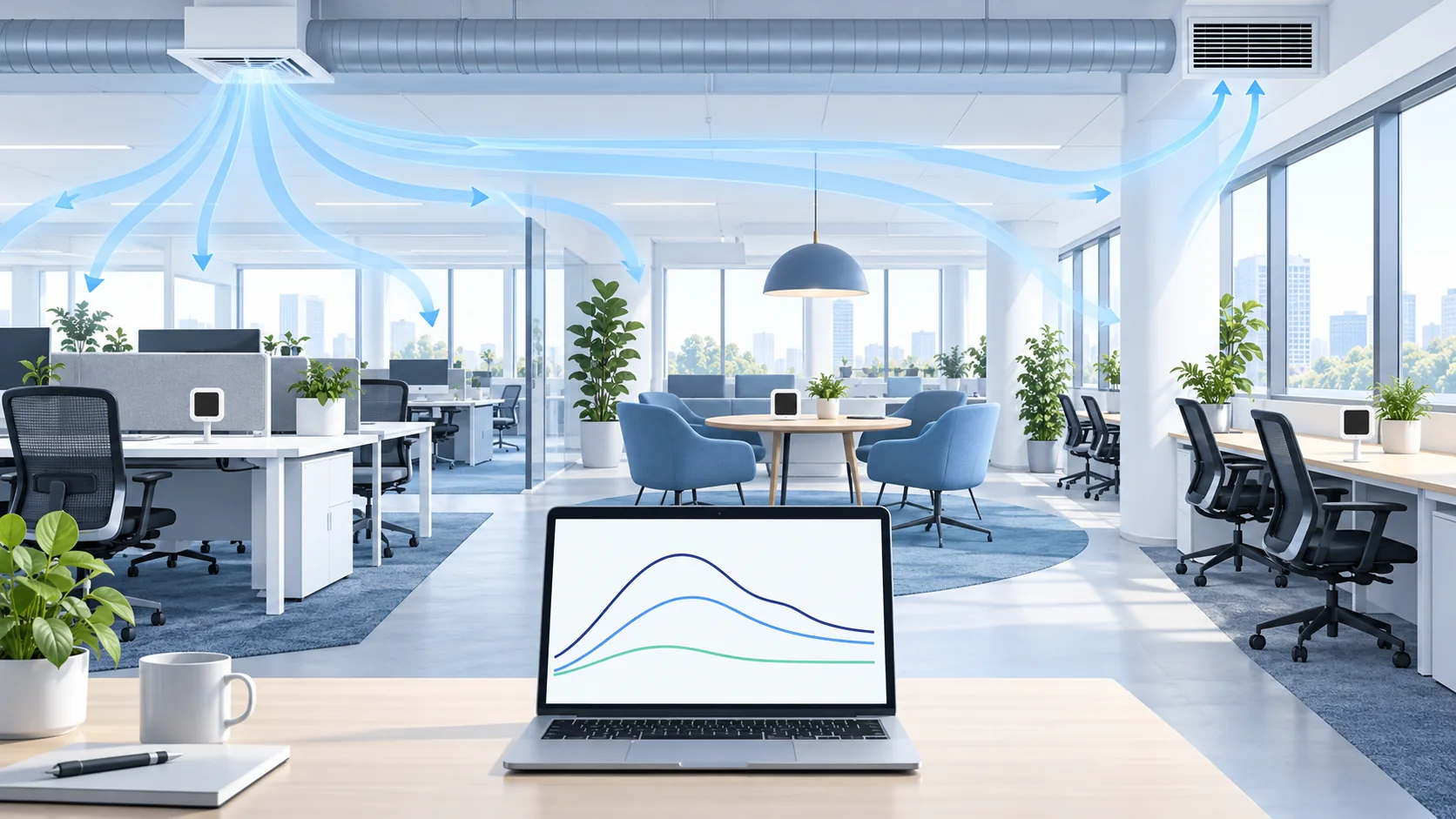
كيفية مقارنة قراءات ثاني أكسيد الكربون عبر مناطق المكاتب ذات المخطط المفتوح
قارن سجلات ثاني أكسيد الكربون المتزامنة في منطقة المكتب بعد التحقق من اتفاقية المراقبة والموقع والإشغال وأحداث نظام الهواء؛ تعلم متى يتطلب اختلاف المنطقة إجراء تحقيق.
اقرأ أكثر
كيفية قراءة اتجاه ثاني أكسيد الكربون في غرفة الاجتماعات مقابل الإشغال
اقرأ اتجاهات ثاني أكسيد الكربون في غرفة الاجتماعات مع أحداث الإشغال والتهوية، وتمييز مستوى البداية، وارتفاع الإشغال، والتدخل، وانخفاض ما بعد الاجتماع.
اقرأ أكثر
كيفية التخطيط لوضع جهاز مراقبة ثاني أكسيد الكربون في المكتب
تخطيط مواقع المكاتب التمثيلية لرصد ثاني أكسيد الكربون حسب غرض القياس والإشغال ومسارات الهواء، ثم التحقق من المواقع وسياق السجل قبل استخدام البيانات.
اقرأ أكثر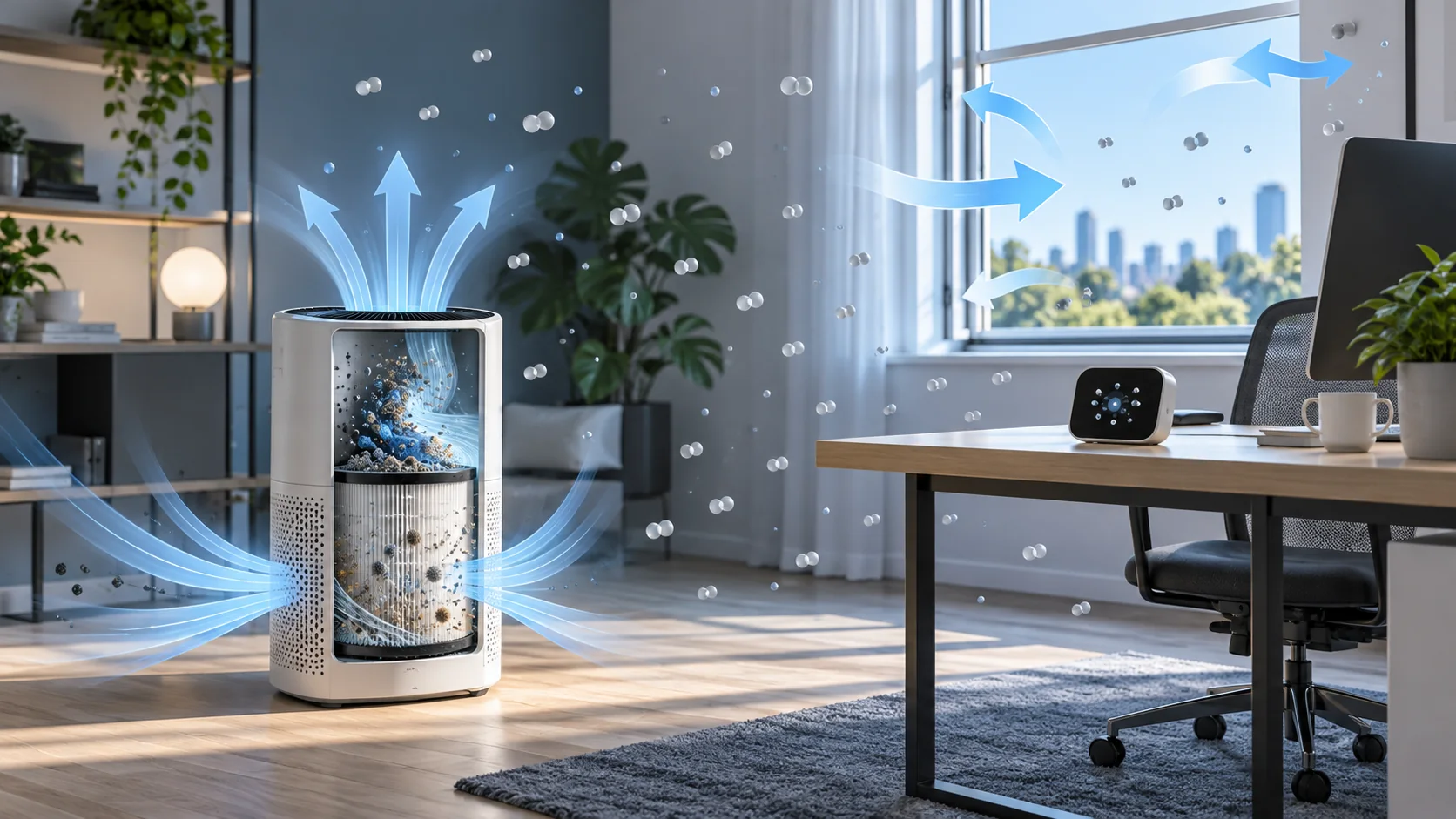
هل تعمل أجهزة تنقية الهواء على خفض ثاني أكسيد الكربون؟ ترشيح منفصل عن تبادل الهواء الخارجي
تقوم أجهزة تنقية الهواء HEPA العادية بالتقاط الجزيئات ولكنها لا تزيل بشكل فعال ثاني أكسيد الكربون الناتج عن الركاب. تعلم كيفية فصل إعادة التدوير وتهوية الهواء الخارجي ومراقبة تأثيرات الخلط.
اقرأ أكثر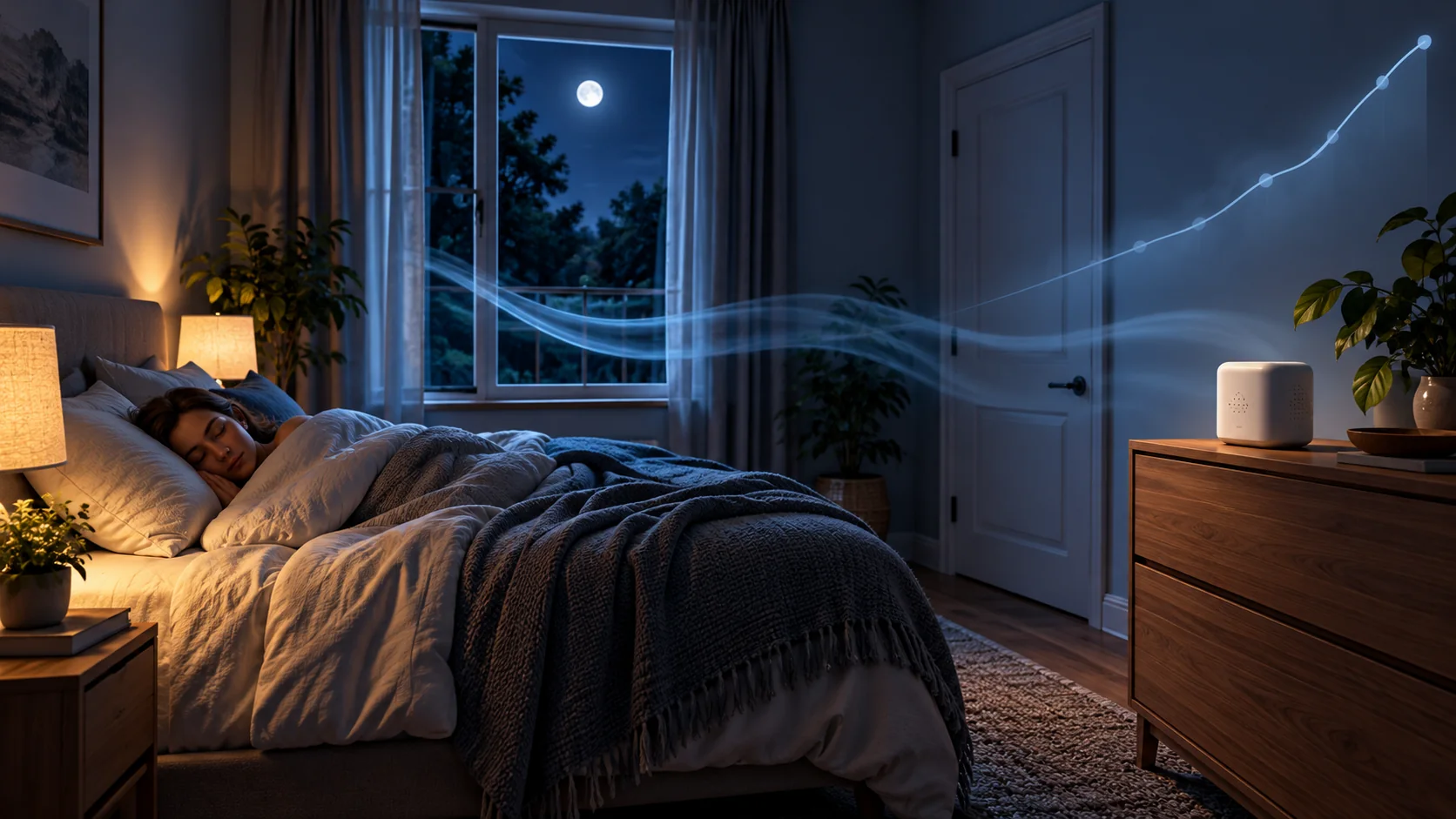
كيفية قراءة سجل ثاني أكسيد الكربون في غرفة النوم أثناء الليل
قم بتفسير أثر ثاني أكسيد الكربون في غرفة النوم طوال الليل باستخدام مستوى البداية والارتفاع والهضبة والاستجابة الصباحية أثناء التحقق من جودة المسجل ومسارات الهواء والليالي المماثلة.
اقرأ أكثر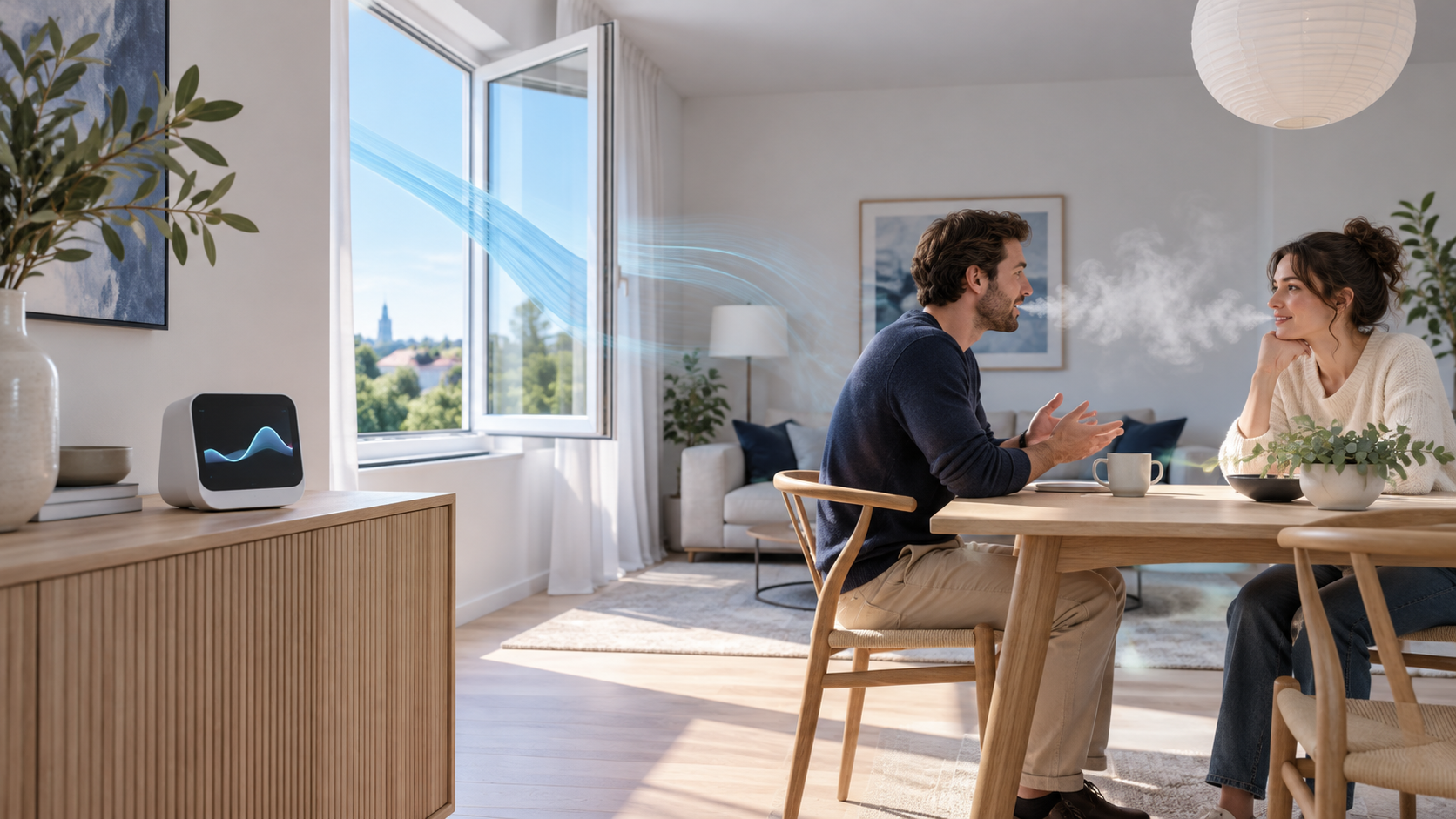
كيفية تفسير اتجاهات ثاني أكسيد الكربون في المنزل: اقرأ النمط، وليس رقمًا واحدًا
تعرف على كيفية تشكيل أثر الإشغال والهواء الخارجي ومزج الغرفة ووضع المراقبة لتتبع ثاني أكسيد الكربون في المنزل، واستخدم سجلًا قابلاً للتكرار لاختبار تغييرات التهوية.
اقرأ أكثر