
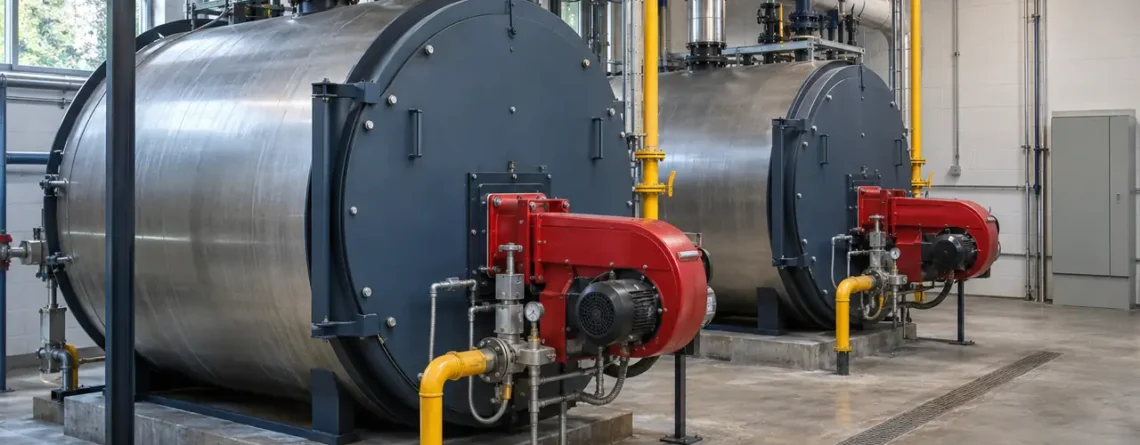
A boiler-room gas monitoring schedule starts with the source and the action a reading is meant to support. A combustible-gas detector looks for escaped fuel in room air. A carbon monoxide detector looks for CO in room air. A workplace oxygen monitor measures the atmosphere people may enter or work in when an oxygen hazard has been identified. A combustion analyzer samples exhaust or flue gas to assess the appliance or to meet a defined measurement obligation. Those four jobs can coexist at a plant. They use different samples, may have separate owners and produce different evidence.
The site team should identify the fuel, equipment and spaces before deciding which jobs apply. A gas-fired hot-water plant, an oil-fired steam plant and a boiler surrounded by equipment that can release inert gas have different scenarios. Start with the locally adopted mechanical, fuel gas, fire and boiler rules and the equipment instructions. Work practices and occupational exposure requirements sit alongside those rules. The result should be a schedule that explains what each instrument observes and what happens when its reading is high, low, invalid or unavailable.
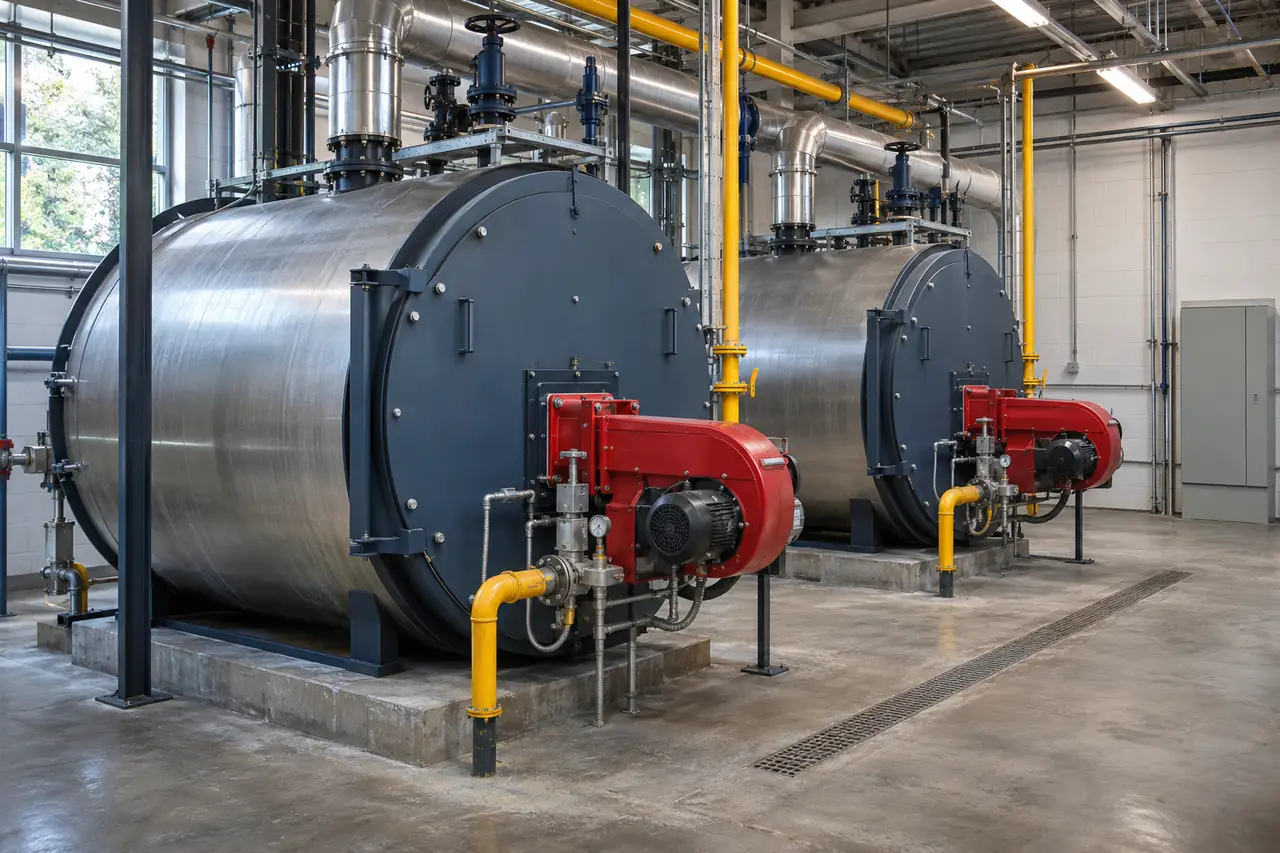
Boiler equipment provides context for the separate process and room measurements.
What sample is each instrument actually measuring?
A mechanical-room drawing often shows a boiler, several pipe runs and a single label reading “gas detection.” Split that label into the measurement jobs that the design actually requires. Trace each one from the physical sample to the decision. Even an instrument with several sensing channels needs a separate definition for each channel.
| Job | Sample and measurand | Decision it can support | Pruebas a conservar |
|---|---|---|---|
| Escaped fuel detection | Room air or air from a designed sample point, for the specified combustible gas | Defined response to a release where the detection system applies | Fuel profile, coverage basis, gas response data, controller and interface drawings |
| Ambient CO detection | Room air at defined points or a worker’s exposure sample, in the applicable units | Defined room alarm or an exposure assessment, according to instrument purpose | CO range and interferences, air path, location, response and exposure basis |
| Ambient oxygen monitoring | Air in the area or work space, with the applicable O₂ measurement basis | Defined area, entry or work decision for a documented atmosphere hazard | Scope of hazard assessment, location, timing and instrument checks |
| Flue and combustion analysis | Exhaust at a specified test point, with named gases and reporting basis | Appliance service diagnosis, a process trend or a defined emissions result | Sample point, method, load, basis, equipment and verification records |
| Burner supervision | Flame signal, pressure switches or other inputs defined by equipment controls | Equipment permissive, trip or lockout according to its approved logic | Burner documentation, interlock schedule and equipment verification |
A workplace sample and a fixed room sample belong on separate rows when each serves a different decision. A fixed detector tells the operator about the gas that reached that detector or its inlet. A person can move across zones, work close to a release or enter an enclosure. A personal instrument or sampling strategy can follow an exposure in a way that a wall-mounted point cannot. Conversely, a worker’s portable instrument is present only when carried and maintained for that assignment.
Write the physical boundary explicitly. For example, “CO at the boiler-room fixed transmitter” and “CO in boiler B exhaust at the service port” could both be recorded in parts per million. A record titled “boiler CO ppm” discards the distinction. Trend labels should include room or equipment identity, point, gas, units and status. If the instrument presents a calculated exhaust result, its basis belongs in the label or linked point metadata.
Follow the fuel before choosing a combustible channel
Trace the fuel from the incoming service through equipment owned by the plant and the appliance. Where relevant, include regulators, valves, joints, flexible connections, burner trains and branches that remain pressurized when a boiler is off. Establish whether the fuel is utility natural gas, a propane supply or another named gas, and identify changes across operating modes. A conversion can affect the gas profile, equipment installation and response instructions even when the room and controls panel appear unchanged.
A combustible-gas detector may report in percent of the lower explosive limit, often written %LEL. The meaning of the scale depends on the target gas and the instrument’s configuration. Some instruments use a specific calibration gas and provide response factors for other gases. A factor for an exact sensing technology and model should be used only within its stated conditions. A concentration expressed as a percentage of LEL is different from volume percent in air. Ask for the gas name, calibration basis, correction method where applicable and the rules for readings beyond range. The MSA comparison of infrared and catalytic bead detectors describes combustible sensing principles and the role of the target gas and environmental conditions.
Catalytic combustible sensors oxidize suitable gases at a heated sensing element. The reaction depends on oxygen and can be affected by poisoning or inhibition. An infrared combustible detector measures absorption for the gases its optical design supports. A suitable hydrocarbon detector can be an option in certain oxygen-poor applications, but its response table and approval need to cover the actual gas and scenario. Infrared coverage for one hydrocarbon does not imply response to a gas with different optical behavior. Review the exact installed instrument and manufacturer documentation before making the technology decision.
Consider air movement and barriers with the release scenario. A warm equipment plume, supply diffuser, open door or extract path can move the gas differently as the building changes mode. A high ceiling void or partition may isolate an area from the detector shown on a floor plan. Gas density is one input. Temperature, release momentum, source geometry, ventilation and access for service also affect whether gas can reach the inlet. Record the basis for each location and each coverage assumption with the design team. A generic height or distance carries little information about an actual room.
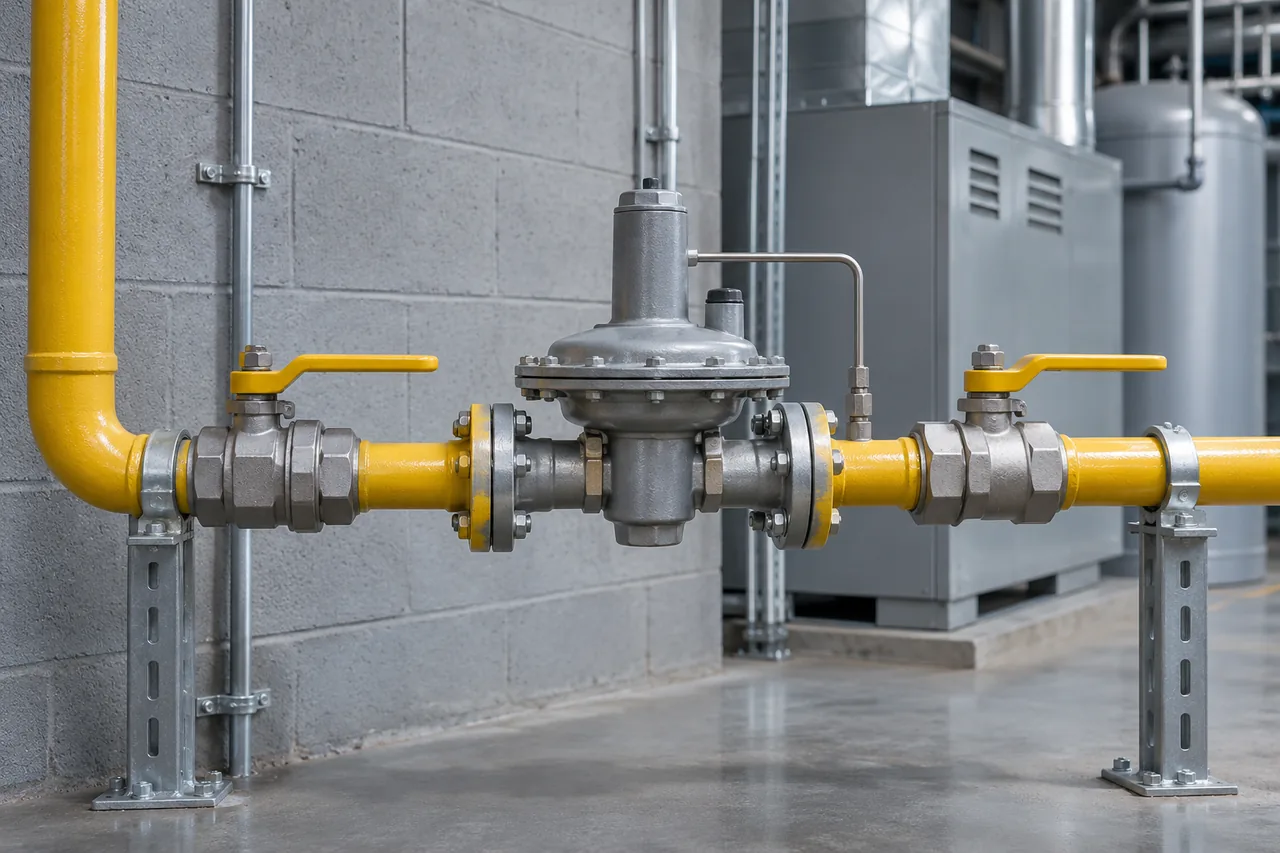
Fuel piping and associated components establish a separate release scenario.
Fuel response belongs in a controlled sequence
Assign ownership of the alarm, local indication, authorized isolation and any ventilation response. The sequence should identify the signal type, which equipment or system has authority to act, how a valid release is distinguished from an instrument fault, and how recovery is permitted. Where the accepted design includes automatic fuel isolation, the gas detector output is one part of that chain. Valve state, proof where specified and restart permission remain separate design questions.
Review what a monitored contact does when its source loses power. A single binary input may represent several physical states unless the interface is designed to distinguish them. Compare power failure, disconnected signal, actual gas event and a control system maintenance bypass. The approved sequence can define a different response for each state. A stable last value can mislead an operator if the monitoring screen has no stale-data indication.
Give ambient CO its own source and pathway analysis
CO can reach a room when combustion products spill, leak from a vent path or arrive from a different source. Adjacent vehicle traffic, temporary engines and other fuel-fired equipment may be relevant to a particular facility. Review the source list beyond the name of the room. A CO event can occur without a combustible-fuel alarm. A fuel release can occur without elevated CO. Both scenarios warrant independent consideration when applicable.
Draft and pressure relationships can change with exhaust fans, combustion air openings, exterior conditions or the operation of nearby equipment. An observation at steady load captures one operating condition. A room investigation should keep the event time and equipment state aligned with ventilation status and other activities. A single low reading taken later, after equipment stopped or doors opened, describes that later sample. The earlier event remains a separate question for the site team.
Electrochemical CO cells are widely used for ambient instruments. Check the exact gas response and documented interferences, along with temperature, humidity, service life and response time. Hydrogen interference is a plausible concern for some CO cells. Whether it matters depends on the cell and concentration of the interfering gas, and any compensation or filter must be evaluated within its specified range. Honeywell’s technical note on electrochemical sensors shows how gas response and cross-sensitivity information can be tied to specific sensor models. A warning signal should remain actionable under the site procedure while the source and instrument are evaluated.
The federal US workplace CO limit is an occupational exposure provision in OSHA’s air-contaminant table. The project should distinguish the applicable exposure metric, personal or area sampling basis, and any local or equipment alarm requirement. An averaging window used to judge an exposure has a different purpose from a room controller’s time delay or alarm logic. A fixed detector trend can inform an investigation when its coverage and data are understood. The exposure assessment still needs evidence suitable for the person, location and time interval being assessed.
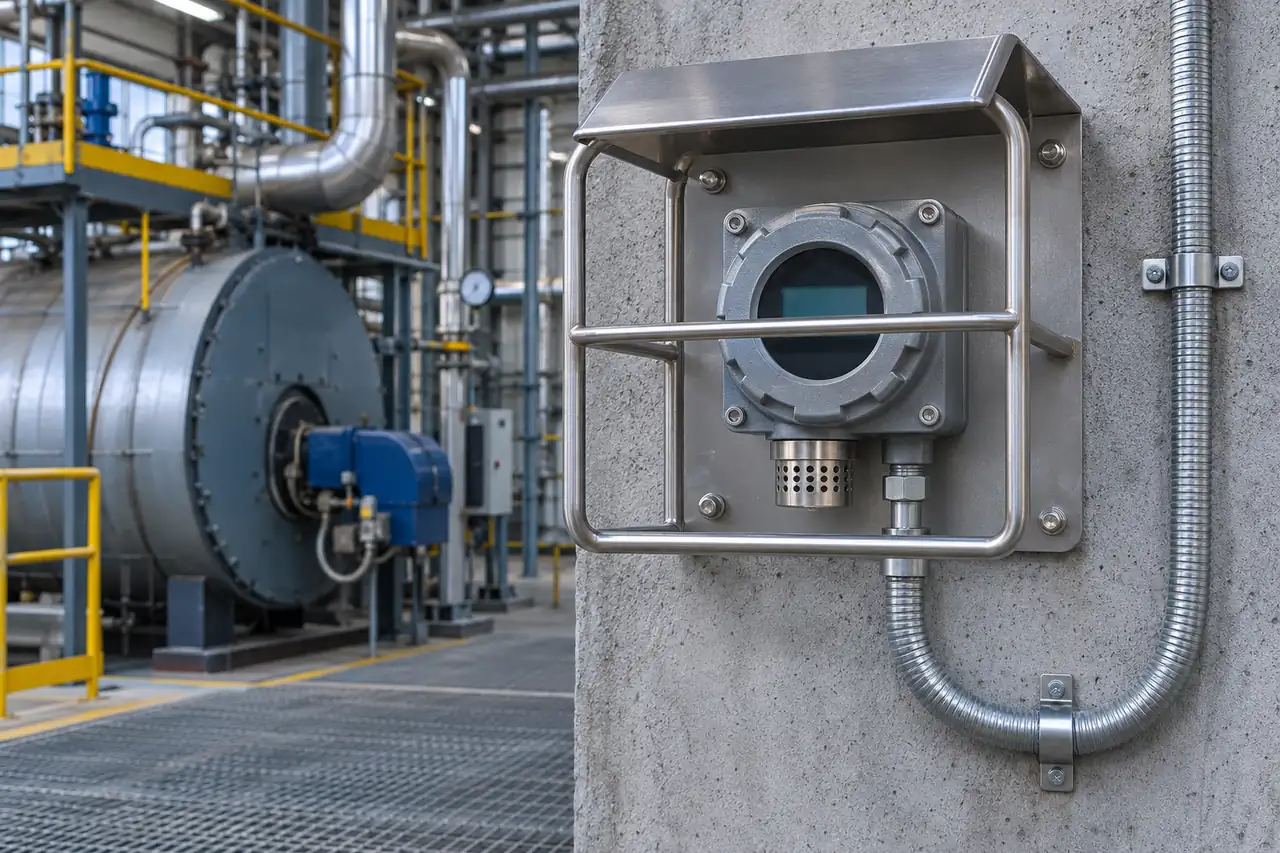
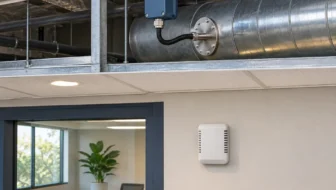
A fixed transmitter represents its sensing location. This scene does not specify mounting.
Three different CO numbers can all be valid
Imagine a plant team receives an appliance report, a room trend and a workplace sampling report. The appliance report lists CO from the exhaust, on a specified basis at a documented load. The trend lists the latest valid ambient CO sample for a fixed point near one work area. The workplace report summarizes an employee measurement over a specified period. All three can use ppm. Each is a different statement about the plant. An exhaust diagnostic cannot be substituted for an area reading. A low time average cannot tell the operator how large a brief event was unless the time history and method support that question.
Keep two chronology fields when possible. One indicates when the sample was taken or integrated. The other indicates when it was logged or shown on the controller. An extractive analyzer may have a transfer delay. A field network may update at a different cadence from the detector. Timeline alignment is important when the inquiry concerns a short equipment transition rather than a steady condition.
Decide where oxygen monitoring serves a defined work or area hazard
Room oxygen matters when a plausible process can change the oxygen concentration in the air people encounter. The review can include inert gases from maintenance or adjacent equipment, releases affecting a poorly ventilated enclosure, or oxygen-consuming conditions within a particular space. A boiler-room label alone does not identify those scenarios. Determine whether the question is continuous area monitoring, worker-carried detection, pre-entry evaluation or another defined activity.
A monitor selected for oxygen must be suitable for the environment and use. Document its valid range, environmental limits, sample inlet, response and other channels needed by the hazard assessment. In ambient work an oxygen result answers the oxygen question. CO can be hazardous while oxygen remains near its ordinary background. Some gases can present toxicity or flammability hazards before an oxygen reading changes enough to serve as a proxy. Use the channels assigned to the identified hazards.
An enclosed boiler component, pit or other restricted space may warrant separate assessment. The US federal general-industry permit-required confined-space rule addresses a specific work context. A room safety program should distinguish the open equipment area from spaces evaluated under entry procedures and should identify who makes and records the determination. In other jurisdictions, use the applicable workplace regulator and adopted rules. A permanent room device elsewhere in the facility supplies a different sample from one taken for a defined entry.
Keep flue gas analysis with the appliance and its measurement method
Combustion analysis can include oxygen, CO and other quantities depending on the equipment and purpose. A service instrument can help a qualified technician assess combustion under the appliance procedure. An installed process analyzer can track exhaust as operating conditions change. A permit or emissions program may require a method with its own sampling, analyzer and validation provisions. These applications can use different instruments even when a channel shares the same gas name.
The sample is hot exhaust or a defined conditioned portion of that exhaust. Identify the port or probe location, extraction and conditioning where applicable, appliance state and reporting basis. Removing water from a sample changes the denominator of a concentration. Air entering a leaking sample path or diluting the flue at a downstream point can change the result as well. If a CO report states a corrected basis, keep the calculation definition, raw readings and any required inputs available. An ordinary room CO reading has a different meaning from a combustion result corrected for a reference oxygen concentration.
EPA Method 3A is a US instrumental method for oxygen and carbon dioxide in stationary-source emissions where required by the applicable rule or permit. It illustrates the value of validating the sampling system and analyzer together. It does not supply the service instructions for every boiler or establish a room-air safety measurement. Use the equipment’s service instructions and the actual project measurement requirement to decide what evidence applies.
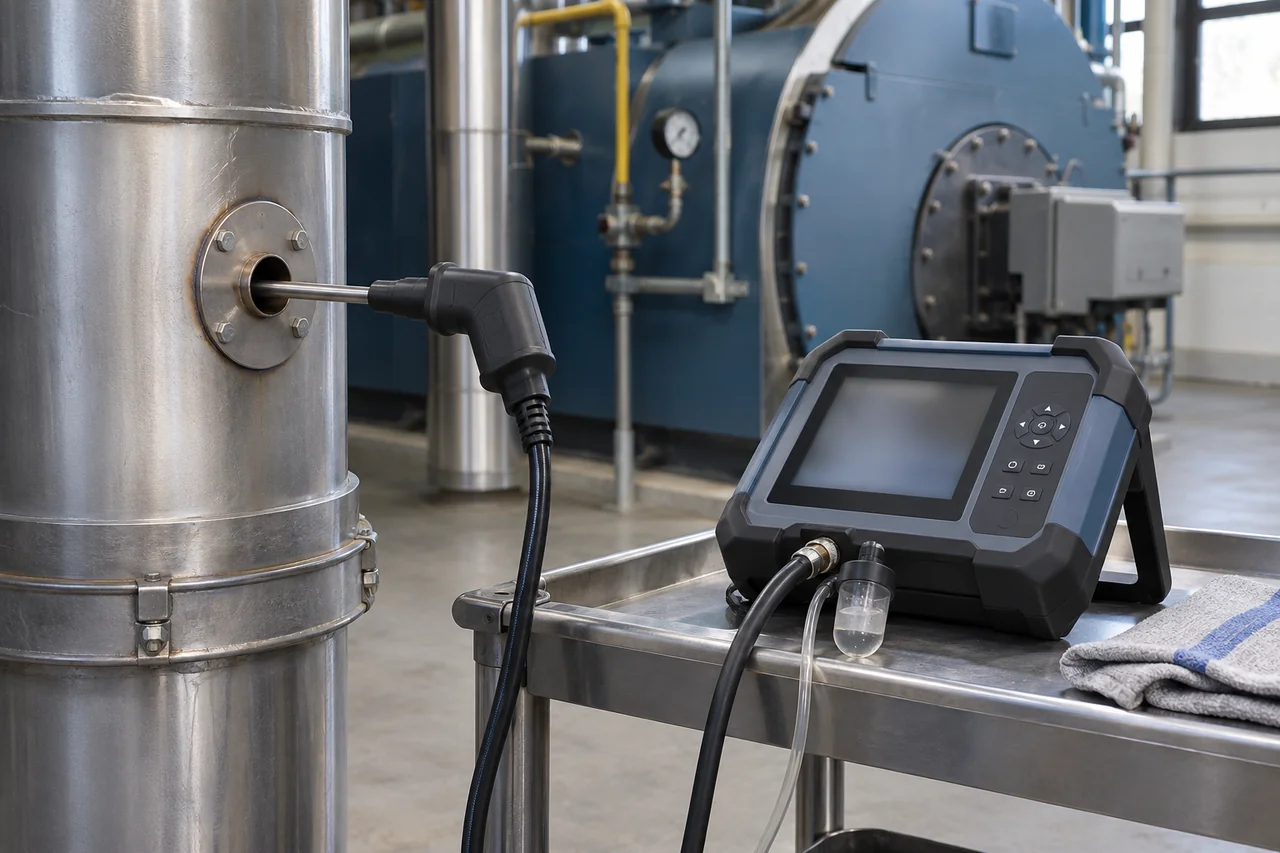
Exhaust sampling is a separate task from ambient room measurement.
Burner controls are another layer
A burner management system may use inputs such as flame supervision, gas pressure, valve proving or airflow permissives as specified by the equipment and governing requirements. Those inputs describe the state of the burner and its services. They do not sample the general room atmosphere. A shutdown or lockout record can help correlate an event with operation. It does not establish whether a pipe connection upstream released gas into the room or whether CO reached a work area.
Similarly, any flue oxygen input used by a combustion control strategy has a specific control purpose and configured response to a fault. It should appear on the process instrumentation schedule with the owner of that control. Ambient warning and room response should have their own documented interface. Review the design with the equipment specialist, controls designer and responsible safety staff, including what each system is expected to do if another system loses power.
Establish code scope before extracting an alarm value
US projects can involve state and local adoption of different editions and amendments, equipment listing and instructions, occupational obligations and permits. The site’s construction or alteration status matters. Check occupancy, equipment capacity or classification where applicable, fuel and installation details. The authority responsible for building permits may differ from the organization responsible for boiler inspections, emissions or workplace exposure. Record which source controls each individual decision.
El Minnesota mechanical rule for combustion equipment provides one example of jurisdiction-specific provisions. New York City’s natural gas detector guidance addresses a city requirement for covered housing and explains its applicability. The presence of a detector provision in one use case is evidence about that use case. A central plant in another city, an industrial workplace or an oil-fired appliance needs its own basis. In jurisdictions outside the United States, start with the applicable local building, gas, fire and workplace requirements and the installed equipment documentation.
Read the condition before the number. One value may be an equipment certification condition, another may be a limit for a workplace exposure, and another may be a site-approved room alarm. For every threshold or state in the approved design record, keep the purpose, gas, units, basis, time behavior, authority, required response and responsible owner together. An alarm list copied from a different plant loses most of the information needed to judge whether it belongs at this site.
Build a measurement schedule that operators can use
A useful schedule has rows tied to equipment tags and physical areas. Its entries include operating states the point covers, allowed range, invalid states and where the reading is displayed. For each row, identify the part of the design that turns a detector output into an action. A valid reading can trigger a local warning, a remote message, an interface to another controller or several actions in a designed sequence. Verification evidence should show which actions were actually observed.
| Schedule field | What to document |
|---|---|
| Source and coverage | Gas or process, credible release or sample location, affected area and operating states |
| Instrumento | Exact detector or analyzer, gas configuration, range, units and environmental rating |
| Sampling | Physical inlet or probe, mounting or line details, filter and flow supervision if relevant |
| Control and notification | Source of logic, destination, priority, authorized actions and physical proof where required |
| Invalid data | Loss of power, fault, overrange, service, stale communications and bypass |
| Test boundary | Detector response, signal delivery, commanded action and independent feedback as applicable |
| Ownership | Responsible discipline or team, document revision, service owner and approved recovery |
Specify how service changes are controlled. A detector can be in warm-up after replacement, a sample path can be disconnected for maintenance and a controller can be under a temporary override. The operator needs an indication of coverage and availability during those states. A return-to-service record should identify the asset, configuration, resulting checks and unresolved conditions, with restrictions if required by the site process. Align maintenance access with the design so qualified personnel can reach detectors and sample components under the applicable procedures.
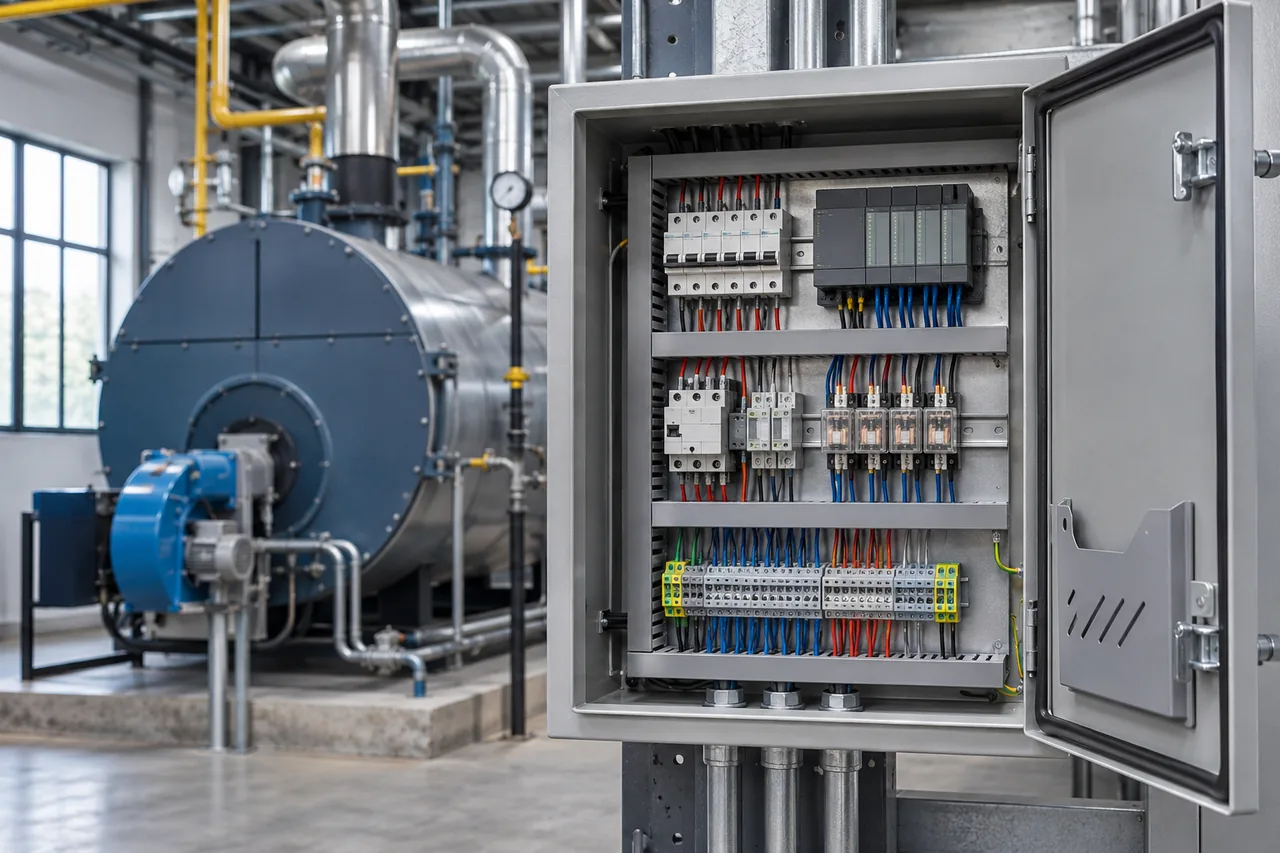
The installed control path defines how a detector event becomes an action.
Hypothetical plant with two boilers and an adjacent loading area
Consider two gas-fired boilers sharing a mechanical room beside a loading area. A fixed fuel-gas detection row concerns a release from the pressurized fuel system into the room. A separate ambient CO row covers combustion products that could arrive from the plant or the adjacent activity. A qualified service contractor uses a flue analyzer at the defined appliance test point for each boiler. Workplace staff assess a restricted equipment enclosure separately for entry hazards.
Suppose the fixed ambient CO channel rises while the fuel channel stays low. The operations log preserves the alarm, ventilation mode, boiler state and nearby activity. An appliance test performed later records its own load and sampling basis. The team can assess competing explanations using the two independent records. A service result at one boiler under one load is useful evidence about that test condition. The fixed channel event still has its own time, source investigation and response record.
Now suppose a controls upgrade imports all four data streams into the same dashboard. The interface map should preserve their independence. If a network update fails, the dashboard should distinguish stale values from live values where the system design calls for it. The underlying approved controller’s authority and any local actions should be documented separately from the dashboard. Use commissioning records to show the path through the actual installation. A screen graphic alone cannot establish what happened at the fan, valve or local annunciator.
What can a detector check demonstrate?
A functional gas response check can demonstrate the expected response under the test conditions. A calibration check compares the indication with a suitable reference. A full installed sequence check adds the signal path, controller behavior and configured downstream outcomes. For an aspirated system, the point where test gas enters matters. A test applied at the analyzer can leave the installed sample inlet and transport path outside the test boundary.
OSHA’s bulletin on direct-reading portable gas monitors describes the distinction between portable monitor functional checks and calibration. The bump-test guide expands on what a response check shows. Fixed instruments and combustion analyzers need their applicable methods, instructions and approved test arrangements. Keep the test point, reference, observed action and any unverified parts of the chain in the report. Testing that can operate equipment or alarm interfaces belongs under the authorized site procedure.
Preguntas frecuentes
Does a boiler’s flue analyzer monitor carbon monoxide in the room?
Its probe or sample line measures exhaust at its defined sampling point. An ambient CO measurement requires a suitable channel that samples the room or the worker’s environment as specified. An instrument may offer more than one mode, but the mode, inlet and intended use still define what the displayed value represents.
Can a fuel detector replace a CO detector?
The two channels have different target gases and decisions. Compare the exact gas responses of each instrument. A shared controller or enclosure can host independent channels if the application and approvals support it. Each channel still needs its own purpose, limits and evidence.
Do all boiler rooms need an oxygen alarm?
Review the oxygen hazard and governing requirements for the specific space and task. A fixed area detector, portable worker instrument and measurement used under an entry procedure have distinct purposes. Document the reason for selecting each one and the boundaries of the coverage it provides.
Is one detector location suitable for every gas?
Location depends on the source, room layout, airflow states, equipment instructions and applicable requirements. A location chosen for one gas and decision cannot be assumed representative for another. Review actual room geometry and changes in ventilation when evaluating coverage.
Who owns the gas response sequence?
The project documents should identify the owner of each local control, interface and final action, along with the authority that accepts the arrangement. Facilities staff need a record of where to see alarms, how faults are identified and which procedure governs recovery. The detector vendor, controls contractor and equipment supplier may each provide evidence for part of the chain.





Deja una respuesta