北米市場をターゲットとするガスセンサーメーカー、ガス検知器ブランド、システムインテグレーターにとって、認証は単なるコンプライアンス要件以上のものになりつつあります。また、顧客の信頼、プロジェクトの承認、製品の選択においても重要な要素です。

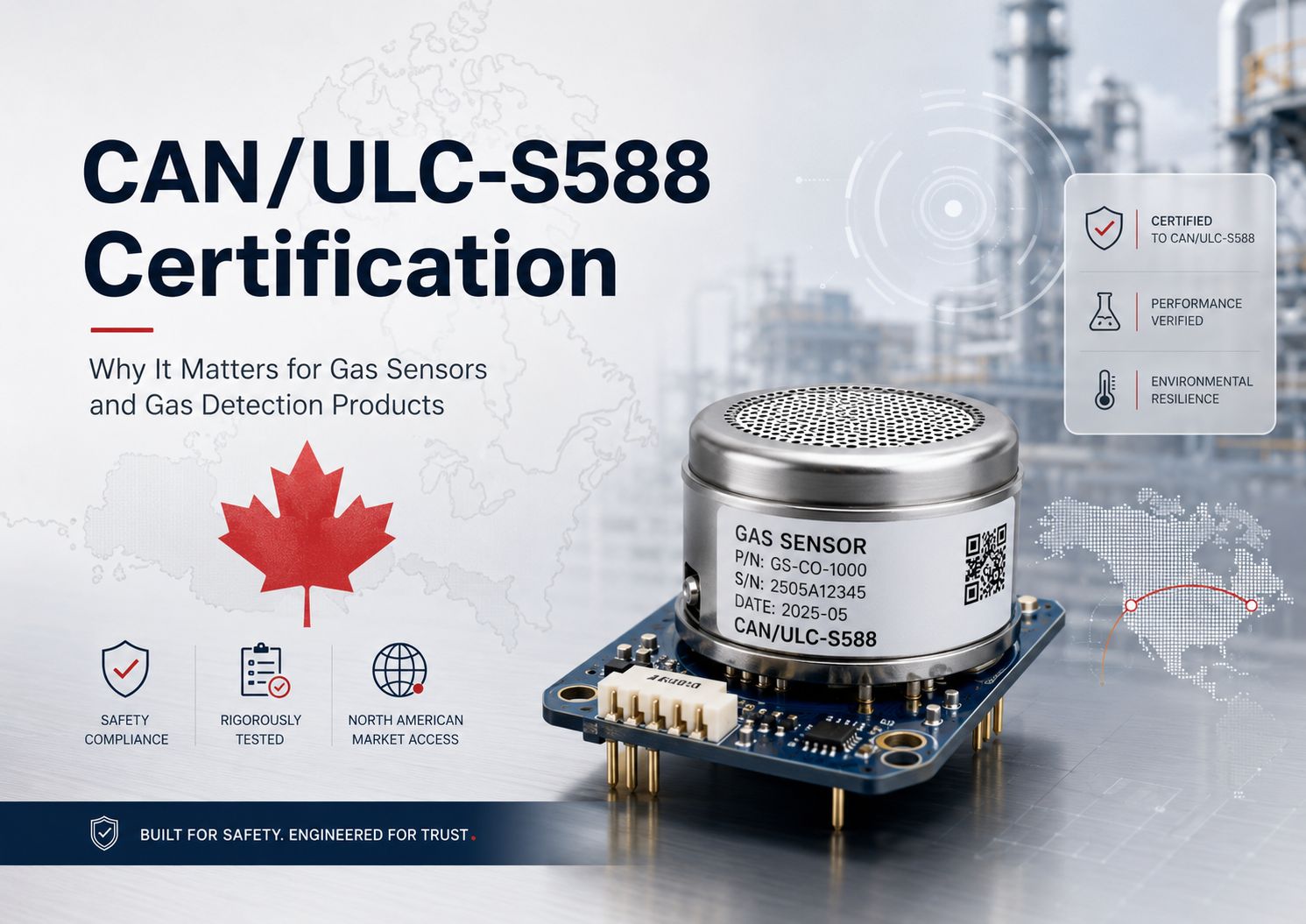
ますます注目を集めている規格の 1 つが、 CAN/ULC-S588、正式なタイトルは ガスおよび蒸気の検出器およびセンサー (付属品を含む)。このカナダの規格は、ガスおよび蒸気の検知器、および有毒ガスおよび可燃性ガスの検知に使用されるセンサーに適用されます。これには、常設型、携帯型および可搬型の機器が含まれます。

提携している企業向け 一酸化炭素センサー、水素センサー、可燃性ガスセンサー、有毒ガスセンサー、ガス検知モジュール, understanding CAN/ULC-S588 is important when developing products for safety-related applications such as residential safety, commercial buildings, energy storage systems, fuel cell systems, HVAC control, and industrial monitoring.

What Is CAN/ULC-S588?

CAN/ULC-S588 is a Canadian standard for gas and vapour detectors and sensors, including accessories. It covers requirements for products used to detect toxic gases, combustible gases, and vapours in ordinary gas detection applications.

In practical terms, CAN/ULC-S588 is highly relevant to products such as:

  • Carbon monoxide detectors and CO sensors
  • Hydrogen gas detectors and H₂ sensors
  • Combustible gas detectors
  • Toxic gas detectors
  • Multi-gas detection devices
  • Gas sensing modules used in safety systems
  • Accessories related to gas detection products

The scope of the standard includes fixed, portable, and transportable gas and vapour detectors and sensors. It is especially important for products used in indoor locations, outdoor applications, or unconditioned environments where reliability and safety performance are critical.

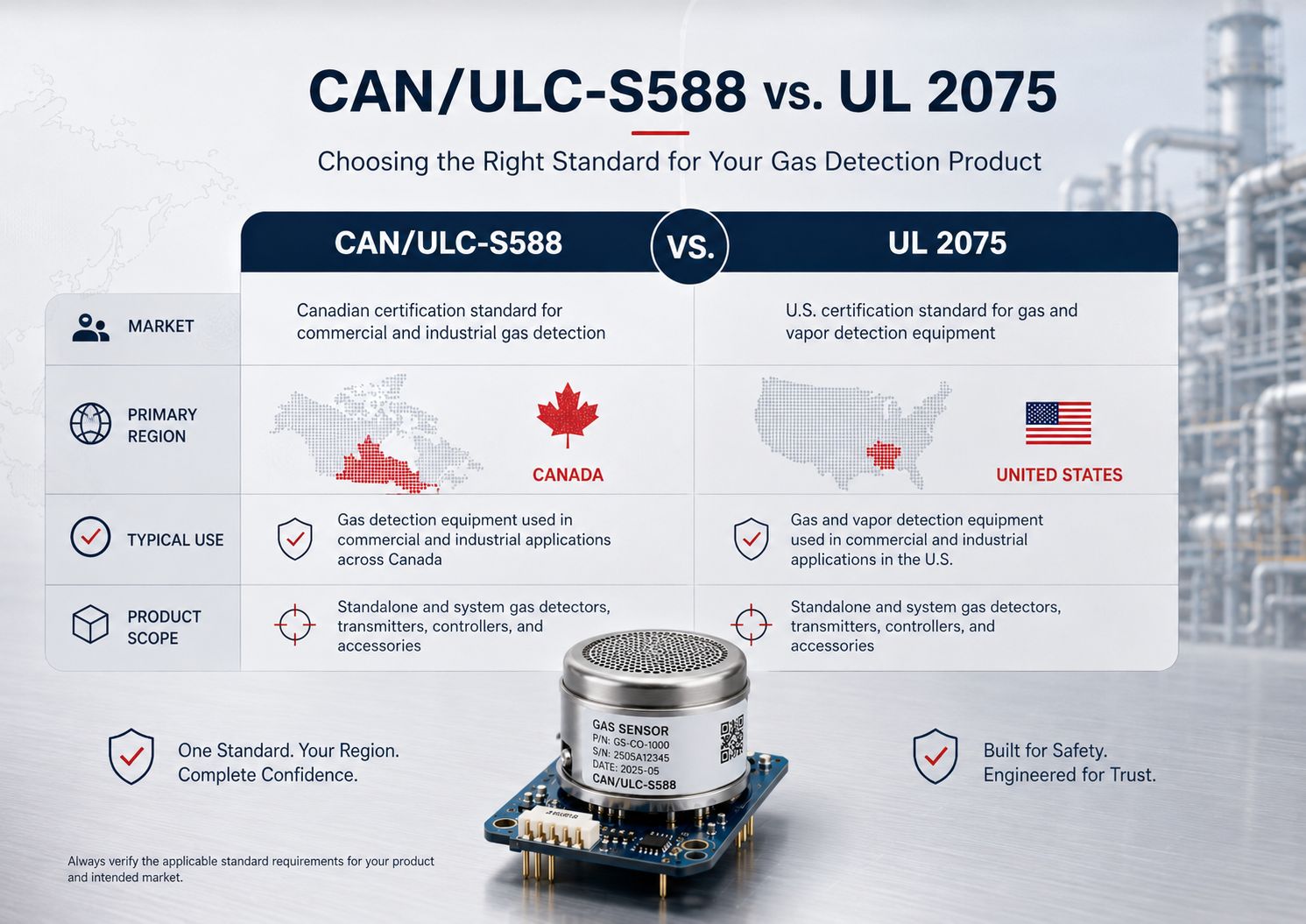
How Is CAN/ULC-S588 Related to UL 2075?

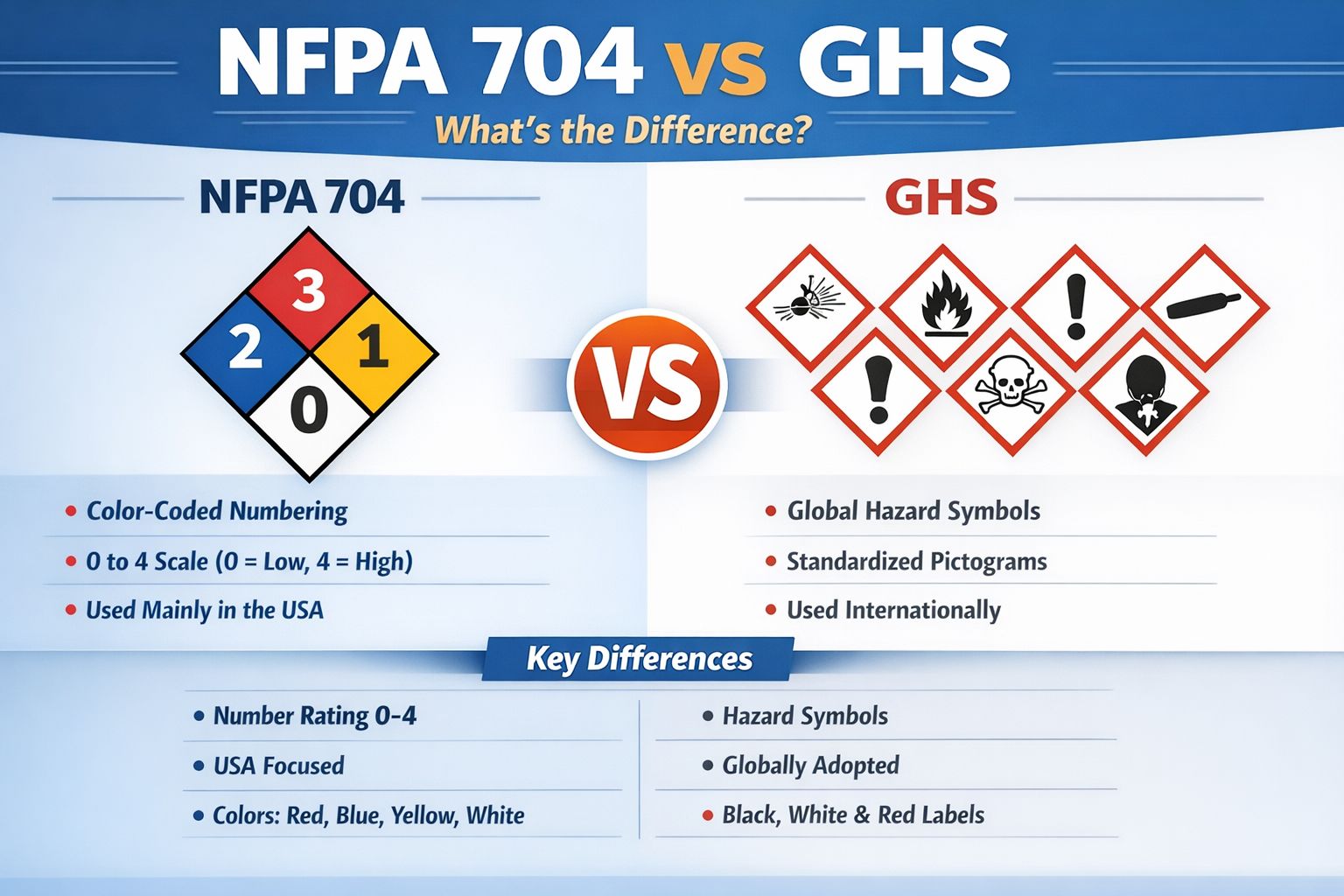
CANULC S588vS. UL 2075

For companies entering North America, CAN/ULC-S588 is often discussed together with UL 2075

UL 2075 is the U.S. standard for Gas and Vapor Detectors and Sensors. It applies to fixed, portable, and transportable toxic and combustible gas and vapor detectors and sensors intended for use in ordinary non-hazardous locations, including indoor and unconditioned areas.

A simple way to understand the relationship is:

標準Main MarketProduct Focus
UL 2075米国Gas and vapor detectors and sensors
CAN/ULC-S588カナダGas and vapour detectors and sensors, including accessories

For many North American projects, manufacturers may need to consider both standards. A gas detection product or sensor component that supports both UL 2075 and CAN/ULC-S588 requirements can be more attractive to OEM customers, system integrators, and safety equipment manufacturers.

Intertek はまた、ガス検知器が UL 61010-1 および CSA C22.2 No. 61010-1 の範囲から削除され、現在は UL 2075 および ULC S588 の範囲内にあることにも言及しました。これは、ガス検知器の認証が北米でより専門化していることを示しています。

ガスセンサーメーカーにとってCAN/ULC-S588が重要な理由

センサー メーカーにとって、CAN/ULC-S588 は認定された検出器を販売するだけではありません。また、センサーが完全なガス検知製品内の主要コンポーネントとして使用される場合、センサー自体の競争力にも影響を与える可能性があります。

Gas detector manufacturers often look for sensor suppliers that can help reduce certification risk. If a sensor has already been evaluated according to recognized North American safety and performance requirements, it may help the end-product manufacturer simplify product development and improve confidence during certification planning.

This is especially important in applications where gas detection is directly linked to safety, such as:

  • Residential carbon monoxide alarms
  • Commercial building gas monitoring
  • Parking garage ventilation control
  • Battery energy storage system safety
  • Hydrogen leakage detection
  • Fuel cell system monitoring
  • Industrial toxic gas detection
  • HVAC and refrigeration safety systems

In these applications, customers do not only ask whether a gas sensor can detect a target gas. They also care about long-term stability, operating temperature range, response performance, failure behavior, end-of-life indication, calibration strategy, and certification support.

Key Technical Areas Behind CAN/ULC-S588 Evaluation

The full CAN/ULC-S588 standard is a paid technical document, so manufacturers should always work with an authorized certification body for formal testing and interpretation. However, based on public information and standards update notices, several areas are especially important for gas detection products.

1. Gas Detection Performance

ガス検知製品は、指定された条件下で対象ガスを確実に検知できることを実証する必要があります。これには、感度、アラームしきい値、応答時間、回復動作、および環境暴露後のパフォーマンスが含まれる場合があります。

たとえば、一酸化炭素、水素、メタン、プロパン、二酸化窒素、または硫化水素を対象とする製品は、予測可能かつ安全な方法でガス濃度に反応できることを示す必要があります。

2. 環境の信頼性

ガス検知器やセンサーは、理想的ではない環境に設置される場合があります。温度、湿度、振動、汚染、長期的なドリフトはすべてセンサーの性能に影響を与える可能性があります。

For North American applications, customers may pay close attention to wide-temperature performance, especially in outdoor, garage, industrial, and energy storage environments.

3. Electrical and Functional Safety

A gas detection product is not only a sensing device. It is also part of a safety system. Therefore, electrical safety, component reliability, signal failure behavior, and abnormal operation conditions may be considered during evaluation.

4. Marking and Installation Instructions

The latest ULC S588 update notice includes revisions related to marking and installation instructions, which means manufacturers must also pay attention to product labeling, user guidance, installation limitations, and application conditions.

5. Combustible Gas Detection Thresholds

可燃性ガス製品の場合、危険な濃度に達する前にユーザーに警告するためにデバイスが使用される可能性があるため、検出しきい値は特に重要です。 ULC S588 の Intertek 規格更新通知では、可燃性ガスおよび蒸気の検出しきい値テストに関連する要件について言及しています。

CAN/ULC-S588 と水素の検出

バッテリーエネルギー貯蔵システム、燃料電池、水素エネルギーインフラ、産業用水素アプリケーションの成長により、水素検出の重要性はますます高まっています。

水素は低分子で拡散性が高く、可燃性のガスです。実際のシステムでは、水素は電池室、燃料電池機器、充電インフラ、水素製造現場、または密閉された技術スペースに現れる可能性があります。

For hydrogen sensor manufacturers, certification-related performance may include:

  • Low-level hydrogen detection capability
  • Fast response and recovery
  • 広い使用温度範囲
  • 長期安定性
  • Resistance to interference gases
  • Output reliability for system integration
  • Suitability for safety-related monitoring

Because hydrogen safety is becoming a major topic in energy transition projects, gas sensors used in hydrogen detection are increasingly expected to support recognized standards and certification pathways.

CAN/ULC-S588 and Carbon Monoxide Detection

Carbon monoxide remains one of the most important gases in residential, commercial, and industrial safety. CO is colorless, odorless, and toxic, which makes reliable detection essential.

CO sensors are widely used in:

  • Residential carbon monoxide alarms
  • Commercial building safety systems
  • Parking garage ventilation control
  • Boiler rooms
  • Fire detection and safety systems
  • Gas appliances
  • Recreational vehicles and marine applications

For CO sensors, customers often focus on:

  • Long service life
  • Low drift
  • Stable output over temperature and humidity
  • Resistance to alcohol, hydrogen, and other interference gases
  • Reliable performance over the full product life cycle
  • Support for 10-year detector designs

For OEM manufacturers, a CO sensor with strong certification support can be a major advantage when designing gas alarms or gas monitoring systems for North America.

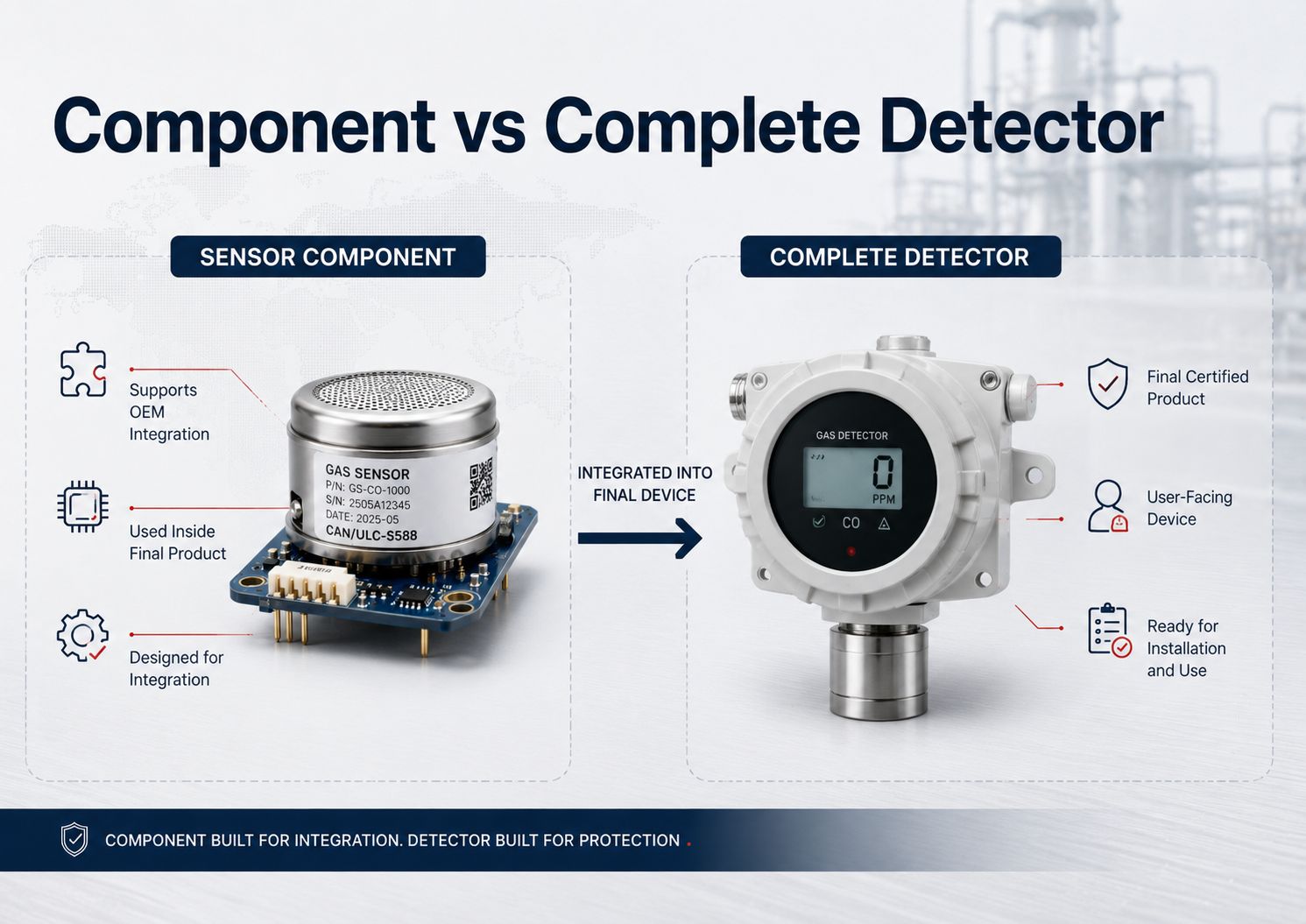
Component Certification vs Complete Product Certification

Component vs Complete Detector

One important point should be clearly understood: a certified sensor component is not the same as a certified complete gas detector

A gas sensor may be evaluated as a recognized component used inside a larger certified product. In this case, the sensor supports the certification of the final product, but the complete detector or alarm still needs its own evaluation based on final design, enclosure, power supply, software logic, alarm output, user instructions, and installation conditions.

This distinction matters because gas detector manufacturers often ask sensor suppliers for documentation that can support their own certification process. A well-prepared sensor supplier should be able to provide:

  • Sensor datasheet
  • Performance test data
  • Lifetime and aging data
  • Environmental test data
  • Interference gas data
  • Calibration information
  • Quality control documentation
  • Application notes
  • Certification-related technical support

この認定が市場の優位性となる理由

ガス検知市場では、もはや技術的性能だけでは十分ではありません。顧客は、承認、統合、認証が容易な製品をますます求めています。

CAN/ULC-S588 は、いくつかの方法で価値を生み出すことができます。

センサーメーカー向け

これは、この製品が重大な安全関連の用途に適しており、北米の顧客プロジェクトをサポートできることを示すのに役立ちます。

ガス検知器ブランドの場合

これにより、コアセンシングコンポーネントを選択し、カナダまたはより広範な北米市場向けに製品を設計する際の不確実性が軽減されます。

システムインテグレーター向け

これにより、ガス検知デバイスを建物の安全性、エネルギー貯蔵、産業用監視、換気制御システムに使用する際に安心感が得られます。

エンドユーザー向け

It supports safer gas monitoring by encouraging more reliable performance, proper installation, and clear product marking.

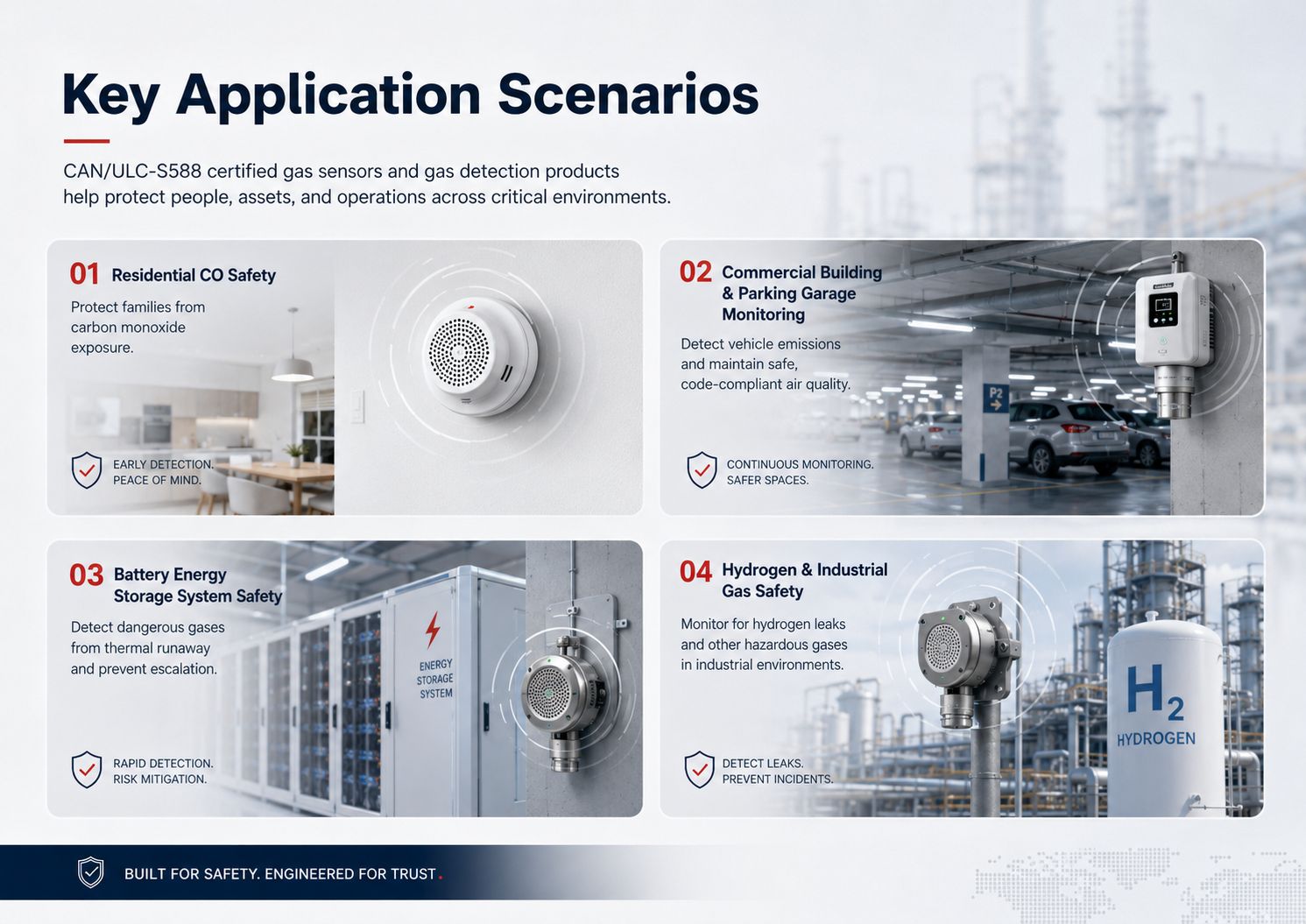
Applications Where CAN/ULC-S588 May Be Important

Key Application Scenarios

CAN/ULC-S588 is especially relevant to gas detection products used in the following applications:

応用Typical Target Gases
Residential safetyCO, combustible gas
Commercial buildingsCO, NO₂, combustible gas
Parking garagesCO, NO₂
Battery energy storage systemsH₂, CO, VOCs, electrolyte vapour indicators
Fuel cell systemsH₂
産業安全H₂S, CO, combustible gases
HVAC and ventilation controlCO₂, CO, NO₂
Fire safety systemsCO, H₂, combustible gases

Different applications may require different standards, installation codes, and certification routes. Therefore, manufacturers should evaluate the target market and application scenario before starting certification.

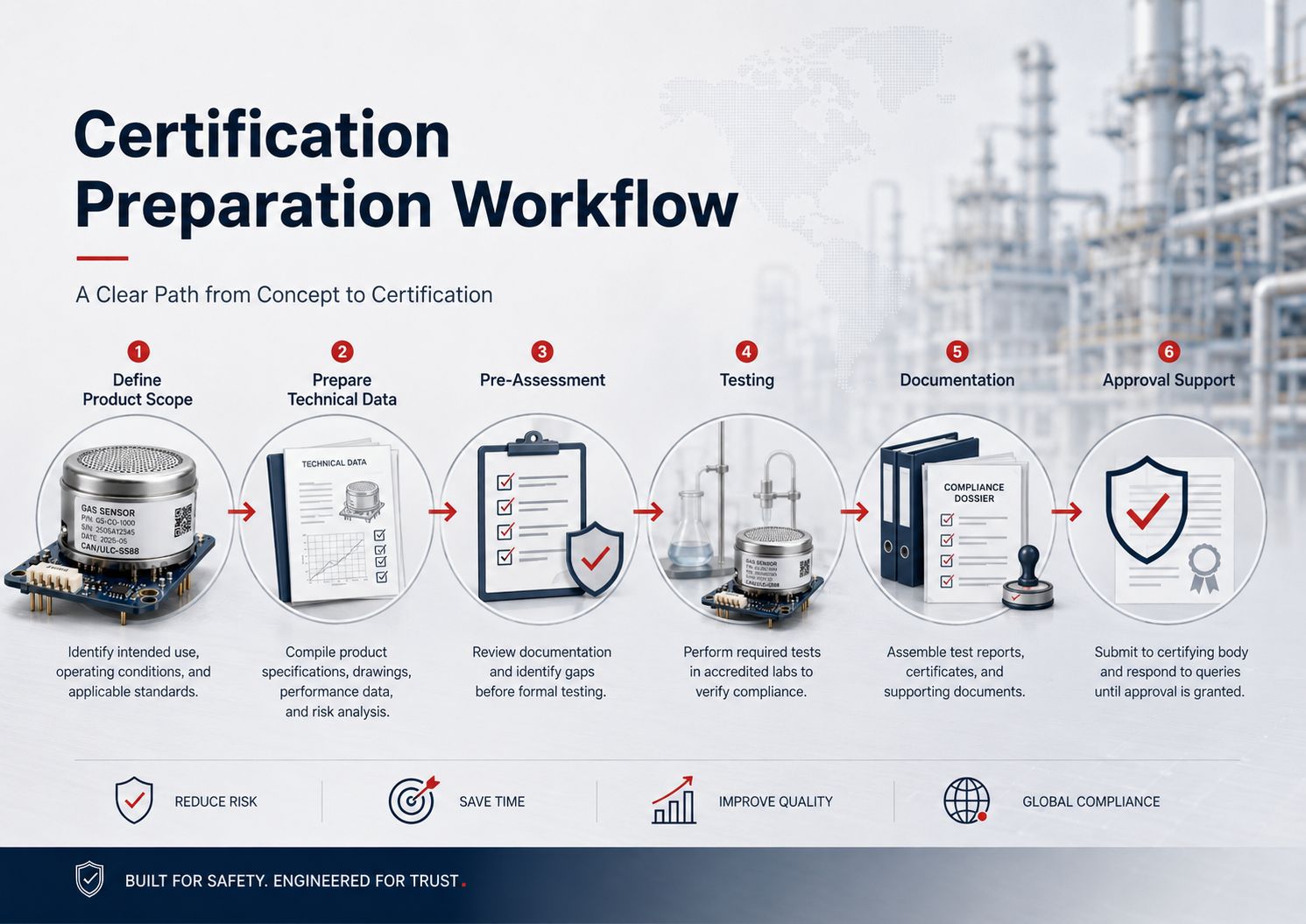
What Manufacturers Should Prepare Before Certification

Certification Preparation Workflow

Before starting a CAN/ULC-S588 or UL 2075 certification project, gas sensor and detector manufacturers should prepare a strong technical foundation.

Important preparation work includes:

  1. Define the product scope
    Confirm whether the product is a sensor component, sensing module, gas detector, gas alarm, or complete monitoring device.

  2. Confirm the target gas and application
    CO、H₂、CH₄、プロパン、NO₂、H₂S、および VOC 関連ガスには、異なるテスト要件と顧客の期待がある場合があります。

  3. 信頼性データの準備
    長期ドリフト、経年変化、温度サイクル、湿度への曝露、および保管安定性のデータは重要です。

  4. 環境仕様の見直し
    使用温度、保存温度、湿度範囲、圧力範囲、および設置環境を明確に定義する必要があります。

  5. 品質管理文書を準備する
    認証機関と OEM 顧客は、生産の一貫性、校正プロセス、検査方法、トレーサビリティをレビューできます。

  6. 認証ルートの明確化
    目標がコンポーネントの認識であるか、モジュールの評価であるか、または完全な製品の認証であるかを決定します。

  7. 資格のある認証機関と早めに連携しましょう
    早期の事前評価は、再設計、ドキュメントのギャップ、予期しないテストの遅延を回避するのに役立ちます。

結論

CAN/ULC-S588 は、ガスおよび蒸気の検出器およびセンサーに関する重要なカナダの規格です。 UL 2075 とともに、北米のガス検知製品認証において重要な役割を果たしています。

ガスセンサーメーカーにとって、この規格は単なる規制上の話題ではありません。それは市場シグナルでもあります。住宅安全、商業ビル、エネルギー貯蔵、水素安全、産業用監視、HVAC システムの顧客は、より強力な信頼性データと認証サポートを備えたガス センシング製品をますます求めています。

ガス検知アプリケーションの安全性がより重要になるにつれ、CAN/ULC-S588 および UL 2075 の要件を理解しているセンサー サプライヤーは、OEM 顧客をサポートし、より価値の高い市場に参入する上で有利な立場に立つことになります。

CO、水素、可燃性ガス、または有毒ガスのセンシング ソリューションを評価するプロジェクト チームにとって、適切なセンサー技術を選択することは最初のステップにすぎません。認証計画、信頼性テスト、およびアプリケーション固有の統合は、ガス検知製品開発を成功させる上で同様に重要な部分になりつつあります。

よくある質問

CAN/ULC-S588とは何ですか?

CAN/ULC-S588 は、アクセサリを含むガスおよび蒸気の検出器およびセンサーに関するカナダの規格です。有毒ガスおよび可燃性ガスの検出に使用される固定式、携帯式、可搬式の製品が対象となります。

Is CAN/ULC-S588 the same as UL 2075?

No. UL 2075 is mainly used for the U.S. market, while CAN/ULC-S588 is the Canadian standard. However, they are often discussed together for North American gas detection products.

Which gases are related to CAN/ULC-S588?

The standard may apply to toxic and combustible gas detection products, including products for gases such as carbon monoxide, hydrogen, methane, propane, nitrogen dioxide, hydrogen sulfide, and other gas or vapour hazards depending on the application.

Does a certified sensor mean the complete detector is certified?

Not necessarily. A sensor may be evaluated as a component, but the complete gas detector or alarm usually requires separate evaluation based on the final product design and application.

Why is CAN/ULC-S588 important for gas sensor suppliers?

It helps sensor suppliers support OEM customers targeting Canada or North America. It can improve customer confidence, reduce certification uncertainty, and strengthen competitiveness in safety-related gas detection markets.

返信を残す

あなたのメールアドレスが公開されることはありません。 必須フィールドは、マークされています *