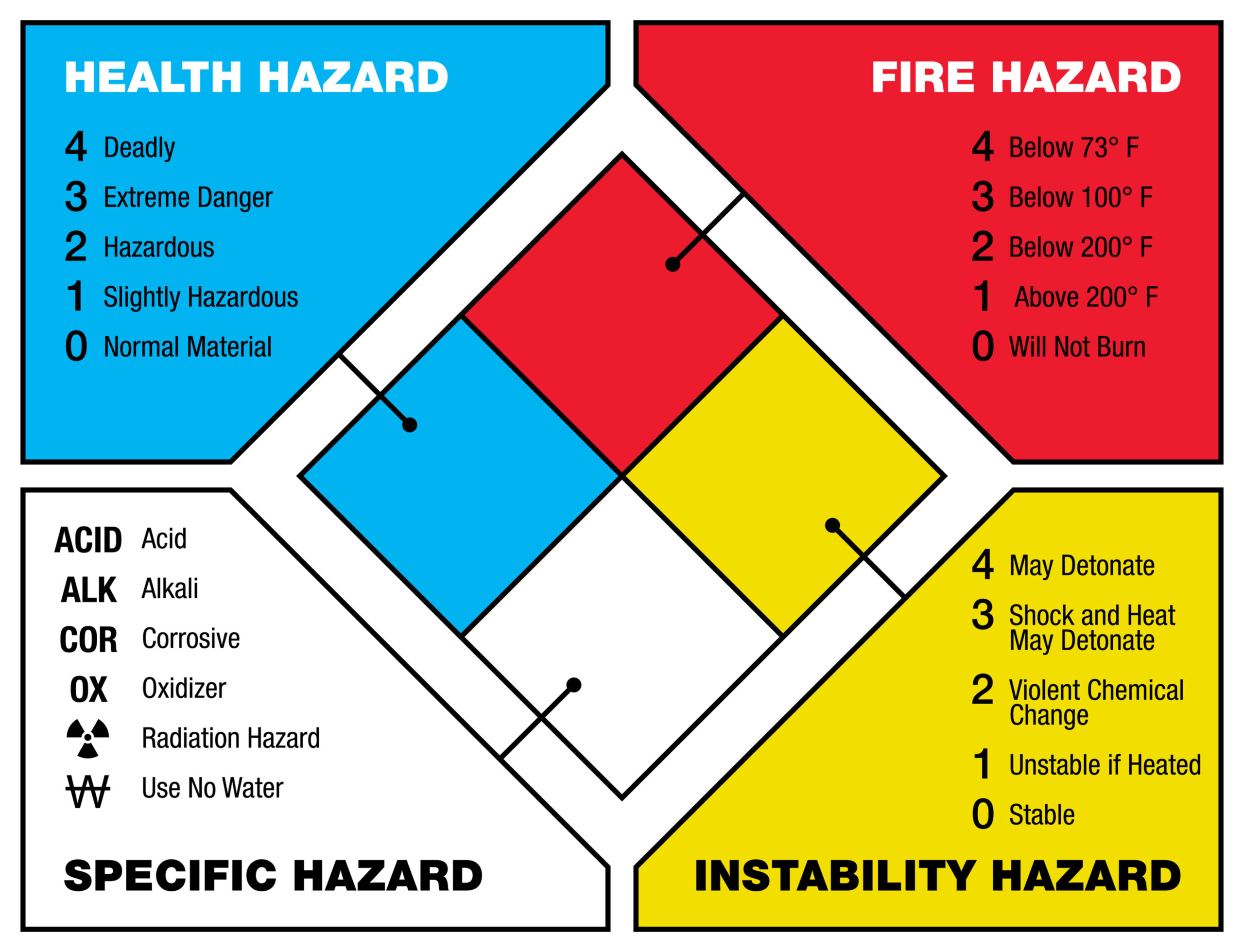
NFPA 704 は、 緊急対応のための物質の危険性を特定するための全米防火協会の標準システム。おなじみのものを使用しています ハザードダイヤモンド または ファイアダイヤモンド 消防士、危険物チーム、その他の緊急対応者に、材料の健全性、可燃性、不安定性、および特別な危険性の視覚的な概要を迅速に提供します。両方 NFPAand OSHA describe it as a simple, readily recognized, easily understood marking system intended to communicate hazard severity for emergency response.Many people know NFPA 704 by its shape rather than its formal name. The system is built around aダイヤモンド型の「四角形」プラカード 4つの小さなセクションに分かれています。その視覚的なレイアウトが、危険な化学物質を保管、処理、または処理する施設で広く使用され続けている理由の 1 つです。 NFPAは、このシンボルは、長い技術的な説明ではなく、緊急時の一般的な危険の深刻さの感覚を即座に提供するように設計されていると説明しています。
NFPA 704 が重要な理由
緊急対応者は多くの場合、数秒以内に決定を下す必要があるため、NFPA 704 は重要です。火災、流出、漏洩、またはその他の事故が発生した場合、対応者は消火方法、隔離距離、または保護措置を選択する前に完全な安全データシートを確認する時間がない場合があります。 NFPA ハザード ダイヤモンドは、主要なリスクを一目で伝えるのに役立ちます。 NFPA 自身の説明では、このシステムは物質の危険性を特定することを目的としており、 重大度of those hazards for emergency response.This emergency-response focus also explains why NFPA 704 is different from many workplace labeling systems. OSHA’s Hazard Communication framework is aligned with GHS and is designed to provide standardized label elements and SDS information for workers, while NFPA 704 is built around rapid hazard recognition in emergency conditions.
NFPA 704 ダイヤモンドの読み方
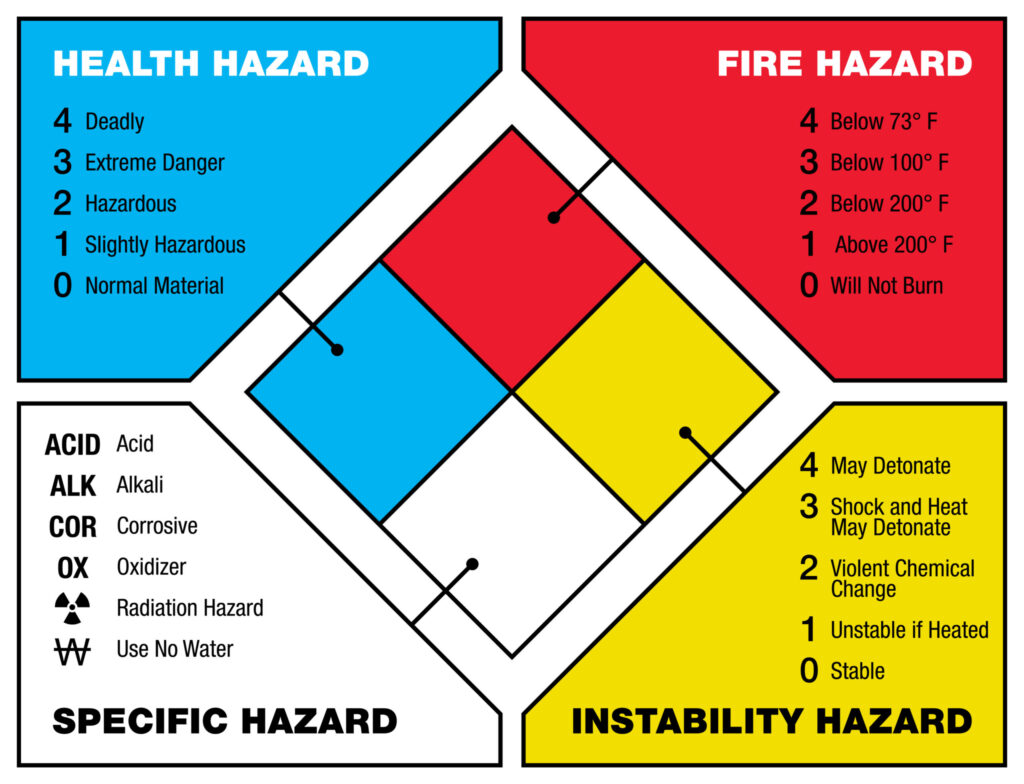
NFPA 704 プラカードには、色分けされた 4 つの領域があります。
色
位置
意味
青
左
健康被害
赤
トップ
引火の危険性
黄色
右
不安定性/反応性の危険性
白
底
特別な危険
NFPA and OSHA both describe the color positions this way, and NFPA notes that the white section is used for special hazards when applicable.The three main numeric sections use a0 4スケールまで、 どこ 0 最小限の危険を示します そして 4 は重大な危険を示します。 NFPA の公開説明では、一貫してこれらの用語で数値スケールが説明されています。
の 白い象限 のために予約されています 特別な危険。 NFPA の公開ガイダンスでは、このセクションで一般的に示される特別な危険には以下が含まれると記載されています。 W、 牛、 そして の上。 NFPAは次のように説明しています。 W 水との異常な反応性を示し、 牛 は酸化剤を示し、 の上indicates a simple asphyxiant gas. NFPA committee materials also note that OX and W are the required NFPA 704 special symbols, while SA is an optional symbol used inside the white quadrant.This part of the diamond is especially important because it alerts responders to hazards that may affect firefighting strategy. For example, aW マーキングは、水が事故を制御するのに役立つのではなく、事態を悪化させる可能性があることを警告します。
NFPA 704 は GHS と同じではありません
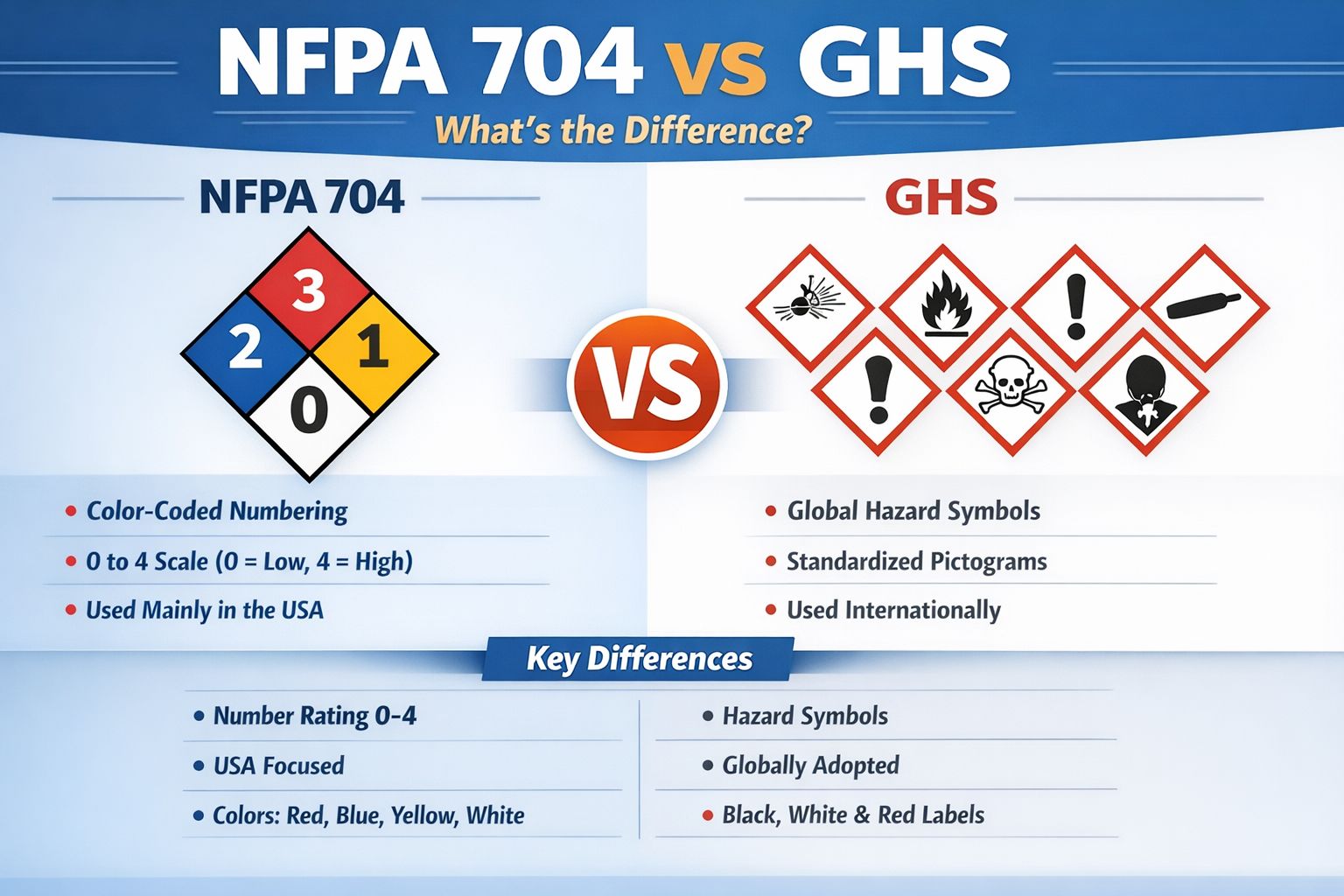
読者にとって最も重要な点の 1 つは、 NFPA 704 ラベルと GHS ラベルは互換性がありません。 OSHA の危険情報伝達基準は、 世界調和システム (GHS)and requires shipped-container labels to include elements such as signal words, pictograms, hazard statements, and precautionary statements. OSHA’s NFPA comparison materials make clear that NFPA 704 serves a different purpose and uses a different logic.A major source of confusion is the use of numbers. OSHA specifically warns usersSDS のセクション 2 にある GHS 危険有害性カテゴリー番号を NFPA 704 ラベルにコピーしないこと. The numbering systems are different and are designed for different labeling purposes.Another important difference is hazard scope. OSHA’s NFPA/GHS comparison states that NFPA 704 focuses on急性、短期的な健康被害 一方で、慢性的な健康への影響は、GHS ベースの職場コミュニケーションでカバーできるのと同様に、NFPA 704 ラベルの対象にはなりません。
NFPA 704 の一般的な使用法
NFPA 704 is commonly used wherever responders need quick hazard recognition for chemicals stored or handled on-site. High-ranking guidance pages and institutional safety references repeatedly show the system being used for chemical storage areas, facility hazard identification, and emergency planning contexts where responders need immediate awareness of health, flammability, instability, and special hazards.In practice, that means NFPA 704 often appears in industrial plants, laboratories, chemical storage rooms, utility areas, warehouses, and other facilities that maintain hazardous materials inventories. The exact posting rules can depend on local fire code, facility type, and jurisdictional adoption.
NFPA 704 使用時のよくある間違い
A common mistake is assuming NFPA 704 is a complete replacement for OSHA HazCom or GHS labeling. It is not. OSHA makes clear that workplace hazard communication requires labels, SDSs, and training, while NFPA 704 is a fast-response marking system.Another mistake is treating the NFPA number as a general-purpose consumer safety score. NFPA 704 is not designed to summarize every possible hazard detail for routine daily handling. It is specifically intended to help emergency responders understand the相対的な重症度of hazards during an incident.A third mistake is copying SDS Section 2 category numbers directly into the diamond. OSHA’s comparison guidance explicitly warns against this because GHS category numbers and NFPA 704 ratings are not equivalent.
正しい NFPA 704 評価を決定する方法
The correct NFPA 704 rating should be based on appropriate hazard data rather than guesswork. OSHA comparison guidance points users toward the NFPA rating system and information available in the SDS, and institutional safety guidance typically maps relevant SDS sections to health, flammability, instability, and special hazard determination.For SEO readers looking for a practical takeaway, the safest rule is this:非公式のインターネット チャートだけではなく、SDS と NFPA の方法論を使用します。。これは、緊急条件が通常の取り扱い条件と異なる可能性がある混合物、プロセス化学薬品、および現場特有の材料にとって特に重要です。