
Introduction
Flow sensors and flow meters are essential devices used to measure the flow rate of liquids and gases in various applications, ranging from industrial processes to medical devices. Accurate flow measurement is vital for ensuring efficiency, safety, and optimal performance in numerous systems. This comprehensive guide delves into the different types of flow sensors and flow meters, their working principles, applications, advantages, and how to choose the right flow measurement device for specific needs.
What are Flow Sensors and Flow Meters?
Flow Sensors
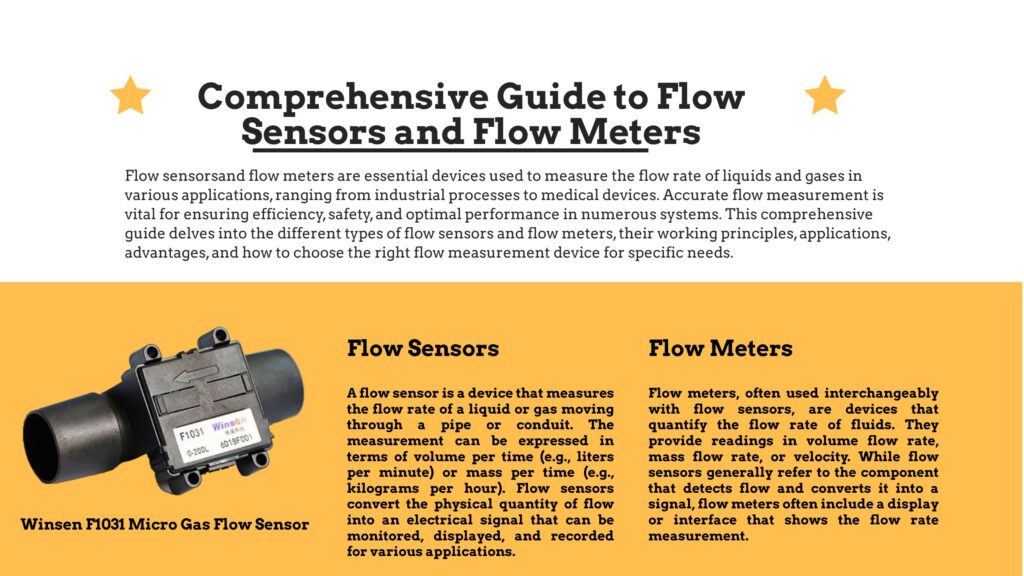
A flow sensor is a device that measures the flow rate of a liquid or gas moving through a pipe or conduit. The measurement can be expressed in terms of volume per time (e.g., liters per minute) or mass per time (e.g., kilograms per hour). Flow sensors convert the physical quantity of flow into an electrical signal that can be monitored, displayed, and recorded for various applications.
Flow Meters
Flow meters, often used interchangeably with flow sensors, are devices that quantify the flow rate of fluids. They provide readings in volume flow rate, mass flow rate, or velocity. While flow sensors generally refer to the component that detects flow and converts it into a signal, flow meters often include a display or interface that shows the flow rate measurement.
Types of Flow Sensors and Flow Meters
Flow sensors and flow meters come in multiple types, each suited to different applications and operating principles. The main types include:
1. Differential Pressure Flow Sensors/Meters
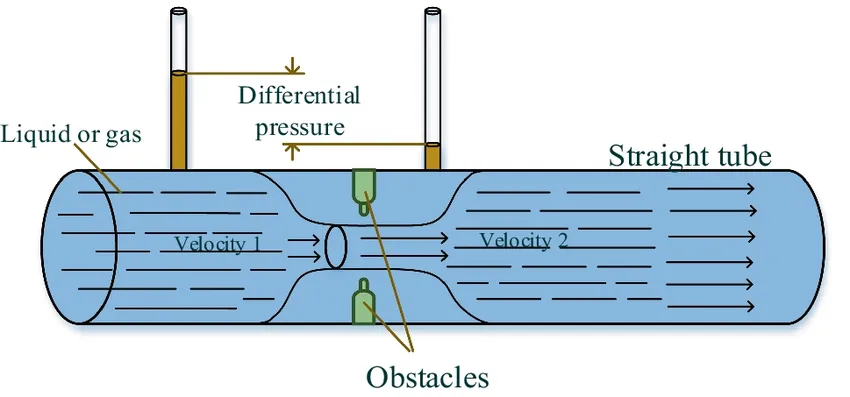

- Principle: These devices measure the pressure drop across an obstruction in the flow path (such as an orifice plate, venturi tube, or flow nozzle) to determine the flow rate. The relationship between pressure drop and flow rate is governed by Bernoulli’s equation.
- Applications: Widely used in industrial processes, HVAC systems, and water treatment plants.
2. Positive Displacement Flow Sensors/Meters
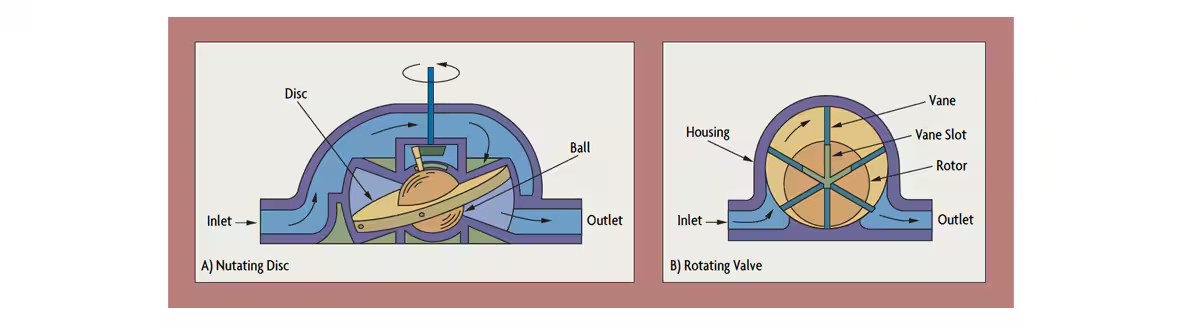

- Principle: These devices measure flow by capturing a fixed volume of fluid and counting the number of times the volume is filled. Common designs include piston, gear, and rotary vane meters.
- Applications: Ideal for measuring the flow of viscous fluids such as oil, fuel, and chemicals.
3. Turbine Flow Sensors/Meters
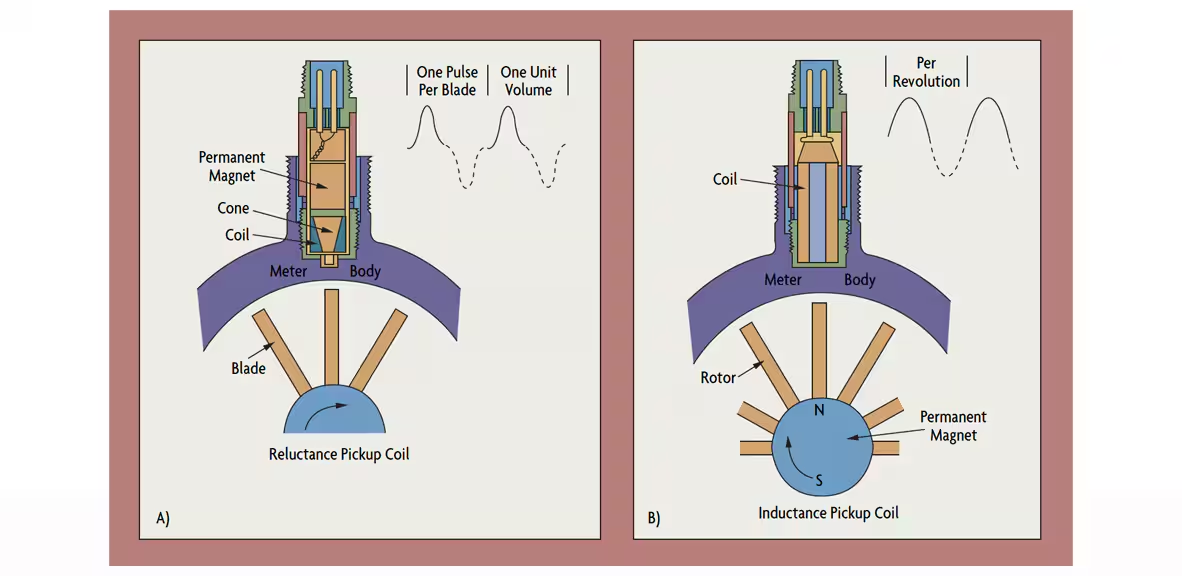

- Principle: These devices use a turbine wheel that rotates in response to the fluid flow. The rotational speed of the turbine is proportional to the flow rate and is measured by a magnetic or optical sensor.
- Applications: Used in water distribution systems, fuel measurement, and HVAC applications.
4. Electromagnetic Flow Sensors/Meters
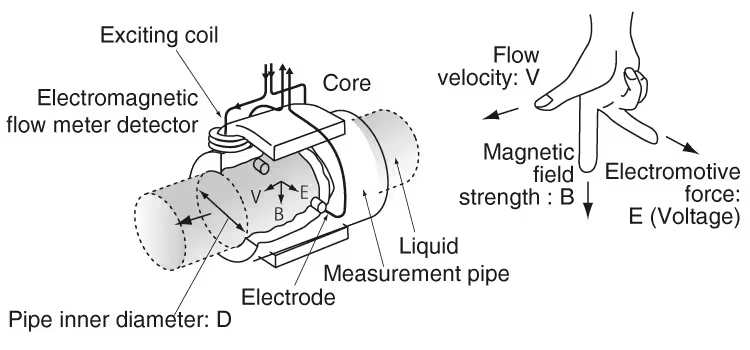

- Principle: Electromagnetic flow sensors, or magmeters, operate based on Faraday’s law of electromagnetic induction. They measure the flow of conductive fluids by detecting the voltage generated when the fluid flows through a magnetic field.
- Applications: Suitable for water and wastewater management, chemical processing, and food and beverage industries.
5. Ultrasonic Flow Sensors/Meters
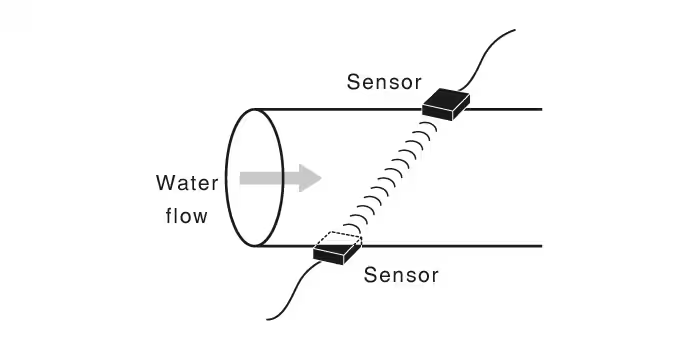

- Principle: Ultrasonic flow sensors use sound waves to measure the flow rate. There are two main types: transit-time and Doppler. Transit-time sensors measure the time difference between ultrasonic pulses traveling with and against the flow, while Doppler sensors measure the frequency shift of reflected ultrasonic waves from particles or bubbles in the fluid.
- Applications: Commonly used in non-invasive flow measurement, particularly in clean or partially clean liquids.
6. Thermal Mass Flow Sensors/Meters


- Principle: These devices measure the mass flow rate of gases by detecting the temperature change of a heated element as the gas flows over it. The rate of heat loss is proportional to the mass flow rate.
- Applications: Used in applications such as HVAC systems, process gas monitoring, and semiconductor manufacturing.
7. Coriolis Flow Sensors/Meters
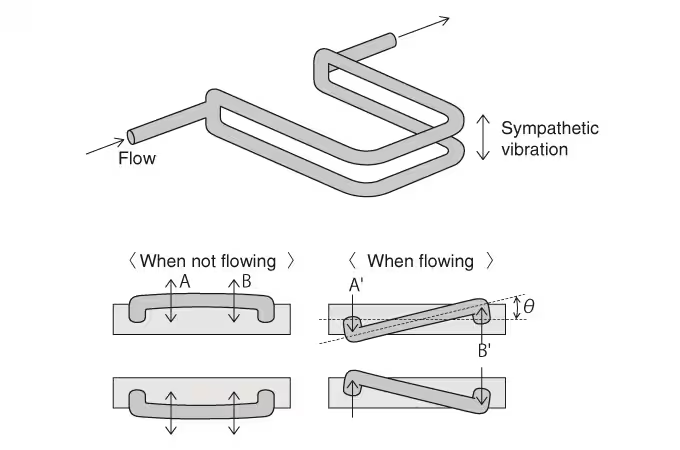

- Principle: Coriolis devices measure the mass flow rate by detecting the Coriolis force exerted on a vibrating tube through which the fluid flows. The deflection of the tube is proportional to the mass flow rate.
- Applications: Ideal for high-precision measurement of both liquids and gases in industries such as oil and gas, pharmaceuticals, and chemical processing.
8. Vortex Flow Sensors/Meters
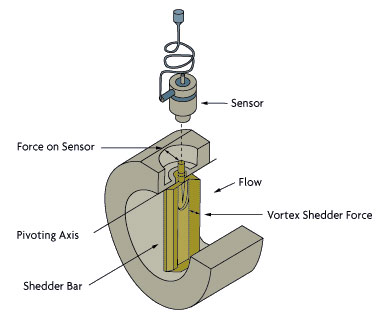

- Principle: Vortex devices measure the flow rate by detecting the frequency of vortices shed by a bluff body placed in the flow stream. The frequency of vortex shedding is proportional to the flow velocity.
- Applications: Used in applications where the fluid is clean, such as steam, air, and water systems.
Readted Read: How to Choose the Right Flow Sensor
Working Principles of Flow Sensors and Flow Meters
The working principle of a flow sensor or flow meter depends on its type. Here is an overview of how some of the most common flow sensors and meters operate:
1. Differential Pressure Flow Sensors/Meters
These devices use a primary element (e.g., orifice plate) that creates a pressure drop proportional to the flow rate. The differential pressure is measured by a secondary element, and the flow rate is calculated using Bernoulli’s equation.
2. Positive Displacement Flow Sensors/Meters
These devices capture and measure discrete volumes of fluid. Each cycle or revolution of the sensor corresponds to a specific volume, and the total flow is calculated by counting the cycles or revolutions.
3. Turbine Flow Sensors/Meters
As fluid flows through the device, it impinges on the turbine blades, causing the turbine to rotate. The rotational speed is measured by a magnetic or optical pickup, and the flow rate is determined based on the turbine’s calibration.
4. Electromagnetic Flow Sensors/Meters
These devices induce a magnetic field in the fluid flow path. As the conductive fluid moves through the magnetic field, a voltage is generated perpendicular to the flow direction. This voltage is proportional to the flow rate and is measured by electrodes.
5. Ultrasonic Flow Sensors/Meters
Transit-time ultrasonic devices measure the time difference between sound pulses traveling with and against the flow direction. Doppler ultrasonic devices measure the frequency shift of reflected sound waves from particles or bubbles in the fluid. Both methods provide a flow rate based on the sound wave measurements.
6. Thermal Mass Flow Sensors/Meters
These devices consist of a heated element and a temperature sensor. As gas flows over the heated element, it carries heat away, causing a temperature change. The rate of heat loss is measured and correlated to the mass flow rate.
7. Coriolis Flow Sensors/Meters
Coriolis devices use a vibrating tube through which the fluid flows. The flow induces a Coriolis force that causes the tube to twist. The degree of twisting is proportional to the mass flow rate and is measured to determine the flow.
8. Vortex Flow Sensors/Meters
A bluff body placed in the flow path sheds vortices at a frequency proportional to the flow velocity. This frequency is detected by a sensor, and the flow rate is calculated based on the vortex shedding frequency.
Applications of Flow Sensors and Flow Meters
Flow sensors and flow meters are used in a wide range of applications across various industries:
1. Industrial Processes
- Chemical Processing: Ensures precise flow measurement of chemicals for accurate mixing and reaction control.
- Petrochemical Industry: Monitors the flow of hydrocarbons and gases for process optimization and safety.
- Food and Beverage: Measures the flow of liquids and gases in production lines to maintain quality and consistency.
2. HVAC Systems
- Airflow Measurement: Monitors and controls airflow in heating, ventilation, and air conditioning systems.
- Refrigerant Flow: Ensures proper flow of refrigerants in cooling systems for optimal performance.
- Energy Management: Helps in energy auditing and efficiency improvement by monitoring fluid flow rates.
3. Medical Devices
- Respiratory Equipment: Measures the flow of gases in ventilators and anesthesia machines.
- Infusion Pumps: Ensures accurate delivery of fluids and medications to patients.
- Dialysis Machines: Monitors the flow of blood and dialysate during dialysis treatments.
4. Water and Wastewater Management
- Flow Monitoring: Measures the flow of water in distribution networks and wastewater in treatment plants.
- Leak Detection: Identifies leaks in pipelines to prevent water loss and contamination.
- Irrigation Systems: Ensures efficient water usage in agricultural irrigation systems.
5. Automotive Industry
- Fuel Injection Systems: Monitors the flow of fuel to ensure efficient combustion and reduce emissions.
- Engine Coolant Flow: Ensures proper cooling of the engine to prevent overheating.
- Exhaust Gas Measurement: Measures the flow of exhaust gases for emission control and compliance.
6. Oil and Gas Industry
- Pipeline Monitoring: Measures the flow of oil, gas, and other fluids in pipelines for transportation and storage.
- Production Wells: Monitors the flow rates of oil and gas from production wells.
- Refinery Processes: Ensures accurate flow measurement in various refining processes.
7. Consumer Electronics
- Smart Water Meters: Measures the flow of water in residential and commercial buildings for billing and monitoring.
- Home Appliances: Monitors the flow of water and other fluids in appliances like washing machines and dishwashers.
- Fitness Devices: Measures airflow in devices like spirometers and breath analyzers.
Advantages of Flow Sensors and Flow Meters
Flow sensors and flow meters offer several advantages, including:
1. Accuracy and Precision
Flow measurement devices provide accurate and precise measurements, essential for applications requiring exact flow control and monitoring.
2. Real-time Monitoring
They enable real-time monitoring of fluid flow, ensuring timely detection of anomalies and quick response to potential issues.
3. Durability and Reliability
Many flow sensors and meters are designed to withstand harsh environments and extreme conditions, offering long-term reliability and durability.
4.Versatility
Flow sensors and meters are available in various types and designs, making them suitable for a wide range of applications and industries.
5. Energy Efficiency
Accurate flow measurement helps in optimizing processes, reducing energy consumption, and improving overall efficiency.
6. Safety
By providing precise flow measurements, these devices contribute to safety in critical applications such as chemical processing, oil and gas production, and medical devices.
Comparison of Different Types of Flow Sensors and Flow Meters
| Type | Principle | Advantages | Disadvantages | Applications |
|---|---|---|---|---|
| Differential Pressure | Measures pressure drop across an obstruction | Widely used, accurate for certain conditions | Pressure loss, requires calibration | Industrial processes, HVAC systems |
| Positive Displacement | Captures and measures discrete volumes | High accuracy for viscous fluids | Can be bulky, mechanical parts wear out | Chemical processing, oil, and fuel measurement |
| Turbine | Measures rotational speed of a turbine | High accuracy, suitable for clean fluids | Can be affected by fluid properties | Water distribution, fuel measurement |
| Electromagnetic | Measures voltage induced by fluid in a magnetic field | No pressure loss, suitable for conductive fluids | Only works with conductive fluids | Water and wastewater management |
| Ultrasonic | Uses sound waves to measure flow | Non-invasive, works with dirty fluids | Can be expensive, requires clean conditions | Water and wastewater, medical devices |
| Thermal Mass | Measures heat loss from a heated element | Accurate for gas flow, wide range | Affected by temperature changes | HVAC systems, process gas monitoring |
| Coriolis | Measures Coriolis force on a vibrating tube | High precision, measures mass flow directly | Expensive, complex design | Oil and gas, pharmaceuticals |
| Vortex | Detects frequency of vortices shed by a bluff body | No moving parts, durable | Affected by fluid properties and conditions | Steam, air, and water systems |
Conclusion
Flow sensors and flow meters are critical tools in various industries, providing essential data for monitoring and controlling fluid dynamics. Understanding the different types of flow sensors and meters, their working principles, applications, and advantages can help in selecting the right device for specific needs. By considering factors such as flow range, fluid type, accuracy, installation requirements, and environmental conditions, users can ensure optimal performance and reliability in their flow measurement systems. Whether for industrial processes, medical devices, HVAC systems, or automotive applications, flow sensors and meters play a vital role in modern technology, contributing to advancements and innovations across various fields.
You May Like:
Pressure vs. Flow Sensors: A Comprehensive Comparison