Introduction
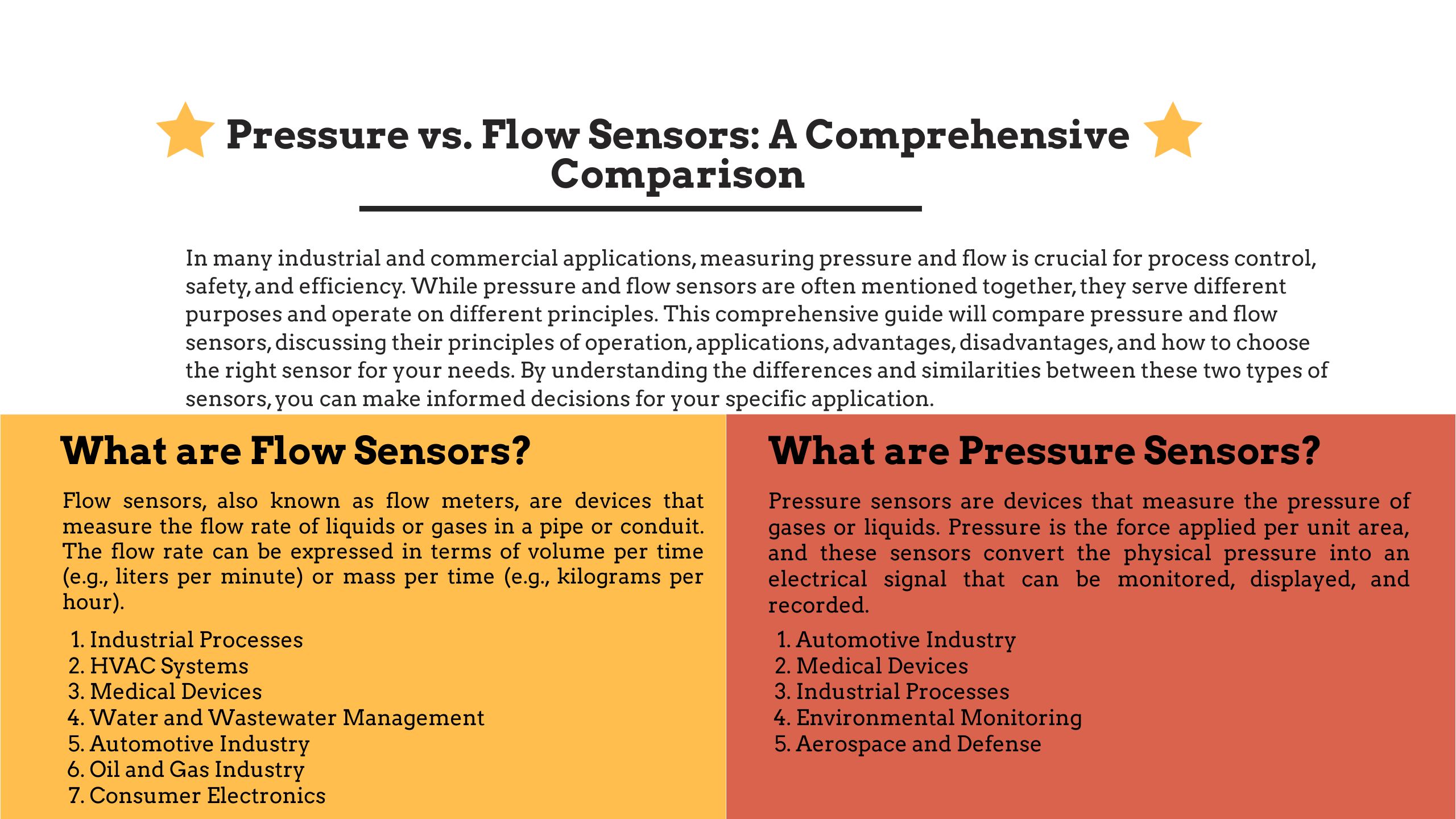
In many industrial and commercial applications, measuring pressure and flow is crucial for process control, safety, and efficiency. While pressure and flow sensors are often mentioned together, they serve different purposes and operate on different principles. This comprehensive guide will compare pressure and flow sensors, discussing their principles of operation, applications, advantages, disadvantages, and how to choose the right sensor for your needs. By understanding the differences and similarities between these two types of sensors, you can make informed decisions for your specific application.
What are Pressure Sensors?
Definition
Pressure sensors are devices that measure the pressure of gases or liquids. Pressure is the force applied per unit area, and these sensors convert the physical pressure into an electrical signal that can be monitored, displayed, and recorded.
Types of Pressure Sensors
There are several types of pressure sensors, each designed for specific applications and operating conditions:
- Piezoresistive Pressure Sensors

- Principle: These sensors use piezoresistive materials that change resistance when subjected to pressure. The change in resistance is proportional to the applied pressure.
- Applications: Used in automotive, medical devices, and industrial processes.
- Capacitive Pressure Sensors
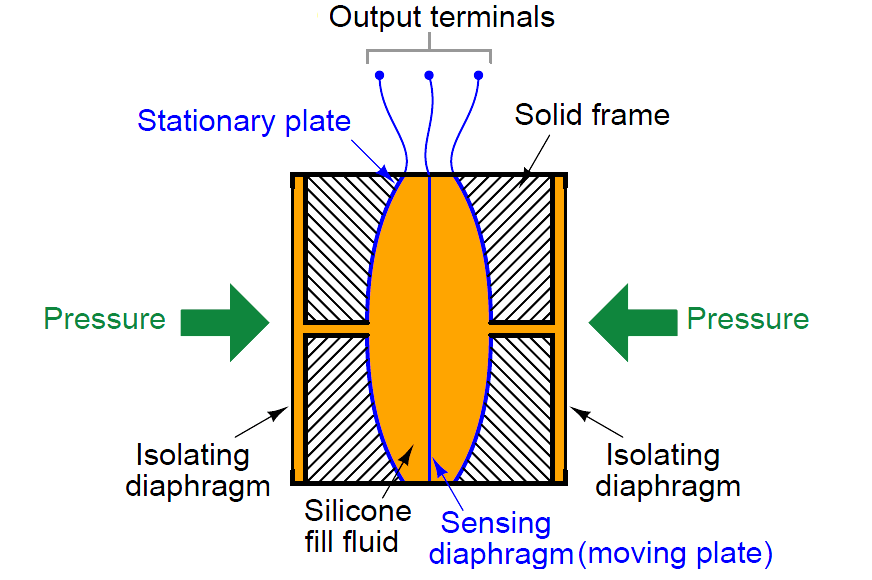
- Principle: These sensors measure pressure by detecting changes in capacitance between two plates separated by a dielectric material. The distance between the plates changes with pressure, altering the capacitance.
- Applications: Suitable for low-pressure applications and environmental monitoring.
- Electromagnetic Pressure Sensors
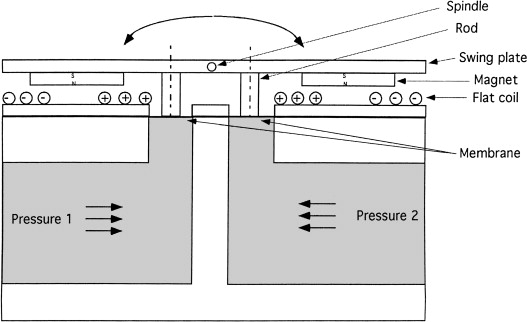
- Principle: These sensors use electromagnetic force to measure pressure. They often employ a diaphragm that moves in response to pressure, altering the electromagnetic field and producing a measurable signal.
- Applications: Used in harsh environments and high-precision applications.
- Optical Pressure Sensors

- Principle: These sensors measure pressure by detecting changes in light transmission through an optical fiber or by using interferometry. Pressure-induced changes in the optical path length or light intensity are measured.
- Applications: Used in high-temperature and high-EMI environments.
- Resonant Pressure Sensors
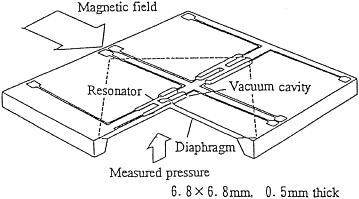
- Principle: These sensors measure pressure by detecting changes in the resonant frequency of a vibrating element. The frequency shift is proportional to the applied pressure.
- Applications: Suitable for high-precision and high-stability applications.
Applications of Pressure Sensors
Pressure sensors are used in a wide range of applications:
- Automotive Industry
- Monitoring tire pressure, oil pressure, and fuel pressure.
- Ensuring optimal engine performance and safety.
- Medical Devices
- Measuring blood pressure, respiratory pressure, and intracranial pressure.
- Ensuring accurate diagnosis and patient monitoring.
- Industrial Processes
- Monitoring and controlling process pressures in chemical plants, refineries, and manufacturing facilities.
- Ensuring safety and efficiency in operations.
- Environmental Monitoring
- Measuring atmospheric pressure for weather forecasting and research.
- Monitoring air and water quality.
- Aerospace and Defense
- Monitoring cabin pressure, fuel pressure, and hydraulic systems in aircraft.
- Ensuring safety and performance in critical applications.
What are Flow Sensors?
Definition
Flow sensors, also known as flow meters, are devices that measure the flow rate of liquids or gases in a pipe or conduit. The flow rate can be expressed in terms of volume per time (e.g., liters per minute) or mass per time (e.g., kilograms per hour).
Types of Flow Sensors
Flow sensors come in various types, each suited to different applications and operating principles:
- Differential Pressure Flow Sensors
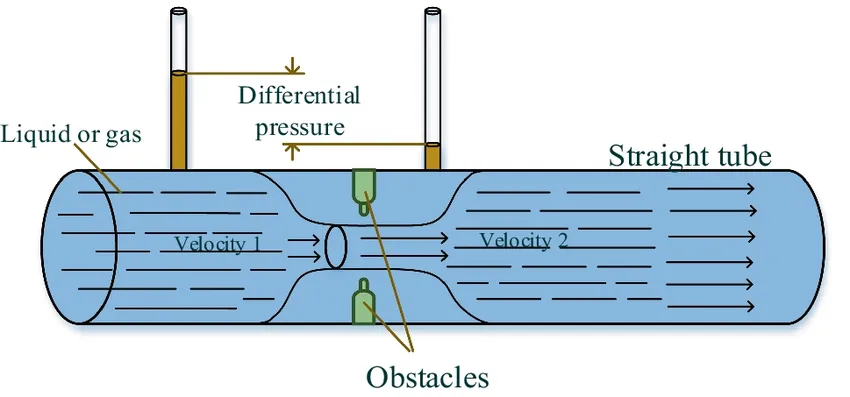
- Principle: Measure the pressure drop across an obstruction (e.g., orifice plate) to determine flow rate using Bernoulli’s equation.
- Applications: Industrial processes, HVAC systems, water treatment plants.
- Positive Displacement Flow Sensors
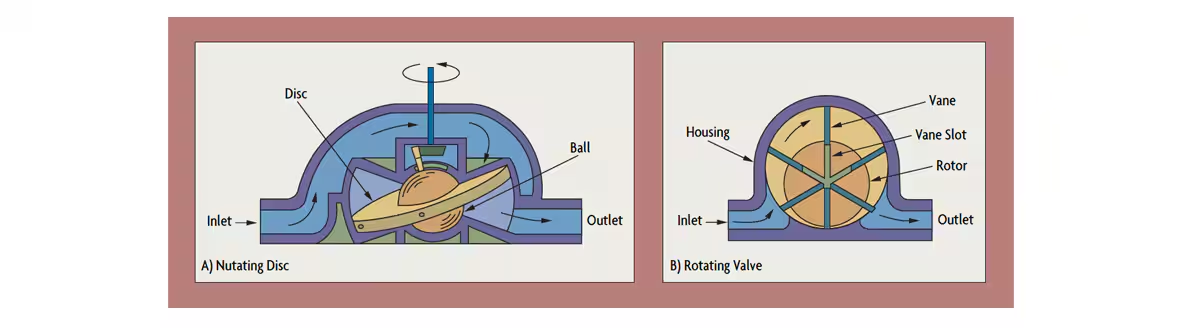
- Principle: Capture and measure discrete volumes of fluid, counting the number of times the volume is filled.
- Applications: Measuring viscous fluids such as oil, fuel, and chemicals.
- Turbine Flow Sensors
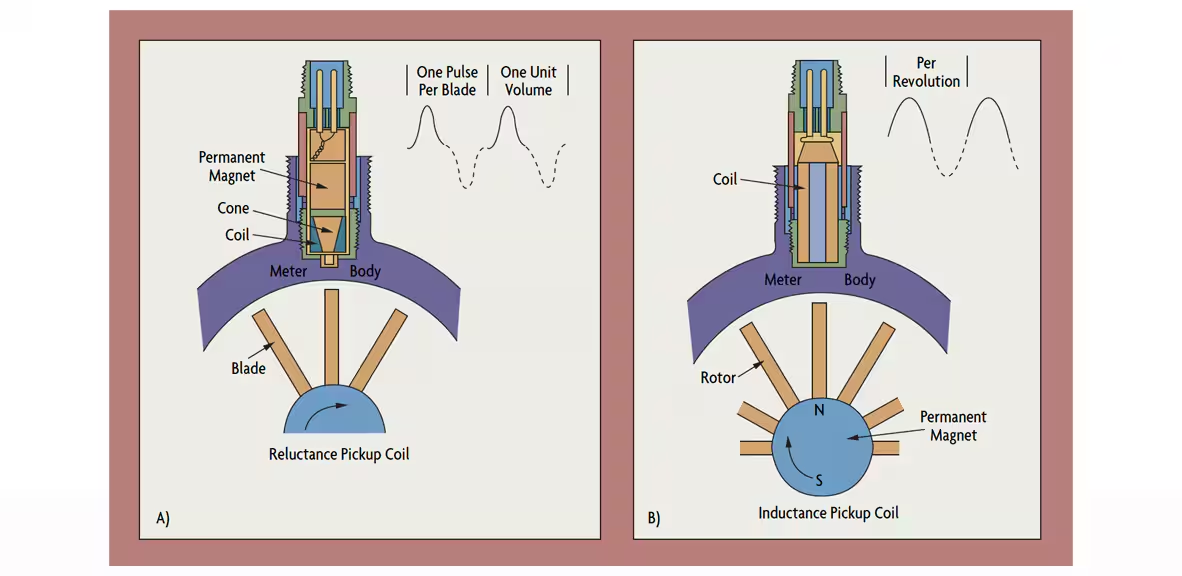
- Principle: Use a turbine wheel that rotates in response to fluid flow, with rotational speed proportional to flow rate.
- Applications: Water distribution systems, fuel measurement, HVAC applications.
- Electromagnetic Flow Sensors
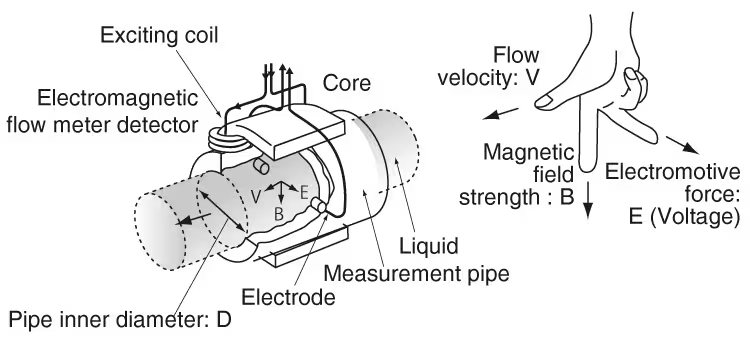
- Principle: Measure flow of conductive fluids by detecting voltage generated when fluid flows through a magnetic field.
- Applications: Water and wastewater management, chemical processing, food and beverage industries.
- Ultrasonic Flow Sensors
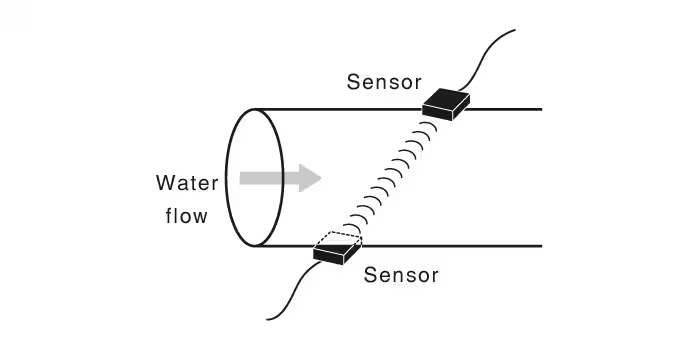
- Principle: Use sound waves to measure flow rate, with transit-time sensors measuring time difference and Doppler sensors measuring frequency shift.
- Applications: Non-invasive flow measurement, clean or partially clean liquids.
- Thermal Mass Flow Sensors

- Principle: Measure mass flow rate of gases by detecting temperature change of a heated element as gas flows over it.
- Applications: HVAC systems, process gas monitoring, semiconductor manufacturing.
- Coriolis Flow Sensors
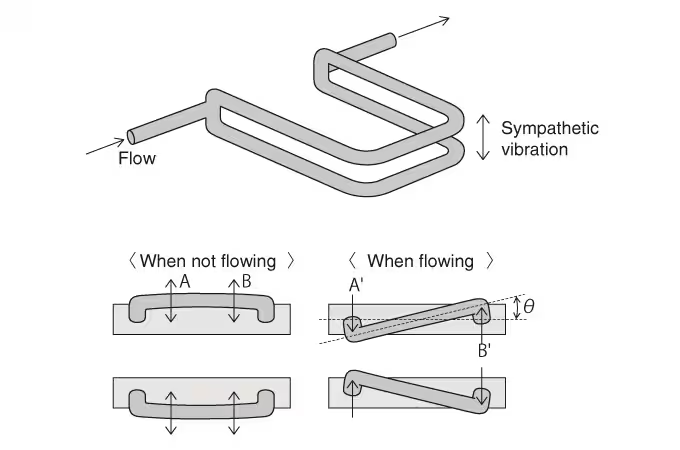
- Principle: Measure mass flow rate by detecting Coriolis force exerted on a vibrating tube through which fluid flows.
- Applications: High-precision measurement of liquids and gases in oil and gas, pharmaceuticals, chemical processing.
- Vortex Flow Sensors
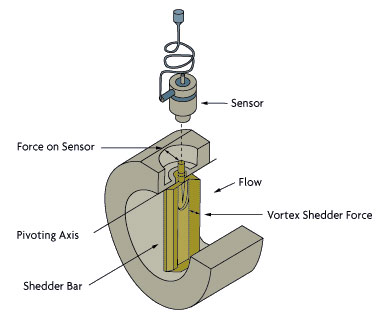
- Principle: Measure flow rate by detecting frequency of vortices shed by a bluff body placed in the flow stream.
- Applications: Steam, air, and water systems.
Applications of Flow Sensors
Flow sensors are used in various applications across different industries:
- Industrial Processes
- Chemical processing: Ensures precise flow measurement for accurate mixing and reaction control.
- Petrochemical industry: Monitors flow of hydrocarbons and gases for process optimization and safety.
- Food and beverage: Measures flow of liquids and gases in production lines for quality and consistency.
- HVAC Systems
- Airflow measurement: Monitors and controls airflow in heating, ventilation, and air conditioning systems.
- Refrigerant flow: Ensures proper flow of refrigerants in cooling systems for optimal performance.
- Energy management: Helps in energy auditing and efficiency improvement by monitoring fluid flow rates.
- Medical Devices
- Respiratory equipment: Measures flow of gases in ventilators and anesthesia machines.
- Infusion pumps: Ensures accurate delivery of fluids and medications to patients.
- Dialysis machines: Monitors flow of blood and dialysate during dialysis treatments.
- Water and Wastewater Management
- Flow monitoring: Measures flow of water in distribution networks and wastewater in treatment plants.
- Leak detection: Identifies leaks in pipelines to prevent water loss and contamination.
- Irrigation systems: Ensures efficient water usage in agricultural irrigation systems.
- Automotive Industry
- Fuel injection systems: Monitors flow of fuel for efficient combustion and reduced emissions.
- Engine coolant flow: Ensures proper cooling of the engine to prevent overheating.
- Exhaust gas measurement: Measures flow of exhaust gases for emission control and compliance.
- Oil and Gas Industry
- Pipeline monitoring: Measures flow of oil, gas, and other fluids in pipelines for transportation and storage.
- Production wells: Monitors flow rates of oil and gas from production wells.
- Refinery processes: Ensures accurate flow measurement in various refining processes.
- Consumer Electronics
- Smart water meters: Measures flow of water in residential and commercial buildings for billing and monitoring.
- Home appliances: Monitors flow of water and other fluids in appliances like washing machines and dishwashers.
- Fitness devices: Measures airflow in devices like spirometers and breath analyzers.
More About Flow Sensor: Understanding Flow Sensors: A Comprehensive Guide
Comparison of Pressure and Flow Sensors
Principles of Operation
- Pressure Sensors: Measure the force exerted by a fluid on a surface, converting it into an electrical signal.
- Flow Sensors: Measure the rate at which a fluid moves through a pipe or conduit, converting it into an electrical signal.
Applications
- Pressure Sensors: Used in applications where monitoring and controlling pressure is crucial, such as in automotive, medical, and industrial processes.
- Flow Sensors: Used in applications where accurate measurement of fluid flow is essential, such as in water distribution, chemical processing, and HVAC systems.
Advantages
- Pressure Sensors:
- High accuracy and precision.
- Suitable for a wide range of pressures and environments.
- Robust and reliable for critical applications.
- Flow Sensors:
- Accurate measurement of flow rates.
- Suitable for various fluids and gases.
- Available in non-invasive designs for easy installation.
Disadvantages
- Pressure Sensors:
- Can be affected by temperature changes.
- Some types require regular calibration.
- Can be sensitive to environmental conditions.
- Flow Sensors:
- Some types can be expensive.
- May require specific fluid properties for accurate measurement.
- Can be affected by fluid impurities or bubbles.
Choosing the Right Sensor
Factors to Consider
- Measurement Range
- Pressure Sensors: Determine the expected pressure range for your application and choose a sensor that can accurately measure within that range.
- Flow Sensors: Determine the expected flow range for your application and choose a sensor that can accurately measure within that range.
- Fluid Type
- Pressure Sensors: Consider the type of fluid (gas or liquid) and its properties (viscosity, temperature, pressure) when selecting a pressure sensor.
- Flow Sensors: Consider the type of fluid (gas or liquid) and its properties (viscosity, temperature, pressure, conductivity) when selecting a flow sensor.
- Accuracy and Precision
- Pressure Sensors: Assess the required accuracy and precision for your application. High-precision sensors are essential for critical processes.
- Flow Sensors: Assess the required accuracy and precision for your application. High-precision sensors are essential for critical processes.
- Installation Requirements
- Pressure Sensors: Evaluate the installation requirements, including mounting options, space constraints, and environmental conditions.
- Flow Sensors: Evaluate the installation requirements, including pipe size, mounting options, and space constraints.
- Environmental Conditions
- Pressure Sensors: Consider the operating environment, including temperature, humidity, and potential exposure to corrosive or hazardous substances.
- Flow Sensors: Consider the operating environment, including temperature, humidity, and potential exposure to corrosive or hazardous substances.
- Output Type
- Pressure Sensors: Choose a sensor with an output compatible with your system, such as analog voltage, current, or digital signals.
- Flow Sensors: Choose a sensor with an output compatible with your system, such as analog voltage, current, pulse, or digital signals.
- Maintenance and Calibration
- Pressure Sensors: Assess the maintenance and calibration needs of the sensor. Some pressure sensors require regular calibration and maintenance.
- Flow Sensors: Assess the maintenance and calibration needs of the sensor. Some flow sensors require regular calibration and maintenance.
- Cost
- Pressure Sensors: Consider the cost of the sensor, including initial purchase price, installation, and ongoing maintenance.
- Flow Sensors: Consider the cost of the sensor, including initial purchase price, installation, and ongoing maintenance.
Comparison of Different Types of Pressure and Flow Sensors
| Type | Principle | Advantages | Disadvantages | Applications |
|---|---|---|---|---|
| Piezoresistive Pressure | Resistance changes with pressure | High sensitivity, suitable for various pressures | Sensitive to temperature changes | Automotive, medical devices, industrial processes |
| Capacitive Pressure | Capacitance changes with pressure | Suitable for low-pressure applications | Requires calibration, sensitive to humidity | Environmental monitoring, HVAC systems |
| Electromagnetic Pressure | Electromagnetic force changes with pressure | Suitable for harsh environments | Requires specialized equipment | Industrial processes, aerospace, defense |
| Optical Pressure | Light transmission changes with pressure | High precision, non-invasive | Expensive, requires clean conditions | High-temperature environments, high-EMI areas |
| Resonant Pressure | Resonant frequency changes with pressure | High stability, suitable for precision tasks | Complex design, expensive | High-precision applications, scientific research |
| Differential Pressure Flow | Pressure drop across an obstruction | Widely used, accurate for certain conditions | Pressure loss, requires calibration | Industrial processes, HVAC systems |
| Positive Displacement Flow | Discrete volumes are captured and measured | High accuracy for viscous fluids | Can be bulky, mechanical parts wear out | Chemical processing, oil, and fuel measurement |
| Turbine Flow | Rotational speed of a turbine is measured | High accuracy, suitable for clean fluids | Can be affected by fluid properties | Water distribution, fuel measurement |
| Electromagnetic Flow | Voltage induced by fluid in a magnetic field | No pressure loss, suitable for conductive fluids | Only works with conductive fluids | Water and wastewater management |
| Ultrasonic Flow | Sound waves measure flow rate | Non-invasive, works with dirty fluids | Can be expensive, requires clean conditions | Water and wastewater, medical devices |
| Thermal Mass Flow | Heat loss from a heated element is measured | Accurate for gas flow, wide range | Affected by temperature changes | HVAC systems, process gas monitoring |
| Coriolis Flow | Coriolis force on a vibrating tube is measured | High precision, measures mass flow directly | Expensive, complex design | Oil and gas, pharmaceuticals, chemical processing |
| Vortex Flow | Frequency of vortices shed by a bluff body is detected | No moving parts, durable | Affected by fluid properties and conditions | Steam, air, and water systems |
Conclusion
Pressure and flow sensors are essential tools in various industries, providing critical data for monitoring and controlling processes. Understanding the differences between pressure and flow sensors, including their principles of operation, applications, advantages, and disadvantages, is crucial for selecting the right sensor for your needs. By considering factors such as measurement range, fluid type, accuracy, installation requirements, and environmental conditions, you can ensure optimal performance and reliability in your measurement systems. Whether for industrial processes, medical devices, HVAC systems, or automotive applications, pressure and flow sensors play a vital role in modern technology, contributing to advancements and innovations across various fields.