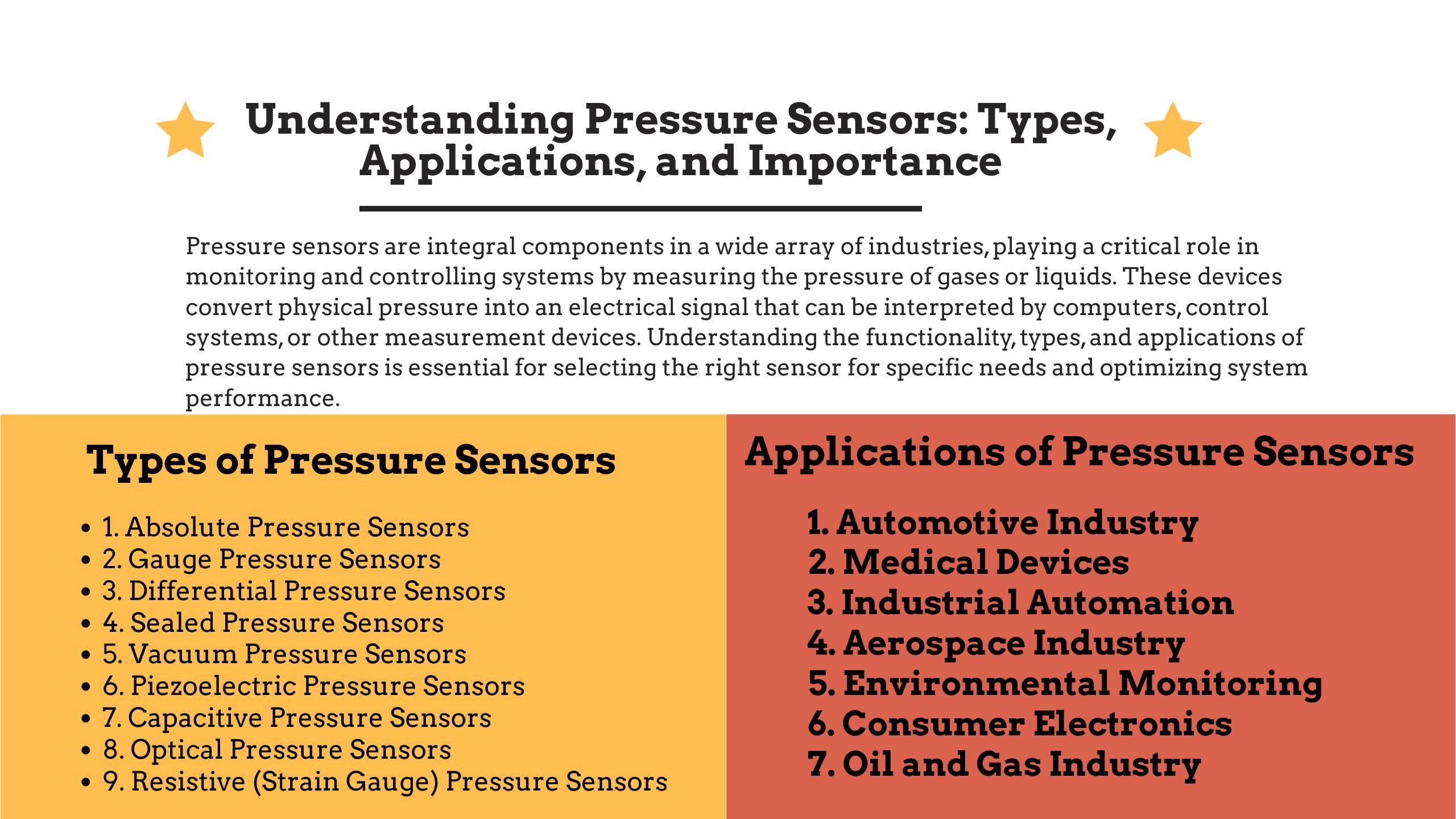
Pressure sensors are integral components in a wide array of industries, playing a critical role in monitoring and controlling systems by measuring the pressure of gases or liquids. These devices convert physical pressure into an electrical signal that can be interpreted by computers, control systems, or other measurement devices. Understanding the functionality, types, and applications of pressure sensors is essential for selecting the right sensor for specific needs and optimizing system performance.

This article will explore what pressure sensors are, their different types, how they work, their applications, and why they are important across various industries.

What is a Pressure Sensor?

A pressure sensor is a device that measures the pressure of a fluid (liquid or gas) and converts this pressure into an electrical signal. This signal can then be monitored, displayed, or used to trigger an action in a control system. Pressure sensors are used in a vast range of applications, from industrial automation to automotive systems, and from medical devices to consumer electronics.

Pressure sensors operate based on different principles, depending on the type and application. Some common principles include piezoelectric, capacitive, resistive, and optical methods. The output of a pressure sensor can be in the form of a voltage, current, or digital signal, depending on the design and intended use.

Types of Pressure Sensors

There are several types of pressure sensors, each designed to measure specific types of pressure or to operate in particular environments. Here’s an overview of the most common types:

1. Absolute Pressure Sensors

  • Definition: Absolute pressure sensors measure pressure relative to a perfect vacuum (zero pressure).
  • Working Principle: These sensors typically use a sealed chamber with a vacuum as a reference. The pressure of the measured medium is compared to this vacuum, providing an absolute pressure reading.
  • Applications: Used in barometric readings, altimeters, and applications requiring precise atmospheric pressure measurements.

2. Gauge Pressure Sensors

  • Definition: Gauge pressure sensors measure pressure relative to ambient atmospheric pressure.
  • Working Principle: The sensor measures the difference between the pressure in the system and the ambient air pressure. If the system pressure is higher than the atmospheric pressure, the gauge pressure is positive; if lower, it is negative.
  • Applications: Commonly used in tire pressure gauges, blood pressure monitors, and fluid power systems.

3. Differential Pressure Sensors

  • Definition: Differential pressure sensors measure the difference in pressure between two points in a system.
  • Working Principle: These sensors have two input ports, each connected to a different point in the system. The sensor measures the difference in pressure between these two points, which is crucial in systems where pressure drops are significant.
  • Applications: Used in HVAC systems, flow measurement, filter monitoring, and liquid level measurement.

4. Sealed Pressure Sensors

  • Definition: Sealed pressure sensors measure pressure relative to a sealed chamber with a fixed reference pressure.
  • Working Principle: Similar to absolute pressure sensors, but instead of a vacuum, the reference pressure in the sealed chamber is fixed and known. The sensor measures the pressure difference between the medium and the sealed chamber.
  • Applications: Used in environments where the pressure sensor is exposed to harsh conditions, such as high altitudes or deep-sea applications.

5. Vacuum Pressure Sensors

  • Definition: Vacuum pressure sensors measure pressures below atmospheric pressure (i.e., vacuum).
  • Working Principle: These sensors are designed to detect very low pressures relative to ambient atmospheric pressure, often down to near-complete vacuums.
  • Applications: Used in vacuum packaging, semiconductor manufacturing, and scientific research where precise vacuum control is required.

6. Piezoelectric Pressure Sensors

  • Definition: Piezoelectric pressure sensors generate an electrical charge in response to applied pressure.
  • Working Principle: When pressure is applied to a piezoelectric material, it generates a small electrical charge that can be measured. This type of sensor is particularly useful for measuring dynamic pressure changes.
  • Applications: Used in accelerometers, dynamic pressure measurements, and applications where rapid pressure changes need to be monitored.

7. Capacitive Pressure Sensors

  • Definition: Capacitive pressure sensors measure pressure by detecting changes in capacitance caused by the deformation of a diaphragm.
  • Working Principle: When pressure is applied to the diaphragm, it moves, causing a change in the capacitance between the diaphragm and a fixed electrode. This change in capacitance is proportional to the applied pressure.
  • Applications: Used in barometric pressure sensors, low-pressure measurements, and consumer electronics.

8. Optical Pressure Sensors

  • Definition: Optical pressure sensors use light to measure pressure changes.
  • Working Principle: These sensors use fiber optics or other optical components to detect changes in pressure. The pressure causes a physical change in the sensor, such as a shift in wavelength or intensity of light, which can be measured.
  • Applications: Used in environments where traditional electronic sensors might fail, such as high electromagnetic interference (EMI) environments or where extreme precision is required.

9. Resistive (Strain Gauge) Pressure Sensors

  • Definition: Resistive pressure sensors, often called strain gauge sensors, measure pressure by detecting changes in electrical resistance.
  • Working Principle: When pressure is applied to a diaphragm with a strain gauge attached, the diaphragm deforms, causing a change in resistance. This change in resistance is proportional to the applied pressure.
  • Applications: Used in industrial process control, medical devices, and automotive systems.

How Do Pressure Sensors Work?

Pressure sensors work by converting the physical pressure of a fluid into an electrical signal. The working principle varies depending on the type of sensor:

1. Piezoelectric Sensors

Piezoresistive Pressure Sensors

In piezoelectric sensors, a piezoelectric material generates an electrical charge in response to mechanical stress. When pressure is applied, the material deforms, creating a charge proportional to the pressure. This charge is then measured and converted into a signal that indicates the pressure.

2. Capacitive Sensors
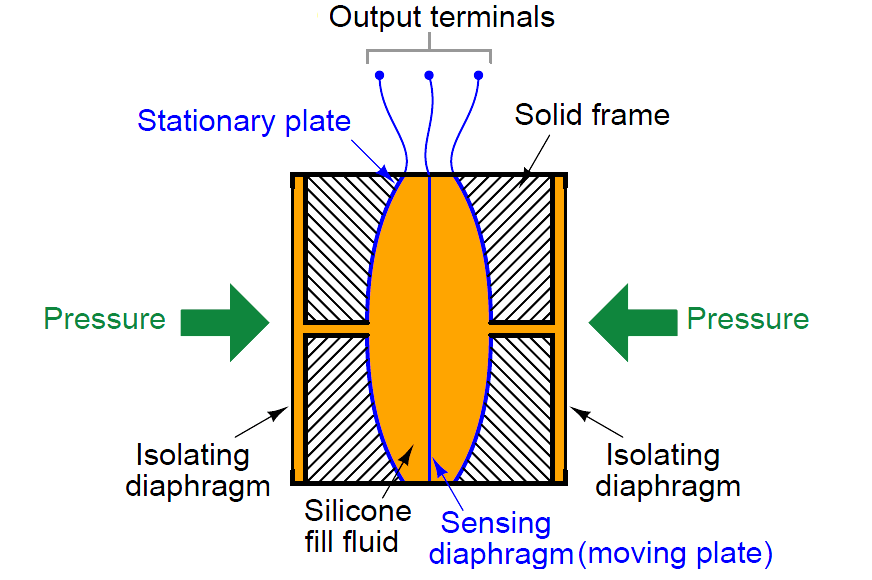
Capacitive Pressure Sensors

Capacitive sensors rely on a diaphragm that moves in response to pressure changes. The diaphragm forms one plate of a capacitor, and as it moves closer or further away from a fixed plate, the capacitance changes. This change in capacitance is measured and converted into a pressure reading.

3. Resistive Sensors

Resistive sensors use strain gauges attached to a diaphragm. When pressure is applied, the diaphragm deforms, causing the strain gauge to stretch or compress. This deformation changes the electrical resistance of the strain gauge, which can be measured and correlated to the applied pressure.

4. Optical Sensors

Optical Pressure Sensors

Optical sensors use light to detect pressure changes. Pressure may cause a physical change, such as bending a fiber optic cable or altering the properties of a material that affects light transmission. These changes are detected by measuring variations in light intensity, wavelength, or phase, which are then converted into a pressure reading.
Applications of Pressure Sensors

Pressure sensors have a vast array of applications across different industries, reflecting their versatility and importance in modern technology:

1. Automotive Industry

In the automotive industry, pressure sensors are used in various systems, including:

  • Tire Pressure Monitoring Systems (TPMS): Sensors measure the air pressure inside tires, ensuring they are properly inflated to enhance safety and fuel efficiency.
  • Engine Management Systems: Sensors monitor oil pressure, fuel pressure, and manifold pressure to optimize engine performance and emissions control.
  • Braking Systems: Pressure sensors in anti-lock braking systems (ABS) monitor hydraulic pressure, ensuring optimal braking performance.

2. Medical Devices

In the medical field, pressure sensors are critical for:

  • Blood Pressure Monitors: Sensors measure the pressure of blood within the arteries, providing essential data for diagnosing and managing hypertension.
  • Respiratory Devices: Sensors in ventilators and CPAP machines monitor airway pressure, ensuring patients receive the correct amount of air or oxygen.
  • Infusion Pumps: Pressure sensors ensure the accurate delivery of fluids and medications by monitoring the pressure within the infusion line.

3. Industrial Automation

In industrial automation, pressure sensors are used for:

  • Process Control: Sensors monitor pressure in pipelines, reactors, and other equipment, ensuring processes operate within safe and efficient parameters.
  • Hydraulic Systems: Sensors measure the pressure of hydraulic fluids, helping to control machinery and prevent system failures.
  • Pneumatic Systems: Sensors in pneumatic systems monitor air pressure to control the operation of valves, actuators, and other components.

4. Aerospace Industry

Pressure sensors in the aerospace industry are vital for:

  • Altitude Measurement: Barometric pressure sensors are used in altimeters to determine aircraft altitude by measuring atmospheric pressure.
  • Cabin Pressure Control: Sensors monitor and control cabin pressure, ensuring passenger comfort and safety at high altitudes.
  • Fuel Systems: Pressure sensors monitor fuel pressure, ensuring the engine receives a steady and adequate supply of fuel.

5. Environmental Monitoring

Pressure sensors contribute to environmental monitoring by:

  • Weather Stations: Barometric pressure sensors are used to measure atmospheric pressure, helping to forecast weather conditions and monitor climate changes.
  • Water Quality Monitoring: Pressure sensors in water systems measure the pressure of fluids, helping to detect leaks, blockages, and other issues that could affect water quality.

6. Consumer Electronics

Pressure sensors are increasingly found in consumer electronics, such as:

  • Smartphones: Barometric sensors in smartphones are used to detect altitude changes, providing data for location services, fitness apps, and weather predictions.
  • Wearable Devices: Sensors in fitness trackers and smartwatches monitor blood pressure, providing health-related data to users.
  • Home Automation: Pressure sensors are used in smart home systems to monitor and control air and water pressure, enhancing comfort and efficiency.

7. Oil and Gas Industry

In the oil and gas industry, pressure sensors are essential for:

  • Drilling Operations: Sensors monitor the pressure of drilling fluids, helping to prevent blowouts and other dangerous situations.
  • Pipeline Monitoring: Pressure sensors detect pressure changes in pipelines, helping to identify leaks and maintain the integrity of the system.
  • Reservoir Management: Sensors measure the pressure of fluids within reservoirs, aiding in the management and extraction of resources.

The Importance of Pressure Sensors

Pressure sensors are crucial in various applications due to their ability to provide accurate, real-time data on the pressure of fluids. This data is essential for maintaining safety, efficiency, and performance in many systems.

1. Safety

In many industries, pressure sensors are vital for ensuring safety. For example, in the automotive industry, tire pressure sensors help prevent accidents caused by under-inflated tires. In the oil and gas industry, pressure sensors monitor drilling operations and pipelines, helping to prevent catastrophic failures.

2. Efficiency

Pressure sensors help optimize the performance of systems by providing real-time data that can be used to adjust processes. In industrial automation, for example, pressure sensors ensure that machinery operates within optimal parameters, reducing energy consumption and wear on equipment.

3. Compliance

Many industries are subject to strict regulations regarding the monitoring and control of pressure. Pressure sensors provide the data needed to comply with these regulations, ensuring that systems operate within legal and safety limits.

4. Cost Savings

By providing accurate pressure data, sensors help prevent equipment failures, reduce maintenance costs, and improve the efficiency of processes. This leads to significant cost savings over time, particularly in industries like manufacturing, oil and gas, and aerospace.

How to Choose the Right Pressure Sensor

Choosing the right pressure sensor for a specific application requires consideration of several factors:

1. Pressure Range

The sensor must be capable of measuring the expected pressure range in the application. Selecting a sensor with too narrow a range could result in inaccurate readings or damage to the sensor, while a sensor with too wide a range may lack the necessary sensitivity.

2. Accuracy

The required accuracy of the sensor depends on the application. For critical applications, such as medical devices or aerospace systems, high accuracy is essential. In less critical applications, a lower accuracy sensor may suffice.

3. Environmental Conditions

The operating environment can significantly impact the choice of sensor. Factors to consider include temperature, humidity, exposure to corrosive substances, and electromagnetic interference. Some sensors are designed to operate in harsh environments, while others are better suited for controlled conditions.

4. Output Signal

The type of output signal (analog or digital) required by the control system should be considered. Some applications may require a specific signal type, such as 4-20mA, 0-5V, or a digital communication protocol like I2C or SPI.

5. Size and Form Factor

The physical size and form factor of the sensor may be important, especially in applications with space constraints. Miniature sensors are available for compact spaces, while larger sensors may offer additional features or robustness.

6. Cost

Cost is always a consideration when selecting a sensor. While it’s important to choose a sensor that meets all technical requirements, it’s also important to consider the budget. In some cases, a more expensive sensor may offer greater durability or lower maintenance costs, leading to cost savings over time.

7. Compatibility

The sensor must be compatible with the existing system in terms of electrical connections, communication protocols, and mechanical fittings. Compatibility issues can lead to additional costs or the need for system modifications.

Conclusion

Pressure sensors are indispensable tools in modern technology, providing critical data across a wide range of industries. From automotive systems to industrial automation, medical devices to environmental monitoring, these sensors ensure safety, efficiency, and compliance in countless applications. Understanding the different types of pressure sensors, how they work, and where they are used is essential for making informed decisions about sensor selection and implementation.

As technology advances, pressure sensors continue to evolve, offering greater accuracy, reliability, and versatility. By choosing the right pressure sensor for a specific application, businesses and individuals can optimize system performance, enhance safety, and achieve significant cost savings.

Realted Read: Pressure vs. Flow Sensors: A Comprehensive Comparison

[post-views]

Leave a Reply

Your email address will not be published. Required fields are marked *