
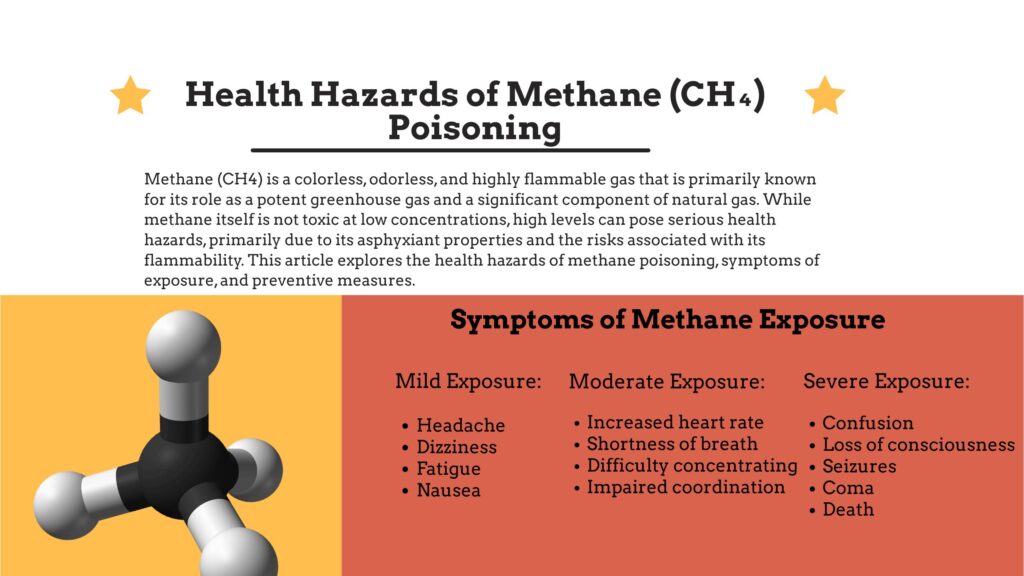
Methane (CH₄) is a colorless, odorless, and highly flammable gas that is primarily known for its role as a potent greenhouse gas and a significant component of natural gas. While methane itself is not toxic at low concentrations, high levels can pose serious health hazards, primarily due to its asphyxiant properties and the risks associated with its flammability. This article explores the health hazards of methane poisoning, symptoms of exposure, and preventive measures.
Understanding Methane
Methane is a simple hydrocarbon gas composed of one carbon atom and four hydrogen atoms. It is released from natural sources such as wetlands, oceans, and permafrost, as well as from human activities like fossil fuel extraction, agriculture, and waste management.
More About Methane: Methane(CH4), Definition, Sources, and Environmental Impact
Health Hazards of Methane Poisoning
Asphyxiation Risk
Methane is not toxic in itself, but it can displace oxygen in the air, leading to an oxygen-deficient environment. When methane concentrations are high, the displacement of oxygen can result in asphyxiation, which is the primary health risk associated with methane exposure.
- Oxygen Displacement: Methane can accumulate in enclosed or poorly ventilated spaces, reducing the available oxygen. Normal air contains about 21% oxygen, and when this level drops below 19.5%, it can create an oxygen-deficient environment. At levels below 16%, symptoms of oxygen deprivation become apparent, and levels below 10% can lead to unconsciousness or death.
Symptoms of Methane Exposure
The symptoms of methane exposure are mainly due to the lack of oxygen rather than the toxicity of methane itself. These symptoms can vary depending on the level and duration of exposure:
- Mild Exposure:
- Headache
- Dizziness
- Fatigue
- Nausea
- Moderate Exposure:
- Increased heart rate
- Shortness of breath
- Difficulty concentrating
- Impaired coordination
- Severe Exposure:
- Confusion
- Loss of consciousness
- Seizures
- Coma
- Death
Flammability and Explosion Risk
Methane is highly flammable and can form explosive mixtures with air at concentrations between 5% and 15%. The risks associated with methane explosions and fires are significant in both industrial settings and residential areas where natural gas is used.
- Fire Hazard: Methane can ignite when exposed to an ignition source, such as a spark or open flame, leading to fires or explosions.
- Explosion Hazard: In confined spaces, methane can accumulate to explosive levels. An explosion can cause serious injuries, fatalities, and structural damage.
Preventive Measures
Detection and Monitoring
- Methane Detectors: Installing methane detectors in areas where methane buildup is possible, such as industrial facilities, mines, and homes with natural gas appliances, is crucial for early detection and prevention of hazardous situations.
- Regular Monitoring: Conducting regular air quality monitoring in workplaces, especially in confined spaces, to ensure methane levels remain within safe limits.
Realted Read: Understanding Methane Sensors, How They Work and Their Applications
Ventilation
- Adequate Ventilation: Ensuring proper ventilation in areas where methane emissions may occur helps to prevent the accumulation of gas and maintains safe oxygen levels.
- Use of Ventilation Systems: Utilizing mechanical ventilation systems in industrial settings to control methane levels and enhance air circulation.
Safety Protocols
- Emergency Procedures: Establishing and training personnel on emergency procedures for methane leaks, including evacuation plans and the use of personal protective equipment (PPE).
- Regular Inspections: Conducting routine inspections and maintenance of equipment and infrastructure that may produce or transport methane to prevent leaks.
First Aid for Methane Exposure
- Remove from Exposure: Immediately move the affected person to fresh air if methane exposure is suspected.
- Call for Medical Help: Seek medical attention promptly, especially if the person shows signs of severe exposure such as confusion, loss of consciousness, or difficulty breathing.
- Administer Oxygen: Provide supplemental oxygen if available and trained to do so while awaiting emergency medical services.
Conclusion
While methane itself is not toxic, its health hazards primarily arise from its ability to displace oxygen, creating an asphyxiation risk, and its flammability, posing fire and explosion hazards. Understanding the risks associated with methane exposure, recognizing the symptoms, and implementing preventive measures are essential to ensure safety in both industrial and residential settings. By employing proper detection, ventilation, and safety protocols, the dangers of methane poisoning can be effectively managed and mitigated.