Methane (CH₄) is a colorless, odorless gas that plays a significant role in both the energy sector and environmental science. As the second most potent greenhouse gas, methane has a high global warming potential but a shorter atmospheric lifetime compared to carbon dioxide. This article delves into the chemical and physical properties of methane, its sources and uses, the health hazards associated with it, and its impact on climate change. Additionally, we will explore strategies to reduce methane emissions and the importance of global initiatives like the Global Methane Pledge.
What is Methane?

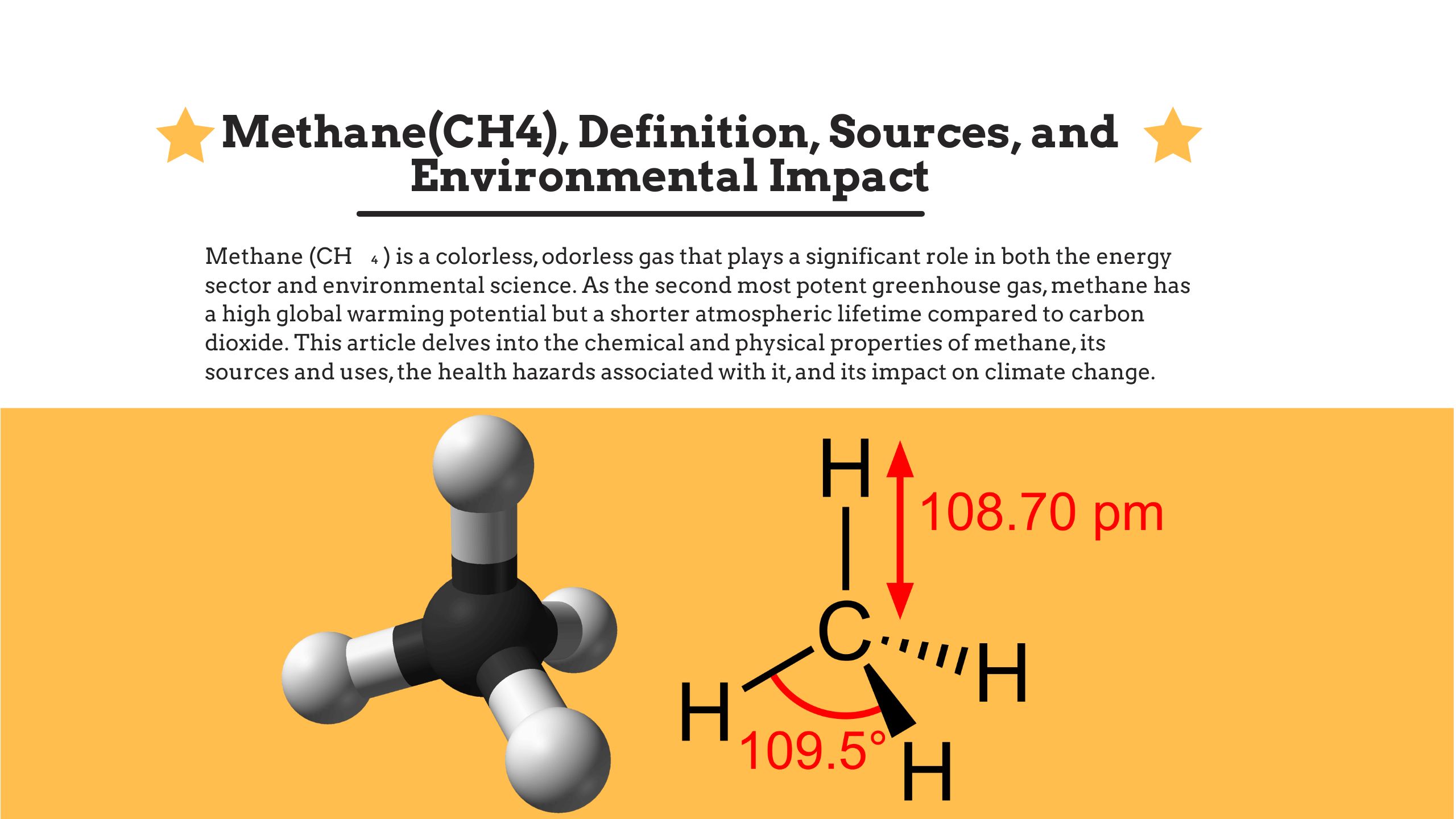
Methane (CH4) is a colorless, odorless, and flammable gas belonging to the hydrocarbon family. It consists of one carbon atom bonded to four hydrogen atoms. It is the primary component of natural gas and is commonly found in fossil fuel reserves, wetlands, and the digestive systems of animals.
Chemical Properties of Methane
- Chemical Formula: CH₄
- Molecular Weight: 16.04 g/mol
- Boiling Point: -161.5°C (-258.7°F)
- Melting Point: -182.5°C (-296.5°F)
- Density: 0.656 kg/m³ at 0°C
- Solubility: Slightly soluble in water
Physical Properties of Methane
- State: Gas at room temperature
- Color: Colorless
- Odor: Odorless (odorants are added for detection in natural gas)
- Flammability: Highly flammable
- Explosive Limits: 5-15% in air

Sources of Methane
Methane (CH4) is a greenhouse gas and is produced by both natural and human-related sources. Here are the primary sources of methane
Natural Sources
- Wetlands: Methane is released during the decomposition of organic matter in wetland environments, such as marshes, swamps, and rice paddies.
- Termites: Termites produce methane as a byproduct of their digestion process.
- Natural Gas Seepage: Methane can naturally seep out from underground reservoirs and escape into the atmosphere.
Human-Related Sources
- Energy Production: Methane is emitted during the extraction, production, and distribution of fossil fuels, including coal, oil, and natural gas. This includes activities such as mining, drilling, and leakage from pipelines.
- Livestock and Agriculture: Enteric fermentation, a digestive process in ruminant animals like cattle, sheep, and goats, produces methane. Methane is also emitted from manure management systems (such as storage and spreading of animal waste) and rice cultivation.
- Landfills: Organic waste decomposition in landfills under anaerobic (oxygen-deprived) conditions produces methane. Landfills are a significant anthropogenic source of methane emissions.
- Biomass Burning: Incomplete combustion of organic matter, such as forest fires and burning of agricultural residues, releases methane.
- Wastewater Treatment: Anaerobic decomposition of organic matter in wastewater treatment plants generates methane.
- Industrial Processes: Methane is emitted during the production and use of coal, oil, and natural gas, as well as from certain industrial activities like coal mining, oil refining, and chemical manufacturing.
Uses of Methane
Natural Gas
- Heating, cooking, and electricity generation
- Feedstock for chemical production
Methane is the primary component of natural gas, which is a widely used fossil fuel for heating, cooking, and electricity generation. Natural gas is also utilized as a feedstock in the production of chemicals, fertilizers, and other industrial processes.
Energy Production
- Fuel for heat and electricity generation
- Gas turbines, CHP systems, and gas-fired power plants
Methane can be burned as a fuel to produce heat and electricity. It is used in gas turbines, combined heat and power (CHP) systems, and gas-fired power plants, contributing to the generation of electricity and heating.
Transportation
- Compressed Natural Gas (CNG) and Liquefied Natural Gas (LNG)
- Alternative fuel for vehicles
Compressed Natural Gas (CNG) and Liquefied Natural Gas (LNG) are forms of methane that can be used as an alternative fuel for vehicles. Methane-powered vehicles, including cars, buses, and trucks, offer reduced emissions compared to traditional gasoline or diesel-powered vehicles.
Industrial Processes
- Raw material and feedstock
- Production of hydrogen, syngas, methanol, ammonia, and other chemicals
Methane serves as a raw material and feedstock in various industrial processes. It is used in the production of hydrogen, synthesis gas (syngas), methanol, ammonia, and other chemicals. These chemicals find applications in manufacturing, pharmaceuticals, plastics, fertilizers, and more.
Heating and Cooking
- Residential and commercial heating
- Cooking fuel for households and restaurants
Methane is commonly used for residential and commercial heating purposes, as well as for cooking in households and restaurants. It is supplied through natural gas pipelines or in the form of CNG for localized distribution.
Anaerobic Digestion
- Generation of biogas through organic waste breakdown
- Heat, electricity generation, and vehicle fuel
Methane can be produced through anaerobic digestion, a process that breaks down organic waste materials such as agricultural residues, food waste, and sewage sludge. The generated methane, known as biogas, can be used for heat, electricity generation, or as a vehicle fuel.
Research and Laboratory Use
- Scientific research applications
- Laboratory burners and calibration gas for analytical instruments
Methane is utilized in scientific research, including environmental studies, combustion research, and chemical reactions. It can act as a fuel for laboratory burners and as a calibration gas in analytical instruments.
Dangers of methane
Methane (CH4) can pose several dangers and risks to both human health and the environment.
Fire and Explosion Hazard
Methane is highly flammable and can form explosive mixtures with air when concentrations are within the flammable range (5-15% by volume). In the presence of an ignition source, such as an open flame or spark, methane can ignite, leading to fires and explosions. This poses a significant risk in environments where methane is present, such as natural gas distribution systems, industrial facilities, and confined spaces.
Asphyxiation
Methane is an odorless and colorless gas, making it difficult to detect without proper monitoring equipment. In high concentrations, methane can displace oxygen in confined spaces, leading to oxygen deficiency and the risk of asphyxiation. Lack of oxygen can cause dizziness, unconsciousness, and even death.
Climate Change and Global Warming
Methane is a potent greenhouse gas, with a higher global warming potential than carbon dioxide (CO2) over a 20-year timeframe. Excessive emissions of methane contribute to climate change and exacerbate global warming. Methane is released from various sources, including fossil fuel extraction, agriculture, and waste management.
Health Effects
Direct exposure to high concentrations of methane gas can cause adverse health effects. Although not toxic itself, methane can displace oxygen, leading to oxygen deprivation and symptoms such as dizziness, nausea, headaches, and loss of consciousness. Additionally, methane leaks or releases from industrial processes may contain other harmful compounds or contaminants that can have health impacts.
Environmental Impact
Methane emissions contribute to air pollution and can have detrimental effects on air quality and ecosystem health. Methane reacts with other pollutants in the atmosphere, contributing to the formation of ground-level ozone, a harmful air pollutant. Methane also plays a role in the degradation of the ozone layer in the upper atmosphere.
More on methane’s climate impact: Methane and the Environment, A Comprehensive Guide
Methane Health Hazards: Health Hazards of Methane (CH₄) Poisoning
How to Detect Methane
Detecting methane gas is important for safety, environmental monitoring, and leak detection.
- Combustible Gas Detectors: These portable devices are commonly used to detect flammable gases, including methane. They work by measuring the concentration of methane in the surrounding air. When methane levels exceed a certain threshold, an alarm is triggered. Combustible gas detectors are commonly used in industrial settings, construction sites, and confined spaces.
- Fixed Gas Detectors: These are stationary devices installed in specific locations where methane leaks are likely to occur, such as gas pipelines, storage facilities, or industrial plants. Fixed gas detectors continuously monitor the air for methane concentrations and can provide immediate warnings if high levels are detected.
- Flame Ionization Detectors (FID): FID instruments are often used in industrial applications to detect and measure methane emissions. They work by burning a small sample of the gas and measuring the ionization current generated by the combustion. FID detectors are sensitive to methane and can provide accurate measurements in real-time.
- Infrared Gas Detectors: These detectors use infrared technology to detect the presence of methane. They emit infrared beams that are absorbed by methane molecules, allowing the detector to measure the gas concentration. Infrared gas detectors are commonly used in industrial settings and can provide continuous monitoring.
- Portable Gas Monitors: These handheld devices are commonly used by emergency responders, technicians, or professionals working in hazardous environments. Portable gas monitors can detect multiple gases, including methane, and provide real-time readings of gas concentrations. They are lightweight, easy to use, and often equipped with alarms and visual indicators.
Methane Detection Technologies: Understanding Methane Sensors, How They Work and Their Applications
Conclusion
Methane is a powerful greenhouse gas with far-reaching implications for the environment and human health. Understanding its sources, impacts, and ways to reduce emissions is crucial for mitigating climate change. Through global initiatives like the Global Methane Pledge, improved technologies, and proactive policies, significant reductions in methane emissions are possible, offering a pathway toward a more sustainable and healthier future.