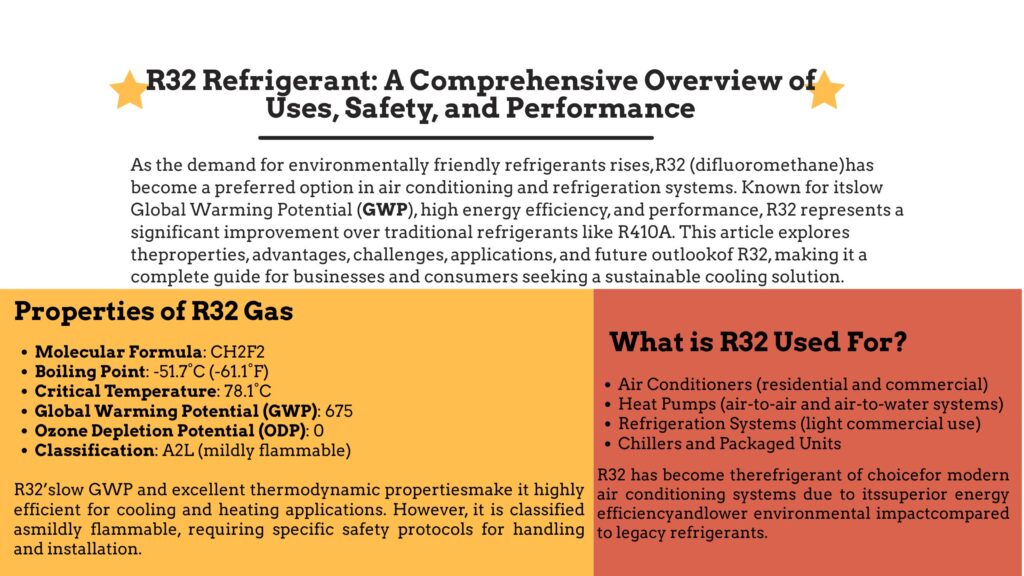
As the demand for environmentally friendly refrigerants rises, R32 (difluoromethane) has become a preferred option in air conditioning and refrigeration systems. Known for its low Global Warming Potential (GWP), high energy efficiency, and performance, R32 represents a significant improvement over traditional refrigerants like R410A. This article explores the properties, advantages, challenges, applications, and future outlook of R32, making it a complete guide for businesses and consumers seeking a sustainable cooling solution.
Introduction to R32 Refrigerant
R32, also known as difluoromethane, is a hydrofluorocarbon (HFC) refrigerant widely used in air conditioning, refrigeration systems, and heat pumps. It is a popular replacement for high-GWP refrigerants, such as R-410A, and offers superior performance with a Global Warming Potential (GWP) of 675, making it a more sustainable option. Due to its energy efficiency and ease of adoption, R32 has become the preferred choice in residential and commercial air conditioning systems worldwide.
History and Evolution of R32
The use of R32 emerged as part of the industry’s response to Montreal Protocol regulations, which phased out ozone-depleting substances like CFCs and HCFCs. R32 gained traction as a component of blended refrigerants such as R-410A, but its potential as a standalone refrigerant was recognized due to its higher efficiency and lower environmental impact. With countries striving to meet environmental standards, the adoption of R32 has accelerated, particularly in air conditioning systems.
Properties of R32 Gas
- Molecular Formula: CH2F2
- Boiling Point: -51.7°C (-61.1°F)
- Critical Temperature: 78.1°C
- Global Warming Potential (GWP): 675
- Ozone Depletion Potential (ODP): 0
- Classification: A2L (mildly flammable)
R32’s low GWP and excellent thermodynamic properties make it highly efficient for cooling and heating applications. However, it is classified as mildly flammable, requiring specific safety protocols for handling and installation.
What is R32 Used For?
R32 is primarily used in the HVAC industry, with applications spanning:
- Air Conditioners (residential and commercial)
- Heat Pumps (air-to-air and air-to-water systems)
- Refrigeration Systems (light commercial use)
- Chillers and Packaged Units
R32 has become the refrigerant of choice for modern air conditioning systems due to its superior energy efficiency and lower environmental impact compared to legacy refrigerants.
Why Are We Moving to R32 Refrigerant?
The transition to R32 is driven by a global push for more sustainable and eco-friendly refrigerants. As part of efforts to reduce greenhouse gas emissions, the HVAC industry is shifting from older refrigerants with high GWP—such as R-410A and R-22—towards alternatives like R32. R32 aligns with international environmental goals such as the Kigali Amendment to the Montreal Protocol and F-Gas regulations in Europe.
What is the Global Warming Potential (GWP) and Why Does It Matter?
GWP measures the impact of a refrigerant on global warming relative to carbon dioxide over a 100-year period. A lower GWP means less contribution to climate change.
- R-410A GWP: 2088
- R32 GWP: 675
By transitioning to R32, countries and industries can meet carbon reduction targets and phase out high-GWP gases.
Benefits of Using R32 in Air Conditioning and Heat Pumps
The widespread use of R32 in air conditioning and heat pumps is driven by several advantages:
- Energy Efficiency: R32 has better heat transfer properties, enabling systems to run more efficiently and consume less energy.
- Environmental Benefits: With a GWP of 675, R32 is a more sustainable alternative to R-410A, which has a GWP of 2088.
- Lower Refrigerant Charge: R32 systems require less refrigerant, reducing overall costs and emissions.
- Improved Performance: R32 enables faster cooling and more consistent performance, making it ideal for high-temperature regions.
- Ease of Adoption: Many existing HVAC systems are easily adaptable to R32, allowing for seamless upgrades from older refrigerants like R-410A.
Safety of R32 Refrigerant
Although R32 is considered safe for most HVAC applications, it is classified as A2L, meaning it is mildly flammable. Here are key safety considerations when handling R32:
- Leak Detection: Systems using R32 should be equipped with leak R32 sensors to prevent accidental gas escape.
- Ventilation: Ensure proper ventilation to reduce the risk of gas accumulation.
- Technician Training: Installation and maintenance personnel must be trained to handle mildly flammable refrigerants.
- Electrical Safety: Avoid installing R32 systems near potential ignition sources.
When safety protocols are followed, R32 is a reliable and efficient refrigerant with minimal risk.
R32 vs. R290: A Comparative Analysis
| Feature | R32 | R290 (Propane) |
|---|---|---|
| GWP | 675 | 3 |
| Flammability Class | A2L (mildly flammable) | A3 (highly flammable) |
| Energy Efficiency | High | Very High |
| ODP | 0 | 0 |
| Common Applications | Air conditioners, heat pumps | Refrigeration, heat pumps |
Both refrigerants offer high efficiency and environmental benefits, but R32 is less flammable, making it more suitable for air conditioning systems. On the other hand, R290 offers an even lower GWP but requires stricter safety measures.
More About R290: R290 Refrigerant: Uses, Benefits, Safety, and Comparisons
R32 vs. Other Common Refrigerants (R-410A, R-22, R-134a)
- R-410A: R32 offers better efficiency and a lower GWP than R-410A, making it a preferred replacement in new air conditioning systems.
- R-22: R32 is a more sustainable alternative, as R-22 is being phased out due to its ozone-depleting properties.
- R-134a: Although both R32 and R-134a are HFCs, R32 has better cooling efficiency and is used in more advanced HVAC systems.
More Refrigerants compare: Comparative Analysis of Refrigerants, Properties, Advantages, and Disadvantages
Pros and Cons of R32
Pros:
- Environmentally Friendly: Low GWP and zero ODP.
- Highly Efficient: Provides superior cooling performance.
- Lower Refrigerant Charge: Reduces system costs and emissions.
- Widely Available: Easy to adopt in existing HVAC systems.
Cons:
- Mildly Flammable: Requires special handling and safety protocols.
- Requires Technician Training: Specialized skills are necessary for installation and maintenance.
- Not Suitable for All Systems: Some refrigeration applications require alternative refrigerants.
Regulatory Framework and Usage Guidelines for R32
Countries and regions worldwide have introduced safety standards and environmental regulations to ensure the safe use of R32. Notable standards include:
- ISO 5149: Guidelines for the safe use of refrigerants, including A2L gases like R32.
- EN 378: European standards for refrigeration safety.
- ASHRAE 34: Classification of refrigerants based on toxicity and flammability.
Compliance with these standards ensures the safe installation and operation of R32 systems.
Hydrofluorocarbon (HFC) Refrigerants and Environmental Impact
R32 belongs to the family of HFC refrigerants, which are being phased down under the Kigali Amendment to the Montreal Protocol. While R32 has a lower GWP than other HFCs, continued efforts are underway to transition toward even more sustainable alternatives like natural refrigerants (e.g., R290).
Related Read: Understanding Refrigerants: Types, Uses, and Environmental Impact
The Future of R32 in the Refrigeration Industry
R32 is expected to remain a key refrigerant for the foreseeable future, especially in the air conditioning and heat pump sectors. As technology advances, manufacturers are developing more efficient systems that maximize R32’s potential while ensuring safety. Additionally, the transition to low-GWP refrigerants will drive further innovations in the HVAC industry.
Related Read: What Makes a Good Refrigerant?
FAQ
F-Gas Regulations and Their Impact on Refrigerants
The F-Gas regulations are European laws aimed at controlling the use of fluorinated gases, including refrigerants. These regulations promote the gradual phase-out of high-GWP refrigerants.
Latest F-Gas Regulations and Compliance Dates
The most recent F-Gas regulations came into effect in 2015, setting a schedule to reduce the use of high-GWP gases.
Will R410A Equipment Be Banned in the UK?
Yes, under current regulations, the use of R-410A and other high-GWP refrigerants will be restricted from 2025 onwards. R32 is an ideal replacement for R-410A, ensuring compliance with these standards.
Market Availability and Adoption of R32 in the UK
R32-based equipment is widely available in the UK and across Europe, with manufacturers like Hitachi offering residential and commercial systems. As the ban on R-410A approaches, more companies are adopting R32 for new HVAC systems.
Is R32 Safe to Use?
Yes, but as a mildly flammable (A2L) refrigerant, R32 requires careful handling and installation. Safety guidelines must be followed to avoid risks.
Can R32 Be Mixed with Other Refrigerants?
No, R32 should not be mixed with other refrigerants, as it could affect system performance and safety.
Can the Same Tools Be Used for R32 Installation?
Yes, most tools used for R-410A systems are compatible with R32, but technicians must undergo specialized training for handling mildly flammable gases.
Conclusion
R32 refrigerant offers a perfect balance between performance, efficiency, and environmental responsibility. With its lower GWP, high energy efficiency, and versatility, R32 is an ideal choice for modern air conditioning systems and heat pumps. Although it requires careful handling due to its mild flammability, the benefits of R32 far outweigh its challenges. As the HVAC industry continues to embrace sustainable solutions, R32 will play a pivotal role in shaping the future of refrigeration technology.
Looking for reliable refrigerant suppliers from China ?
We offer end-to-end procurement solutions, handling everything from sourcing to shipping, ensuring you get the best products at competitive prices.
- sales@sensor1stop.com
- +86 18037022596
- 18037022596