
Độ trễ của ống có nghĩa là gì
Độ trễ của ống lấy mẫu khí là thời gian một sự thay đổi ở đầu vào từ xa cần đi qua đường lấy mẫu trước khi máy phân tích có thể phản hồi. Đối với một ống có thể tích bên trong đã biết và lưu lượng thể tích được phân phối ổn định, thể tích chia cho lưu lượng sẽ đưa ra ước tính hữu ích về thời gian vận chuyển hoặc thời gian lưu trú trung bình. Thiết lập riêng thời gian của phép đo được cài đặt. Sự thay đổi nồng độ thực sự có thể lan rộng, mất biên độ hoặc đi theo một con đường khác trước khi đến được tế bào cảm nhận. Sau đó, thiết bị sẽ đóng góp thời gian trao đổi, động lực cảm biến, lọc tín hiệu và khoảng thời gian cập nhật của riêng nó.
Bắt đầu bằng cách viết một câu về sự kiện quan trọng. Một nhà nghiên cứu môi trường có thể cần so sánh xu hướng tập trung giữa hai địa điểm. Người vận hành phòng thí nghiệm có thể muốn phân biệt sự chuyển tiếp của van với kết quả đọc ổn định sau này. Một nhà phân tích dữ liệu có thể muốn ghi lại nồng độ trên đồng hồ dùng cho các phép đo khác. Đây là những nhiệm vụ khác nhau. Thay đổi sớm nhất có thể phát hiện được, điểm giữa, phản hồi gần cuối cùng và thời gian máy chủ ghi lại giá trị mới có thể trả lời các câu hỏi khác nhau về cùng một lần chạy.
Tube dimensions support an estimate for design comparison. A verified response describes an assembled configuration at stated conditions. For workplace safety equipment, use the instrument maker's approved sampling configuration and the applicable qualified verification process. The equations here explain transport and data interpretation in a laboratory or monitoring context. They do not establish how long to wait before making an entry or safety decision.
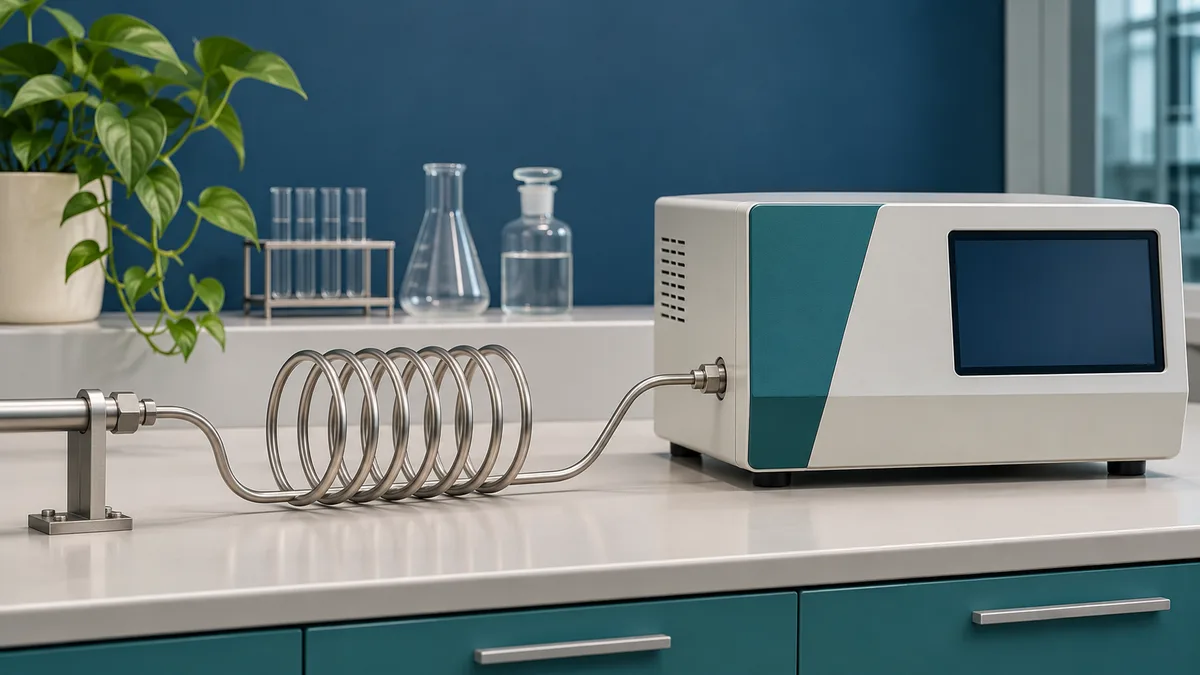
Đường dẫn lấy mẫu thêm một giai đoạn vận chuyển trước khi máy phân tích có thể phản hồi.
Tính thể tích khí đó thực sự chiếm
For a straight circular tube, the gas volume is the cross-sectional area times the length. Use the internal diameter. The jacket, braid, and wall thickness take up space but do not carry the sample. If a drawing lists only outside diameter, look up the exact tubing part and wall dimension. A nominal size without an explicit bore leaves one of the most influential inputs unresolved. For irregular openings, molded assemblies, or fittings, use the manufacturer's internal free volume when available, or record that the contribution is unknown.
Một chuyển đổi thuận tiện cho một ống tròn là:
Thể tích ống tính bằng mL = π × [đường kính trong tính bằng mm ` 2]² × chiều dài tính bằng m.
Yếu tố số xuất phát từ sự chuyển đổi giữa chiều dài, milimét khối và mililít. Một mặt cắt ngang tính bằng milimét vuông nhân với một mét sẽ cho số milimét khối gấp một nghìn lần. Một nghìn milimét khối bằng một mililít. Với thể tích tính bằng mL và lưu lượng tính bằng mL/phút, thời gian vận chuyển danh nghĩa tính bằng giây = 60 × thể tích ` lưu lượng.
Đường kính có vẻ bình phương, do đó, một sự thay thế khiêm tốn trong lỗ khoan có thể làm mất đi giả định về lịch trình. Chiều dài tăng gấp đôi sẽ tăng gấp đôi thể tích bên trong ở lỗ khoan không đổi. Nhân đôi lỗ khoan gấp bốn lần ở cùng một chiều dài. Việc độ trễ có thay đổi bởi các yếu tố tương tự hay không phụ thuộc vào lưu lượng được phân phối, điều này có thể thay đổi khi đường ống thay đổi. Lỗ khoan nhỏ hơn có thể tăng lực cản đủ để giảm lưu lượng được phân phối, do đó thể tích tính toán nhỏ hơn không đảm bảo phản hồi lắp đặt nhanh hơn.
Các EPA's guidance on ambient sampling residence time treats the probe, manifold, and analyzer segment separately. It makes the treatment of an in-line filter holder explicit. This is a helpful way of auditing volume even when your system is outside the EPA guidance's ambient monitoring scope.
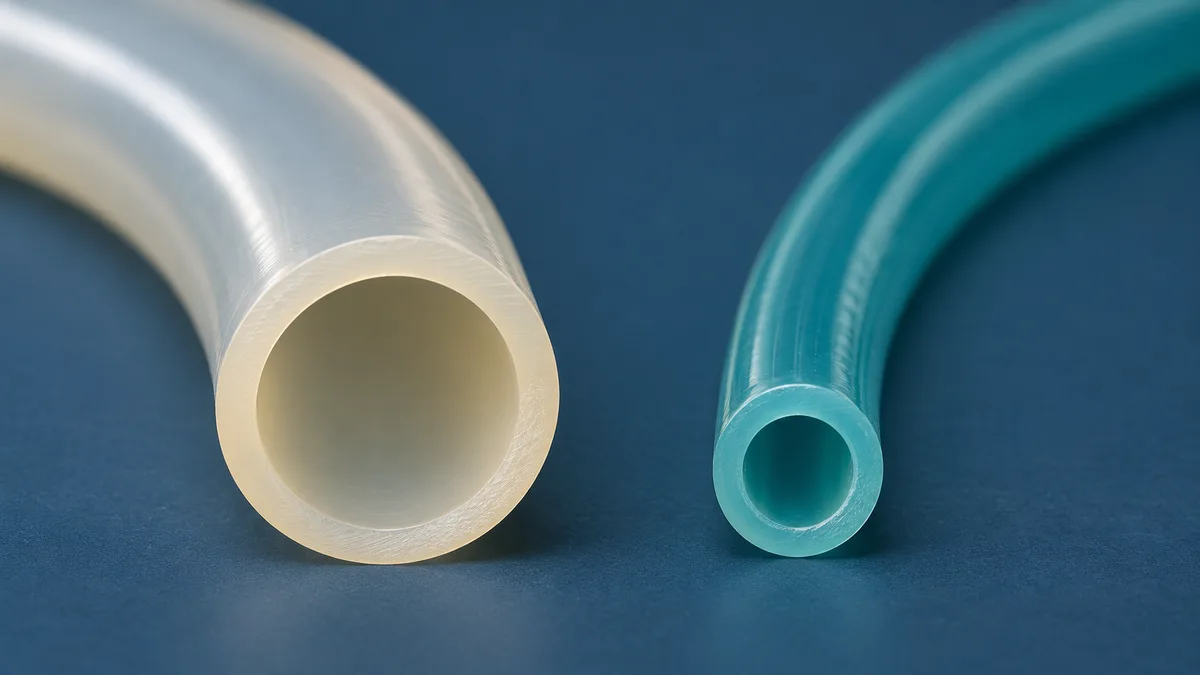
Sử dụng lỗ khoan bên trong mở khi tính toán thể tích ống.
Một ví dụ hoạt động sử dụng kích thước giả định
Hãy xem xét một máy phân tích nghiên cứu CO₂ trong nhà giả định. Đường dẫn mẫu của nó bao gồm một đường dài 8 m với lỗ khoan 4 mm, tiếp theo là dây dẫn 1 m với lỗ khoan 2 mm. Dòng thể tích ổn định quan sát được qua cả hai ở điều kiện cục bộ đã nêu là 240 mL/phút. Ống đầu tiên chứa π × 2² × 8, tương đương khoảng 100,5 mL. Cái thứ hai chứa π × 1² × 1, hoặc khoảng 3,1 mL. Nếu một ngăn giữa chúng đóng góp 12 mL thể tích khí thì thể tích danh nghĩa tồn kho là khoảng 115,7 mL. Ước tính quá cảnh là 60 × 115,7 240 hoặc khoảng 28,9 giây.
Lặp lại phép tính với 200 mL/phút sẽ có 34,7 giây. Sự thay đổi đó là dự đoán cho cùng một thể tích khí ở lưu lượng giả định thấp hơn. Phép đo phản ứng sau khi tải bộ lọc hoặc thay đổi ống vẫn có thể khác nhau do đường dẫn trộn hoặc tương tác với khí khác nhau. Giữ khối lượng, lưu lượng và thời gian quan sát được trong các cột riêng biệt giúp ngăn việc nhập thay đổi dự đoán dưới dạng kết quả xét nghiệm.
| Thành phần đường dẫn | Âm lượng trong ví dụ này | Luồng phân phối giả định cho phân đoạn này | Đóng góp danh nghĩa |
|---|---|---|---|
| 8 m với đường kính trong 4 mm | 100,5mL | 240 mL/phút | 25,1 giây |
| 1 m với đường kính trong 2 mm | 3,1mL | 240 mL/phút | 00,8 giây |
| Người giữ nội tuyến | 12mL | 240 mL/phút | 3,0 giây |
| Tổng số chỉ cho các tập được liệt kê | 115,7mL | Tương tự thông qua tất cả các phần được liệt kê | 28,9 giây |
Các giá trị trong màn hình được làm tròn từ các phép tính không làm tròn. Kết quả là một đường dẫn chuỗi đơn minh họa. Nó không bao gồm tế bào đo của máy phân tích, lọc tín hiệu, độ không đảm bảo của van hoặc dung sai thời gian. Ví dụ này chứng minh rằng một phần trông nhỏ từ bên ngoài có thể đáng được đưa vào. Sự đóng góp danh nghĩa của chủ sở hữu trong khoảng ba giây có thể quan trọng khi thử nghiệm so sánh một số luồng có dấu thời gian hoặc hỏi phòng nào đã thay đổi trước.
Sử dụng luồng được phân phối và đi theo con đường thực tế
A pump's open-flow specification is a description of the pump under stated conditions. A series restriction, a partly loaded filter, an inlet valve, or a sample cell can put it at a different operating point. A regulator or internal controller can further complicate the comparison. Use a flow value representative of the particular segment as assembled, rather than a catalog value for an isolated pump. Record where the flow was observed. If an instrument reports sample flow internally, determine whether that value refers to the inlet, the flow cell, the exhaust, or a standard-condition equivalent.
A standard volumetric flow expresses a quantity of gas on the manufacturer's stated reference pressure and temperature basis. A local volumetric flow describes the space occupied per unit time at the actual conditions in the section under review. The numerical values may be close for one room-air bench setup and materially different for an extractive analyzer with pressure changes. If a controller reports standard flow and the line volume is geometric, the two inputs need compatible conditions. For an ideal gas of fixed composition, the local volumetric flow at a given molar flow scales with absolute temperature divided by absolute pressure. Use the instrument's actual definitions before applying a conversion. A pressure gauge may report gauge pressure rather than absolute pressure.
Đối với một đường dẫn chuỗi liên tục đơn giản với mật độ thay đổi ít, hãy tính từng phần và cộng các phần đóng góp. Đối với hệ thống phân nhánh, hãy theo dõi lộ trình của mẫu đến máy phân tích đích. Một đoạn chung trước khi phân chia có thể mang thông lượng kết hợp, trong khi nhánh chỉ mang luồng được phân phối của nó. Không chia thể tích đường dây hoàn chỉnh cho cài đặt máy bơm được sao chép từ nhánh khác. Chỉ bao gồm khối lượng trao đổi với tuyến đường quan tâm. Đường vòng có thể thay đổi vận chuyển trong một phân đoạn chung trong khi vẫn giữ nguyên dòng nhánh của máy phân tích hầu như không thay đổi. Đo hoặc thu được cả hai luồng khi chúng ảnh hưởng đến đường dẫn.
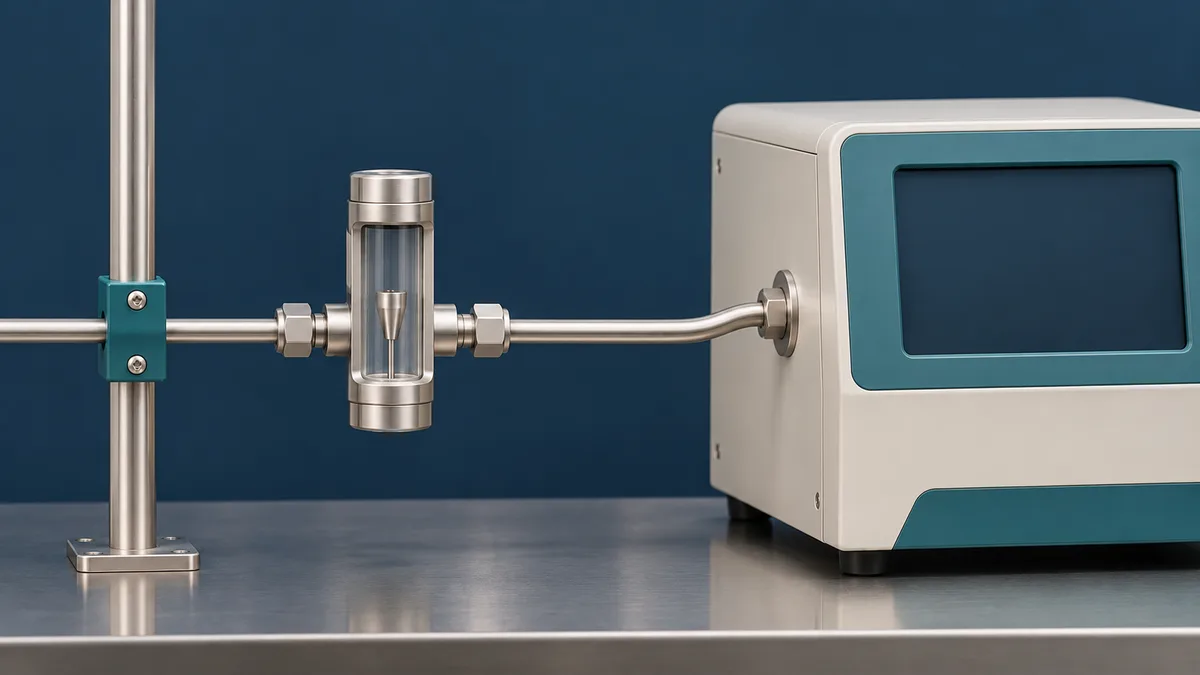
Luồng được phân phối qua đường dẫn đã lắp ráp là đầu vào cho ước tính. Phần cứng trong hình là khái niệm.
Xét một đa tạp giả thuyết có 90 mL thể tích tự do chung. Một đường vòng và các nhánh cùng hút 900 mL/phút qua thể tích chung đó, do đó thời gian đóng góp đơn giản ở đó là 6 giây. Một nhánh máy phân tích cụ thể có thể tích 45 mL và lưu lượng 150 mL/phút, cho thêm 18 giây nữa theo thể tích chia cho lưu lượng. Dự đoán là 24 giây cho tuyến đường đó. Chia tất cả 135 mL cho 900 mL/phút sẽ dự đoán là 9 giây và bỏ lỡ phần lớn độ trễ của nhánh. Chia mọi thứ cho luồng nhánh sẽ dự đoán 54 giây và phóng đại phân đoạn chung. Bảng tính lộ trình ngăn chặn cả hai lỗi. Ví dụ này giả định thông lượng được báo cáo là các lưu lượng thể tích thực tế tương thích ở các điều kiện liên quan.
Hiểu khối lượng chia cho lưu lượng không thể dự đoán được
Mặt trận tập trung có hình dạng
Việc ước tính thể tích sẽ dễ hình dung nhất nếu khí chuyển động như một nút chặn lý tưởng, có ranh giới rõ ràng ngăn cách mẫu cũ và mẫu mới. Khí thực trong ống thường có sự phân bố về thời gian vận chuyển. Trong dòng chảy tầng, khí ở gần trung tâm có thể di chuyển nhanh hơn khí ở gần vách, trong khi khuếch tán phân tử di chuyển vật chất giữa các vùng. Các khớp nối và buồng có thể tạo ra các vùng trộn và trao đổi chậm. Do đó, máy phân tích có thể đăng ký thời điểm bắt đầu thay đổi trước tiêu chí gần cuối cùng đã chọn và có thể tiếp tục tiến đến giá trị cuối cùng sau ước tính vận chuyển trung bình.
Hãy xem xét một buồng trộn hoàn toàn lý tưởng với dòng vào và ra bằng nhau không đổi, nồng độ ban đầu đồng nhất và bước ổn định ở đầu vào. Hằng số thời gian của nó là thể tích chia cho lưu lượng. Tại một thời điểm không đổi, nó đã di chuyển được khoảng 63% chặng đường hướng tới nồng độ mới. Phản hồi 90% cần khoảng 2,3 hằng số thời gian. Giá đỡ 12 mL ở tốc độ 240 mL/phút có hằng số thời gian danh nghĩa là ba giây theo lý tưởng đó. Nếu giá đỡ được trộn đều, tỷ lệ trao đổi 90% riêng biệt giả định của nó là khoảng 6,9 giây, thay vì thời gian đến nhanh như ba giây. Vỏ bộ lọc thực không nhất thiết phải được trộn đều. Sự so sánh giải thích tại sao cùng một số tập có thể mô tả một đặc điểm khác của dấu vết.
A short pulse is particularly demanding. A broadened edge changes the apparent peak and spreads it across several samples. If the question is whether a short spike reached a particular size, a delay correction applied after the fact may be insufficient. A timing shift only moves the recorded trace. It does not restore amplitude removed by mixing, attenuation, or the analyzer's filtering.
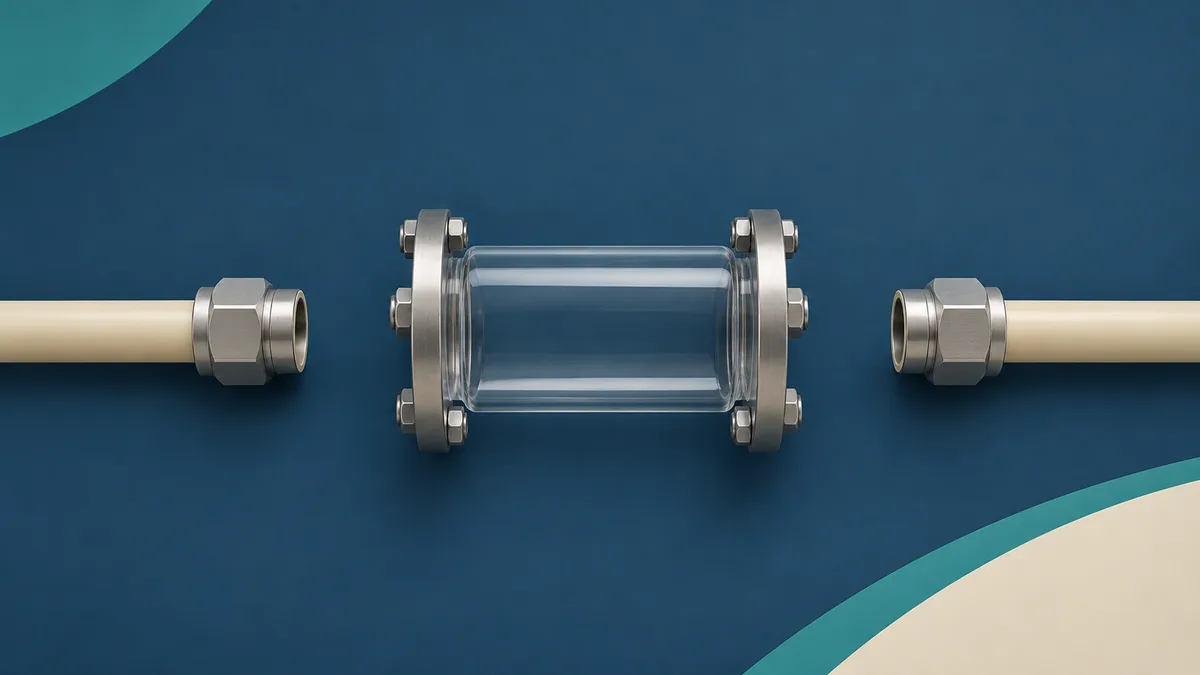
Thể tích ống và giá đỡ có thể đóng góp khác nhau vì hình dạng của quá trình chuyển đổi khí phụ thuộc vào sự pha trộn. Quan điểm này mang tính khái niệm.
Material interactions can matter more than the tube volume
Molecules can interact with tubing, seals, valve surfaces, filter media, or condensate. Some interactions persist after the concentration at the inlet has fallen, producing an asymmetric response or recovery tail. In other circumstances, the sampled concentration is lower at the analyzer than at the inlet because some of the target species is held or transformed in the path. A material that is satisfactory for one species may be inappropriate for another. Temperature, humidity, previous exposure, surface cleanliness, and contact time all affect the relevance of compatibility evidence.
The UK Health and Safety Executive's sample-tube incident bulletin provides a concrete failure mode. A calibration gas gave a rapid response in a combination that was much slower for the vapor of interest. HSE identified adsorption in the sampling tube as a major contributor. The lesson for interpreting evidence is the species dependence of the path response. A geometrical estimate and a prompt response to an unrelated gas do not characterize the full sampling system's response to the target.
Sự ngưng tụ làm thay đổi cả đường dẫn và mẫu. Nó có thể thu thập ở điểm thấp, hạn chế thông lượng hoặc hòa tan thành phần mục tiêu tùy thuộc vào hóa học. Sự rò rỉ ở phần dưới áp suất xung quanh có thể tiếp nhận không khí trong phòng và làm loãng mẫu. Trong những trường hợp này, số lượng từ giao diện dữ liệu có thể trông hoàn toàn bình thường trong khi lượng khí được cung cấp lại khác. Để tải chất lỏng cụ thể, hãy xem phần thảo luận về bộ lọc kỵ nước và mẫu ẩm. Ghi lại nồng độ thu hồi và lưu lượng phân phối thành các lượng riêng biệt. Thỏa thuận ở cái này không đảm bảo thỏa thuận ở cái kia.
Máy phân tích đóng góp thời gian riêng của nó
Check which boundaries define a manufacturer's response value. A specification could describe a sensing element under standard conditions, a transmitter with factory filtering, or a complete instrument with a particular inlet configuration. Ask whether the timing begins at the sensing face, at the instrument connector, at a remote probe, or on the first reported sample. If an end-to-end instrument rating already includes the internal cell and digital processing, adding them again overstates the estimate. If a sensor element rating excludes the entire inlet and display processing, applying it to the complete instrument understates the system response.
A sample held and repeated on a digital interface can conceal the actual fresh-data rate. A logger may store a row every second when its source analyzer updates every five seconds. This creates five timestamps without five independent measurements. Determine when the instrument updates and what time a stored row represents. For phase-sensitive analysis, maintain both the instrument's measurement timing and the logger receipt time whenever they are available.
Xác định tính năng phản hồi trước khi xem xét dấu vết
| Đo lường | Câu hỏi thực tế | Trình độ chuyên môn chính |
|---|---|---|
| Đường dẫn danh nghĩa V/Q | Lượng khí trung bình cư trú trên tuyến đường sẽ là bao nhiêu trong các điều kiện dòng chảy đã nêu? | Chỉ riêng hình học và dòng chảy không thể xác định được sự mất biên độ hoặc sự thay đổi có thể phát hiện được lần đầu tiên |
| Khởi phát hoặc có thể phát hiện được | When did the response first become distinguishable from baseline noise? | Depends on amplitude, noise, threshold, and update cadence |
| System t50 | When did the response reach the midpoint of a defined step? | A useful alignment feature only if the response shape and conditions are understood |
| System t90 | Khi nào dấu vết đạt tới 90% thay đổi được xác định của nó đối với mức cuối cùng? | Yêu cầu một cao nguyên có thể phòng thủ được và nguồn gốc thời gian đã nêu |
| Thời gian tăng t10–90 | Khoảng chuyển tiếp sau phần đầu tiên của phản hồi rộng đến mức nào? | Khác biệt với t90 được đo từ khi bắt đầu sự kiện đầu vào |
| Phục hồi và dư lượng | Phản hồi có trở lại đường cơ sở dự kiến sau sự kiện không? | Nhạy cảm với các bề mặt hấp phụ, trộn, trễ và trôi |
| Thời gian ghi máy chủ | Khi nào ứng dụng nhận được hoặc lưu trữ kết quả mới? | Bao gồm việc thu thập, lưu vào bộ nhớ đệm và các lần thử lại có thể xảy ra |
Đối với bước tăng từ mức cơ bản 400 ppm lên mức cuối cùng là 600 ppm trong ví dụ, mức 50% là 500 ppm và mức 90% là 580 ppm. Nếu dấu vết bắt đầu thay đổi ở giây thứ 13, vượt qua 50% ở giây thứ 28 và 90% ở giây thứ 62 thì ba đặc điểm đó mô tả hiệu suất khác nhau. Thời gian được đo từ sự kiện đầu vào đến điểm giao cắt 90% là 62 giây. Nếu mức vượt 10% xảy ra ở giây thứ 17, thời gian tăng từ 10% lên 90% là 45 giây. Ghi lại các quy tắc nội suy hoặc khoảng thời gian mẫu được sử dụng để xác định mỗi lần giao nhau. Một bước có biên độ quan sát được cuối cùng bị sai lệch thấp vẫn có thể đạt tới 90% biên độ sai lệch đó, do đó, hãy so sánh kết quả cuối cùng với tham chiếu độc lập của nó.
Hoa Kỳ phần phản ứng của hệ thống phân tích khí thải động cơ explicitly ties its transformation time to transport and analyzer response. Its required procedures and limits have a defined purpose under that part. The terminology can inform a separate research time-alignment plan without importing those regulatory acceptance criteria into an unrelated instrument.

Compare characteristic points on the original traces, including recovery. The graphics are schematic and unscaled.
What to capture in a full-path characterization record
Begin with an annotated sketch of the assembled configuration. Identify the event origin and where the reported time was observed. Mark the shared and branch paths. List the exact bore, run length, holder and valve identifiers, anticipated internal volumes, and documented filter state. Tie that sketch to a configuration revision and the actual instrument model and firmware. A revised tube that has the same outside diameter, or a substitute seal that fits the holder, should be visible in the record.
Next, document how the inlet event and analyzer record were timed. In an authorized laboratory evaluation, the measurement plan can distinguish timing a commanded change from timing the concentration change at the inlet. A valve command is an electrical event. The concentration transition at the entrance of the path may occur later. A reference trace or independently characterized challenge timing resolves that ambiguity where the question requires it. A step size should be clear relative to baseline variability and appropriate to the materials and instrument's intended use. Personnel should use the applicable supplier and site procedures for any physical gas handling.
A useful record preserves both the as-built timing estimate and observed trace outcomes. Store background and final concentration, test environment, relevant outlet or inlet pressure, local flow basis, sample and reporting cadence, filter condition, time origin, the rise and recovery metrics selected before evaluating, and a link to the original data. For repeated observations, report the spread and note when a plateau or threshold crossing cannot be resolved. Suppressing an inconclusive run makes the ability to reproduce the result worse.
A comparison between an instrument inlet characterization and a full-path characterization can help narrow the cause of a discrepancy. A slower full-path response with similar eventual concentration points toward transport, dispersion, or added exchange. Persistent low recovery after a stable inlet change calls for a separate investigation of leakage, conditioning, target interaction, or reference mismatch. If both records share the same slow response, instrument configuration or reference-event generation deserves attention. These are diagnostic hypotheses. Different faults can yield similar traces, so look for corroborating flow, pressure, or material evidence before assigning a cause.
Các Washington Department of Ecology gaseous pollutant monitoring procedure describes a pathway for evaluating an ambient monitoring sampling train from the probe. It illustrates the value of defining the start point for a complete-path check. Its equipment and limits are specific to that network. In any other setting, record your own authorized method and the as-built boundary it covers.
Decide when an old delay value can still be used
A stored timing correction is valid only as far as its evidence carries. A tube replacement, changed internal diameter, filter alteration, altered bypass, analyzer firmware update, or modified reporting average can move the timing. Temperature and pressure changes can shift flow or gas interactions. A change in target species can invalidate material evidence even when timing for a previously used species remains stable. Changes in data acquisition can leave the physical route unchanged but invalidate the interpretation of a recorded timestamp.
For a study that compares steady plateaus over long windows, absolute offset may matter less than adequate stabilization and representativeness. For a project that derives a ratio from moving signals, offset, channel differences, and averaging overlap all matter. Where field reports state delay without describing the boundary, a later analyst cannot tell whether to shift the logs, discard the switch transition, or use the final stable segment. Tie any timing correction to its objective, and preserve the original timestamps so that the analysis remains reversible.
A practical release criterion for a lab design identifies the geometrical estimate, the verified timing metrics, the expected gas and matrix, the acceptable concentration recovery, the configuration fingerprint, and defined conditions that trigger reevaluation. If two reported systems have the same V/Q but need different acceptance intervals, the difference is a reason to examine the full trace, rather than a reason to average their estimates.
Check sensitivity to uncertainty in the input values
Ước tính độ trễ có thể chính xác một cách sai lầm khi thu được từ các kích thước danh nghĩa. Đối với độ không đảm bảo đo độc lập nhỏ về chiều dài ống, lỗ khoan và dòng chảy, độ không đảm bảo tương đối trong thể tích được mô hình hóa có đóng góp tỷ lệ thuận với một lần độ không đảm bảo độ dài tương đối và hai lần độ không đảm bảo đo tương đối của lỗ khoan. Độ trễ cũng có sự đóng góp tương đối từ luồng. Đây là quan sát độ nhạy, không phải là mô hình không chắc chắn hoàn chỉnh cho phản hồi được cài đặt. Các nguồn không chắc chắn được chia sẻ có thể tương quan với nhau và một thay đổi lớn cần được xử lý trực tiếp chứ không phải bằng một xấp xỉ thay đổi nhỏ.
For example, if the only uncertain input were a 4.0 mm bore and the plausible interval were 3.9 to 4.1 mm, calculate both extreme volumes at the same length rather than relying on the printed number of digits. The ratio of the smaller to nominal volume is (3.9/4.0)², or approximately 0.951. The larger is approximately 1.051 times nominal. The output therefore moves about five percent for a 0.1 mm change on either side of the nominal bore. If a flow tolerance is also important, model the low and high throughput with the same physical conditions and show separately how that changes the range.
A quote from a drawing can support a planning estimate, while the exact installed part and measured flow establish a different level of evidence. Avoid reporting 28.92 seconds as if measurement precision had been demonstrated. The time symbols in a response table need enough information to reproduce their interpretation, including selected crossing definitions, acquisition cadence and which intervals met the validity rules.
Câu hỏi thường gặp
Can I estimate tubing delay from length alone?
Only if a manufacturer gives a condition-specific relationship that matches the tested bore, delivered flow, instrument, and gas. Geometry requires internal diameter as well as length, and an installed timing claim also needs a validated target response. Avoid transporting a seconds-per-distance value across dissimilar paths.
Does a narrower tube make an analyzer faster?
It reduces internal volume for a given length, which shortens the nominal estimate if flow is held constant. It may increase restriction, resulting in less delivered flow or a different pressure condition. The useful comparison keeps both terms visible and confirms what the assembled path delivers.
Is purge time equal to V/Q?
A single volume exchange establishes a reference scale. A plug-like tube and a mixed chamber produce different concentration histories after that time. Purge for a specified residual or plateau is a response claim that depends on mixing, adsorption, recovery, and the relevant instrument procedure.
Can I subtract the tubing delay from the recorded time?
A stable, characterized delay can support a transparent time correction for a defined analysis. A single shift cannot recover amplitude or sharpness lost to dispersion and instrument averaging. Store original timestamps and validate any correction on independent evidence.
Does changing a filter require a new timing check?
A replacement with a controlled identical part may be covered by a documented maintenance check. A changed filter design, volume, grade, loading state, or housing can change delivered flow, gas recovery, and response. Reassess timing whenever the change can affect the claim the data will support.
Tài liệu tham khảo kỹ thuật
US EPA residence-time technical note — residence-time geometry and segment-specific flow for ambient systems.
Bản tin an toàn ống mẫu HSE — species-dependent loss and delay in a detector sample tube.
Washington Ecology gaseous pollutant monitoring SOP — example of defined whole-path verification in an ambient monitoring network.
40 CFR § 1065.308 — separation of system timing and reporting frequencies in a specified emissions test method.






Để lại một câu trả lời