
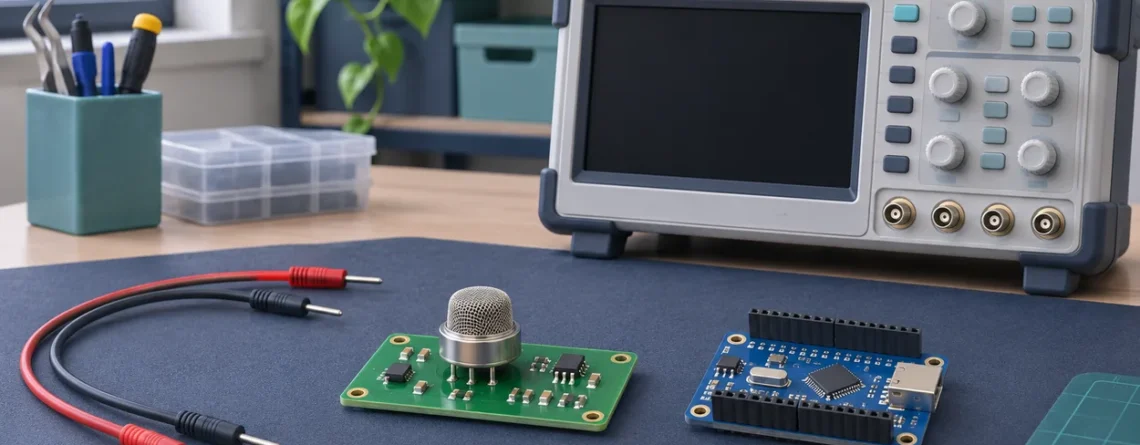
Document a gas sensor communication fault by finding the first layer at which the observed behavior diverges from the model's documentation. Separate power and interface compatibility, transport and transaction timing, frame validity, and interpretation of the measurement. A timeout, a valid response with an invalid measurement, and a plausible number interpreted in the wrong unit call for different investigations.
Bắt đầu với thiết lập thử nghiệm đã được phê duyệt và sửa đổi mô-đun chính xác. Giữ nguyên quan sát ban đầu trước khi hoán đổi các bộ phận hoặc đặt lại cấu hình. Một bản ghi hữu ích xác định kênh bị ảnh hưởng, trạng thái có thể tái tạo, so sánh đã biết rõ ràng nếu có và chủ sở hữu tiếp theo của câu hỏi chưa được giải quyết. Một nhãn “cảm biến ngoại tuyến” duy nhất cung cấp cho chủ sở hữu đó quá ít thông tin.
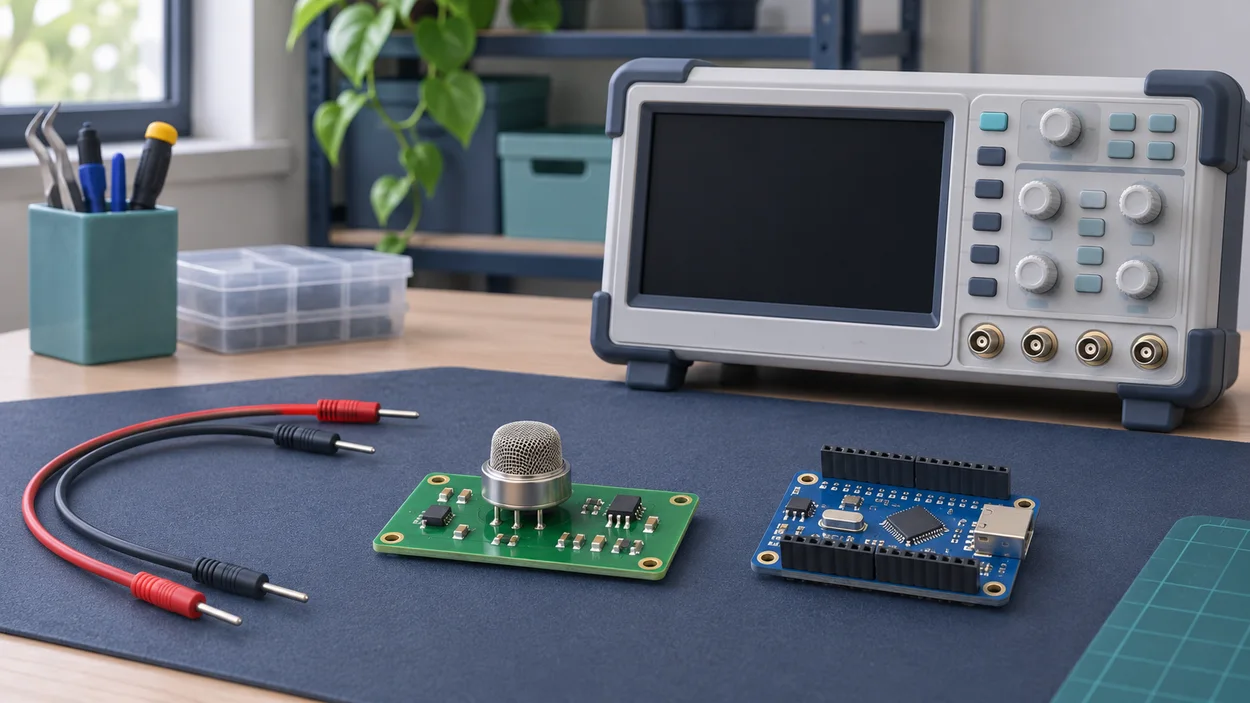
Sử dụng cấu hình băng ghế được ghi lại để phân biệt lớp bị lỗi đầu tiên.
Chụp cấu hình xác định hoạt động bình thường
Identify the sensor or instrument model, variant, output option, firmware and document revision. A family name alone can cover several gases, ranges or electrical interfaces. Winsen's ZE03 electrochemical module documentation is one example of a model family whose manual specifies a supply rail separately from its UART signal level, and describes active upload and request/reply communication modes. Check the exact configuration before treating a poll as necessary or diagnosing unsolicited data as a fault.
Ghi lại mô hình máy chủ, mô hình bộ chuyển đổi và bản sửa đổi, bus vật lý, giả định mức tín hiệu, mã nhận dạng cáp, cấu trúc liên kết, địa chỉ nút nếu có, phiên bản bộ giải mã và thời gian quan sát được. Bộ điều hợp đã thay đổi có thể thay đổi hướng của trình dịch, thời gian hoặc điều kiện không hoạt động trong khi trông giống hệt với ứng dụng. Cảm biến được thay thế có thể xuất xưởng ở chế độ mặc định khác được ghi lại. Việc giữ cấu hình hoạt động cuối cùng mang lại cho người điều tra nhiều đòn bẩy hơn so với bộ sưu tập ảnh chụp màn hình không có cấu trúc sau nhiều thay đổi.
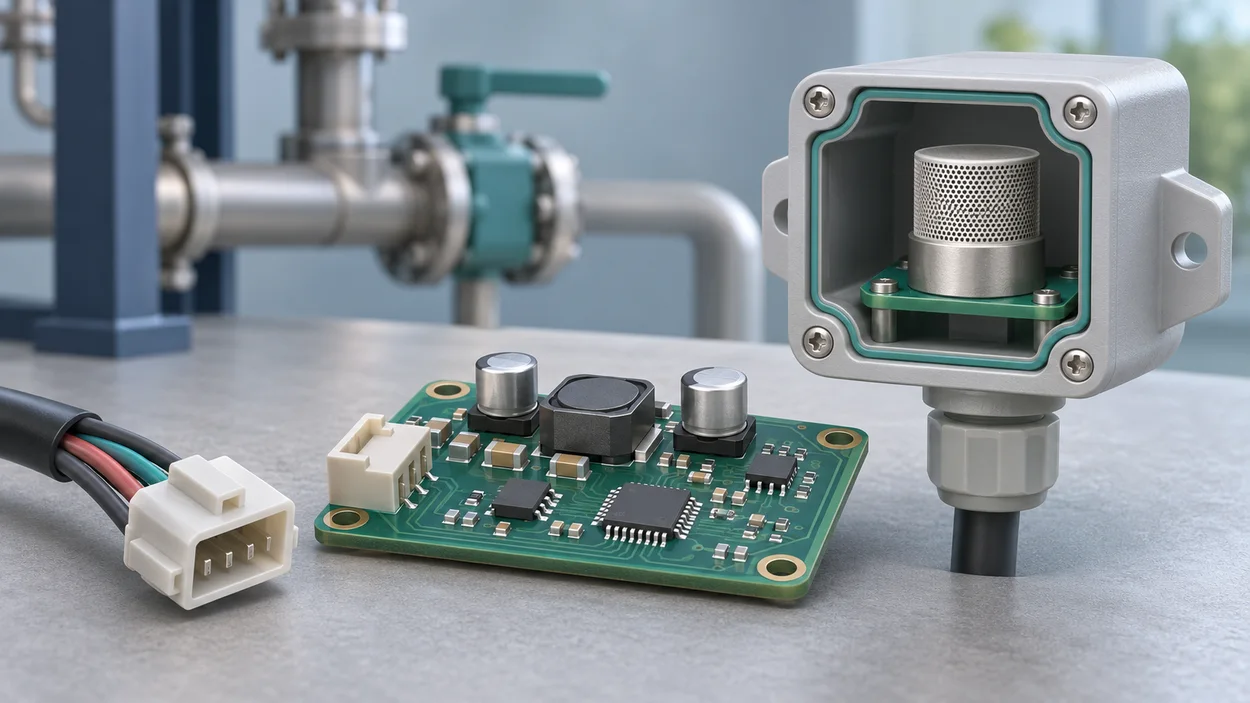
Một kết nối tương thích yêu cầu kiểm tra cả yêu cầu về nguồn cung cấp và giao diện.
| Quan sát | So sánh đầu tiên để ghi lại | Những gì nó chưa được thiết lập |
|---|---|---|
| Không có hoạt động điện | Chế độ dự kiến, nguồn cung được đo tại thiết bị và hoạt động của máy chủ có thể quan sát được | Lỗi thiết bị, cho đến khi kiểm tra được cơ sở nguồn và chế độ |
| Hoạt động điện, không có hệ quy chiếu hợp lệ | Cấp độ giao diện, thời gian, giao thức và ranh giới dự kiến | Hiệu lực đo lường |
| Ngoại lệ hợp lệ hoặc phản hồi chưa sẵn sàng được ghi lại | Yêu cầu chính xác và trường ngoại lệ hoặc trạng thái được trả về | Rằng một mẫu đã được sản xuất |
| Giá trị lặp lại hợp lệ | Cập nhật nhịp, trạng thái sẵn sàng cho dữ liệu và nhận dạng bản ghi | Nồng độ khí ổn định |
| Nồng độ nằm ngoài phạm vi dự kiến mặc dù khung hợp lệ | Nhận dạng kênh, quy mô, đơn vị, trạng thái và điều kiện tham chiếu | Giải thích đúng hoặc thay đổi môi trường thực sự |
Sử dụng hiện có Giới thiệu RS485 for physical-interface background. For troubleshooting, identify whether RS-485 carries Modbus RTU, a vendor-specific frame structure or another application protocol. Seeing differential activity cannot identify its payload. Likewise, a UART formatter does not define the electrical requirements of a connector.
Distinguish power problems from transaction problems
Trong bố trí thử nghiệm điện áp thấp đã được phê duyệt, hãy kiểm tra hoạt động cung cấp của thiết bị theo nhu cầu bình thường và trạng thái hoạt động được ghi lại. Việc ghi lại số đọc không hoạt động ở nguồn điện có thể che giấu sự sụt giảm trên cáp, đầu nối hoặc thành phần bảo vệ. Một số thiết bị có thể đặt lại trong khi khởi động hoặc tải định kỳ trong khi dường như vẫn hoạt động giữa các sự kiện. Các chỉ báo nguồn hoặc đặt lại dấu thời gian liên quan đến giao tiếp của máy chủ để người điều tra có thể xem liệu các câu trả lời bị hỏng có trùng với quá trình khởi động lại hay không.
For board-level interfaces separate expected voltage on the data lines from the sensor's supply specification. Check whether the adapter is compatible and which reference or isolation arrangement the documented interface needs. For differential serial connections read the product and system documentation for polarity, bias and termination. Avoid guessing signal meaning from connector shape or generic letter conventions. The Texas Instruments RS-485 design guide discusses the electrical design issues of differential links. The Modbus serial-line implementation guide describes the serial protocol stack and link behavior separately.
Electrical activity is most informative when observed at a named point. A host transmit indicator demonstrates an attempted send by one element. It does not show the sensor saw the same signal. Activity at a device endpoint is a different fact. Document what instrument captured it, in what configuration and at which location. Scope and logic captures can be appropriate on an approved bench. Do not retrofit diagnostic connections to a live safety system in a way that changes its approved design or availability.
Keep observations and interpretations in separate fields. “Supply measured at the endpoint stayed inside the documented range during this captured interval” is an observation tied to an instrument and time. “Power is good” is too broad to survive a shift handoff. “No host output during the observed interval” is narrower than “the adapter failed.” A state can be unexpected in request/reply mode and expected for a host that is waiting for a module to publish first.
Read the first failed transaction at the right layer
UART settings include the baud rate and data framing. A device-specific protocol adds boundaries, message types and checks. A reasonable review compares the capture with the documentation for the exact variant. Record the intended operation in words, time relative to power up, observed length, and the validation result. An unexpected number of received bytes might stem from incompatible framing, truncated data, early timeout, a mismatched parser, or a previous host attempt whose residual bytes were heard at the next read.
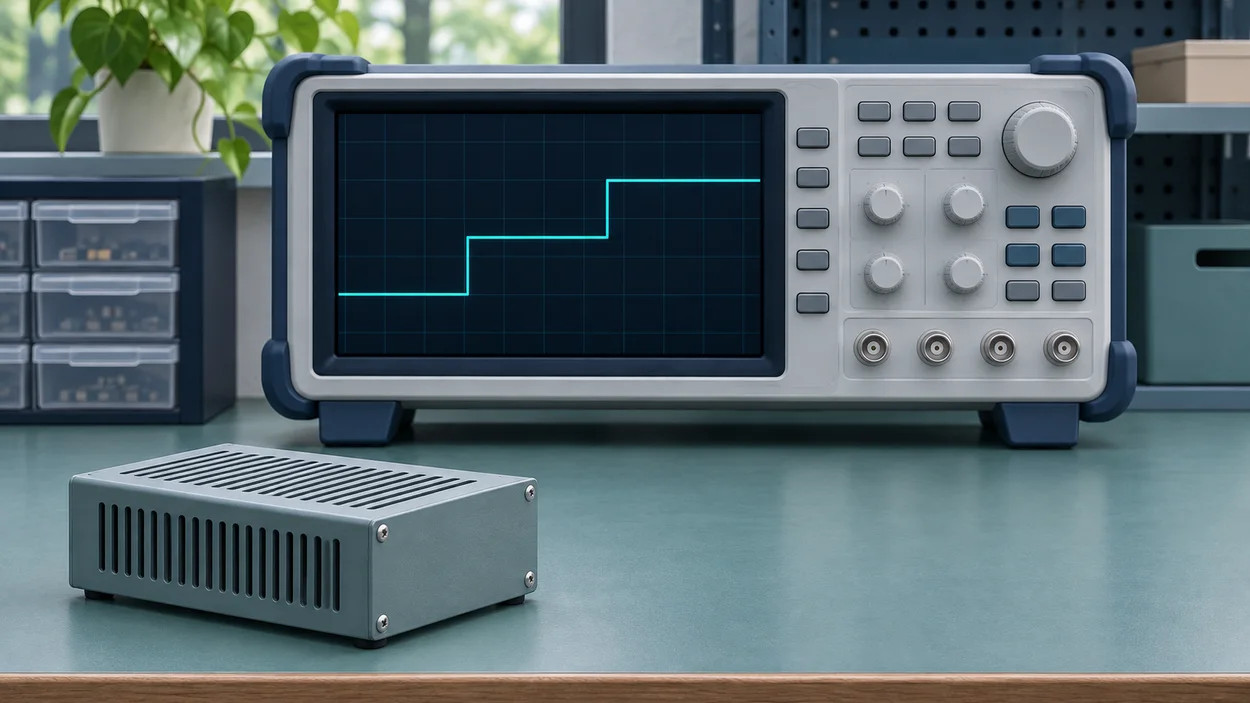
Activity is evidence about the physical signal. Validate the expected transaction and frame separately.
For I²C, NXP UM10204 defines the bus behavior and acknowledgement. A sensor-specific manual explains normal mode and operation timing. A negative acknowledgement observed at the address phase can have different significance from the controller's expected negative acknowledgement at the end of a read. And a device-specific NACK during an early read can mean the measurement is not ready. Record the phase and operating state before calling an observed NACK a failure.
Sensirion's SCD4x data sheet documents operation timing and a data-ready check for specific modes. It also specifies CRC fields in its I²C payload. A checksum failure, a negative acknowledgement and a ready flag with no new sample are different symptoms. The record should distinguish an electrically completed transaction from a value which passed the sensor protocol's integrity and readiness checks.
A Modbus serial capture can carry a normal reply, an exception or a corrupted frame. Capture integrity and decoding separately. A valid exception is structured evidence of communication at that layer. It may point to a request or device-state issue. An invalid frame is not yet evidence about gas concentration. A valid frame stating a reading is unusable should produce a measurement quality state, even when the networking health display reads online.
Preserve timing and parse evidence before changing things
Preserve the first failing trace or relevant extract, along with exact versions. Retain both transaction and software event times if possible. For intermittent cases include a known-good event from the same measurement channel and a short pre-failure interval. If several devices share a link, record whether other nodes continued to report. This can narrow which parts of the acquisition and processing chain were still working.

Attach the minimum evidence needed to correlate the observation with the affected version.
A useful summary names a symptom precisely: “On the test bench the driver logged valid frames before restart. In the first three reads after the restart it recorded an address-phase NACK. Subsequent reads were valid once documented measuring state was entered.” That statement permits review of the sequence without assigning unsupported root cause. It is more useful than “I²C was unstable.”
Keep acquisition evidence and diagnostic summaries independent of any last-known-value policy. A host may continue to display the most recent valid observation while communication is down. Record its measurement age and reason current data are unavailable. Distinguish sensor uptime from wall time and keep a session identifier where available. Annotate retries and the first successful response. They allow an investigator to tell a real transient from repeated processing of one failed transaction.
Worked example: the wrong service layer was blamed
Suppose a research bench displays a constant reading for nine minutes after its driver update. A team suspects the sensor's response is slow. It collects a short approved bench trace and finds the device sends complete frames. The driver recently added an expected response type that differs from this device's configured active report mode, so it discards reports. The display shows a cached last-known value without marking it old. This example contains an application data-quality issue and a dashboard issue even though the physical link works.
The team captures the device and driver versions, documents the response type shown on the bench, and checks the data-sheet match. It reviews why the dashboard did not age out the old value. A corrected decoder that records new valid readings resolves the first problem, while an explicit stale state resolves the second. Neither change by itself establishes the sensor's physical accuracy. A short before-and-after capture and a configuration record make the result reviewable.
Consider another case with the same display symptom. The host polls successfully, but the module sends status saying a measurement is not available after a reset. The parsed status is correct. In that situation verify the documented acquisition mode and timing before changing the decoder. A service log may eventually link the reset to a supply event. The screen symptom by itself could not distinguish those causes.
Record recovery and decide what still needs evidence
A practical handoff has a manageable number of fields. Include timestamp and time basis, test purpose, equipment identity and revision, interface and configured mode, precise failure state, first failing evidence, last known good evidence, scope, a bounded change and the new observation. State whether the change was temporary, applied to a research unit, or approved as part of an equipment revision. The maintenance record guide describes the related need to preserve as-found and as-left states.

Preserve as-found and as-left evidence and review the remaining uncertainties.
Review potential recurrence. If a swap restores communication, record the exact eligibility and configuration of the replacement. An adapter swap may also have changed power, connectors or software settings. A single uncontrolled swap is evidence of restored service under a new configuration, but it may not isolate the failing component. Reproduce only in a controlled safe setting where repeated failures do not compromise ongoing protection.
Verify the outcome with the same mode, interval and dataset requirements that revealed the symptom, plus representative normal and failure states when relevant. Check that after recoverable errors the system distinguishes a new sample from a cached one, and that treatment of invalid or stale input is visible in both display and stored data. If the system is used for worker protection or in a classified area, route that evidence through the approved maintenance and service process. An investigative note alone does not authorize return to service.
Design a diagnostic log around facts that survive a handoff
A short timeline should work without access to a particular dashboard. For each event identify the clock basis, the layer, the observed outcome and the evidence location. The initiating condition might be a reconnect or planned restart in an approved bench setup. Record the observed recovery and any later steps separately. “Operator changed the adapter at 14:10, driver restarted at 14:11, first valid frame at 14:12” provides a sequence without attributing the improvement to only one action. A reviewer can reproduce the most plausible condition in a safe setting before reaching a causal conclusion.
Use stable event types. “No bytes” means nothing was received in a defined window with defined expectations. “Checksum failure” means enough bytes arrived to attempt validation and did not pass that check. “Device status invalid” means the protocol worked sufficiently to decode a status that prevents using the measurement. “Duplicate measurement” should identify how the application determined a repeated source event. “Out of expected bounds” is an application interpretation that needs unit and range evidence. Broad categories such as “connection error” might help a dashboard summary, but the detailed record should be specific.
What counts as a good frame depends on the documented protocol, not appearance. A count or checksum may fit while the response is from an unexpected model, device address, channel or revision. A reply to a different pending transaction can be correctly formed and still belong to the wrong attempt. Capture an identifier that can correlate requests and responses if the protocol supports one, or describe the scheduler and time window if it does not. In a multi-device system, record duties for who can use a shared half-duplex link and how simultaneous activity is handled, within the equipment's documented design.
Compare an affected unit with a known-good setup
Một so sánh hữu ích giúp giữ ổn định các yếu tố chính. Ví dụ: trong thiết lập băng ghế được ủy quyền, cùng một bộ giải mã và chế độ ghi tài liệu có thể nhận được từ một mô-đun đã biết của cùng một bản sửa đổi. Nếu đơn vị tham chiếu chỉ gửi sau khi nó đã đạt đến trạng thái sẵn sàng được ghi lại thì cả hai có thể sẽ khởi động im lặng. Nếu một báo cáo đặt lại khi được ghép nối với một cấu hình được ghi lại rõ ràng và một báo cáo khác liên tục không đặt lại, điều đó sẽ thu hẹp cuộc điều tra. Nhãn "hàng hóa đã biết" ít có ý nghĩa trừ khi thiết lập và hành vi bình thường đã được ghi lại.
Use one controlled change at a time where practical. Two observations with different power source, cable and protocol settings cannot isolate a single cause. If a field service action necessarily changes several things at once, preserve the full list and state which conclusions are supported. A restored connection proves the new configuration operated in the observed window. It does not prove that the original intermittent cause was completely isolated. Overstating certainty can send the next responder to the wrong spare parts.
Document known-good environmental and load conditions. Intermittent issues can correlate with allowable temperature, cable movement or another application using the same interface. Note evidence without arbitrarily forcing the system beyond its approved limits. A controlled test of a research unit can compare timing and recoverability without disrupting live systems. Scope captures and logs should be collected only with authorized access and retained under applicable operating procedures.
Distinguish a decoder change from a true measurement change
Giả sử một đơn vị đọc theo phần triệu tạo ra một giá trị được biểu thị dưới dạng số nguyên thông thường, trong khi một mô-đun khác biểu thị phần mười bằng cách sử dụng cùng một trường có kích thước. Khi một trình phân tích cú pháp coi chúng là có thể hoán đổi cho nhau, dấu vết kết quả có thể tăng gấp 10 lần trong khi thiết bị tiếp tục báo cáo các khung hợp lệ. Việc truyền dữ liệu thành công và CRC không nói gì về việc giải thích vật lý. Bản chuyển giao phải chứa biến thể chính xác và ý nghĩa trường để kỹ sư khác có thể nhanh chóng nhận ra sự không khớp.
Similarly, an accepted data packet may include a state indicator that is ignored by the first version of a parser. A concentration field observed during an initial state might be a previous value, assumed value, diagnostic result or simply unavailable. Consult the documented behavior. A valid parser needs to reveal the condition as well as the numeric value when the downstream application depends on validity. When a firmware update changes the meaning of a status bit, keep example records from each mode and preserve configuration revision in the logs.
A saturated or flat numerical plot is particularly easy to misread. It could indicate unchanged gas, repeated rendering of cached data, rounding below the displayed resolution, stopped acquisition, a default sentinel passed through by the application or actual instrument saturation. Use data-ready and record identity where available, then compare internal measured fields with the final presentation. If status information is missing, the plot alone cannot decide between those explanations. The investigation may need a separate reference that does not share the same failure path.
Capture only the diagnostic material that matters
Attach a short before-and-after capture with the minimum needed scope, timestamps, observation point, and device revision. Include data version and authorization context when prescribed. Avoid copying unrelated payloads, identifiers and operating details into shared tickets if a bounded record is enough. A well-labeled trace of the failing exchange plus an adjacent valid one can answer more questions than a large uninterpretable capture. Retain the store and name the person or team who can review it if more context is genuinely needed.
Treat the test instrument as another participant with its own limits. At a safe bench, confirm whether timing resolution is sufficient to distinguish expected framing, whether the capture begins early enough to observe the transition, and which points are physically measured. Never assert the module saw a trace measured only at an intervening adapter. Discuss interactions between probes and signals during the review if relevant. If the evidence is software logs only, label the observation as such. It may narrow the failure layer without proving what happened electrically.
For return-to-service evidence, state what improved and its limits. A unit at an authorized bench may pass a defined run after a driver correction. That outcome supports the configuration and conditions actually tested. Approval for a deployed system should follow the site's approved method and equipment responsibilities. A good record makes those decisions reviewable without expecting the investigator to certify systems outside their scope.
Đọc trạng thái ở cả hai phía của cổng
A site application may present results from a gateway that has two independent interfaces. One side polls a module, the other side serves cached records or an API. A valid response to the application establishes the gateway is reachable. Ask when the gateway last obtained a new measurement and what it cached. Is the status copied unchanged from the instrument, generated by the gateway, or combined by the application? A gap can otherwise be attributed to the wrong device. Review the time base and avoid assuming timestamped cached records refer to current conditions.
A useful trace compares the event from each side. An illustrative record could contain a gateway poll at 12:00:10 with a timeout, a numeric response to the dashboard at 12:00:11 representing a prior 12:00:00 observation, and a stale indication when the site's defined age is exceeded. Those records can all be true. To debug the physical acquisition use the first event and source trace. To debug an unexpectedly reassuring display, use the second and third events. Keep both in the same incident timeline with their stated clocks.
Examine failure clusters rather than one isolated counter
On a shared serial bus, values may stop updating for one address while neighboring channels continue to work. Record each affected instrument and note which channels remained valid at approximately the same time. That comparison can separate a local issue from a shared bottleneck, although it does not prove the exact cause. If the host process changes poll cadence for all devices after one timeout, a single device issue can affect the apparent behavior of other channels. Preserve sequence and attempt counts for a representative interval before and after the first fault.
For intermittent failures, capture rates in useful units. Twenty errors in a period means very different things if twenty transactions were attempted or if thousands were attempted. One configuration may appear to have more errors simply because it polls more frequently. Compare like operating modes and record how retries are counted. A counter for failed attempts should be separate from one for user-visible missing observations. A single retry can recover a sample, but the first failure can still be important evidence of an interface or workload problem.
Sometimes an observable failure recurs after maintenance on a single unit. Check time correlation with firmware records, power cycling, humidity, cabling or a replacement accessory using authorized observations. Correlation only narrows a plan. A careful comparison documents conditions before and after in a safe bench arrangement and uses a known-good configuration where available. Closing a ticket should record what was tested and how many representative events were observed. An inference about the root cause should be identified as such.
Include a short diagnostic record example
| Trường ghi | Hypothetical example |
|---|---|
| Scope and test boundary | Sensor station A on isolated research bench, driver version under review |
| Expected and observed | Periodic update expected after readiness; first two attempts returned no new value |
| Evidence time | Session elapsed time plus synchronized host UTC |
| Capture reference | Bounded transaction extract plus known-good comparison under same configuration |
| Action and result | Waited for documented readiness in test logic; first valid sample accepted and logged |
| Remaining question | Confirm repeatability over representative startup transitions before closing review |
This example is a documentation pattern. Timing and readiness are model-specific. Applying another instrument's wait time could hide one failure or trigger another. The record should support comparison with actual equipment documentation rather than copying the hypothetical values or the corrective action into a different service procedure.
Câu hỏi thường gặp
If a sensor returns a valid CRC, is the gas reading valid?
A protected frame passing CRC means it passed the protocol's integrity check. Validate its device identity, measurement status, range, unit, age and application conditions separately.
Does every I²C NACK mean a wiring problem?
No. Its location in the transaction and the device state matter. A controller commonly ends an I²C read with a NACK, and some sensors document not-ready behavior. An unexplained address-phase NACK under expected operating conditions is a different observation.
Does an RS-485 adapter automatically read a module's gas value?
No. The adapter provides a physical transport function. The host still needs the exact protocol, transaction behavior, field definitions and scale appropriate to the device.
Should I erase old logs when the fault is fixed?
Retain the original relevant evidence in accordance with local record rules, and link it to recovery verification. Otherwise a later recurrence may have no useful baseline.
What can I record when a fault happens only occasionally?
Capture device identity, exact timestamps, circumstances around the event, nearest valid samples, scope of affected channels, communication states and any concurrent resets or power observations. A bounded timeline is more useful than a broad explanation with no evidence.






Để lại một câu trả lời