Read cabin CO₂ as a time series shaped by the people inside, the vehicle's fresh-air/recirculation setting, leakage, fan and window state, and the monitor's position and response. 在封閉、繁忙的行程中,該值不斷上升,表明呼出的二氧化碳累積速度快於清除速度,但一個數字無法診斷車輛故障、建立通用健康閾值或描述交通顆粒物暴露情況。記錄模式何時發生變化以及裡面有多少人,然後比較類似的旅程。如果問題涉及顆粒或廢氣,請使用單獨的相關測量。
小木屋比大房間變化得更快。人們不斷呼出二氧化碳,而外部空氣的吸入、再循環、打開的窗戶和洩漏會改變氣體的稀釋方式。座艙過濾器可以減少一些進入的顆粒物,但通常不會去除大量呼出的二氧化碳。這就產生了真正的權衡:限制交通顆粒的模式可能會導致機艙二氧化碳濃度上升。原來的 針對 92 種車型進行實地研究 觀察了其路線和車輛的這種權衡;其數值結果並不適用於每輛車。其他 部分再循環實驗 探索在特定測試條件下平衡兩個通道。
首先確定顯示器測量的內容
A direct CO₂ monitor measures carbon dioxide reaching its inlet, commonly with an NDIR sensing method. A product that reports an “eCO₂” number inferred from VOC response is not directly measuring the same quantity. Check the finished product's method, range, stated accuracy, warm-up, power and logging behavior before interpreting a trip. The 直接 CO2 與 eCO2 指南 explains the difference in the sensing chain. A component's favorable laboratory specification does not automatically transfer to a portable monitor bouncing in a warm, sunlit vehicle.
二氧化碳也是 不是一氧化碳 (CO)。一氧化碳可能透過排氣故障或其他燃燒源進入車輛,而車內二氧化碳監測儀不能用作一氧化碳安全警報。這 CO 與 CO2 通道指南 詳細說明差異。 CO2 也無法檢測氮氧化物、超細顆粒、PM2.5、氣味或所有 VOC。彩色汽車「空氣品質」圖示可能基於顆粒物或 VOC 通道,而不是測量的二氧化碳;在將變更歸因於某種氣體之前,請先閱讀車輛手冊。
| 問題 | 相關證據 | 僅靠 CO2 顯示器無法確定什麼 |
|---|---|---|
| Are occupants' exhalations accumulating during recirculation? | 直接機艙二氧化碳趨勢、乘客數量和 HVAC 模式/時間。 | 準確的換氣率或從一個斜率進行故障診斷。 |
| 交通顆粒是否進入機艙? | 適合內部顆粒測量,必要時還可以進行外部顆粒測量;過濾和路由上下文。 | 二氧化碳含量可能較低,而粒狀物含量較高。 |
| 空調濾清器有效嗎? | Particle-specific comparison under controlled conditions and the filter's instructions. | CO2 線下降並不能證明顆粒已被移除。 |
| 是否有燃燒/排氣問題? | 適當的安全回應和專業檢查。 | CO2 不是 CO 偵測器或廢氣測試。 |
| 駕駛員是否受到傷害或不安全? | 駕駛者狀況、症狀和適當的安全措施;從來沒有單一的 ppm 公式。 | 機艙監視器無法診斷警覺性。 |
這種區別是實際的。選擇再循環後,駕駛可能會發現二氧化碳含量上升,而外部顆粒水平下降。兩種讀數都不能證明另一個通道是安全的。當駕駛在柴油車後面時,外部空氣進氣口打開時,人們也可能會看到低二氧化碳含量;如果沒有進行顆粒測量,這幾乎無法說明實際的顆粒暴露。研究機艙空氣的研究人員經常測量兩個通道以了解這種平衡,而不是要求一種氣體來代表整個暴露。
為什麼再循環會改變痕跡
在再循環模式下,HVAC 系統會重複使用更大份額的機艙空氣,而不是持續引入等量的外部空氣。此設定不一定是完美的密封:車輛洩漏空氣,自動氣候控制可能會改變新鮮空氣比例,速度或壓力條件很重要。但由於乘員呼吸量較小,外部空氣更換量減少通常會導致機艙二氧化碳含量上升。在室外空氣模式下,變化的方向和速度取決於進氣率、風扇、窗戶、乘客數量、路線和先前的集中度。儀表板符號是模式請求,而不是測量的室外空氣流量。
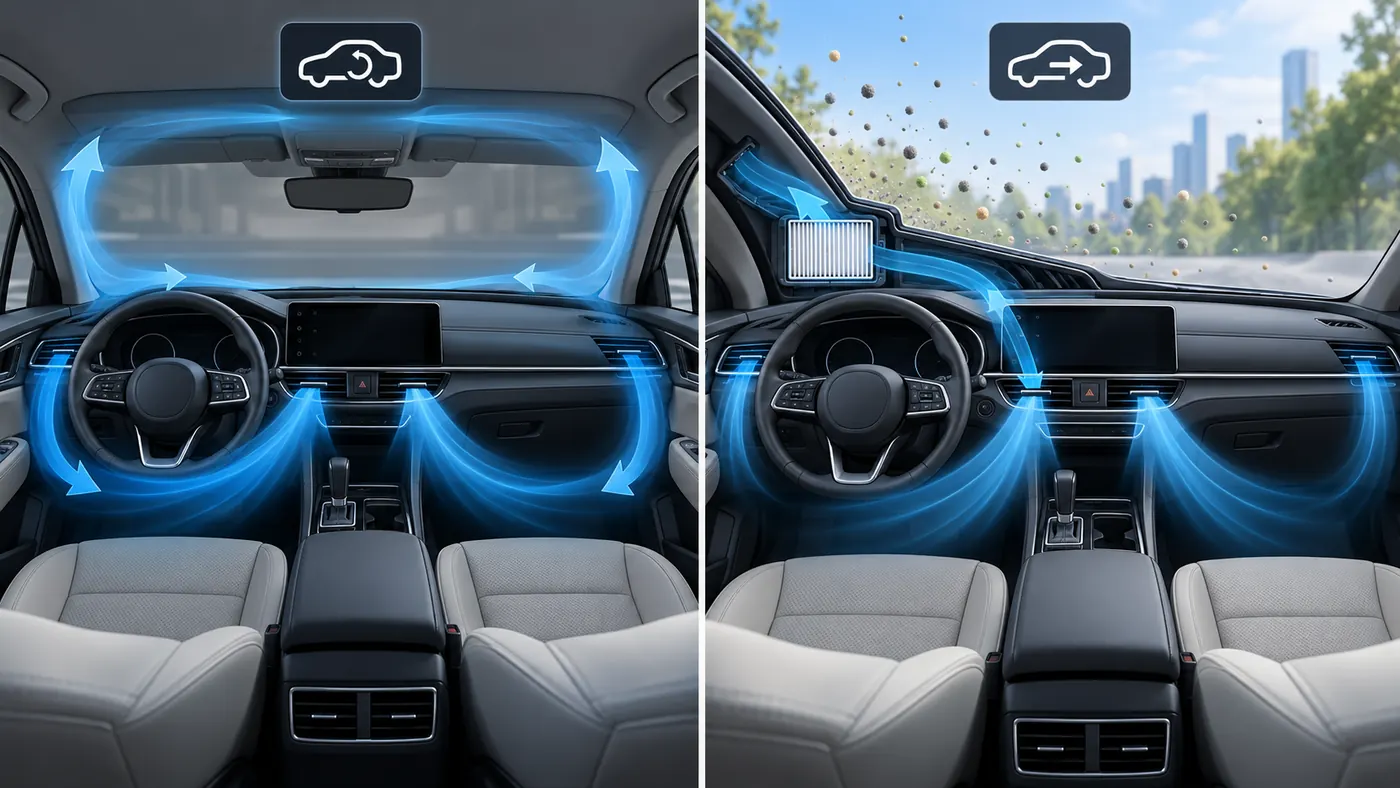
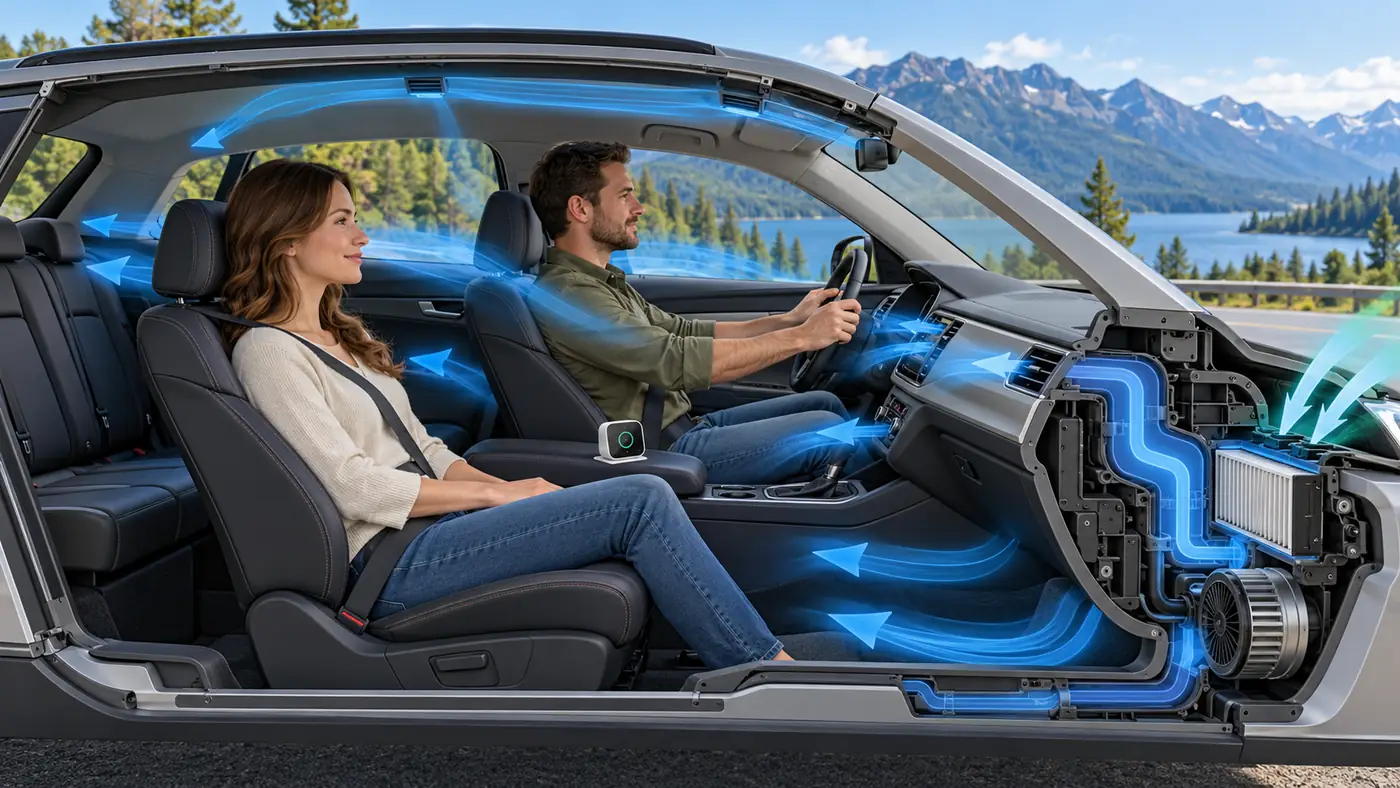
該圖像顯示了兩個 概念性的 air paths, without implying a specific vehicle's flap position or calibrated flow. Research is conditional. The 92輛車實地研究 發現在其測試路線下,再循環中的超細顆粒濃度低於室外空氣模式,且艙內二氧化碳累積。一個 車艙模擬研究 不同的氣候、乘客數量、過濾和再循環程度;其結論取決於模型車輛和條件。一個 曼谷通勤車實地研究 同樣報導了模式依賴性二氧化碳行為。這些研究證明 檢查模式和條件, not copying one car's rise rate or a particular control setting into all vehicles.
Some vehicles automatically change their air-intake strategy to manage defogging, temperature, battery demand or air quality. A driver may believe “recirculation” stayed constant while the system partially admitted outside air. Conversely, a partially blocked intake, different fan speed or open window can alter the result even when the icon appears unchanged. If a repeatable difference matters, consult the vehicle's operating documentation and have the system inspected rather than inferring a stuck flap from a handheld CO₂ chart alone.
沒有一般規則表明最低的二氧化碳讀數始終是最佳的整體機艙空氣選擇。在污染嚴重的道路上,如果過濾器和條件不充分,打開進氣口可能會增加顆粒暴露。無限期地保持再循環可能會累積呼出的二氧化碳。相關平衡隨外部空氣、交通、車廂過濾器、佔用情況和氣候而變化。一個 受控部分再循環實驗 展示了為什麼同時觀察粒子和 CO2 比單獨優化兩者更能提供更多信息,但其測試分數並不是任意模型的用戶指令。
乘客數量和行程階段很重要
短暫停留後,空車內的一個人所產生的二氧化碳模式與進入已有人的封閉車廂的四個人所產生的二氧化碳模式不同。起點、乘員數量、他們的活動、艙室容積、混合和持續時間都會影響軌跡。乘客數量增加帶來的較大漲幅本身並不代表暖通空調的表現較差。如果目的是比較模式或汽車,請保持佔用率、路線和觀察期盡可能相似,並解釋哪些內容不能保持不變。
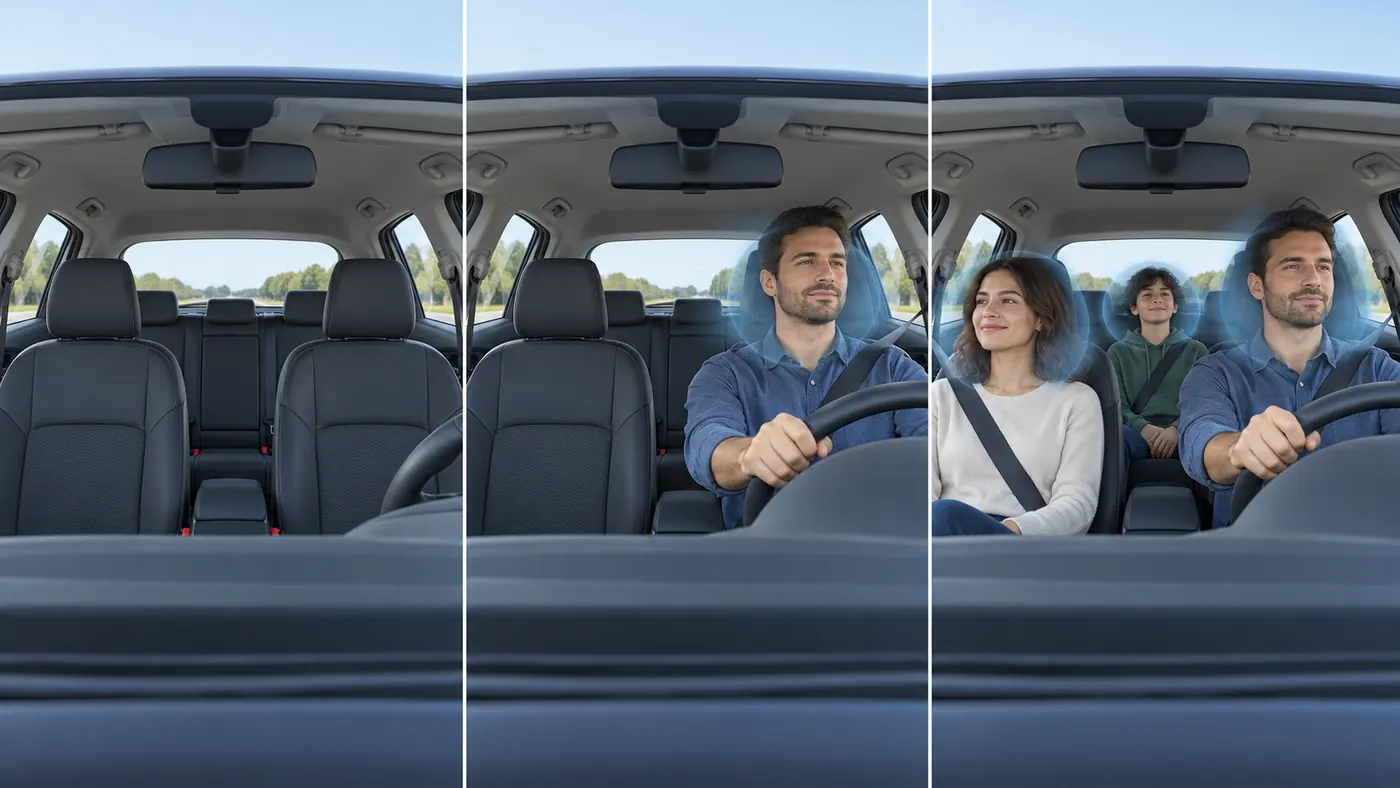
The illustration contains no ppm axis because a real trace requires an instrument and documented conditions. Mark the events that change interpretation: doors closed after boarding; recirculation engaged; fan speed changed; window opened; passenger added; outside-air mode resumed; car stopped. A brief door opening can introduce a pulse of outside air and reset a small cabin's local conditions. An instrument with a slow response or rolling average may show that event after a delay. Without event times, the analyst may mistake a device lag for a ventilation lag.
另一種情況是停放、有人佔用、氣候系統關閉的車輛。下一次旅行開始時的濃度可能與戶外背景不同。記錄起始狀況以及停車期間汽車是否有人。不要將每個人退出後的緩慢下降解釋為新鮮空氣流量的直接測量,除非適當的示踪氣體方法及其假設得到滿足。駕駛室洩漏和混合可能會因天氣和車輛狀態而異。一輛車的模型或研究測試不會自動轉移到另一輛車上。
放置便攜式監測儀,以便安全地採樣機艙空氣
The ideal sampling point depends on the question, but it should not be directly in a passenger's exhaled plume, pressed against a supply vent, exposed to windshield sun or trapped behind fabric. Sun-heated electronics can alter instrument temperature beyond the intended conditions; a cold air jet can sample locally different air. A monitor held in one person's hand measures a moving local environment, not a stable cabin point. Read the device's specified operating temperature and mounting instructions.
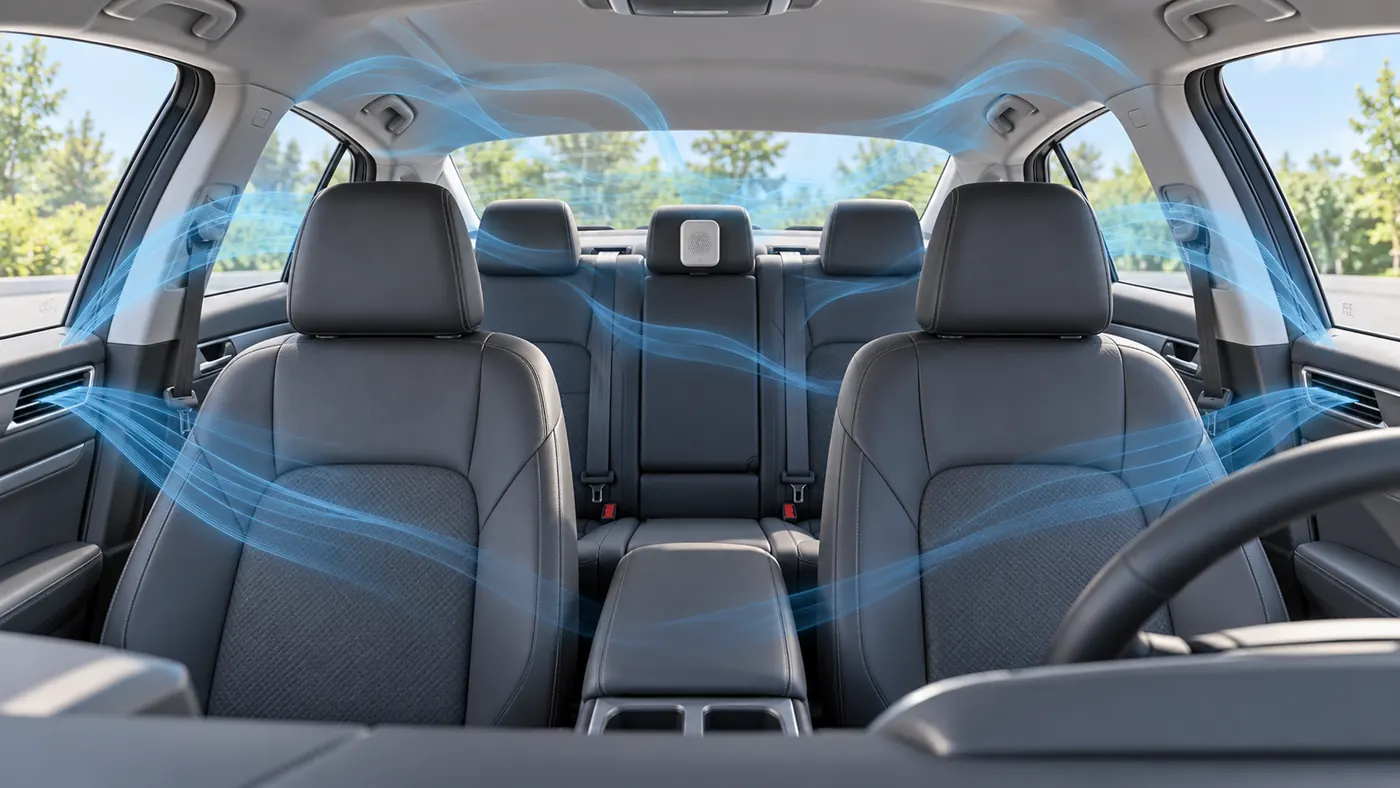
Secure the monitor so it cannot become a projectile or obstruct driver controls, visibility, airbags or seat-belt use. Do not manipulate a logger while driving; set up the device before the trip and review data after stopping safely. If the device needs a cable, route it according to vehicle safety needs. The image is illustrative, not a mounting specification for a particular dashboard or model. A vehicle manufacturer may provide a built-in sensor and its own control logic; a portable display does not override the vehicle's operating instructions.
如果比較兩個感測器,請將它們短暫地放在一起以檢查一致性、時鐘和平均值,然後再確定兩個機艙座椅具有不同的空氣品質。設備之間的差異可能類似於空間差異。這 CO2 監測儀精度規格指南 explains why a one-ppm display step is not one-ppm accuracy. Automatic baseline correction can also depend on the device seeing appropriate low-concentration periods; a sensor continually kept in a car or used under unusual conditions needs the manufacturer's recommendations. Never recalibrate simply to make a reading look desirable.
機艙空氣並不完全均勻。直接通風口、氣流和窗戶開口可以產生梯度。對於正式的設計或暴露研究,應事先指定所需的採樣位置和方法。對於個人趨勢比較,可重複的安全位置、正確的儀器和誠實的事件日誌比反覆移動手持顯示器來查找最高或最低數字更有用。
保留簡短的磁碟機事件日誌
解釋性日誌可以很簡短。捕獲測量間隔以及可能對其產生影響的變化。時間序列記錄器有助於保留順序;如果有人在不開車時記錄定時觀察,仍然可以使用即時顯示。我們的 記錄器與顯示指南 幫助在這些記錄之間進行選擇。
| 場地 | 寫下什麼 | 為什麼這很重要 |
|---|---|---|
| 車輛和監控器 | 車輛型號/年份(如果已知); CO2 監測儀品牌/型號、序號、直接方法和位置。 | 將儀器差異與車輛差異分開。 |
| 時鐘和取樣 | 日期、時區、記錄間隔和任何平滑設定。 | 允許事件對齊。 |
| 居住者 | 人們登機或離開的人數和時間;不需要名字。 | 描述主要的二氧化碳來源。 |
| 暖通空調模式 | 再循環/外部空氣、自動模式、風扇設定以及何時更改。 | 描述預期的空氣路徑,但不是實際的流量。 |
| 門窗 | 空缺和持續時間。 | 解釋突變和當地樣本。 |
| 旅行背景 | 停車或移動、廣泛的路線類型、交通和室外污染/天氣(如果相關)。 | 使比較更易於解釋。 |
| 數據品質 | 熱身、陽光、通風口附近、缺少原木或移動裝置。 | 防止錯誤歸因。 |
| 其他管道 | 僅當使用合適的設備實際測量時,PM2.5 或顆粒數。 | 將交通顆粒物問題和二氧化碳問題分開。 |
The table intentionally has no example concentration. Invented readings would be especially misleading when the true result varies across vehicles, passengers and routes. Store the original log when possible and annotate a copy. If a chart changes after a mode switch, note the sensor response and whether the vehicle's automatic system may have changed another variable. A change in CO₂ alone shows an association with that interval; it does not prove exactly how much outside air entered or that one button caused the entire change.

若要比較兩種模式,請在可行的情況下使用相似的行程、相同的監視器位置和相同的人員。不同日期的 A/B 比較可能會受到交通、室外污染、天氣、風扇設定和初始客艙條件的影響。如果條件明確,前後圖仍然可以提供豐富的資訊。不要僅僅因為不方便的部分打斷了整齊的趨勢而丟棄它們;標記開門、丟失信號或移動設備,以便下一個讀者可以理解。
設計一個能夠克服明顯混雜因素的比較
A practical comparison begins with a narrowly worded question, such as whether one occupied vehicle shows a repeatable CO₂ difference between two HVAC modes during similar stretches. Record the initial concentration and allow for the instrument's warm-up and response time. If the first mode always follows a long parked interval and the second follows a window opening, the result cannot be attributed to the mode alone. Alternating the order on comparable runs may help, but road, weather and traffic will still vary. Report the conditions along with any observed difference, and avoid presenting a single trial as a performance specification.
車速和壓力會改變洩漏和進氣行為。即使按鈕位置看起來是固定的,自動氣候控制也可以改變外部空氣比例。乘客數量會改變二氧化碳源的強度,而談話、開門和監視器的重新定位會改變當地的軌跡。為了進行有用的非正式比較,請將監視器保持在一個安全位置,並將相同的乘客放在船上,標記每個模式或視窗變化,並比較監視器回應後的持續時間。如果這些條件不能保持相似,日誌仍然可以描述那次旅行中發生的事情;它根本無法孤立出一個原因。
Do not combine particle channels without defining them. PM₂.₅ is typically a mass concentration estimate for a size fraction, while ultrafine-particle studies may count particles by number in a different size range. A reduction in one does not prove the same reduction in the other. Consumer optical PM measurements may also respond to particle composition and humidity. When researching a filter or recirculation trade-off, note the study's measured size range, route, vehicle, filter and sampling position before applying its insight to a different car. A filter product claim and an independent cabin exposure measurement are not the same evidence.
保持決策與證據相稱。駕駛可以使用駕駛室趨勢來詢問某個設定是否會在該車中產生重複的累積,然後查閱車輛手冊或在行為異常時尋求服務。進行曝光或購買索賠的工作場所車隊需要更強大的協議、可比較的車輛和合適的測量方法。這兩種用例都不應該發明一種通用的「安全」客艙二氧化碳切斷技術。正確的下一步可能是顆粒測量、暖通空調檢查或只是更好地記錄重複行程。當駕駛者感到不適或受損時,這些都不能取代安全停車。
謹慎解釋常見的跡線形狀
再循環期間上升: 乘員排放是一個合理的原因,特別是在機艙有人居住且外部空氣更換有限的情況下。檢查乘客數量、模式、位置以及監視器是否穩定。此比率不是機械通氣或個人表現的獨立衡量標準。
外部空氣選擇後下降: 增加稀釋是合理的,但同時打開窗戶、乘客退出或設備移動可能會有所貢獻。如果比較很重要,請在類似條件下重複並記下發生了什麼變化。下降的二氧化碳線並不能直接說明道路外部粒狀物是否上升。
前排和後排座位的讀數不同: 局部呼吸、供氣口和氣流可以發揮作用;樂器之間的差異也是如此。在宣布機艙區域問題之前,並排比較設備並保持可重複的採樣方法。
登機後立即出現高數字: 機艙可能是在室外背景之上開始的,或者設備可能是從另一個環境帶入的。確定起始點和響應時間。單一初始值的資訊量低於後續模式和佔用標記軌跡的資訊量。
扁平線: the room may be in approximate balance, the device may average slowly, or the logger may be stale. Check data quality. A flat line is not proof that filtration works, CO is absent or the driver's alertness is safe.
這 ASHRAE 對室內二氧化碳的立場 emphasizes the limits of turning concentration into ventilation or health conclusions without proper assumptions. Research on cabin exposures is informative but does not supply a universal “safe to drive” CO₂ number. Sleepiness, headache or other symptoms deserve appropriate attention regardless of a monitor's value. If a driver feels impaired, they should stop safely and address the condition; a ppm display cannot diagnose the cause.
二氧化碳和顆粒物控制可能會朝不同方向發展
The cabin filter's job is largely different from outdoor-air exchange. A high-efficiency particle filter may reduce incoming particles when outside air is admitted, but the actual performance depends on filter type, condition, leakage, fan setting and the particle mix. Recirculation can reduce some roadway pollution exposure yet allow CO₂ to rise. A field 針對 12 輛使用高效座艙過濾的車輛進行研究 研究了一種在吸收外部空氣的同時減少超細顆粒的特殊方法;它的結果並不是對每一個作為「優質」銷售的過濾器的一攬子承諾。
Field studies capture real traffic but cannot hold every condition fixed. Controlled experiments can isolate an air-path change but may not reproduce a dirty filter, a different vehicle body or seasonal traffic. Simulations can explore many combinations efficiently, provided their assumed airflows and particle behavior are understood. Read these approaches together: they establish why a trade-off is plausible and worth measuring, while leaving the best setting for a particular trip dependent on conditions and the vehicle's design.
在野火期間或在高排放車輛後面,請勿單獨使用二氧化碳來選擇模式。僅憑顆粒讀數也不能證明有足夠的室外空氣到達居住者。如果自動化系統同時最佳化兩者,則應一起評估其感測器、控制演算法和操作限制。客艙「空氣品質」徽章可能指的是 VOC 或顆粒物,並不意味著測量了二氧化碳。詢問汽車實際使用什麼頻道以及顯示器代表什麼狀態。
If a smell of exhaust or an urgent safety concern occurs, follow the vehicle's safety guidance and seek appropriate inspection rather than using a CO₂ monitor to reassure yourself. A separate CO hazard is possible; the CO₂ channel cannot rule it out. Ordinary cabin monitoring is an aid to understanding ventilation and exposure patterns, not a substitute for vehicle maintenance or emergency judgment.
常見問題
為什麼即使風扇打開,二氧化碳也會上升?
風扇可以移動或再循環機艙空氣,而無需添加太多外部空氣。居住者繼續呼出二氧化碳。檢查進氣模式和車輛文件,然後根據乘客數量和感知器位置解釋趨勢。風扇圖示本身並不能衡量新鮮空氣率。
空調濾清器可以去除二氧化碳嗎?
普通的客艙顆粒過濾器無法去除明顯的二氧化碳。它們以顆粒為目標,有時還帶有針對選定氣味或氣體的附加介質。更換過濾器後粒狀物含量降低並不代表二氧化碳含量降低。室外空氣交換和居住者發電仍然與二氧化碳有關。
1,000 ppm 是通用車輛安全限值嗎?
No. A number copied from a building guide or one vehicle study cannot serve as a universal driving or health threshold. The relevant evidence depends on measurement quality, duration, occupants and other exposures. Use the trend to understand air exchange; do not infer an individual's impairment or a vehicle's legal compliance from one concentration.
我可以使用最高行程讀數來比較兩輛車嗎?
只能非常小心。乘客數量、行程持續時間、啟動二氧化碳、模式、洩漏、風扇、窗戶、路線、氣候和顯示器差異可以主導比較。在將差異歸因於車輛設計之前,需要匹配的協議和同步儀器。即便如此,二氧化碳結果也無法描述顆粒或所有污染物。
CO2 值低能否證明沒有排氣洩漏?
不。 CO2 不是 CO 警報或排氣系統檢查。懷疑廢氣入侵需要適當的安全回應和專業檢查。請勿留在車內,因為二氧化碳螢幕看起來正常。
如果自動氣候控制改變模式,我該記錄什麼?
記錄使用者選擇的設定、可見模式變化、風扇行為、除霧事件以及車輛手冊中有關自動進氣的任何內容。如果實際的新鮮空氣分數未知,則將其標記為未知。圖表不應該被用來發明從未測量過的襟翼位置或氣流。
使用時間序列提出更好的問題
當將濃度跡線連接到已知的行程序列時,機艙二氧化碳監測最有用。它可以顯示特定車輛內佔用的再循環時間和外部空氣時間之間的可重複差異,同時留下確切的氣流、顆粒物和健康影響的不確定性。記錄這種不確定性是一種力量。它將下一次檢查引向正確的管道或專業的方法,而不是讓一個數字帶有它無法支持的主張。
技術來源
When Does Condensation Mislead an HVAC Sensor?
了解 HVAC 盤管、探頭和外殼的冷凝何時會改變感測器讀數,以及如何區分預期的排水和不必要的潤濕。
閱讀更多