
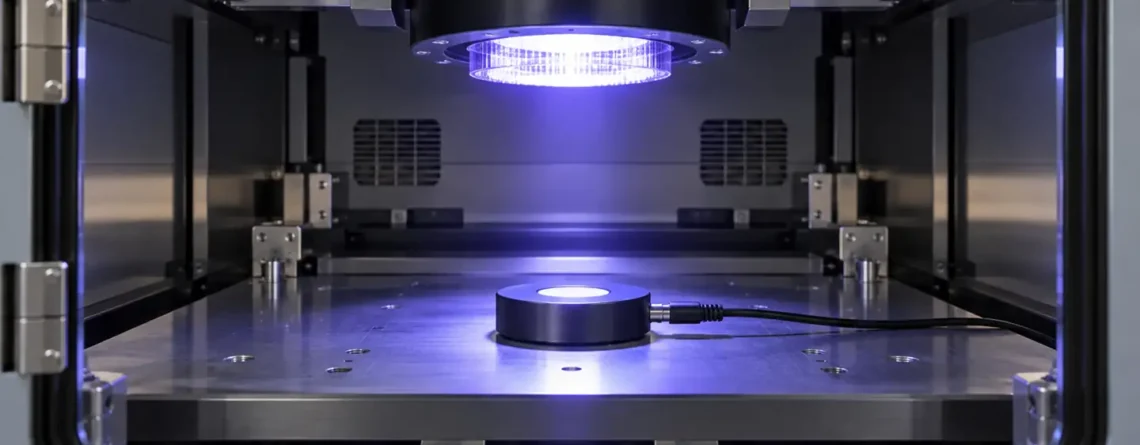
选择紫外线传感器 源光谱、需要报告的数量、预期强度和测量几何形状. A sensor designed to estimate solar UV index does not necessarily measure a UV curing lamp correctly, and an instrument labeled “UVC” does not by itself establish whether a disinfection process is effective. Ask for the detector's full spectral response, calibration conditions and usable range before comparing displayed readings.
有用的问题不仅仅是仪器是否能够检测到紫外线辐射。它是指整个传感器、光学窗口、滤光片和校准是否对测量位置的辐射做出适当的响应。本指南遵循从来源到报告值的这些选择。
定义读数必须代表什么
UV radiation covers a range of wavelengths. Common categories are UVA, UVB and UVC, but a category label alone is too broad to define an instrument's response. Two lamps in the same named band may have different spectral distributions, and two instruments labeled for that band can weight those distributions differently. Record the actual source type and available spectral information, including whether it is a narrow-band LED or a broadband lamp.
| 测量任务 | 定义数量 | 主要选型问题 |
|---|---|---|
| 阳光照射监测 | 红斑加权辐照度或指定的紫外线指数测量。 | 探测器和算法必须近似于预期太阳条件下的相关权重。 |
| 紫外光固化工艺 | 处理平面上指定范围内的辐照度和/或辐射暴露。 | Match the sensor's spectral response and geometry to the lamp, optics and workpiece. |
| UV光源趋势 | 在固定位置和配置处可重复读取。 | 将有用的相对趋势与绝对、可追踪的辐照度测量区分开来。 |
| 实验室光谱表征 | 定义波长范围内的光谱辐照度。 | 光谱分辨率、校准和杂散光性能必须适合光源。 |
在选择硬件之前,记下光源、波长、预期信号、测量位置、传感器方向、曝光持续时间以及根据结果做出的决定。指定输出是否将一个灯与另一个灯进行比较、验证过程趋势或支持正式的测量程序。每个都需要不同程度的光谱和校准控制。
辐照度、辐射暴露量和紫外线指数不同
辐照度 是每单位面积的辐射功率入射,对于规定的光谱带和测量平面,通常以 W/m² 或 mW/cm² 为单位报告。 辐射暴露 是辐照度随时间的积分,通常以 J/m² 或 J/cm² 表示。对于规定时间内辐照度恒定的情况,曝光量等于辐照度乘以时间;实际过程暴露可能会随着源、传感器或工件的移动而变化。
例如,理想的恒定辐照度 10 mW/cm2 保持 5 秒可产生 50 mJ/cm2 的辐射暴露。该算术假设辐照度在相关平面上保持恒定,并且仪器对相关波长做出响应。它不是推荐的工艺剂量,也不是已实现任何生物学或治愈结果的证据。
这 紫外线指数 与红斑加权紫外线辐照度相关,用于传达引起晒伤的太阳紫外线的强度。它不是所有紫外线能量的直接测量,不应被视为 UVC 过程读数。这 World Health Organization's UV index explanation 描述了其公共卫生作用。这 Silicon Labs Si1133 设计指南 显示光谱加权如何进入特定紫外线指数传感器的设计;它的实现是特定于模型的。
为什么光源光谱必须与传感器匹配
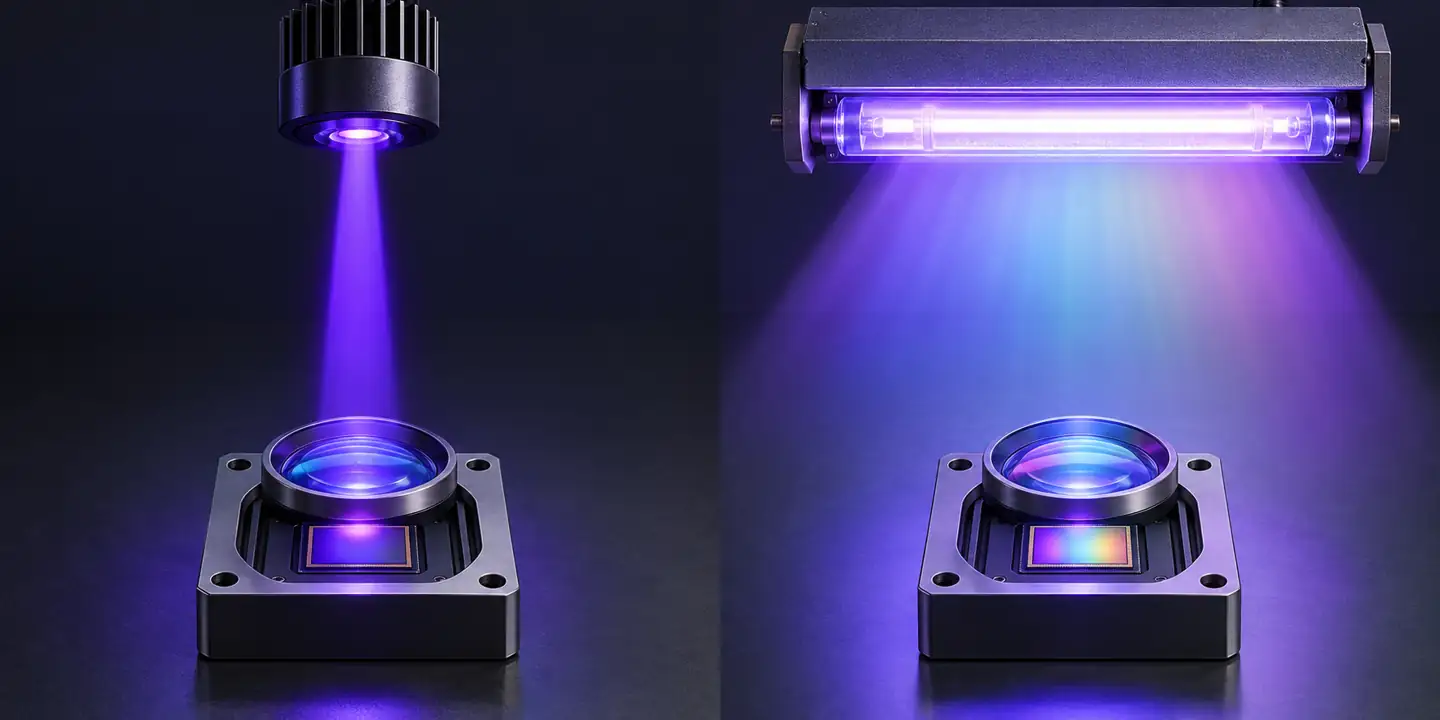
A broadband UV detector produces a signal from radiation across the wavelengths to which its detector and filter respond. Its output therefore depends on both the incoming spectrum and the instrument's spectral responsivity. If a sensor is calibrated with one lamp and used with an LED whose emission is concentrated at a different wavelength, the calibration factor may no longer give the same accuracy. A nominal band name does not reveal the shape of the response within that band.
这 NIST 致力于标准化 UV LED 测量 描述了滤波检测器中光谱不匹配可能引起的重大误差。误差的大小和方向取决于实际的源和仪器。请求传感器的光谱响应曲线、校准源描述和不确定度声明,然后将它们与被测源进行比较。
For a narrow-band UV LED, ask whether the sensor response is known at the LED's actual emission wavelengths and operating conditions. For a broadband source, determine whether the response is sufficiently uniform or correctly weighted across the relevant spectrum. If two instruments disagree, compare their spectral response, measurement plane, angle and integration interval before assuming one is faulty.
选择测量方法
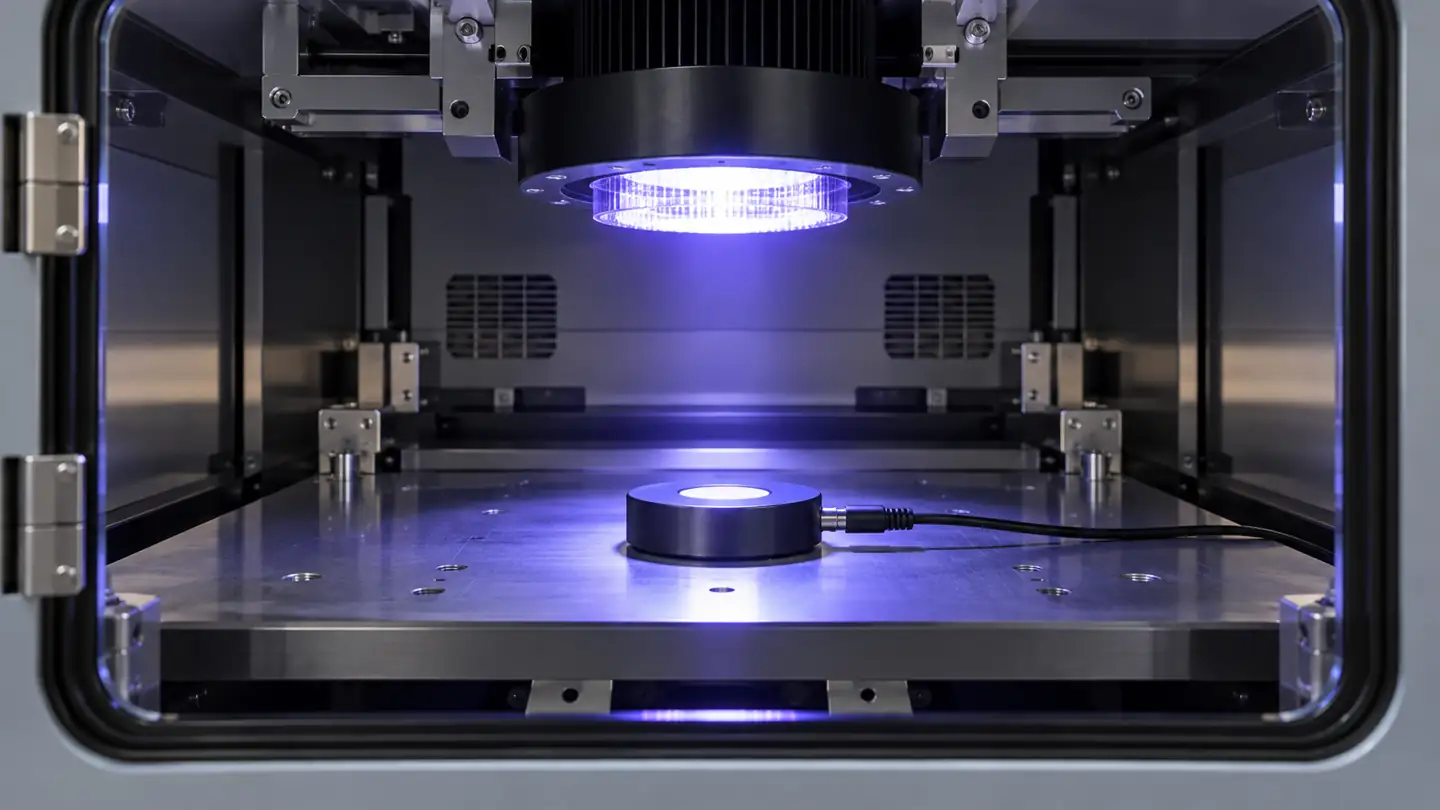
滤波光电二极管辐射计将入射辐射转换为电信号,并报告定义的光谱响应的值。它结构紧凑,方便重复测量,但过滤器、检测器和校准定义了读数的含义。电路板上的光电二极管组件不会自动成为校准的辐射计:放大器、外壳、窗口、温度行为和算法都会影响结果。
光谱辐射计按波长分离辐射并报告光谱,而不仅仅是一个波段积分值。它可以帮助识别源峰值或评估光谱不匹配。其光谱分辨率、波长校准、杂散光性能、动态范围和测量几何结构必须适合该任务。频谱比单个宽带读数更详细,但它不会自动消除测量不确定性。
相对监视器对于跟踪一个固定源随时间的输出可能很有用。如果尚未确定其对相关来源的绝对响应,则应将其描述为相对的。记录传感器位置和操作条件,以便设置的更改不会伪装成灯老化。稳定的相对趋势和可追踪的绝对测量值回答了不同的问题。
| 仪器或输出 | 有用的时候 | 使用前检查 |
|---|---|---|
| 过滤宽带紫外辐射计 | 重复需要定义的频带或加权响应。 | 实际光谱和角度响应、校准源和范围。 |
| 光谱辐射计 | 需要进行光源光谱或波长相关的评估。 | 光谱范围、带宽、校准和杂散光行为。 |
| 集成紫外线指数传感器 | 仪器估算其预期光学设计的太阳紫外线指数。 | 已安装设备的算法、窗口传输和验证。 |
| 相关过程监控 | 跟随稳定设置的变化是主要目标。 | 再现性、位置以及与过程的记录关系。 |
这 CIE 紫外辐射计校准说明 指出仪器可以具有不同的光谱范围和加权函数。选择与仪器要报告的数量相对应的校准方法和条件。
测量平面和角度很重要
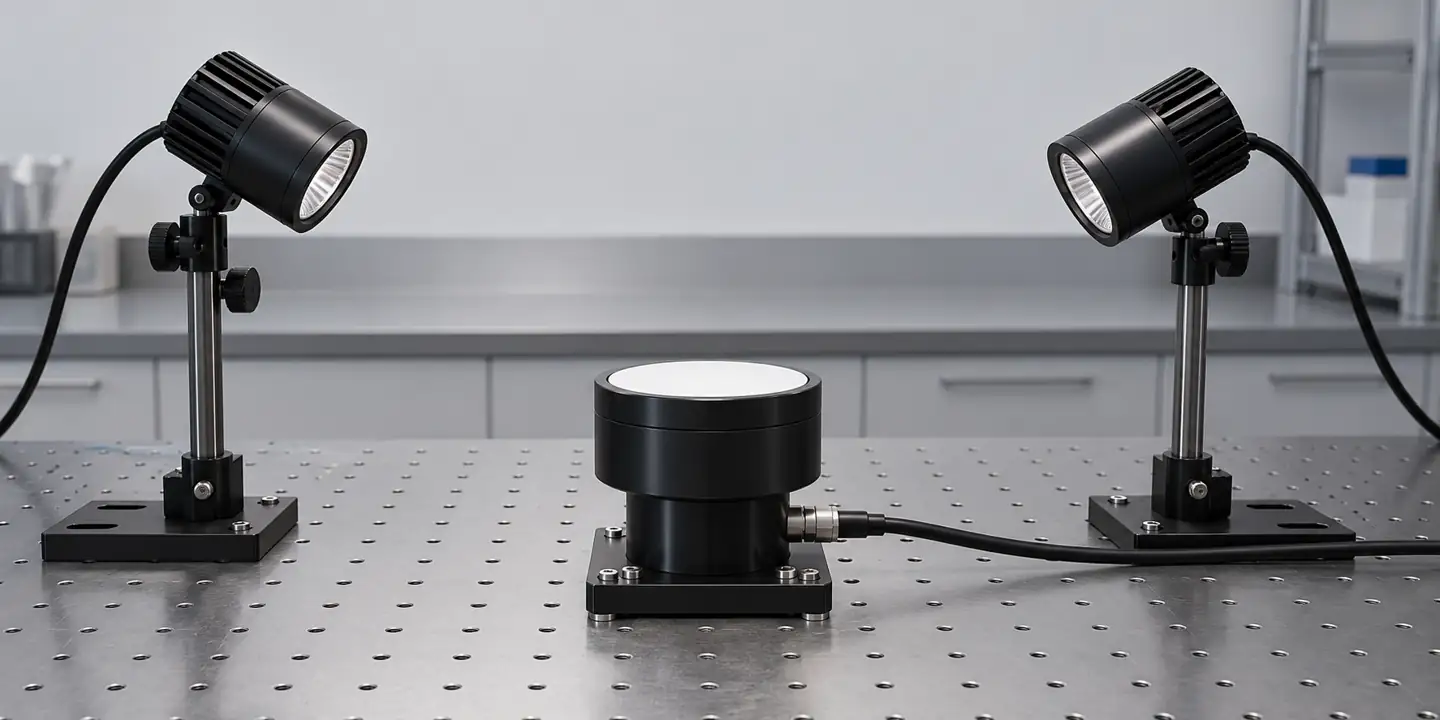
The irradiance at a sensor depends on its position and orientation relative to the source. A process measurement should be made at a defined plane that represents the workpiece or monitoring point, subject to equipment design and the instrument's instructions. Moving a probe closer to a source, tilting its receiving surface or placing it behind a window can change the result. A large-area source, reflected light and nonuniform illumination make a simple point-source distance calculation an unreliable substitute for measurement.
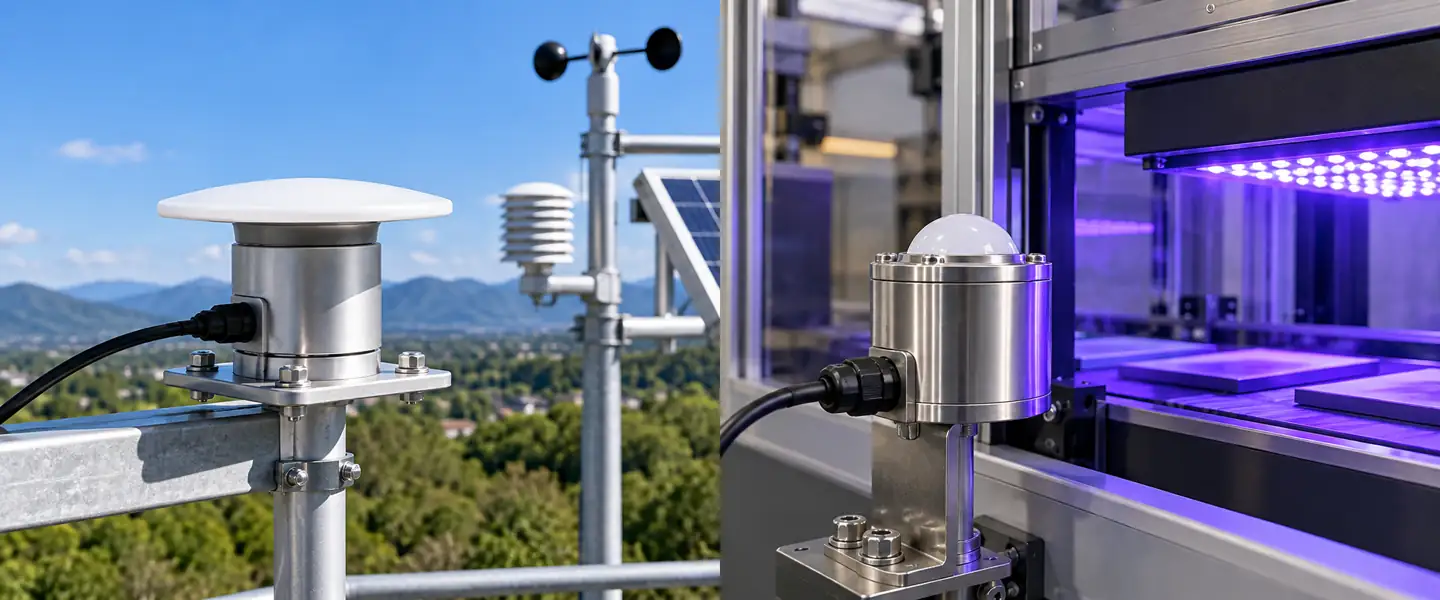
对于理想的平面辐照度接收器,对平行光束的响应随入射角的余弦变化。真实的扩散器和传感器组件与理想情况不同,尤其是在大角度时。在测量阳光、扩展光源或来自多个方向的光时,请检查规定的角度或余弦响应。在不同角度对两个设备进行比较可能会揭示几何差异,而不是有缺陷的探测器。
记录测量位置、方向、任何外壳或窗口、源预热状态、相关距离以及操作设置。如果更换光学窗口,其传输可能会改变系统响应。肉眼看起来透明的材料不一定在感兴趣的紫外波长范围内是透明的。评估完整安装的光路,而不是单独的检测器。
避免饱和度、暗偏移和杂散光
The expected maximum irradiance must fit within the instrument's calibrated measuring range. A saturated photodiode, amplifier or ADC can produce a clipped, flat or misleadingly plausible result. Conversely, at very low signal levels, dark current, electronic offset, noise and stray light may be a meaningful fraction of the reading. Check the datasheet's range, detection limits and conditions instead of equating display resolution with accuracy.
某些设备会自动更改增益或积分时间。确认转换是否影响输出连续性以及仪器是否标记过载或低于范围的情况。如果紫外线源是脉冲式的或相对于传感器移动的,则测量带宽和记录间隔必须捕获相关的时间曲线。平均读数可以掩盖短峰值;单独的峰值读数可能无法提供曝光所需的时间积分。
如果源抑制不足,可见光或红外辐射也可以有助于读数。干扰程度取决于滤波器、源光谱和仪器设计。避免假设每个紫外线标记光电二极管都能完美抑制所有其他波长。这 NIST 对紫外线测量误差的审查 讨论影响可比性的光谱和几何因素。
温度和时间响应
探测器及其电子器件的温度会改变灵敏度、暗信号或增益。即使紫外线源本身稳定,热源附近的测量也可能会受到影响。询问精度规格是否包括超出预期工作范围的温度以及仪器是否报告其内部温度。保护仪器免受超出其额定值的温度影响,并允许任何指定的稳定时间。
对于传送带或脉冲源,请考虑仪器的响应速度和采样频率。传感器可以具有足够的波长范围,但如果积分时间较长,则会错过短峰值。相反,短的噪声样本可能不能很好地代表稳定的平均值。预期的统计数据(峰值辐照度、平均辐照度或积分曝光)决定了所需的响应和时间。
传感器和任何数据记录器必须就累积暴露的时间间隔达成一致。如果光源在工件上移动,位置和速度会改变照明轮廓。在代表性操作条件下测量或验证设置,而不是假设某一固定点的强度描述了整个过程。
Calibration and verification
Calibration relates the instrument output to a reference under documented conditions; verification checks whether it remains suitable for use. A calibration certificate is most useful when it identifies the measured quantity, spectral band or responsivity, source, geometry, range, uncertainty and traceability. A certificate issued for a different source spectrum or measurement configuration does not automatically characterize all applications.
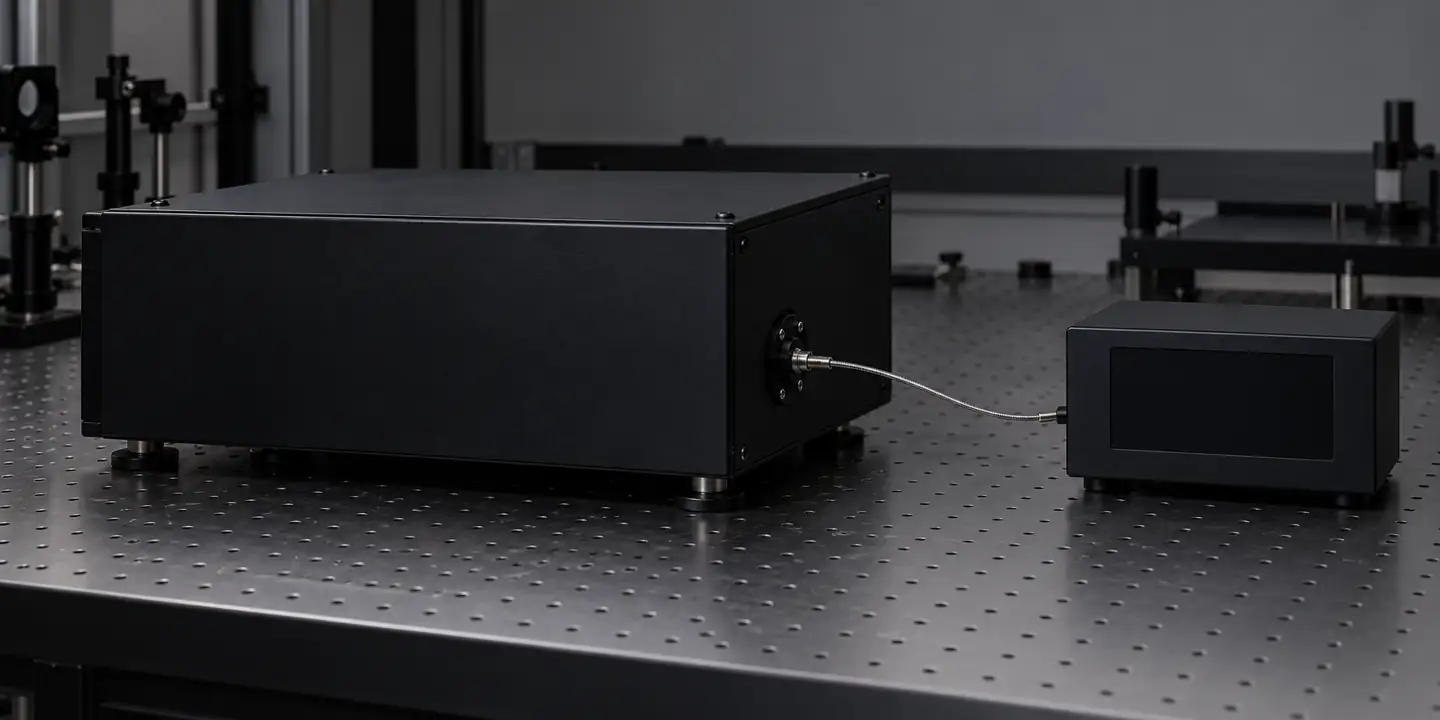
在将仪器与参考进行比较之前,请对齐测量平面、方向、源条件和时序。参考值应具有适合预期用途的不确定度和光谱覆盖范围。记录调整前的实际读数和调整后的剩余读数,以及传感器配置和环境条件。对检查源的稳定响应是有帮助的,但它不能独立地证明每个波长的完整光谱响应。
Set the verification interval using the manufacturer's instructions, the measurement program, conditions of use and observed drift. UV exposure can affect some optical materials over time; contamination or damage to the window can also alter response. Inspect and clean only as permitted by the manufacturer. Replacing a window, diffuser or detector can change calibration and should be documented.
比较读数而不隐藏条件
如果两个辐射计的读数不同,首先检查它们报告的数量、单位和光谱权重是否相同。接下来比较源、曝光平面、角度、光学窗口、范围、定时和校准源。报告峰值辐照度的传感器和报告一段时间内平均值的传感器即使使用相同的单位,也不能直接进行比较。同样,两个宽带传感器对于一盏灯可能一致,而对于具有不同光谱峰值的 LED 则不同。
Do not apply a universal correction factor based on one comparison unless a qualified method supports it for the source and conditions. Keep the original readings and the correction method in the record. Reassess the relationship when the source type, filters, measurement geometry or instrument changes.
What to request on a calibration record
Ask which quantity and spectral response were calibrated, the wavelength coverage, the source used and the measurement geometry. Check whether the certificate covers the entire instrument, including the diffuser and any window, or only a detector component. Confirm the uncertainty statement and the range of values over which it applies. A certificate number by itself does not describe whether the calibration matches a particular application.
For a UV LED, compare the LED's emission spectrum with the calibrated responsivity and the instrument's spectral response. Some applications need a source-matched calibration or a spectral-mismatch assessment. The method depends on the available data and the uncertainty target; a user should not invent an adjustment from a nominal peak wavelength alone. Temperature, aging and drive conditions can affect the source spectrum, so preserve the operating conditions used for the comparison.
维护仪器标识符、固件或增益设置、校准日期、窗口状况和例行检查结果的简单记录。如果在修理传感器或更换过滤器后读数发生变化,请注释时间序列。可追踪的参考、可重复的测量位置和服务历史一起比没有操作上下文的单个证书提供更多信息。
三个应用程序的选择工作表
太阳紫外线监测。 Define whether the desired output is UV index, spectral irradiance or another weighted quantity. The instrument's spectral response, diffuser, orientation and algorithm all matter. A sensor placed behind a cover must be evaluated with that cover in place. A weather display should label estimated and measured quantities clearly.
UV curing. Define the source spectrum, irradiance band, workpiece plane, exposure time and the purpose of the reading. A process may depend on both peak irradiance and accumulated exposure, as well as the material and process conditions. A radiometer can help monitor the optical process but a single reading does not by itself prove the final coating's performance. Use process-specific validation and testing.
UVC source monitoring. 确定实际的源光谱和测量几何形状,并选择适合该任务并经过校准的仪器。传感器读数是更广泛的系统评估的一个输入;它本身不会在整个空间内确定递送剂量或证明病原体灭活。遵循特定安装的适用设备和测量程序。
传感器供应商的问题
Provide the source type, measured or expected spectrum, measurement distance and orientation, intensity range and the reporting quantity. Ask the supplier which portion of the instrument's response contributes to the displayed result and whether visible light or infrared from that source can affect it. Request the spectral-response curve for the complete instrument, not just a detector-material description.
说明设备是否必须连续测量或仅在定期检查期间进行测量。对于连续运行,请询问漂移、窗口污染、环境温度、输出状态以及控制器在故障期间收到的信息。对于便携式辐射计,询问可重复定位、测量间隔以及仪器如何记录峰值或积分值。
If the instrument will be compared with another meter, share both instruments' calibration conditions and intended source. A supplier may be able to explain which differences are expected and which tests are needed. Request a documented uncertainty for the actual configuration where available; an isolated best-case specification at a different wavelength or geometry does not describe the entire process measurement.
Keep the optical setup consistent
实际的测量记录包括显示传感器、源、测量平面和方向的图表或照片。记下源操作设置、预热条件、任何过滤器、窗口和固定装置以及样品或工件位置。如果移动仪器或更换源,请在比较不同日期的值之前记录更改。
当光源照射某一区域不均匀时,一个测量位置可能无法代表整个有用区域。在多个预定义点进行的调查可以揭示空间变化,但其点间距和解释应针对该过程进行设计。保留个人读数及其位置,而不是将调查减少到一个无法解释的平均值。如果传感器的孔径有限,请考虑它实际接收到的面积和角度。
在可重复的条件下进行例行检查可以提供最多的信息。读数较低可能是由于灯老化、测量位置改变、窗口污染、温度、电子漂移或综合因素造成的。在调整仪器之前,比较已知的检查条件并检查光路。保留发现的结果,以便历史记录在维护后仍然有用。
了解流程基线的价值
对于现有安装,当光源、光学器件和工件布置处于已知条件时建立基线。在定义的位置记录多个测量值,并识别由预热、功率设置、源移动和重复定位引起的正常变化。然后可以根据相同的条件来解释后来的测量结果。基线是本地流程的参考;它不能自动转移到不同的来源或生产线。
When the process uses several lamps or LEDs, a combined reading may hide the failure or degradation of one part of the source. The measurement plan may need several positions or independently monitored zones. The appropriate coverage depends on the optics and the decision. If a change is detected, compare it with source diagnostics and the condition of reflectors, windows and fixtures rather than immediately changing the radiometer's calibration.
Where readings are logged automatically, retain the timestamp, sensor identifier, selected range and any invalid or overload status. Do not replace missing data with zero irradiance without clearly indicating that the sensor was unavailable. A record of measurement conditions gives operators a way to distinguish an actual source change from an instrument or data-path problem.
Troubleshooting a UV measurement
| 观察 | Questions to investigate | Evidence to retain |
|---|---|---|
| Two meters disagree on an LED source | Are spectral responses and calibration sources compatible? | Source spectrum, meter models and calibration records. |
| Reading drops over time | 来源是否发生变化,或者传感器窗口是否被污染? | 源运行状态、检查和参考检查历史记录。 |
| 阅读量保持在明显的最大值 | 传感器或电子器件是否饱和? | 范围、过载标志和合适的较低信号检查。 |
| 安装盖子后户外读数发生变化 | 盖子是否传输相关波长并影响角度响应? | 涵盖材料、几何形状和前后比较。 |
| 曝光量与辐照度×时间不同 | 辐照度是否恒定,两个量是否在同一时间间隔内积分? | 时间配置文件、积分设置和单位。 |
常见问题
通用 UVA 传感器可以测量紫外线指数吗?
Not reliably by simply converting its UVA reading. UV index uses an erythemal weighting across relevant solar wavelengths. An instrument needs an appropriate spectral response or validated algorithm for the intended conditions.
Is UV dose the same as irradiance?
No. Irradiance is power per unit area; radiant exposure is its time integral. The term dose can have application-specific meanings, so define the quantity, spectral weighting and units.
Why can two sensors in the same UV band disagree?
Their spectral responses, source calibration, angular responses, measurement locations and integration settings can differ. A shared UVA or UVC label is insufficient to establish equivalence.
Does a UVC reading prove a disinfection system works?
No. An instrument measures a defined optical quantity at its location. Effectiveness depends on the delivered exposure in the actual system and the validated process conditions.
Does a higher display resolution mean higher accuracy?
No. Resolution is the smallest displayed increment. Spectral mismatch, calibration uncertainty, geometry, drift, noise and saturation can dominate the total error.
When is a spectroradiometer useful?
It is useful when the source spectrum or wavelength-dependent response must be examined. Its own spectral range, resolution, calibration and stray-light limits must fit the measurement.







发表评论