

A proximity sensor is a device that detects the presence or absence of an object—or its distance from the sensor—without any physical contact. These sensors are vital in modern automation, robotics, industrial control systems, smartphones, and countless smart technologies. They offer a reliable, non-intrusive way to monitor movement, trigger actions, or provide positional feedback, contributing to efficiency, safety, and intelligent system design.
This article explores the fundamentals of proximity sensors, including types, working principles, technologies used, applications, and future trends.
1. What is a Proximity Sensor?
A proximity sensor detects the presence or motion of an object within a specific range and responds accordingly. It emits a signal—such as electromagnetic, ultrasonic, or optical—and then monitors for changes or reflections caused by nearby objects.
1.1 Key Characteristics
- Non-contact detection
- Short to medium sensing range
- Fast response time
- High repeatability and durability
2. How Proximity Sensors Work
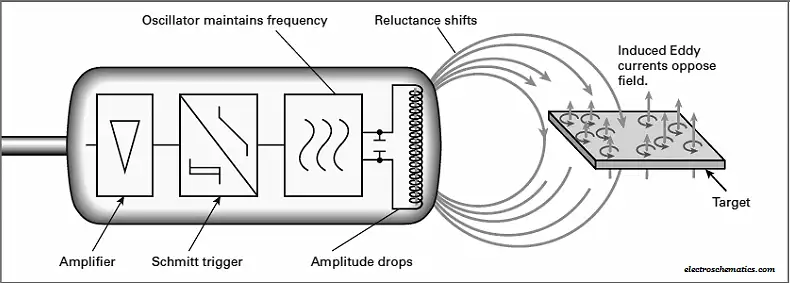
(robu.in)
Proximity sensors work by emitting a signal from a transmitter and then detecting the interaction of that signal with an object in its vicinity. The way this interaction is detected varies depending on the sensor type—ranging from changes in capacitance or inductance to disruptions in light beams or sound waves.
3. Types of Proximity Sensors
There are several types of proximity sensors based on the kind of detection technology they use. Each type is suited for specific materials, distances, and environmental conditions.
3.1 Inductive Proximity Sensors
- Principle: Detect metal objects by generating and measuring changes in electromagnetic fields.
- Best for: Metal-only detection (iron, copper, aluminum).
- Range: Typically up to 80 mm.
- Advantages: Durable, immune to dirt and water.
- Applications: Machinery, conveyors, automation systems.
3.2 Capacitive Proximity Sensors
- Principle: Detect any object that changes capacitance within the sensor’s electric field.
- Best for: Plastics, liquids, granules, and metals.
- Range: Up to 60 mm.
- Advantages: Can detect through glass or plastic walls.
- Applications: Level detection, material handling, packaging.
3.3 Ultrasonic Proximity Sensors
- Principle: Emit high-frequency sound waves and measure the echo returned.
- Best for: Detecting any solid or liquid regardless of color or transparency.
- Range: From a few centimeters to several meters.
- Advantages: Good for irregular or transparent objects.
- Applications: Distance measurement, obstacle detection, parking systems.
3.4 Optical (Photoelectric) Proximity Sensors
- Principle: Use light (LED or laser) and a photodetector to identify object presence or distance.
- Best for: Wide range of materials.
- Types:
- Through-beam
- Reflective
- Diffuse
- Range: Up to several meters.
- Advantages: High-speed detection.
- Applications: Counting objects, safety gates, industrial automation.
3.5 Magnetic Proximity Sensors
- Principle: Detect magnetic fields, usually through reed switches or Hall effect sensors.
- Best for: Detecting magnets or ferromagnetic objects.
- Range: Few millimeters to several centimeters.
- Advantages: Ideal for sealed environments.
- Applications: Security systems, door/window monitoring, speed sensors.
3.6 Infrared (IR) Proximity Sensors
- Principle: Emit IR light and detect its reflection from nearby objects.
- Best for: Short-range sensing.
- Range: Typically <10 cm.
- Advantages: Compact and low-cost.
- Applications: Smartphones, consumer electronics, hand sanitizer dispensers.
4. Key Features and Parameters
| Parameter | Description |
|---|---|
| Sensing Distance | Max range the sensor can detect an object |
| Target Material | What materials can be sensed (metal, plastic, etc.) |
| Output Type | Analog, digital, or switching signal |
| Response Time | Time taken to register a change in proximity |
| Environmental Tolerance | Resistance to temperature, dust, water, etc. |
| Power Consumption | Especially important in portable or battery-powered devices |
5. Applications of Proximity Sensors
Proximity sensors are found in countless fields, each using their features in unique ways:
5.1 Industrial Automation
- Position sensing in robotic arms
- Counting parts on conveyors
- Detecting jams or obstructions
5.2 Automotive
- Parking assistance (ultrasonic)
- Automatic braking systems
- Gear and pedal position sensing
5.3 Consumer Electronics
- Smartphone screen dimming when near the ear (IR)
- Touchless switches and gesture recognition
5.4 Aerospace and Defense
- Landing gear proximity detection
- Weapon bay door automation
- Collision avoidance in drones
5.5 Healthcare and Medical Devices
- Non-contact activation of devices
- Liquid level sensing
- Patient proximity detection
5.6 Smart Buildings and IoT
- Occupancy sensors for lights/HVAC
- Touchless access control
- Smart appliances (e.g., auto-opening bins)
6. Advantages of Proximity Sensors
- Durability: No mechanical parts, longer life span.
- Precision: Accurate detection and repeatability.
- Non-contact: Reduces wear and mechanical interference.
- Fast Response: Ideal for real-time control systems.
- Compact Design: Suitable for embedded and mobile applications.
7. Limitations
- Limited Range: Most sensors have a short operational range.
- Target Specificity: Some types only detect certain materials.
- Environmental Sensitivity: Temperature, humidity, or contaminants may affect accuracy.
- Power Needs: Continuous operation may consume more power in wireless setups.
8. Proximity Sensors in IoT
Proximity sensors are key elements in Internet of Things (IoT) systems where real-time awareness of object presence, position, or movement is critical.
8.1 Examples in Smart Systems
- Smart Retail: Automated customer engagement or digital signage activation.
- Smart Agriculture: Detect animal presence, irrigation control, or level detection in silos.
- Smart Cities: Traffic flow optimization, pedestrian sensing, smart lighting.
8.2 Communication Protocols
Modern sensors support:
- I2C, SPI, UART for embedded systems.
- RS-485, CAN for industrial use.
- LoRa, NB-IoT, Zigbee, Bluetooth for wireless deployments.
9. Emerging Technologies and Future Trends
The future of proximity sensing lies in increasing intelligence, energy efficiency, and multi-sensor fusion:
9.1 Smart Sensors
- Built-in microcontrollers for local decision-making.
- Self-calibrating and learning-based systems.
9.2 Integration with AI
- Detect patterns or behaviors (e.g., distinguishing a human from a robot).
- Predictive maintenance by analyzing object interaction patterns.
9.3 Flexible and Printed Sensors
- Ultra-thin, printable proximity sensors for wearables or textiles.
9.4 Energy Harvesting Sensors
- Self-powered sensors using vibration, light, or RF energy.
10. Popular Proximity Sensor Modules
| Model | Type | Range | Use Case |
|---|---|---|---|
| LJ12A3-4-Z/BX | Inductive | 4mm | Industrial automation |
| HC-SR04 | Ultrasonic | 2–400cm | Arduino/robotics |
| TCRT5000 | IR | <5cm | Line following, obstacle sensors |
| VL53L0X | Laser ToF | 30–200cm | Accurate distance measurement |
| E18-D80NK | IR Optical | 3–80cm | Obstacle detection, automation |
Conclusion
Proximity sensors are essential components of modern intelligent systems. They facilitate seamless interaction between the physical and digital worlds through non-contact detection, making machines and environments smarter and safer. From industrial equipment and consumer electronics to smart cities and healthcare devices, their influence is immense and still growing.
With advances in artificial intelligence, wireless connectivity, and sensor miniaturization, proximity sensors will continue to be foundational in shaping our automated future.
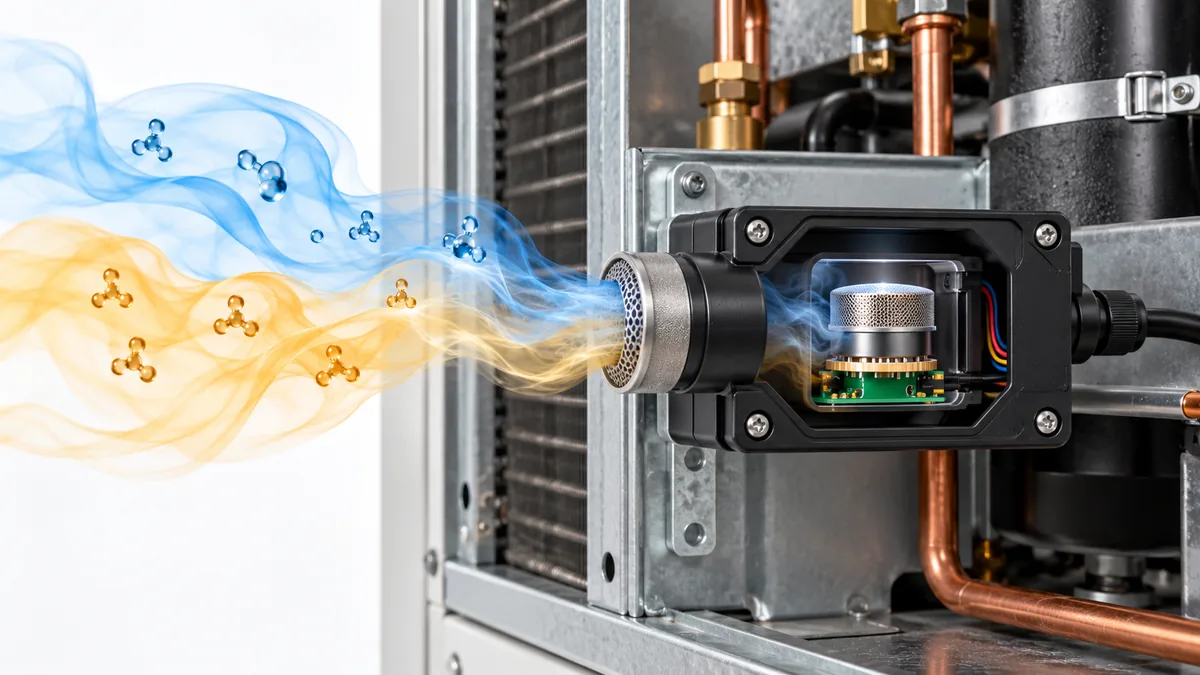
Can Another Gas Trigger a Refrigerant Detector? Reading Cross-Sensitivity Claims
Understand refrigerant-detector cross-sensitivity, compare NDIR and MOS evidence, and read gas-interference claims without dismissing a real alarm.
Read More
What Should a Refrigeration Plant-Room Gas Monitoring Log Record?
Build a useful plant-room gas log by recording detector identity, configuration, alarms, faults, ventilation response and maintenance evidence.
Read More
When Does Condensation Mislead an HVAC Sensor?
Learn when condensation at HVAC coils, probes and enclosures changes a sensor reading, and how to distinguish expected drainage from unwanted wetting.
Read More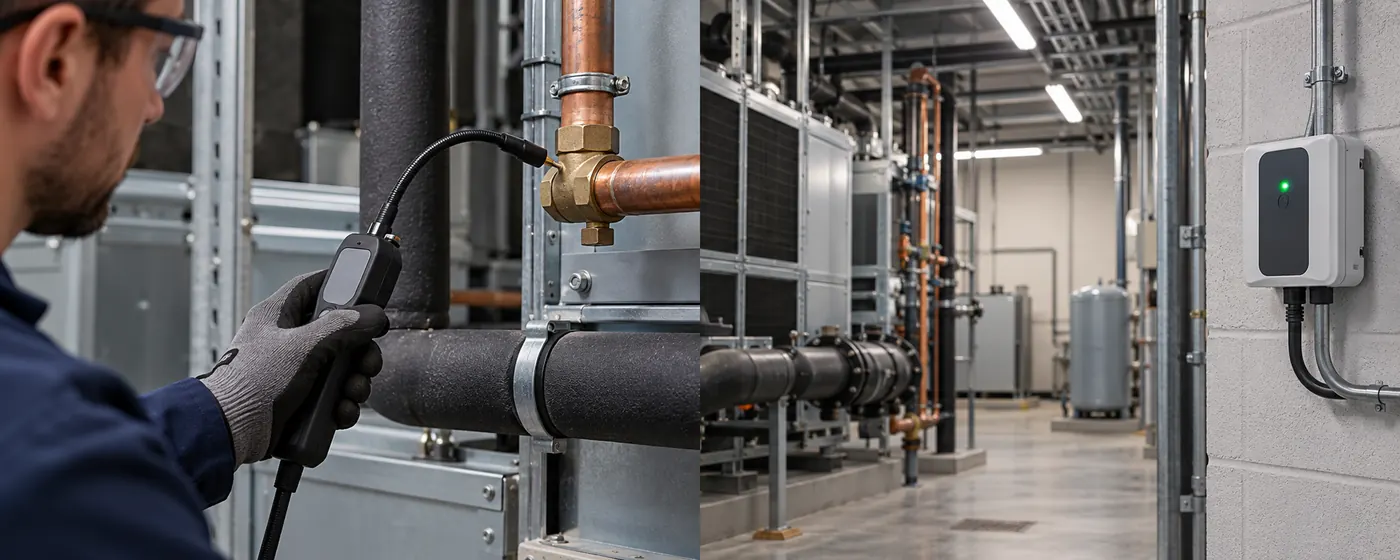
Portable vs Fixed Refrigerant Detection: How Their Jobs Differ
Compare handheld leak locators, fixed-point monitors and aspirating systems by sample location, response chain and commissioning needs.
Read More
Refrigerant Identification vs Concentration Measurement: Which Test Do You Need?
Distinguish a sealed-charge identifier from ambient concentration monitoring, handheld leak location and formal refrigerant purity testing.
Read More
How Humidity Affects Optical PM2.5 Sensor Readings
Learn why humidity, water uptake, fog and condensation can affect optical PM2.5 estimates and how to investigate and validate a humid-air spike.
Read More