
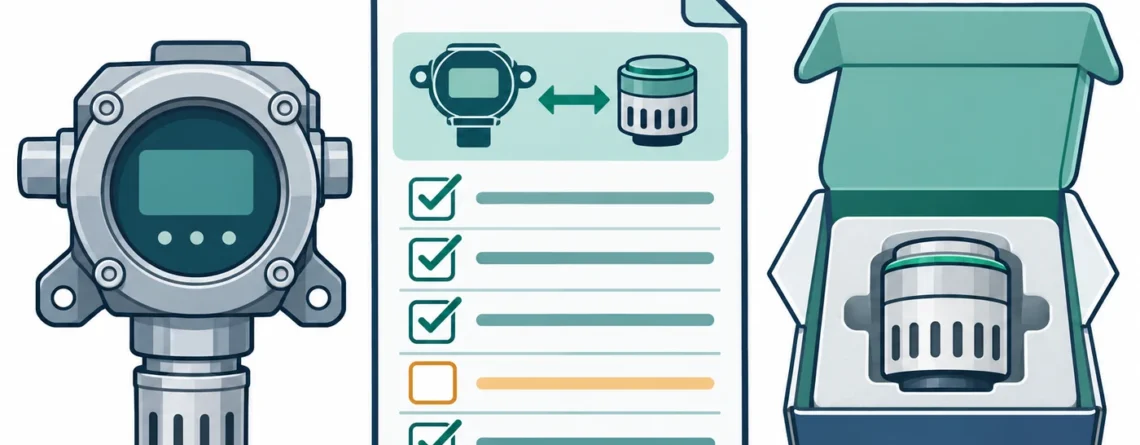
Before replacing a gas detector sensor, verify the exact approved replacement, the reason for replacement, the device's service restrictions and the evidence required before the detector returns to duty. After replacement, confirm component identity, configuration, required gas-response verification and any affected system interfaces. Mechanical fit and a normal display are insufficient evidence that the restored instrument performs its intended function.
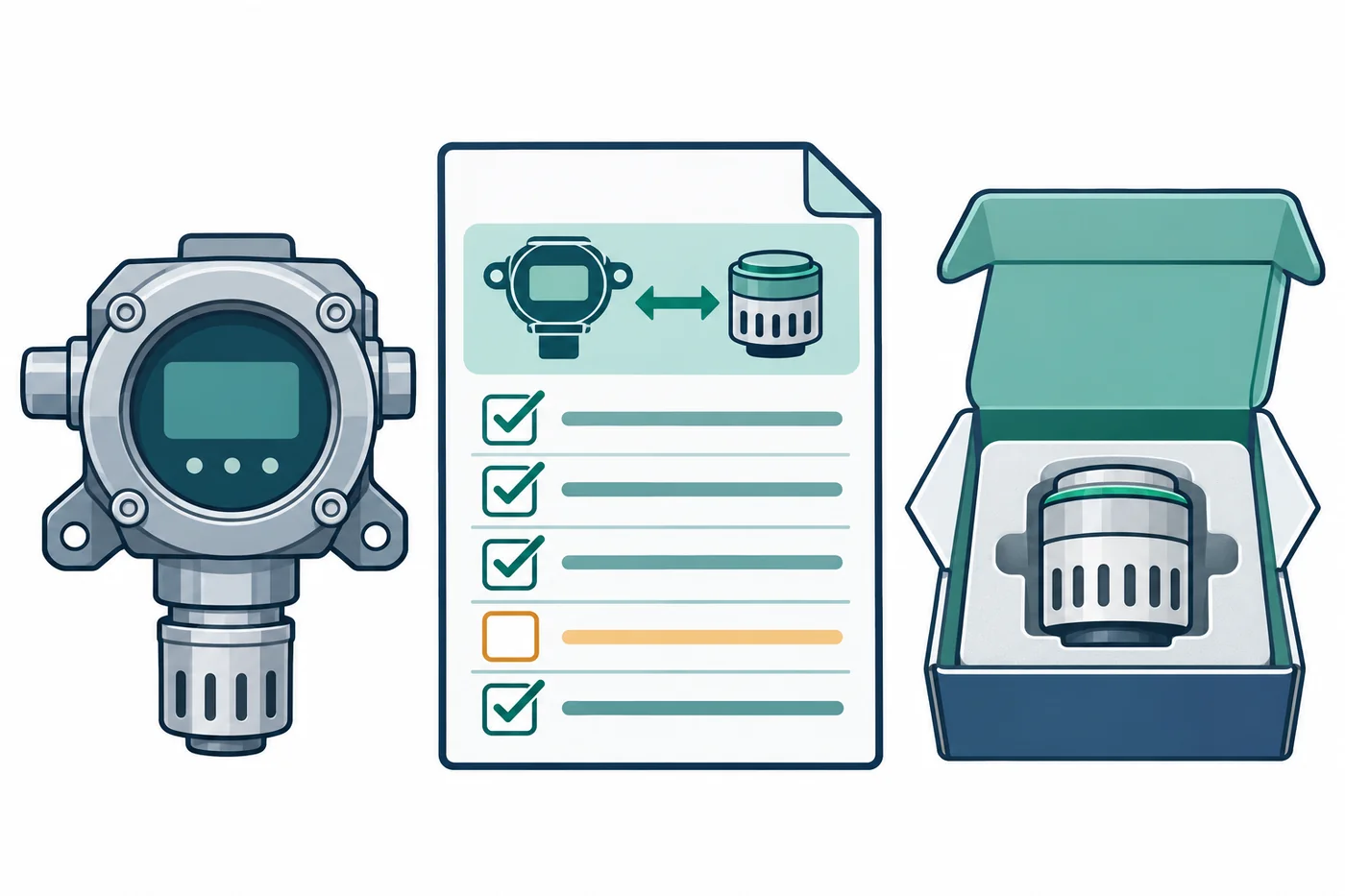
Replacement changes a component within a continuing measurement system. Compatibility and acceptance remain separate questions.
This checklist is for planning and reviewing an authorized service event. It does not describe opening hazardous-area equipment, connecting live components or performing calibration. Those activities depend on the exact product, location and approved work arrangements. Some devices permit replacement of a defined module; others require manufacturer service or replacement of a larger assembly.
First establish why replacement is proposed
The service record should describe the trigger. It may be a failed verification, persistent fault, exposure, diagnosed sensitivity loss, manufacturer lifecycle instruction or a planned change. “Old sensor” is an incomplete reason when the decision depends on a particular service criterion. Preserve the evidence that led to the proposal before the intervention makes the original condition unavailable.
A failed response does not automatically identify the sensing element as the cause. Gas may not be reaching it because of a blocked filter, damaged line, unsuitable calibration cap or pump problem. The reference gas and delivery method may be wrong. An electrical fault or configuration mismatch can also alter the displayed result. Replacement should follow an appropriate diagnosis rather than become the default response to every failed check.
IL Bollettino consultivo dell'OSHA sui monitor a lettura diretta, dated November 26, 2024, discusses drift, exposure and the need to follow manufacturer servicing instructions. Its documentary implication is useful: the condition before work and the resulting disposition belong in the history. A successful replacement does not by itself explain which earlier measurements may have been affected.
Define the objective of the service event. Is the intention to restore the same approved measurement duty, change to a different target gas, replace unsupported hardware or investigate recurring failures? These objectives require different reviews. A change in duty should not be processed as routine like-for-like maintenance merely because the new module can be fitted to the same housing.
Identify the replaceable unit precisely
The word “sensor” can mean a bare element, a cartridge with electronics, a complete sensing head, a transmitter assembly or an entire portable detector. Read the parts list and service instructions to determine which unit is replaceable. The procurement description should match the manufacturer's definition and approved part number, including any configuration-dependent suffix.
Record manufacturer, model, hardware revision and installed sensing options. For fixed equipment, identify both the transmitter and remote head if present. For portable instruments, identify the whole instrument and the channel position. A housing serial number is useful, but it may not uniquely describe the component being removed or the replacement being installed.
IL Manuale del pellistore IGD MK8 distinguishes a plug-in replacement sensor, a protective sinter assembly and other parts of the detector. That is a product-specific example of why a service plan must identify the actual replacement boundary. It does not authorize equivalent work on another detector or on a part the manufacturer does not list as field replaceable.
Some components carry calibration information or identity electronically. Others require configuration or adjustment after installation. Do not assume a pre-calibrated module eliminates every installed-system check. Establish what the supplied calibration covers, what the host must recognize and which acceptance activities the instructions still require in the installed arrangement.
Build a compatibility decision before ordering parts
Compatibility includes target gas, range, units, sensing technology, interface, host revision and approval conditions. A similar connector or enclosure thread establishes only a small part of that relationship. Obtain the applicable manufacturer's part reference or written compatibility evidence rather than treating visual similarity as a technical specification.
Consider the complete application. A different measuring range can change output scaling and alarm interpretation. A different target gas can require a different reference mixture and a revised hazard assessment. A different sensing technology can have different interference, oxygen or environmental limits. These changes may affect the suitability of an otherwise compatible host device.
| Compatibility field | Prove da richiedere | Why a mismatch matters |
|---|---|---|
| Approved part identity | Manufacturer parts list or confirmed service reference | Similar parts can have different functions or restrictions |
| Target gas and measuring range | Module marking and applicable device documentation | Displayed values and alarm interpretation depend on the basis |
| Host hardware and firmware | Compatibility statement for the installed revision | Recognition or processing may differ between revisions |
| Electrical or digital interface | Approved module/host relationship | Mechanical connection does not prove signal compatibility |
| Environmental and enclosure conditions | Product instructions and approval documents | Replacement can affect permitted use or enclosure integrity |
| Calibration and registration needs | Specific service procedure | Factory evidence may exclude the final installed configuration |
| System output relationship | Approved configuration and interface records | Correct local indication may coexist with wrong downstream scaling |
Record how each field was resolved. A purchasing system may list a superseded part and its replacement, but the technical relationship should remain traceable. If a supplier proposes an alternative, refer the question to the manufacturer or responsible design owner. An urgent maintenance need does not make an undocumented substitution equivalent to an approved spare.
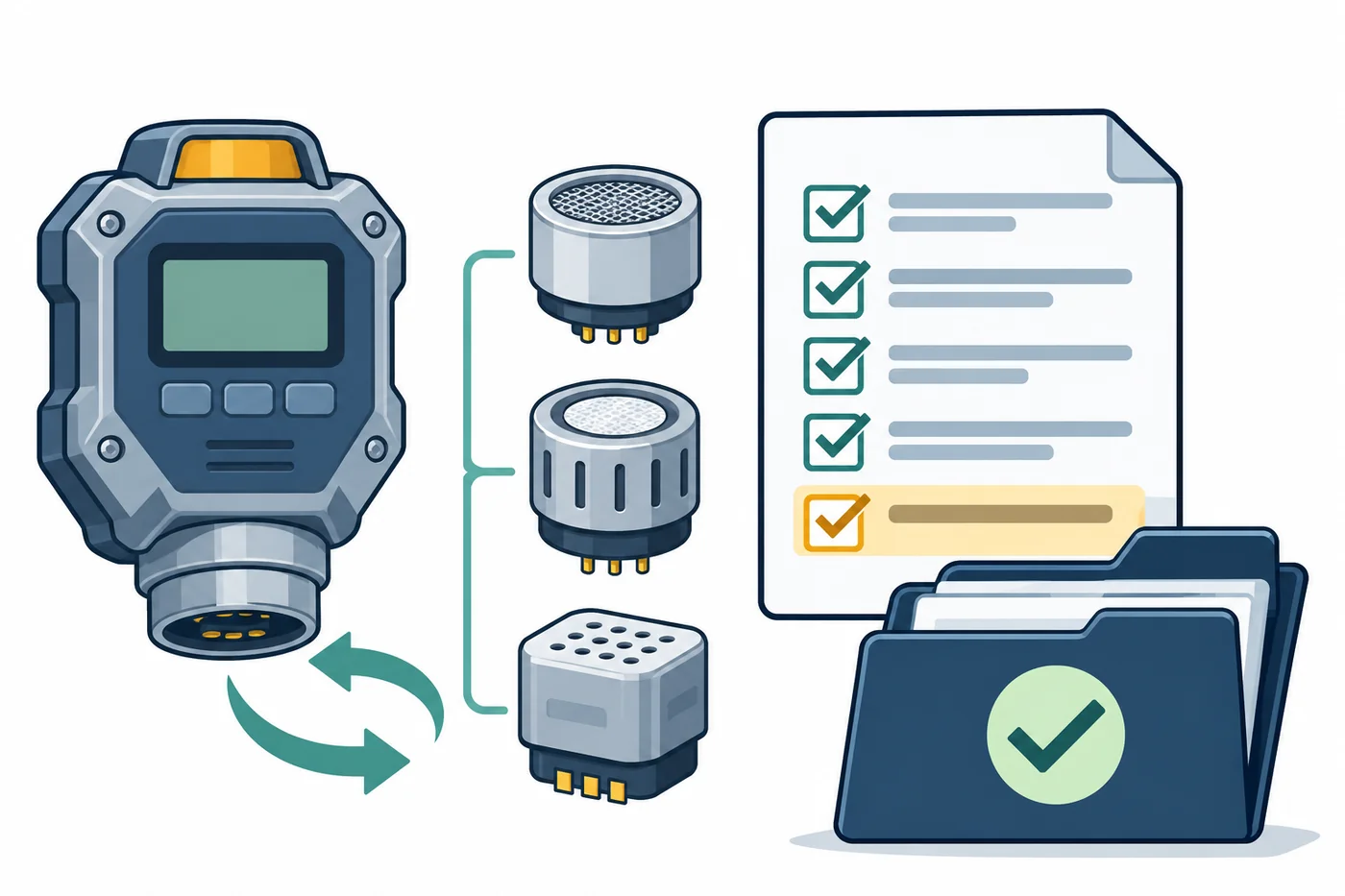
Compatibility depends on documented identity and application, not appearance alone.
Respect service and approval boundaries
Product instructions can restrict where and by whom replacement is performed. Hazardous-area enclosures, intrinsic-safety arrangements, seals and specified components can be part of the product's protection concept. The service plan must follow those conditions. A general internet checklist cannot establish that opening, substitution or reassembly is permissible for a particular installed device.
IL Guida di consultazione rapida Honeywell GasAlertMicro 5/PID/IR includes specific cautions about replacement and service for those models. Read them together with the full applicable instructions. They illustrate why a portable housing should not be treated as an unrestricted platform for interchangeable sensing elements.
Some fixed products have explicit field-service limits. The Manuale di sicurezza Det-Tronics PIRECL 95-8630 revisione 5.2 specifies that internal device repairs are factory work and constrains changes in its safety-certified application. That instruction should not be generalized to every infrared detector, but it directly challenges the assumption that every detector contains a user-replaceable cell.
The work package should name the authorized personnel, applicable instructions and required work location or isolation arrangements. It should also identify how detection availability is managed while the device is out of service. These are prerequisites to the service event, not details to be improvised after a failed instrument has already been removed.
Preserve as-found information before the component changes
Capture the original symptom, status, relevant readings, configuration and service history. Where the method permits and the information is relevant, retain the last failed check and comparison conditions. Photographs of labels can help establish identity, but they do not replace the manufacturer's instructions or a traceable service record.
Identify the removed component and the time its service ended. Record any known exposure, contamination or physical damage that might affect investigation and disposition. If the cause remains unknown, preserve that uncertainty. A new component producing a satisfactory result does not prove that age was the only reason the old one failed.
Separate the housing's history from the sensing element's history. A long-term drift trend should not continue as if no component change occurred. Mark the replacement event and begin the new component's performance history on its own identity. This helps later reviewers distinguish recurrent application problems from the behavior of an individual sensing element.
When earlier measurements support an important decision, route potential impact into the site's review process. The service technician may not be the person authorized to assess past exposure or process records. The maintenance record should make the issue visible and identify the receiving owner, rather than declaring earlier measurements valid or invalid without the required assessment.
Inspect the rest of the measurement path
A new sensing element cannot overcome every upstream problem. Review the installed inlet, filter, weather protection, tubing, pump and conditioning components that belong to the measurement. Their relevance depends on the device and application. The objective is to confirm that the replacement plan addresses the actual path by which gas reaches the sensing element.
IL Guida HSE sui rilevatori di gas infiammabili discusses physical condition, contamination and sample-path defects as factors affecting readings. These principles support a broader service review. They should not be converted into a generic cleaning method: cleaning products, replacement filters and handling restrictions remain manufacturer-specific.
If the removed sensor shows contamination, ask whether the same exposure will affect the replacement. A repeated replacement cycle can indicate an unsuitable location, accessory or application condition. Refer potential design changes through the responsible owner. Adding an improvised barrier or changing tubing to protect the new sensor can alter response and create a different measurement problem.
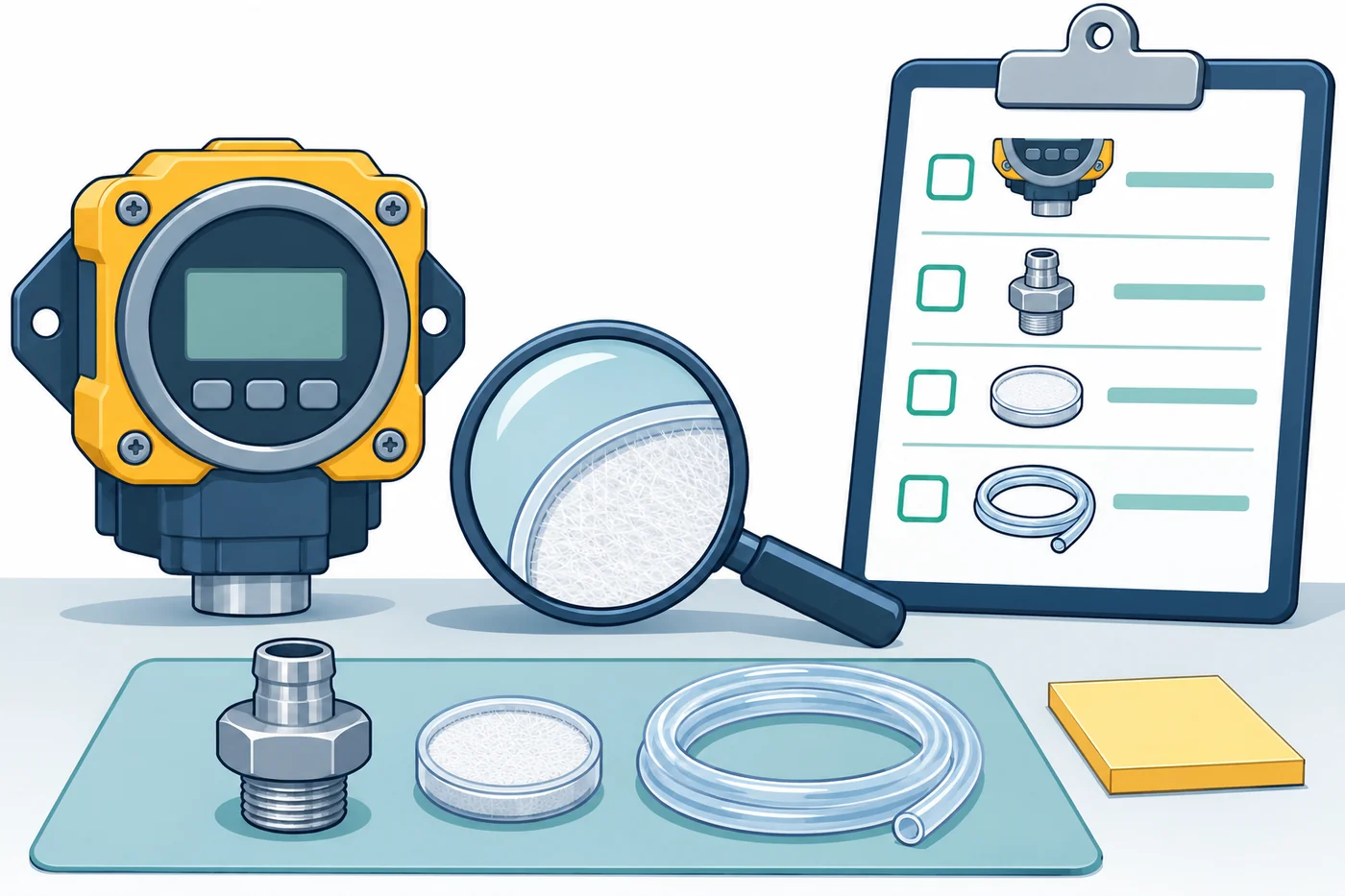
The surrounding path can remain defective after a sensing element is replaced.
Reconcile configuration after replacement
Record what the host recognizes after the approved service. Check the installed gas identity, range, units, channel association and applicable settings against the intended duty. An instrument may display a healthy state while using a default configuration or an unexpected gas basis. The record should show the relevant comparison with the approved configuration.
For fixed systems, include the relationship between the detector output and the receiving channel. If the replacement changes the measurement range or configured gas, the controller or supervisory system may need a controlled review. Do not assume that a correct detector display means the remote display, alarm logic and historian are using the same interpretation.
IL Manuale di installazione Rosemount 925FGD, settembre 2024 demonstrates that transmitter, sensor and output behavior belong to a defined product arrangement. Its relay and configuration descriptions are model-specific. The general checklist question is whether the actual installed relationship still matches the approved design after service.
Retain any configuration changes as part of the event, with their reason and approval. If no changes were needed, record the relevant verification rather than leaving ambiguity. A later investigator should be able to distinguish a like-for-like replacement from a combined sensor replacement and range change, because the two events have different implications for trend continuity and interfaces.
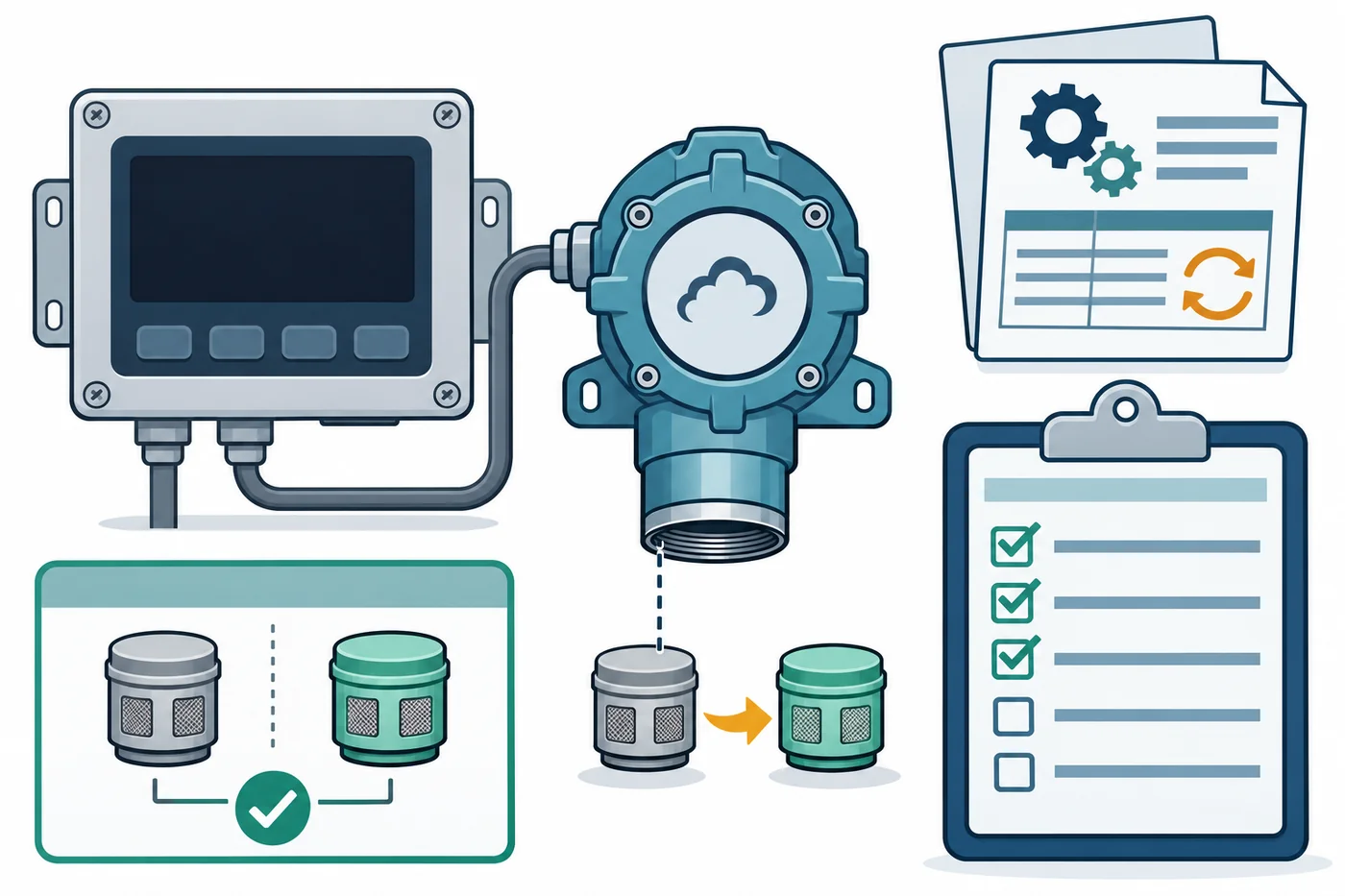
The detector and receiving system should agree on the measurement basis and channel identity.
Define the required acceptance evidence
Acceptance should follow the applicable service method and the intended duty. It can include stabilization, required calibration or verification, response to the specified gas, alarm functions and affected outputs. The sequence and conditions are instrument-specific. A checklist should reference that method rather than invent a universal wait time, reference concentration or tolerance.
Factory calibration evidence and installed verification answer different questions. A supplier certificate can describe the module under stated conditions, while the service event establishes its relationship with the installed host and any relevant accessories. Determine which claims the supplied evidence covers and what remains to be demonstrated locally under the approved procedure.
Keep functional and quantitative evidence distinct. A normal startup and working display do not establish response to gas. A functional gas challenge does not necessarily establish quantitative accuracy. A concentration comparison at the detector does not prove every remote indication or automatic action. The evidence set should match the exact restored function without expanding any single result's meaning.
Document failures encountered during acceptance. If the new sensor cannot meet the required criterion, do not erase the original replacement event and start a clean history. Preserve the component identity, method, observations and subsequent action. The issue may involve the replacement, host, reference, delivery path or application; the record should support diagnosis rather than prematurely selecting a cause.
Review system restoration separately from sensor service
During service, the site may have applied temporary inhibits, isolated outputs or used an approved alternative arrangement. A successful sensor check does not prove that these changes have been reversed. Identify the layers involved and the evidence that each affected function has returned to its defined operating state.
For a fixed protective function, the acceptance boundary should state whether downstream effects were observed or excluded. If the work could affect scaling, alarm logic or final action, refer the required verification to the responsible owner. A service certificate should not silently claim end-to-end performance when only the local instrument was checked.
For portable equipment, reconcile fleet status, labels and service records before issue. A unit can remain marked unavailable in one system and appear acceptable in another. Clear status communication reduces the chance that a partially completed service event is mistaken for an accepted instrument. Record the actual completion time when it matters to subsequent use.

The service result and the return-to-duty decision should remain traceable to each other.
A hypothetical replacement with a hidden mismatch
Consider a hypothetical fixed detector that is scheduled for sensing-module replacement after recurring verification failures. The stores system supplies a module with the same physical connection but a different range. The technician notices the difference before installation and refers it for compatibility review. That observation prevents the purchasing description from becoming an unexamined technical decision.
Suppose the design owner confirms that the alternative could be used only with a controlled range and interface change. The replacement is no longer routine like-for-like maintenance. The work package needs the approved configuration relationship, appropriate references and acceptance evidence for the affected outputs. Simply fitting the component and accepting a local reading would leave the remote system's interpretation unresolved.
Now consider a separate finding: the removed module's inlet protection is contaminated. That raises a different question about recurring exposure and gas access. The new range does not resolve it. The record should keep the compatibility issue and contamination issue distinct, with separate owners and actions where appropriate. Combining them into “sensor renewed” would conceal useful diagnostic information.
This example describes a review method, not an actual installation or successful modification. Its outcome is a defined decision path: confirm compatibility, classify any change correctly, address the measurement path and verify the restored duty. The value comes from identifying the hidden mismatch before a healthy display gives an unjustified impression of completeness.
Use a staged checklist with clear hold points
Before ordering, confirm the replacement boundary, approved part, host compatibility and reason for change. Before service, confirm instructions, competence, equipment availability arrangements and necessary references. After service, confirm identity, configuration and required verification. Before return to duty, confirm restrictions, restoration and acceptance authority. These stages help prevent unresolved prerequisites from being buried in a completed work order.
| Palcoscenico | Required decision | Evidence retained |
|---|---|---|
| Diagnosi | Is replacement supported, and what else needs investigation? | Original symptom, failed results and identified uncertainty |
| Procurement | Is this the approved component for this host and duty? | Part identity and compatibility reference |
| Work planning | Can the service be performed under the required conditions? | Applicable instructions, competent support and outage arrangements |
| Configurazione | Does the restored device match its approved basis? | Gas, range, units, channel and settings comparison |
| Verifica | Does the required method support acceptance? | Actual results, criteria, references and exclusions |
| Restauro | Is the intended function available again? | Inhibit disposition, affected interface evidence and acceptance record |
The checklist should permit an explicit unresolved status. Requiring every field to become a tick can encourage assumptions when a document or result is missing. A clear hold with an owner and required evidence is more useful than a completed form that obscures uncertainty. The next reviewer should know exactly what is needed to close the event.
Keep replacement history useful for future planning
Link each removed component to its installation and removal dates, reason and final disposition. Link the new component to the service event and acceptance evidence. This creates a usable lifecycle history without pretending that the detector body and sensing element have the same age. It also helps distinguish warranty, storage and installed-service questions.
Review recurring replacements in context. Repeated failure of one component type can justify manufacturer investigation, but compare exposure, environment, workload and accessory arrangements before assuming a product-wide issue. Repeated failures at one location can point toward an application condition. The history should support those questions with evidence rather than simply count parts consumed.
The existing Sensor1stop guide to zero and span explains why baseline and sensitivity evidence should not be conflated. After replacement, preserve the exact method used rather than recording only “zeroed.” A plausible baseline is not a substitute for the full set of acceptance activities required for the restored instrument.
Retain removed components for investigation where the approved process requires it, and follow the applicable disposal and handling arrangements. A sensing element may contain materials requiring particular treatment. The service record should identify whether the part was returned, held or disposed of without turning the article into a generic hazardous-material procedure.
Handle a different sensor as a controlled application change
A proposed substitute may be technically usable without being a routine replacement. Treat a change in target gas, range, technology, host relationship or approval condition as a question for the responsible design and equipment owners. The service plan should identify the affected requirements before the part enters the normal spare inventory. This avoids a procurement substitution silently changing the measurement claim.
Begin with the new intended duty. Compare it with the original hazard assessment and configuration basis. A broader nominal range is not automatically an improvement if it changes the useful indication or output relationship. A different technology may avoid one interference while introducing another limitation. The manufacturer documentation and application assessment should explain why the new arrangement meets the actual need.
Then review supporting infrastructure. The existing reference gas, calibration adapter, docking method, sample path and controller configuration may not remain suitable. A compatible host can still need a different procedure or accessory. Include training and service documentation in the change review so the next technician does not apply the old method to the new installed component.
Preserve the effective date of the changed configuration. Historical readings should remain linked to the sensor and basis that produced them. A trend spanning the change may be useful, but it should clearly identify the transition and any limitations on comparison. Re-labelling old records with the new gas identity would create a false continuity.
Finally, establish the acceptance boundary for the changed function. This can be wider than the evidence needed for a like-for-like component replacement because downstream interpretation or task suitability may have changed. The approved review should state which earlier evidence remains applicable and which new results are required. That makes the change concrete and prevents unnecessary repetition of unrelated checks.
Review an incomplete replacement event without guessing
Sometimes a detector returns from service with a new component but incomplete paperwork. The first task is to identify what is known: the installed part marking, instrument identity, available work report and any recorded final verification. Separate these observations from assumptions about what the contractor probably did. A familiar service provider's name is not evidence of an unrecorded activity.
Request the missing evidence by claim. If compatibility is unclear, ask for the approved part relationship. If the reported result lacks a method, ask which procedure and acceptance criteria were used. If a final system response was excluded, identify the remaining verification owner. A focused request is more likely to close the gap than a broad request for a better certificate.
Keep the device's status aligned with the unresolved issue under the site's process. Do not declare it fully accepted solely because the hardware appears complete. Equally, do not infer that the sensor is defective from missing paperwork. The appropriate conclusion is that the required acceptance evidence remains incomplete until the defined issue is resolved.
When clarification arrives, retain it with the original service event rather than creating a disconnected new history. Record the source, date and scope of the clarification. This preserves the difference between contemporaneous measurements and later documentary explanation while allowing a reviewer to understand the final decision and its basis.
Domande frequenti
Can a replacement with the same connector be used?
The connector establishes mechanical or electrical fit only in a limited sense. Verify the approved part relationship, target gas, range, host revision and relevant approval conditions. If the relationship is not documented, refer it to the manufacturer or responsible technical owner before treating the part as equivalent.
Does a pre-calibrated sensor need further checks?
Read the exact product instructions. Supplied calibration evidence may cover the module under specified conditions while registration, host configuration or installed verification remains necessary. Do not assume that a factory certificate covers every downstream output or accessory used after installation.
Should every gas detector sensor be replaced at the same age?
No universal age follows from the word sensor. Technology, model, exposure, storage and application differ. Manufacturer instructions and the actual service evidence determine the relevant criteria. A model-specific replacement recommendation should remain attached to that model rather than becoming a general rule.
Can calibration repair a damaged sensor?
Adjustment changes the reported response under its method; it does not reverse every form of physical or chemical damage. Follow the product's failure and service criteria. A device that cannot meet the required verification remains unresolved even if its baseline can be adjusted to a plausible value.
Is a normal display enough after replacement?
It establishes only the meaning assigned to that display state by the product. Required gas-response, quantitative and alarm evidence may still be missing. The acceptance claim must match the method and functions actually checked, including affected interfaces where the intended duty requires them.
Who should authorize return to service?
The site's defined process should identify that role. The technician records the service and verification; the responsible authority accepts the restored duty and any restrictions. In some organizations these responsibilities overlap, but the evidence and decision should still be distinguishable and traceable.
Fonti e documenti delle apparecchiature
- OSHA: Calibrazione e test dei monitor a lettura diretta, SHIB 26-11-2024, advisory discussion of drift, damage and servicing.
- IGD: manuale del pellistore MK8, specific replaceable components and service restrictions.
- Honeywell: guida di consultazione rapida GasAlertMicro 5/PID/IR, named-model replacement and use cautions.
- Emerson: Manuale di installazione Rosemount 925FGD, settembre 2024, specific transmitter, sensor and output arrangement.
- Det-Tronics: Manuale di sicurezza PIRECL 95-8630 revisione 5.2, model-specific service and safety-application boundaries.
- HSE: selezione e utilizzo di rilevatori di gas infiammabili, general gas-path and maintenance considerations within its flammable-gas scope.








lascia un commento