

Find applicable CO2 monitoring requirements by starting with the installation's location, activity, gas system, and responsible authority. Then identify the adopted rules and their referenced documents, confirm the applicable editions and amendments, and translate the relevant requirements into project evidence. Searching for a single “CO2 standard” cannot establish that chain because ventilation assessment, occupational exposure, compressed-gas storage, refrigeration, and fire suppression are different applications.
A published code, an adopted local rule, a consensus standard, and a manufacturer guide can all be useful. Their authority and scope differ. The practical objective is a traceable requirement register showing why each document applies and how the design addresses it. This article explains that document-selection task; it does not supply universal alarm settings or substitute a list of links for the applicable text.

Define the application before choosing a document
Write a short application statement with enough detail to distinguish the project from similar installations. Include the jurisdiction, site use, type of CO2 system, intended monitoring purpose, affected spaces, and whether the work is a new installation, alteration, or review of an existing system. Record uncertainties rather than concealing them inside a broad term such as “commercial use.”
For example, a ventilation survey in an occupied office asks a different question from a leak-detection system beside a beverage supply. A CO2 refrigeration circuit and a CO2 fire-extinguishing system also have different system functions and document pathways. The same chemical formula does not mean that all these installations share the same governing requirements.
Use an application statement to guide research and authority discussions. It helps a reviewer explain why a promising search result is relevant, only partly relevant, or outside scope. It also prevents the specification from accumulating unrelated standards simply because their titles mention gas or indoor air. A shorter, justified document list is more useful than a long list with no applicability reasoning.
Separate four kinds of authority
| Document type | 確立できるもの | What still needs checking |
|---|---|---|
| Adopted statute, regulation or local code | Obligations within its jurisdiction and scope | Effective date, amendments, applicability and authority interpretation |
| Published model code | Published requirements available for adoption or contractual use | Whether and how the relevant jurisdiction adopted it |
| Consensus standard | Requirements or methods within the document's scope | Referencing provision, edition and contractual or legal role |
| Manufacturer instructions | Supported equipment use, installation and service conditions | Correct model, revision and compatibility with project requirements |
| Official guidance or advisory bulletin | Regulator interpretation, explanation or recommended practice | Its stated status and the underlying binding provisions |
A document can occupy more than one role when adopted or incorporated by reference. The register should explain that relationship rather than assign authority from the logo on its cover. “NFPA compliant” is incomplete without identifying the document, edition, requirement, application, and evidence. “OSHA says” is similarly incomplete when the source is an advisory bulletin rather than the cited regulation.
Start with the jurisdiction's adopted basis
Locate the official adoption information for the city, state, province, country, or other responsible jurisdiction. Check local amendments and the effective date relevant to the project. A manufacturer's application note can help identify questions, but it cannot establish which edition a local authority enforces.
The latest publisher edition and the adopted edition may differ. That is not automatically an error. Codes are adopted through jurisdiction-specific processes, and projects may be subject to transition provisions or other defined conditions. Record the actual adopted basis and obtain clarification where the applicable date or alteration scope is uncertain.
An authority's application guide may be useful evidence of local expectations, but examine its date and scope carefully. A guide prepared for a previous code cycle may remain online after adoption changes. A page covering one occupancy or system quantity cannot be generalized to all installations. Keep the adoption record and the application guide as separate references so that a future reviewer can see what each contributes.
Check publisher status without assuming local adoption
役人 NFPA 55 development page はこの文書を圧縮ガスおよび極低温流体規定として特定しており、現在は 2027 年版をリストしています。発行された修正情報も表示されます。この発行者のステータスはエディションの調査には役立ちますが、特定のインストールをどのエディションが管理しているかはわかりません。
発行者チェックを管轄チェックとは別に記録します。最初の答えは「何が公開され、修正されたのか?」です。 2 番目の質問は、「ここでは何が当てはまりますか?」と答えます。プロジェクトには、特定のエディションを参照する契約仕様が含まれる場合もあります。矛盾や曖昧さがある場合は、責任ある当事者による解決が必要です。すべての引用を黙って最新の年に置き換えることによって解決されるべきではありません。
Where the complete standard is available only through controlled access, obtain the applicable authorized text before claiming clause-level compliance. Public summaries and edition pages support statements about scope and status. They do not support an assertion that every relevant clause has been inspected. A research note should identify that access boundary plainly, and the project register should keep the unresolved text review visible.

Do not mistake development documents for the final rule
検索エンジンは、公開されたコード テキストの前に、最初の草案レポート、2 番目の改訂版、公開意見、委員会の回答、または会議文書を返すことができます。これらには、提案された文言、番号が付け直されたセクション、および提案されたしきい値が含まれる場合があります。これらは開発履歴を理解するのに役立ちますが、プロジェクトの最終的な運用要件を確立するものではありません。
Check the document's own title and status, not merely the search snippet. A revision report may quote substantial proposed text and look more accessible than the published document. Its completeness does not make it authoritative as adopted law. A search result that says “shall” still requires context: who issued the document, what stage it represents, and whether the wording entered the applicable published and adopted text.
Keep development material outside the operative requirement register unless it is explicitly identified as background. If it reveals a potentially relevant issue, trace that issue into the published edition and then into the project's adopted basis. Do not extract a convenient number from a committee report and put it in a purchase order as though it were a universal monitoring requirement.
Follow references without losing the parent scope
A code can refer to another standard for a particular system, component, method, or condition. The reference does not necessarily make every part of that standard applicable to every CO2 installation. Identify the parent provision, the referenced edition, and the extent of incorporation.
For example, a reference to a gas-monitoring standard may serve a specific compressed-gas application. The project still needs to establish that its gas system falls within the parent code's relevant scope. A secondhand statement that “CGA requires monitoring” omits both the exact document and the legal or contractual path that makes it applicable.
Build a reference chain rather than a flat bibliography. The chain might begin with a local adoption instrument, continue through an adopted code provision, and reach an incorporated technical standard and the manufacturer's installation instructions. Each link should answer why the next document is relevant. Where the complete referenced text has not been obtained, mark that dependency unresolved rather than infer its contents from a vendor summary.
Occupational exposure documents answer a specific question
Exposure requirements and recommendations identify substances, concentrations, averaging periods, and jurisdictions. They are essential where the assessment concerns worker exposure, but they are not automatically a complete fixed detection system design. A time-weighted average and an instantaneous alarm serve different functions.
の NIOSH CO2 Pocket Guide presents United States occupational references and identifies CO2's health effects. The HSE CO2 guidance discusses the Great Britain framework and its workplace exposure limits. These sources should be read within their respective roles. A numerical difference between recommendations or jurisdictions is a reason to identify the controlling basis, not to average the numbers.
要件登録の場合は、物質、単位、平均期間、法的ステータスまたは勧告ステータス、および適用可能性を記録します。次に、その参照を使用するエンジニアリングまたは暴露評価の決定を特定します。アラームの設計基準と関連するシステム要件を説明せずに、アラームの欄に暴露限界の引用を入れることは避けてください。この近道は、現在の状態の測定と長期にわたる曝露の評価との違いを隠します。
換気ガイダンスは意図された状況に留まるべきです
CO2 は人が吐き出すため、適切な占有空間の換気の有用な指標となります。の CO2 モニターの使用に関する HSE ガイダンス makes that purpose clear and notes limitations, including spaces with processes that produce CO2. This is a different document path from detection of an accidental release from stored gas.
If the project involves both indoor-air-quality trending and a CO2 supply, list the objectives separately. The ventilation instrument's range, placement advice, and occupant messaging should not be imported automatically into the safety system. Likewise, a safety detector's location does not necessarily represent average occupied-zone ventilation.
The document review should ask what the observed concentration means in that application. Is it being interpreted as a proxy for ventilation, a direct substance concentration for a release scenario, or an input to another control function? The same numerical unit can appear in all three roles while the required equipment, evidence, and decisions differ substantially.

Local application guides are useful examples with boundaries
の City of Victorville fire-prevention standards 独自の改訂日、権限声明、適用範囲、提出予定を記載した M-1 CO2 システム文書が含まれます。これは、ローカル文書が提供できる情報の一例です。その要件は、他の管轄区域向けのユニバーサルデザイン仕様ではありません。
完全なローカル スコープを読み、ガイドが該当する採用基準と一致しているかどうかを確認してください。未解決の不一致や日付に関する質問を責任当局に記録します。便利な検出器の配置や検査間隔を提供するという理由だけでローカル ドキュメントを使用しないでください。文書を関連性のあるものにした場所とプロジェクトの条件は、引用とともに伝えられる必要があります。
A strong project file therefore preserves the official URL, document title, revision, retrieval date, and applicable installation description. It also preserves the outcome of any authoritative clarification obtained through the project's normal process. A folder of downloaded PDFs without those connections can be difficult to interpret after a design change or a change in project personnel.
Use a requirement register that separates text from interpretation
Each row should identify a requirement in its proper context and then state the project's response. Keep the authoritative source reference separate from the engineering interpretation. This allows a reviewer to check whether the interpretation follows from the cited material and whether the proposed evidence actually demonstrates it.
| レジスタフィールド | 目的 |
|---|---|
| 要件識別子 | コメントとクロージャーの安定した参照 |
| 出典と版 | 正確な文書のアイデンティティ |
| 養子縁組または契約ベース | ソースが適用される理由 |
| 適用範囲と条項 | どの設置条件が要件をトリガーするか |
| プロジェクトの解釈 | 要件に基づいた設計上の決定 |
| 責任者 | 誰がその決定を解決し実行するのか |
| 証拠の参照 | 図面、スケジュール、提出または受理記録 |
| 未解決の問題と処分 | 何が不明であり、どのように解決されたのか |
This register is an organizing method, not a new standard. Its value lies in keeping assumptions reviewable. A row marked “complete” without a source or evidence reference is less useful than an open row that clearly identifies the missing decision. Avoid closing questions solely because an item appears in a supplier's compliance matrix; compare that answer with the relevant source and project scope.
Translate requirements into identifiable deliverables
A design requirement may need several deliverables: a location drawing, a channel schedule, a cause-and-effect document, equipment instructions, and a defined acceptance record. The requirement register should explain which deliverable addresses which part. A single catalogue page rarely demonstrates the whole installed function.
For example, the equipment manual may support the chosen sensor and accessory combination, while the design drawing addresses the physical location and the interface schedule addresses notification. The acceptance plan then defines how the required installed behavior will be demonstrated under authorized procedures. None of these records alone proves that all other parts are correct.
This distinction also helps procurement. Ask suppliers for evidence tied to their scope and ask designers or integrators for evidence tied to theirs. An equipment manufacturer cannot usually establish the adequacy of an unfamiliar room layout from a part number. An installer cannot establish a sensor's interference performance by confirming that it is wired correctly. Clear deliverables prevent one party's evidence from being stretched beyond what it actually shows.
メーカーの指示をモデル固有のものに保つ
マニュアルは、製品、センサー、オプション、ソフトウェア、およびアクセサリと正確に一致する必要があります。現在の製品ファミリーの Web ページには、異なる地域またはバージョンの複数のマニュアルがリンクされている場合があります。どれが当てはまるか、そしてその理由を記録します。サポートされている使用法、環境制限、電源配置、サンプリング構成、出力の意味、およびサービス要件をプロジェクト要件と併せて確認します。
A manufacturer's guide can also explain important restrictions that are absent from a marketing summary. A sensor may have a suitable nominal range while the proposed accessory or environment falls outside supported use. The procurement review should retain those restrictions rather than extract only the favorable specification table.
If the manual conflicts with the proposed design or does not establish a necessary capability, obtain clarification before treating the issue as closed. Do not invent a configuration to reconcile documents by assumption. The evidence file should identify whether the clarification changes the equipment, the design, the intended role, or the acceptance criteria.
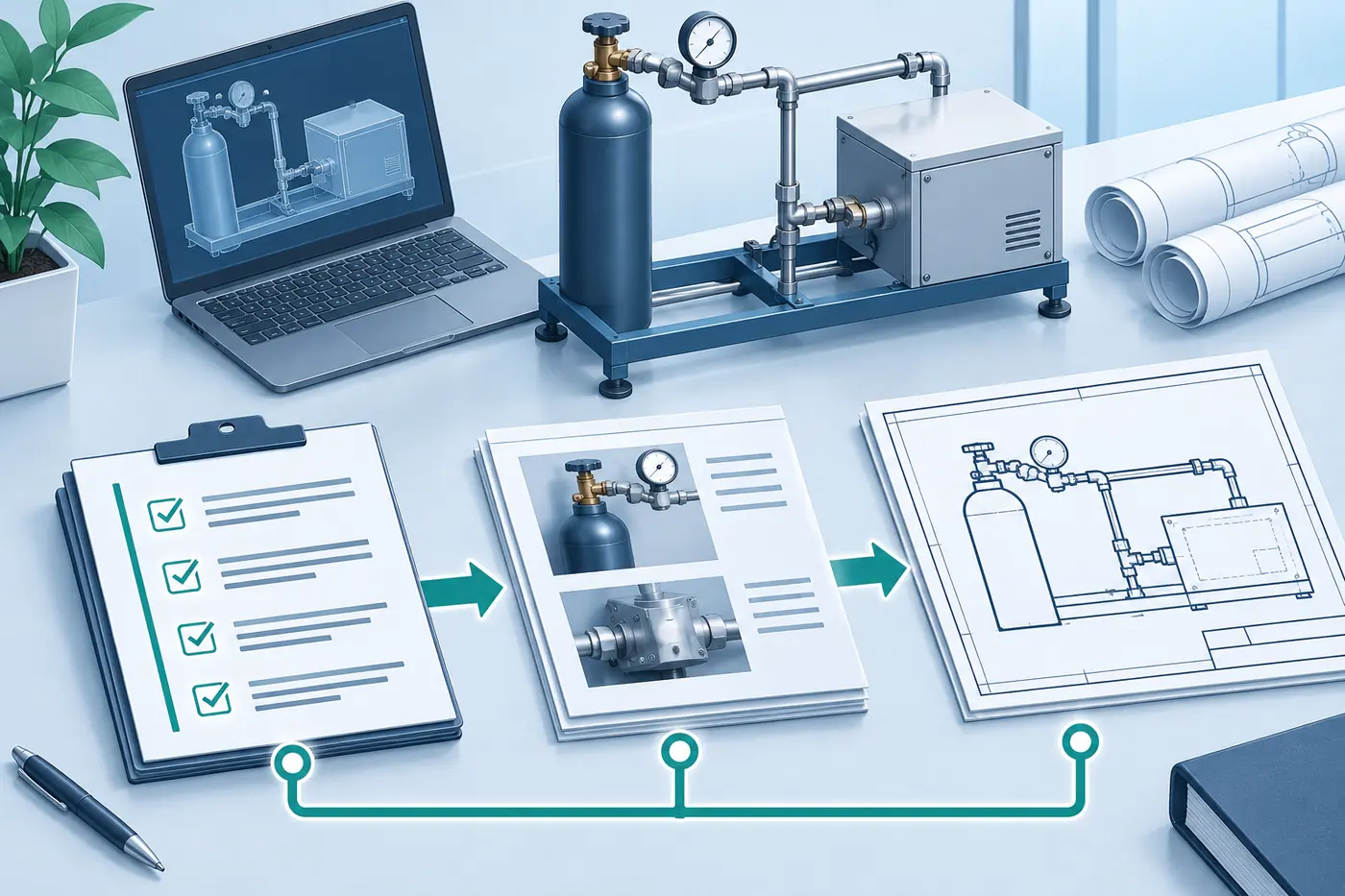
A hypothetical beverage-system document review
Imagine an owner planning a beverage CO2 installation in a commercial building. The first search returns an old local fire-department handout, an NFPA development report, a manufacturer application note, and an occupational exposure page. Each looks relevant, but none alone establishes the complete project basis.
The reviewer first records the actual jurisdiction and installation description, then locates the adopted code information and current local guidance. The older handout is checked for continued applicability. The development report is retained as background only. The application note is used to identify equipment questions and obtain the exact product instructions. The exposure page is placed in the occupational assessment part of the file.
Next, the reviewer builds the reference chain and marks any unavailable full-text standard review as open. The equipment schedule, location drawings, and alarm interface responsibilities are tied to the relevant requirements. A supplier's statement of compliance is evaluated against those deliverables. This hypothetical example does not decide whether monitoring is required for a particular quantity or design; it shows how to establish the documents needed to make that decision correctly.
Review changes at the document level too
部屋のレイアウトの修正、ガス貯蔵の変更、新しい機器の役割、または占有者の変更により、適用範囲が変更される場合があります。ファームウェアまたはセンサーの置き換えにより、その設計をサポートするメーカーの指示が変更される場合があります。新しいコードの公開には採用チェックが必要になる場合がありますが、採用された修正はプロジェクトに直接影響を与える可能性があります。
Use a controlled revision record to identify what changed and which requirement rows need review. Do not overwrite the old register with an unexplained new edition year. Preserve the basis for the original decision and the reason for the update. This is particularly useful for existing installations, where the current published edition may differ from the installation's original approved basis.
The review should also distinguish an identified document change from an established obligation to alter equipment. Those are different conclusions. The responsible authority and applicable rules determine the latter. A systematic record supports that determination without assuming that every new publication automatically requires replacement or that an old approval makes every future change irrelevant.
Preserve a document's identity when saving it
A saved PDF or printed webpage can lose the context that made it useful. Retain the publisher or issuing authority, full title, document number, edition or revision, publication or effective date where available, exact URL, and retrieval date. Identify whether it is the complete text, a scope page, an application guide, or a development record. These details help a reviewer avoid treating unlike documents as equivalent.
File names should support identification without becoming the only evidence. A downloaded file renamed “latest CO2 rules” is difficult to interpret months later. The title page and source record are more reliable anchors. Where a webpage changes in place, the retained observation should say what was actually inspected and which conclusions it supported at that time. Do not imply that every future version of the URL necessarily contains the same information.
Keep superseded references distinguishable from the current project basis. Old editions can be important for understanding an existing installation, but they should not sit undifferentiated beside a newer accepted requirement register. The register should identify the effective basis for each relevant decision and explain any intentional use of an earlier edition. That is more useful than deleting historical evidence or silently relabeling it as current.
Where access is incomplete, record the limitation at the point of use. A public publisher summary can establish a document's title and scope description. It cannot establish a detailed clause that was not read. An index or search snippet may identify where to look next, but it should not be the final support for a technical obligation. Explicit access notes allow the project team to obtain the remaining text before it relies on a compliance conclusion.
Handle ambiguous applicability as a defined question
An uncertain requirement is easier to resolve when the question includes the installation facts and competing interpretations. Instead of asking whether “CO2 monitoring is required,” identify the jurisdiction, system type, relevant quantity basis, spaces, work scope and the provisions believed to apply. State what decision remains open, such as whether a particular alteration falls within an identified requirement.
The supporting packet should contain the relevant drawings, application statement and source references. Keep factual uncertainty separate from interpretive uncertainty. If the actual storage arrangement is unknown, determine that fact rather than requesting an interpretation based on a guess. If the facts are established but the adopted rule's scope is unclear, the responsible authority or project process can address the interpretive question more effectively.
Record the outcome in a form that can be connected to the design. A conversation summary may be helpful, but the project should identify the authoritative disposition through its normal documentation process. Note any conditions attached to the decision. An answer for a specific room or system should not become a blanket exemption for other installations that differ materially.
Then update the requirement register and affected deliverables. A resolved applicability question is not fully integrated if the equipment schedule still follows the earlier assumption. The same decision may affect drawing notes, supplier scope, alarm interfaces, acceptance criteria and maintenance responsibilities. Identify those consequences explicitly so that the clarification becomes part of the implemented design.
For future changes, retain the facts on which the disposition depended. If the quantity, room arrangement, occupancy or equipment role changes, the old answer may no longer address the installation. A record that explains the basis makes that dependency visible without requiring someone to reconstruct the original conversation. This is the practical benefit of disciplined document selection: the file supports a specific, reviewable decision and shows when the decision needs to be revisited.

How can a purchaser avoid an overbroad compliance claim?
Ask the supplier to identify the particular requirement, document edition, equipment variant and evidence scope. A useful response might establish a product capability while leaving site location or interface design to the project team. That is a legitimate boundary when it is explicit. A statement covering every regulation everywhere is less useful because it cannot be checked against a defined application.
Separate the source of an obligation from the evidence of implementation. A local adoption record explains why a requirement applies. A manufacturer manual explains supported equipment use. A drawing describes the design response. An acceptance record demonstrates a defined installed behavior. Listing all four under a single “compliant” heading can hide the fact that one part remains missing.
When a claim depends on a full-text standard that the reviewer has not accessed, keep that text review open. Do not fill the gap with an unverified clause number copied from a vendor. The project can identify the exact document needed and arrange authorized access through its normal process. The article's public sources identify useful pathways, but they cannot establish every project's clause-level conclusions.
最終的な要件登録では、別のレビュー担当者が検証された事実と解釈や未解決の質問を区別できるようにする必要があります。この違いは、たとえ小規模なプロジェクトであっても貴重です。これは、誰も再現できない広範なコンプライアンスの主張を残すのではなく、明確な購入決定をサポートし、状況が変化したときに所有者に実用的な出発点を提供します。
よくある質問
When arranging a review, make the required decision explicit in the meeting record. Distinguish selecting a governing document from interpreting a clause and from accepting an equipment submittal. These decisions can occur at different stages and involve different responsible people. Recording their scope prevents agreement on one question from being reported as approval of the entire installation.
Is the newest NFPA edition automatically the applicable one?
No. Publisher status and local adoption are separate facts. Identify the adopted or contractually specified edition, amendments, and project applicability. The official publisher page is the right place to check publication status; it is not evidence of a particular jurisdiction's adoption.
Can I use a committee report because the full standard is difficult to access?
Use it only as clearly identified background. Obtain the authorized applicable published text before making clause-level claims. Proposed or revised wording in development records can differ from the final text and from the locally adopted edition.
Can a manufacturer declare that a system meets every CO2 regulation?
A useful declaration must identify its scope and evidence. The equipment supplier can address supported product capabilities, but project applicability, location, integration, and authority acceptance need their own evidence. A broad statement without document and edition references leaves those questions unanswered.
Do workplace exposure limits specify the whole alarm system?
No. They address exposure within a defined framework. Alarm thresholds, timing, notification, fault handling, and interfaces require the applicable system design basis. Preserve the distinction rather than treating one number as a complete detection specification.
What should I do with older internal background articles?
Use them to understand the question, then follow their references to the current applicable originals. The existing CO2 safety overview provides application context. The NFPA 704 explanation concerns hazard markings, which have a separate role from selecting gas-detection requirements.







返信を残す