
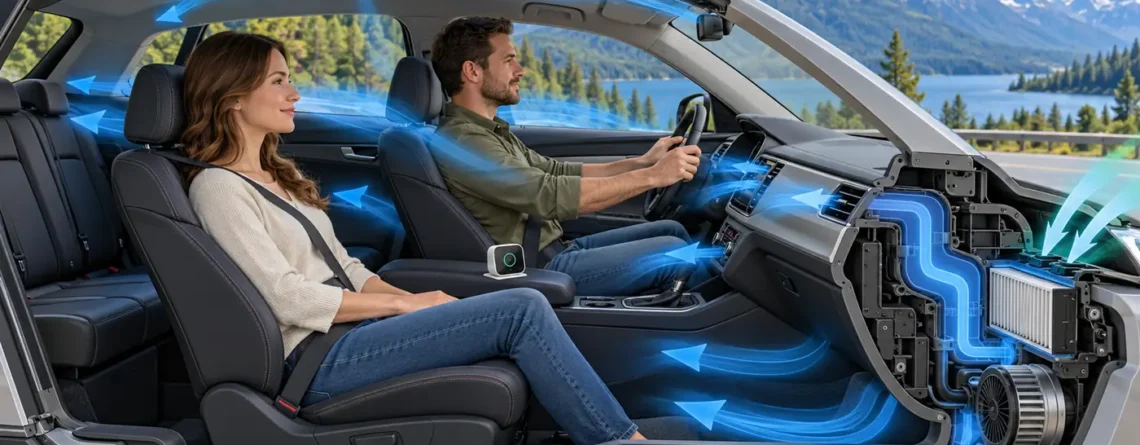
Read cabin CO₂ as a time series shaped by the people inside, the vehicle's fresh-air/recirculation setting, leakage, fan and window state, and the monitor's position and response. 閉鎖された人が乗車中の走行中の値の上昇は、吐き出された CO₂ が除去されるよりも早く蓄積していることを示している可能性がありますが、数値だけでは車両の故障を診断したり、普遍的な健康閾値を確立したり、交通粒子への曝露を説明したりすることはできません。モードがいつ変更されたのか、車内に何人いるのかを記録し、同様の区間の走行を比較します。質問が粒子または排気ガスに関するものである場合は、別の関連する測定値を使用してください。
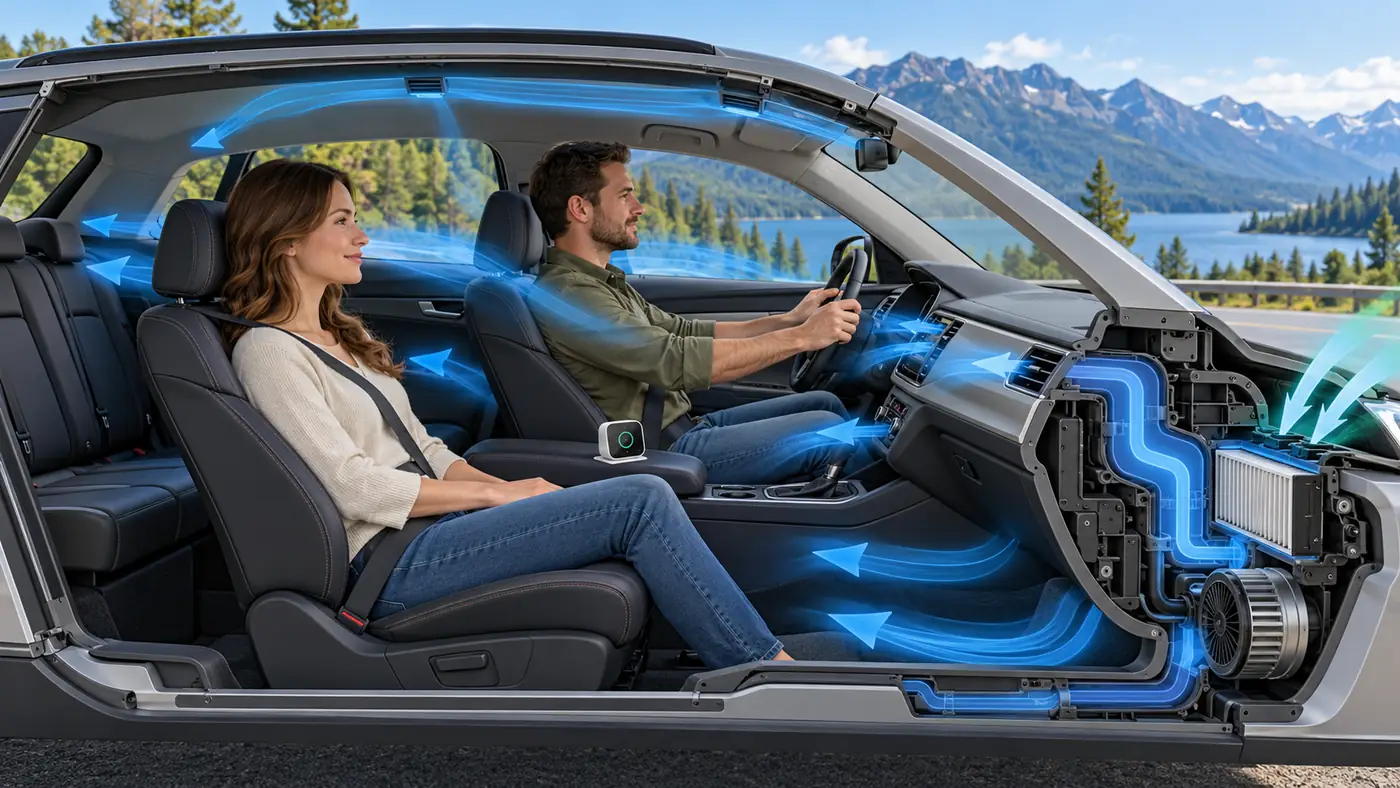
小さな小屋は大きな部屋よりも早く変化します。人は継続的に CO₂ を吐き出しますが、外気の取り入れ、再循環、窓の開閉、漏れによってガスの希釈方法が変化します。キャビンフィルターは、入ってくる粒子の一部を減らすことができますが、通常はかなりの量の呼気 CO₂ を除去しません。これは実際のトレードオフを生み出します。交通粒子を制限するモードでは、車内の CO₂ が増加する可能性があります。オリジナル 92 車種にわたるフィールド調査 ルートと車両に関してこのトレードオフを観察しました。その数値結果はすべての車の仕様ではありません。他の 部分再循環実験 特定のテスト条件下で 2 つのチャネルのバランスを検討しました。
まずディスプレイが何を測定するかを特定します
A direct CO₂ monitor measures carbon dioxide reaching its inlet, commonly with an NDIR sensing method. A product that reports an “eCO₂” number inferred from VOC response is not directly measuring the same quantity. Check the finished product's method, range, stated accuracy, warm-up, power and logging behavior before interpreting a trip. The 直接的な CO₂ と eCO₂ のガイド explains the difference in the sensing chain. A component's favorable laboratory specification does not automatically transfer to a portable monitor bouncing in a warm, sunlit vehicle.
CO₂も 一酸化炭素(CO)ではありません。 CO は排気障害や他の燃焼源から車両に侵入する可能性があり、車室内の CO₂ モニターは CO 安全警報として機能できません。の CO 対 CO₂ チャネルガイド 違いを詳しく説明します。また、CO₂ は窒素酸化物、超微粒子、PM₂.₅、臭気、またはすべての VOC を検出しません。色付きの車の「空気の質」アイコンは、測定された CO₂ ではなく、微粒子または VOC チャネルに基づいている場合があります。 1 つのガスの変更を原因とする前に、車両のマニュアルをお読みください。
| 質問 | 関連する証拠 | CO₂ 表示だけでは確立できないこと |
|---|---|---|
| Are occupants' exhalations accumulating during recirculation? | 客室の CO₂ 傾向、乗客数、HVAC モード/時間を直接管理します。 | 正確な空気交換率または 1 つのスロープからの故障診断。 |
| 交通粒子が車内に入り込んでいませんか? | 屋内および場合によっては屋外での適切な粒子測定。フィルターとルートのコンテキスト。 | CO₂ は少なくても、粒子は多くなります。 |
| キャビンフィルターは効果があるのでしょうか? | Particle-specific comparison under controlled conditions and the filter's instructions. | CO₂ ラインの低下は粒子の除去を証明するものではありません。 |
| 燃焼・排気に問題はありませんか? | 適切な安全対応と専門的な検査。 | CO₂ は、CO 検出器や排気検査ではありません。 |
| ドライバーに障害があるのか、それとも安全ではないのか? | ドライバーの状態、症状、および適切な安全措置。決して単一の ppm 式ではありません。 | キャビンモニターでは覚醒度を診断できません。 |
区別は実用的です。ドライバーは、再循環を選択すると、車外の粒子レベルが低下する一方で、CO₂ が上昇するのを目にすることがあります。どちらの読み取り値も、もう一方のチャネルが安全であることを証明するものではありません。また、ディーゼル車の後ろを運転しているときに、外気取り入れ口が開いていると CO₂ が少ないことがわかります。粒子測定を行わない限り、実際の粒子曝露についてはほとんど意味がありません。機内の空気を研究している研究者は、このバランスを理解するために、1 つのガスに曝露全体を対応させるのではなく、両方のチャネルを測定することがよくあります。
再循環によってトレースが変化する理由
再循環モードでは、HVAC システムは、同量の外気を継続的に導入するのではなく、キャビンの空気の大部分を再利用します。設定は必ずしも完全にシールされるわけではありません。車両から空気が漏れ、自動空調制御により外気の割合が変化する可能性があり、速度や圧力条件も重要です。しかし、乗員の呼吸量が少ないため、外気の置換が少なくなり、一般的に車室内の CO₂ が増加します。外気モードでは、変化の方向と速度は吸気量、ファン、窓、乗客数、ルート、事前の集中力によって異なります。ダッシュボードのシンボルはモード要求であり、測定された外気流量ではありません。
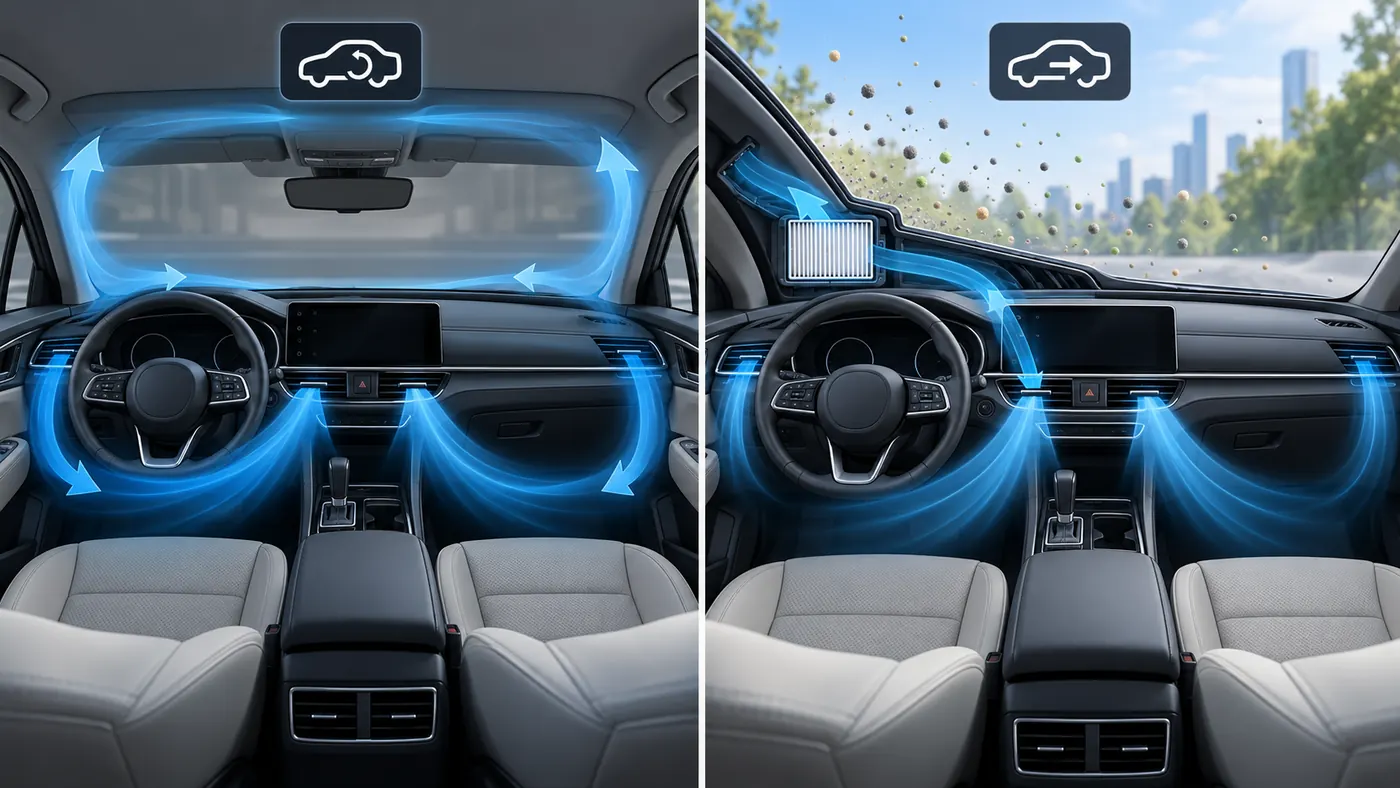
画像には2つ写っています 概念的な air paths, without implying a specific vehicle's flap position or calibrated flow. Research is conditional. The 92台の車両による現地調査 は、テストルートでの外気モードよりも再循環中の超微粒子濃度が低いこと、および客室内 CO₂ の蓄積が確認されました。あ 車室内シミュレーション研究 さまざまな気候、乗客数、濾過と再循環の程度。その結論は、モデル化された車両と条件によって異なります。あ バンコク通勤車フィールド調査 同様に、モード依存の CO₂ 挙動が報告されました。それらの研究は正当化します モードと条件を確認する, not copying one car's rise rate or a particular control setting into all vehicles.
Some vehicles automatically change their air-intake strategy to manage defogging, temperature, battery demand or air quality. A driver may believe “recirculation” stayed constant while the system partially admitted outside air. Conversely, a partially blocked intake, different fan speed or open window can alter the result even when the icon appears unchanged. If a repeatable difference matters, consult the vehicle's operating documentation and have the system inspected rather than inferring a stuck flap from a handheld CO₂ chart alone.
最低の CO₂ 測定値が常に総合的な機内空気の最適な選択であるという一般的な規則はありません。ひどく汚染された道路では、フィルターや条件が適切でない場合、吸気口を開けると粒子への曝露が増加する可能性があります。再循環を無制限に続けると、呼気された CO₂ が蓄積する可能性があります。関連するバランスは、外気、交通量、客室フィルター、占有率、気候によって異なります。あ 制御された部分循環実験 は、粒子と CO₂ の同時観察が、どちらかを個別に最適化するよりも有益である理由を示していますが、そのテストされた部分は任意のモデルに対するユーザーの指示ではありません。
乗客数と旅行段階が重要
少し停車した後、空の車内に 1 人が乗車すると、すでに乗客が乗車していた密閉された車両に 4 人が乗車する場合とは異なる CO₂ パターンが発生します。開始点、乗員の数、彼らの活動、客室の容積、混合および継続時間はすべてトレースに影響します。乗客が増えて上昇率が大きくなったとしても、それ自体は HVAC のパフォーマンスが悪くなったことを意味するわけではありません。モードや車両を比較することが目的の場合は、乗車率、ルート、観察期間を実際と同じ程度に保ち、一定に保つことができないものについて説明します。
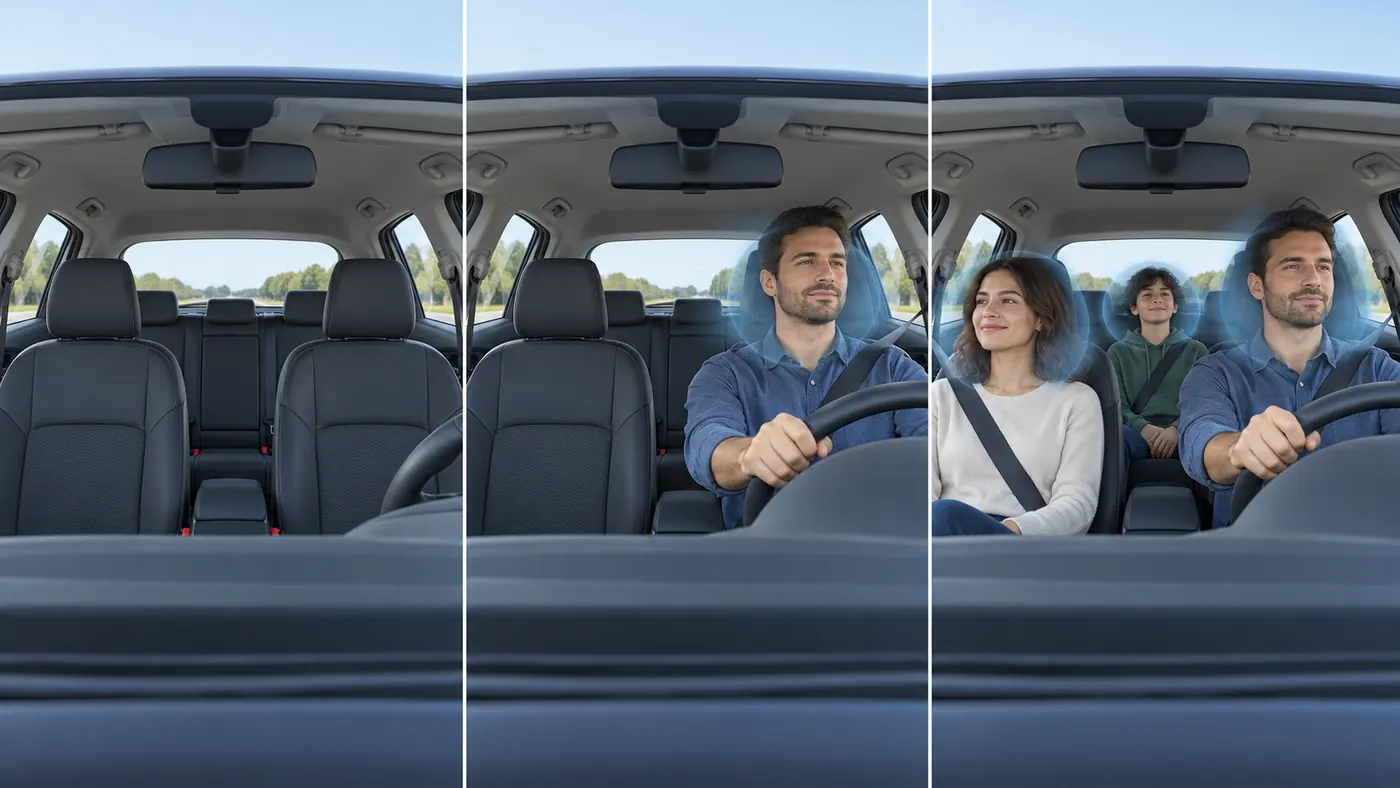
The illustration contains no ppm axis because a real trace requires an instrument and documented conditions. Mark the events that change interpretation: doors closed after boarding; recirculation engaged; fan speed changed; window opened; passenger added; outside-air mode resumed; car stopped. A brief door opening can introduce a pulse of outside air and reset a small cabin's local conditions. An instrument with a slow response or rolling average may show that event after a delay. Without event times, the analyst may mistake a device lag for a ventilation lag.
空調システムがオフの状態で駐車され、人が乗っている車両も別のシナリオです。次の旅の始まりの集中力は、屋外の背景とは似ていないかもしれません。始動条件と停止中に車両に人が乗っていたかどうかを記録します。適切なトレーサーガス法とその仮定が満たされない限り、全員が退出した後の緩やかな減少を外気流量の直接的な測定値として解釈しないでください。キャビンの漏れと混合は、天候や車両の状態によって変化する可能性があります。 1 つの自動車のモデルまたは研究テストが、自動的に別の自動車に移行されることはありません。
車内の空気を安全にサンプリングできるようにポータブル モニターを設置します。
The ideal sampling point depends on the question, but it should not be directly in a passenger's exhaled plume, pressed against a supply vent, exposed to windshield sun or trapped behind fabric. Sun-heated electronics can alter instrument temperature beyond the intended conditions; a cold air jet can sample locally different air. A monitor held in one person's hand measures a moving local environment, not a stable cabin point. Read the device's specified operating temperature and mounting instructions.
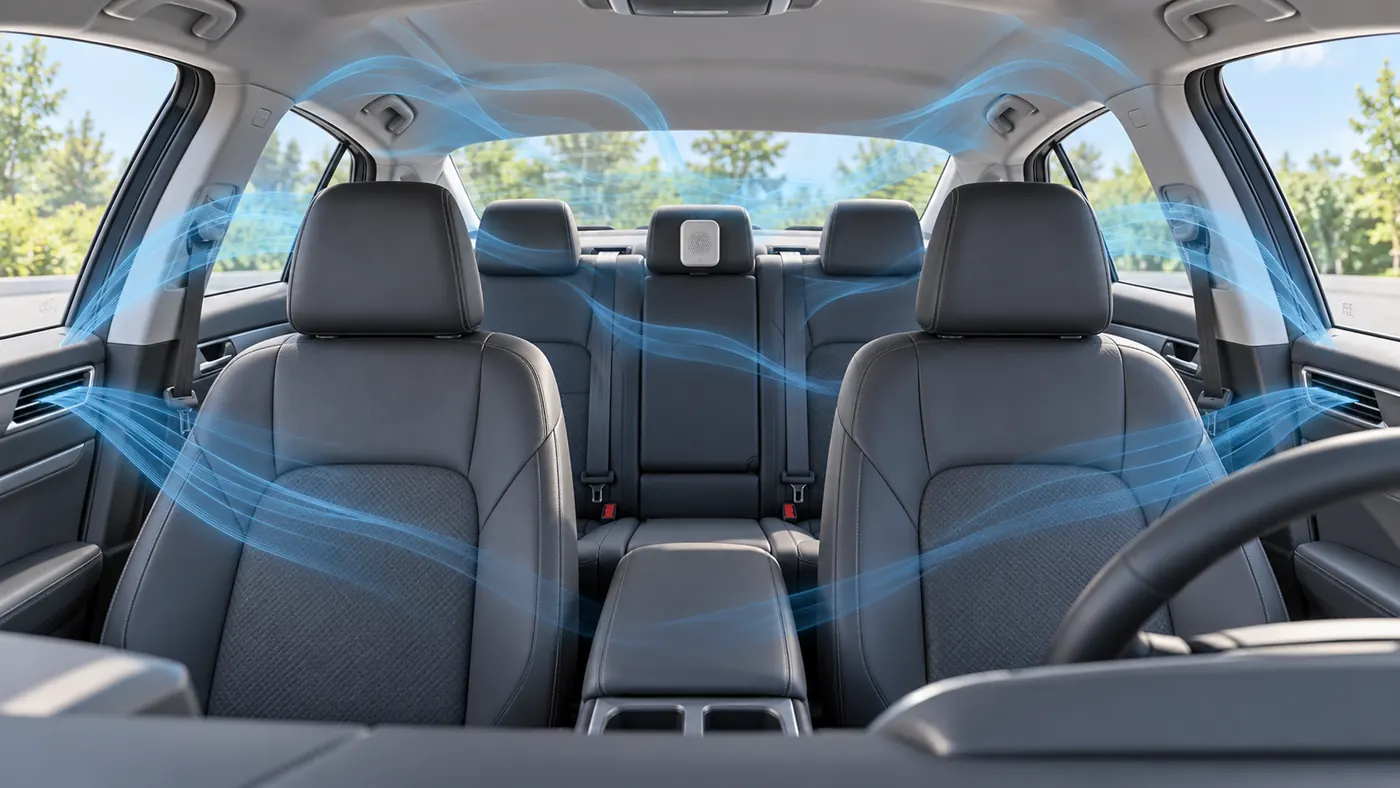
Secure the monitor so it cannot become a projectile or obstruct driver controls, visibility, airbags or seat-belt use. Do not manipulate a logger while driving; set up the device before the trip and review data after stopping safely. If the device needs a cable, route it according to vehicle safety needs. The image is illustrative, not a mounting specification for a particular dashboard or model. A vehicle manufacturer may provide a built-in sensor and its own control logic; a portable display does not override the vehicle's operating instructions.
2 つのセンサーを比較する場合は、キャビンの 2 つの座席の空気の質が異なると判断する前に、センサーを短時間同じ場所に配置して一致、クロック、平均を確認してください。デバイス間の不一致は、空間的な違いに似ている場合があります。の CO₂ モニター精度仕様ガイド explains why a one-ppm display step is not one-ppm accuracy. Automatic baseline correction can also depend on the device seeing appropriate low-concentration periods; a sensor continually kept in a car or used under unusual conditions needs the manufacturer's recommendations. Never recalibrate simply to make a reading look desirable.
機内の空気は完全に均一ではありません。直接の通気口、呼吸の流れ、窓の開口部によって勾配が生じることがあります。正式な設計または暴露研究の場合、必要なサンプリング位置と方法を事前に指定する必要があります。個人的な傾向を比較するには、最高または最低の数値を見つけるために繰り返し移動するハンドヘルドディスプレイよりも、再現可能な安全な位置、正しい機器、および正直なイベントログの方が役立ちます。
短いドライブイベントログを保存する
説明ログは簡潔にすることができます。測定間隔と、それに影響を与える可能性のある変更をキャプチャします。時系列ロガーはシーケンスを保存するのに役立ちます。誰かが運転していないときに時間指定の観察を記録した場合でも、ライブ ディスプレイを使用できます。私たちの ロガーとディスプレイのガイド これらのレコードの中から選択するのに役立ちます。
| 分野 | 何を書き留めるべきか | なぜそれが重要なのか |
|---|---|---|
| 車両とモニター | 車両のモデル/年式 (わかっている場合)。 CO₂ モニターのメーカー/モデル、シリアル、直接方式、および位置。 | 計器の違いと車両の違いを区別します。 |
| クロックとサンプリング | 日付、タイムゾーン、ロギング間隔、および任意のスムージング設定。 | イベントの位置合わせを可能にします。 |
| 占有者 | 人数と乗降時刻。名前は必要ありません。 | 主な CO₂ 発生源について説明します。 |
| HVAC モード | 循環・外気、自動モード、ファン設定、変更時。 | 実際の流れではありませんが、意図した空気の経路を説明します。 |
| 窓/ドア | オープニングと期間。 | 急変や局所サンプルについて解説します。 |
| 旅行の背景 | 駐車中か移動中か、広範なルートの種類、交通状況、および該当する場合は屋外の汚染/天候。 | 比較をより解釈しやすくします。 |
| データ品質 | ウォームアップ、日光、通気口の近さ、丸太の欠落、またはユニットの移動。 | 虚偽の帰属を防止します。 |
| その他のチャンネル | PM₂.₅ または粒子数は、適切な装置で実際に測定した場合のみ。 | トラフィック粒子と CO₂ の質問を分離します。 |
The table intentionally has no example concentration. Invented readings would be especially misleading when the true result varies across vehicles, passengers and routes. Store the original log when possible and annotate a copy. If a chart changes after a mode switch, note the sensor response and whether the vehicle's automatic system may have changed another variable. A change in CO₂ alone shows an association with that interval; it does not prove exactly how much outside air entered or that one button caused the entire change.
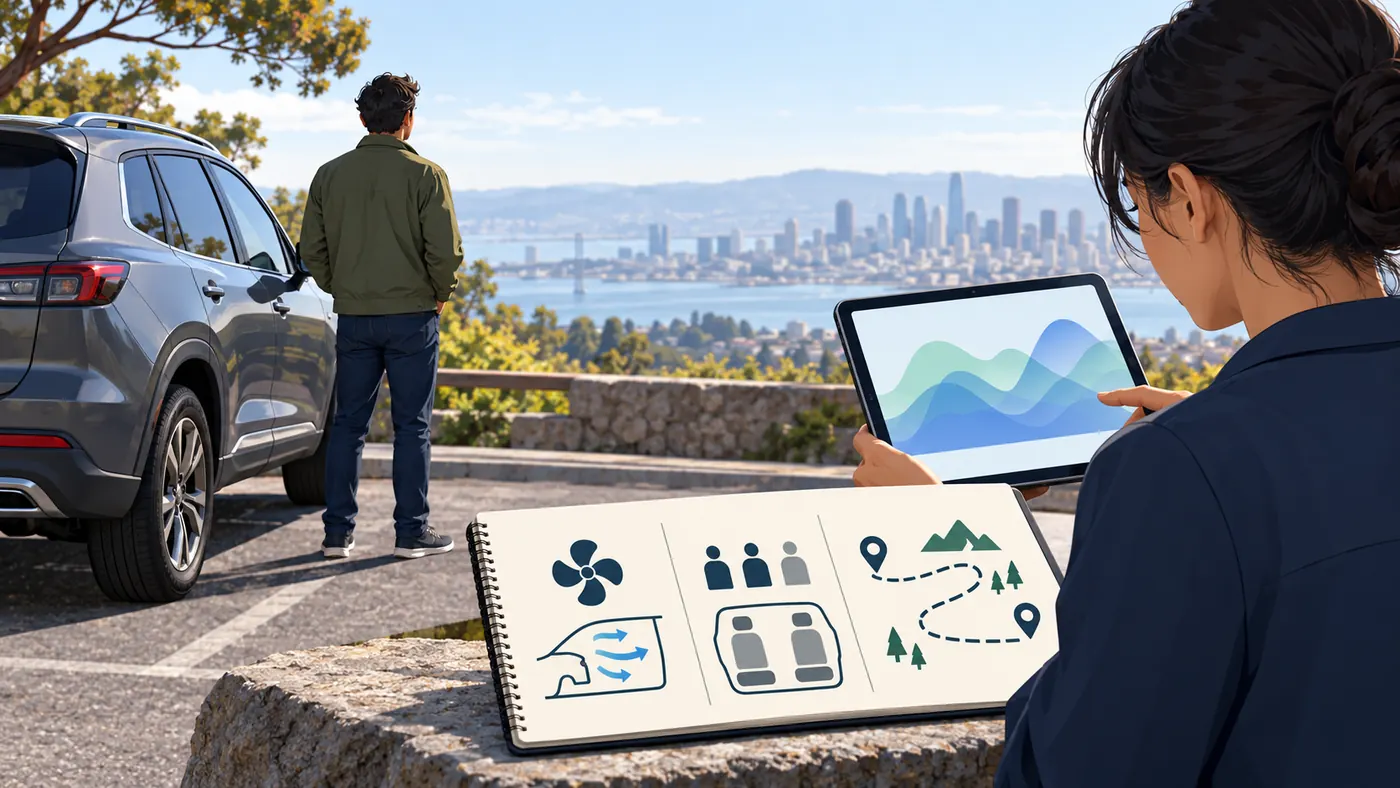
2 つのモードを比較するには、可能であれば、同様のトリップ ストレッチ、同じモニターの位置、同じ人を使用します。異なる日の A/B 比較は、交通状況、屋外汚染、天候、ファンの設定、および客室の初期状態によって混乱する可能性があります。条件が明示されている場合、前後のプロットは依然として有益です。整然とした傾向を妨げるという理由だけで、不便なセグメントを破棄しないでください。次の読者がそれを理解できるように、ドアの開閉、信号の喪失、またはデバイスの移動にラベルを付けます。
明らかな交絡要因を乗り越えられる比較を設計する
A practical comparison begins with a narrowly worded question, such as whether one occupied vehicle shows a repeatable CO₂ difference between two HVAC modes during similar stretches. Record the initial concentration and allow for the instrument's warm-up and response time. If the first mode always follows a long parked interval and the second follows a window opening, the result cannot be attributed to the mode alone. Alternating the order on comparable runs may help, but road, weather and traffic will still vary. Report the conditions along with any observed difference, and avoid presenting a single trial as a performance specification.
車の速度と圧力により、漏れや吸気の動作が変化する可能性があります。自動温度調節機能は、ボタンの位置が固定されているように見えても、外気の割合を変更する可能性があります。乗客数によって CO₂ 発生源の強度が変化し、会話、ドアの開閉、モニターの位置の変更によって現地の痕跡が変化します。非公式の比較に役立つようにするには、モニターを 1 つの安全な位置に保ち、同じ乗員を乗せ、すべてのモードまたはウィンドウの変更をマークし、モニターが応答した後の持続期間を比較します。これらの条件を同様に保つことができない場合でも、ログにはその旅行で何が起こったかを記述することができます。原因を 1 つだけ分離することはできません。
Do not combine particle channels without defining them. PM₂.₅ is typically a mass concentration estimate for a size fraction, while ultrafine-particle studies may count particles by number in a different size range. A reduction in one does not prove the same reduction in the other. Consumer optical PM measurements may also respond to particle composition and humidity. When researching a filter or recirculation trade-off, note the study's measured size range, route, vehicle, filter and sampling position before applying its insight to a different car. A filter product claim and an independent cabin exposure measurement are not the same evidence.
決定を証拠に比例させてください。ドライバーは、車室内の傾向を使用して、設定によってその車両に繰り返し蓄積が生じるかどうかを確認し、車両のマニュアルを参照するか、予期しない動作の場合はサービスを求めることができます。暴露または購入請求を行う職場のフリートには、より強力なプロトコル、同等の車両、および適切な測定方法が必要です。どちらの使用例も、逸話的な痕跡から普遍的な「安全な」客室 CO₂ カットオフを発明すべきではありません。次の適切なステップは、粒子の測定、HVAC の検査、または単により適切に記録された繰り返しの旅行かもしれません。これらはどれも、ドライバーが気分が悪くなったり、障害を感じたりしたときに安全に停止することに代わるものではありません。
一般的なトレース形状を慎重に解釈する
再循環中の上昇: 特にキャビンに人がいて外気の入れ替えが限られている場合には、乗員からの排気ガスが原因である可能性が考えられます。乗客数、モード、位置、モニターが安定したかどうかを確認します。この率は、人工呼吸器や個人のパフォーマンスを独立して測定するものではありません。
外気選択後の落下: 希釈率が増加する可能性は考えられますが、窓の開閉、乗客の降車、または装置の移動が同時に発生する可能性があります。比較が重要な場合は、同様の条件で繰り返し、何が変化したかに注目してください。 CO₂ ラインの低下は、道路外の粒子が上昇したかどうかについて直接的には何も示しません。
前部座席と後部座席で異なる測定値: 局所的な呼吸、供給口、空気の流れが寄与する可能性があります。楽器間の違いも同様です。キャビンゾーンの問題を宣言する前に、デバイスを並べて比較し、再現可能なサンプリング方法を維持します。
乗車直後の高い数値: キャビンが屋外の背景の上で開始されたか、デバイスが別の環境から持ち込まれた可能性があります。開始点と応答時間を設定します。単一の初期値は、後続のモードおよび占有ラベルの付いたトレースほど情報量が少なくなります。
平らに見える線: the room may be in approximate balance, the device may average slowly, or the logger may be stale. Check data quality. A flat line is not proof that filtration works, CO is absent or the driver's alertness is safe.
の 屋内 CO₂ に関する ASHRAE の見解 emphasizes the limits of turning concentration into ventilation or health conclusions without proper assumptions. Research on cabin exposures is informative but does not supply a universal “safe to drive” CO₂ number. Sleepiness, headache or other symptoms deserve appropriate attention regardless of a monitor's value. If a driver feels impaired, they should stop safely and address the condition; a ppm display cannot diagnose the cause.
CO₂ と粒子制御は異なる方向に進む可能性がある
The cabin filter's job is largely different from outdoor-air exchange. A high-efficiency particle filter may reduce incoming particles when outside air is admitted, but the actual performance depends on filter type, condition, leakage, fan setting and the particle mix. Recirculation can reduce some roadway pollution exposure yet allow CO₂ to rise. A field 高効率キャビン濾過を使用した12台の車両の研究 外気を取り入れながら超微粒子を減らす特別な方法を研究しました。その結果は、「プレミアム」として販売されるすべてのフィルターに対して包括的に約束されるものではありません。
Field studies capture real traffic but cannot hold every condition fixed. Controlled experiments can isolate an air-path change but may not reproduce a dirty filter, a different vehicle body or seasonal traffic. Simulations can explore many combinations efficiently, provided their assumed airflows and particle behavior are understood. Read these approaches together: they establish why a trade-off is plausible and worth measuring, while leaving the best setting for a particular trip dependent on conditions and the vehicle's design.
山火事中や排出量の多い車両の後ろでモードを選択するために CO₂ のみを使用しないでください。また、粒子の読み取りだけで十分な外気が居住者に到達していることを証明することもできません。自動化システムが両方を最適化する場合、そのセンサー、制御アルゴリズム、および動作限界を一緒に評価する必要があります。客室の「空気の質」バッジは、VOC または粒子を指す場合があり、CO₂ が測定されたことを意味するものではない場合があります。車が実際にどのチャンネルを使用しているのか、ディスプレイがどのような状態を表しているのかを尋ねてください。
If a smell of exhaust or an urgent safety concern occurs, follow the vehicle's safety guidance and seek appropriate inspection rather than using a CO₂ monitor to reassure yourself. A separate CO hazard is possible; the CO₂ channel cannot rule it out. Ordinary cabin monitoring is an aid to understanding ventilation and exposure patterns, not a substitute for vehicle maintenance or emergency judgment.
よくある質問
扇風機を回しているのにCO₂が上昇するのはなぜですか?
ファンは、外気をあまり加えることなく、機内の空気を移動または再循環させることができます。乗員は CO₂ を吐き続けます。吸気モードと車両のマニュアルを確認し、乗客数とセンサーの位置から傾向を解釈します。ファンのアイコンだけでは外気の割合を測定したものではありません。
キャビンフィルターは CO₂ を除去しますか?
通常の客室用粒子フィルターでは、かなりの量の CO₂ を除去できません。これらは粒子をターゲットにし、場合によっては選択された臭気やガス用の追加媒体を使用します。フィルターを交換しても粒子が減少しても、CO₂ は減少しません。外気交換と居住者による発電は引き続き CO₂ に関連します。
1,000 ppm は普遍的な車両の安全制限ですか?
No. A number copied from a building guide or one vehicle study cannot serve as a universal driving or health threshold. The relevant evidence depends on measurement quality, duration, occupants and other exposures. Use the trend to understand air exchange; do not infer an individual's impairment or a vehicle's legal compliance from one concentration.
最高のトリップ読み取り値を使用して 2 台の車を比較できますか?
十分な注意が必要です。乗客数、旅行期間、開始 CO₂、モード、漏れ、ファン、窓、ルート、気候、モニターの違いが比較に影響を与える可能性があります。違いが車両の設計にあると考える前に、一致したプロトコルと同期した計器が必要です。それでも、CO₂ の結果は粒子やすべての汚染物質を説明するものではありません。
CO₂ 値が低いということは、排気漏れがないことを証明できますか?
いいえ、CO₂ は CO 警報や排気システムのチェックではありません。排気ガスの侵入が疑われる場合は、適切な安全対応と専門的な検査が必要です。 CO₂ スクリーンは正常に見えるため、車内に留まらないでください。
自動温度調節機能がモードを変更した場合、何を記録すればよいですか?
ユーザーが選択した設定、目に見えるモードの変更、ファンの動作、曇り取りイベント、および自動吸気について車両マニュアルに記載されている内容をすべて記録します。実際の外気部分が不明な場合は、不明とラベルを付けます。チャートは、測定されたことのないフラップの位置や気流を作り出すために使用されるべきではありません。
時系列を使用してより良い質問をする
機内 CO₂ モニタリングは、濃度トレースを既知のトリップ シーケンスに結び付ける場合に最も役立ちます。正確な空気の流れ、粒子、健康への影響については不確実性を残しつつ、特定の車両の占有再循環期間と外気期間との再現可能な差異を示すことができます。不確実性を記録することは強みです。 1 つの番号にサポートできない主張を伝えるのではなく、次のチェックを適切なチャネルまたは専門的な方法に誘導します。






返信を残す